Question 1
Thai cushions are designed with a triangular cross-section and are made from layers of smaller cushions. These cushions can be modelled as triangular prisms.
This is shown in the diagram.
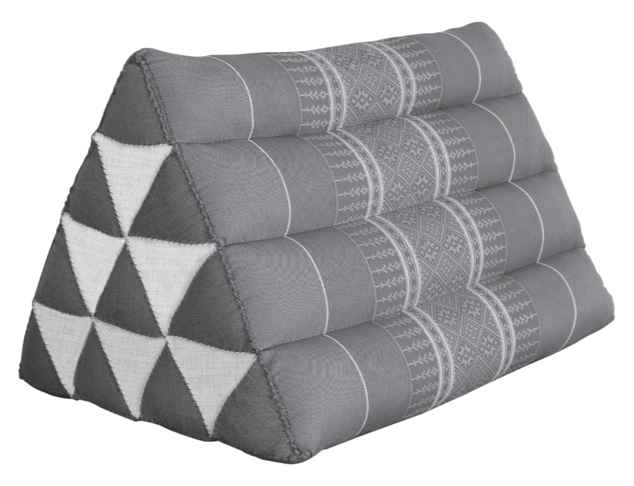
Thai cushion with 4 layers
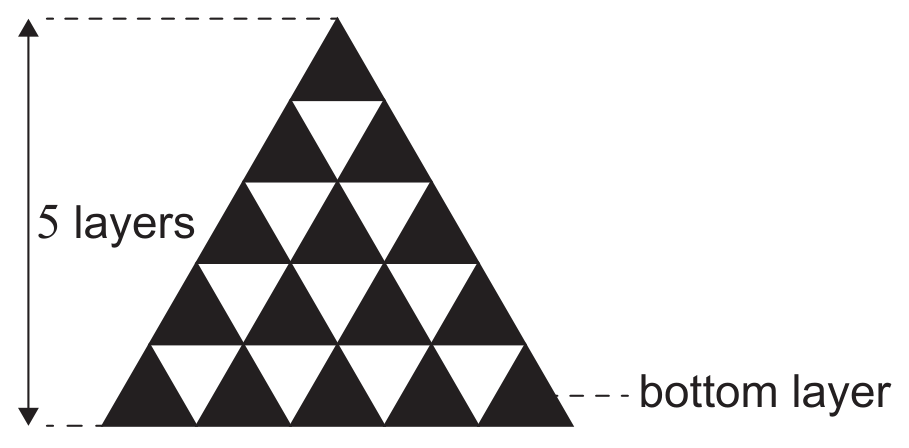
Cross-section of Thai cushion with 5 layers
Question 1(a)
Write down the number of triangular prisms in the bottom layer of the cushion with
Question 1(a)(i)
4 layers.
Question 1(a)(ii)
5 layers.
Mayumi notices that the number of triangular prisms in the bottom layer of the cushions forms an arithmetic sequence.
Question 1(b)
Question 1(b)(i)
Write down the common difference of this sequence.
Question 1(b)(ii)
Find an expression for the number of triangular prisms in the bottom layer of a cushion with n layers.
Mayumi wants to extend this design to create a cushion with 9 layers.
Question 1(c)
Question 1(c)(i)
Find the number of triangular prisms in the bottom layer of Mayumi's cushion.
Question 1(c)(ii)
Calculate the total number of triangular prisms in Mayumi's cushion.
Question 1(d)
Find an expression for the total number of triangular prisms in a cushion with n layers, giving your answer in its simplest form.
Question 1(e)
The cross-section of the cushion consists of black triangles and white triangles.
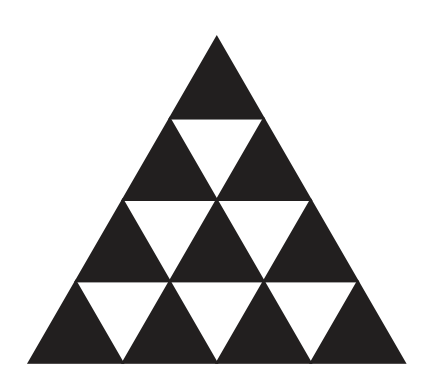
This cushion with 4 layers has a total of 6 white triangles.
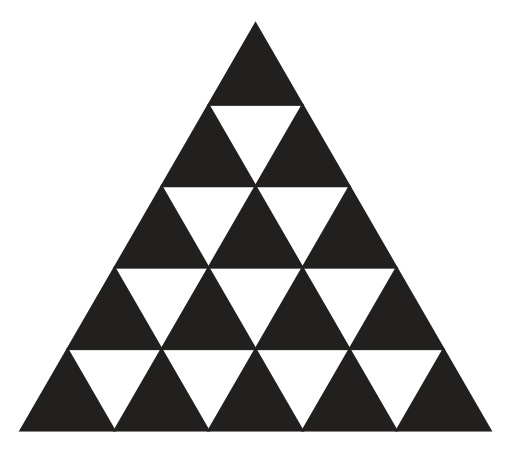
This cushion with 5 layers has 4 white triangles in its bottom layer.
Write down the total number of black triangles in a cushion with 4 layers.
The number of black triangles in each layer forms an arithmetic sequence.
Question 1(f)
Find and simplify an expression for the total number of black triangles in a cushion with n layers.
The total number of white triangles in a cushion with n layers is .
Question 1(g)
Using both the given expression and your answer to part (f), find and simplify an expression for the total number of black and white triangles in a cushion with n layers.