EduNinja

IB ESS SL3.2 Human impact on biodiversityQuestion Bank

Question 1

[Maximum number: 8]
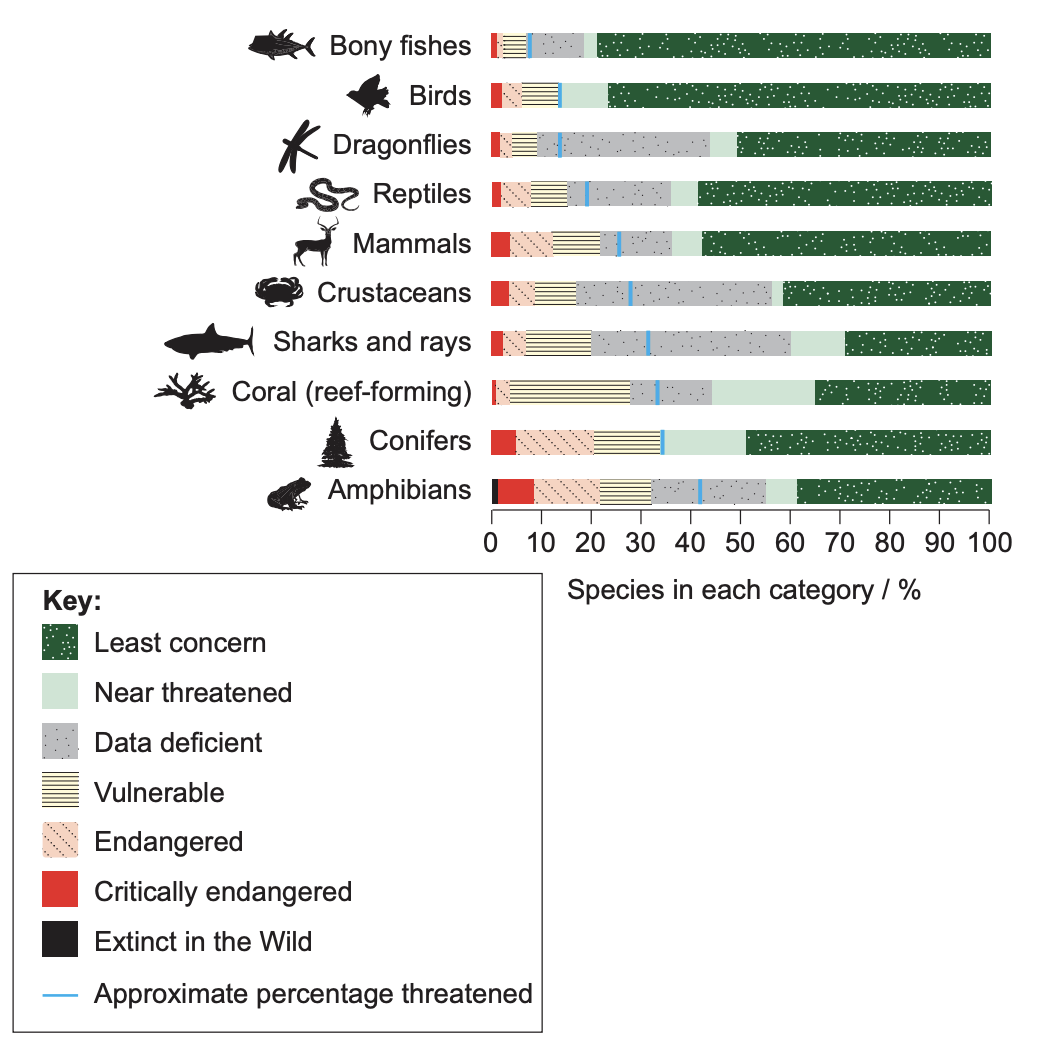
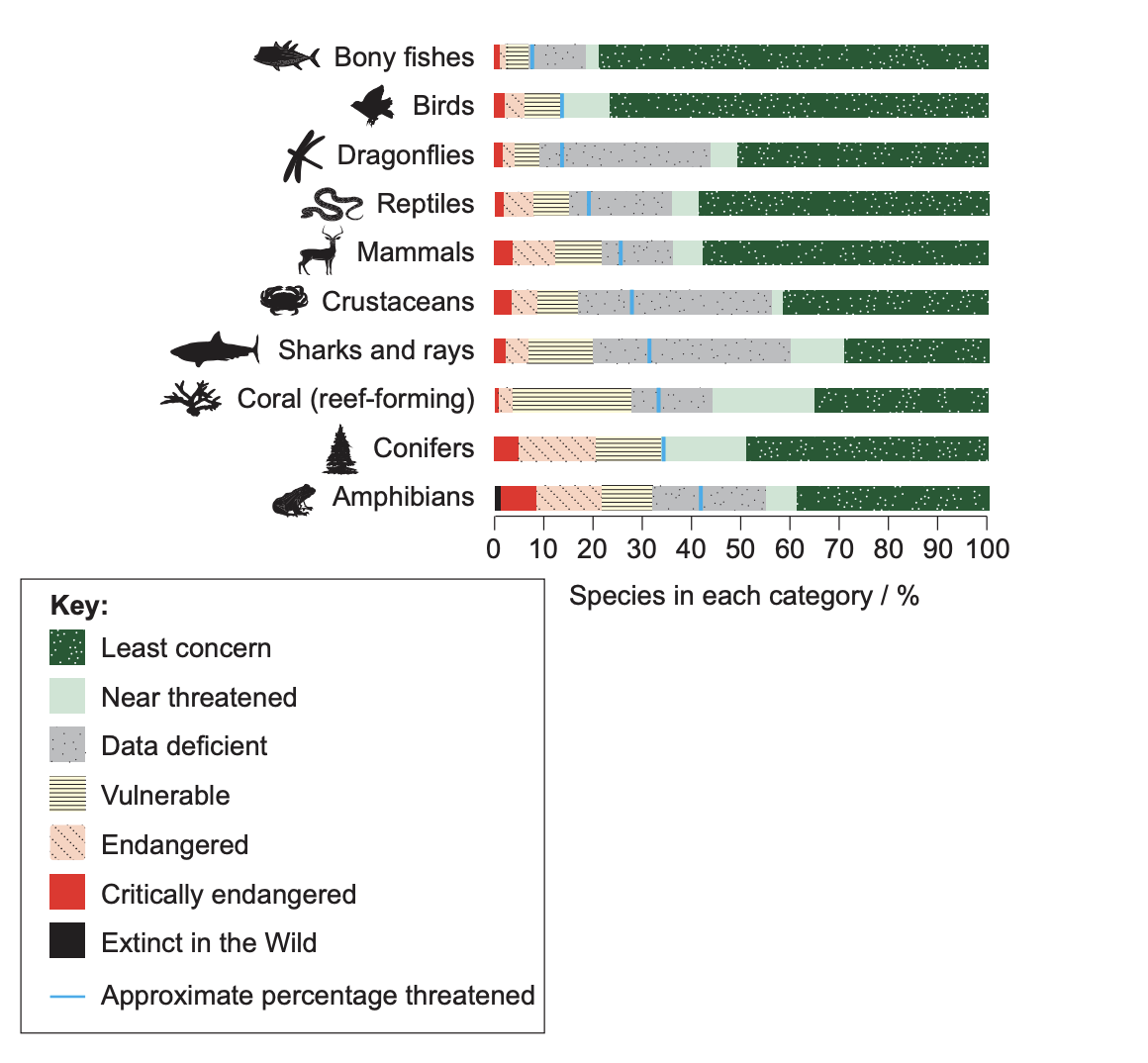
Figure 1(a): Extinction risk levels of species in global biodiversity by category
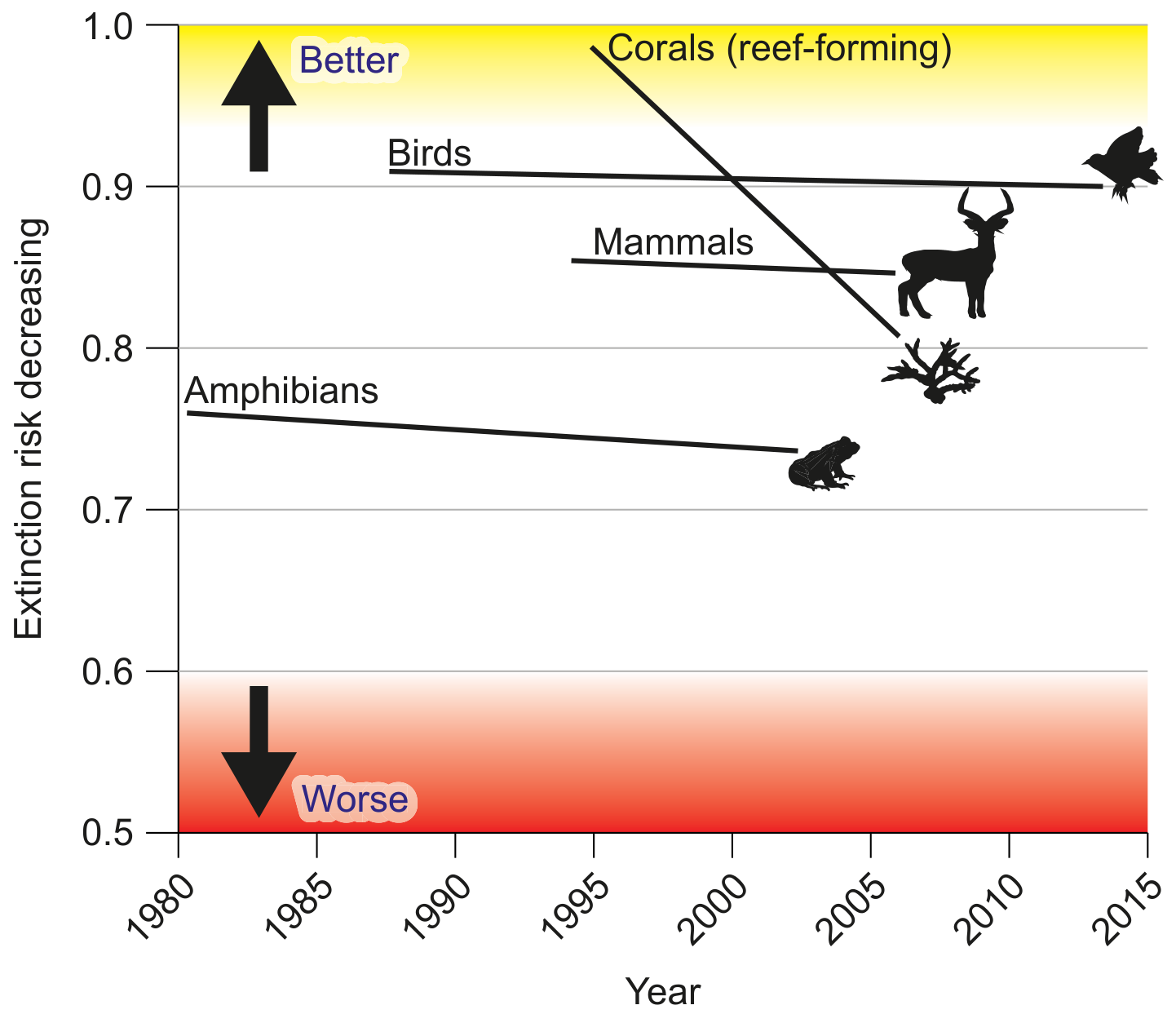
Figure 1(a): Extinction risk levels of species in global biodiversity by category

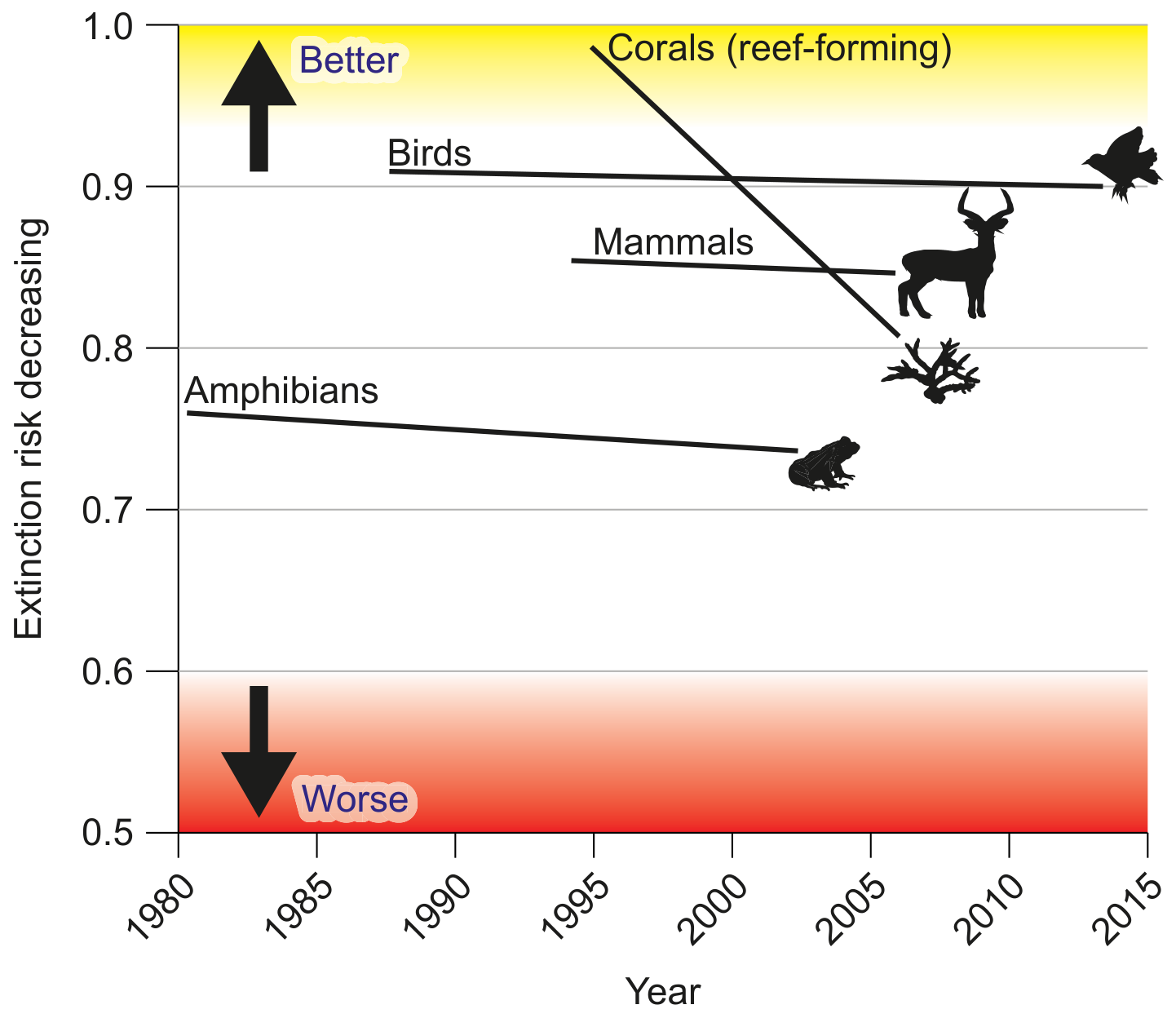
Figure 1(b): Changing species extinction risk by category 1980-2015

Figure 1(b): Changing species extinction risk by category 1980-2015

Question 1(a)

(a)

State the category with the highest percentage of vulnerable species in Figure 1(a).

[ 1 ]

Question 1(b)

(b)

Outline two reasons why Amphibians have the highest percentage of critically endangered species in Figure 1(a).

[ 2 ]

Question 1(c)

(c)

Using Figure 1(a), state the approximate percentage of threatened crustaceans.

[ 1 ]

Question 1(d)

(d)

Describe one reason for the lack of available data for crustaceans.

[ 1 ]

Question 1(e)

(e)

Outline three reasons why the trend for corals is different to the other categories shown in Figure 1(b).

[ 3 ]
Question 1

Question 1(d)

(a)

With reference to Figures 2(b) and 4(a) explain one feature of condors that make them prone to extinction.

Figure 2(b): California condors are scavengers and eat large amounts of carrion.
They are among the world's rarest birds; 2012 counts estimated 405 total, including 226 wild and 179 captive.
They are critically endangered and may travel up to 250 km in search of carrion.
They mature and reproduce slowly, breeding at 6-8 years old and laying only one egg every two years.
They are significant to many Californian Native American groups and traditional myths.

Figure 4(a): main threats include poaching, lead poisoning from carcasses containing lead shot, DDT poisoning, collisions with power lines and wind turbines, egg collecting, habitat destruction, and shooting by farmers who mistakenly believed condors killed farm animals.

[ 2 ]

Question 1

[Maximum number: 3]
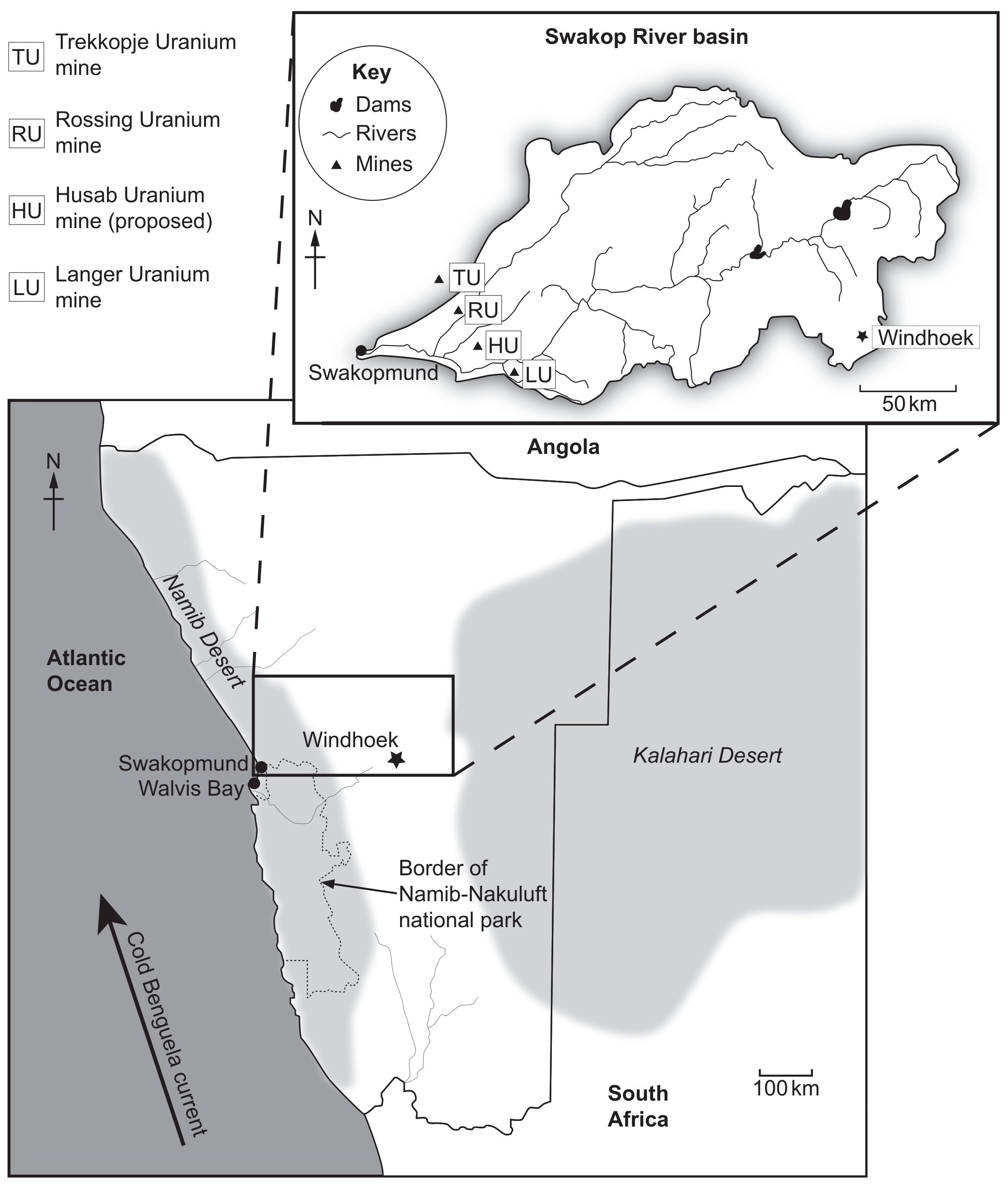
Figure 1(b): Map showing Swakop River in Namibia

Figure 1(b): Map showing Swakop River in Namibia

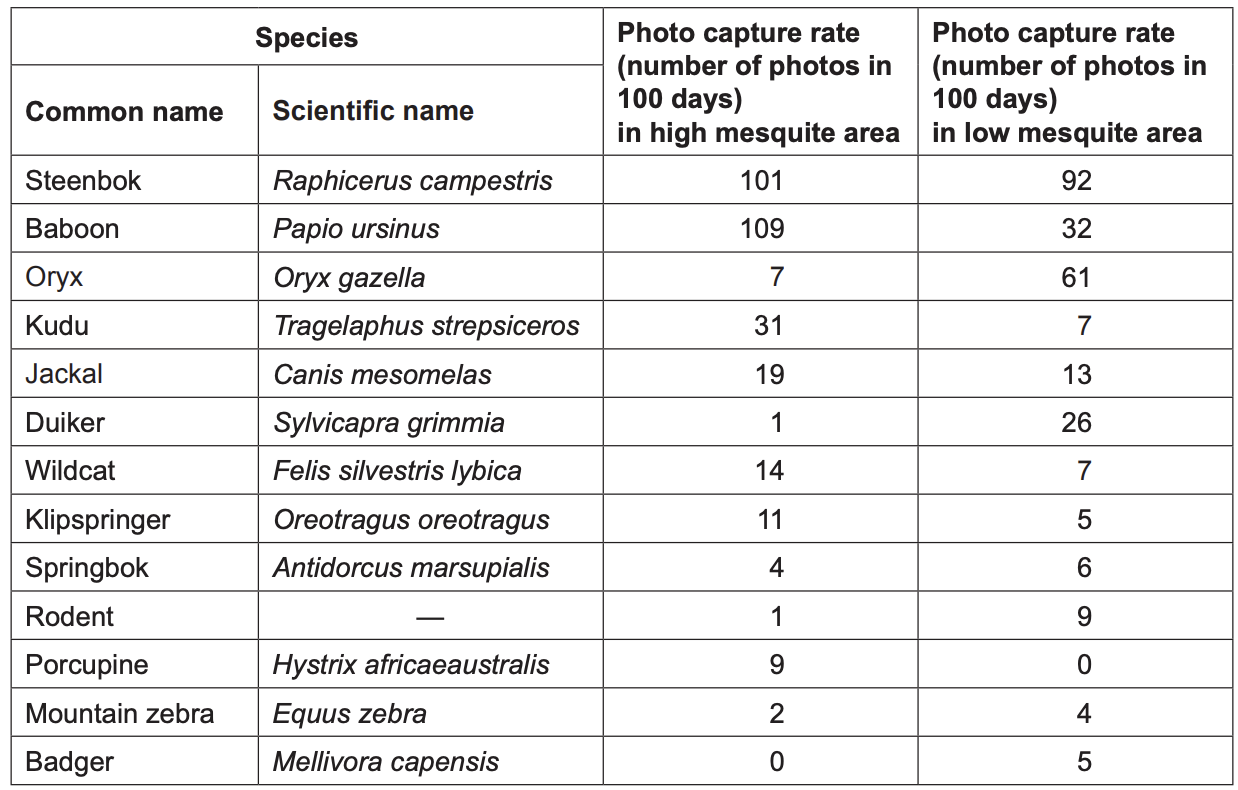
Figure 4(b): Camera trap data for high and low mesquite areas

Figure 4(b): Camera trap data for high and low mesquite areas

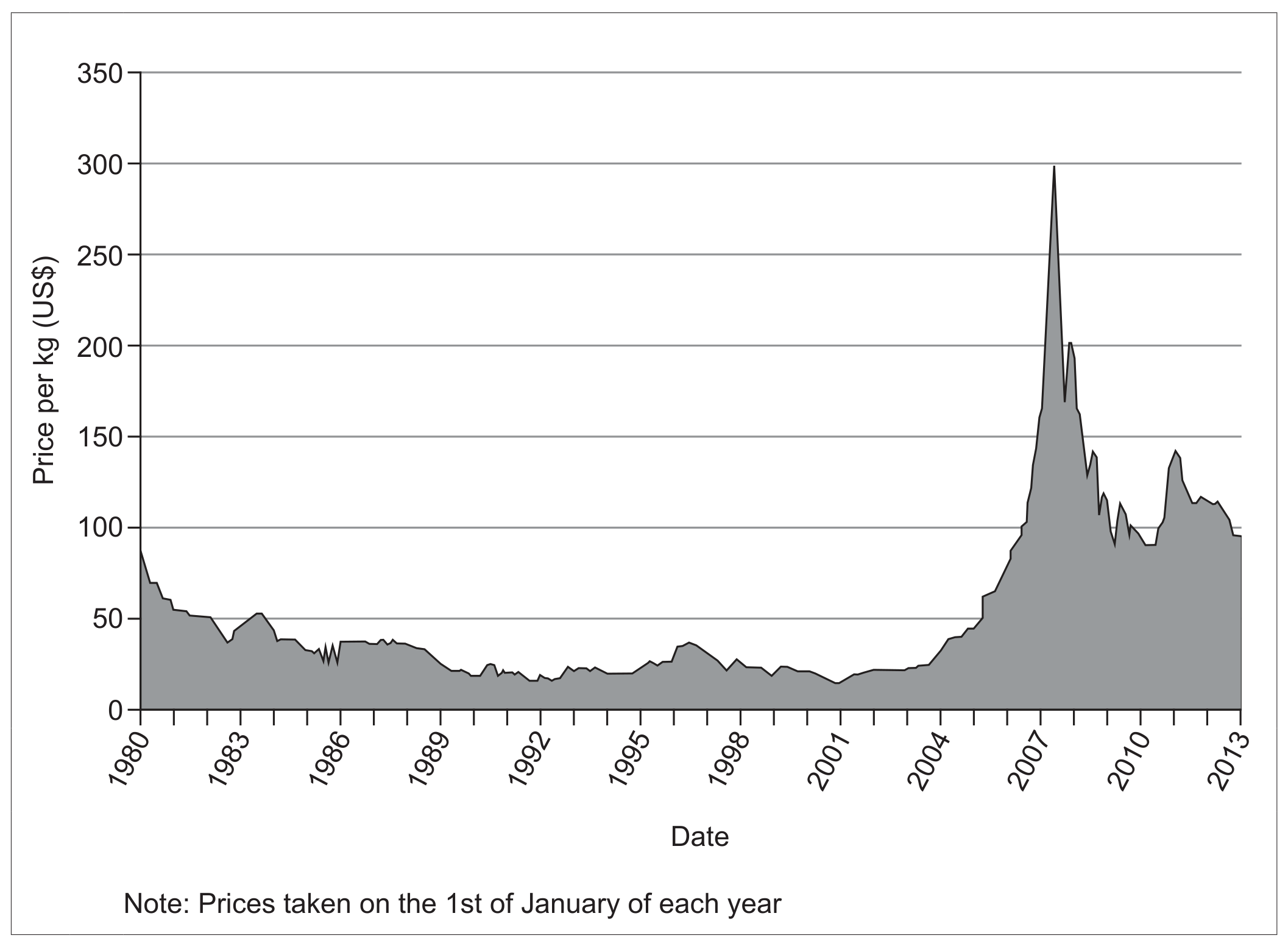
Figure 5(a): Uranium prices from 1980 to 2013

Figure 5(a): Uranium prices from 1980 to 2013

Question 1(f)

(a)

Justify whether or not Mesquite should be cleared from the Swakop River Valley.

Figure 4(a): Mesquite is a non-native species accidentally brought to Namibia from Mexico in 1912.
It spreads rapidly, takes up lots of water and has seeds spread downstream by flash floods.
Studies show negative effects on native vegetation, birds and insects.

Figure 4(c): Mesquite grows rapidly, gives dense shade, produces edible seed pods and is available as firewood.
Harvesting 5% of Mesquite pods could bring in about N$8 million per year, but less than 1% of potential income is currently generated.
Commercial farmers prefer removal because Mesquite harms farms, while poorer communities benefit by collecting/selling pods or using them as animal feed.

[ 3 ]

Question 1

Question 1(b)

Question 1(b)(i)

(a)
(i)

Figure 4 shows the Red List conservation status of eight species from the marshes.

List two factors used to determine a species' Red List conservation status.
1.
2.

Species examples from Iraq marshesConservation status examples
Abu mulletNot evaluated
BunniLeast concern
Smooth-coated otterVulnerable
Basrah reed warblerEndangered
Marbled tealVulnerable

Figure 4: Species found in the Iraq marshes

[ 1 ]

Question 1

Question 1(b)

Question 1(b)(iii)

(a)
(i)

State the purpose of the Red List.

[ 1 ]

Question 1(b)(iv)

(ii)

List two possible threats to albatross species.
1.
2.

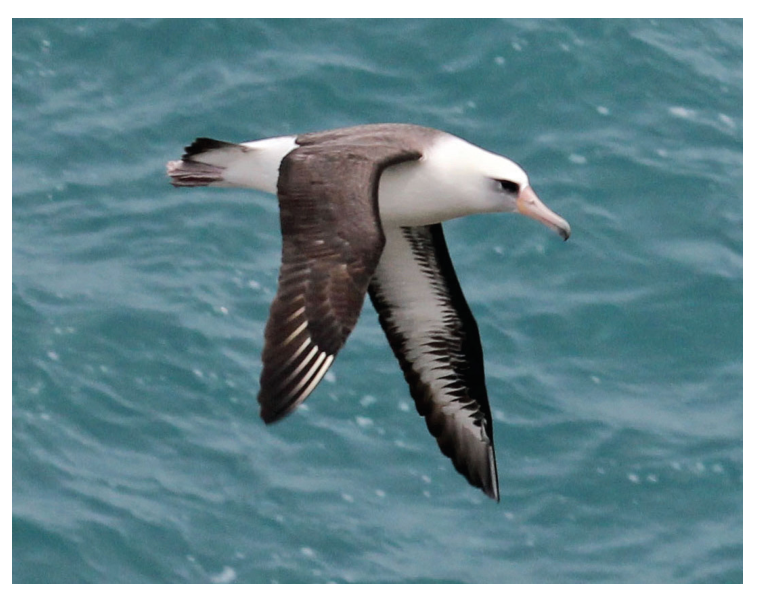
Figure 4(a): Pacific albatross in flight

Figure 4(a): Pacific albatross in flight

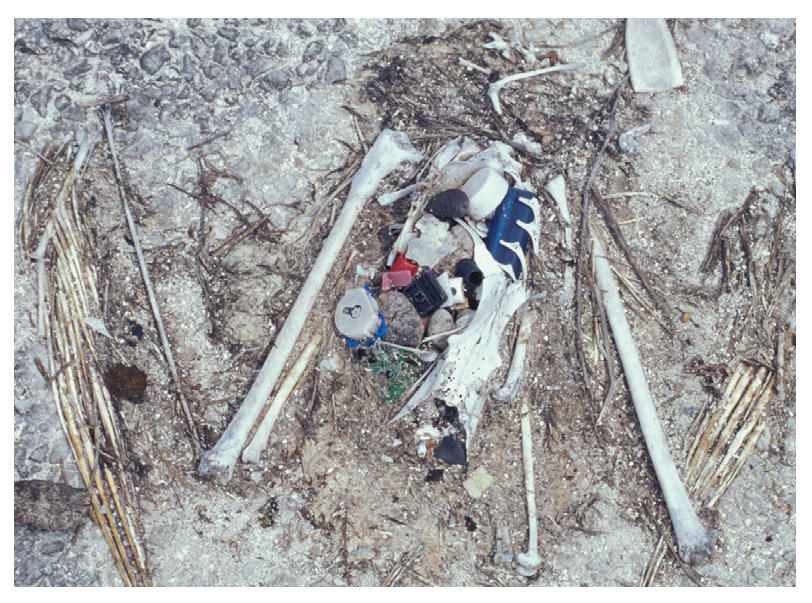
Figure 4(b): Dead albatross chick with plastic garbage in stomach

Figure 4(b): Dead albatross chick with plastic garbage in stomach

Figure 3/4: larger plastic pieces are taken in by fish, sea birds and animals, which may die of starvation.
One study estimates around 1 million sea birds, including albatrosses, and 100000 animals are killed by ingestion of plastic or entanglement in plastic fishing nets.
About half of all albatross species are endangered or critically endangered on the Red List.

[ 1 ]

Question 1

[Maximum number: 8]
Figure 1(a): Extinction risk levels in global biodiversity

Figure 1(a): Extinction risk levels in global biodiversity

Figure 1(b): Changing species extinction risk 1980-2015

Figure 1(b): Changing species extinction risk 1980-2015

Question 1(a)

(a)

State the category with the lowest approximate percentage of threatened species in Figure 1(a).

[ 1 ]

Question 1(b)

(b)

Outline two reasons why amphibians have the highest approximate percentage of threatened species, as shown in Figure 1(a).

[ 2 ]

Question 1(c)

(c)

Using Figure 1(a), state the approximate percentage of sharks and rays that are threatened.

[ 1 ]

Question 1(d)

(d)

Describe one reason why there is a lack of available data for sharks and rays.

[ 1 ]

Question 1(e)

(e)

Outline three reasons why the trend for corals is different to the other categories shown in Figure 1(b).

[ 3 ]
Question 1

Question 1(e)

Question 1(e)(i)

(a)
(i)

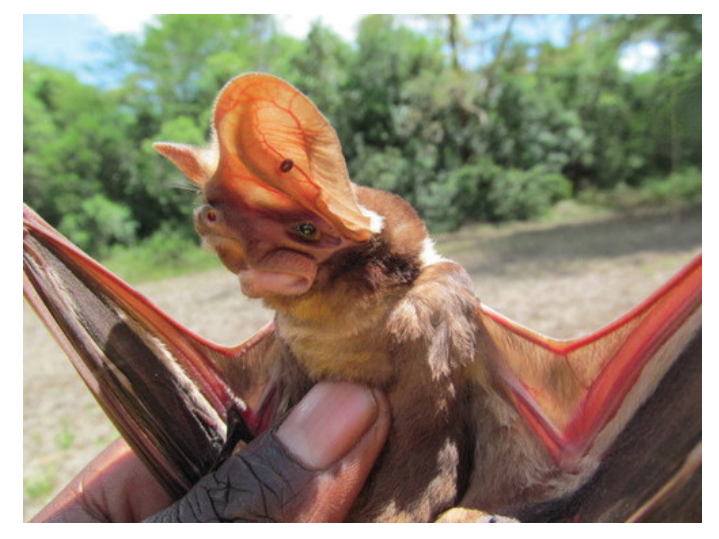
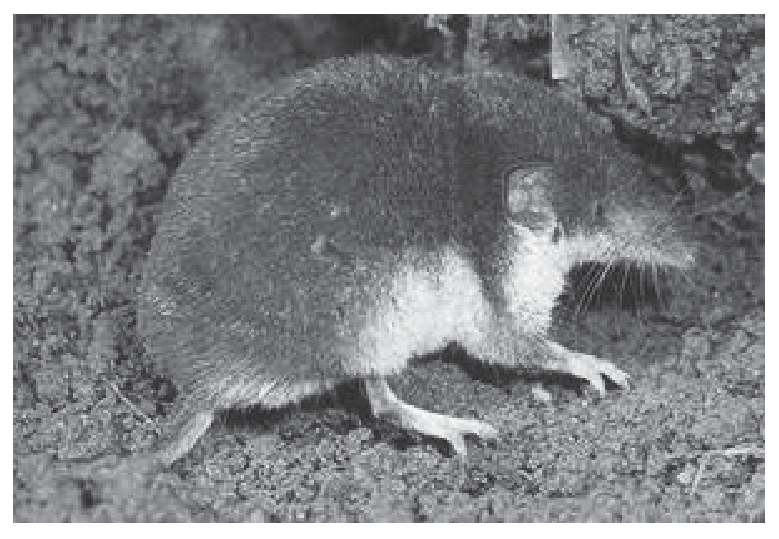
With reference to Figure 8(b), identify two factors that IUCN would have considered in placing Ansell's Shrew in a different Red List category to the Large-eared free-tailed Bat.

Figure 8(b): Large-eared free-tailed bat, near threatened

Figure 8(b): Large-eared free-tailed bat, near threatened

Figure 8(b): Ansell's shrew, endangered

Figure 8(b): Ansell's shrew, endangered

Figure 8(b): examples shown include black rhinoceros (critically endangered), African wild dog (endangered), large-eared free-tailed bat (near threatened), and Ansell's shrew (endangered).

[ 1 ]

Question 2

[Maximum number: 2]
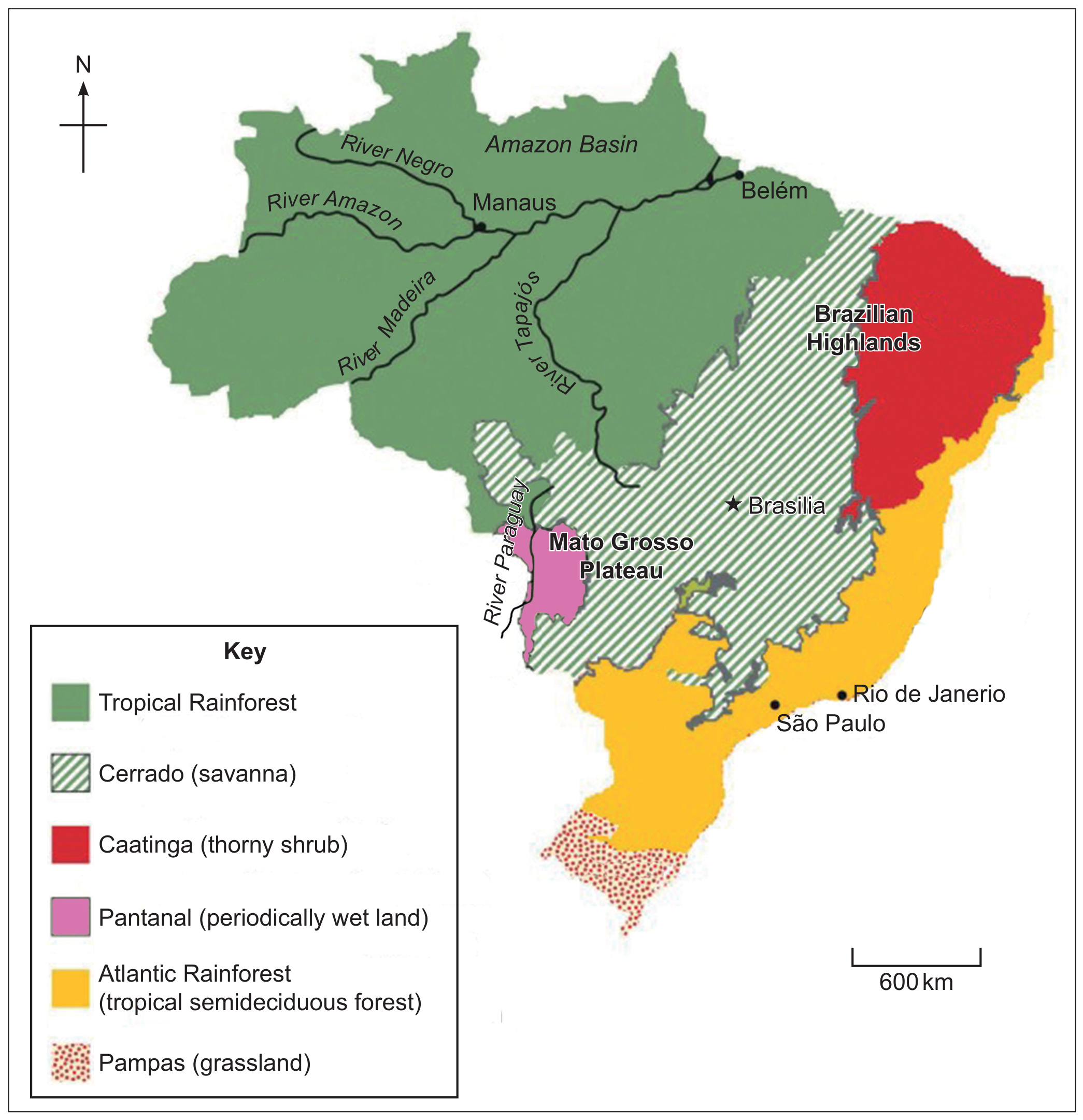
Figure 2: Brazil vegetation map, including Cerrado and Atlantic Rainforest

Figure 2: Brazil vegetation map, including Cerrado and Atlantic Rainforest

Figure 3(a): Fact file on biodiversity in Brazil

- Brazil is the largest country in South America, covering an area of over 8.5 million square kilometers.
- The country contains an exceptionally high number of species, many of which are endemic.
- Estimates of species numbers vary from 1.4 to 2.4 million, of which only a small fraction has been identified.
- Regions of high biodiversity include the Atlantic Rainforest (also known as the Mata Atlântica)
and Cerrado (Savanna).
- The Atlantic Rainforest originally covered about 15% of Brazil mainly along the Brazilian coast as well as extending into neighbouring countries of Paraguay and Argentina. The region comprises of various ecosystems including tropical and subtropical forests.
- The Cerrado region covers about 20% of the land area in central Brazil and extends into the neighbouring countries of Paraguay and Bolivia. It comprises a range of ecosystems including grasslands, savanna regions and forests.

Question image
GroupAtlantic RainforestCerrado
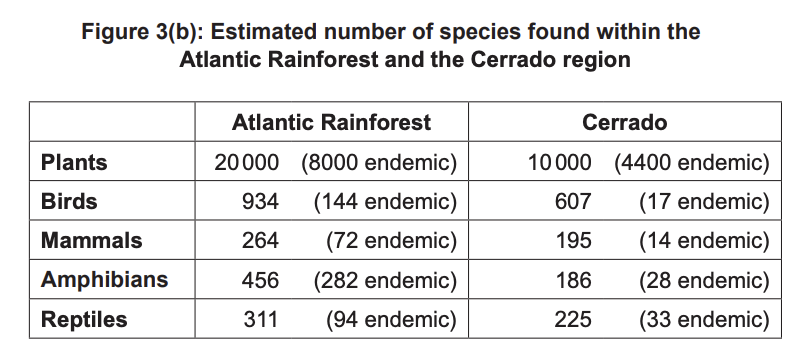
Plants20000 (8000 endemic)10000 (4400 endemic)
Birds934 (144 endemic)607 (17 endemic)
Mammals264 (72 endemic)195 (14 endemic)
Amphibians456 (282 endemic)186 (28 endemic)

Figure 3(b): Estimated species in the Atlantic Rainforest and Cerrado

Question 2(a)

(a)

Figure 3(b) shows biodiversity data for the Atlantic Rainforest and Cerrado region. Identify two factors that may have led to these differences in biodiversity.

[ 2 ]

Question 2

[Maximum number: 1]

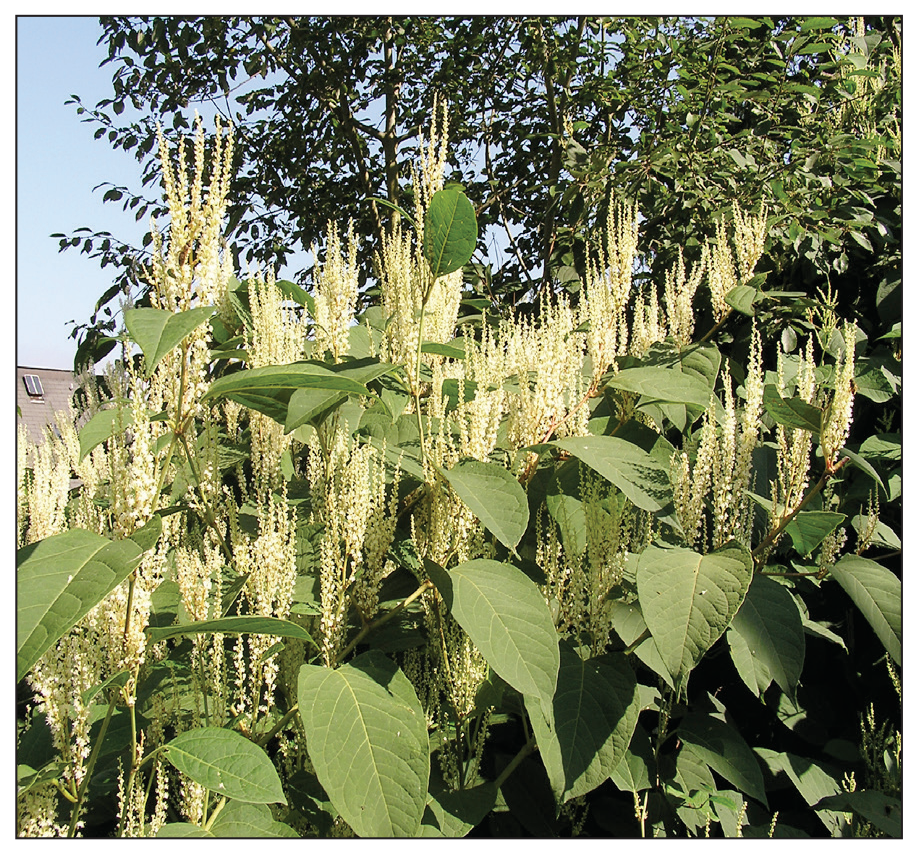
Figure 2 shows Japanese Knotweed (Fallopia japonica), a large plant native to eastern Asia. It is an invasive species that has been successful in colonizing North America and Europe. The most effective method of control of Japanese Knotweed is by herbicide application.

Figure 2

Figure 2

Question 2(b)

(a)

State one impact of an invasive species on the functioning of an aquatic ecosystem.

[ 1 ]

Question 3

[Maximum number: 2]
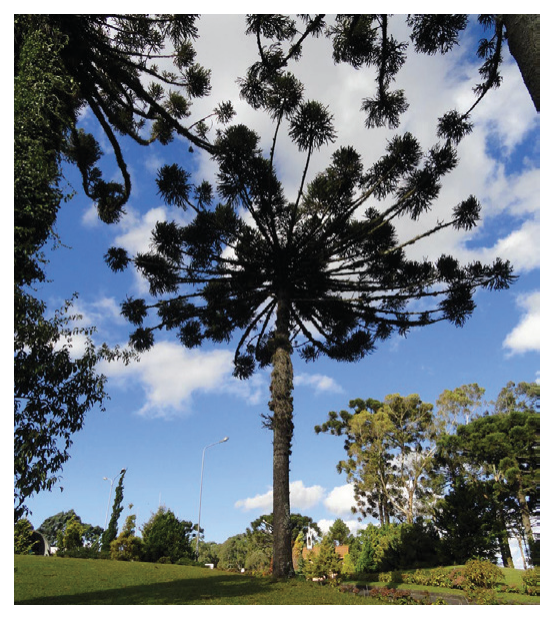
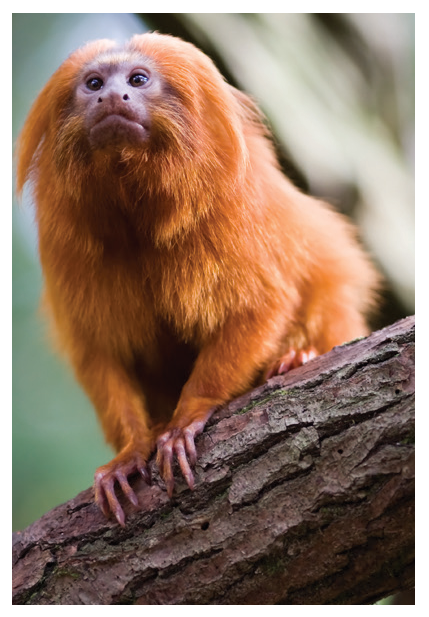
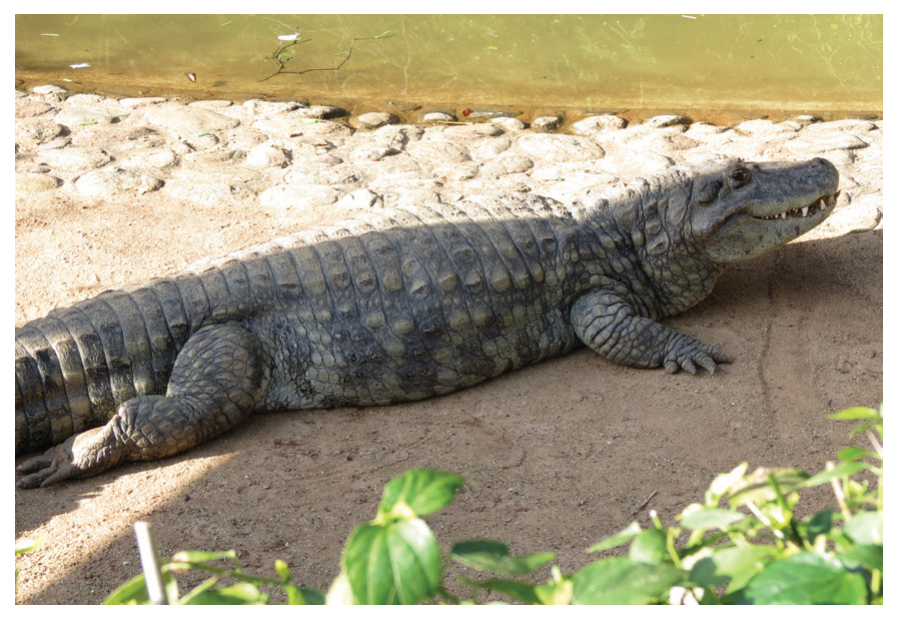
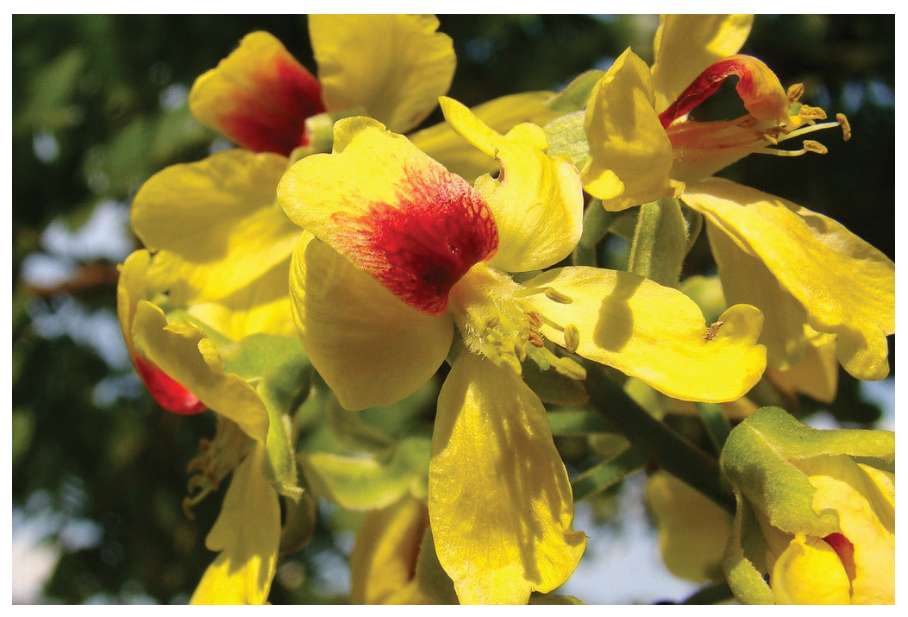
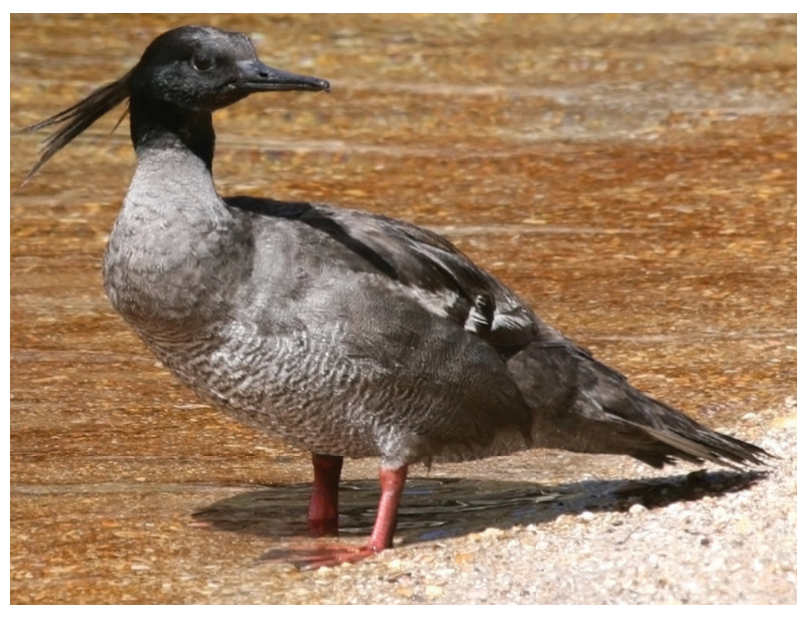
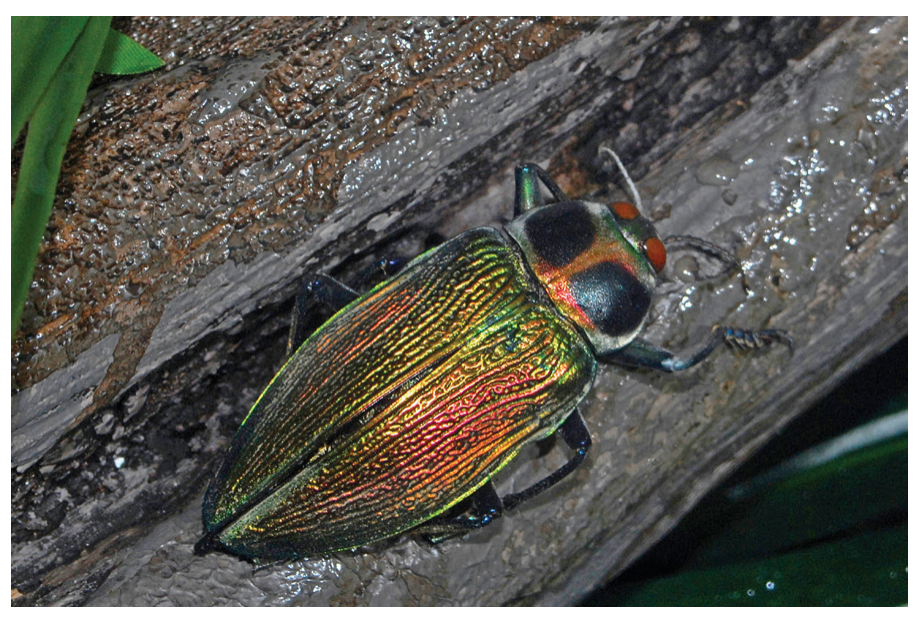
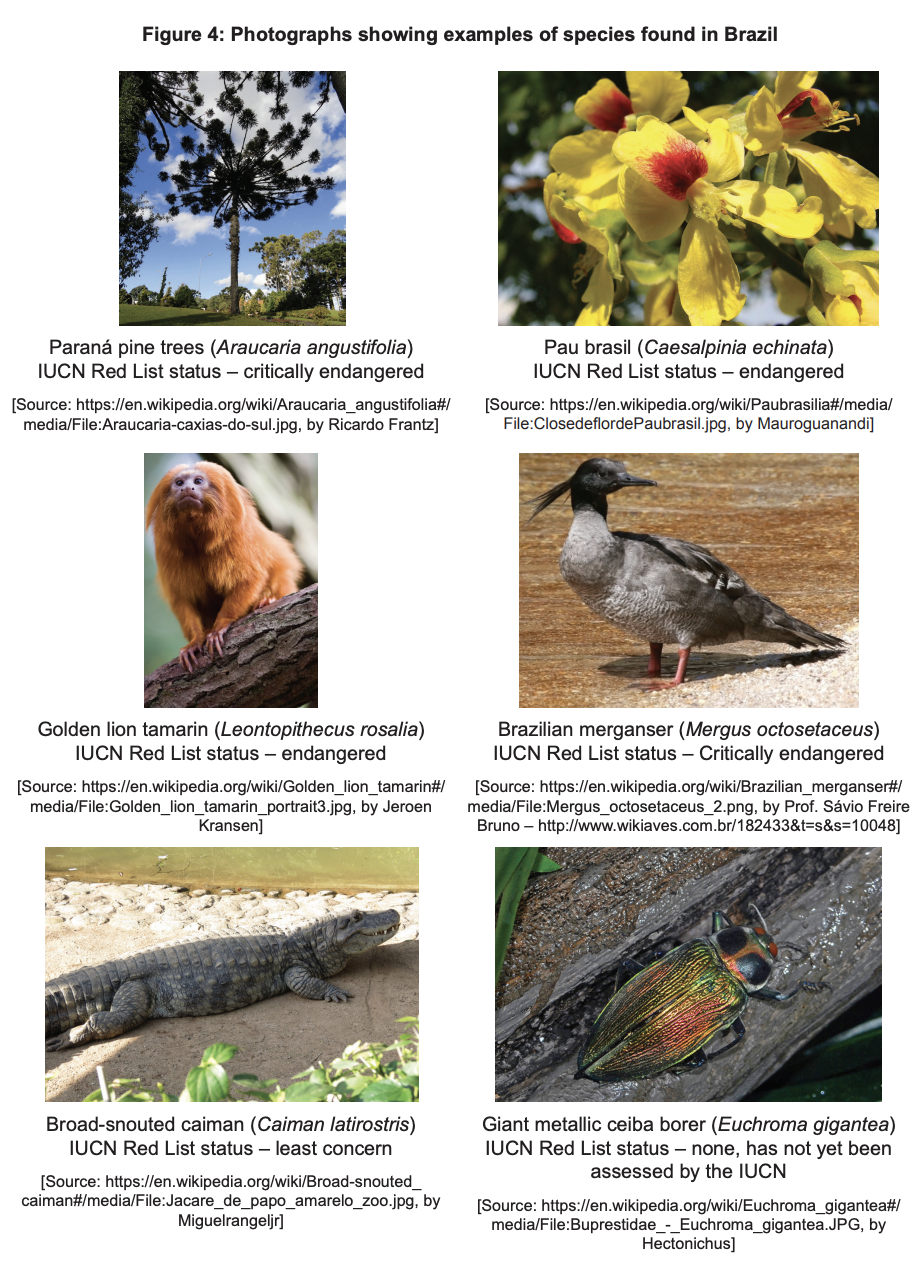
Figure 4: Photographs showing examples of species found in Brazil

Figure 4: Photographs showing examples of species found in Brazil

\section*{Paraná pine trees (Araucaria angustifolia) IUCN Red List status - critically endangered} media/File:Araucaria-caxias-do-sul.jpg, by Ricardo Frantz]

Golden lion tamarin (Leontopithecus rosalia) IUCN Red List status - endangered

Golden lion tamarin (Leontopithecus rosalia) IUCN Red List status - endangered

media/File:Golden_lion_tamarin_portrait3.jpg, by Jeroen Kransen]

Question image

\section*{Broad-snouted caiman (Caiman latirostris) IUCN Red List status - least concern} caiman\#/media/File:Jacare_de_papo_amarelo_zoo.jpg, by Miguelrangeljr]

Question image

\section*{Pau brasil (Caesalpinia echinata) IUCN Red List status - endangered} File:ClosedeflordePaubrasil.jpg, by Mauroguanandi]

Brazilian merganser (Mergus octosetaceus) IUCN Red List status - Critically endangered

Brazilian merganser (Mergus octosetaceus) IUCN Red List status - Critically endangered

media/File:Mergus_octosetaceus_2.png, by Prof. Sávio Freire Bruno - http://www.wikiaves.com.br/182433\&t=s\&s=10048]

Giant metallic ceiba borer (Euchroma gigantea) IUCN Red List status - none, has not yet been assessed by the IUCN

Giant metallic ceiba borer (Euchroma gigantea) IUCN Red List status - none, has not yet been assessed by the IUCN

media/File:Buprestidae_-_Euchroma_gigantea.JPG, by Hectonichus]

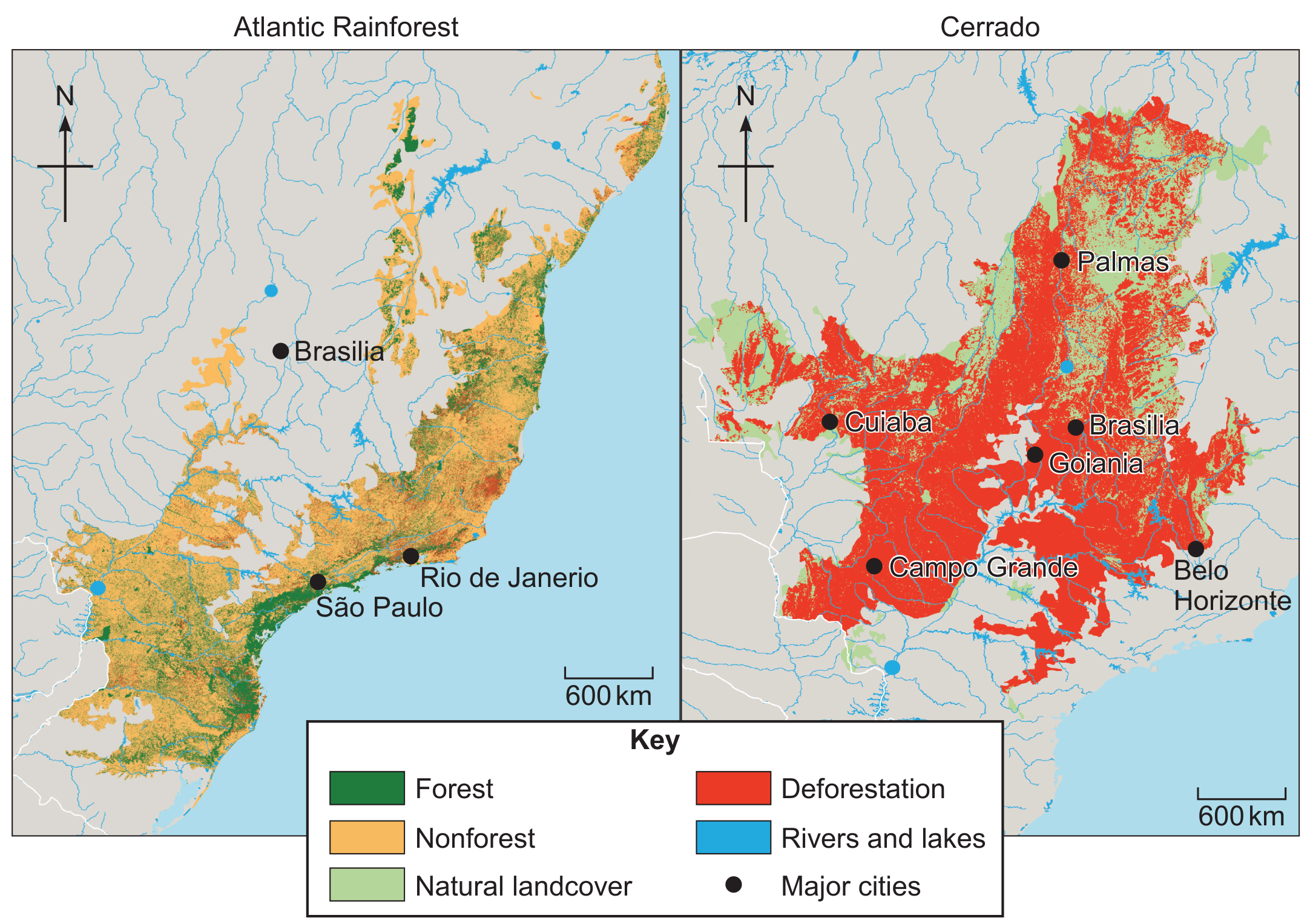
Figure 6(b): Deforestation in the Atlantic Rainforest and the Cerrado

Figure 6(b): Deforestation in the Atlantic Rainforest and the Cerrado

the_atlantic_forest/

Cerrado map: http://wwf.panda.org/what_we_do/footprint/agriculture/soy/soyreport/soy_and_deforestation/the_cerrado/

Question image

Parana pine: critically endangered. Golden lion tamarin: endangered. Broad-snouted caiman: least concern. Pau brasil: endangered. Brazilian merganser: critically endangered. Giant metallic ceiba borer: not yet assessed by the IUCN.

Only about 10% of the original Atlantic Rainforest and around 20% of the original Cerrado vegetation remain. Losses have resulted from land clearance for crops such as sugar cane, coffee, soy beans and biofuel crops; cattle ranching; forest plantations; urban expansion including Rio de Janeiro, Sao Paulo and Brasilia; infrastructure development such as road building; and commercial logging. Organizations support projects to restore forest habitats and encourage sustainable use of natural forest resources.

With reference to the species listed in Figure 4, identify two factors that may have contributed to their status given on the IUCN Red List.

0 selected