EduNinja

IB Chemistry HL3.2 Functional groups: Organic compoundsQuestion Bank

Question 1

[Maximum number: 6]

Urea, (H2 N)2CO\left(\mathrm{H}_{2} \mathrm{~N}\right)_{2} \mathrm{CO}, is excreted by mammals and can be used as a fertilizer.

Question 1(j)

(a)

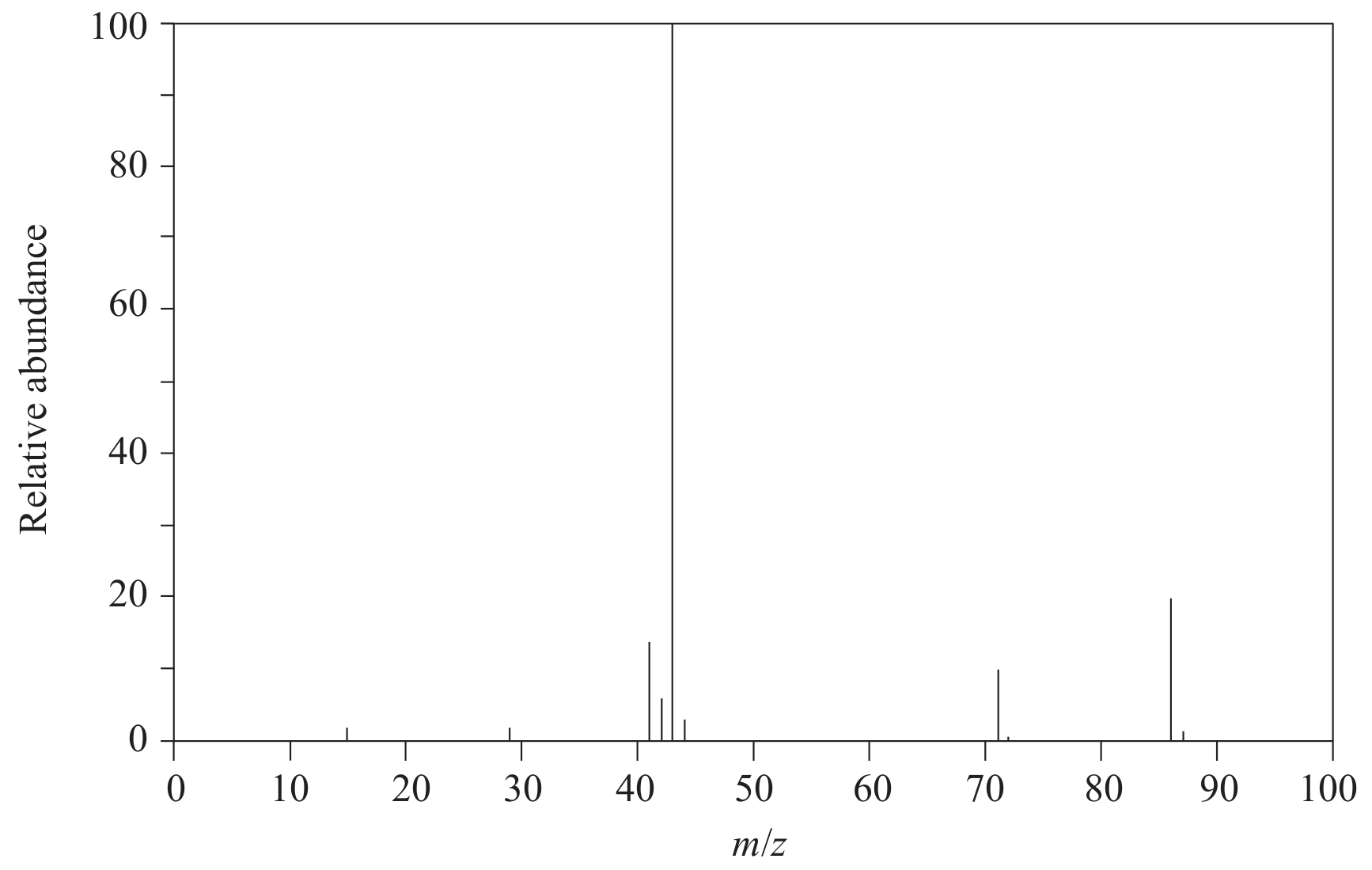
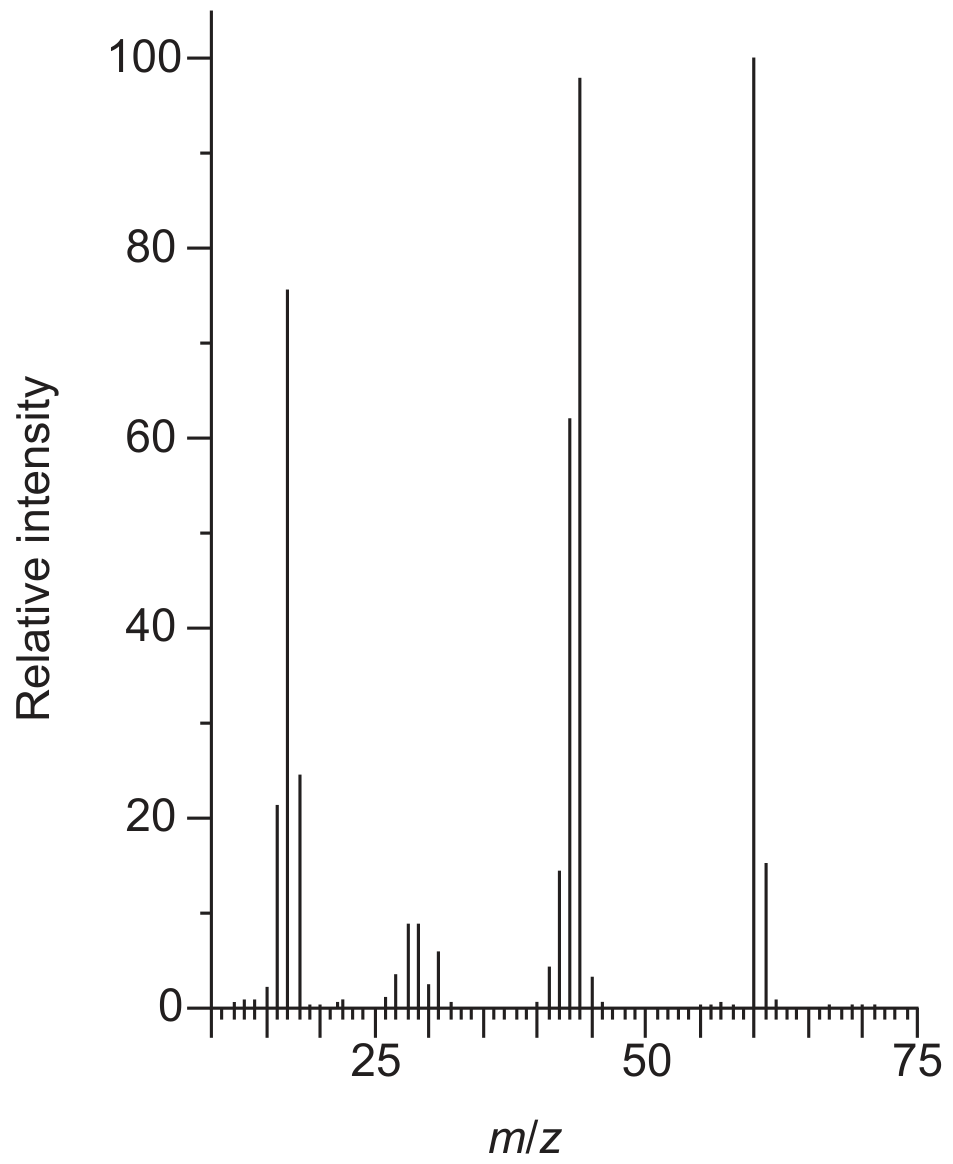
The mass spectrum of urea is shown below.
Question image

Reference Database Number 69, Eds. P.J. Linstrom and W.G. Mallard, National Institute of Standards and Technology, Gaithersburg MD, 20899, doi:10.18434/T4D303, (retrieved May 31, 2018).]

Identify the species responsible for the peaks at m / z=60 and 44 .

60:

44:

[ 2 ]

Question 1(k)

(b)

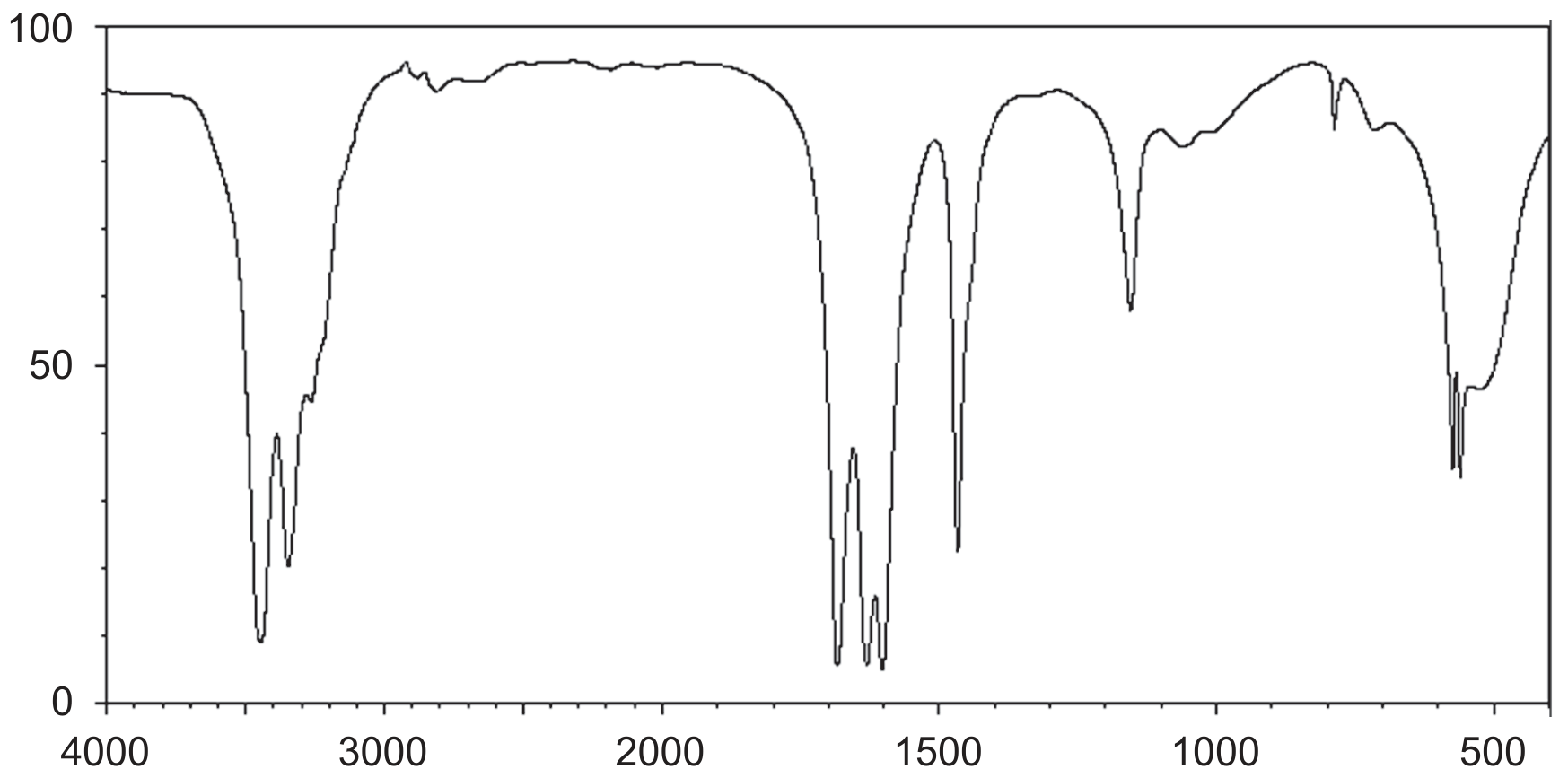
The IR spectrum of urea is shown below.
Question image

Identify the bonds causing the absorptions at 3450 cm13450 \mathrm{~cm}^{-1} and 1700 cm11700 \mathrm{~cm}^{-1} using section 26 of the data booklet.

3450 cm13450 \mathrm{~cm}^{-1} :

1700 cm11700 \mathrm{~cm}^{-1} :

[ 2 ]

Question 1(l)

Question 1(l)(i)

(c)
(i)

Predict the number of signals in the 1HNMR{ }^{1} \mathrm{H} \mathrm{NMR} spectrum of urea.

[ 1 ]

Question 1(l)(ii)

(ii)

Predict the splitting pattern of the 1H{ }^{1} \mathrm{H} NMR spectrum of urea.

[ 1 ]
Question 1

[Maximum number: 4]

Chlorine undergoes many reactions.

Question 1(d)

Question 1(d)(iv)

(a)
(i)

Ethoxyethane (diethyl ether) can be used as a solvent for this conversion.

Draw the structural formula of ethoxyethane.

[ 1 ]

Question 1(d)(v)

(ii)

Deduce the number of signals and chemical shifts with splitting patterns in the 1H{ }^{1} \mathrm{H} NMR spectrum of ethoxyethane. Use section 27 of the data booklet.

[ 3 ]

Question 1

[Maximum number: 2]

Ethane-1,2-diol, HOCH2CH2OH\mathrm{HOCH}_{2} \mathrm{CH}_{2} \mathrm{OH}, has a wide variety of uses including the removal of ice from aircraft and heat transfer in a solar cell.

Question 1(f)

(a)

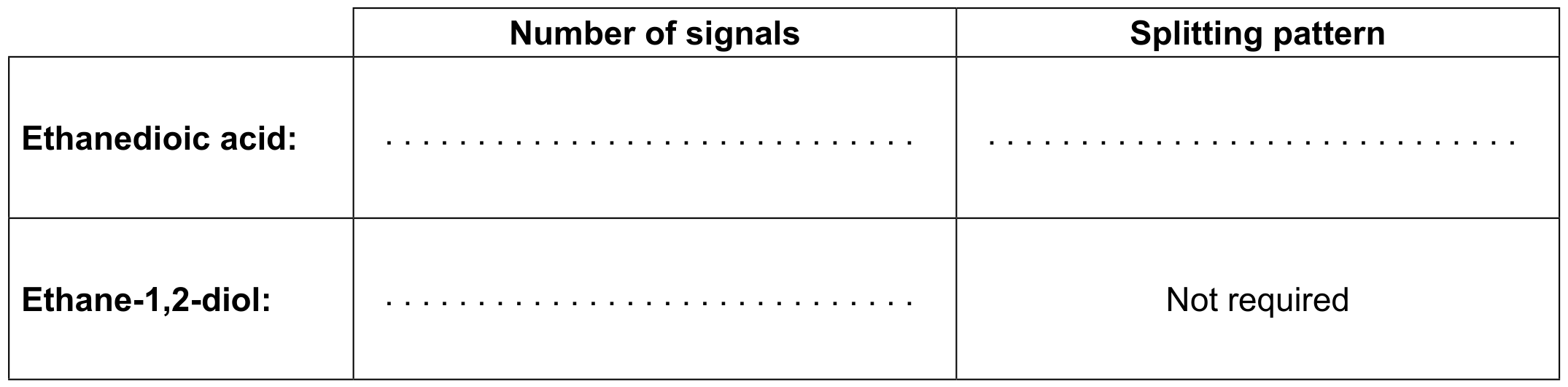
Predict the 1HNMR{ }^{1} \mathrm{HNMR} data for ethanedioic acid and ethane-1,2-diol by completing the table.

Table
[ 2 ]

Question 1

[Maximum number: 6]

A4.406 g sample of a compound containing only C, H and O was burnt in excess oxygen. 8.802 g of CO2\mathrm{CO}_{2} and 3.604 g of H2O\mathrm{H}_{2} \mathrm{O} were produced.

Question 1(c)

(a)

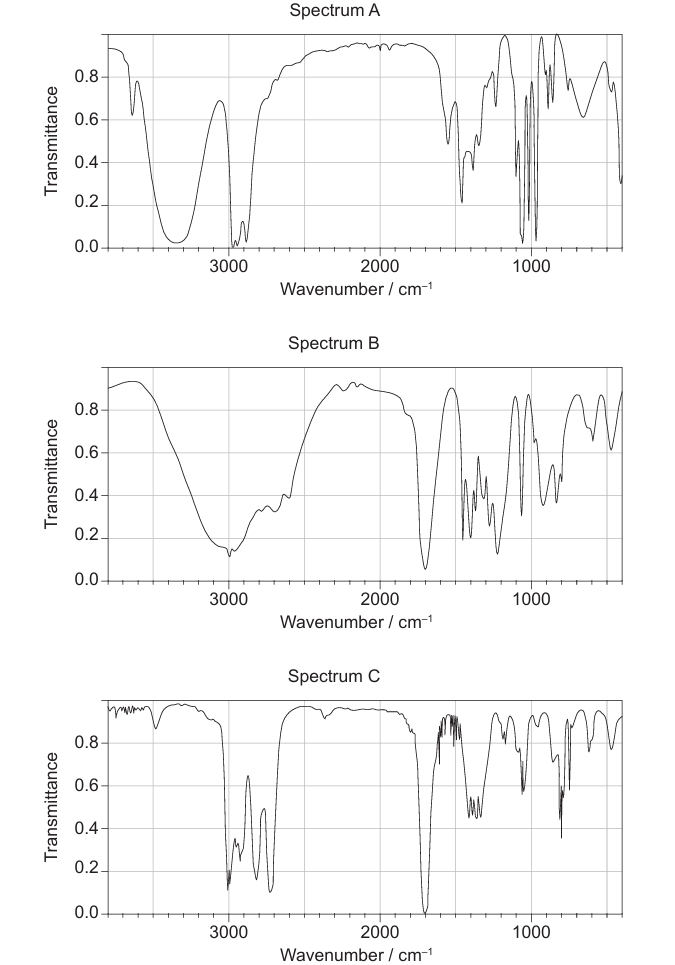
The following spectrums show the Infrared spectra of propan-1-ol, propanal and propanoic acid.

Question image

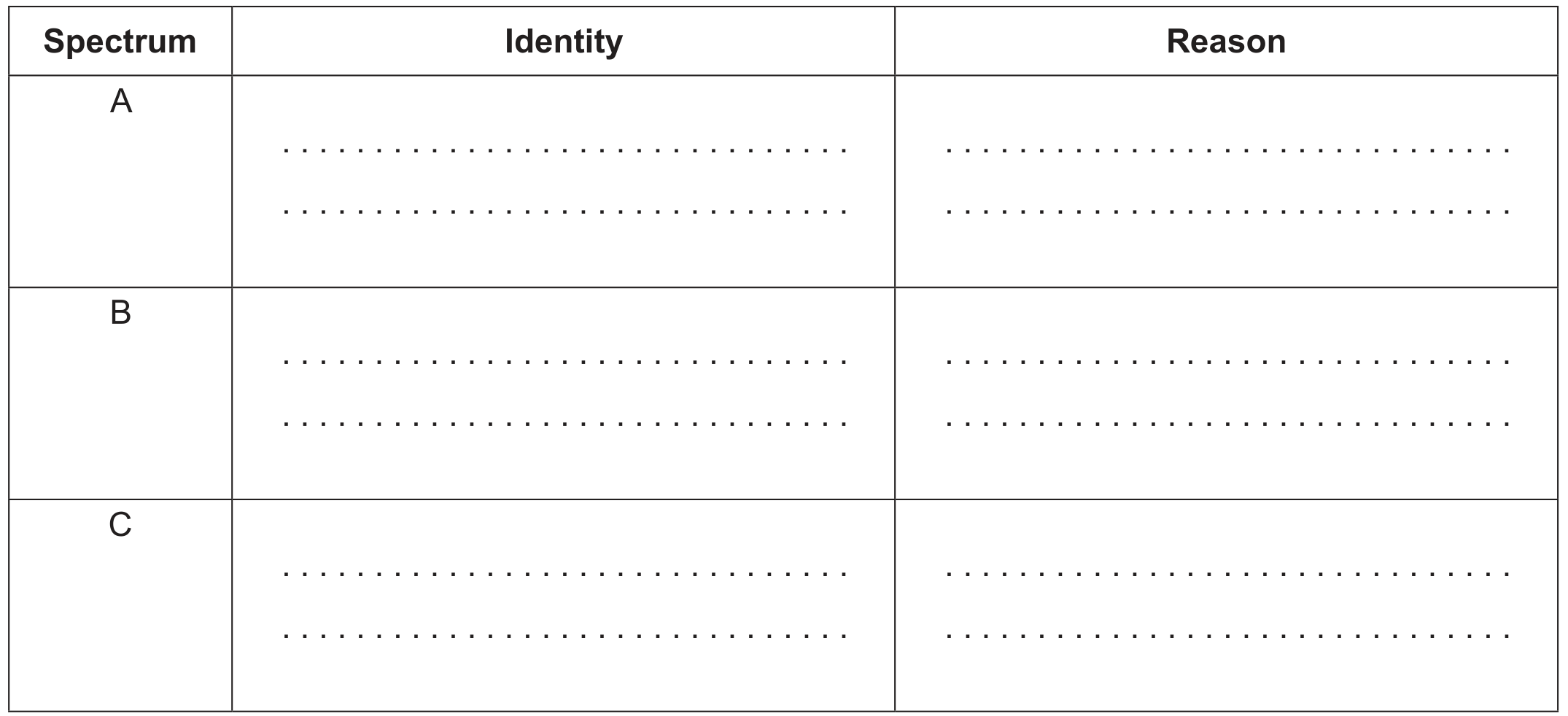
Identify each compound from the spectra given, use absorptions from the range of 1700 cm11700 \mathrm{~cm}^{-1} to 3500 cm13500 \mathrm{~cm}^{-1}. Explain the reason for your choice, referring to section 26 of the data booklet.

Table
[ 3 ]

Question 1(d)

(b)

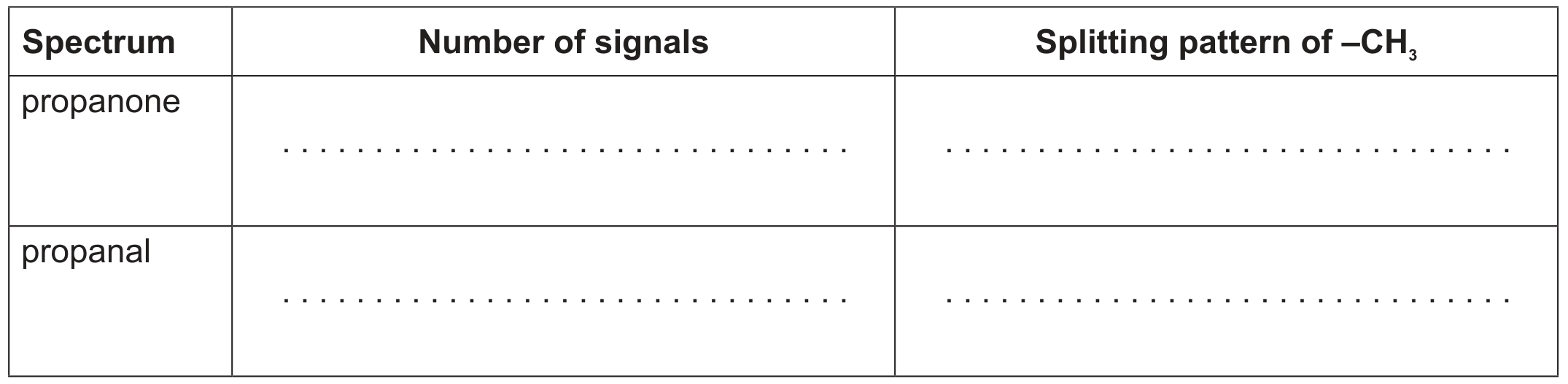
Predict the number of 1HNMR{ }^{1} \mathrm{H} \mathrm{NMR} signals, and splitting pattern of the CH3-\mathrm{CH}_{3} seen for propanone (CH3COCH3)\left(\mathrm{CH}_{3} \mathrm{COCH}_{3}\right) and propanal (CH3CH2CHO)\left(\mathrm{CH}_{3} \mathrm{CH}_{2} \mathrm{CHO}\right).

Table
[ 2 ]

Question 1(e)

(c)

Predict the fragment that is responsible for a m / z of 31 in the mass spectrum of propan-1-ol. Use section 28 of the data booklet.

[ 1 ]

Question 1

[Maximum number: 14]

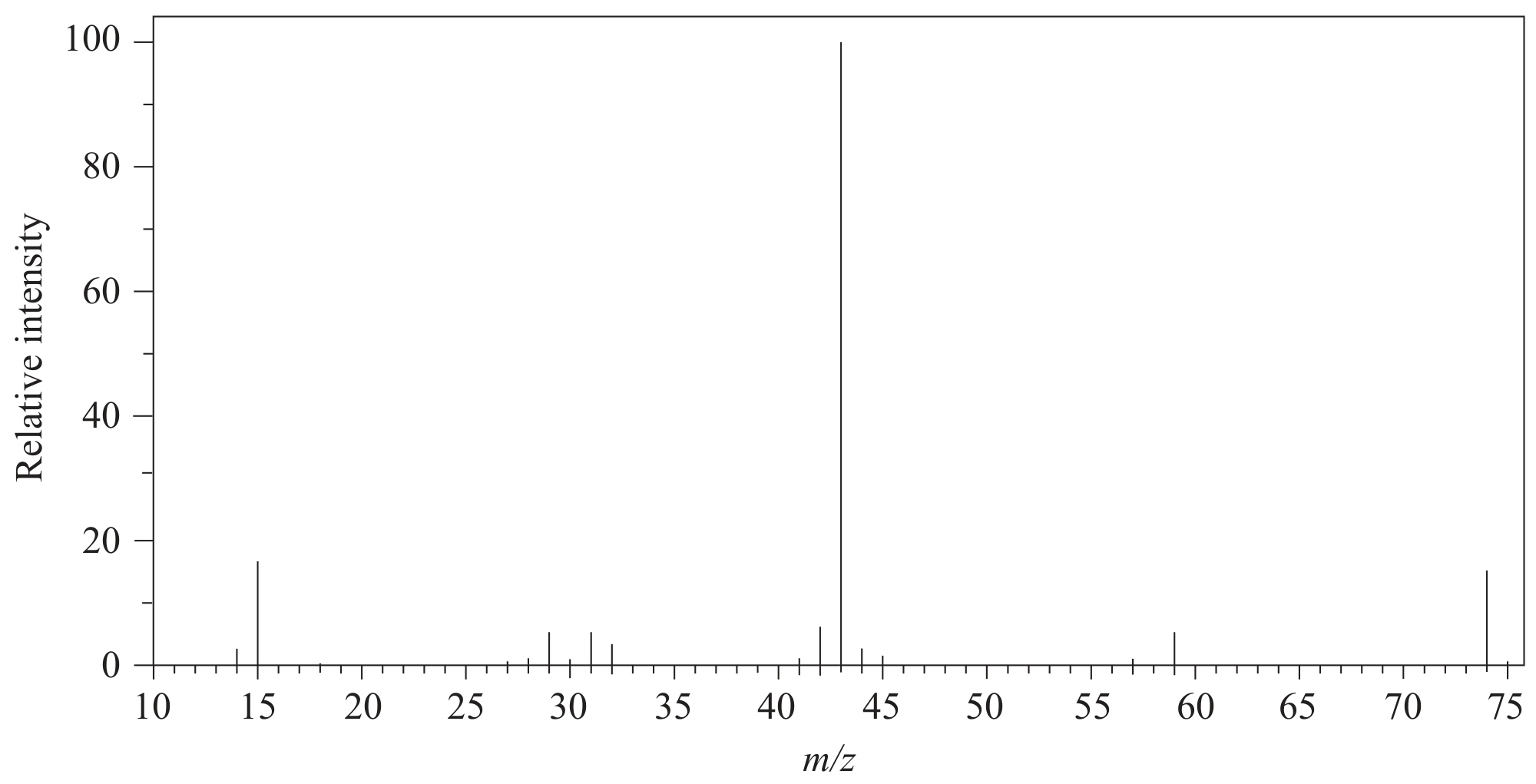
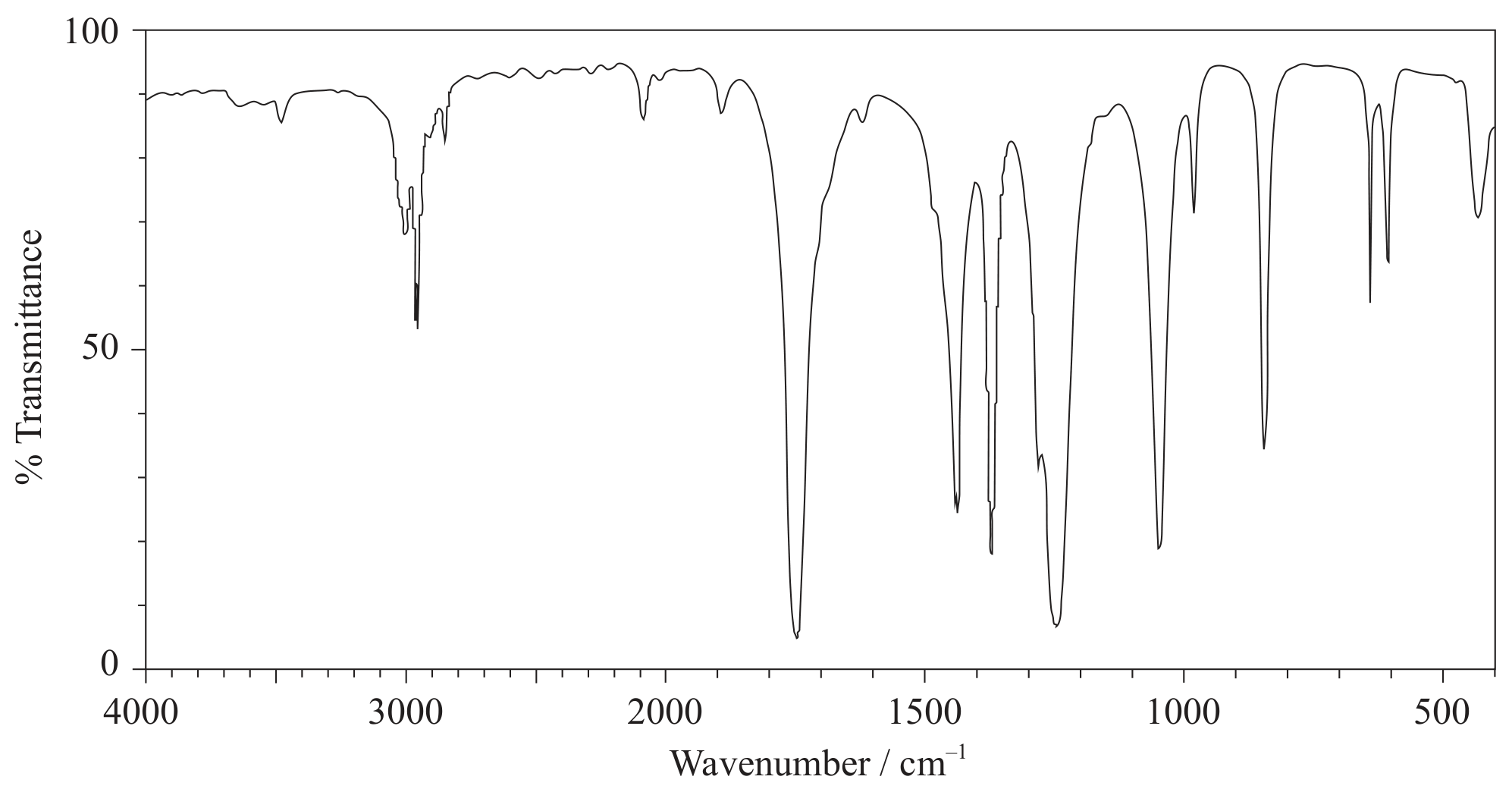
The mass spectrum and infrared (IR) spectrum of a compound are shown below.

Question image
Question image

Question 1(a)

Question 1(a)(i)

(a)
(i)

State the information about this particular compound that can be derived from the mass spectrum and outline how it is found.

[ 2 ]

Question 1(a)(ii)

(ii)

Suggest how the fragment with m / z=43 is formed from the original molecule.

[ 1 ]

Question 1(b)

Question 1(b)(i)

(b)
(i)

Use the IR spectrum in the region 16001800 cm11600-1800 \mathrm{~cm}^{-1} to deduce one functional group that is present in the compound and one group that is absent.

Present:
Absent:

[ 2 ]

Question 1(b)(ii)

(ii)

The molecular formula of the compound is C3H6O2\mathrm{C}_{3} \mathrm{H}_{6} \mathrm{O}_{2}. Explain, with reference to another region of the IR spectrum, why the compound could not be propanoic acid, CH3CH2COOH\mathrm{CH}_{3} \mathrm{CH}_{2} \mathrm{COOH}.

[ 2 ]

Question 1(b)(iii)

(iii)

Deduce the structures of two possible isomers of propanoic acid consistent with the IR spectrum.

[ 2 ]

Question 1(c)

(c)

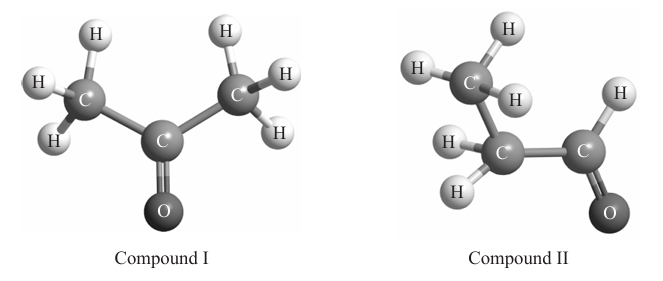
1{ }^{1} HNMR spectroscopy is often very useful in distinguishing between closely related compounds such as the ones shown below.

Question image

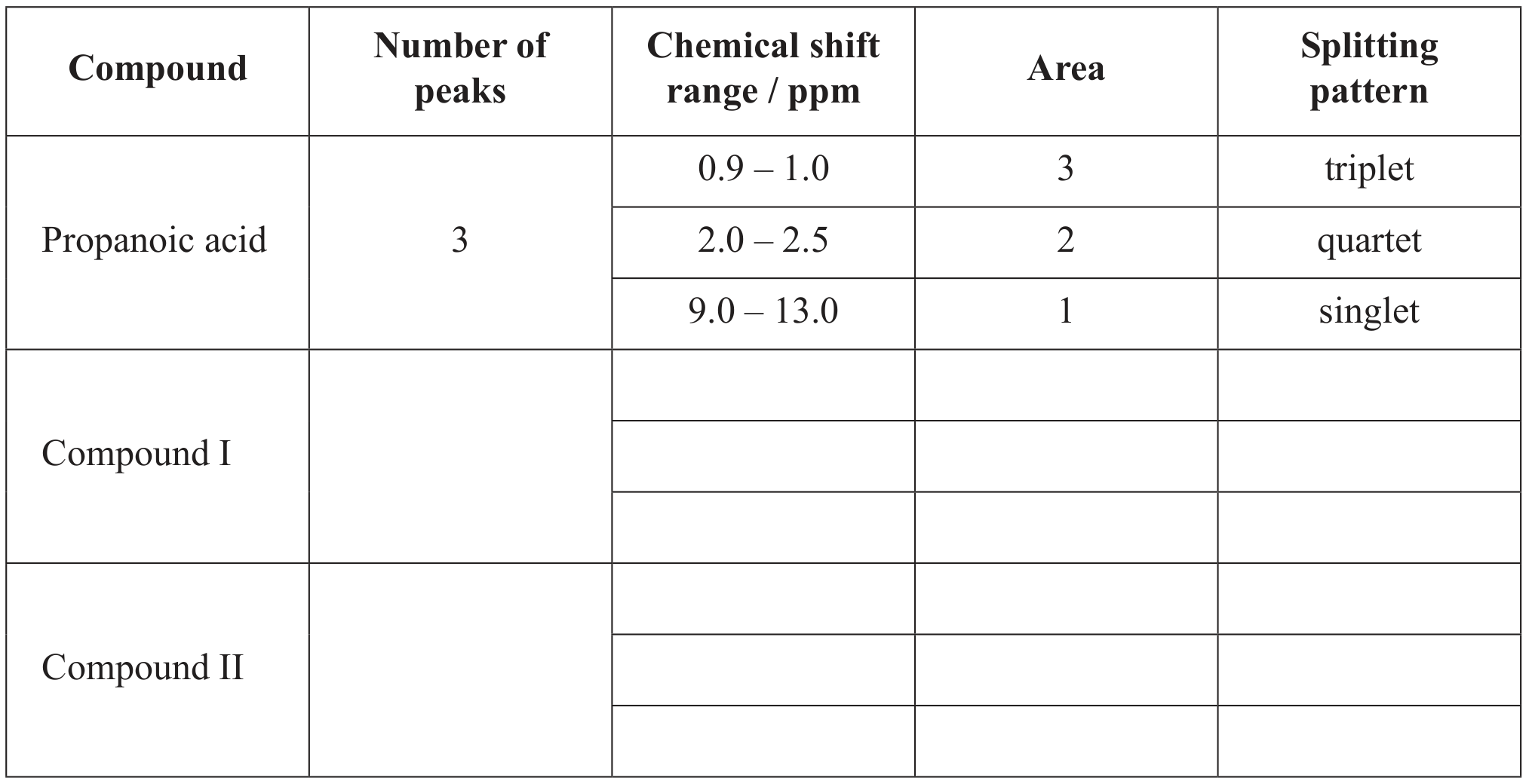
Deduce the 1{ }^{1} HNMR spectra you would expect for each compound and complete the table below. (The answers for propanoic acid are given as a guide.)

Note that some of the boxes may be blank.

Table
[ 5 ]

Question 1

[Maximum number: 1]

Methanoic acid (HCOOH) is the first member of the homologous series of carboxylic acids.

Question 1(a)

(a)

Outline what is meant by the term "homologous series".

[ 1 ]

Question 1

[Maximum number: 5]

Ethyne, C2H2\mathrm{C}_{2} \mathrm{H}_{2}, reacts with oxygen in welding torches.

Question 1(c)

(a)

Ethyne reacts with steam.

C2H2( g)+H2O( g)C2H4O( g)\mathrm{C}_{2} \mathrm{H}_{2}(\mathrm{~g})+\mathrm{H}_{2} \mathrm{O}(\mathrm{~g}) \rightarrow \mathrm{C}_{2} \mathrm{H}_{4} \mathrm{O}(\mathrm{~g})

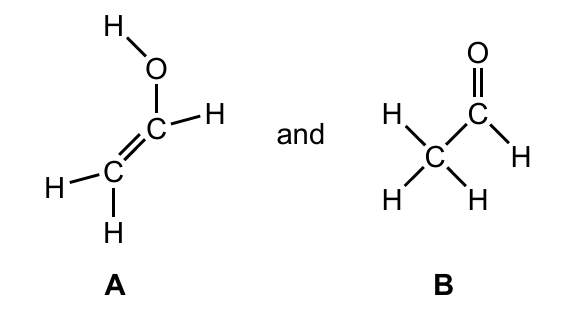
Two possible products are:

Question image
[ 5 ]

Question 1(c)(i)

(i)

State the name of product B, applying IUPAC rules.

[ 1 ]

Question 1(c)(iv)

(ii)

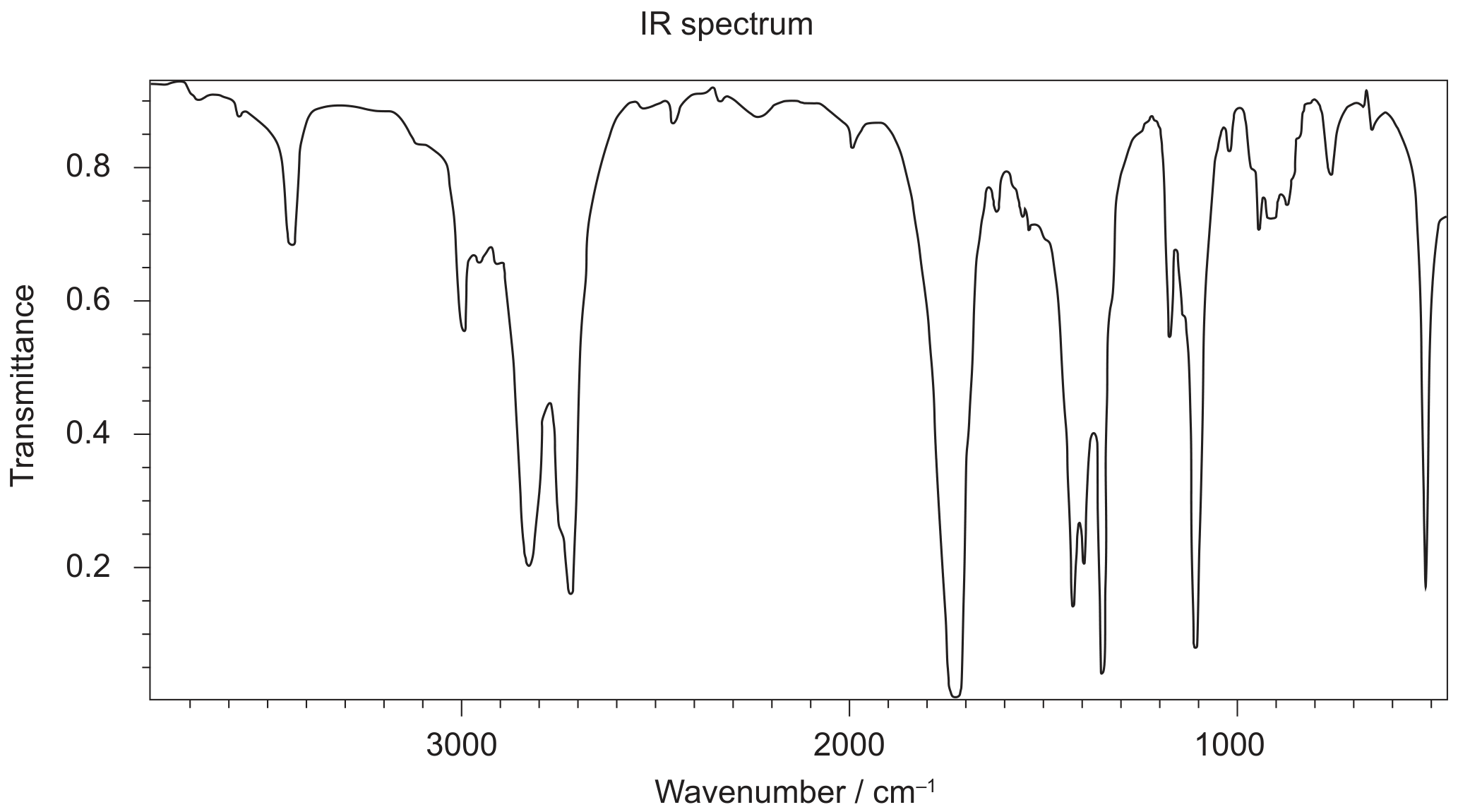
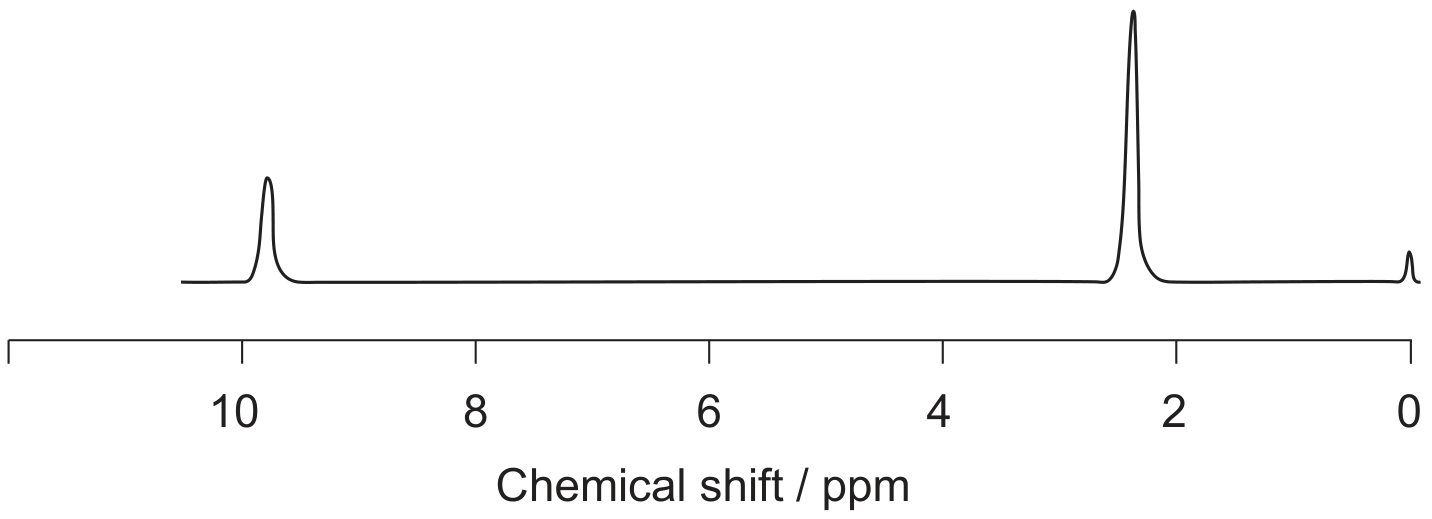
The IR spectrum and low resolution 1HNMR{ }^{1} \mathrm{HNMR} spectrum of the actual product formed are shown.

Question image
\({

\({

Deduce whether the product is A or B, using evidence from these spectra together with sections 26 and 27 of the data booklet.

Identity of product:

One piece of evidence from IR:

One piece of evidence from 1HNMR{ }^{1} \mathrm{H} \mathrm{NMR} :

[ 2 ]

Question 1(c)(v)

(iii)

Deduce the splitting pattern you would expect for the signals in a high resolution 1{ }^{1} HNMR spectrum.
2.3 ppm :
9.8 ppm:

[ 2 ]

Question 1

[Maximum number: 8]

Infrared (IR) spectroscopy is a powerful analytical technique.

Question 1(a)

(a)

Describe how information from an IR spectrum can be used to identify the bonds in a molecule.

[ 2 ]

Question 1(b)

(b)

Explain which of the following compounds would produce the IR spectrum below by referring to the wavenumbers of the relevant peaks found in table 17 of the data booklet.
CH3CH2CH2CH2COOH\mathrm{CH}_{3} \mathrm{CH}_{2} \mathrm{CH}_{2} \mathrm{CH}_{2} \mathrm{COOH}CH3COOCH2CH(OH)CH3\mathrm{CH}_{3} \mathrm{COOCH}_{2} \mathrm{CH}(\mathrm{OH}) \mathrm{CH}_{3}
Compound B

CH3CH2CH2CH2CH2OH Compound C\begin{gathered} \mathrm{CH}_{3} \mathrm{CH}_{2} \mathrm{CH}_{2} \mathrm{CH}_{2} \mathrm{CH}_{2} \mathrm{OH} \\ \text { Compound } \mathbf{C} \end{gathered}
Compound \(\mathbf{A

Compound \(\mathbf{A

[ 3 ]

Question 1(c)

(c)

Explain how the low resolution 1H{ }^{1} \mathrm{H} NMR spectra of the three compounds in part (b) can be used to distinguish between them. Ignore chemical shifts.

[ 3 ]

Question A1

[Maximum number: 8]

Analytical techniques are very useful in determining molecular structures. A compound, X, has the empirical formula C2H4O\mathrm{C}_{2} \mathrm{H}_{4} \mathrm{O}.

Question A1(a)

(a)

Identify the analytical technique that would most readily provide the additional data required to calculate the molecular formula of X.

[ 1 ]

Question A1(b)

(b)

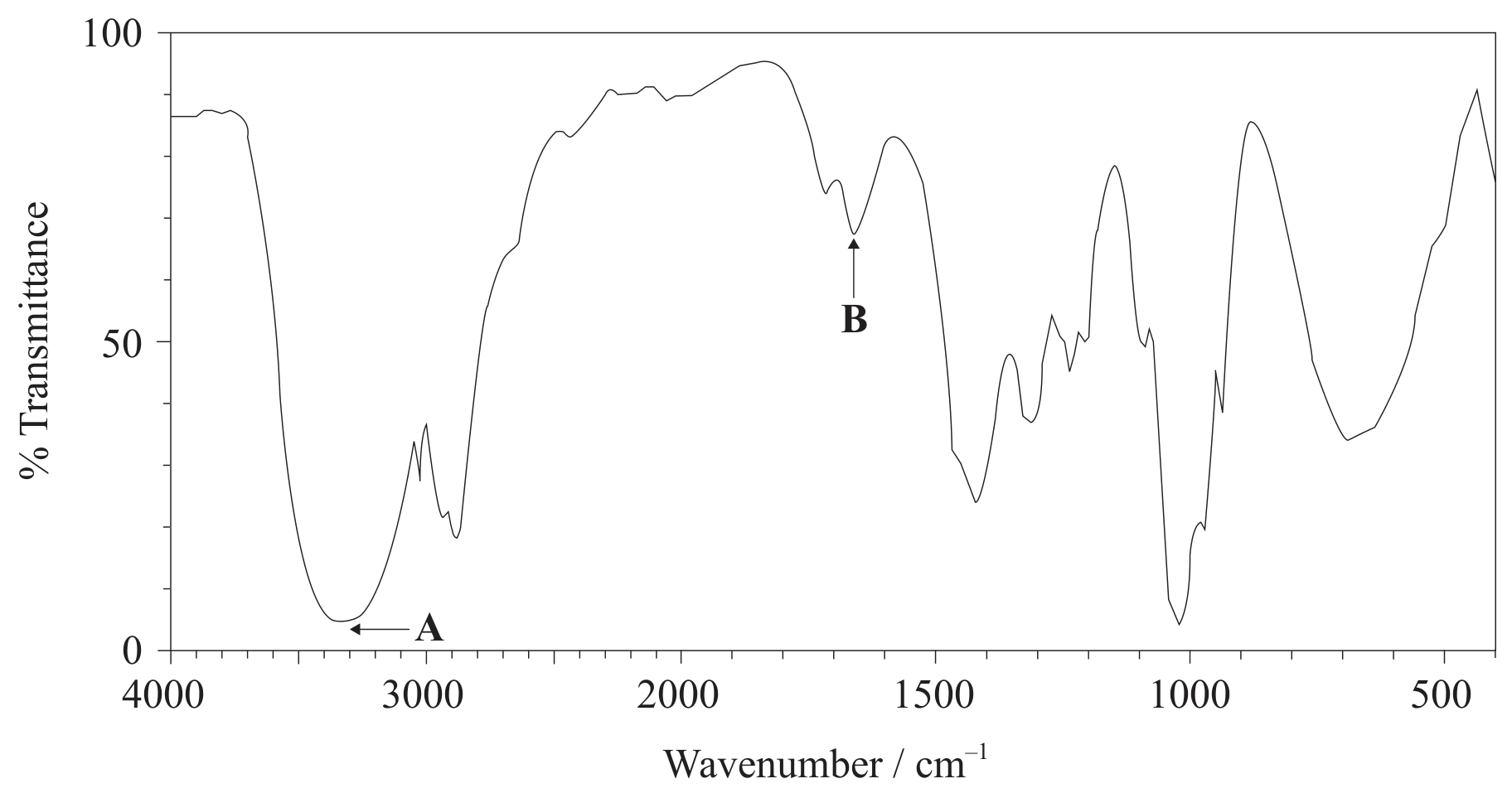
The molecular formula of X is C4H8O2\mathrm{C}_{4} \mathrm{H}_{8} \mathrm{O}_{2}. The information in the IR spectrum below can be used to help determine the structure of X.

Question image
[ 3 ]

Question A1(b)(i)

(i)

Deduce the information obtained from absorptions A and B.

A:

B:

[ 2 ]

Question A1(b)(ii)

(ii)

Comment on the absence of any major absorption in the region 1700-1750 cm-1.

[ 1 ]

Question A1(c)

(c)

The 1HNMR{ }^{1} \mathrm{HNMR} spectrum of X shows three peaks with relative areas of 2: 1: 1.

[ 4 ]

Question A1(c)(i)

(i)

Deduce what information can be obtained from these data.

[ 2 ]

Question A1(c)(ii)

(ii)

Deduce the structure of X.

[ 2 ]

Question A1

Question A1(a)

(a)

Draw the two possible structures of compound P.

[ 1 ]

Question A1(b)

(b)

Explain why the infrared spectra of the structures in (a) are very similar.

[ 1 ]

Question A1(d)

(c)

Pentan-2-one has the following mass spectrum.

Question image

Deduce the formulas of the species with the m / z values at 71 and 43 .
m / z=71:
m / z=43:

[ 2 ]
0 selected