Question 1
[Maximum number: 1]
Which volume, in , of is needed to neutralize ?
A
0.25
B
0.50
C
250
D
500
 EduNinja
Which volume, in , of is needed to neutralize ?
0.25
0.50
250
500
A student investigated the effect of concentration on the rate of reaction between sodium thiosulfate, , and hydrochloric acid, HCl .
Since the solid sulfur product is insoluble, the rate can be determined by measuring the time it takes for the clear solution to turn off-white or pale yellow until the X mark on a white tile below the flask can no longer be seen.
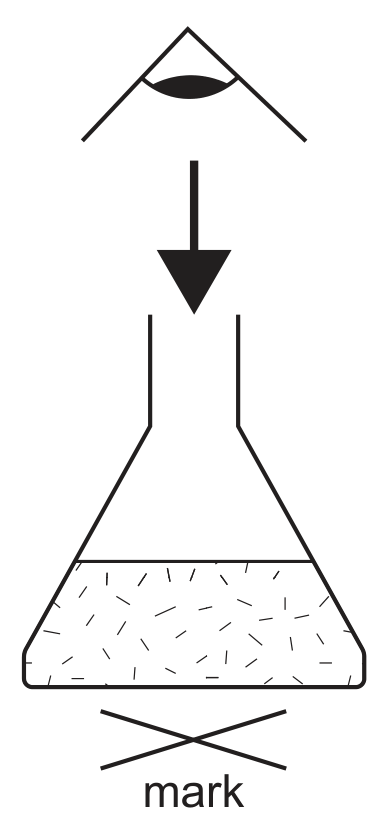
Determine the mass of sodium thiosulfate needed to make of a solution.
Nitrogen dioxide, , is a brown, toxic and corrosive gas. It can be made in a school laboratory by heating a group II metal nitrate or by the reaction of copper, Cu , with concentrated nitric acid, .
Calculate the mass, in g , of Cu required to make 0.0100 moles of . Use section 7 of the data booklet.
A student needed to make of a solution of sodium hydroxide, NaOH , from the solid for a titration.
Calculate the mass of sodium hydroxide needed.
Describe the process of preparing a standard solution from a solid using a volumetric flask.
The standardized sodium hydroxide solution from (c) was used to titrate a propanoic acid solution of unknown concentration.
Calculate the concentration of the propanoic acid if of its solution was neutralized with of standardized sodium hydroxide.
If you did not determine the concentration of sodium hydroxide in part (c), use although this is not the correct answer.
Urea, , is excreted by mammals and can be used as a fertilizer.
Calculate the percentage by mass of nitrogen in urea to two decimal places using section 6 of the data booklet.
Urea can be made by reacting potassium cyanate, KNCO, with ammonium chloride, .
Determine the maximum mass of urea that could be formed from of potassium cyanate solution.
Calculate the maximum volume of , in , produced at STP by the combustion of 0.600 g of urea, using sections 2 and 6 of the data booklet.
A student titrated two acids, hydrochloric acid, HCl(aq) and ethanoic acid, , against of sodium hydroxide, NaOH(aq), to determine their concentration. The temperature of the reaction mixture was measured after each acid addition and plotted against the volume of each acid.
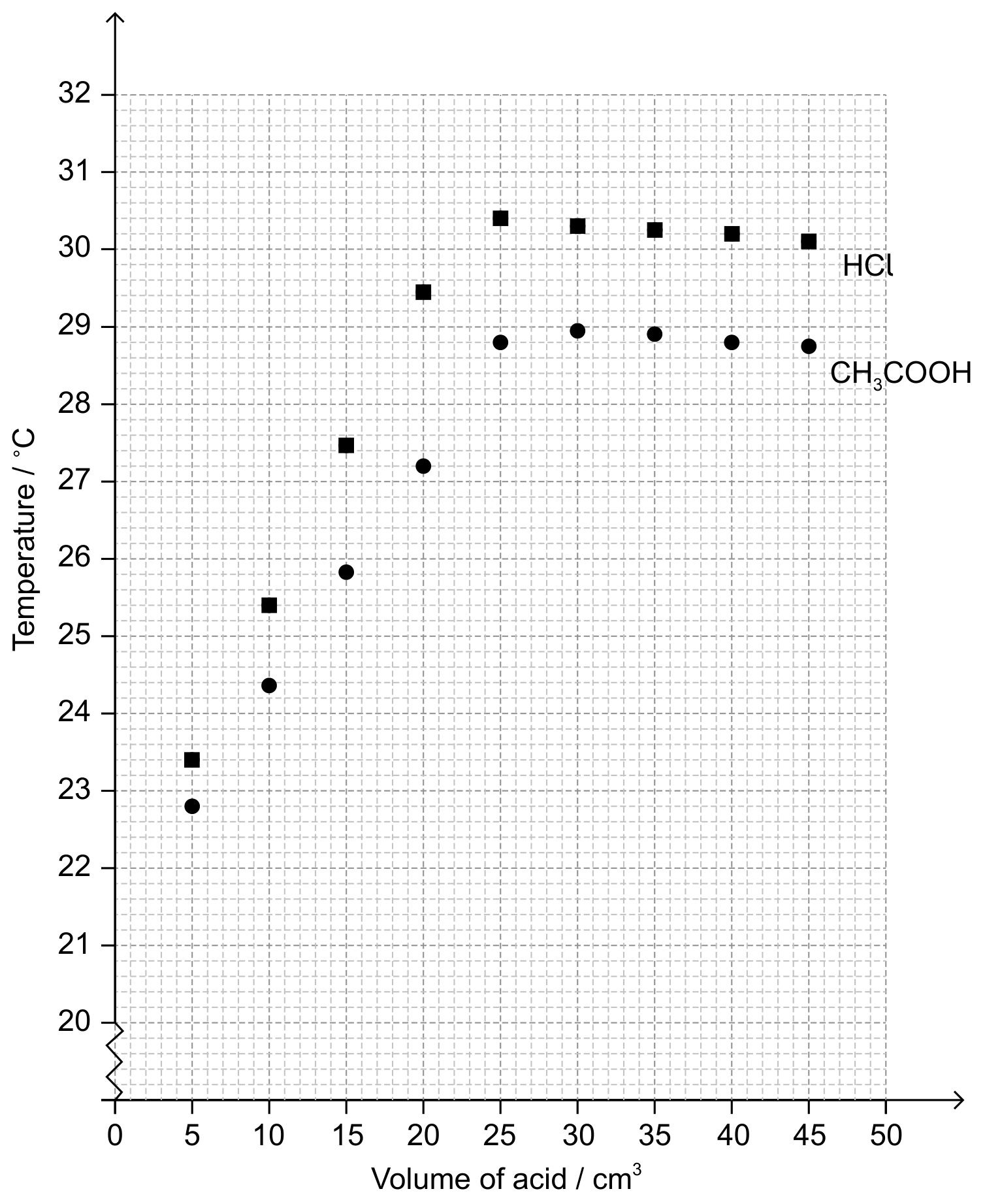
Calculate the concentration of ethanoic acid, , in .
A student carried out an experiment to determine the concentration of a hydrochloric acid solution and the enthalpy change of the reaction between aqueous sodium hydroxide and this acid by thermometric titration.
She added portions of hydrochloric acid to of sodium hydroxide solution in a glass beaker until the total volume of acid added was , measuring the temperature of the mixture each time. Her results are plotted in the graph below.
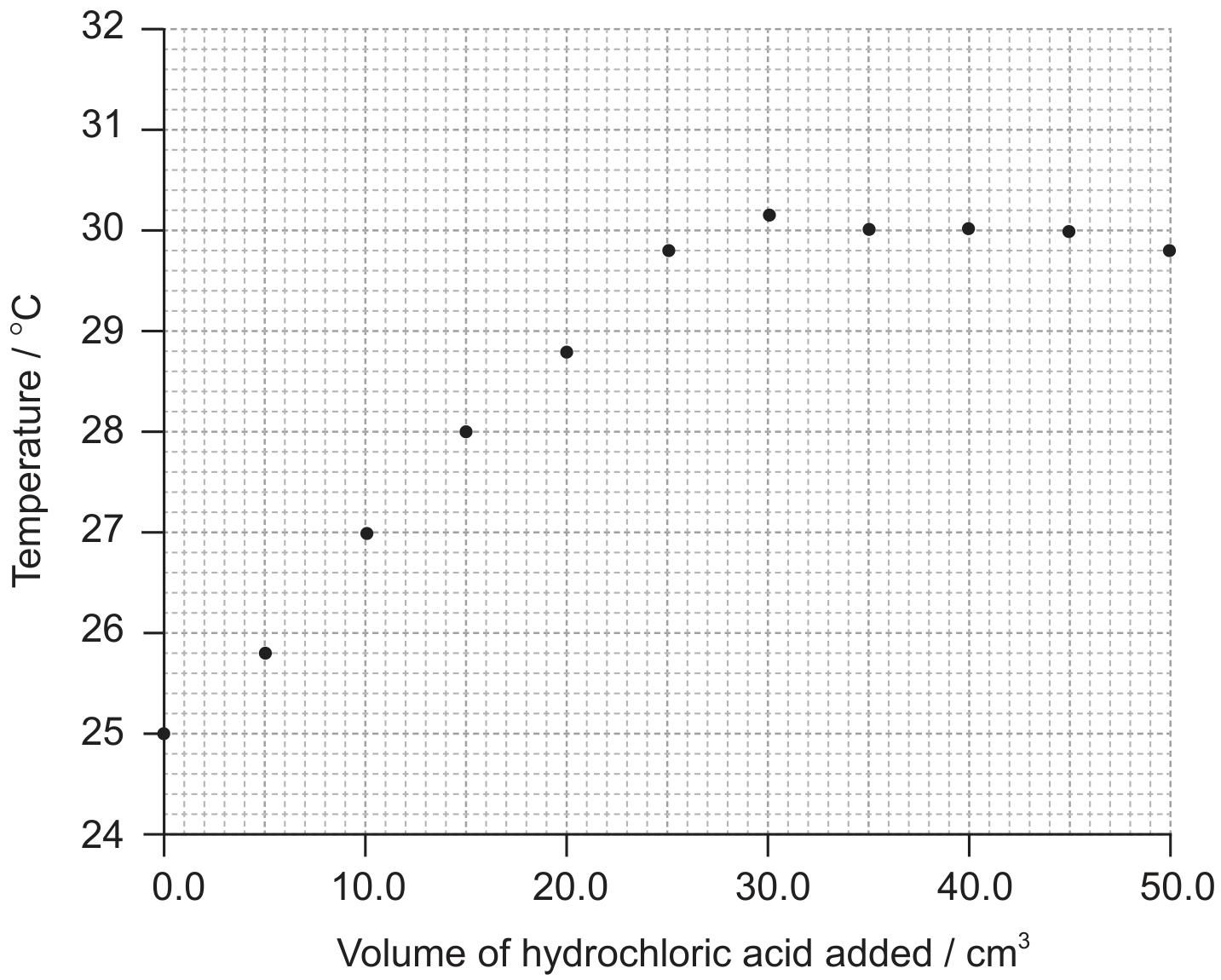
The initial temperature of both solutions was the same.
Determine the concentration of the hydrochloric acid, including units.
Alloys containing at least 60 % copper reduce the presence of bacteria on their surface. The percentage of copper in brass, an alloy of copper and zinc, can be determined by UV-vis spectrometry.
A sample of brass is dissolved in concentrated nitric acid and then made up to with water before analysis.
The concentration of copper(II) ions in the resulting solution is then determined from a calibration curve, which is plotted by measuring the light absorbance of standard solutions.
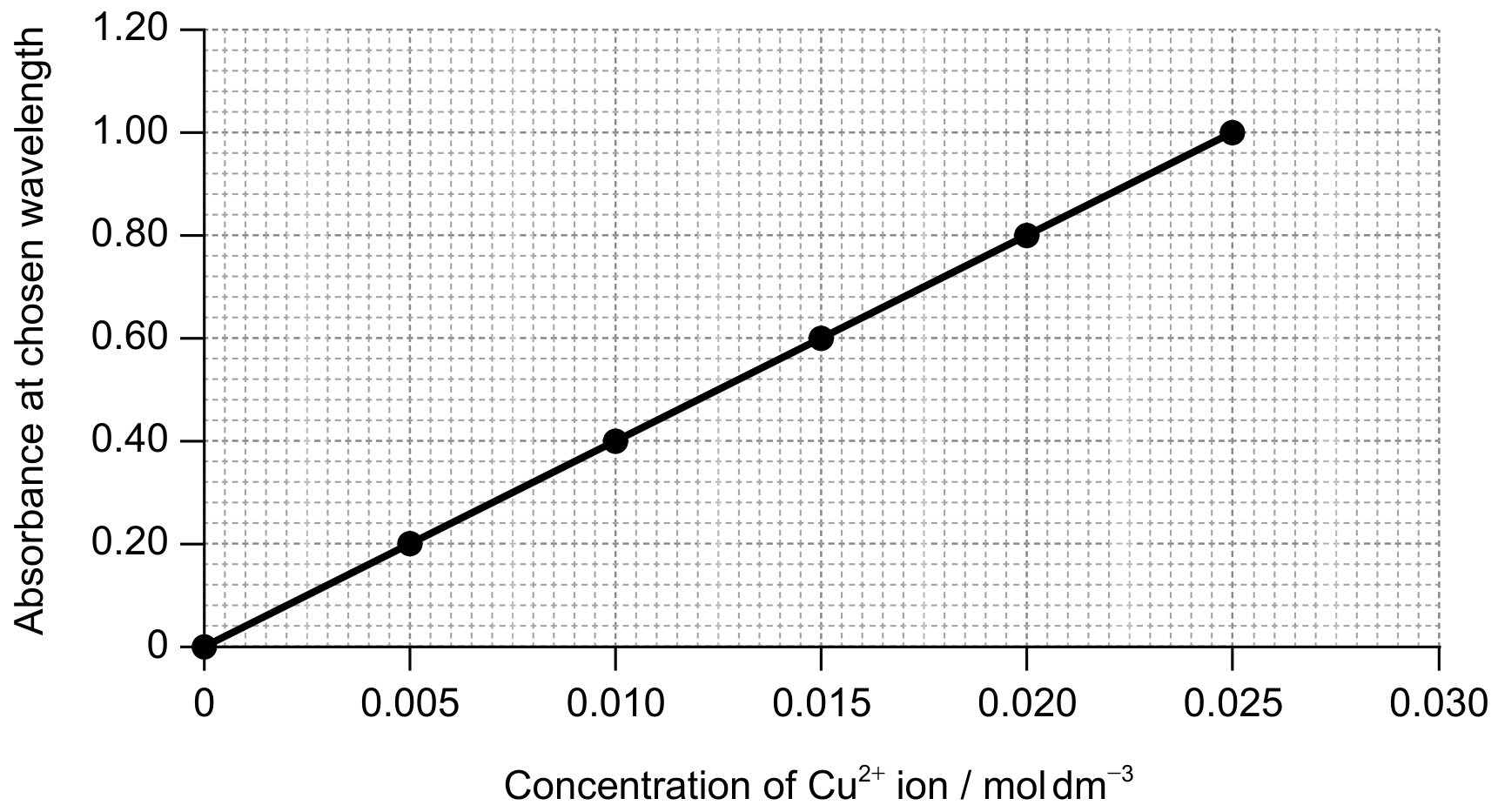
Calibration curve
You may find the following chart and diagram helpful.
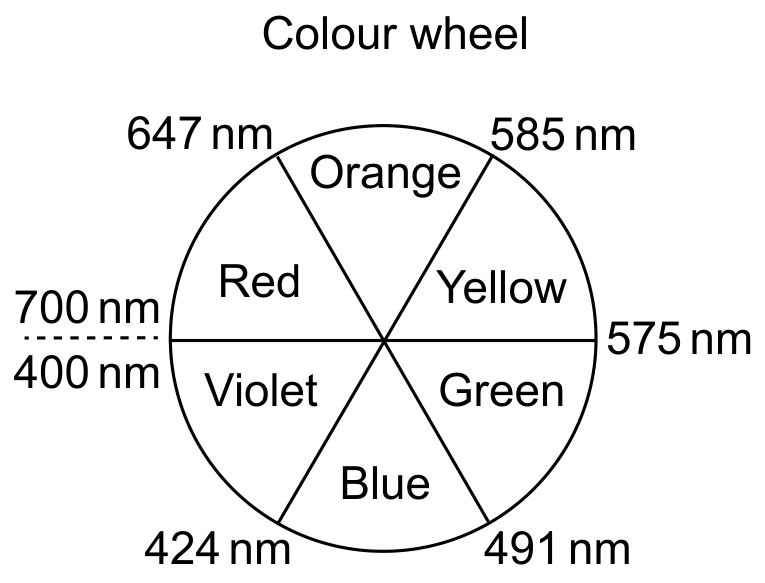
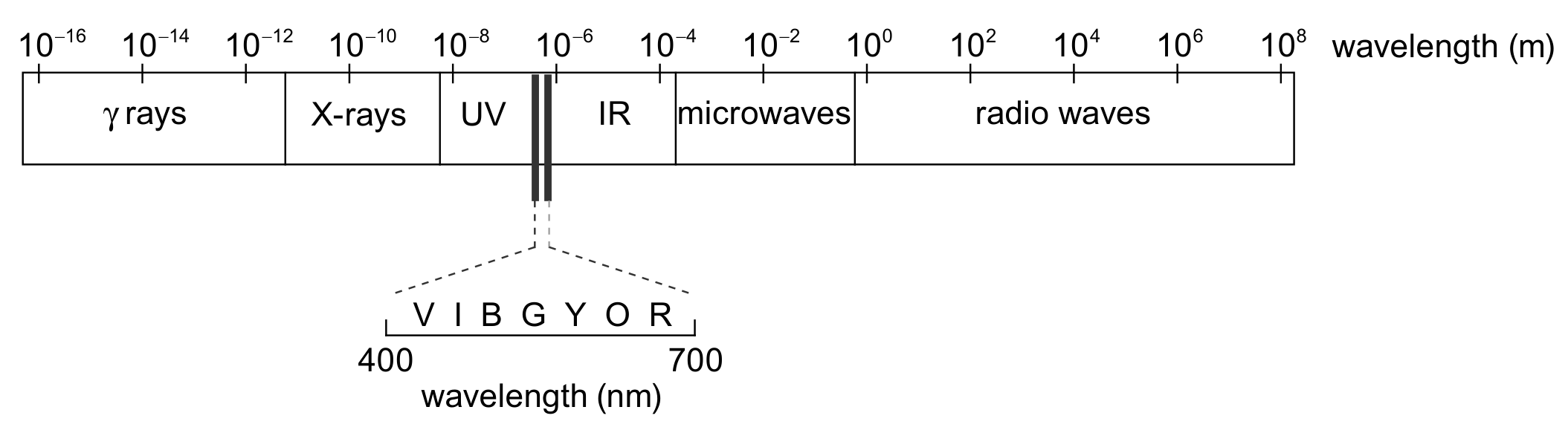
The electromagnetic spectrum energy
Outline how a solution of is obtained from a standard copper(II) sulfate solution, including two essential pieces of glassware you would need.
The original piece of brass weighed 0.200 g . The absorbance was 0.32 .
Calculate, showing your working, the percentage of copper by mass in the brass.
This question is about a mug made of a lead alloy.
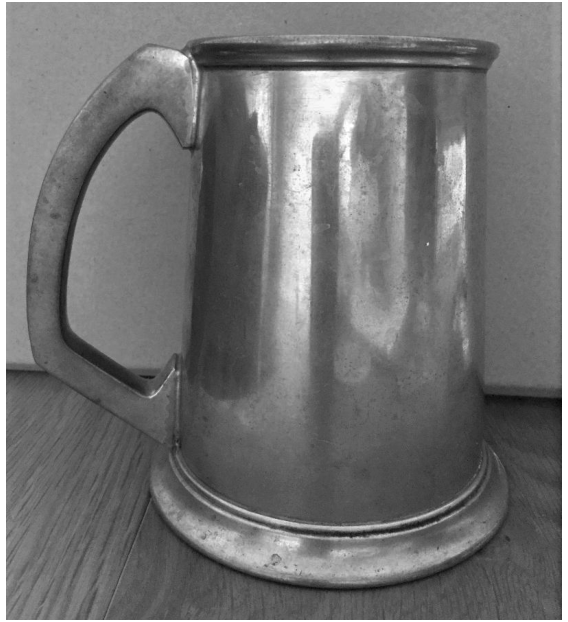
The rate of lead dissolving in common beverages with various pH values was analysed.
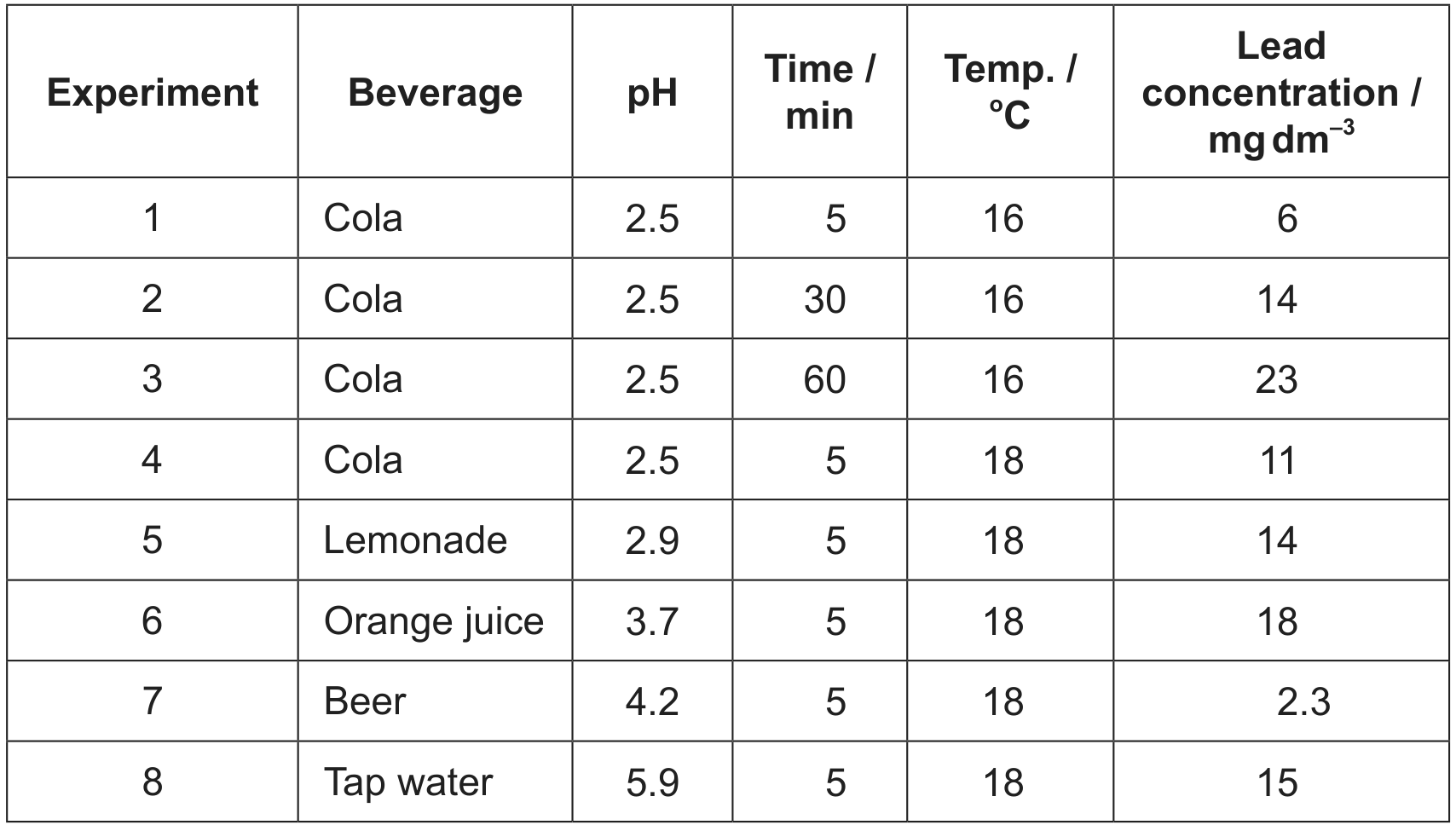
Lead dissolving in beverages at various times and temperatures
A mean daily lead intake of greater than per kg of body weight results in increased lead levels in the body.
Calculate the volume, in , of tap water from experiment 8 which would exceed this daily lead intake for an 80.0 kg man.
Water contaminated with mercury contains methylmercury ions, . These ions are absorbed by living organisms, then slowly metabolized and excreted.
Young fish were taken at regular intervals from a mercury contaminated lake and tested to determine mercury ion content.
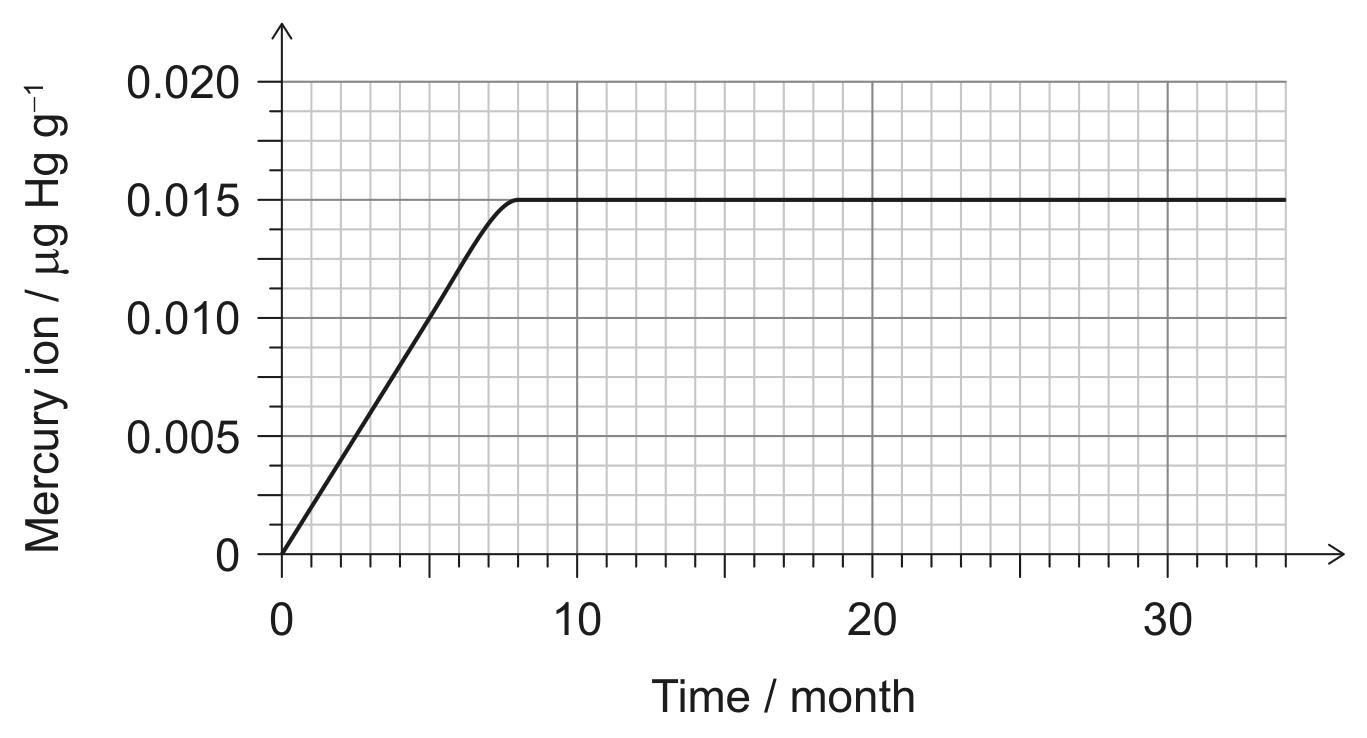
Mercury ion content in muscle tissue of fish
The concentration of mercury ion in a sample of the fish is .
Calculate the mass of Hg , in , in 3.723 g of the sample.