EduNinja

IB Business Management SL5.2 Operations methodsQuestion Bank

5.2 Operations methods

Question 1

[Maximum number: 2]

Tipin (TI)

Tipin (TI) manufactures shirts using a batch production method.
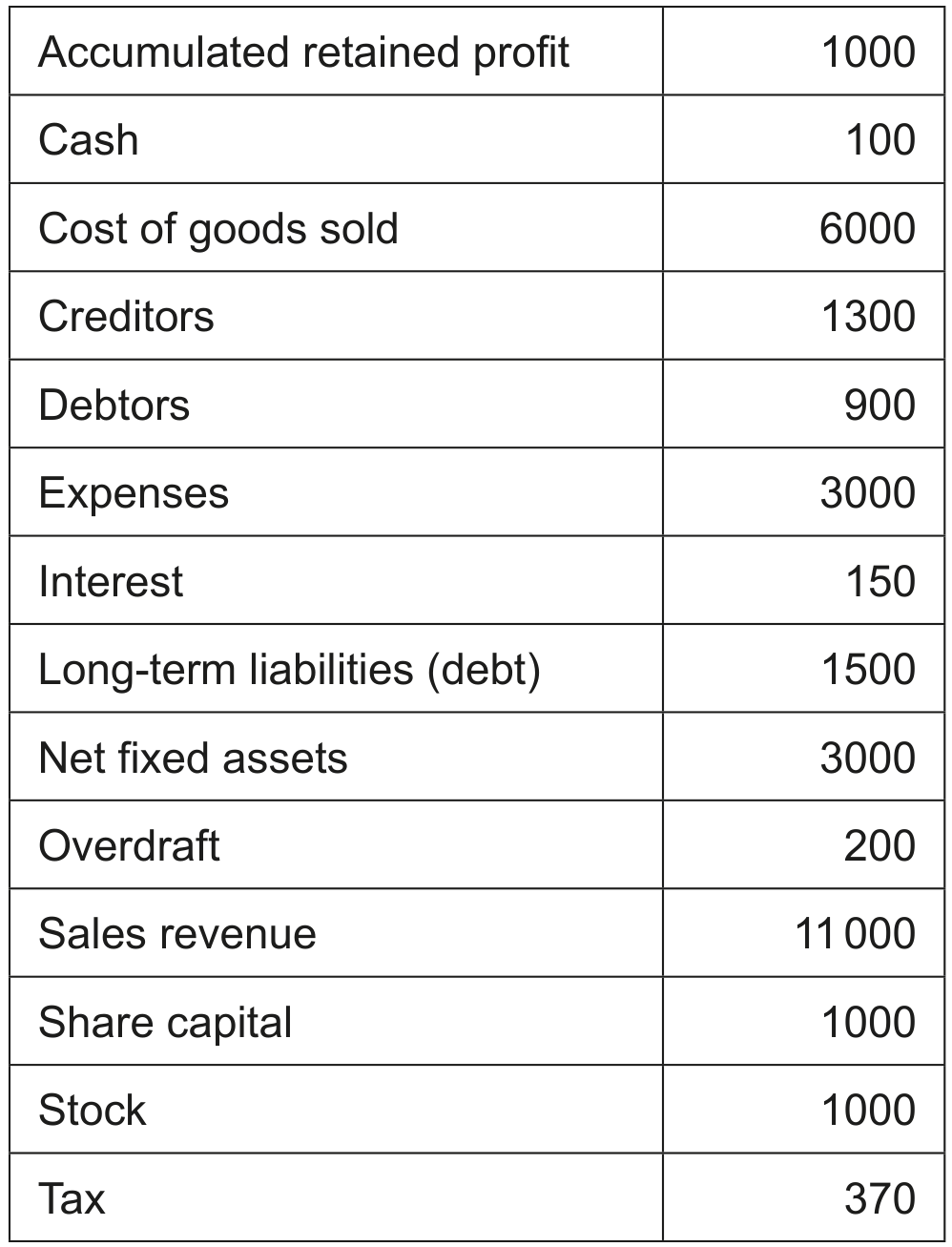
Table 1 provides selected financial information for TI from:
- its profit and loss account for the year ending 31 May 2022
- its balance sheet at 31 December 2021.

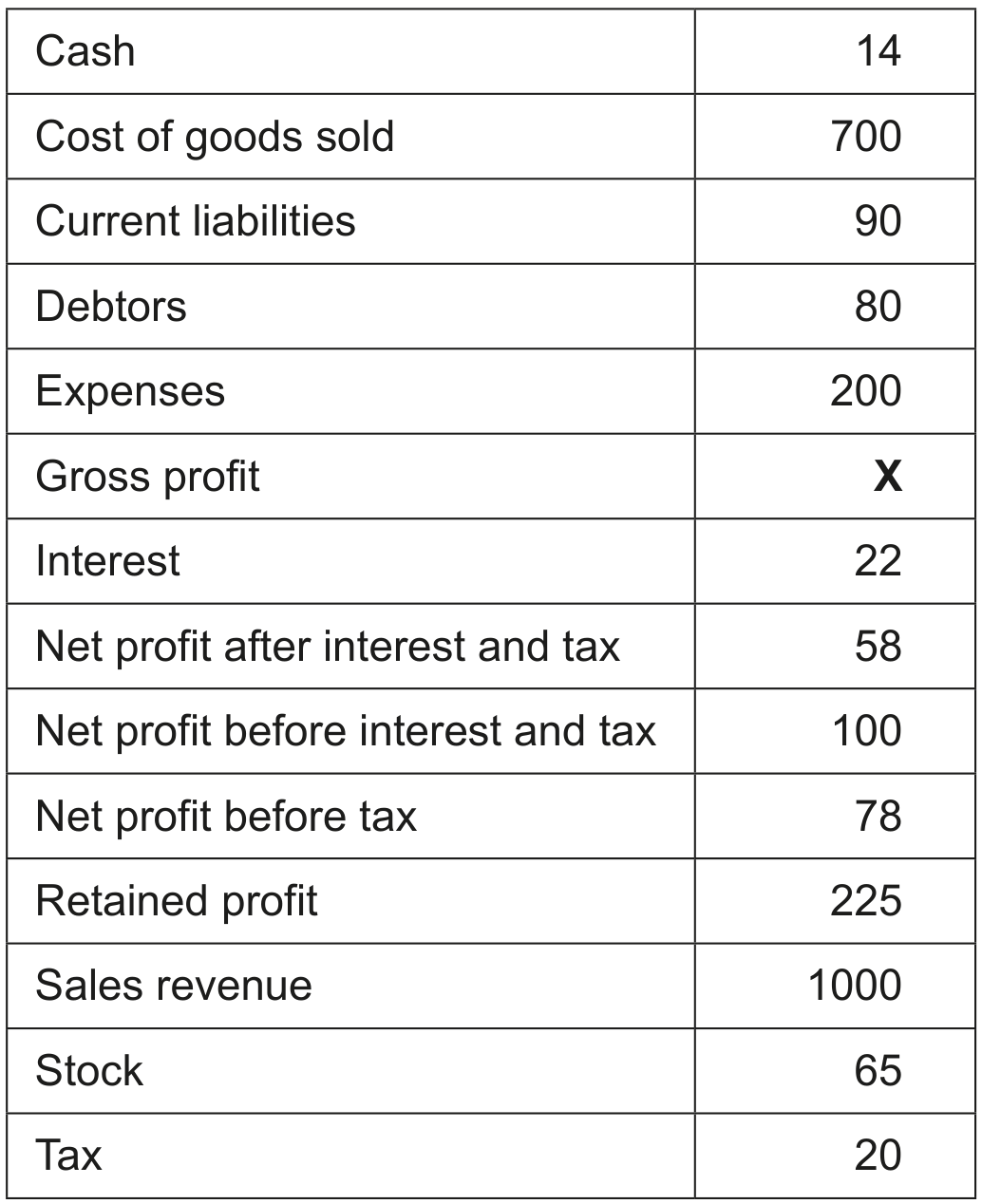
Table 1: Selected financial information for TI (all figures in \$000s)

Table 1: Selected financial information for TI (all figures in \$000s)

At the end of 2021, Tl's current ratio was 2.1. Its net profit margin declined from 14.8 % in 2021 to 10.0 \% in 2022.

Question 1(a)

(a)

State two features of batch production.

[ 2 ]

Question 1

Question 1(a)

(a)

Outline two advantages for Accord of using job/customized production.

[ 4 ]

Question 1

[Maximum number: 2]

1. Lusanka Company (LC)
Lusanka Company (LC) manufactures ceiling fans using a mass production process. Selected financial information for L C is shown in Table 1.

Table 1: Selected financial information for LC for the year ended 31 December 2022 and as of 31 December 2022 (figures in \$000s)

Table 1: Selected financial information for LC for the year ended 31 December 2022 and as of 31 December 2022 (figures in \$000s)

Currently, LC manufactures ceiling fans in a building that is financed by long-term debt. LC is considering selling the building to pay off the long-term debt and moving production to a new building, which L C would lease.

Question 1(a)

(a)

State two features of a mass production process.

[ 2 ]

Question 2

Question 2(b)

(a)

Explain the likely impact on B R D of changing from batch production to cellular manufacturing (lines 41-56).

[ 6 ]

Question 2

Question 2(a)

(a)

Outline one advantage and one disadvantage for ELE of changing to cellular manufacturing in the Zeat factory (line 34).

[ 4 ]

Question 3

Question 3(a)

(a)

With reference to Medimatters, describe two features of batch production.

[ 4 ]

Question 2

[Maximum number: 2]

2. Patras Furniture (PF)
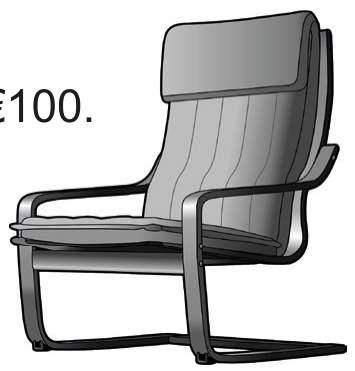
Patras Furniture (PF) manufactures chairs. PF uses batch production.
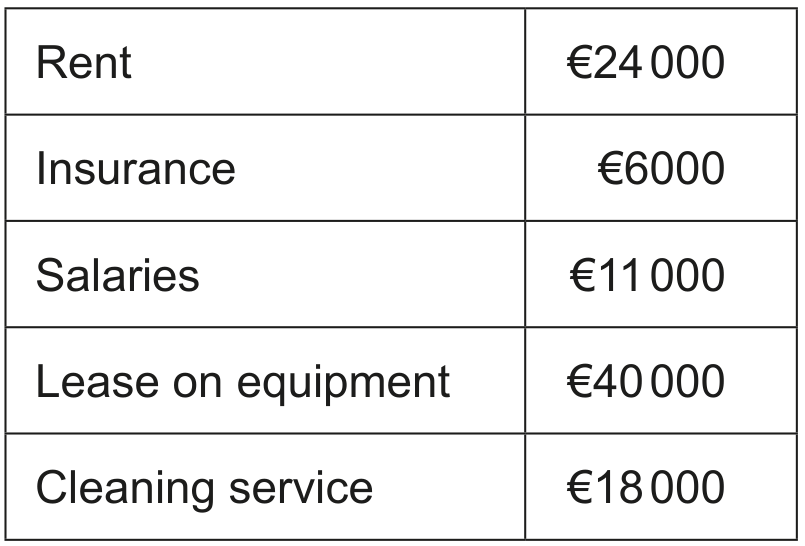
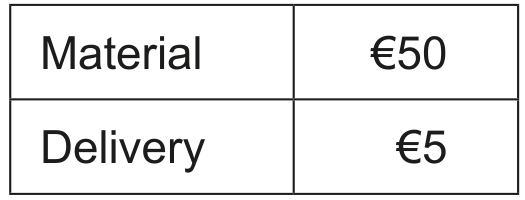
Currently, PF sells 200 chairs per month. Each chair sells at an average price of € 100 . Below are the forecasted fixed and variable costs for 2019.

Question image
Table 1: Fixed costs

Table 1: Fixed costs

Table 2: Variable costs per chair

Table 2: Variable costs per chair

Question 2(a)

(a)

Define the term batch production.

[ 2 ]

Question 2

[Maximum number: 2]

2. Raapin Guitars ( RG )
Raapin Guitars (RG) manufactures guitars in Finland. Over many decades, it has built a reputation for producing high quality, handmade guitars. Apprentices* are recruited when they are 16 or 17 years old. Each apprentice completes a seven-year training program. They are then considered "professional craftsmen" and can expect permanent careers at R G. Each craftsman works with two apprentices to produce high-quality guitars using a batch production method.
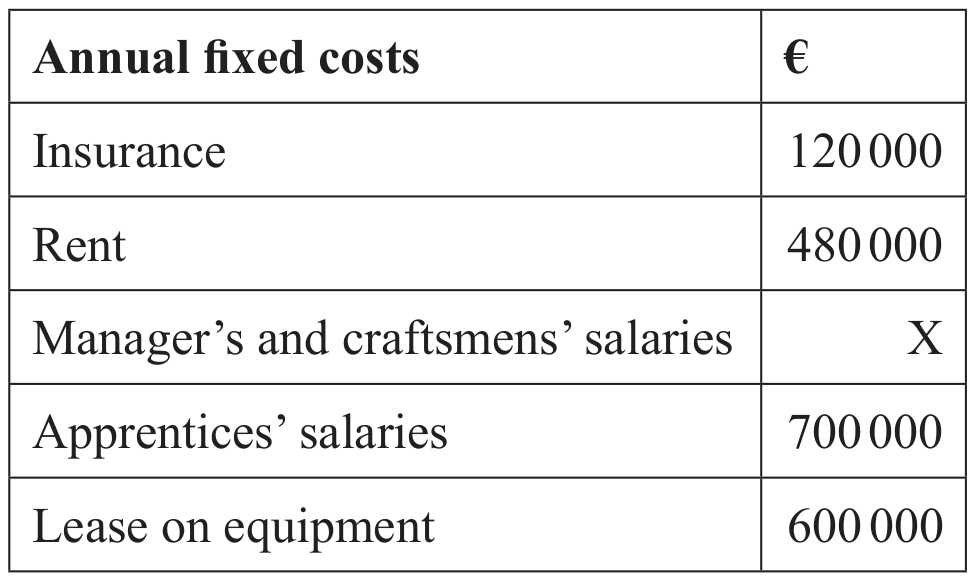
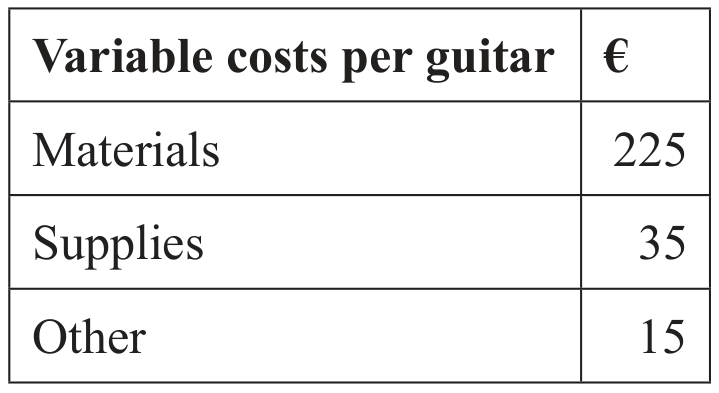
Last year, R G sold 4920 guitars at an average price of € 1200 each. It employed 42 professional craftsmen earning € 50000 per year and one manager earning € 70000 per year.

Table
Table

Recently, R G has struggled to recruit talented teenagers for the apprentice program. Most teenagers in Finland complete secondary school and go to university. Many of them graduate as engineers and design technologists. As a consequence, Anni Raapin, Chief Executive Officer (CEO) of R G, is considering changing the overall production process at R G. She wants to change from a traditional batch production process using professional craftsmen, to an automated flow production process led by two highly trained engineers. These engineers will manage the new production process operated by low-skilled workers.

Even if R G changes to this new production process, the professional craftsmen will not be made redundant. The oldest craftsmen will be offered early retirement. Others will become managers of the new flow production process; the youngest ones will become low-skilled workers. As the craftsmen retire, they will be replaced by workers who have not trained as apprentices and have no knowledge of the traditional batch production process. These new workers will be paid half the salary of the previous professional craftsmen.

\footnotetext{
* apprentice: typically a young person between 15 and 25 years old, who is learning a trade or occupation.
}

Question 2(a)

Question 2(a)(ii)

(a)
(i)

Identify two features of a flow production process.

[ 2 ]

Question 4

[Maximum number: 2]

Aran and Kayla decided to launch Detox using batch production. It has now been on the market for six months. Detox is showing strong growth, although sales for the first six months were less than a quarter of Kayla's target of 160000 bottles for the first year. The price of Detox is $ 2.50 per bottle. The cost of goods sold is $ 160000 and the operating costs before interest and tax are $ 20000 per year.

Enrich sales have not grown much and Aran is very disappointed. Customers, mainly athletes, do not use the product frequently and it is difficult to find new customers. However, research into customer perceptions indicates a very strong brand, resulting largely from Accord's corporate social responsibility (CSR) and strong customer loyalty.

Aran does not like the way the business is organized by product and wants to change it so that it is organized by function instead.

Following the success of Detox, Kayla wants to produce a range of snack bars based on Enrich flavours and recipes. Accord would use the Enrich brand name for the snack bars. The market for healthy snack bars is very competitive and dominated by a few large companies who spend large amounts of money on advertising. The market is growing rapidly - some market researchers estimate by 34 % per annum. There are many examples of small businesses entering the market successfully on a small scale. Kayla estimates the proposal would involve an investment of $ 100000, with forecast net returns of $ 80000 for four years. Aran thinks that the money could be better spent on marketing Enrich drinks.

Question 4(a)

(a)

Define the term batch production.

[ 2 ]

Question 4

[Maximum number: 10]

DA's board must make two major decisions.

Decision 1: DA needs to reduce employment costs. A new system of pay and benefits is under consideration. This includes:
- changing from an annual salary to low basic wages with profit-related bonuses
- reducing social benefits for employees, such as paying market rents for the housing in Ville d'Ablet and having to pay for the use of the leisure facilities
- offering generous compensation payments to employees who are prepared to leave the business.

Decision 2: The three options from DA directors (lines 105-143) must be considered.
Immediately prior to the board meeting, Mia withdrew her proposal (Option C).
There is now additional information available on the remaining options.

Louise plans to target the mass market and proposes using the brand name DuLow for the redesigned products. She is planning for DA to outsource production to Star Electrics (SE). SE uses mass production together with some customization of products. SE keeps costs low by importing cheap raw materials and paying low wages.

Ben, the human resource management director, is concerned about the impact this change would have on DA's employees.

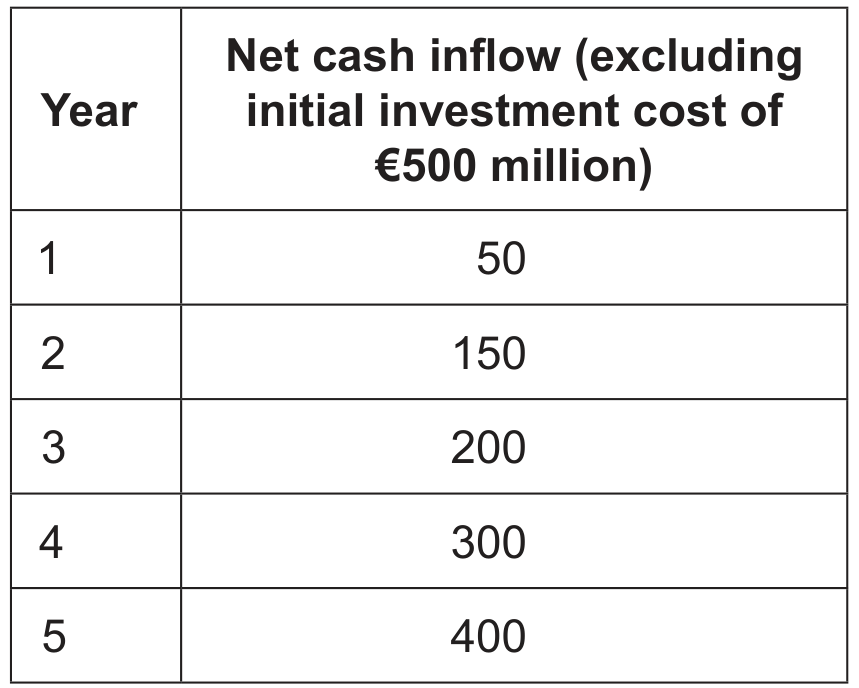
Salah's plan requires new production lines, one for each product. Salah proposes using cellular manufacturing. The investment cost is estimated to be € 500 million. Salah estimates the following net cash inflows (excluding the initial investment cost).

Table 1: Forecast financial information for Option B (figures in € millions)

Table 1: Forecast financial information for Option B (figures in € millions)

Louise thinks the option is expensive. Dodi, the finance director, thinks that the investment is too large and he believes that some shareholders are also concerned about the size of future dividends. Salah believes that shareholders will be pleased about the revenues that this investment will generate. Mia is worried that the products would be expensive to produce and that demand might fall in five to seven years.

Question 4(d)

(a)

Using the case study and additional information from Section B, recommend whether DA should choose Option A or Option B (Decision 2).

[ 10 ]
0 selected