Question 1
Question 1(a)
(a)
Outline two disadvantages for SVTs employees of the new flexible-working contract (lines 60-62).
[ 4 ]
 EduNinja
Outline two disadvantages for SVTs employees of the new flexible-working contract (lines 60-62).
Define the following terms:
workforce planning (line 122).
2. Raapin Guitars ( RG )
Raapin Guitars (RG) manufactures guitars in Finland. Over many decades, it has built a reputation for producing high quality, handmade guitars. Apprentices* are recruited when they are 16 or 17 years old. Each apprentice completes a seven-year training program. They are then considered "professional craftsmen" and can expect permanent careers at R G. Each craftsman works with two apprentices to produce high-quality guitars using a batch production method.
Last year, R G sold 4920 guitars at an average price of € 1200 each. It employed 42 professional craftsmen earning € 50000 per year and one manager earning € 70000 per year.
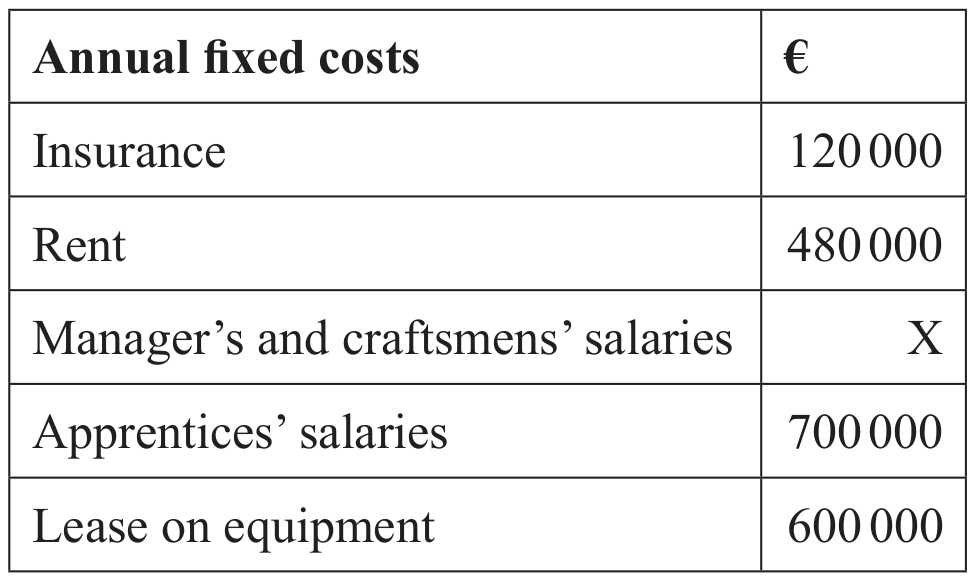
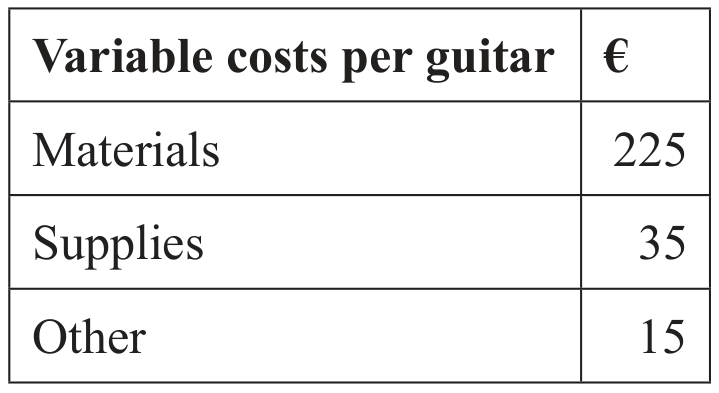
Recently, R G has struggled to recruit talented teenagers for the apprentice program. Most teenagers in Finland complete secondary school and go to university. Many of them graduate as engineers and design technologists. As a consequence, Anni Raapin, Chief Executive Officer (CEO) of R G, is considering changing the overall production process at R G. She wants to change from a traditional batch production process using professional craftsmen, to an automated flow production process led by two highly trained engineers. These engineers will manage the new production process operated by low-skilled workers.
Even if R G changes to this new production process, the professional craftsmen will not be made redundant. The oldest craftsmen will be offered early retirement. Others will become managers of the new flow production process; the youngest ones will become low-skilled workers. As the craftsmen retire, they will be replaced by workers who have not trained as apprentices and have no knowledge of the traditional batch production process. These new workers will be paid half the salary of the previous professional craftsmen.
\footnotetext{
* apprentice: typically a young person between 15 and 25 years old, who is learning a trade or occupation.
}
Describe how one demographic change in Finland affects R G.
The trustees of P U have made proposals to introduce new working patterns for lecturers:
- Compulsory training in IT use for teaching, including online teaching and creating libraries of online resources.
- Contracts that require all lecturers to work at home three days a week. There would be a schedule of who is on site on each day.
- Vacations reduced in length to enable sufficient face-to-face contact with all students. Lecturers would receive a compensatory increase in basic pay.
- Introduction of performance-related pay (PRP).
P U is considering a joint venture with Country B's government. Country B is performing well economically and is planning to expand its university sector. The trustees of believe that the university has a sufficiently strong reputation that the government of Country B will be interested in P U opening a campus there.
Country B's government would provide the facilities and recruit local lecturers and other staff to work at the university. P U would be responsible for all the other costs that it incurs setting up the campus.
PU would:
- design degree courses, syllabuses and course materials
- train all staff
- monitor the progress of each course to ensure that academic standards are good enough to award degrees.
In addition, PU would undertake all market research needed for planning and monitoring new courses, including primary research into the market for university courses.
PU would receive an annual payment from the government of Country B and a fee for each student that successfully completes a degree course.
Explain one impact on and one impact on 's lecturers of the new working patterns.
M M is reviewing its hotel and mining operations.
To understand customer opinions about its hotels, M M will distribute questionnaires at two of its hotels and use a convenience sampling method. M M is also considering introducing flexitime for hotel employees.
For its gold mining operations, M M wants to increase its market share worldwide to 1 % by 2030. In 2020, MM produced 17 tonnes of the global production of 3200 tonnes.
In another development, M M wants to enter the rapidly growing lithium market. M M has rejected the idea of buying an existing lithium producer and is considering two options: opening its own lithium mine in Australia or entering a joint venture with a lithium mining company.
Option 1: Open a lithium mine in Australia
M M has identified a site in Australia, and the Australian government, which is keen to develop its country's lithium mining industry, will approve a mining license for it. Development of the mine would take three years and cost $ 100 million. Table 2 shows the forecasted net returns for the first six years.
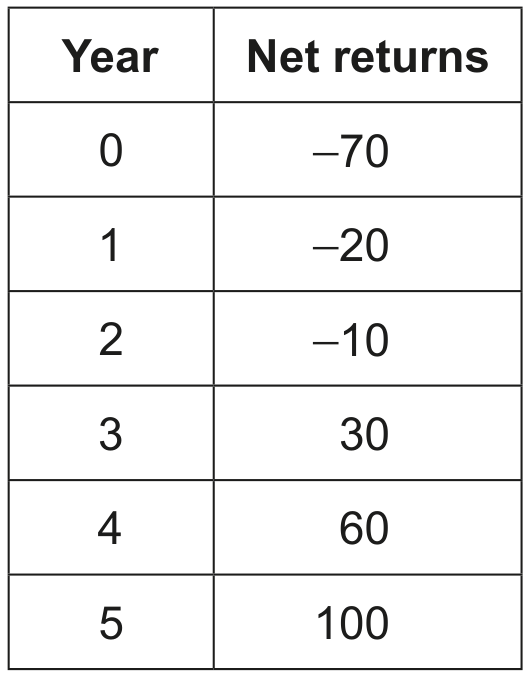
Table 2: Forecasted net returns for the lithium mine (in millions of \$)
M M will sell the lithium to battery manufacturers in China, a market familiar to the Australian mining industry. Transport costs would be high. Environmental pressure groups oppose the mine because of the water and air pollution they think it would create.
Option 2: A joint venture with CanLith (CL)
C L, a lithium mining company, is seeking expansion with a new mine and needs finance. A joint venture with M M would bring M M 's expertise and corporate values to the expansion. M M and C L would have equal ownership of the new mine and jointly manage it. C L would appoint a board of directors. However, C L has attracted bad publicity because of its poor environmental record, and local people oppose the new mine. Information on the joint venture is shown in Table 3.
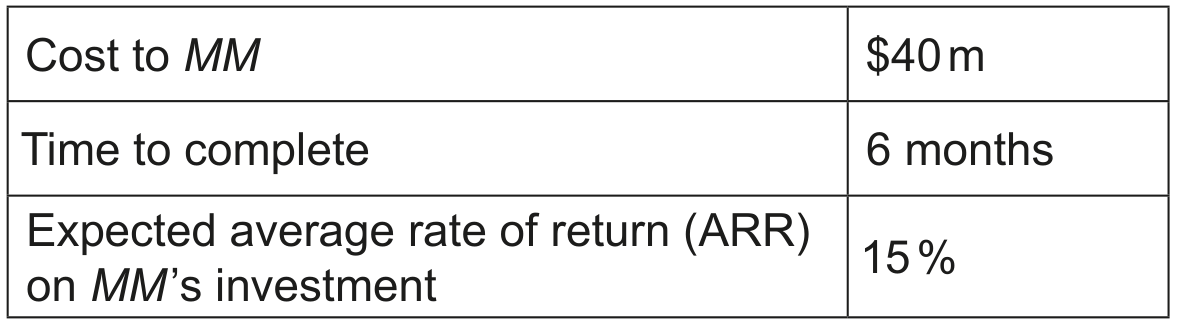
Table 3: Information on setting up the joint venture
Define the term flexitime.
Using examples of migrant workers (such as Jomo Kimathi, Martin Kimathi and Craig Chapman), analyse the significance of changes in domestic and international labour mobility.
Answer the compulsory question from this section.
Define the following terms:
workforce planning (line 91).
3. Mercy Ships (MS)
Mercy Ships (MS) is a non-profit organization that operates the largest non-governmental hospital ship in the world: the Africa Mercy. With the Africa Mercy, Mercy Ships provides free healthcare and other medical services.
Each year, Mercy Ships undertakes thousands of surgical and dental procedures and community health projects. Before the Africa Mercy arrives at a port, Mercy Ships uses brochures aimed at local people to promote its services. Mercy Ships also
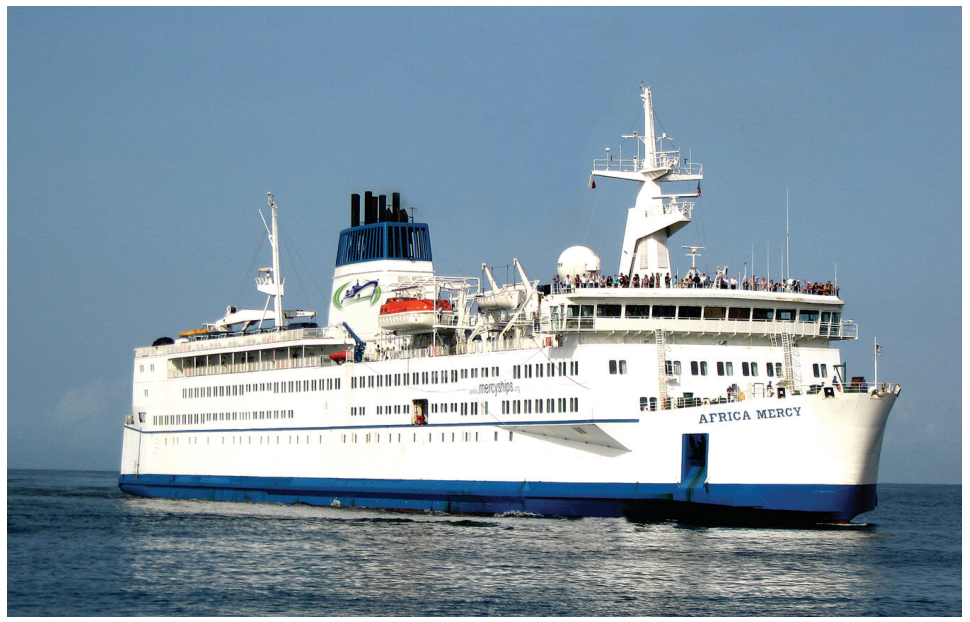
treats patients at dental clinics away from the port itself.
Everyone on the Africa Mercy is a volunteer. To keep the ship in operation, it requires a staff of 400 volunteers, including doctors and nurses as well as chefs, engineers, hair stylists, and many other people from different professions. People volunteer for varying lengths of time and must apply for available positions. Mercy Ships volunteers agree to follow a strict code of conduct and also pay a fee to participate. Volunteers include young people before they begin their professional life, middle-aged people who want a career break, and older people who want to remain active and make a difference. All volunteers believe in Mercy Ships' vision statement to "become the face of love in action, bringing hope and healing to the poor".
To what extent does MS face challenges in its workforce planning?
4. Stuart Sporting Goods Ltd. (SSG)
Stuart Sporting Goods Ltd. (SSG) is a private limited company in Uisge, Scotland. The Stuart family has owned the store since 1937. SSG sells sporting equipment and clothes. It has strong brand awareness and loyalty based on excellent customer service. In 2021, the company had GBP 2.5 million in assets and GBP 2.1 million in equity.
Uisge is near Glasgow, Scotland's largest city. Young families from Glasgow are moving to Uisge, where housing is cheaper and the pace of life is slower. These new residents' employers, usually in Glasgow, allow them to telework two days per week. Uisge's population has grown only slightly, as these new residents are largely replacing an ageing population.
Recently, MuraMerk ( MM), a retailer, opened a superstore in Uisge, MM's first in Scotland. This superstore sells groceries, clothing, hardware, electronics and sporting equipment. M M also sells online. Because of the economies of scale, M M offers lower prices and more choices than other businesses in Uisge, including SSG. For several years before MM's arrival, SSG's sales revenue did not grow and, after MM arrived, sales revenue started to decline.
Aware of MM's impact on small businesses in the United States (US), Douglas Stuart, who is 59 years old and the Chief Executive Officer (CEO) of SSG, is considering two options:
- Option 1: Lower prices, reduce employee levels, and cut costs in the hope that M M will be unsuccessful in Scotland (as it has been in several other countries).
- Option 2: Accept a takeover offer of GBP 1.1 million from a large chain of sporting goods.
With reference to the new residents of Uisge, explain one advantage for employees of teleworking.
4. The significance of changes in international labour mobility
Though the global population may grow from 7 billion in 2011 to 7.6 billion by 2020 , many countries will experience a decline in the number of working-age people. Already in Japan and Europe, each year more people retire from the workforce than young people enter it. By 2020, this problem will also affect Russia, Canada and China. Other countries such as India, Brazil and Indonesia have young populations and young workforces.
Unfortunately, many people lack the skills that employers need. A recent study found that 31 % of employers worldwide struggle to fill jobs requiring basic skills. 65 % of multinational companies have difficulty recruiting new employees with advanced skills. In emerging economies the problem is worse. Difficulties in meeting operational objectives of recruitment prevent many companies from meeting their strategic objectives.
Companies are responding by recruiting new employees from other countries. This practice is called "expanded recruitment". It has led to more international labour mobility, diverse workforces within companies, and diversity in global cities.
Supporters of expanded recruitment argue that the labour problem is demographic: the best solution is to make labour mobility easier. Furthermore, diversity both within companies and in society should improve international understanding and will increase creativity. Critics of expanded recruitment argue that it does not solve the real problem: many jobs require advanced skills, and most educational systems have not responded to those needs. Expanded recruitment has also created other issues for companies, such as problems in communication.
Expanded recruitment has also led to some anger in countries and local communities not accustomed to large immigrant populations.
Used with permission.]
Identify one opportunity and one constraint for companies caused by demographic change.
Analyse one strategy that a global company could adopt for developing future human resources (you may refer to a global company that you have studied).
Discuss the significance of changes in international labour mobility.