Question 1
Question 1(b)
(a)
Explain how RDM's transformation of its manufacturing process from traditional mass production to highly automated production affected the interests of internal stakeholders.
[ 6 ]
 EduNinja
Explain how RDM's transformation of its manufacturing process from traditional mass production to highly automated production affected the interests of internal stakeholders.
Outline possible different interests of two external stakeholders arising from SVTs Outreach Programme (lines 96-115).
1. Suparman Fish ( SF )
Gepa Suparman owns and operates four fishing boats in Indonesia. There is a growing demand for canned (tinned) food, including cans of fish. Gepa wants to enter the secondary sector by opening a small factory producing cans of fish.
Gepa's business will be called Suparman Fish ( S F ) and will be a private limited company. Gepa will own all of the shares. The factory will be located in a village three miles from the harbour. Because unemployment is high in the village, Gepa should easily find workers for the new factory. In addition to the manager's salary, workers' wages, and the cost of fish, supplies, and cans, S F will have the semi-variable cost of electricity.
Gepa has prepared a four-month cash-flow forecast based on the following information:
- opening balance month 1: $ 15000.
- month 1 : sales revenue of $ 1000, increasing by 20 % per month.
- manager's salary: $ 300 per month.
- workers' wages: $ 175 per worker per month.

- variable costs (fish, supplies, and cans) are equal to 40 % of sales revenue.
- semi-variable cost of electricity: fixed cost of $ 100 per month, plus a variable cost of $ 0.10 per kilowatt hour (kwh). Month 1 usage: 100 kwh , increasing by 10 % each month.
Although S F would create several jobs in the village, many residents are not happy about the new factory. The new factory would use chemicals, which cause pollution. Residents are concerned about the unpleasant smells from the factory. A representative from the local employment office is concerned whether Gepa's factory will provide a safe working environment.
Examine two potential stakeholder conflicts when Gepa opens his factory.
Describe two external stakeholders of A F A, other than customers.
Explain how M M could reduce stakeholder conflict in relation to its gold mine in Egypt. (lines 103-107)
Explain the interests of one of TM's internal stakeholders.
ELE is continuing to focus on all three of its divisions.
Car rental division
In 2010, ELE owned 4.5\% of the European Union (EU) car rental market. In 2019, ELEs car rental division had revenues of EUR 0.9 billion in a market worth EUR 16.8 billion. Initially, ELE only provided car rentals in its gasoline stations in Belgium. By 2014, ELE had expanded the service to its stations in France, Spain and the UK. Giselle believes that maintaining high levels of customer satisfaction is an important factor in the car rental division's continuing success.
Zeat division
Zeat's MiniC production line, based in the UK, has 125 employees, most of whom have been with the business since 2000.
Currently, approximately 90 % of MiniC sales are to customers in the EU, and profit margins for the MiniC air compressors have fallen significantly due to rising costs in the UK. Lucas recommended to ELE directors that MiniC production be outsourced to a manufacturer in Hungary in the EU.
Gasoline station division
The gasoline station division accounted for 35 % of ELE's operating profits in 2021. Perrana PLC, a global supermarket chain, has offered to purchase all of ELE's gasoline stations. The offer significantly exceeds the current market value of ELE's gasoline stations.
Perrana would close the gasoline stations and open supermarkets on the sites. All ELE gasoline station employees would face redundancy. ELE's workforce will feel betrayed. Although Hugo is very unhappy about the proposal, Giselle has mixed feelings: she would need to find new locations for her 700 car rental offices, but the sale could help finance the expansion of ELE car rentals into India.
Recommend whether ELE's directors should accept the offer from Perrana to purchase all of ELE's gasoline stations.
2. Klar
Klar is a factory that bottles mineral water for use in large water dispensers. The factory is located on a hill next to a spring from where water flows naturally. Klar uses a flow production method with a production capacity of 35 million litres per year. Klar has a 60 % share of the national market and also exports bottled mineral water to several countries.
A multinational company called Kaiser is interested in acquiring Klar. "If the acquisition takes place, we will expand Klar's production to gain economies of scale; we will also add a new range of flavoured drinks that will be produced in batches and sold in 1.5 litre bottles. Our maximum production capacity of flavoured drinks will be 3 million bottles a year," says Roman Hitschfeld, Kaiser's Production Manager.
The forecast costs for producing Klar's new flavoured drinks are as follows:
- variable cost per bottle: $ 0.4
- estimated sales price per bottle: $ 1.6
- fixed costs: $ 240000.
Klar is facing fierce competition from other companies that use plastic bottles and offer lower prices to consumers. Although the cost of glass bottles is higher than plastic ones, up until now Klar has only used re-useable glass bottles to support its ethical objectives of being environmentally-friendly. Now, Klar is considering switching from re-useable glass bottles to non re-useable plastic ones. The environmental pressure group Plastic No More! is campaigning against the use of plastic. A spokesperson from Plastic No More! said: "there is a growing trend among consumers to purchase products that will not damage the environment, but we are still a minority".
Define the term pressure group.
3. Starvation Peak Running Shoes (SP)
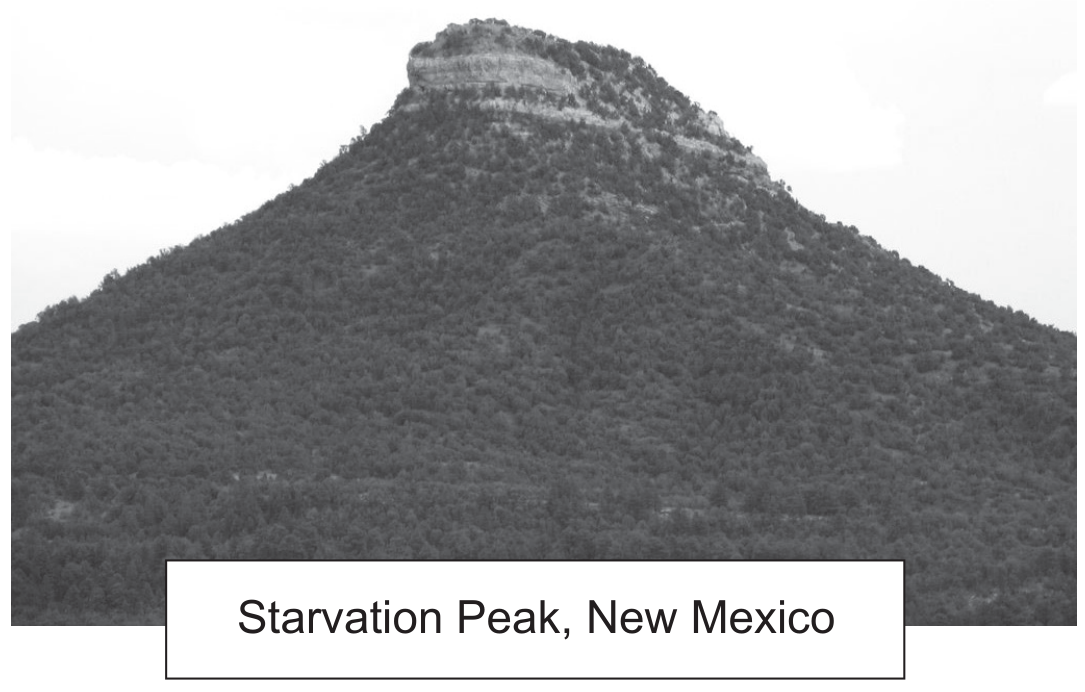
Starvation Peak Running Shoes (SP) is a shop that sells running shoes in Santa Fe, New Mexico, United States (US). Its name comes from the local mountain called "Starvation Peak".
SP customers can buy running shoes at a lower price online, but S P has a unique selling point (USP) concerning its vision and its local reputation. SP's vision statement is: "Running sustains life, locally and globally".
SP is very well known locally, as they
support the local running community in the Santa Fe area. They do so in several ways by:
- sponsoring "running days" at schools
- giving discounts to children and students
- offering "running clinics", where SP employees help people improve their running techniques
- organizing races and other local events.
The biggest event organized by S P is its annual "Race to the Top" on Starvation Peak. According to a local legend, a tribe of Native Americans forced enemies up to the peak, where they died of hunger (starvation). SP promotes the event with the slogan: "Running sustains life, even on Starvation Peak". "Race to the Top" has been popular for ten years. However, there are now conflicts between stakeholders. Local businesses like the event, as it attracts tourists to the area. One pressure group, however, argues that it portrays Native Americans in a negative way. Another pressure group argues that the event damages the natural environment of the mountain. The local authorities managing Starvation Peak have been asked to refuse permission for SP's "Race to the Top".
Advise the local authorities as to whether permission for SP's "Race to the Top" should be refused.
Outline one possible area of conflict between two internal stakeholders of The Imperial.