EduNinja

IB Biology SLD4.3 Climate changeQuestion Bank

Question 1

[Maximum number: 2]

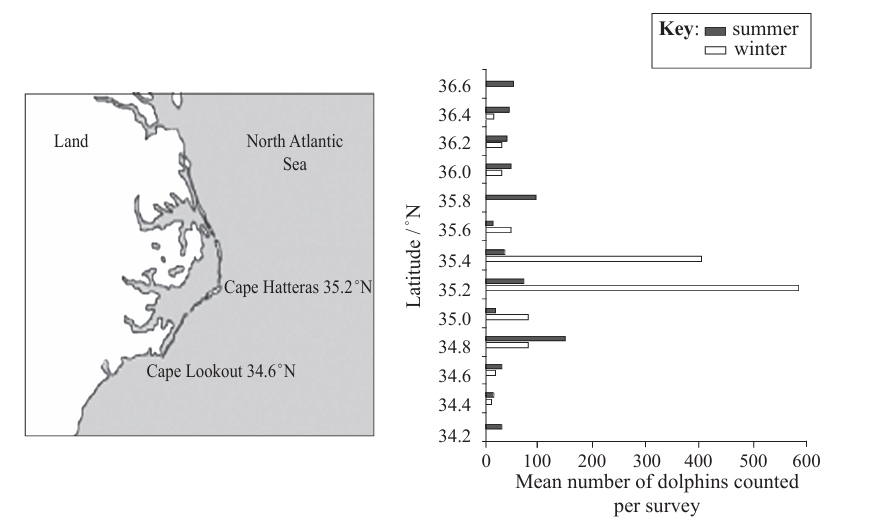
Bottlenose dolphins (Tursiops truncatus) inhabit almost all tropical and temperate oceans between 45N45^{\circ} \mathrm{N} and 45S45^{\circ} \mathrm{S}. Over a two-year period, aerial surveys were carried out to investigate the seasonal distribution of these animals along the mid-Atlantic and eastern coastal waters of the USA. Sightings were recorded using a global positioning system (GPS) while flying parallel to the coast approximately 500 m offshore. The diagram below shows a map of the section of coast surveyed. The bar graph shows the seasonal data for summer and winter at the corresponding latitudes ( N{ }^{\circ} \mathrm{N} ). A total of 5431 bottlenose dolphins were sighted during these surveys.
Question image

Question 1(f)

(a)

Explain how an increase in water temperature due to global warming could affect the distribution of bottlenose dolphins along the eastern coast of the USA.
[ 2 ]

Question 15

[Maximum number: 1]

Which gas is the main contributor to the greenhouse effect?

A

Ozone

B

Methane

C

Nitrogen oxide

D

Water vapour

Question 3

[Maximum number: 2]

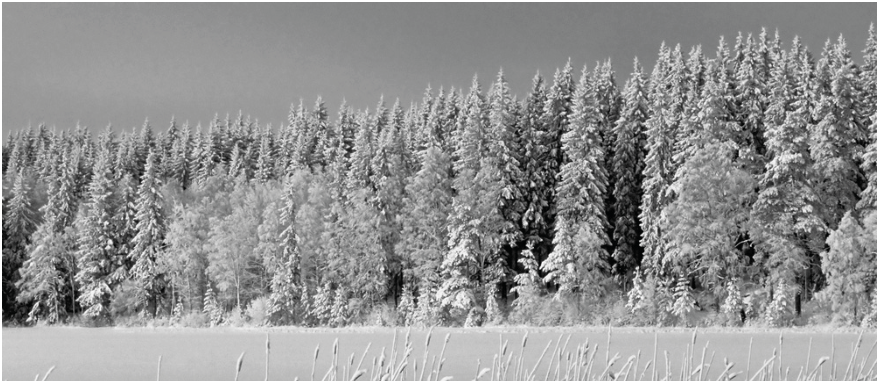
Boreal forests stretch across Canada, Russia and Scandinavia. This northern ecosystem accounts for 29 % of the world's forest areas. The long, cold winters favour tall evergreen trees with either needles or scale-like leaves. These trees are wind-pollinated and their seeds are not enclosed in a fruit. The photograph shows a typical boreal forest in winter.

Question image

Question 3(c)

(a)

An increase in global temperatures poses a critical threat to boreal forests. Explain the consequences of climate change to this northern ecosystem.

[ 2 ]

Question 3

Question 3(b)

(a)

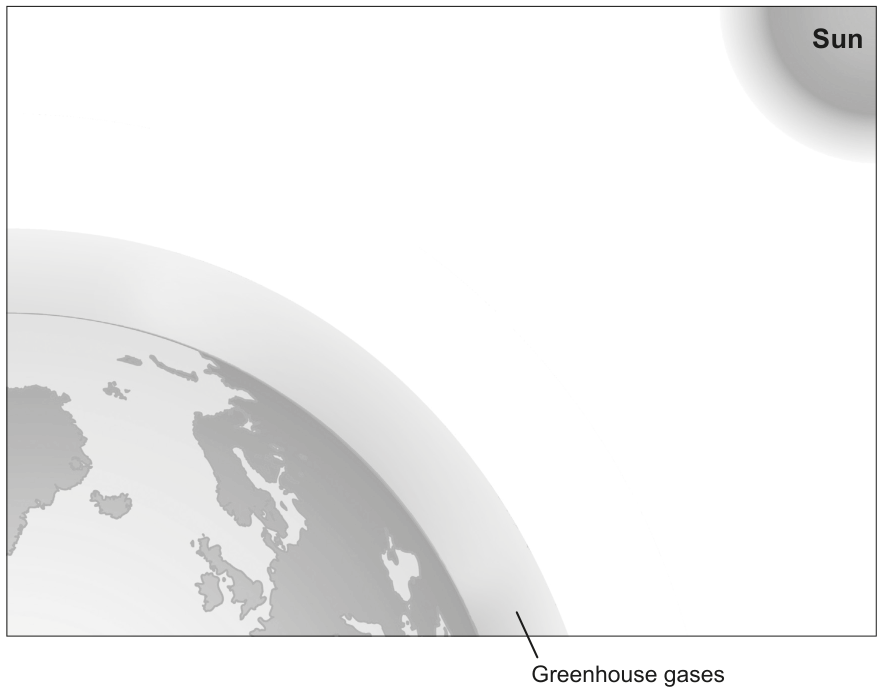
Using the diagram, explain the interaction of short and long wave radiation with greenhouse gases in the atmosphere.

Question image
[ 3 ]

Question 3

Question 3(b)

(a)

Methane can be the product of anaerobic respiration in some organisms.

[ 2 ]

Question 3(b)(ii)

(i)

Explain the role of methane in climate change.

[ 2 ]

Question 4

Question 4(a)

(a)

Outline two possible consequences of global warming for organisms living in arctic ecosystems.

[ 2 ]

Question 19

[Maximum number: 1]

Which activity directly contributes the most to recent increases in atmospheric CO2\mathrm{CO}_{2} concentrations?

A

Landfills

B

Planting trees

C

Cattle rearing

D

Burning of fossil fuels

Question 19

[Maximum number: 1]

Methane is one atmospheric gas that contributes to the greenhouse effect and global warming. What are reasons for this?

I. It absorbs long wave radiation.
II. It is converted to carbon dioxide in the atmosphere.
III. It allows more heat to leave the Earth's atmosphere.

A

II only

B

I and II only

C

II and III only

D

I, II and III

Question 19

[Maximum number: 1]

In addition to carbon dioxide, which of these greenhouse gases is the most significant?

A

Methane

B

Ozone

C

Nitrogen oxides

D

Water vapour

Question 3

[Maximum number: 3]

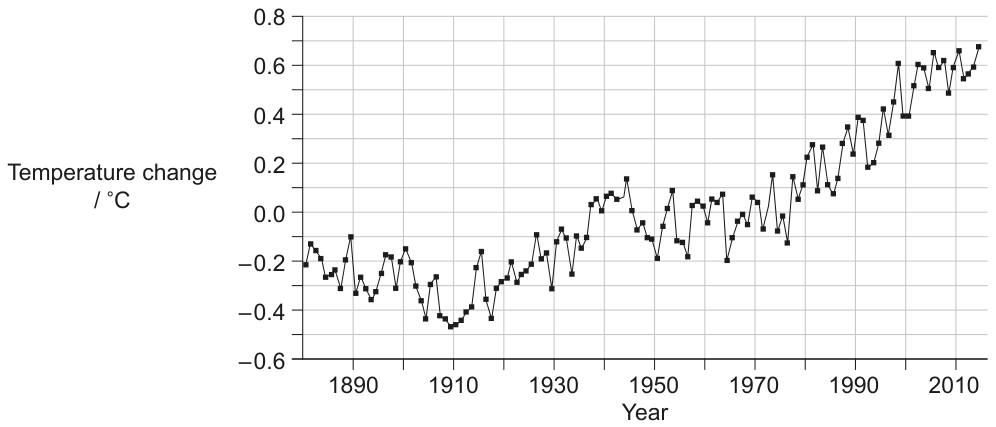
The graph shows the mean annual changes in global temperatures between 1880 and 2014. The mean temperature from 1951 to 1980 was used as the value of zero change in temperature.

Question image

Question 3(c)

(a)

Explain how increased carbon dioxide in the air leads to the greenhouse effect.

[ 3 ]
0 selected