
EduNinja

IB Biology SLD4.2 Stability and changeQuestion Bank

Question 2

[Maximum number: 3]

The mesocosms shown were placed in a freshwater lake to investigate the impact of water mixing on the biomass of zooplankton (microscopic consumers). Each mesocosm is filled with lake water, sealed at the bottom and sides, and open to the air at the top. The water in each mesocosm was mixed either by moving a flat disc up and down or by bubbling air through the water. In the control there was no active mixing.

Question 2(b)

(a)

Outline the advantages of using mesocosms to study ecological relationships.

[ 2 ]

Question 2(c)

(b)

State one possible error that could affect a mesocosm experiment of this type.

[ 1 ]
Question 2

[Maximum number: 2]

Populations evolve by natural selection due to interactions with the environment and other species within the ecosystem.

Question 2(c)

(a)

Explain how the loss of a keystone species affects an ecosystem.

[ 2 ]

Question 3

[Maximum number: 3]

Mosquitofish (Gambusia affinis) are aquatic organisms that feed on mosquito larvae, other insects, zooplankton and detritus. Open mesocosms were established outdoors in 30 large water tanks designed to match natural aquatic habitats in California, USA.
Experiments were set up to measure the effect of extra nutrient availability on the community in the presence or absence of mosquitofish. Each tank was covered with netting. Six tanks were used for each of the different experimental conditions.
Removed for copyright reasons

Question 3(b)

(a)

Suggest one reason for using netting to cover the mesocosms.

[ 1 ]

Question 3(d)

(b)

Explain the advantages of using mesocosms instead of doing the experiment in the natural habitat.

[ 2 ]

Question 17

[Maximum number: 1]

What is exchanged between a sealed mesocosm and the surrounding external environment?

A

Energy

B

Water

C

Air

D

Nothing can pass

Question 18

[Maximum number: 1]

A simple sealed terrestrial mesocosm was set up to demonstrate that natural ecosystems can be sustainable over long periods of time.

What indicates that the mesocosm is still sustainable after several months?

A

Wastes are constantly recycled.

B

The diversity of living organisms increases.

C

Energy is conserved.

D

The mass of carbon increases.

Question 18

[Maximum number: 1]

Which factor(s) would be expected to vary in a closed terrestrial mesocosm?

I. Carbon content
II. Temperature
III. Biomass

A

I only

B

I and II only

C

II and III only

D

I, II and III

Question 4

[Maximum number: 6]

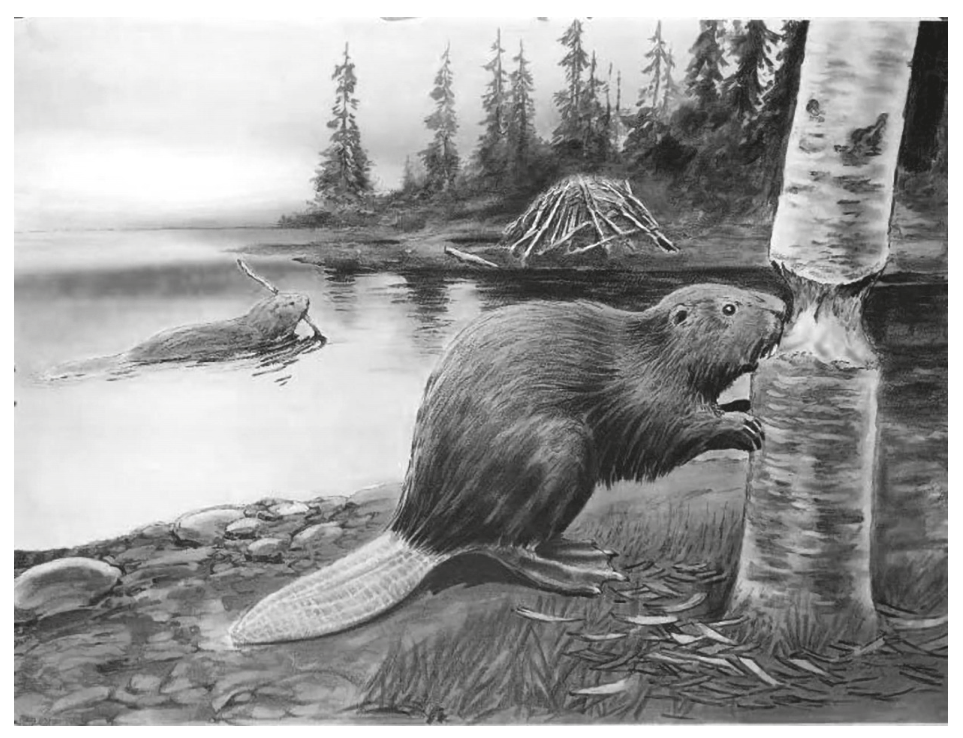
Beavers (Castor fiber) have been reintroduced into many European countries. They cut down trees and use them as a source of food as well as for building their homes and dams.

Question image

Question 4(a)

(a)

Beavers are a keystone species. Outline the importance of keystone species.

[ 2 ]

Question 4(b)

(b)

Studies show that species richness of large invertebrates increases in the presence of beavers. Suggest reasons why biodiversity is important in an ecosystem.

[ 2 ]

Question 4(c)

(c)

Outline two methods of restoration of natural processes in ecosystems by rewilding, other than reintroducing a keystone species.
1.
2.

[ 2 ]

Question 19

[Maximum number: 1]

Which is not essential in a viable mesocosm?

A

Light source

B

Autotroph

C

Saprotroph

D

Herbivore

Question 29

[Maximum number: 1]

Which action is part of the rewilding of ecosystems?

A

Applying fertilizer

B

Removal of apex predators

C

Reintroduction of keystone species

D

Restricting size for easier management

Question 30

[Maximum number: 1]

What directly causes oxygen levels to drop during eutrophication in aquatic ecosystems?

A

Increased photosynthesis by aquatic plants

B

Enhanced respiration by fish

C

More decomposition of organic matter by bacteria

D

Lower levels of nitrogen in the water

0 selected