Question 1
Mice (Mus musculus) have various defence systems against predators such as foxes (Vulpus vulpus) or stoats (Mustela erminea). The mice release specific alarm compounds when under threat that serve as danger signals for other mice. Predators also release scents that the mice can detect.
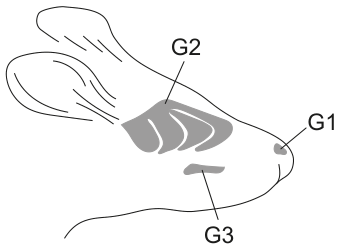
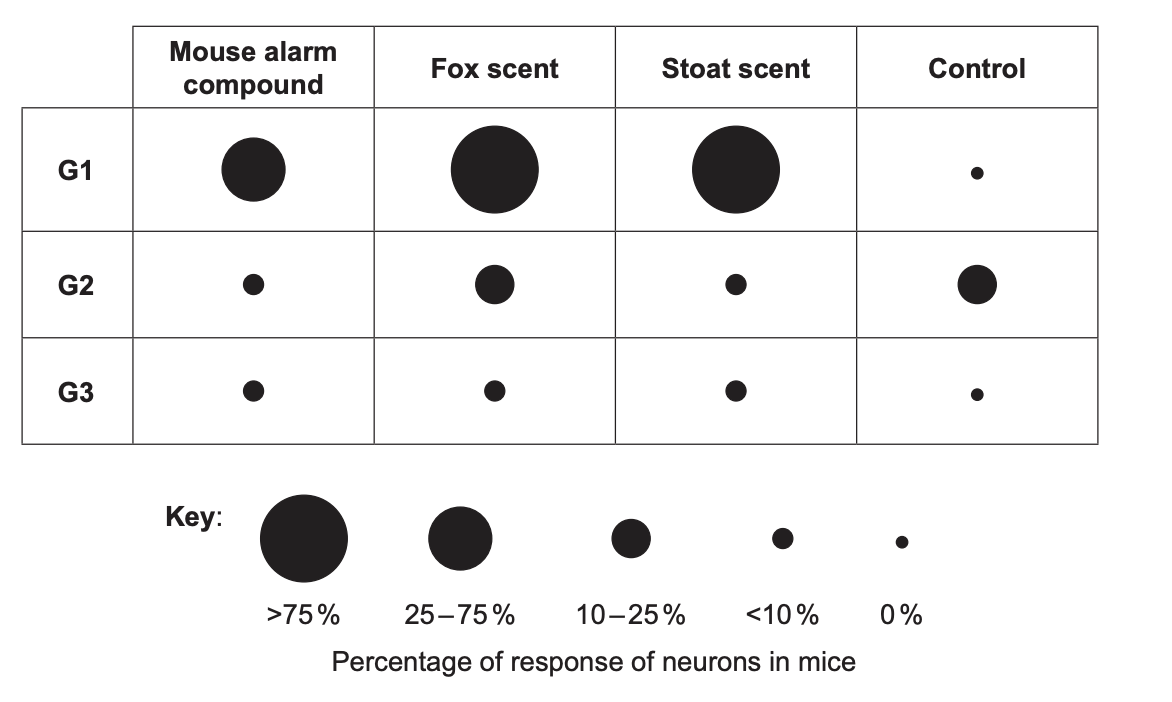
In one study, mice were exposed to paper soaked in compounds taken from other mice, foxes or stoats in a test chamber. The scientists then measured the reaction of three different groups of neurons used in smelling: G1, G2 and G3, as shown in the diagram.
The percentage of G1, G2 and G3 neurons responding to the mouse, fox and stoat compounds, as well as a control compound, are shown in the chart.
Question 1(j)
Discuss whether natural selection would favour the transgenic EBF-producing thale cress plants if they were released into the wild.