Question 1
Dementia is a term used to describe a group of symptoms that are caused by a decline in brain function. People with dementia have problems with memory, language and behaviour.
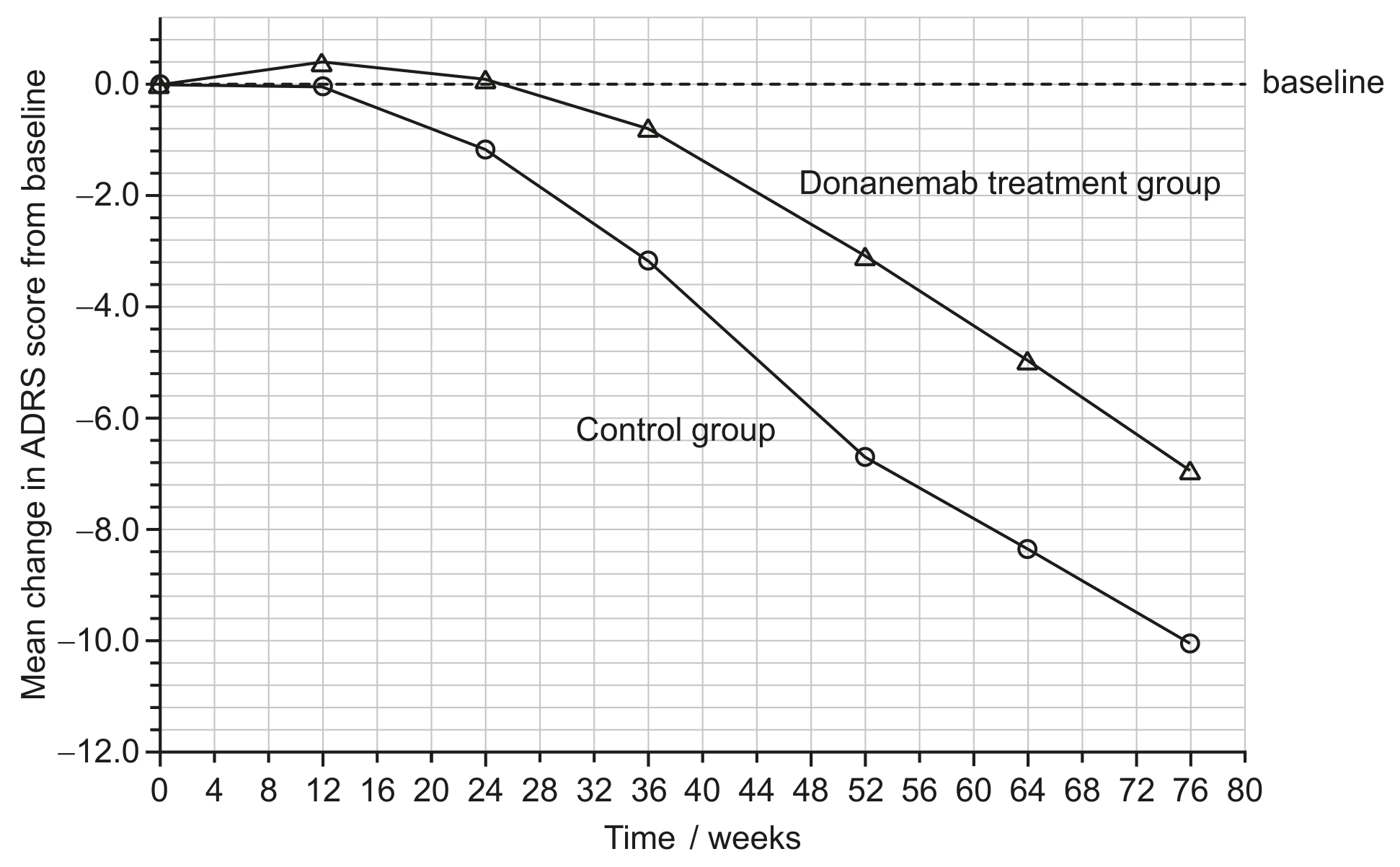
Alzheimer's disease is the most common cause of dementia. Scientists investigated the effect of a drug called donanemab on people with Alzheimer's disease. They divided them into two groups:
- The treatment group received regular injections of a solution containing donanemab.
- The control group received regular injections of a solution without donanemab.
The scientists used the Alzheimer's Disease Rating Scale (ADRS) to measure brain function. The lower the score on this scale, the worse the brain function. The scientists calculated the mean ADRS score for each group at intervals over 76 weeks. They then calculated the mean change from their initial score at the start of the investigation (baseline).
Their results are shown in the graph.
Question 1(d)
SNAP-25 (Synaptosomal-Associated Protein) is a protein found in the brain.
In a different investigation, scientists measured the concentration of SNAP-25 in the cerebrospinal fluid (CSF) of three groups of people:
- 36 people without Alzheimer's disease (No AD)
- 18 people with Alzheimer's disease who had mild dementia (AD mild)
- 24 people with Alzheimer's disease who had severe dementia (AD severe)
Their results are shown in the box-and-whisker plot.
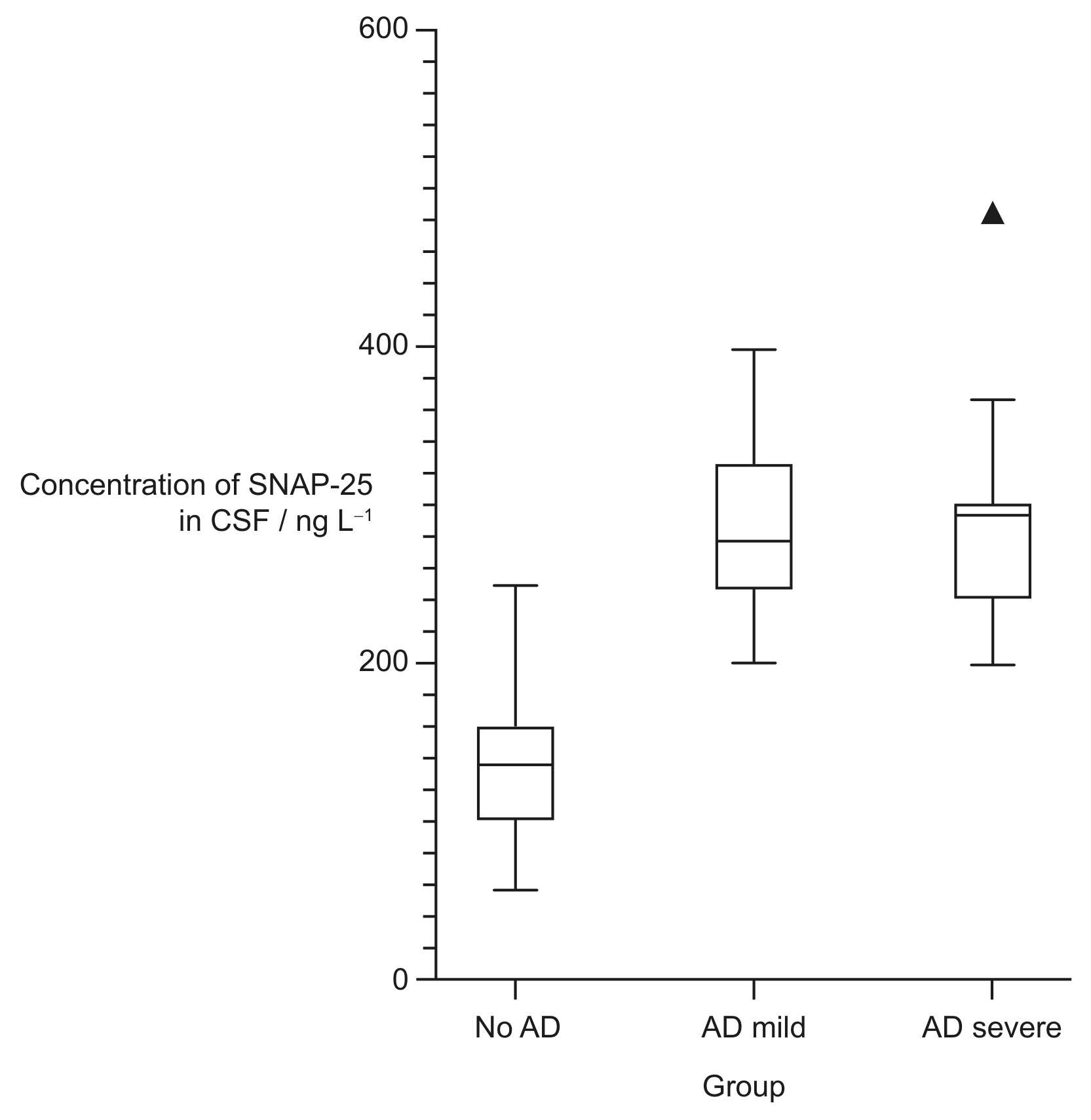
Estimate the median concentration of SNAP-25 in CSF for the AD mild group.
Question 1(e)
Using your knowledge of box-and-whisker plots, state what the data point shown as a triangle represents.
Question 1(f)
Using all the information provided, evaluate the use of SNAP-25 concentration as a potential marker to help confirm a diagnosis of Alzheimer's disease.