EduNinja

IB Biology SLD2.1 Cell and nuclear divisionQuestion Bank

Question 1

[Maximum number: 2]

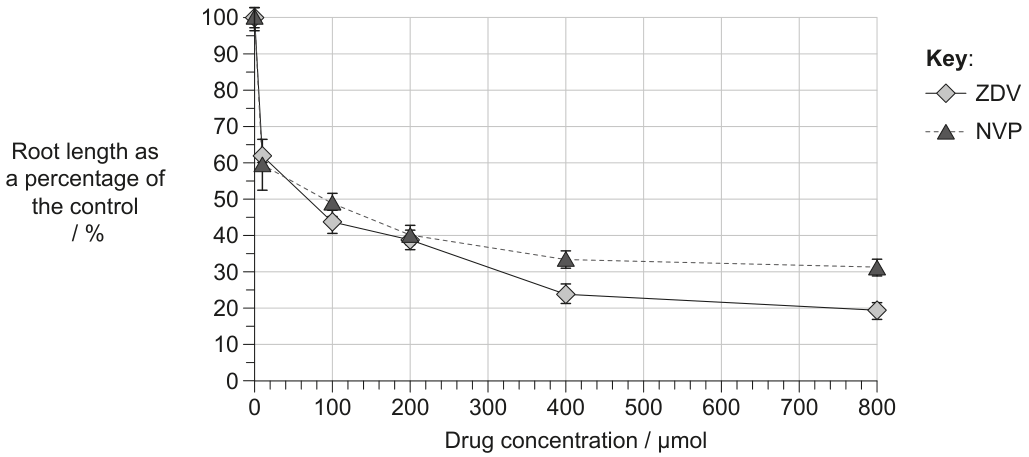
Antiretroviral drugs are used to treat Human Immunodeficiency Virus (HIV) infections. Zidovudine (ZDV) and nevirapine (NVP) are examples of antiretroviral drugs. There are concerns that these drugs may be toxic to body cells in mitosis. In a study using Allium cepa, root tips were exposed to the drugs for 96 hours at a range of concentrations. The control treatment was a drug concentration of 0μ mol0 \mu \mathrm{~mol}. In the graph, root lengths after the 96-hour treatment period are expressed as a percentage of the length of the control.
Question image

Question 1(c)

(a)

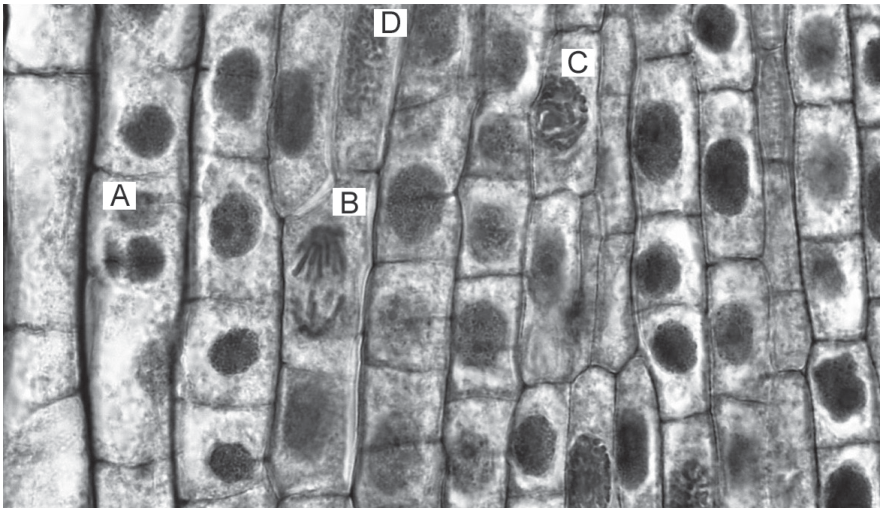
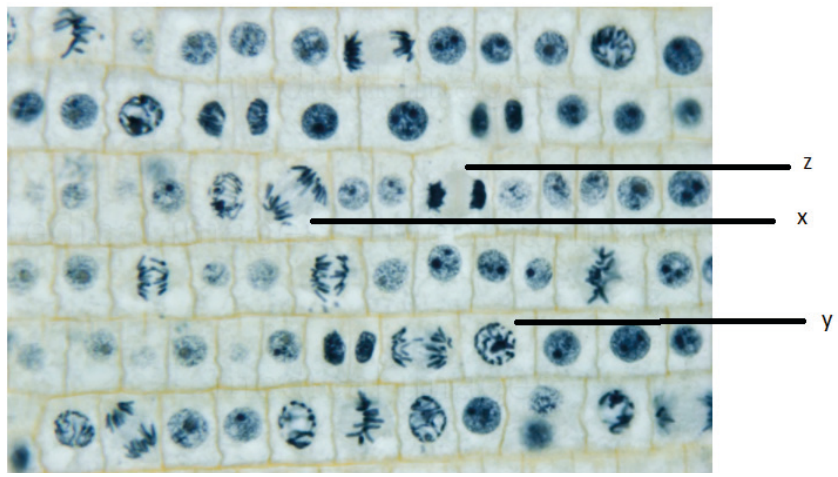
Both ZDV and NVP are believed to have a damaging effect on the process of mitosis but ZDV in particular is believed to block the formation of the spindle.
Question image

Based on this information, suggest with a reason which of the labelled cell types will become more common in Allium root tips treated with ZDV.
[ 2 ]

Question 1

[Maximum number: 1]

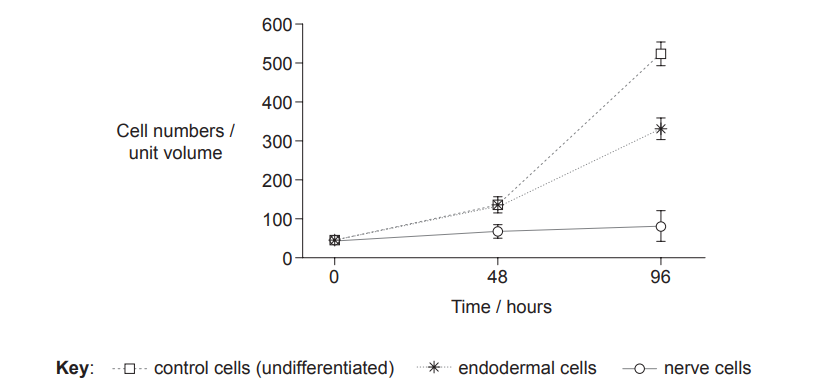
During the development of multicellular organisms, cells differentiate into specific cell lines. A study was carried out on the early stages of differentiation in cells from mouse embryos that were grown in cultures. Two differentiated cell lines were studied, one of inner embryonic tissue (endodermal cells) and the other of external embryonic tissue (nerve cells) after 48 and 96 hours of incubation in cell cultures. A culture of undifferentiated cells was used as a control group. Cell population growth was measured by changes in cell density in all three cell lines.

Question image

Question 1(e)

(a)

Interphase is followed by mitosis. State the final product of the mitotic cell cycle.

[ 1 ]

Question 3

[Maximum number: 1]

The cell theory states that cells come from pre-existing cells. What biological process allows this to occur?

A

Ovulation

B

Differentiation

C

Cytokinesis

D

Exocytosis

Question 3

[Maximum number: 1]

The image shows a micrograph of a cell.

Question image

in_prophase,_metaphase,_anaphase,_telophase).jpg by Doc. RNDr. Josef Reischig, CSc.]

What explains the appearance of the cell in the micrograph?

A

The cell is dying.

B

The DNA is replicating.

C

The cell is in metaphase.

D

The cell is in telophase.

Question 3

[Maximum number: 1]

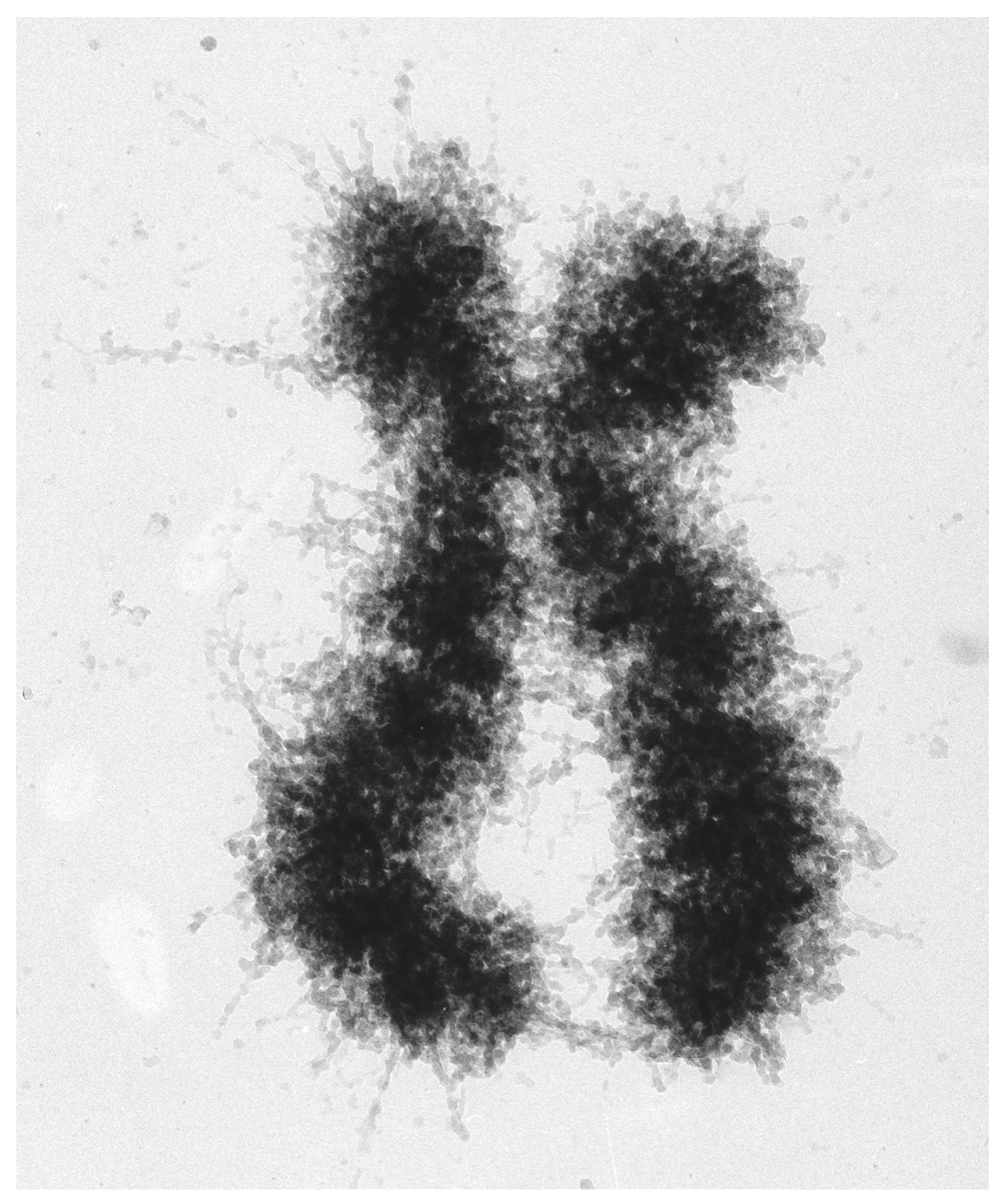
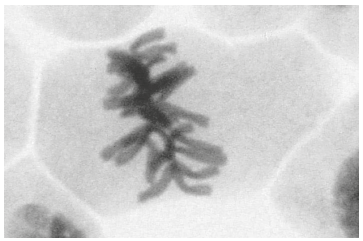
This micrograph is from a dividing cell.

Question image

What is shown in this image?

A

Two condensed chromosomes consisting of four chromatids

B

A chromosome from a cell in telophase of mitosis

C

A chromosome from a cell in G1 of interphase

D

A chromosome from a cell in metaphase

Question 4

[Maximum number: 1]

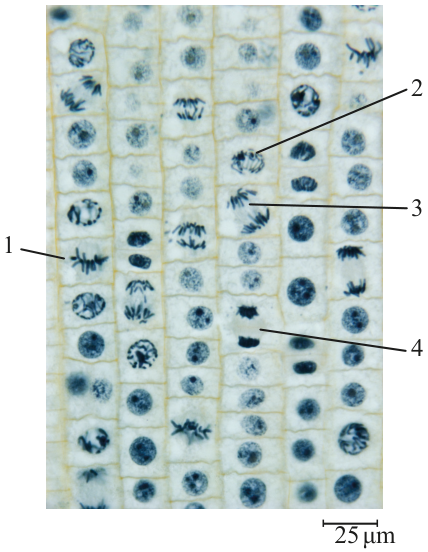
The following shows a micrograph.

Question image

In what order do the events in mitosis occur?

A

1234

B

1243

C

2143

D

2134

Question 4

[Maximum number: 1]

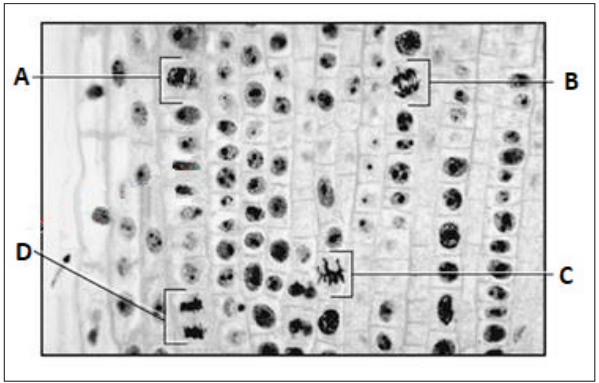
In the micrograph, which letter points to a cell in anaphase?

Question image

Question 5

[Maximum number: 1]

How many chromosomes are there in a cell during anaphase of mitosis, if the diploid numberof the cell is 20 ?

A

10

B

20

C

40

D

80

Question 5

The image shows cells in the different stages of mitosis. Which cell is in telophase?

Question image

Question 5

[Maximum number: 1]

Which is the sequence of events in mitosis?

A

metaphase, anaphase, telophase, prophase

B

anaphase, prophase, telophase, metaphase

C

telophase, prophase, metaphase, anaphase

D

prophase, metaphase, anaphase, telophase

0 selected