EduNinja

IB Biology SLD1.2 Protein synthesisQuestion Bank

Question 1

[Maximum number: 7]

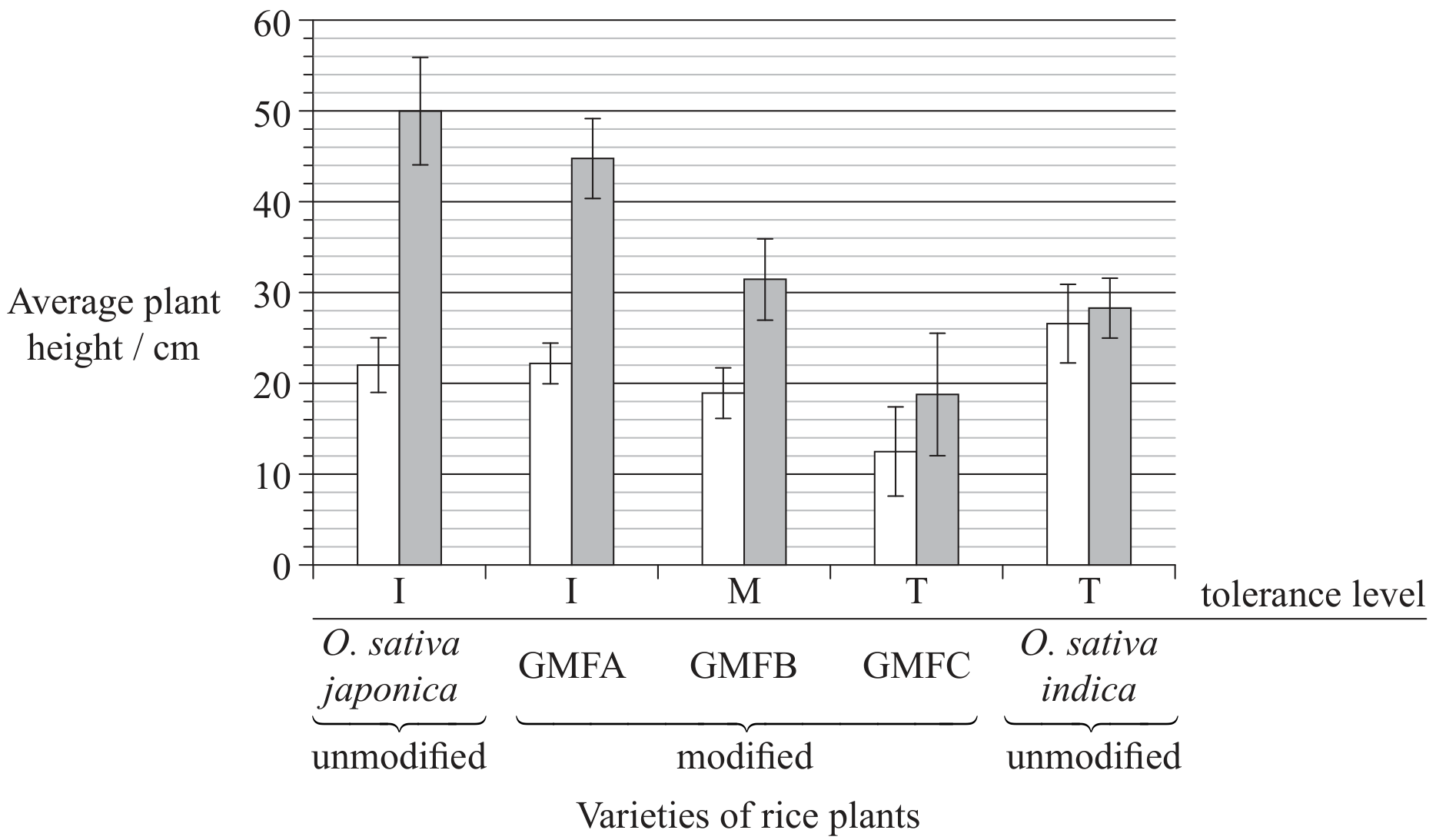
Rice (Oryza sativa) is usually intolerant to sustained submergence under water, although it grows rapidly in height for a few days before dying. This is true for one variety, Oryza sativa japonica. The variety Oryza sativa indica is much more tolerant to submergence.

Three genetically modified forms of O. sativa japonica, GMFA, GMFB and GMFC, were made using different fragments of DNA taken from O. sativa indica.

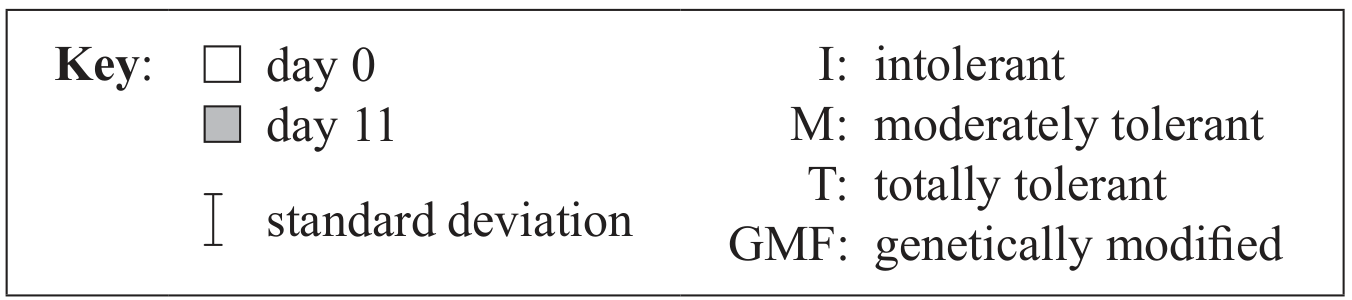
The plants were then submerged for a period of 11 days. The heights of all the plants were measured at the beginning and at the end of the submergence period.
Question image
Question image

Question 1(e)

(a)

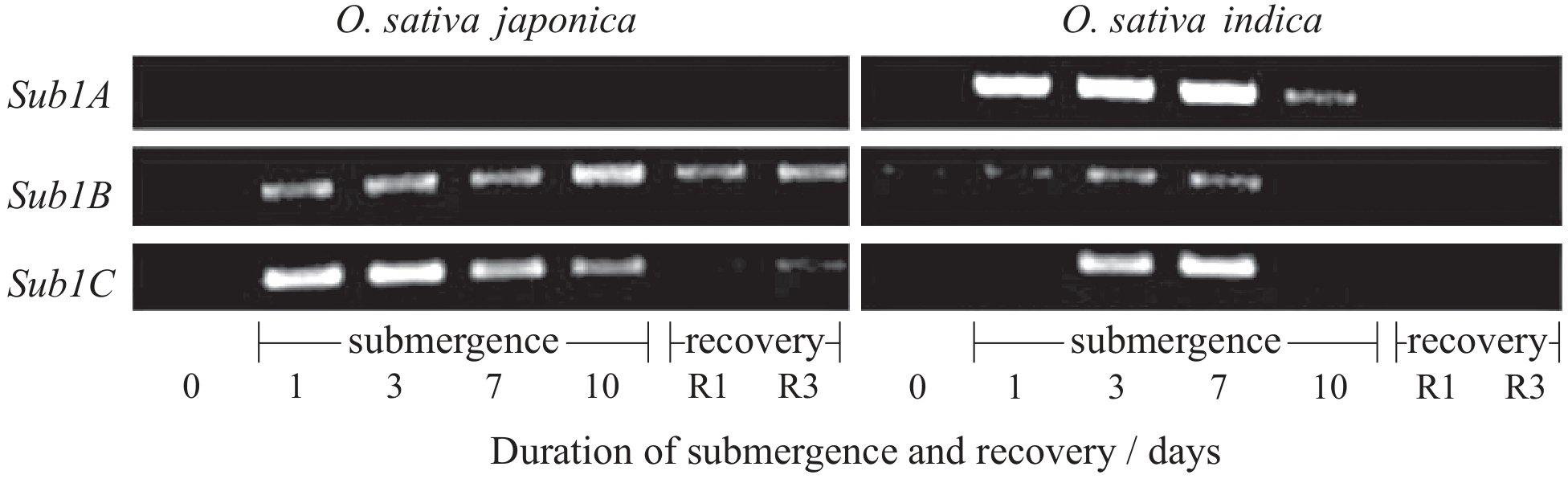
In the same experiment, the researchers hypothesized that the capacity to survive when submerged is related to the presence of three genes very close to each other on rice chromosome number 9; these genes were named Sub1A, Sub1B and Sub1C. The photograph below of part of a gel shows relative amounts of messenger RNA produced from these three genes by the submergence-intolerant variety, O. sativa japonica, and by the submergence-tolerant variety, O. sativa indica, at different times of a submergence period, followed by a recovery period out of water.
Question image
[ 5 ]

Question 1(e)(i)

(i)

Determine which gene produced the most mRNA on the first day of the submergence period for variety O. sativa japonica.

[ 1 ]

Question 1(e)(ii)

(ii)

Outline the difference in mRNA production for the three genes during the submergence period for variety O. sativa indica.

[ 2 ]

Question 1(e)(iii)

(iii)

Compare the mRNA production for the three genes during the submergence period between the two varieties.

[ 2 ]

Question 1(f)

(b)

Deduce, using all the data, which gene was used to modify GMFC.
[ 2 ]

Question 4

[Maximum number: 1]

Where in the cell do condensation reactions involving amino acids occur?

A

Nucleus

B

Golgi apparatus

C

Ribosomes

D

Lysosome

Question 6

[Maximum number: 1]

What occurs during translation?

I. Polypeptides synthesised on ribosomes
II. RNA polymerase catalyses polypeptide synthesis
III. Complementary base pairing between codons and anticodons

A

I and II only

B

I and III only

C

II and III only

D

I, II and III

Question 6

[Maximum number: 1]

The table shows information on the genetic code of four different mRNA sequences. Which sequence demonstrates degeneracy in the genetic code?

mRNA sequence

Amino acids

UUU UUA UCU

Phe Leu Ser

CUU CCU CUU

Leu Pro Leu

AUG ACG AAG

Met Thr Lys

GUU GGU GUG

Val Gly Val

Question 6

[Maximum number: 1]

This is a sequence of nucleotides from a section of mRNA.
AUGAAACGCACGCAG
From which DNA sequence has it been transcribed?

A

ATGAAACGCACGCAG

B

UACUUUGCGUGCGAC

C

TACUUUGCGTGCGTC

D

TACTTTGCGTGCGTC

Question 7

[Maximum number: 1]

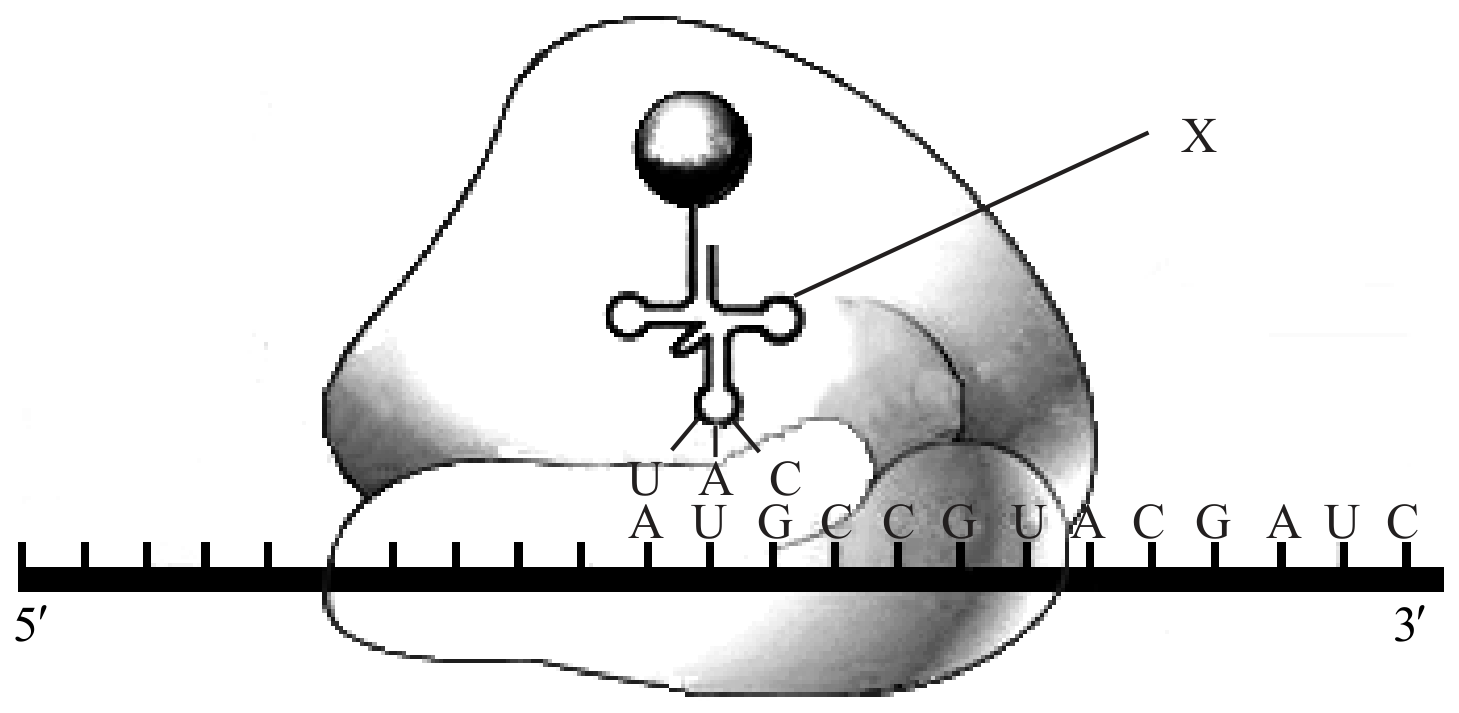
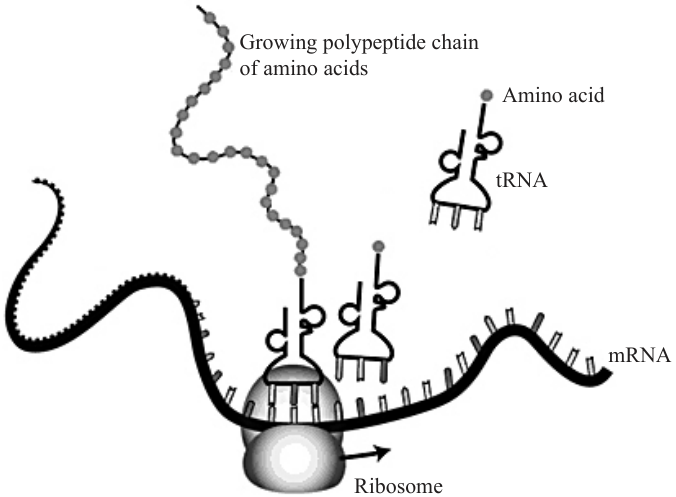
The diagram shows the translation of a mRNA molecule.

Question image

[Content provided by The National Human Genome Research Institute.]

A tRNA molecule with anticodon CAG carries the amino acid phenylalanine. Which codon of mRNA will the tRNA join?

A

CTG

B

CAG

C

GTC

D

GUC

Question 7

[Maximum number: 1]

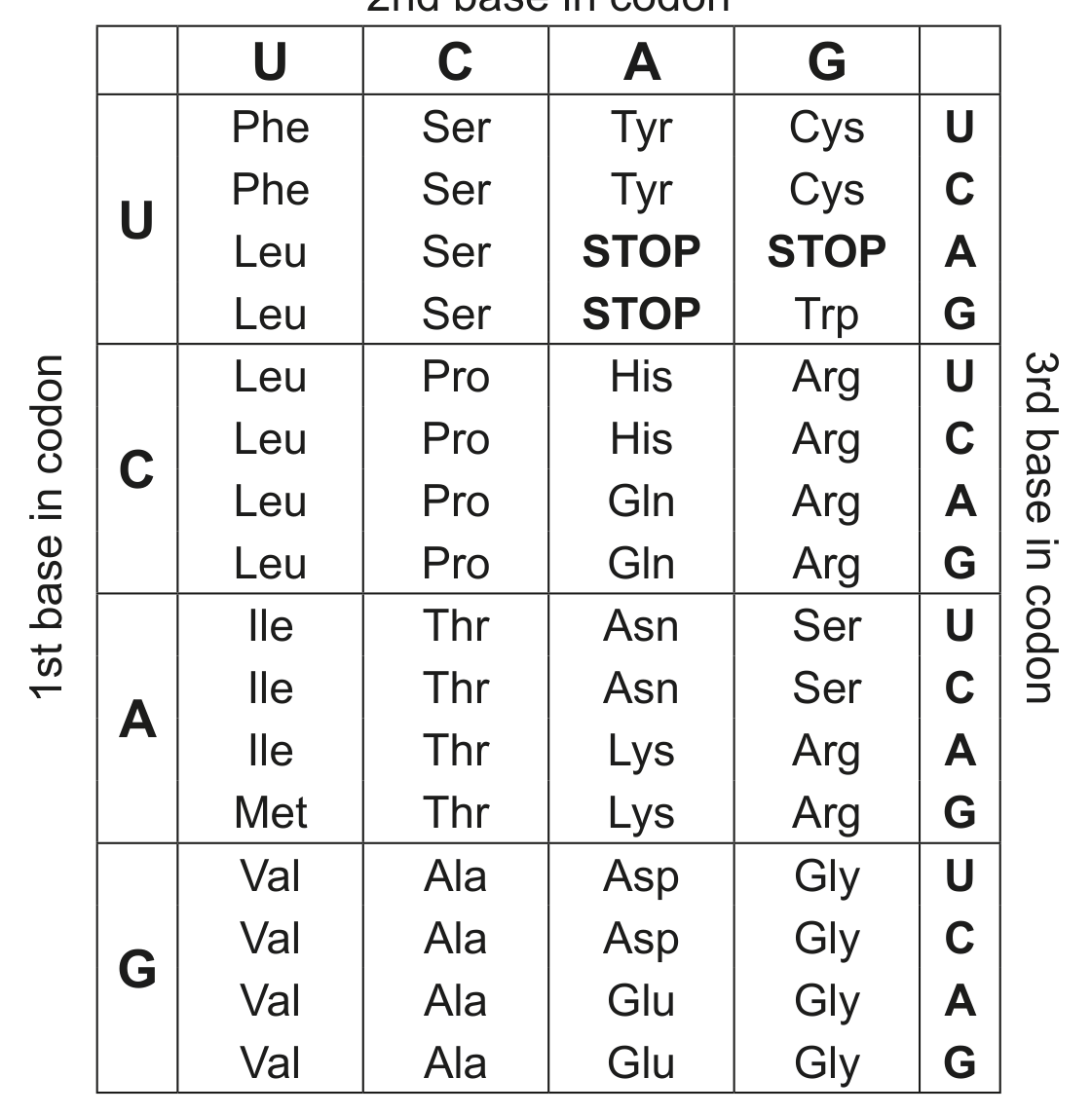
The table shows the genetic code.

2nd base in codon

2nd base in codon

Which mRNA could code for the sequence Ser-Leu-Arg-Phe?

A

UCA UCG UGG UUU

B

UCC ACC AGA UUC

C

UCU CCC AGA UUU

D

UCG CUG AGG UUC

Question 7

[Maximum number: 1]

The antibiotic rifampicin is widely used to treat bacterial infections. It kills bacterial cells by interfering with transcription during protein synthesis. Which process would be directly prevented by rifampicin?

A

Base pairing between mRNA codons and tRNA anticodons

B

Bonding between amino acids

C

Movement of tRNA to the ribosome

D

Synthesis of mRNA from DNA

Question 8

[Maximum number: 1]

Where are amino acids joined together to make polypeptides?

A

Nucleus

B

Nucleolus

C

Golgi apparatus

D

Ribosomes

Question 9

[Maximum number: 1]

What sequence of processes is carried out by the structure labelled X during translation?

Question image
A

Combining with an amino acid and then binding to an anticodon

B

Binding to an anticodon and then combining with an amino acid

C

Binding to a codon and then combining with an amino acid

D

Combining with an amino acid and then binding to a codon

0 selected