EduNinja

IB Biology SLC4.1 Populations and communitiesQuestion Bank

Question 1

[Maximum number: 4]

The grey partridge (Perdix perdix) is a species of bird that is found on farmland. Sparrowhawks (Accipiter nisus) and buzzards (Buteo buteo) are birds of prey that kill and feed on birds, including grey partridge. The number of grey partridges in a region of southern England was monitored from 1970 to 2004. The numbers of sparrowhawks and buzzards, seen from sampling positions during regular observation periods, were counted. The results are shown in the graph below.
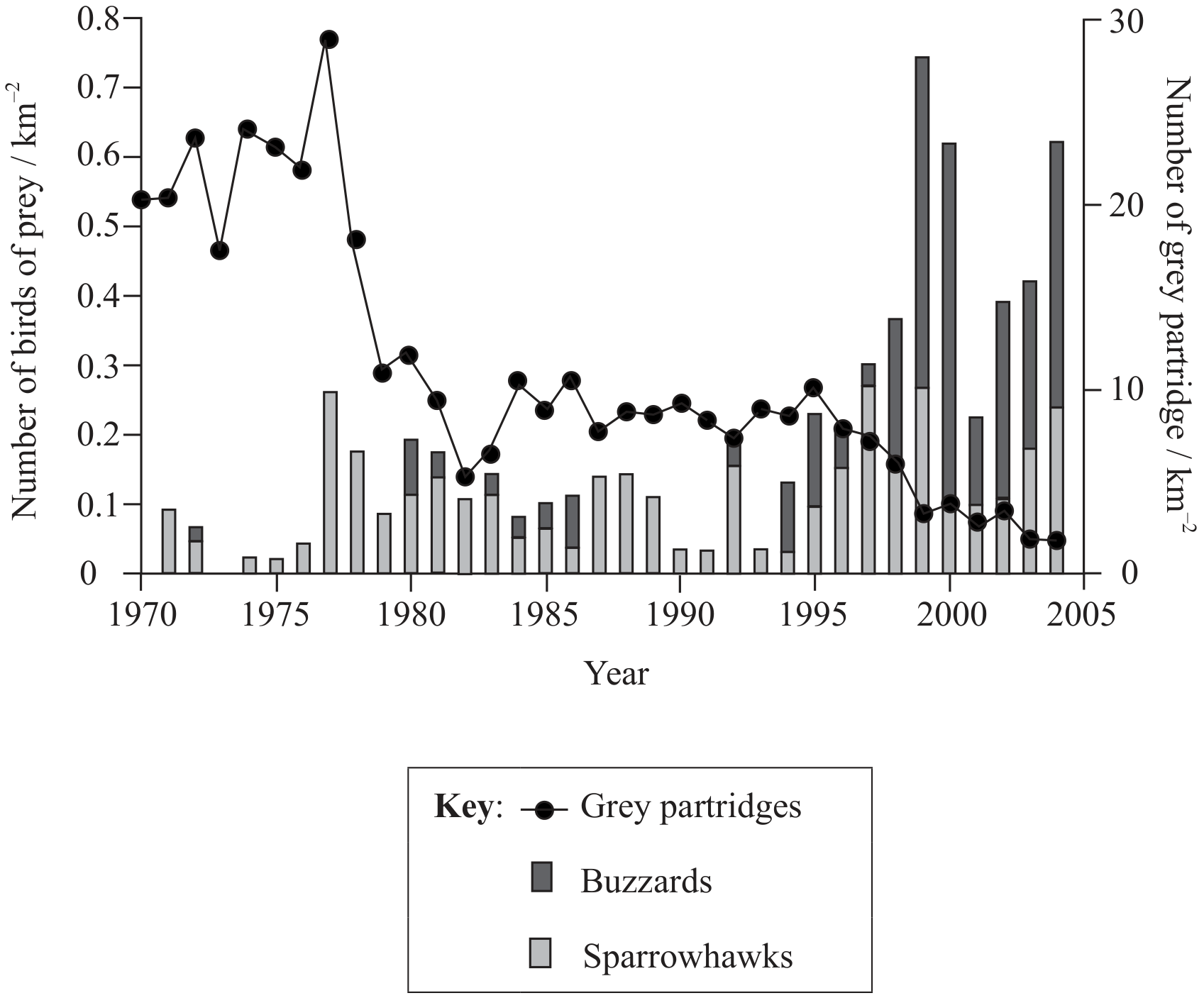
Question image

Question 1(b)

(a)

The density of grey partridge (number per square kilometre) varied considerably in different areas within the study region. The graph below shows the correlation between the density of grey partridges and the density of birds of prey.
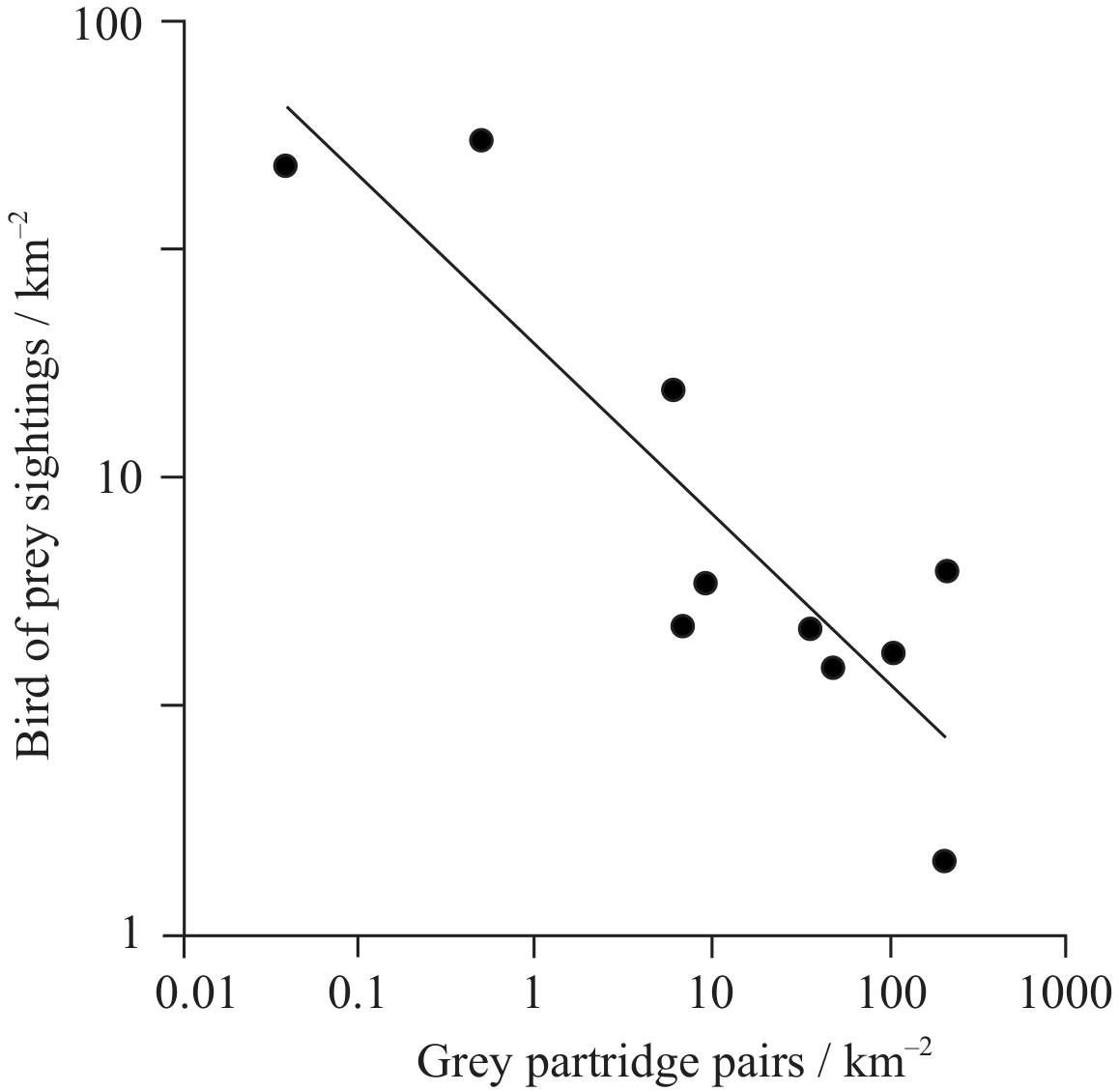
Question image
[ 1 ]

Question 1(b)(i)

(i)

Identify the correlation between the density of grey partridges and birds of prey.

[ 1 ]

Question 1(c)

(b)

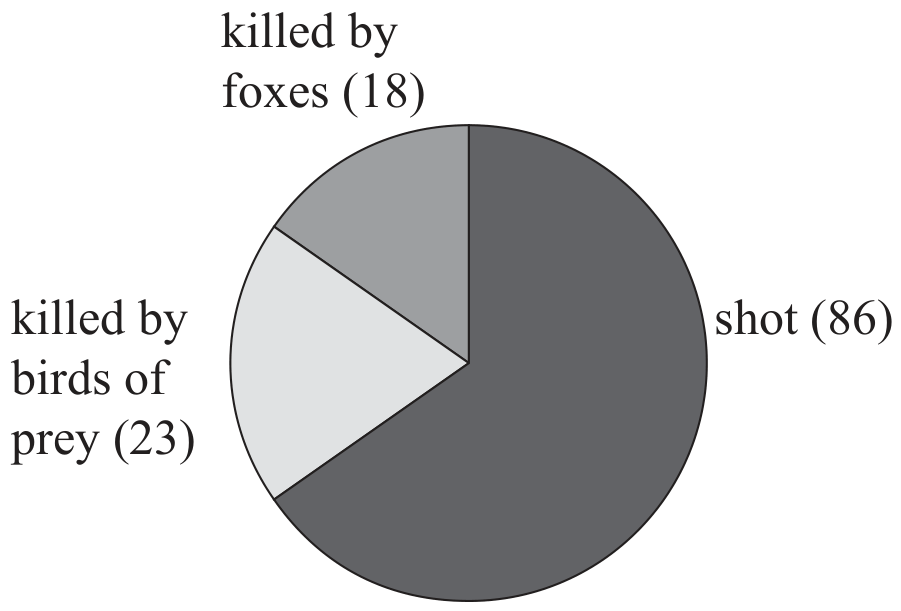
The highest density of birds of prey was found in areas used for recreational shooting. In these areas, other species of partridge were bred and released. Food and shelter were provided for the released birds. These measures tended to increase the number of both released and wild birds.

The causes of death of grey partridge were investigated in one of the areas that was used for recreational shooting. The pie chart below shows the causes of death.
Question image
[ 3 ]

Question 1(c)(ii)

(i)

Using the data provided, discuss the causes of the correlation between the density of grey partridges and the density of birds of prey.
[ 3 ]

Question 1

Question 1(a)

(a)

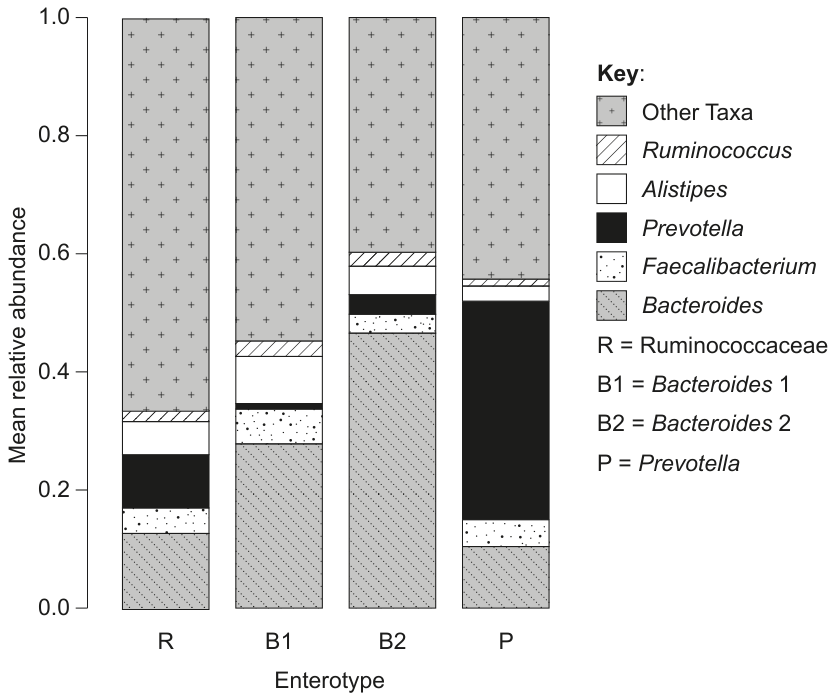
1. There is increasing interest in the bacteria that live in the human gut, known as the gut microbiota. Evidence is accumulating of widespread effects on human health, with some species of bacteria increasing the prevalence of specific diseases and others giving protection.

Long-term diet appears to influence the numbers and types of bacteria that are present in an individual's gut. Several different characteristic combinations of bacteria (called enterotypes) have been discovered. The stacked column graph shows relative amounts of different genera of bacteria in the gut of people with four of these enterotypes. The Bacteroides 2 (B2) enterotype is associated with an increased prevalence of inflammatory bowel disease.

Question image

Using the data in the stacked column graph, describe the features that characterize the B2 enterotype.

[ 2 ]

Question 1

[Maximum number: 8]

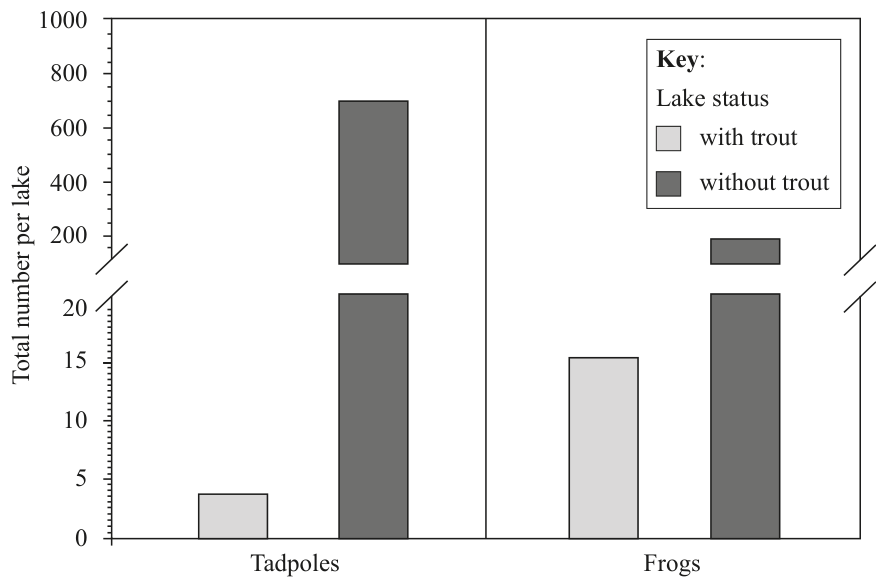
The mountain yellow-legged frog (Rana muscosa) was once a common inhabitant of the Sierra Nevada (California, USA). It has declined during the past century due in part to the introduction of non-native fish, such as trout, into naturally fish-free habitats. The bar chart shows the average number per lake of tadpoles (aquatic larval stage) and frogs in lakes with and without trout in 1996.

Question image

Question 1(b)

(a)

Compare results for lakes with and without trout.

[ 2 ]

Question 1(c)

(b)

The trout might affect the number of frogs or tadpoles by competing for resources. Suggest one other way in which trout might affect the number of tadpoles or frogs in lakes.

[ 1 ]

Question 1(f)

(c)

Describe the effect of removing trout on frog density in Upper and Lower LeConte Lakes.

[ 3 ]

Question 1(g)

(d)

Using the map and graph, predict whether the removal of the trout from Upper and Lower LeConte Lakes will lead to a permanent recovery in the number of frogs and tadpoles.

[ 2 ]

Question 1

[Maximum number: 2]

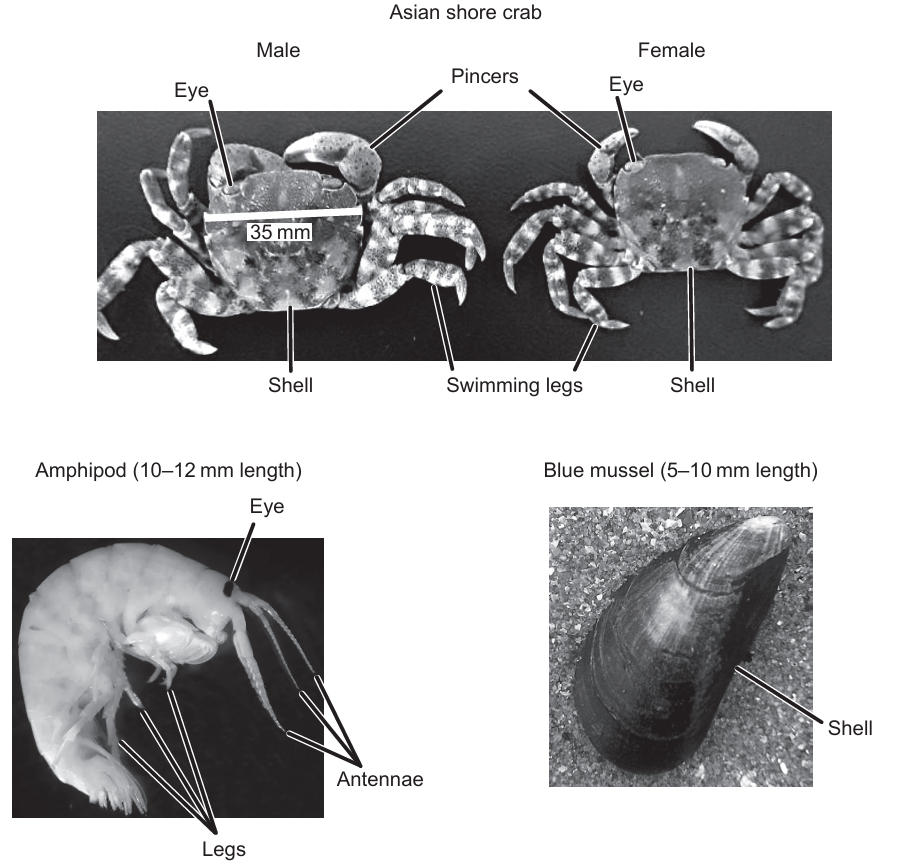
The Asian shore crab (Hemigrapsus sanguineus) is an invasive invertebrate species found along the French coast. It preys on another invasive species, the amphipod Ptilohyale littoralis, and also on the blue mussel (Mytilus edulis), a native species. Scientists studied the relationships between the species.

Question image

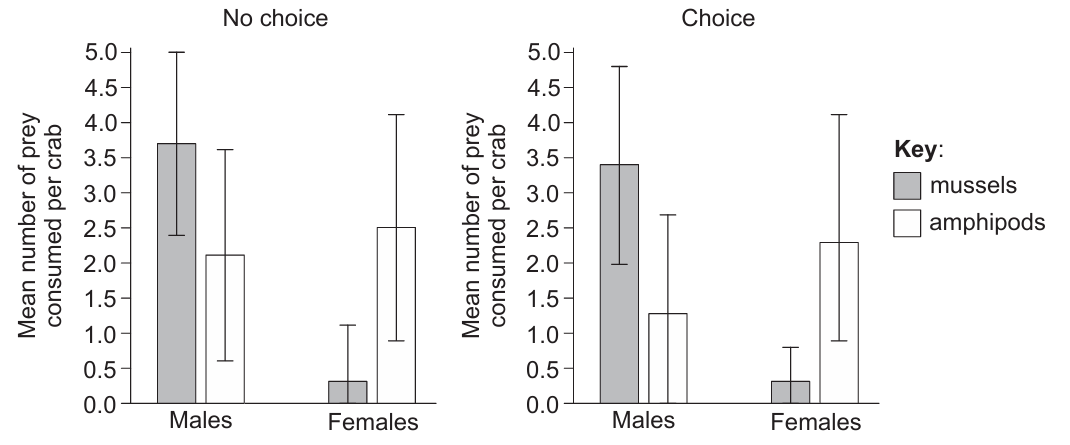
In order to study which prey is preferred by the crabs, each crab was put into a tank for 12 hours containing only one species of prey at a time (no choice) or containing both species at the same time (choice). 15 crabs of each sex were tested. The graphs show the mean number of prey consumed by male and female crabs.

Question image

Question 1(a)

Question 1(a)(ii)

(a)
(i)

Suggest a reason for the prey preference of the male compared to the female.

[ 1 ]

Question 1(a)(iii)

(ii)

Suggest a characteristic of the prey that could affect the feeding choice for either sex of crab.

[ 1 ]

Question 1

[Maximum number: 2]

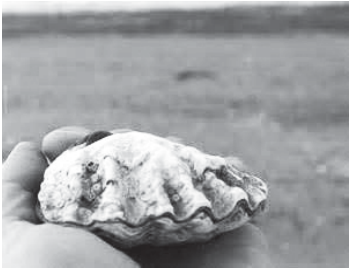
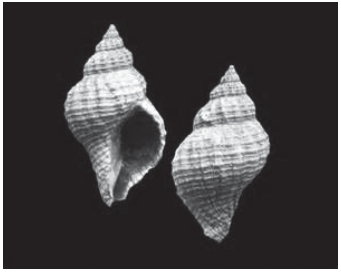
Native oyster populations are decreasing where rivers meet the ocean along the northwest coast of North America. These oyster populations are being attacked by a gastropod.

Adult oyster, Ostrea lurida

Adult oyster, Ostrea lurida

Adult gastropod shell, Urosalpinx cinerea

Adult gastropod shell, Urosalpinx cinerea

It is known that oysters and gastropods have hard parts composed of calcium carbonate and that ocean acidification is increasing. Studies were carried out using juvenile oysters and gastropods to investigate the effects of acidification on the decrease in the population of oysters.

The first step was to raise oysters in two different mesocosms. One had seawater at a normal concentration of CO2\mathrm{CO}_{2} and the other had sea water with a high concentration of CO2\mathrm{CO}_{2}. Gastropods were raised in two further mesocosms with normal and high CO2\mathrm{CO}_{2} concentrations respectively.

Question 1(d)

Question 1(d)(ii)

(a)
(i)

Suggest reasons for the differences in the numbers of oysters drilled, as shown in the bar charts.

[ 2 ]

Question 1

[Maximum number: 2]

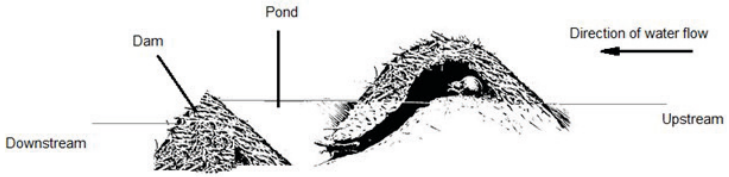
Beavers are large rodents that live in waterways throughout the northern hemisphere. Dams made by beavers change the temperature of the streams and affect the mayfly, Baetis bicaudatus. In the summer of 2008, beaver ponds in West Brush Creek and Cement Creek, Colorado, were studied to evaluate their impacts on mayflies. The study sites included streams flowing into (upstream) and out of (downstream) each beaver pond.

Question image

Mayflies, including the species B. bicaudatus, are aquatic insects that hatch and spend their larval stages in water emerging from the water as adults. Larger females produce an increased number of better quality eggs.

Question 1(g)

(a)

The North American beaver (Castor canadensis) was introduced to islands adjacent to Argentina and Chile where they have become an invasive species. Discuss one ecological criterion (a basis for deciding) whether beavers are harmful or helpful to the ecosystems there.

[ 2 ]

Question 1

[Maximum number: 7]

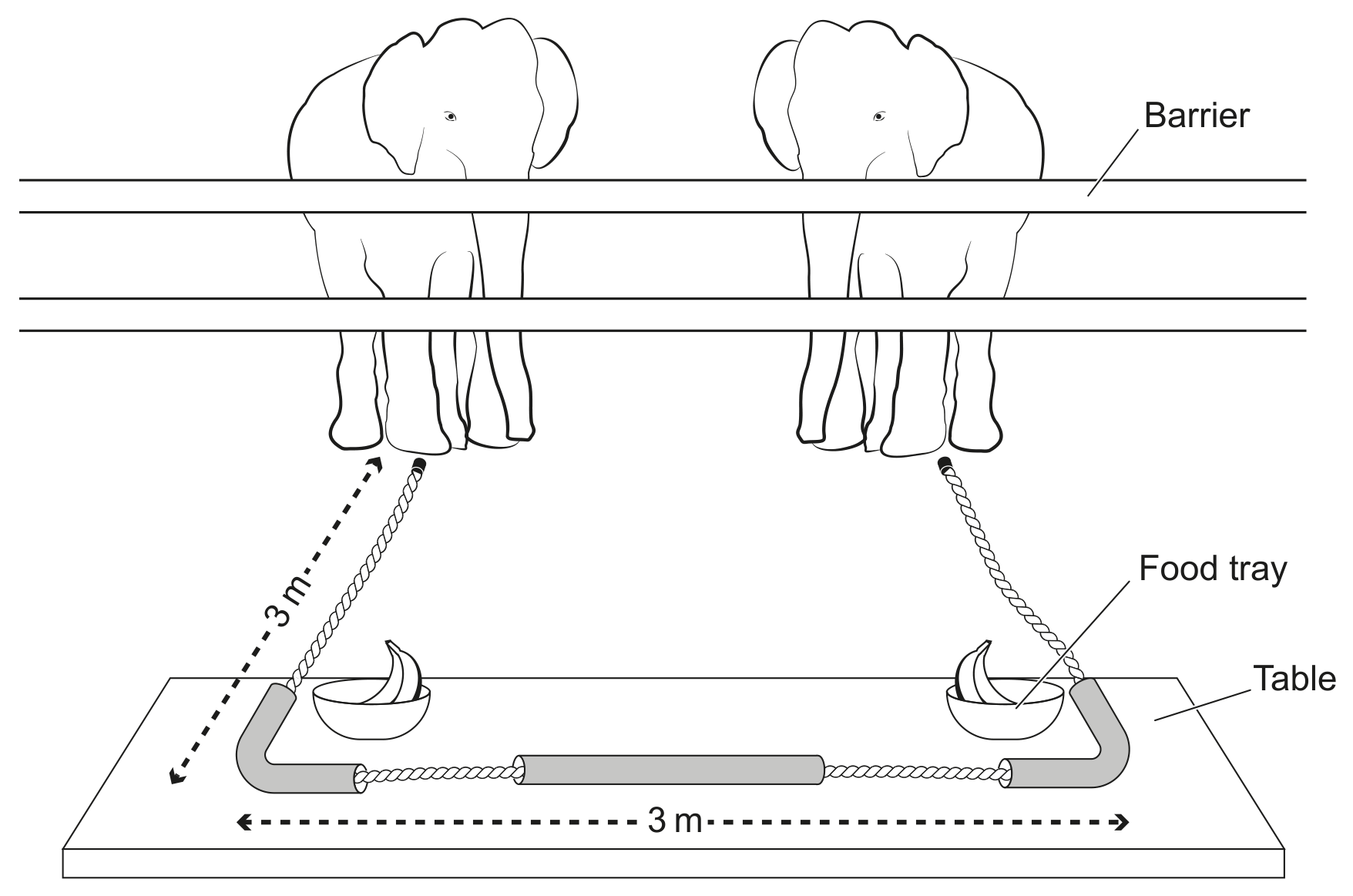
A group of nine semi-wild Asian elephants (Elephas maximus) from an elephant camp in Myanmar were trained to pull two ends of a single rope to get access to food in food trays located on a table behind a barrier. When both elephants pulled the rope, the table moved towards them making the food trays accessible. The task required two elephants to work together in cooperation for mutual benefit to obtain food.

Question image

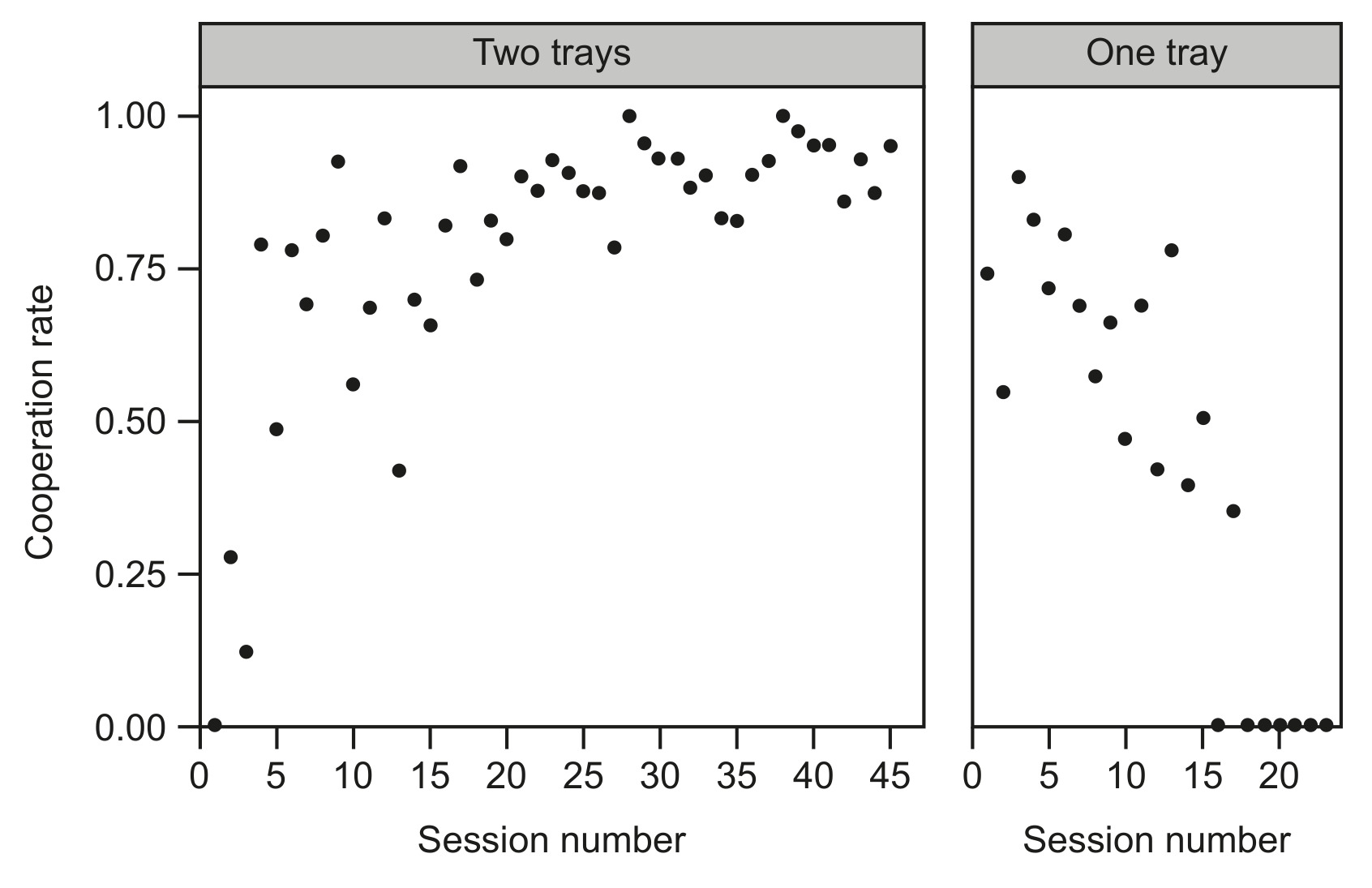
The graph shows the rate of cooperation between pairs of elephants in pulling the rope when there were two food trays, one at each end of the table (as shown in the diagram), or when there was one food tray placed in the centre of the table. The cooperation rate was the number of successful cooperative attempts divided by the number of all attempts in one session. The experiment was repeated for many sessions on successive days.

Question 1(a)

(a)
Question image

Using the graph, describe how the elephants cooperated when two food trays were available.

[ 2 ]

Question 1(b)

(b)

Outline the reason that the one-tray experiment was carried out for fewer sessions than the two-trays experiment.

[ 1 ]

Question 1(c)

(c)

Suggest a reason for the difference in the response of the elephants between the two-tray and one-tray experiments.

[ 1 ]

Question 1(e)

(d)

Compare and contrast the frequency of monopoly and fighting when there is a change from two trays to one tray of food.

[ 2 ]

Question 1(f)

(e)

Suggest a reason for the observed changes in competition.

[ 1 ]

Question 2

[Maximum number: 1]

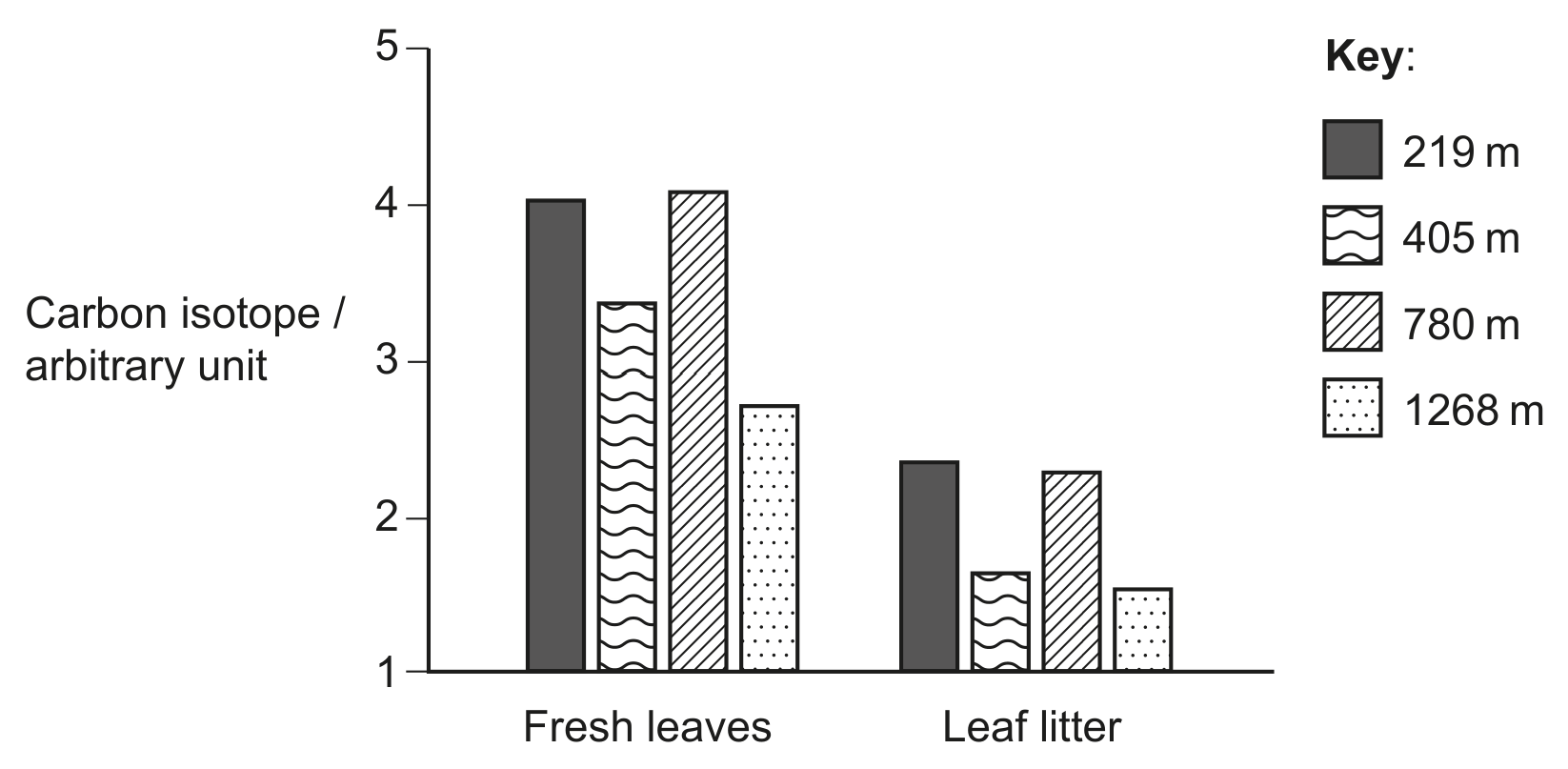
A study was conducted on the presence of a form (isotope) of carbon, carbon- 13(13C)13\left({ }^{13} \mathrm{C}\right), in trees at four different altitudes of Lushan, a mountain in central subtropical China.

Samples of fresh leaves and leaf litter (dead leaves on the ground) were taken from altitudes between 219 m and 1268 m . The carbon isotope in the leaves was measured in each sample. Presence of the carbon isotope was measured to indicate the relative uptake of carbon dioxide in photosynthesis.

Question image

Question 2(a)

(a)

State the method that is used to measure changes in the distribution of organisms and abiotic factors across a specific distance.

[ 1 ]

Question 2

[Maximum number: 3]

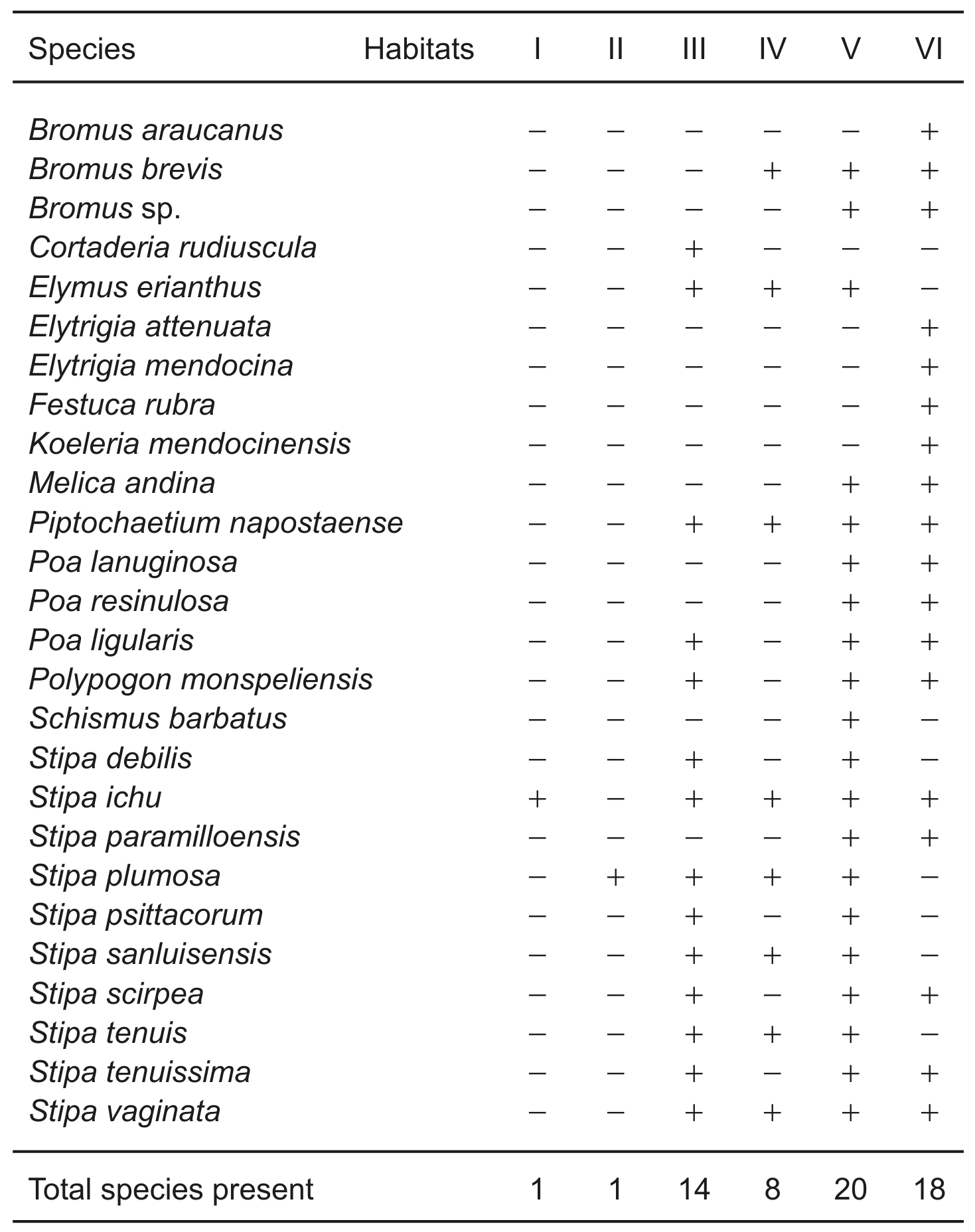
The distribution of native grasses in a temperate arid region of Mendoza, Argentina, was studied in six habitats (I to VI) at different altitudes. The table shows the presence (+) or absence (-) of the species in each habitat.

Table

Question 2(c)

(a)

Explain how the number of organisms of each species could be determined experimentally.

[ 3 ]

Question 2

[Maximum number: 3]

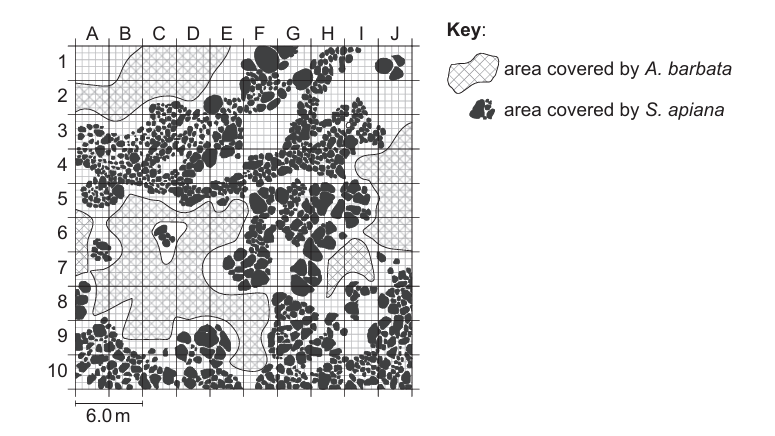
White sage (Salvia apiana) is a native Californian shrub. Slender oat (Avena barbata) is a grass, originally from the Mediterranean, which was introduced to California. The map shows the distribution of the two species in relation to one another in an area near Santa Ynez, California.

Question image

Using the scale bar, determine the area of quadrat A1, giving the units.

Question 2(b)

(a)

Outline how chi-squared can be used to test for an association between the distributions of the two species.

[ 3 ]
0 selected