EduNinja

IB Biology SLC1.3 PhotosynthesisQuestion Bank

Question 1

[Maximum number: 3]

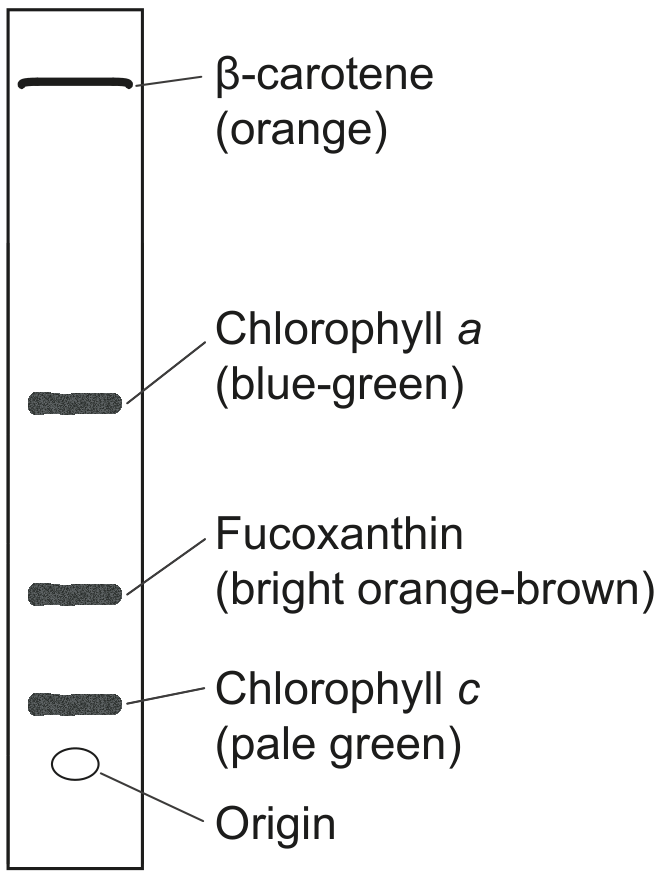
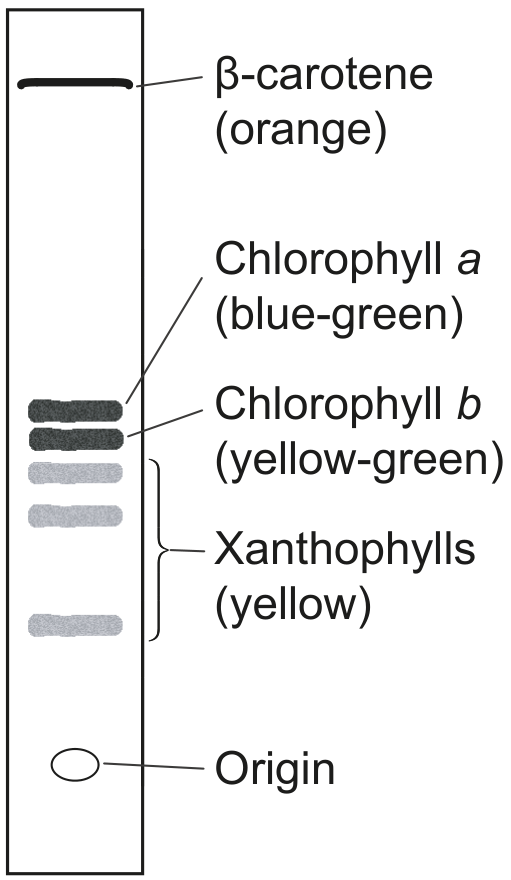
Chromatography is a technique used to separate the components of a mixture. The photosynthetic pigments from three organisms were separated by thin layer chromatography: spinach (Spinacia oleracea), a red alga (Porphyra) and a brown alga (Fucus).
Spinacia oleracea
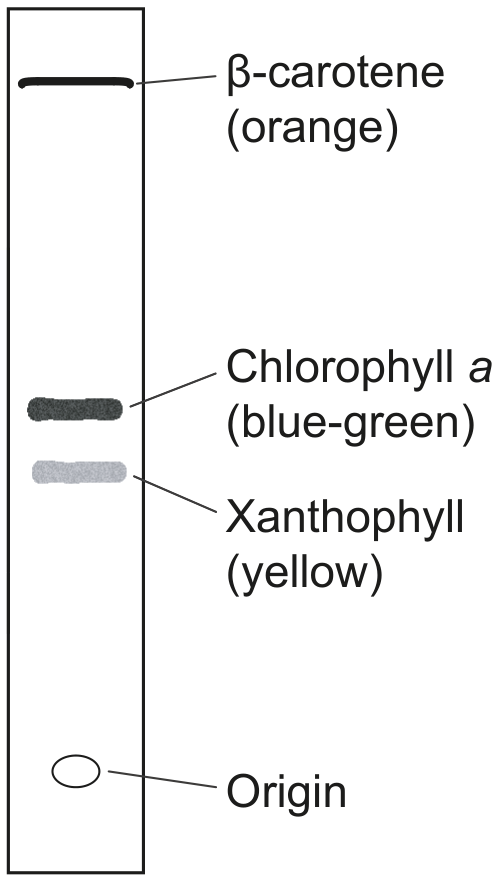
Spinacia oleracea

Porphyra

Porphyra

Fucus

Fucus

Question 1(b)

(a)

Compare and contrast absorption spectra and action spectra.

[ 2 ]

Question 1(c)

(b)

Porphyra also contains phycoerythrin, which is a red pigment.

[ 1 ]

Question 1(c)(ii)

(i)

Predict one colour of light that will be absorbed efficiently by phycoerythrin.

[ 1 ]
Question 1

[Maximum number: 1]

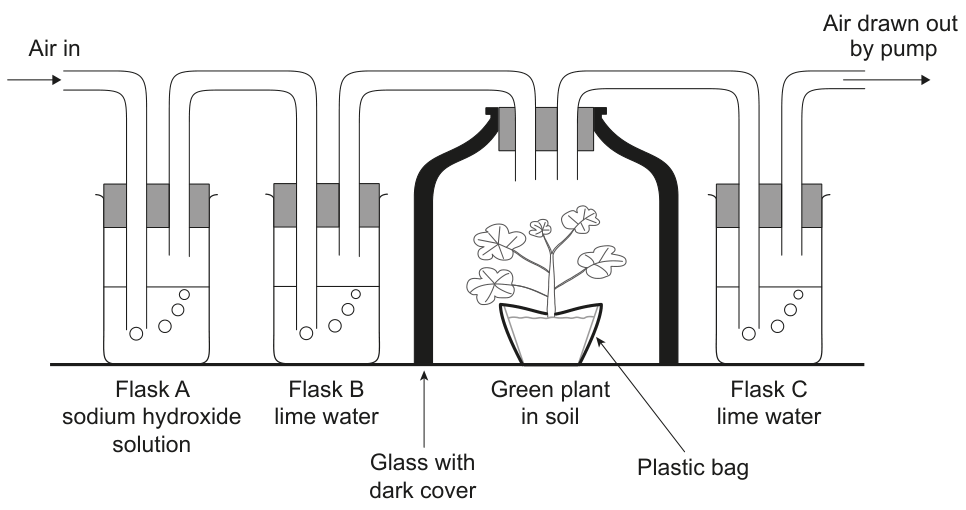
An experiment on aerobic respiration was performed using a plant in a pot containing fertile soil. The apparatus was set up as shown in the diagram. Sodium hydroxide and limewater (calcium hydroxide) are both alkaline solutions. Limewater goes cloudy when carbon dioxide is bubbled into it.

Question image

Question 1(d)

(a)

The same apparatus was used in another experiment, but the potted plant was exposed to light. Predict with a reason the results for lime water in flask C after one hour.

[ 1 ]

Question 1

[Maximum number: 6]

Ozone gas in the atmosphere helps to block high-energy ultraviolet light (UV) from reaching the Earth's surface. Over the past few decades, the ozone layer has been decreasing, thus allowing through more UV.

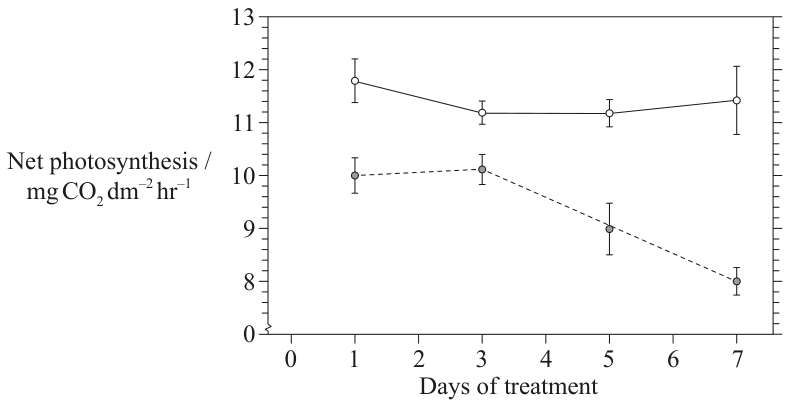
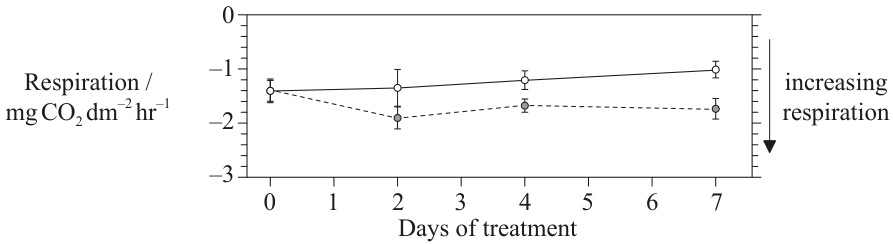
The effect of this decrease in the ozone has been studied in different plants. An early study was undertaken on patience dock plants (Rumex patientia) to test the effect of atmospheric ozone levels decreasing by 38 %. The net photosynthesis (total photosynthesis minus total respiration) and respiration of the plants were measured during seven days of exposure to UV. The rates of photosynthesis and respiration are given in rates of carbon dioxide uptake per unit area of leaf.

Question image
Key: -- control plants - - exposed to UV with 38 % less ozone

Key: -- control plants - - exposed to UV with 38 % less ozone

Question 1(b)

(a)

Distinguish between the results for the plants exposed to UV and the controls without UV in

[ 2 ]

Question 1(b)(i)

(i)

Distinguish between the results for the plants exposed to UV and the controls without UV in net photosynthesis.

[ 2 ]

Question 1(c)

(b)

The rate of photosynthesis can be measured by the rate of carbon dioxide uptake.

State two other ways that the rate of photosynthesis may be measured.

Some recent measurements indicate a 60 % thinning of the ozone layer in some parts of the atmosphere.

[ 2 ]

Question 1(e)

(c)

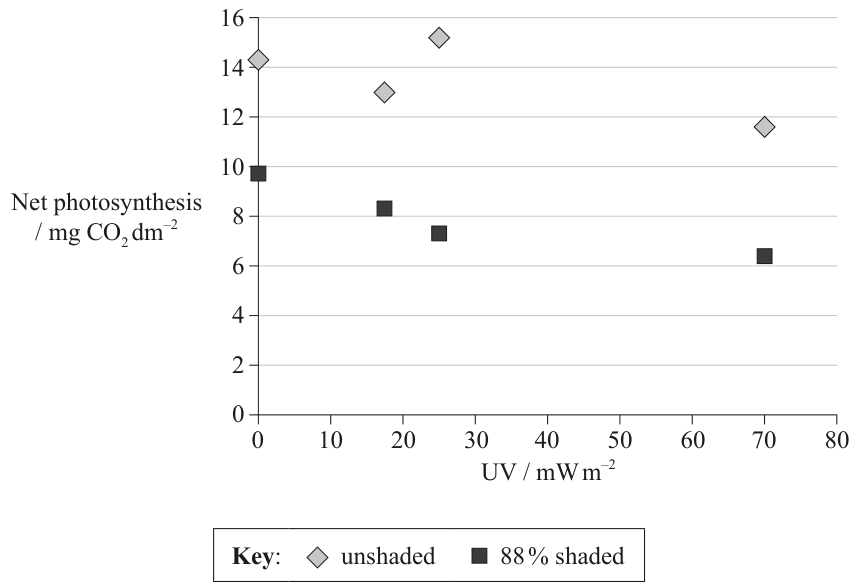
Another study was undertaken to investigate the cumulative effects of different levels of UV over a six week period on net photosynthesis in soybean (Glycine max). One set of plants was in full sunlight (unshaded) and the other set received only 12 % of full sunlight ( 88 % shaded). UV was given using lamps above all of the plants.

Question image

Compare the results of the unshaded and shaded plants.

[ 2 ]

Question 1

[Maximum number: 3]

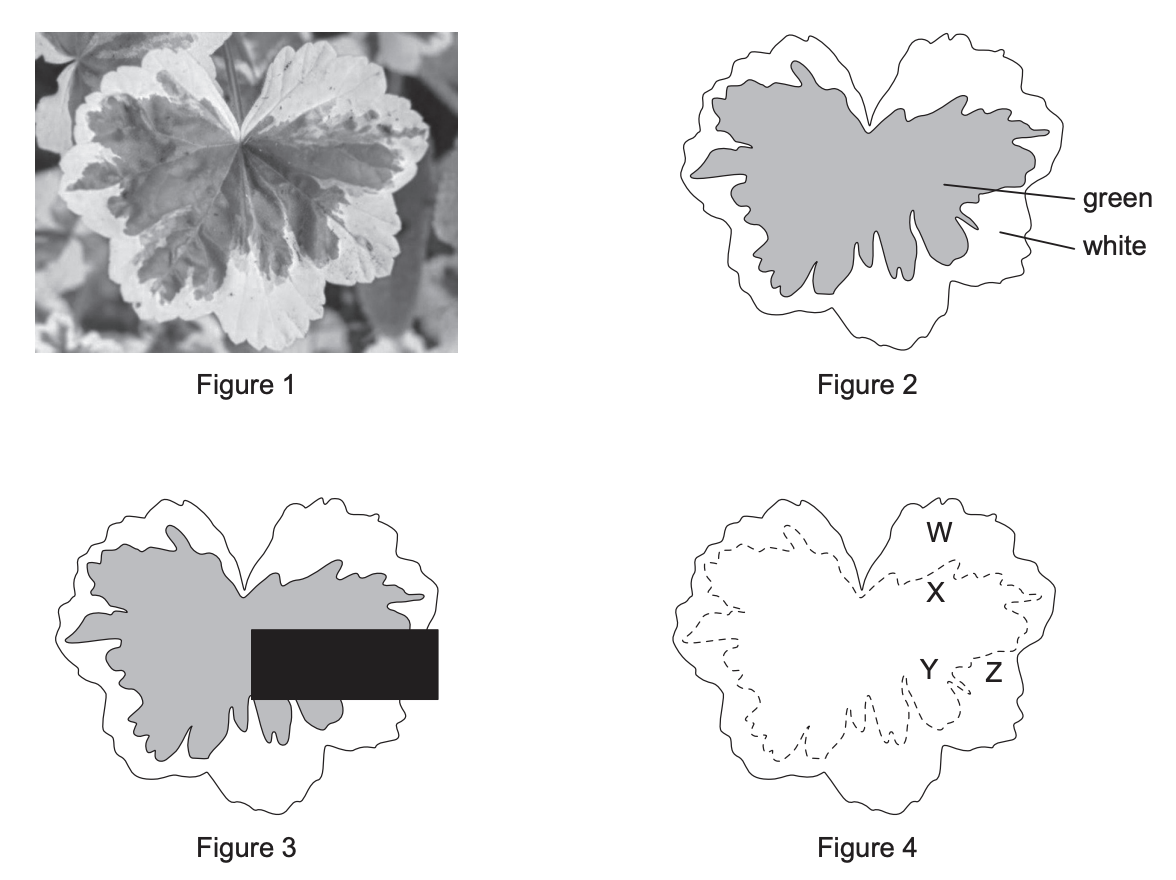
A variegated Pelargonium plant was grown outdoors in a plant pot. Figure 1 shows one leaf of the Pelargonium. The plant was left in the dark for 24 hours to inhibit photosynthesis. After this time, a sketch was made of the leaf to show the colours (Figure 2), then part of the leaf was covered with black card (Figure 3). Following the exposure of the plant to sunlight for six hours, the black card was removed and the leaf tested for starch (Figure 4).

Question image

Question 1(b)

Question 1(b)(ii)

(a)
(i)

Identify which two areas, W, X, Y or Z , in Figure 4 show that chlorophyll is required for photosynthesis.

[ 1 ]

Question 1(c)

Question 1(c)(i)

(b)
(i)

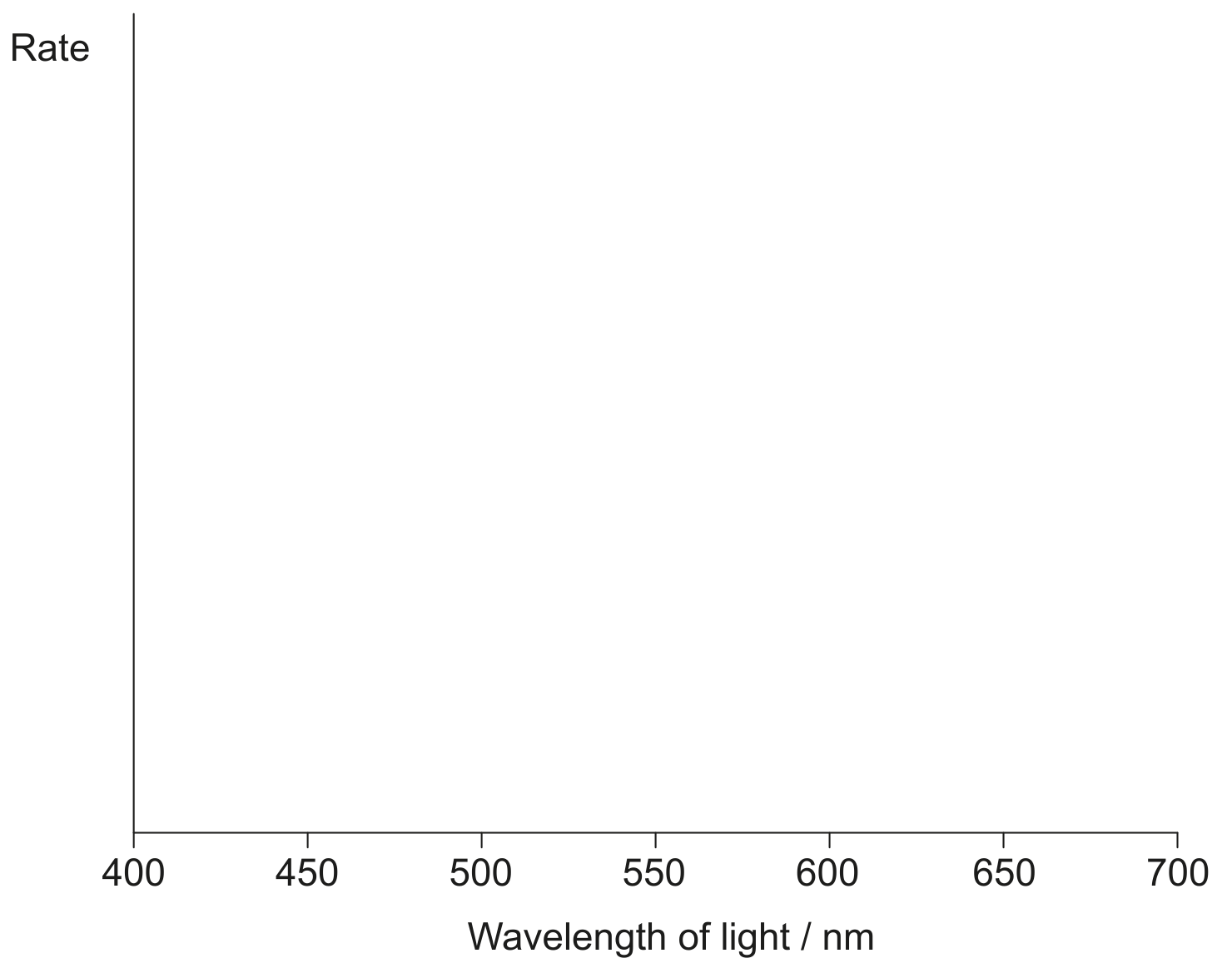
Using the axes, sketch the action spectrum for photosynthesis in the green area of the leaf in Figure 1.

Question image
[ 1 ]

Question 1(c)(ii)

(ii)

Predict how the action spectrum from the white areas of the leaf would differ from the green areas.

[ 1 ]

Question 4

[Maximum number: 1]

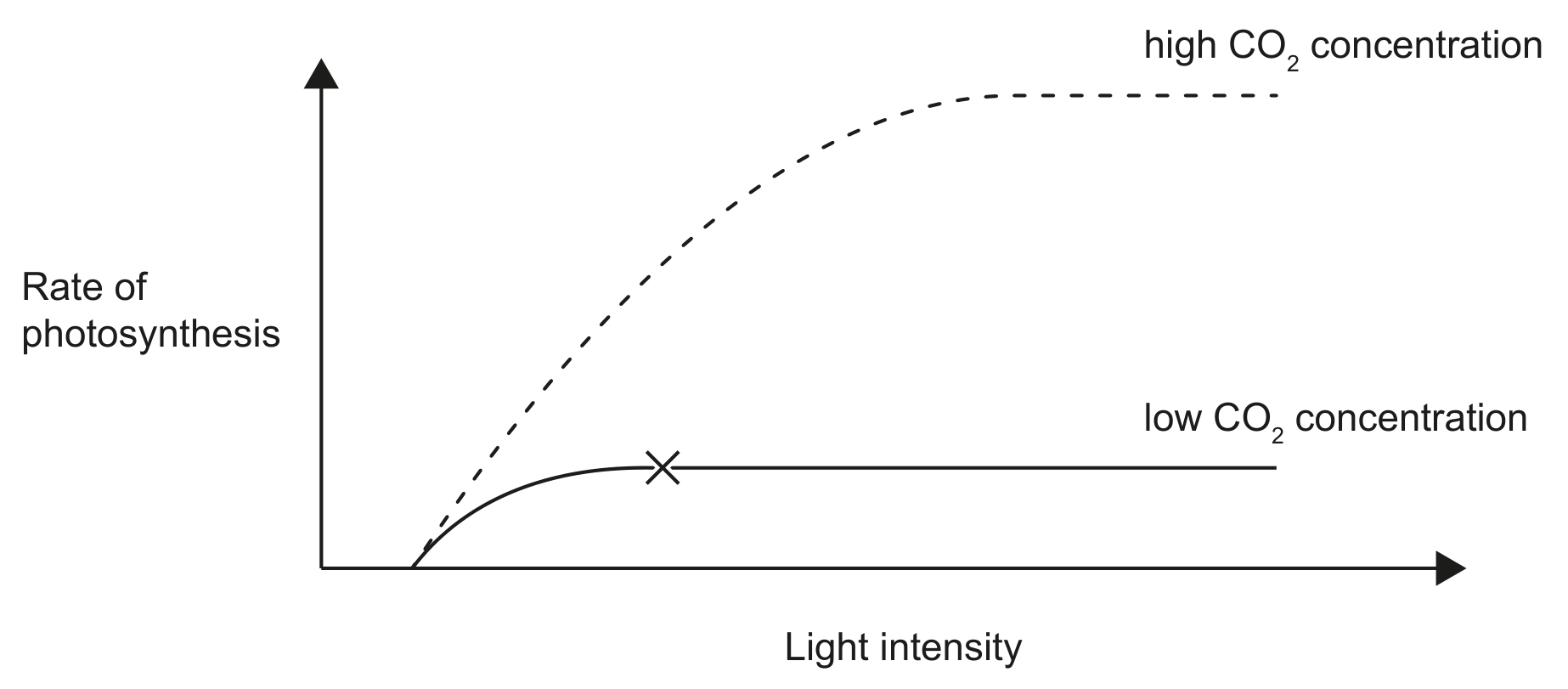
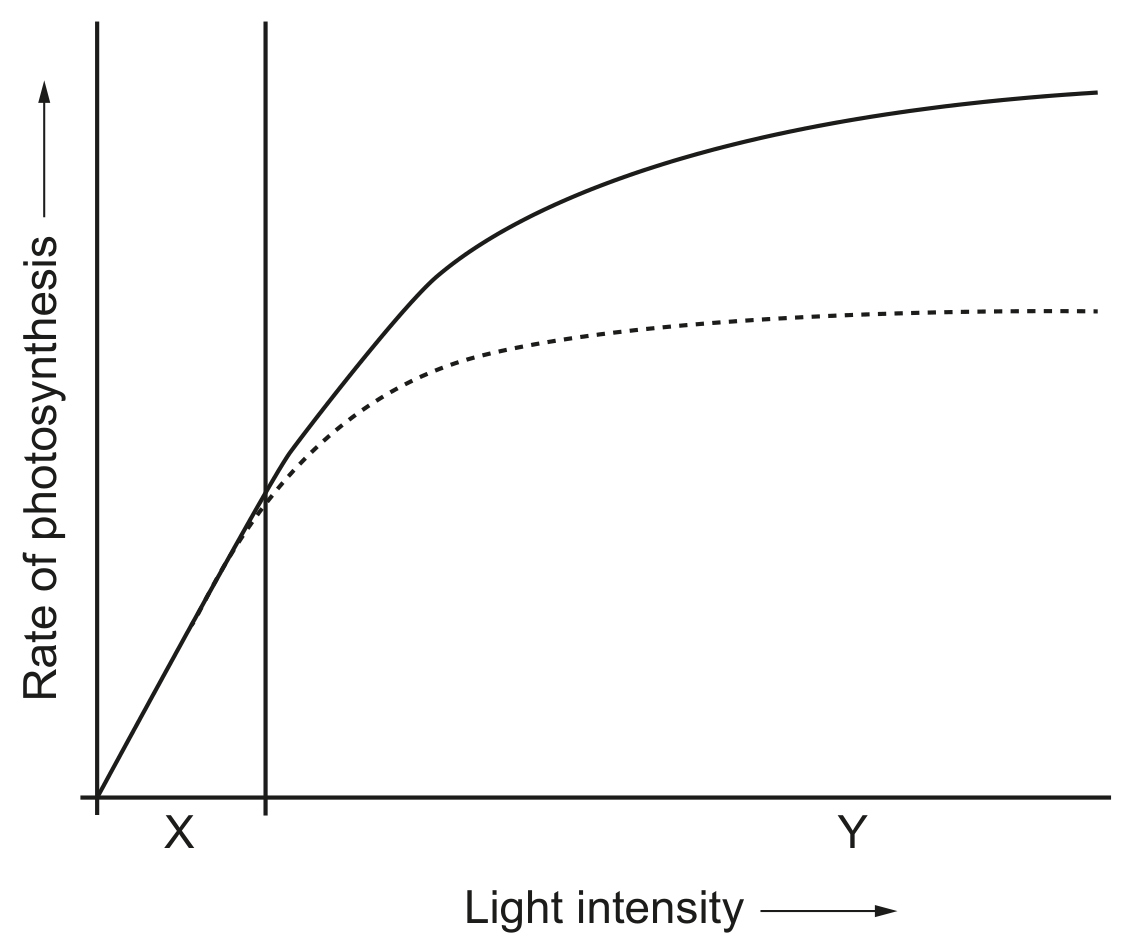
The graph shows the effect of light intensity on the rate of photosynthesis of a green plant at different CO2\mathrm{CO}_{2} concentrations. The temperature is kept constant at 25C25^{\circ} \mathrm{C}.

Question image

What is the limiting factor at × ?

A

Chlorophyll

B

CO2\mathrm{CO}_{2} concentration

C

Temperature

D

Light intensity

Question 5

[Maximum number: 1]

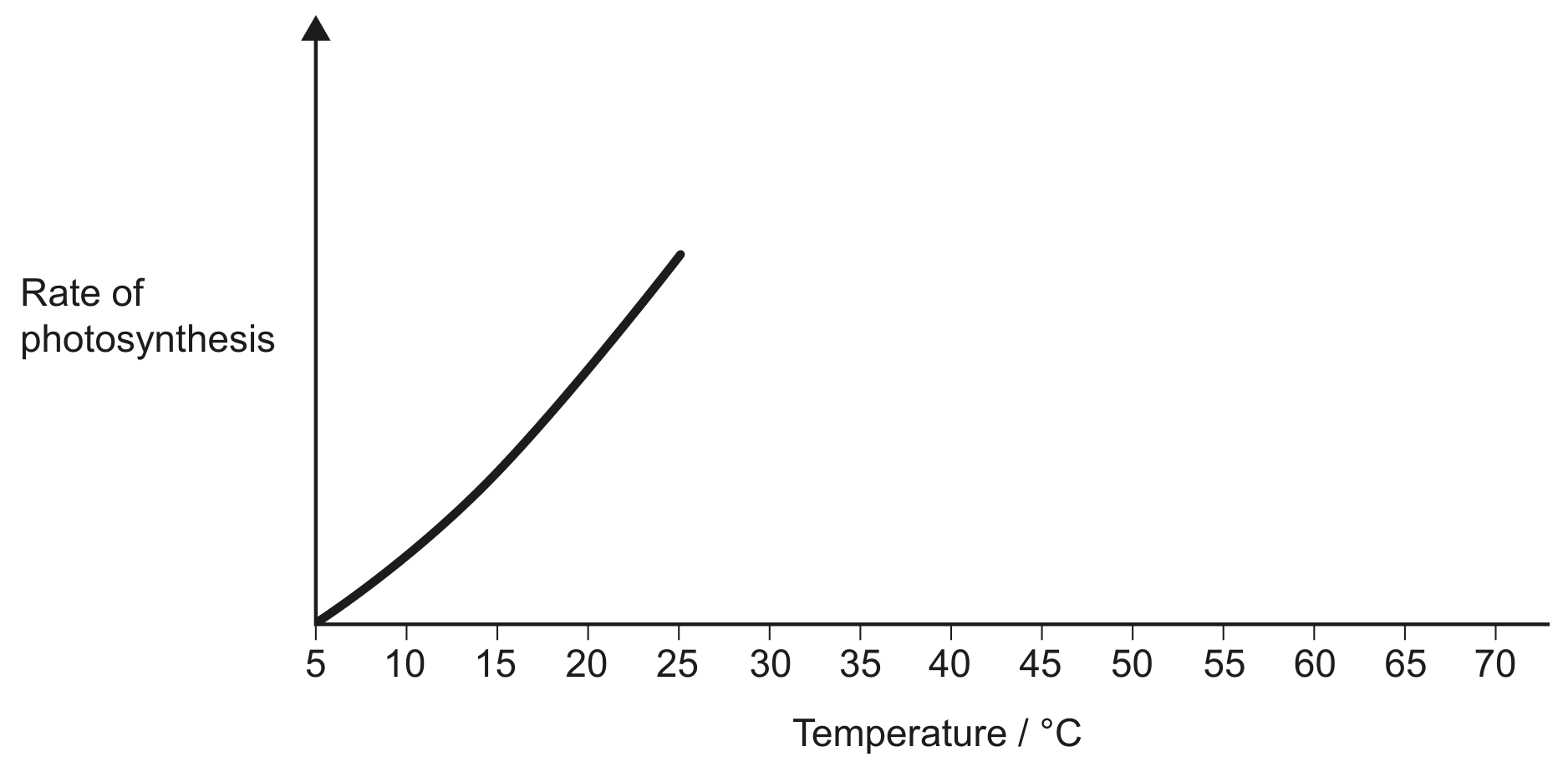
An experiment investigated the effect of temperature on the rate of photosynthesis of a plant. Results are shown for temperatures between 5C5^{\circ} \mathrm{C} and 25C25^{\circ} \mathrm{C}.

Question image

How would further increases in temperature, up to 70C70^{\circ} \mathrm{C}, affect the rate of photosynthesis?

A

It would decrease between 25C25^{\circ} \mathrm{C} and 35C35^{\circ} \mathrm{C} and then increase between 35C35^{\circ} \mathrm{C} and 70C70^{\circ} \mathrm{C}.

B

It would continue increasing as temperature increases.

C

It would increase to a maximum of between 30C30^{\circ} \mathrm{C} and 40C40^{\circ} \mathrm{C} and then decrease.

D

It would peak above 25C25^{\circ} \mathrm{C} and then remain constant.

Question 5

[Maximum number: 1]

The graph shows the rate of photosynthesis as light intensity increases at two different carbon dioxide ( CO2\mathrm{CO}_{2} ) concentrations.

Question image
Question image

What are the limiting factors of photosynthesis at regions X and Y on the graph?

X

Y

CO2\mathrm{CO}_{2} concentration

light intensity

temperature

light intensity

light intensity

CO2\mathrm{CO}_{2} concentration

light intensity

temperature

Question 5

[Maximum number: 1]

Bromothymol blue is an indicator that is initially blue and turns yellow when CO2\mathrm{CO}_{2} is present. Tests were carried out varying the presence of a plant (Elodea canadensis) and a snail (Marisa cornuarietis) in an aquatic environment. What condition would produce a blue colour after sampling the water?

A

Plant kept in the dark without snail

B

Plant and snail kept in the dark

C

Plant kept in the light without snail

D

Snail with no plant

Question 2

[Maximum number: 5]

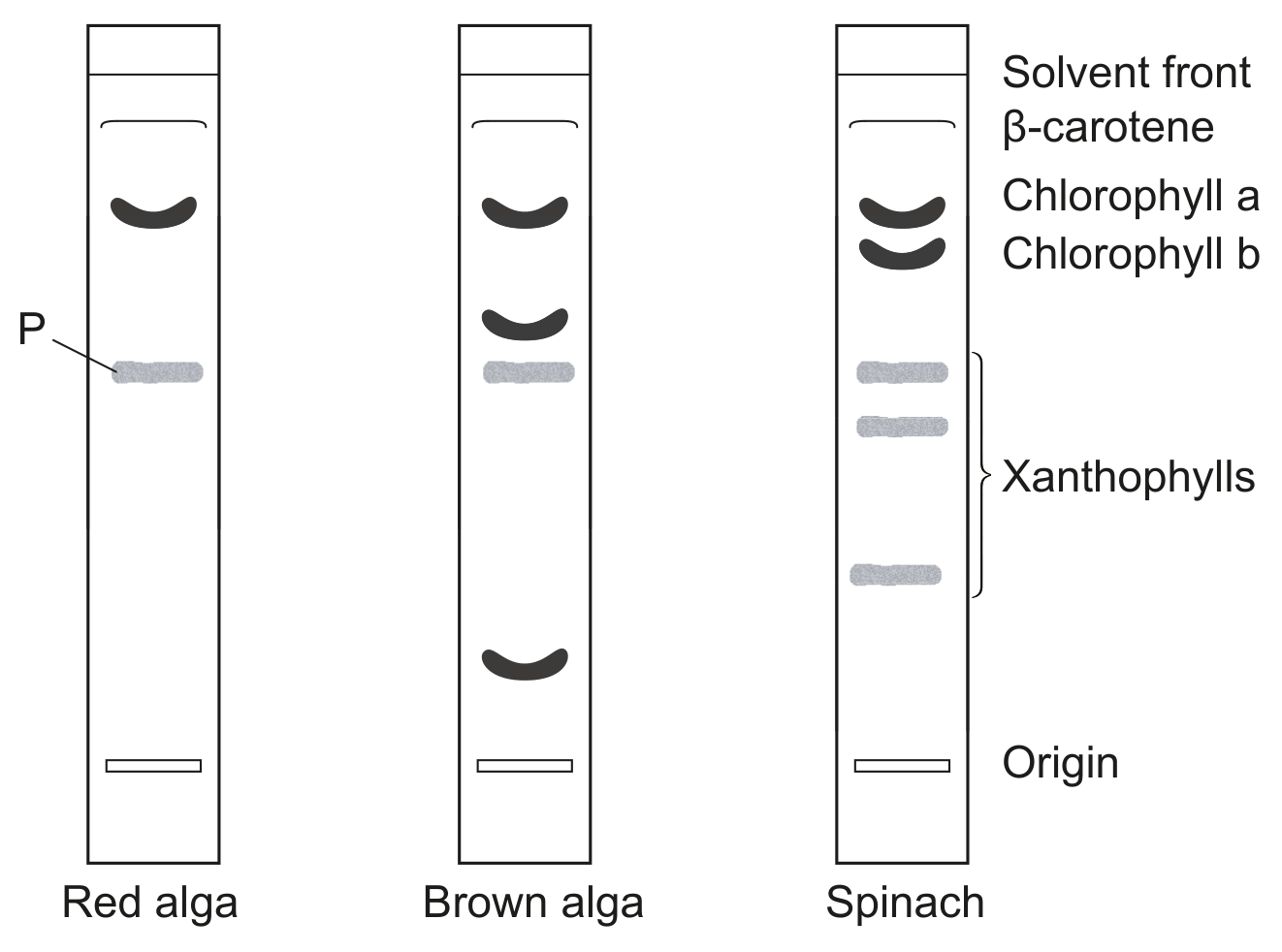
Thin-layer chromatography was carried out on red and brown algae to discover what photosynthetic pigments they contained. The results were compared with the known pigments found in spinach leaves.

Question image

Question 2(a)

(a)

Identify pigment labelled P .

[ 1 ]

Question 2(b)

(b)

State a suitable solvent for extracting photosynthetic pigments from plant tissue.

[ 1 ]

Question 2(c)

(c)

Explain how the pigments in the chromatogram of spinach are identified.

[ 3 ]

Question 2

[Maximum number: 6]

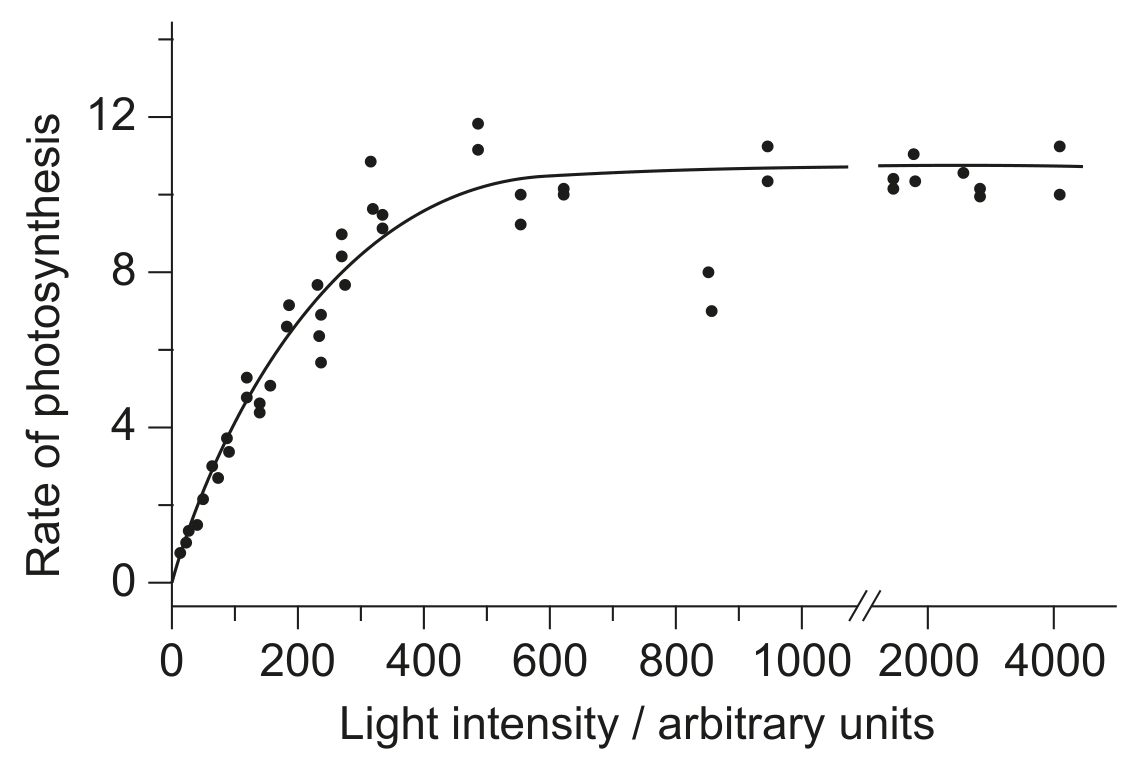
The cells of a cnidarian, Acropora, contain single-celled, photosynthetic algae belonging to the genus Symbiodinium. The graph shows the effect of light intensity on the rate of photosynthesis by Symbiodinium. A line of best fit is shown on the graph.

Question image

Question 2(a)

(a)

Explain the shape of the curve using the concept of limiting factors.

[ 3 ]

Question 2(b)

(b)

State one factor that would need to be controlled in an experiment to test the effect of light intensity on rates of photosynthesis by the algae.

[ 1 ]

Question 2(c)

(c)

Experimental studies have also shown that an increase in the rate of photosynthesis by Symbiodinium in the cells of Acropora is associated with an increase in pH . Suggest an explanation for the increase in pH .

[ 2 ]
0 selected