EduNinja

IB Biology SLC1.2 Cell respirationQuestion Bank

Question 1

[Maximum number: 6]

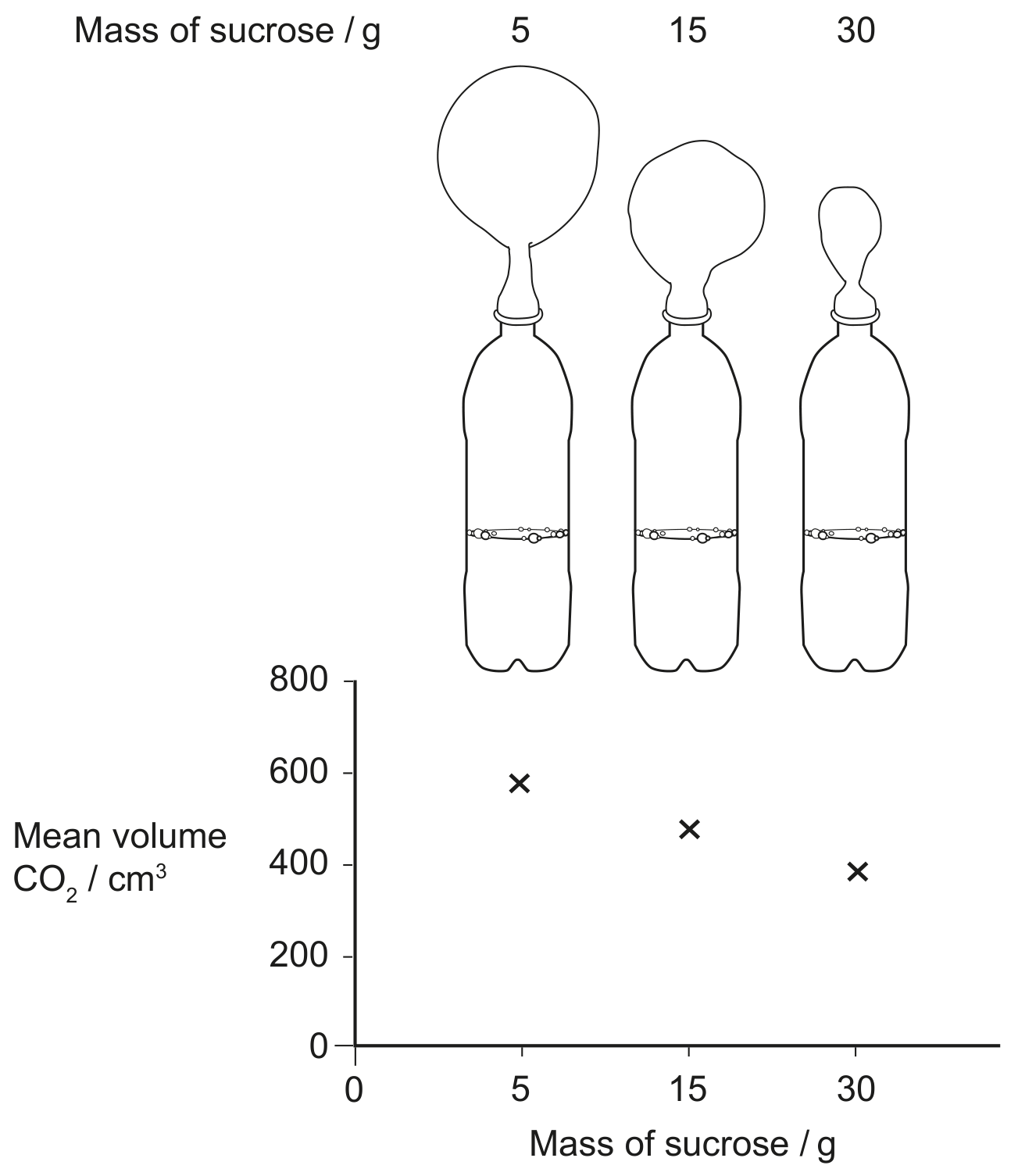
A student carried out an investigation to test cell respiration in yeast (Saccharomyces cerevisiae). Bottles were filled with 5 g of yeast and 80 cm380 \mathrm{~cm}^{3} of water maintained at 40C40^{\circ} \mathrm{C}. A different mass of sucrose was added to each bottle: 5,15 and 30 g respectively.

Bottles were left for 15 minutes before attaching a standard balloon to the opening of each bottle. After 45 minutes, the circumference of each balloon was measured using a string. The volume of CO2\mathrm{CO}_{2} was calculated. Three trials per treatment were performed.

The diagram shows one trial, and the graph shows the mean of three trials.
Question image

Question 1(a)

(a)

State the independent variable.

[ 1 ]

Question 1(b)

(b)

Suggest a reason for waiting 15 minutes before attaching the balloons.

[ 1 ]

Question 1(c)

(c)

Outline a reason for keeping the temperature at 40C40^{\circ} \mathrm{C}.

[ 1 ]

Question 1(d)

(d)

Suggest a conclusion of this experiment.

[ 1 ]

Question 1(e)

(e)

Explain how the method could have been carried out more effectively by the student.
[ 2 ]

Question 1

[Maximum number: 1]

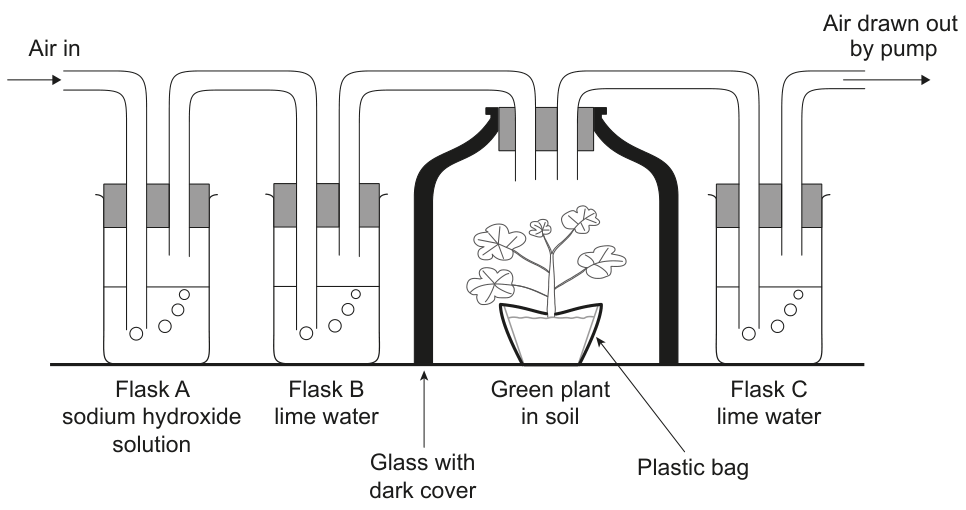
An experiment on aerobic respiration was performed using a plant in a pot containing fertile soil. The apparatus was set up as shown in the diagram. Sodium hydroxide and limewater (calcium hydroxide) are both alkaline solutions. Limewater goes cloudy when carbon dioxide is bubbled into it.

Question image

Question 1(c)

(a)

Suggest a suitable control for this experiment.

[ 1 ]

Question 1

[Maximum number: 3]

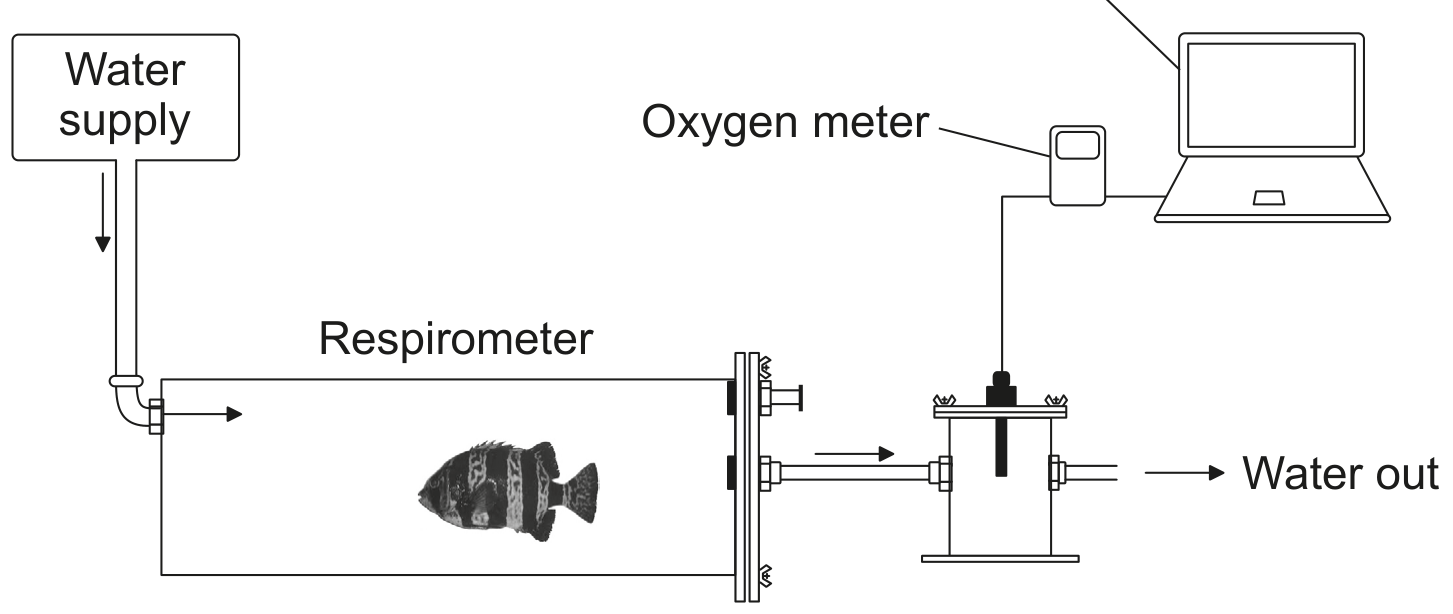
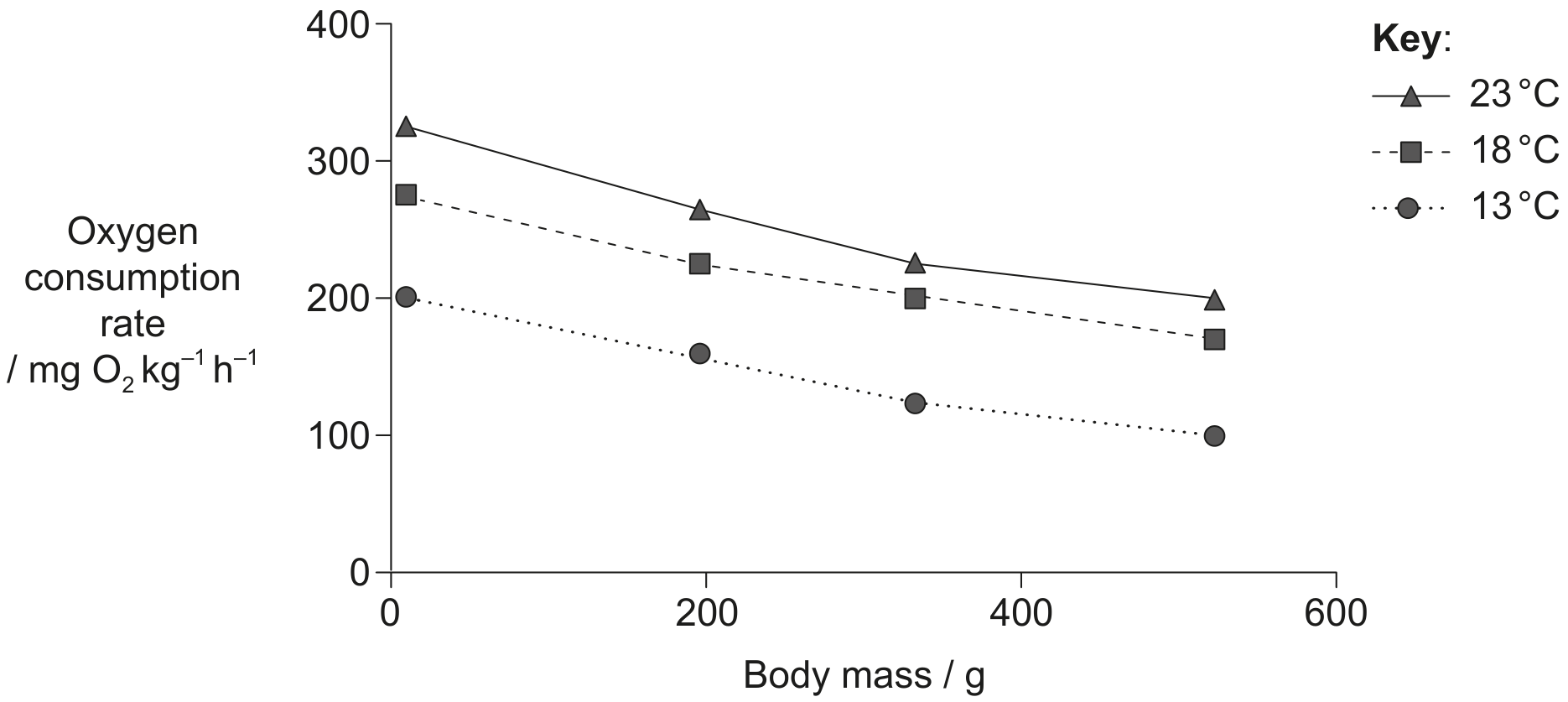
The oxygen consumption rate of the fish Oplegnathus insignis was examined in a respirometer at three different water temperatures and at four different body masses.

Computer used to record oxygen

Computer used to record oxygen

Computer used to record oxygen

Computer used to record oxygen

Question 1(a)

(a)

Suggest how the oxygen consumption rate is determined using this apparatus.

[ 2 ]

Question 1(b)

(b)

State the relationship between body mass and the oxygen consumption of fish.

[ 1 ]

Question 1

[Maximum number: 4]

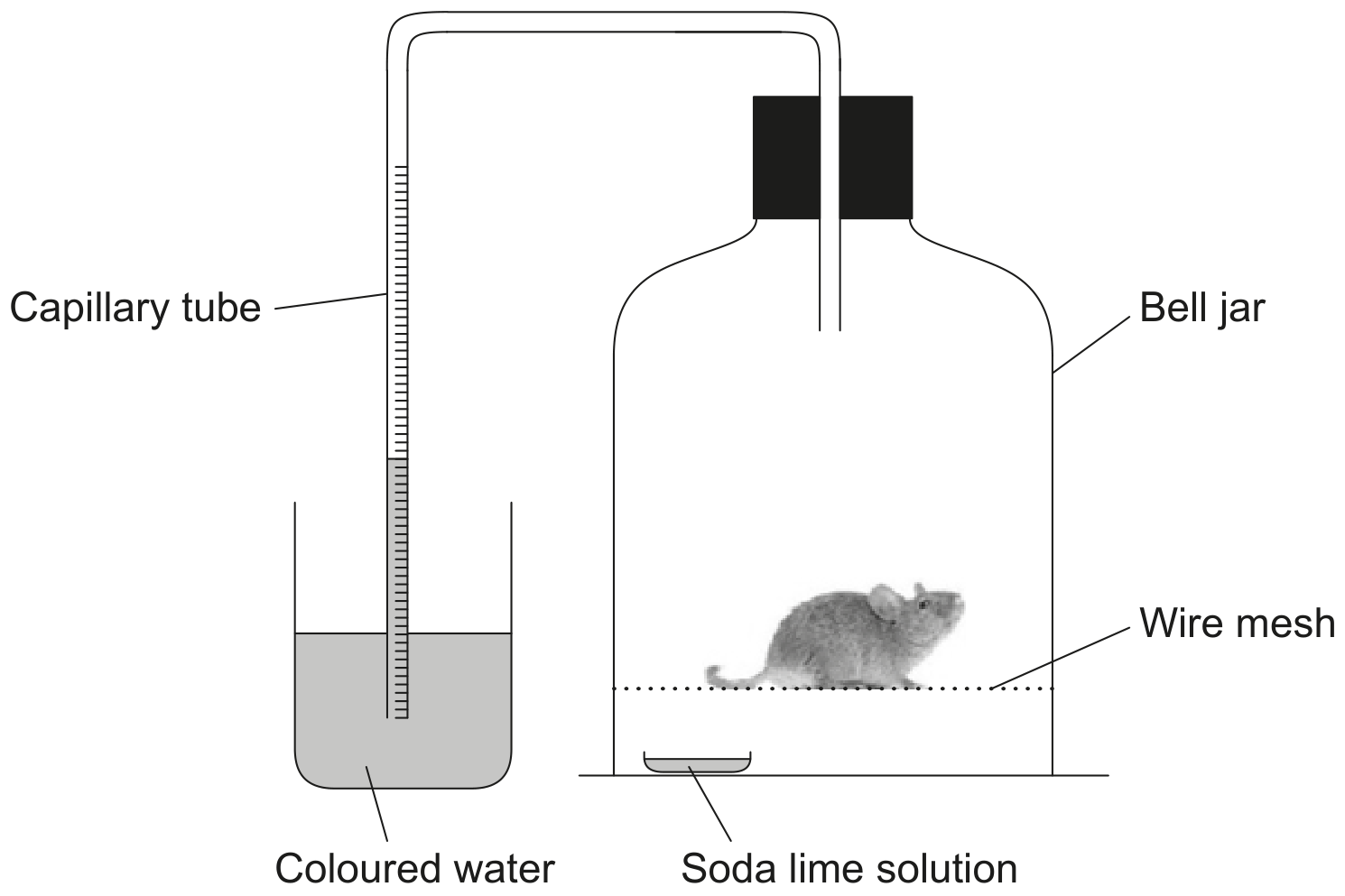
In an experiment measuring oxygen consumption, a laboratory mouse was placed in a respirometer for a short time. Soda lime solution absorbed any carbon dioxide produced during the experiment.

Question image

Question 1(a)

(a)

Suggest the purpose of the wire mesh.

[ 1 ]

Question 1(b)

(b)

Describe how the apparatus measures the oxygen consumption of the mouse.

[ 3 ]

Question 1

[Maximum number: 1]

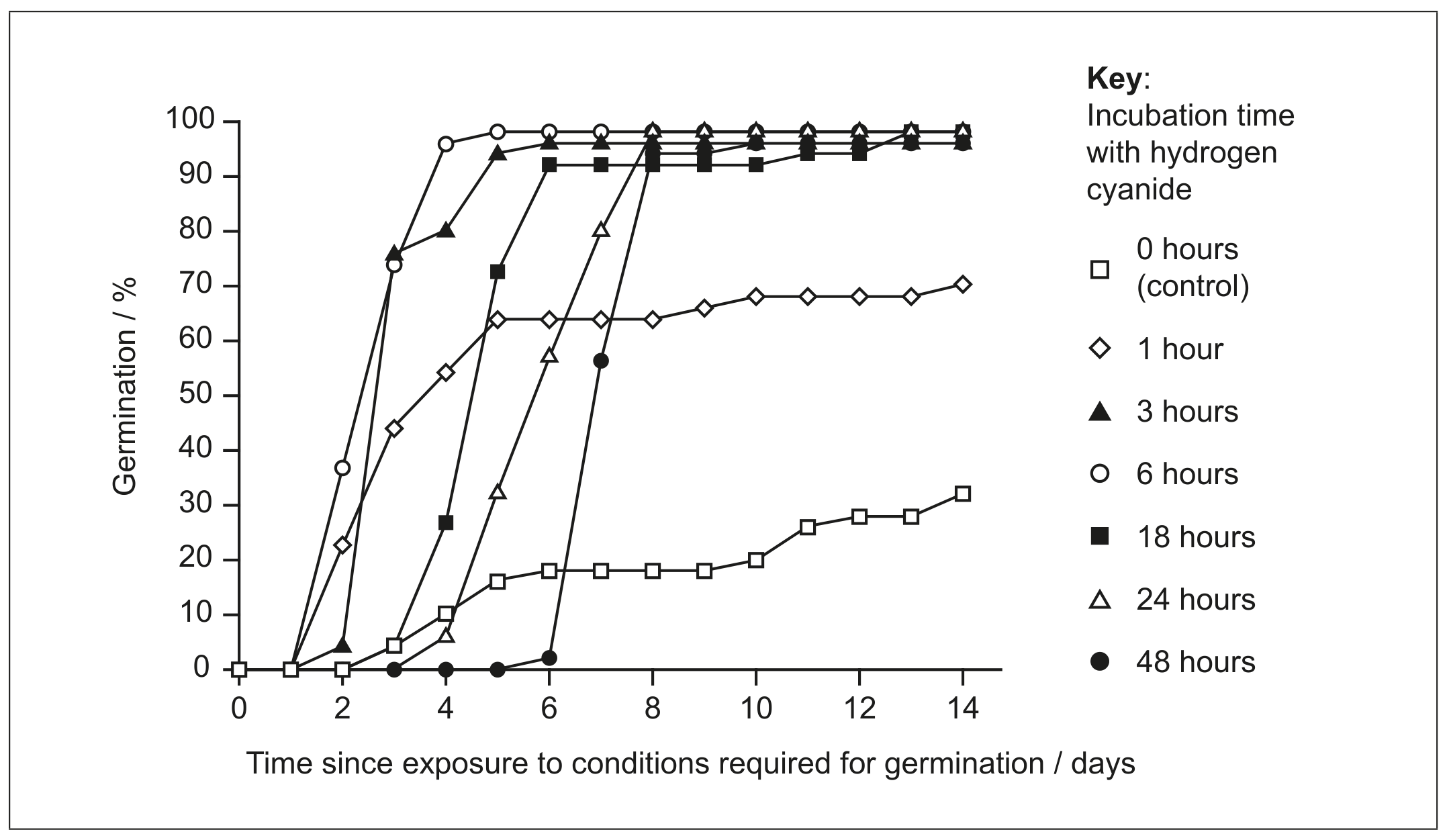
Cyanide, a chemical found in all living organisms, is known to stimulate seed germination in many plant species. Cyanide is also known to be an inhibitor of cellular respiration. Freshly harvested sunflower (Helianthus annuus) seeds were incubated with hydrogen cyanide for different periods of time and then exposed to the conditions required for germination. The graph shows the percentage of seeds that had germinated over fourteen days.

Question image

Question 1(d)

(a)

Cyanide is also known to inhibit respiration. Suggest how this is shown in the graph.

[ 1 ]

Question 1

[Maximum number: 2]

Ozone gas in the atmosphere helps to block high-energy ultraviolet light (UV) from reaching the Earth's surface. Over the past few decades, the ozone layer has been decreasing, thus allowing through more UV.

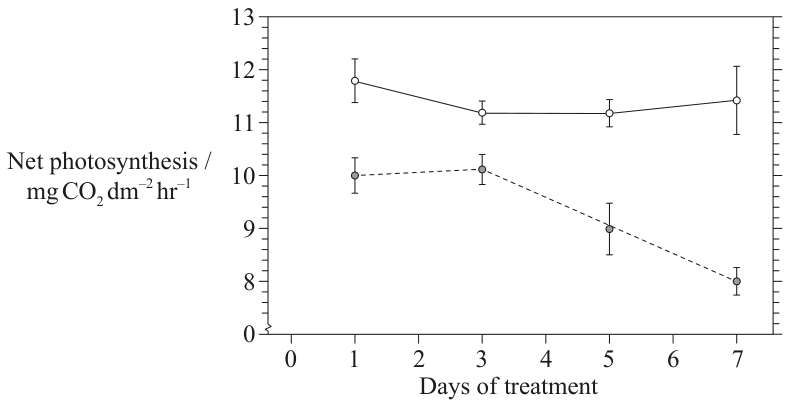
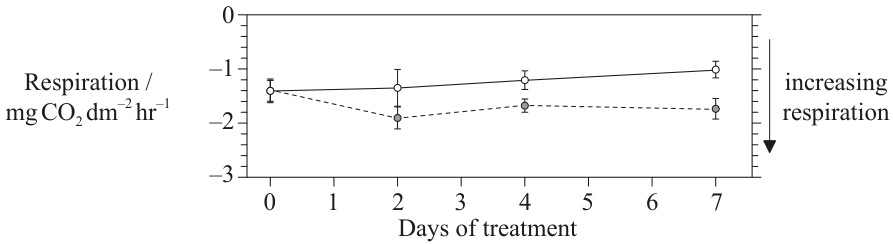
The effect of this decrease in the ozone has been studied in different plants. An early study was undertaken on patience dock plants (Rumex patientia) to test the effect of atmospheric ozone levels decreasing by 38 %. The net photosynthesis (total photosynthesis minus total respiration) and respiration of the plants were measured during seven days of exposure to UV. The rates of photosynthesis and respiration are given in rates of carbon dioxide uptake per unit area of leaf.

Question image
Key: -- control plants - - exposed to UV with 38 % less ozone

Key: -- control plants - - exposed to UV with 38 % less ozone

Question 1(b)

(a)

Distinguish between the results for the plants exposed to UV and the controls without UV in

[ 2 ]

Question 1(b)(ii)

(i)

Distinguish between the results for the plants exposed to UV and the controls without UV in respiration.

[ 2 ]

Question 4

[Maximum number: 1]

What are the waste products of aerobic and anaerobic respiration in humans?

Aerobic respiration

Anaerobic respiration

carbon dioxide only

lactate and carbon dioxide

carbon dioxide and water

lactate and carbon dioxide

carbon dioxide and water

lactate only

carbon dioxide only

lactate only

Question 6

[Maximum number: 1]

What are the product(s) and site of anaerobic respiration in human cells?

Product

Site of anaerobic respiration

lactate

mitochondria

carbon dioxide + water

mitochondria

lactate

cytoplasm

carbon dioxide + water

cytoplasm

Question 8

[Maximum number: 1]

How do human muscle cells respond to intense exercise?

A

They stop using oxygen and replace glycolysis with lactic fermentation.

B

They produce smaller amounts of ATP in order to reduce the need for oxygen.

C

They produce lactate in order to quickly supply the energy for muscle contraction.

D

They produce ethanol and carbon dioxide as waste products.

Question 9

[Maximum number: 1]

What is the definition of cell respiration?

A

The controlled release of energy, in the form of ATP, from organic compounds.

B

The process used in some organisms to produce their own organic substances.

C

The process that uses energy, in the form of ATP, to produce organic compounds.

D

The controlled release of energy during the production of food from organic compounds.

0 selected