EduNinja

IB Biology SLB4.1 Adaptation to environmentQuestion Bank

Question 1

[Maximum number: 3]

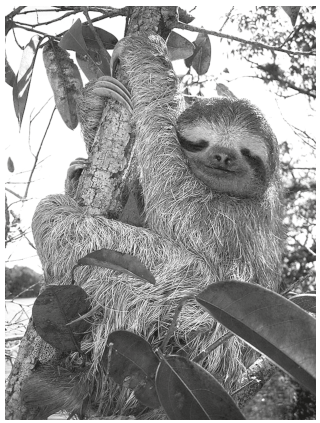
Three-toed sloths (Bradypus variegatus) are placental mammals that live in trees in Central and South America. They eat leaves and fruit and get almost all their water from succulent plants.
Question image

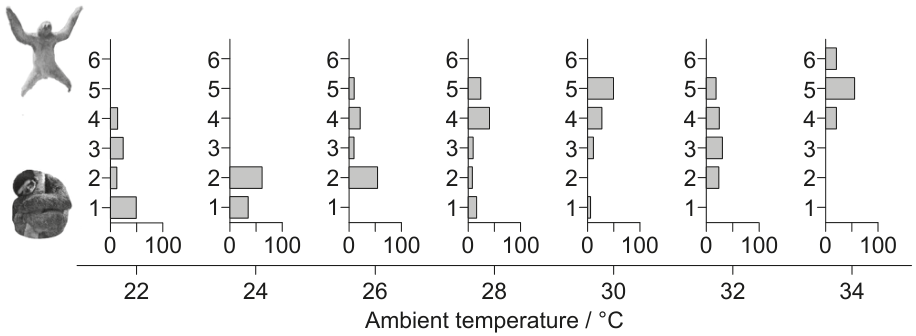
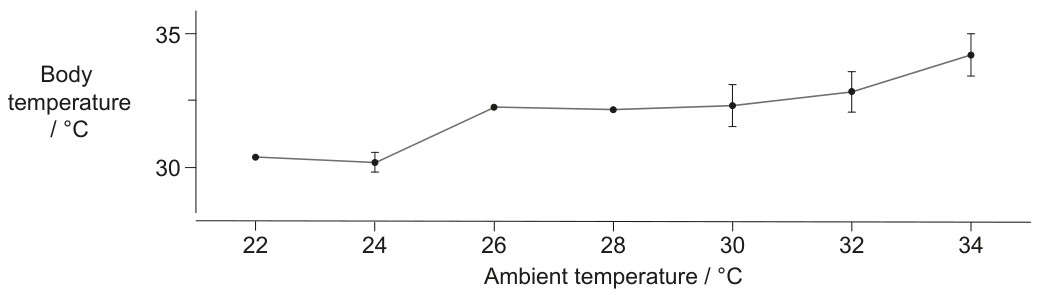
Three-toed sloths change their body posture in response to the temperature of their environment (ambient temperature). Researchers assessed posture on a scale from 1 to 6 , with 1 being when the sloth was curled into a tight ball and 6 when it had all limbs spread. The percentage of time the sloths were observed in each position was recorded at ambient temperatures from 22C22^{\circ} \mathrm{C} to 34C34^{\circ} \mathrm{C}. The researchers also measured the body temperature of the sloths over the same range of ambient temperatures.
Question image

Posture

Question image

Question 1(b)

Question 1(b)(ii)

(a)
(i)

Suggest reasons for this trend.

[ 2 ]

Question 1(h)

(b)

Suggest, with a reason, how the activity of the sloth varies with ambient temperature.
[ 1 ]

Question 1

[Maximum number: 10]

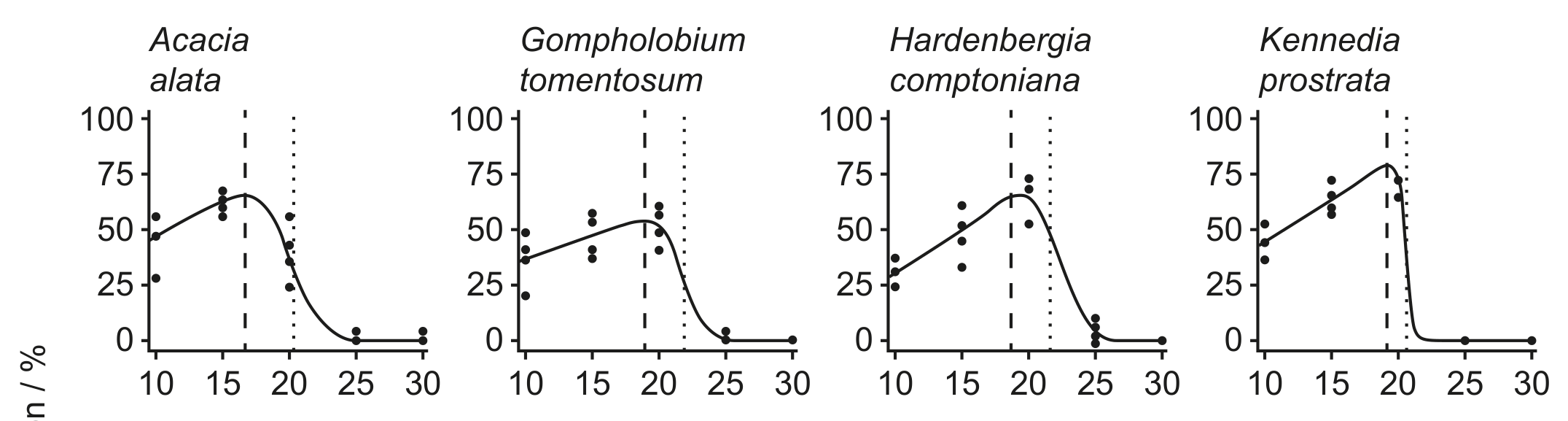
Fires are a natural phenomenon in some forest ecosystems, so plants evolve to become fire-adapted. The Northern Jarrah Forest in southwest Australia is an example. The seeds of many species germinate after forest fires, when there is less competition for resources from existing plants.

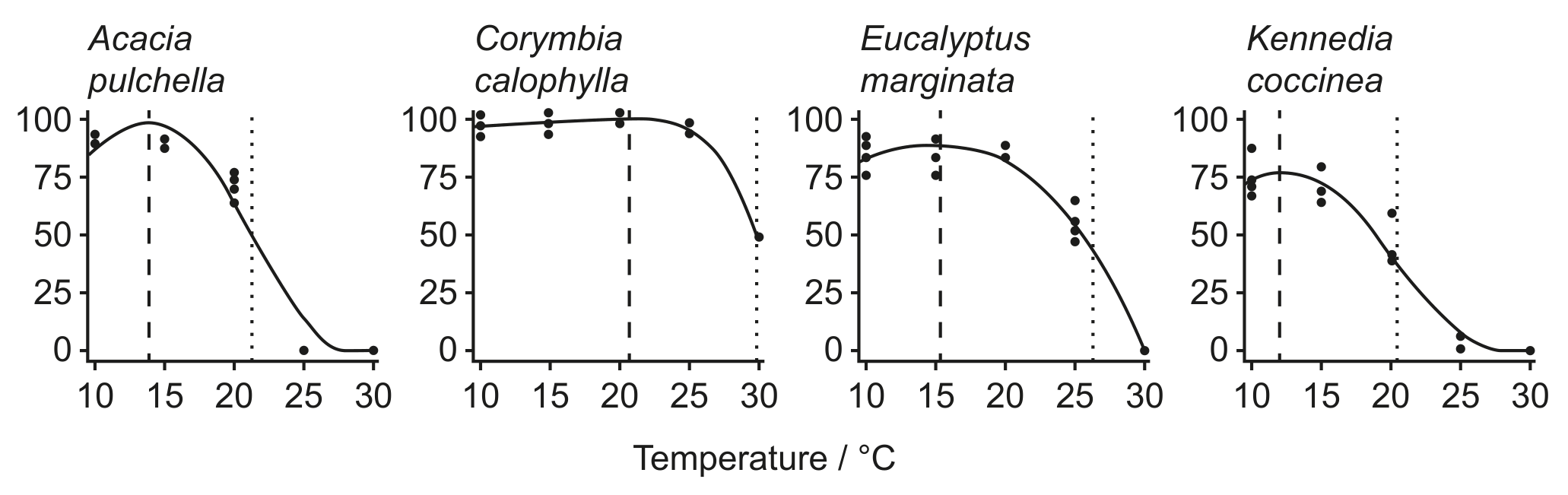
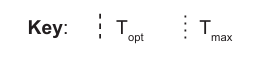
The effect of temperature on germination was measured in species that occur commonly in the Northern Jarrah Forest. The graphs show results for eight species across the range of soil temperatures expected in this ecosystem. Four replicates of 25 seeds were sown at each temperature. Statistical modelling was used to predict the overall relationship between temperature and germination, and to estimate the optimum temperature ( Topt \mathrm{T}_{\text {opt }} ) and maximum temperature ( Tmax\mathrm{T}_{\max } ) at which germination commonly occurs. The eight species were then divided into two groups according to the effects of temperature on germination.

Group 1

Group 1

Group 2

Group 2

Question image

Question 1(a)

(a)

Identify the species in which Topt T_{\text {opt }} is lowest.

[ 1 ]

Question 1(b)

(b)

Calculate the range for TmaxT_{\max } among the eight species.

[ 1 ]

Question 1(c)

(c)

Analyse the graphs to find the key difference between species in Group 1 and Group 2.

[ 1 ]

Question 1(d)

(d)

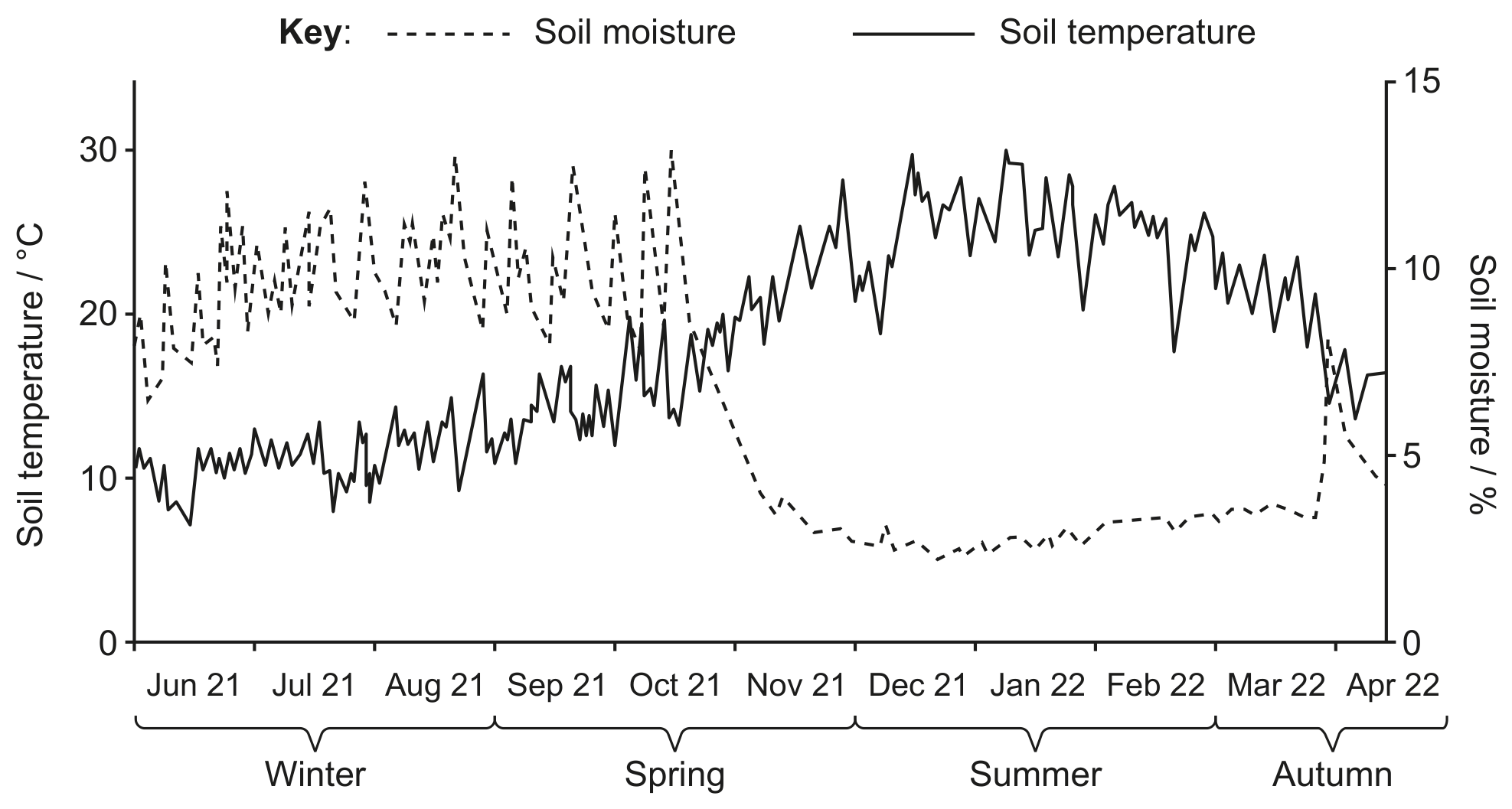
To investigate the seasonality of germination, soil temperature and soil moisture were monitored at sites in Korung National Park, which is part of the Northern Jarrah Forest. The graph shows the results.

Question image
[ 2 ]

Question 1(d)(i)

(i)

Distinguish between soil moisture in winter and in summer.

[ 2 ]

Question 1(e)

(e)

Predict, giving reasons, when germination would start in Kennedia prostrata, following a forest fire at the start of summer.

[ 3 ]

Question 1(f)

(f)

Using the data in the graphs, discuss whether species in Group 1 or Group 2 are more likely to be adversely affected by increases in soil temperature due to global warming.

[ 2 ]

Question 1

[Maximum number: 4]

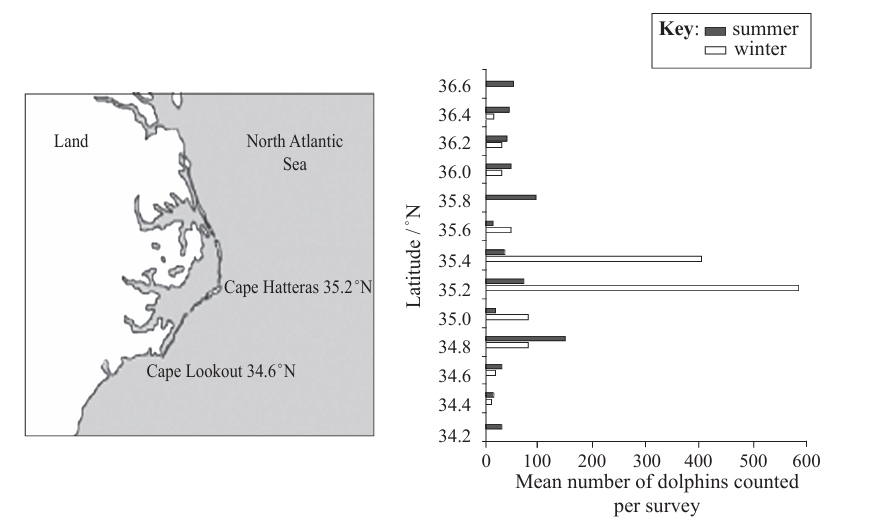
Bottlenose dolphins (Tursiops truncatus) inhabit almost all tropical and temperate oceans between 45N45^{\circ} \mathrm{N} and 45S45^{\circ} \mathrm{S}. Over a two-year period, aerial surveys were carried out to investigate the seasonal distribution of these animals along the mid-Atlantic and eastern coastal waters of the USA. Sightings were recorded using a global positioning system (GPS) while flying parallel to the coast approximately 500 m offshore. The diagram below shows a map of the section of coast surveyed. The bar graph shows the seasonal data for summer and winter at the corresponding latitudes ( N{ }^{\circ} \mathrm{N} ). A total of 5431 bottlenose dolphins were sighted during these surveys.

Question image

Question 1(d)

(a)

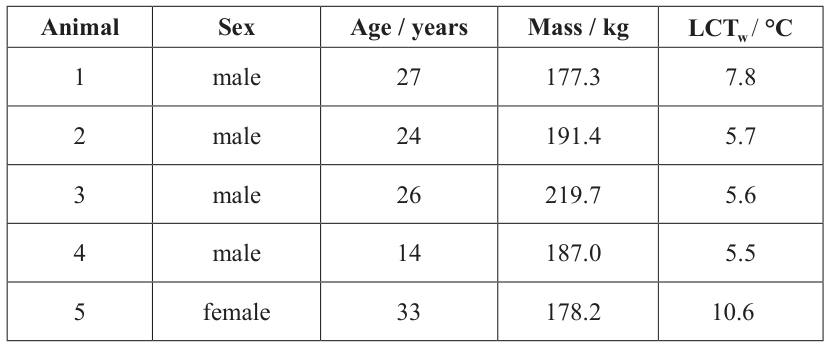
In a different study, researchers investigated the role of water temperature as a possible factor in the distribution of bottlenose dolphins. The rate of metabolism (measured as the rate of oxygen uptake per unit mass) of five captive adults was measured under a range of water temperatures. The rate of metabolism was found to increase significantly when the water temperature fell below a certain value known as the lowest critical water temperature ( LCTw\mathrm{LCT}_{\mathrm{w}} ). Below this temperature the body uses more energy to combat the cooling effect of the surrounding water. The data for these animals are summarized below.

Table


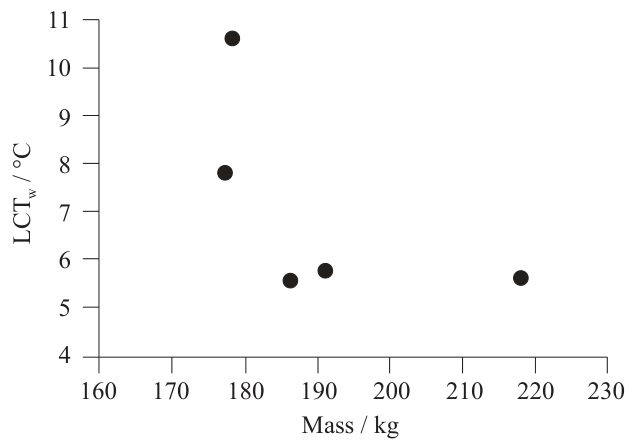
The graph below summarizes the relationship between LCTw\mathrm{LCT}_{\mathrm{w}} and body mass.

Question image

Outline the relationship between body mass and LCTw\mathrm{LCT}_{\mathrm{w}} for male dolphins.

[ 2 ]

Question 1(e)

(b)

Evaluate the hypothesis that water temperature determines the range and distribution of bottlenose dolphins in the wild.

[ 2 ]

Question 1

[Maximum number: 2]

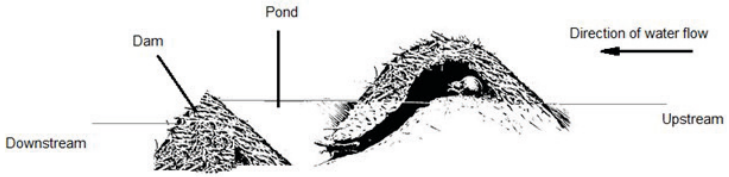
Beavers are large rodents that live in waterways throughout the northern hemisphere. Dams made by beavers change the temperature of the streams and affect the mayfly, Baetis bicaudatus. In the summer of 2008, beaver ponds in West Brush Creek and Cement Creek, Colorado, were studied to evaluate their impacts on mayflies. The study sites included streams flowing into (upstream) and out of (downstream) each beaver pond.

Question image

Mayflies, including the species B. bicaudatus, are aquatic insects that hatch and spend their larval stages in water emerging from the water as adults. Larger females produce an increased number of better quality eggs.

Question 1(c)

(a)

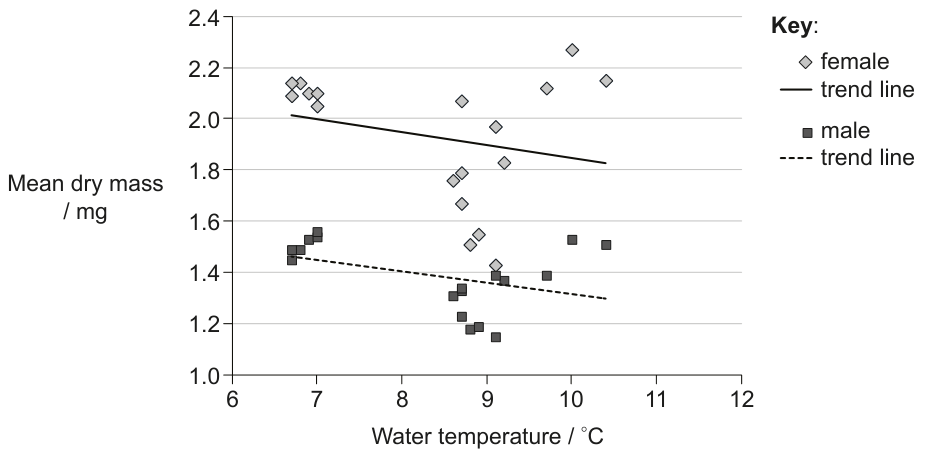
The graph shows the mean dry mass of mayflies relative to the water temperature in their habitats.

Question image

Using the graph, discuss evidence for the hypothesis that mayflies grow to greater dry mass in cooler water.

[ 2 ]

Question 1

[Maximum number: 2]

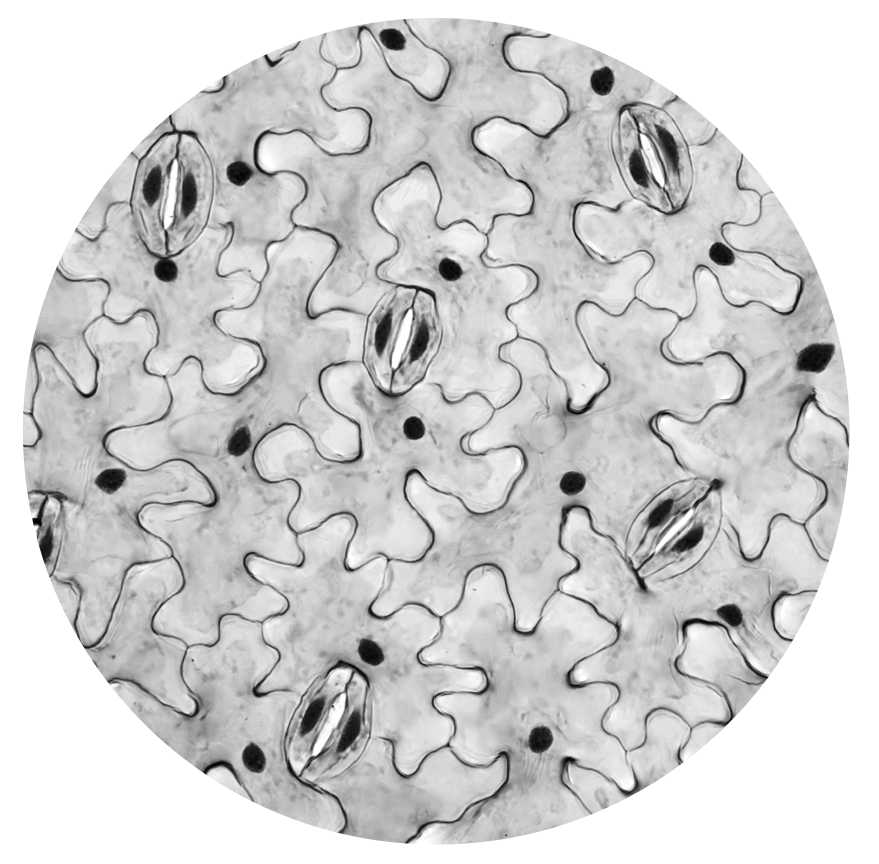
The image shows a cast of the lower surface of a leaf from a busy Lizzie (Impatiens walleriana) plant as seen under a light microscope with a magnification of 600×600 \times.

Question image

Question 1(d)

(a)

Explain one feature of tree roots that help trees to survive in mangrove swamps.

[ 2 ]

Question 2

[Maximum number: 2]

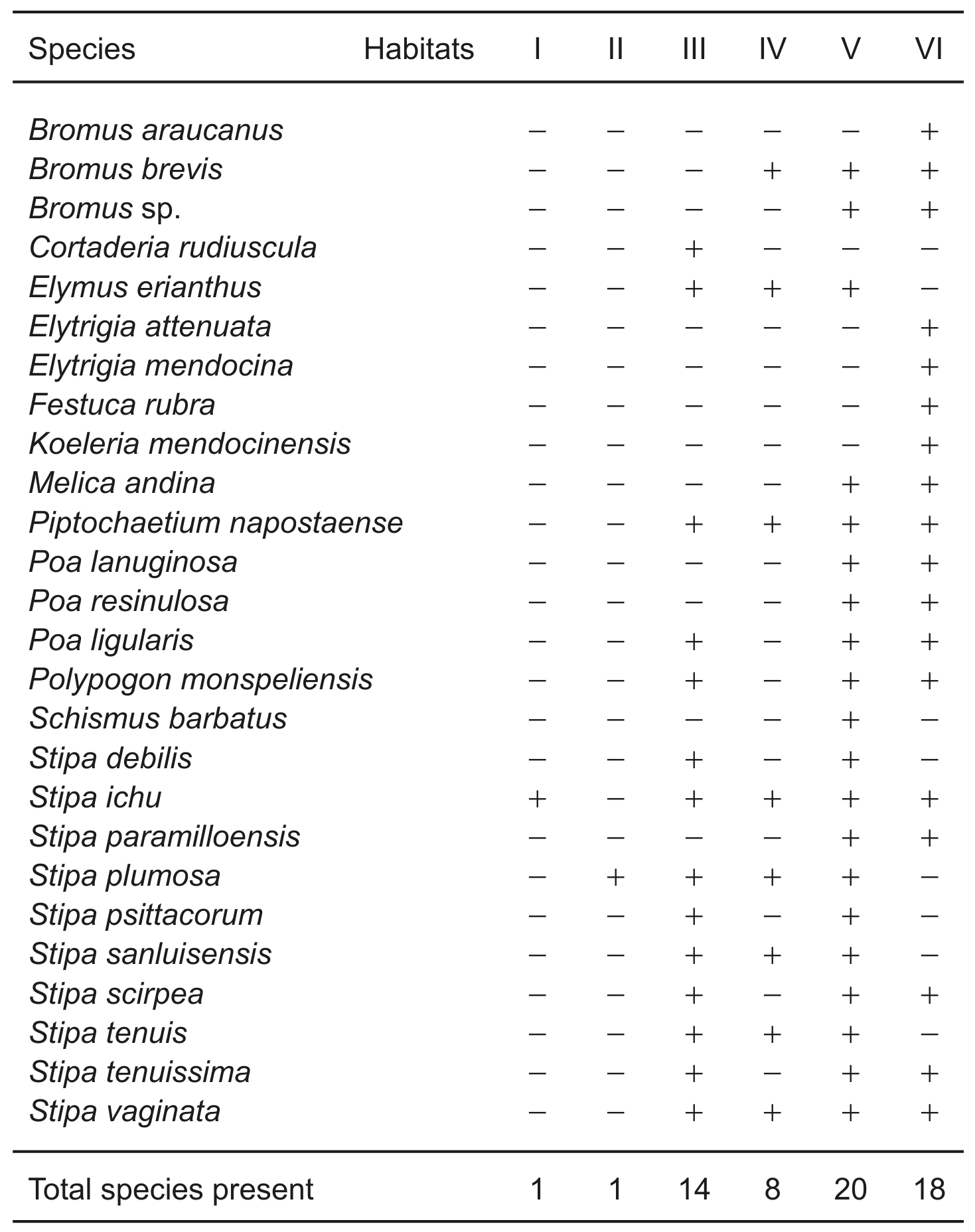
The distribution of native grasses in a temperate arid region of Mendoza, Argentina, was studied in six habitats (I to VI) at different altitudes. The table shows the presence (+) or absence (-) of the species in each habitat.

Table

Question 2(a)

(a)

Suggest one abiotic factor, other than altitude, that could be affecting the distribution of species in the different habitats.

[ 1 ]

Question 2(b)

(b)

Define habitat.

[ 1 ]

Question 24

[Maximum number: 1]

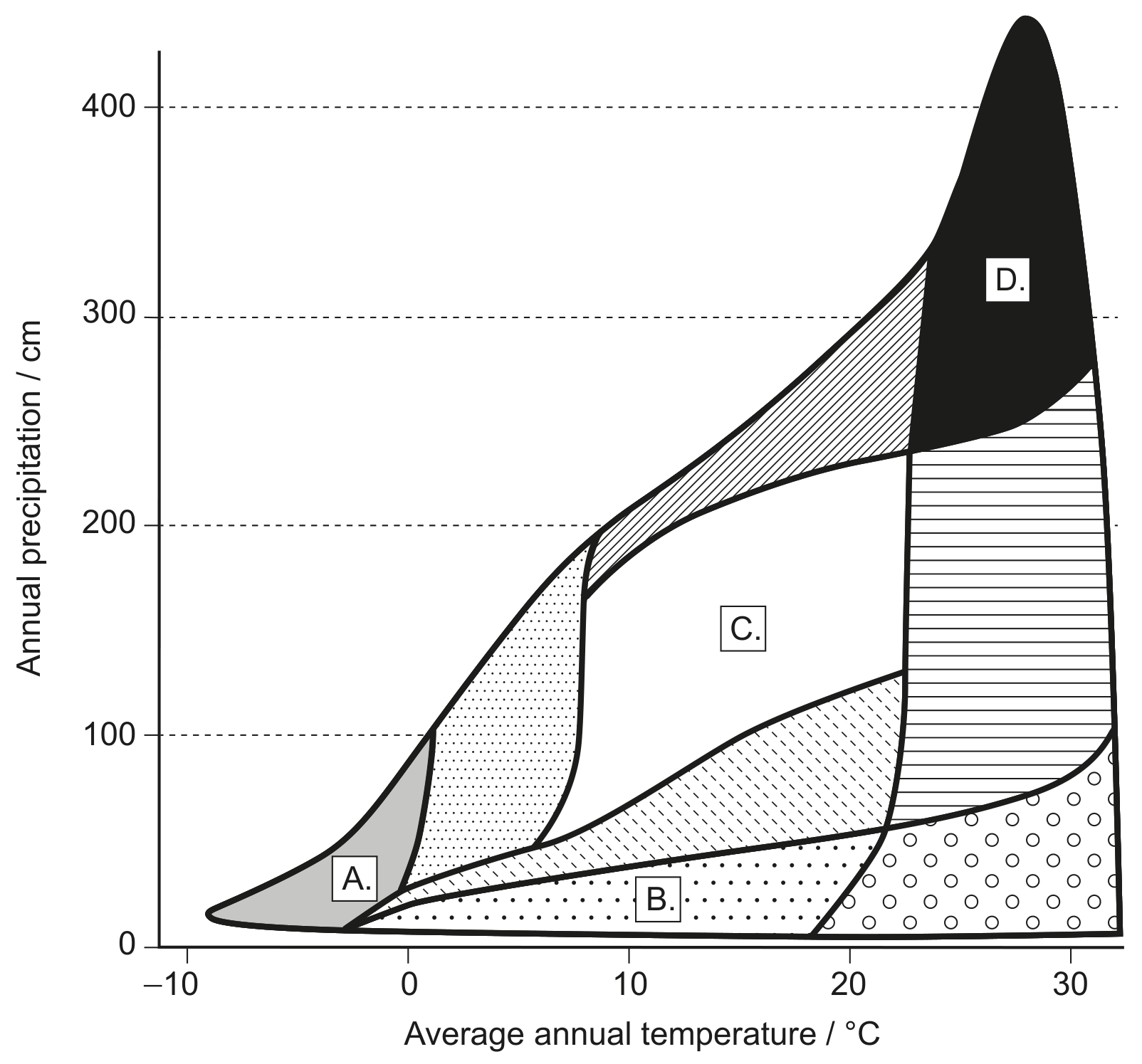
A graph of abiotic factors needed for biomes to develop is shown. Which label identifies temperate forest?

Question image

Question 24

[Maximum number: 1]

What is an abiotic factor in an ecosystem?

A

The mutualistic relationship between zooxanthellae and coral

B

The predator-prey relationship between wolves and elk

C

The salinity surrounding marram grass on a sand dune

D

An infectious disease affecting a population of rabbits

Question 24

[Maximum number: 1]

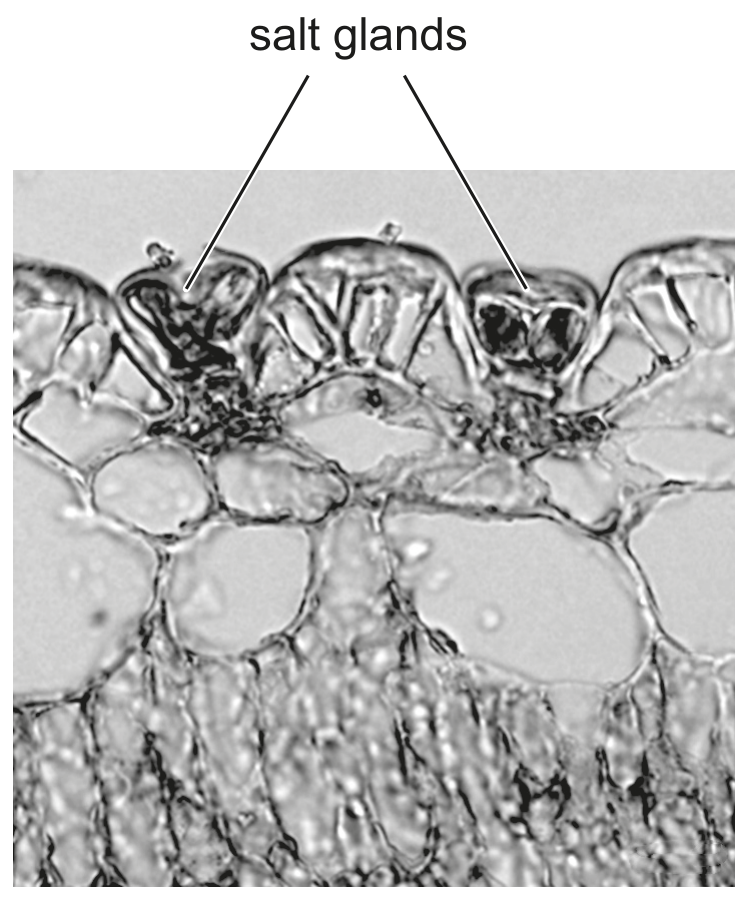
Avicennia officinalis is a tree species that is adapted to live in mangrove swamps. Salt glands can be seen in the micrograph of a transverse section of an A. officinalis leaf.

Question image

How does A. officinalis benefit from this adaptation?

A

The glands provide nitrates for amino acid synthesis as mangrove soils are nitrogen-deficient.

B

The salt in the leaves attracts predators to eat the leaves.

C

A high concentration of salt in the glands allows absorption of water into the leaf cells.

D

The glands secrete salt to keep cytoplasmic concentration suitable for metabolic processes.

Question 6

[Maximum number: 3]

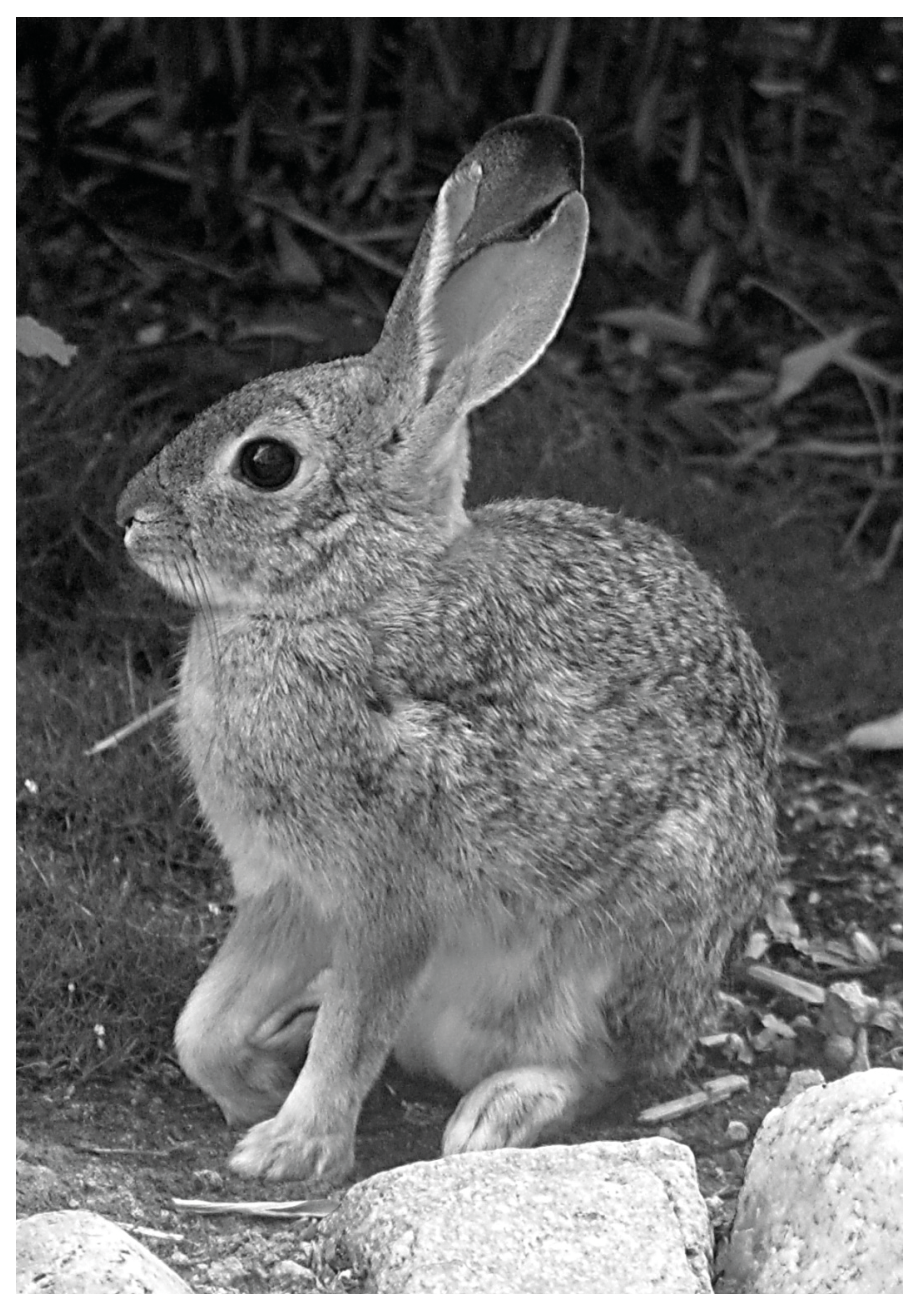
The desert cottontail (Sylvilagus auduboni) is a rabbit that lives in North American deserts.

Question image

Question 6(a)

(a)

State two abiotic factors that characterize a hot desert biome.
1.
2.

[ 2 ]

Question 6(b)

(b)

Suggest one adaptation of the cottontail that helps it to survive in desert conditions.

Answer one question. One additional mark is available for the construction of your answer. Answers must be written within the answer boxes provided.

[ 1 ]
0 selected