EduNinja

IB Biology SLB3.2 TransportQuestion Bank

Question 1

[Maximum number: 2]

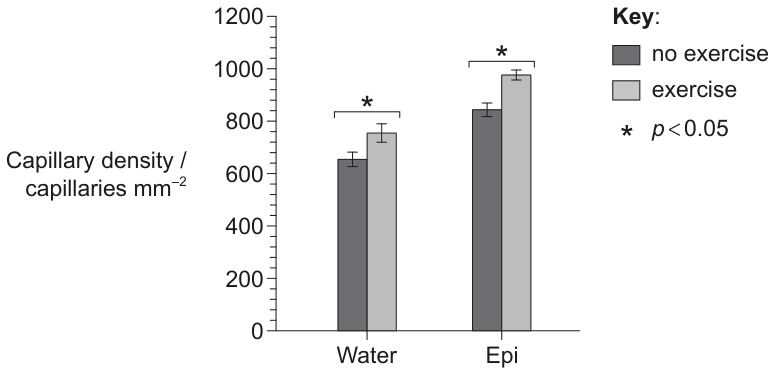
Consumption of dark chocolate has been shown to have health benefits. A study was undertaken to see the effects of epicatechin (Epi), a substance in dark chocolate, on the aerobic capacity of leg muscles of mice.

A group of adult mice was used to measure the effects of a low dose of Epi given over 15 days. The mice were divided into four groups and given either water or Epi and were either kept idle (no exercise) or made to exercise on a treadmill.

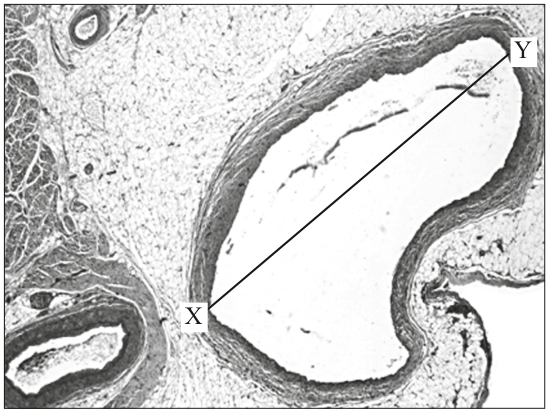
After 15 days, the results were analysed. The blood capillary density in leg muscle was measured under the light microscope.
Question image

Question 1(b)

(a)

Describe how increased capillary density could affect the aerobic capacity of muscle.

[ 2 ]
Question 2

[Maximum number: 3]

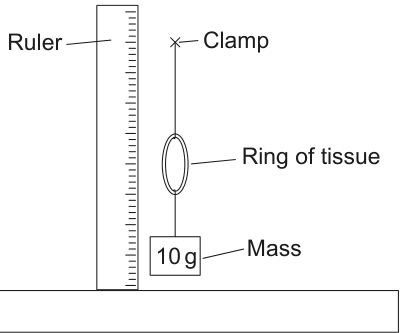
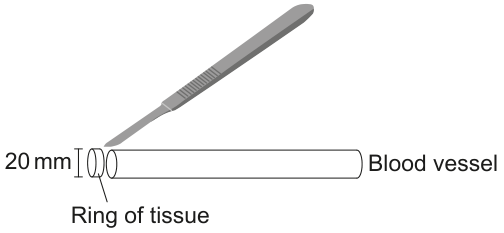
In an investigation to compare the elasticity of arteries and veins, rings of the same diameter (20 mm)(20 \mathrm{~mm}) of artery and vein tissue were cut from blood vessels obtained from a mammal.

Question image

Each ring was attached to a clamp. Multiple masses of 10 g were added and removed. The vertical diameter of the artery and the vein was measured, both with the mass and once the mass had been removed.

Question image

The results are shown in the table.

Diameter of vein / mmDiameter of artery / mm
Mass / gWith massMass removedWith massMass removed
020202020
1026262622
2034333023
3038363523
4040373824

Question 2(c)

(a)

Explain the differences between the results shown for vein and artery.

[ 3 ]

Question 2

[Maximum number: 2]

Hormones are used for cell-to-cell communication in the human body.

Question 2(b)

(a)

Hormones enter and leave the bloodstream through capillaries. Outline two adaptations of capillaries for efficient exchange of substances with surrounding tissues.

[ 2 ]

Question 2

[Maximum number: 2]

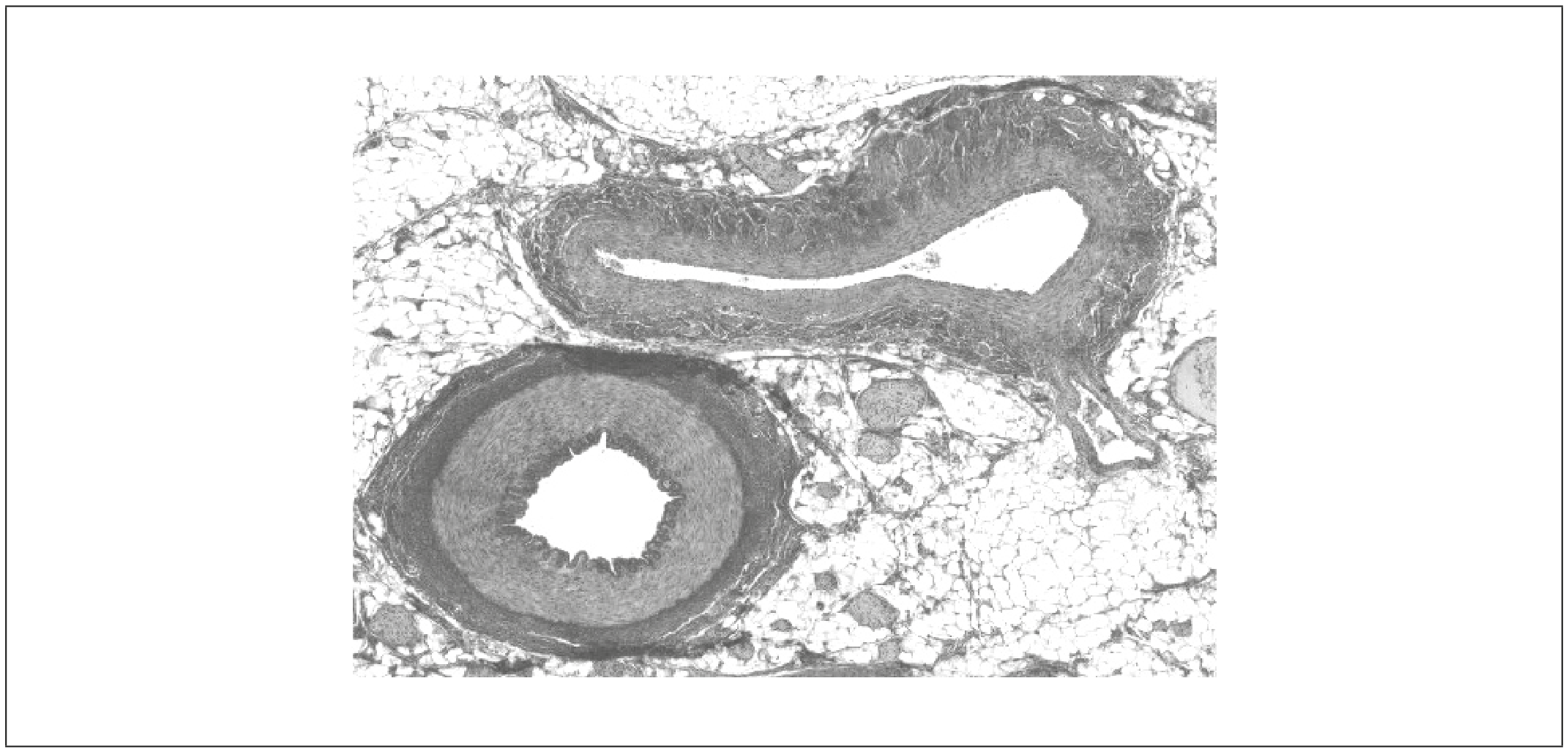
The photomicrograph shows a coronary artery and a cardiac vein.

Question image

Question 2(a)

(a)

Label the artery and the vein.

[ 1 ]

Question 2(b)

(b)

Describe one characteristic of the artery and vein which helped you to identify them.

Artery:

Vein:

[ 1 ]

Question 2

[Maximum number: 2]

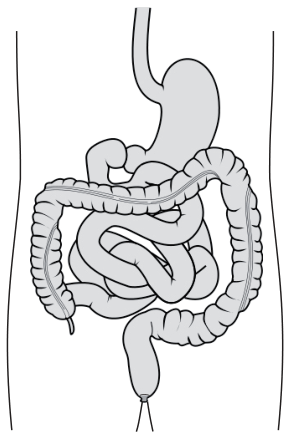
The structure of part of the digestive system is shown in the diagram below.

Question image

Question 2(b)

Question 2(b)(i)

(a)
(i)

Explain how the structure of veins is adapted to their function.

[ 2 ]

Question 3

[Maximum number: 3]

The micrograph shows a transverse section through blood vessels of a mammal.

Question image

Question 3(a)

(a)

Identify the vein by labelling it with the letter V.

[ 1 ]

Question 3(b)

(b)

Distinguish between the vein and the artery with reference to structures visible in the micrograph.

[ 2 ]

Question 3

[Maximum number: 2]

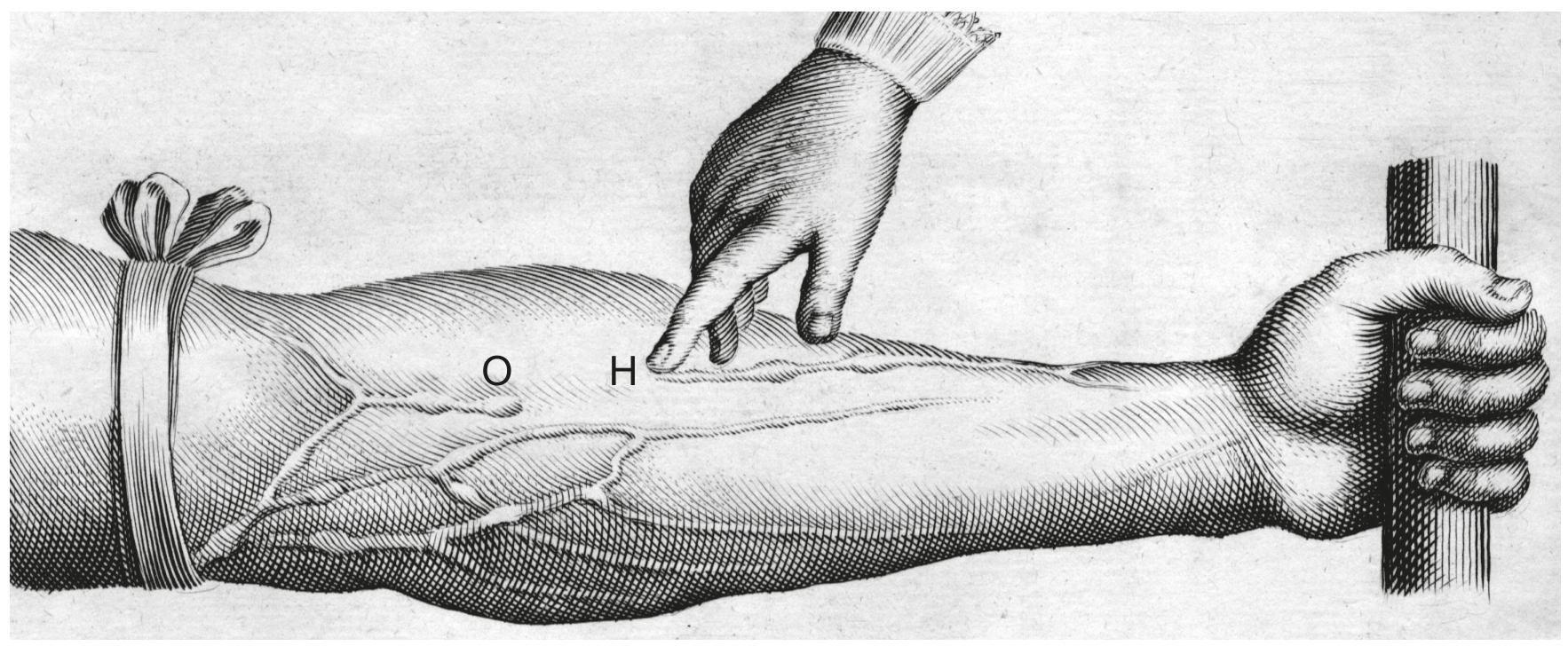
In 1628, the physician William Harvey described details of the circulation of blood for the first time. In one experiment, he tied a tight bandage around the upper arm of a volunteer to display the blood vessels in the lower arm more clearly. He pressed his finger on the blood vessel at H . At the same time, he pushed the blood in the vessel from H to O with a second finger, removing the blood as shown in the diagram. When the finger at H was released, the blood vessel refilled with blood.

Question image

Question 3(b)

(a)

Deduce what the experiment demonstrated about the circulation of blood.

[ 2 ]

Question B1

[Maximum number: 1]

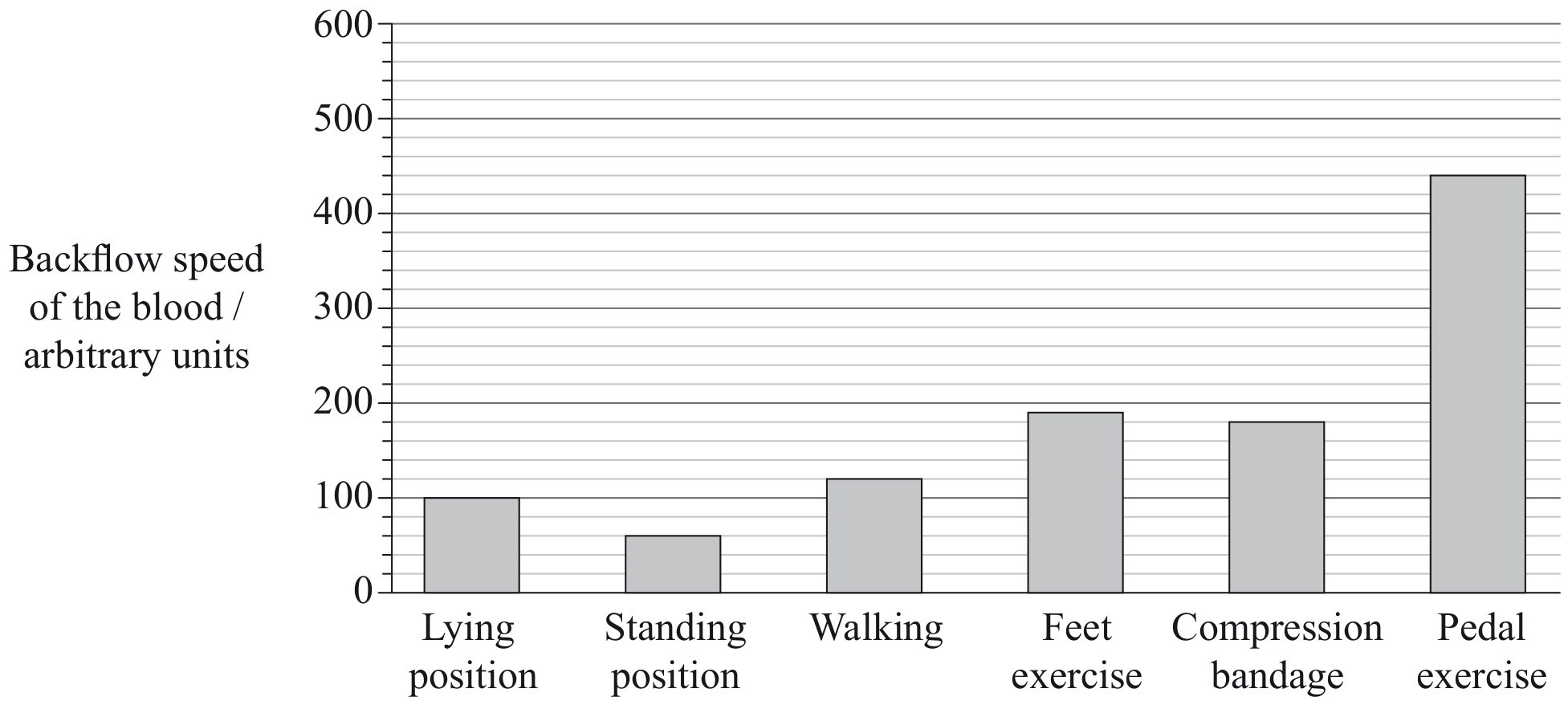
B1. Backflow is the return of blood to the heart. In legs, backflow is enhanced by the pumping action of leg muscles during movement. When this does not occur efficiently, serious health problems can arise. The backflow speed of 40 patients was measured during the application of different therapy methods. The lying position is the control.

Question image

Question B1(a)

Question B1(a)(i)

(a)
(i)

State which activity reduces backflow speed in relation to the control.

[ 1 ]

Question 3

Question 3(b)

(a)

Distinguish between the structure of arteries and the structure of veins.

[ 3 ]

Question 3

Question 3(c)

(a)

Outline the causes and consequences of blood clot formation in coronary arteries.

[ 2 ]
0 selected