Question 1
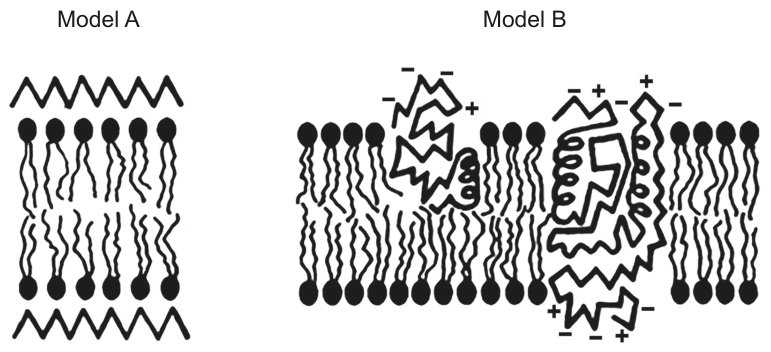
Two models of plasma membrane structure are shown.
Question 1(b)
Question 1(b)(i)
Label the model A diagram to show a region of protein.
Question 1(b)(ii)
Label the model B diagram to show a phospholipid.
EduNinjaTwo models of plasma membrane structure are shown.

Label the model A diagram to show a region of protein.
Label the model B diagram to show a phospholipid.
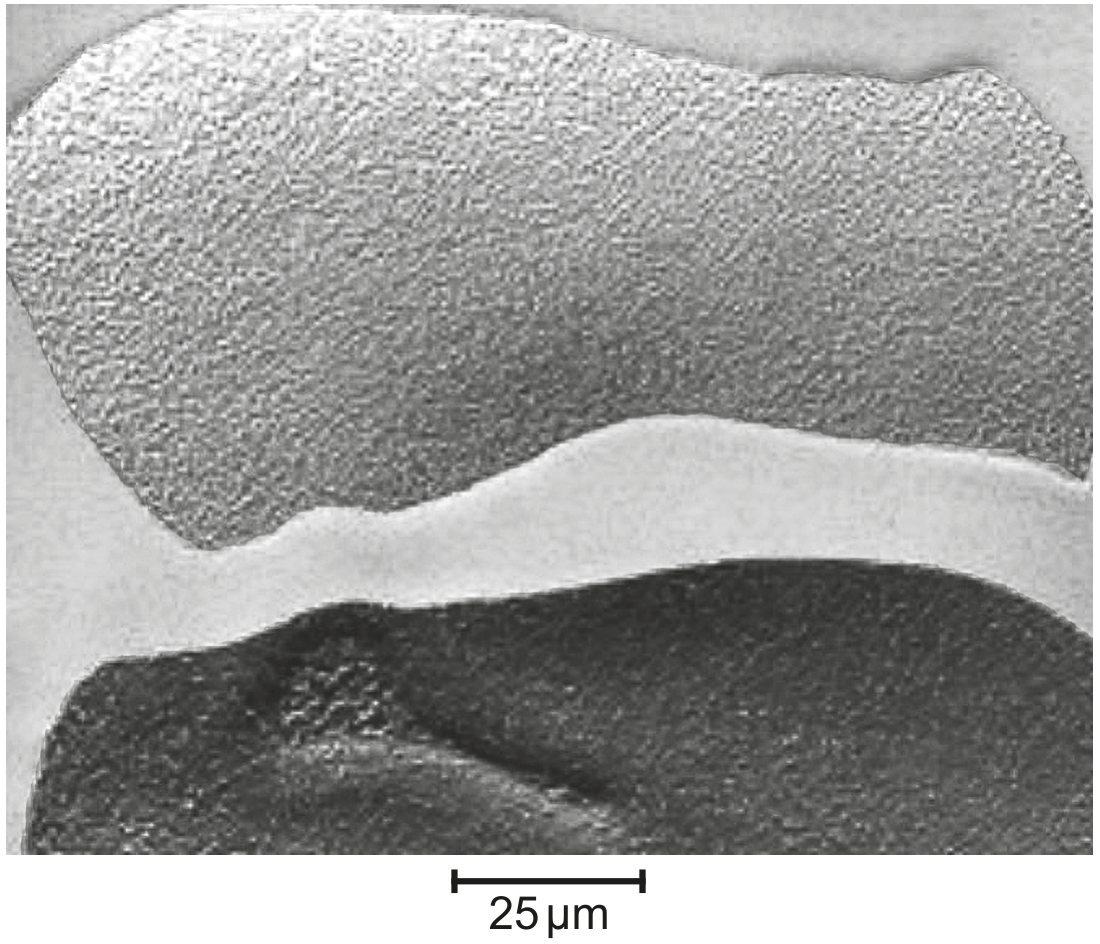
Membrane structure can be investigated using a technique known as freeze fracture. Cells are frozen and then split. Fracturing often occurs between the two phospholipid layers of membranes in the cell. An electron micrograph of such a fractured membrane is shown.

Explain how the amphipathic nature of phospholipids allows them to form bilayers.
What special property of phospholipid molecules explains their ability to spontaneously assemble into a lipid bilayer?
They are hydrophobic.
They are amphipathic.
They are saturated.
They are hydrophilic.
What is/are required for facilitated diffusion?
I. A concentration gradient
II. ATP
III. A channel protein
I only
I and III only
II and III only
I, II and III
What is the function of proteins in passive transport?
To serve as electron carriers in the membrane
To interact with hormones to influence cell activity
To serve as channels so that specific molecules diffuse across the membrane
To release energy from ATP so that specific substances can cross the membrane
Which molecule is paired with the component of the cell membrane that allows it to pass through the membrane?
Molecule
Component of the
cell membrane
insulin
aquaporin
glycogen
channel protein
oestradiol
phospholipid bilayer
carbon dioxide
pump protein
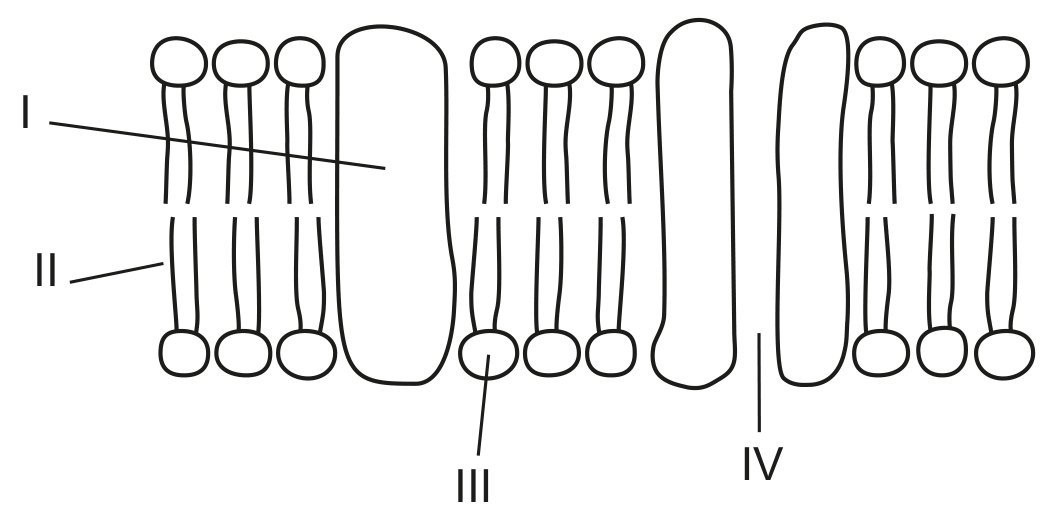
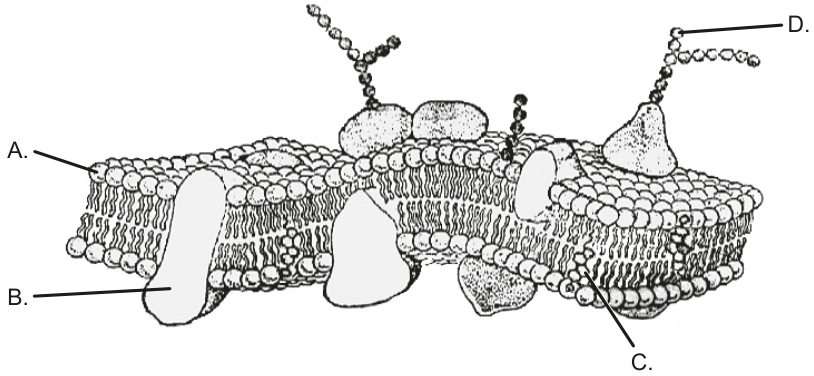
The diagram shows the fluid mosaic model of cell membranes. Which labelled regions are hydrophilic?

I and II
I and III
II and IV
III and IV
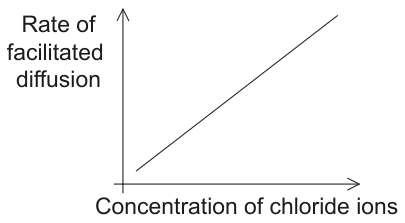
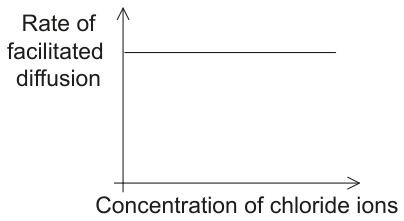
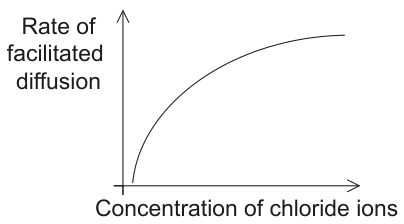
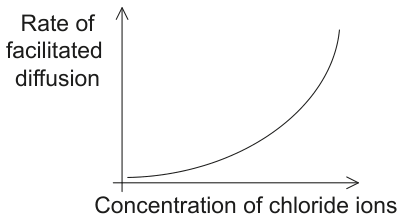
Which graph best represents the relationship between the concentration of chloride ions in the external environment of a cell and the rate at which the chloride ions move by facilitated diffusion into the cytoplasm of the cell?


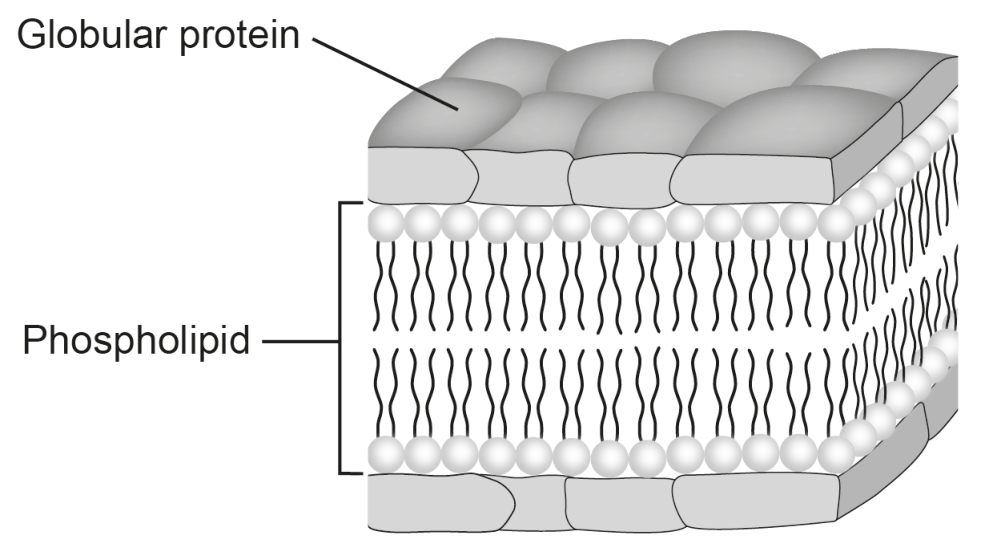
The diagram shows the Davson-Danielli model of the cell membrane.

How does this model relate to the fluid mosaic model?
Both models include a phospholipid bilayer sandwiched between two layers of protein.
The Davson-Danielli model does not include integral proteins, whereas the fluid mosaic model does.
The fluid mosaic model shows proteins sandwiched between two layers of phospholipid.
The Davson-Danielli model includes a phospholipid bilayer, whereas the fluid mosaic model does not.
In the diagram, which structure is an intrinsic or integral protein?