EduNinja

IB Biology SLA4.1 Evolution and speciationQuestion Bank

Question 1

[Maximum number: 5]

The land snail Cepaea nemoralis is very common in North America and in Europe.

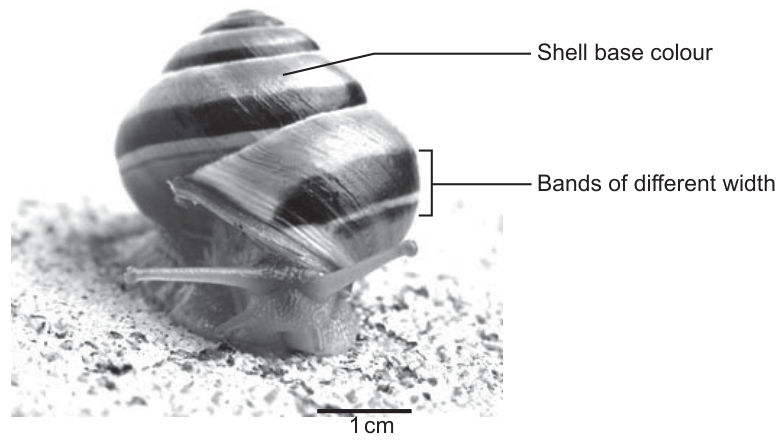
The base colour of its shell varies between brown, pink and yellow, and also in its intensity. Some shells are unbanded, but most show one to five bands of different width on top of the shell base colour.
Question image

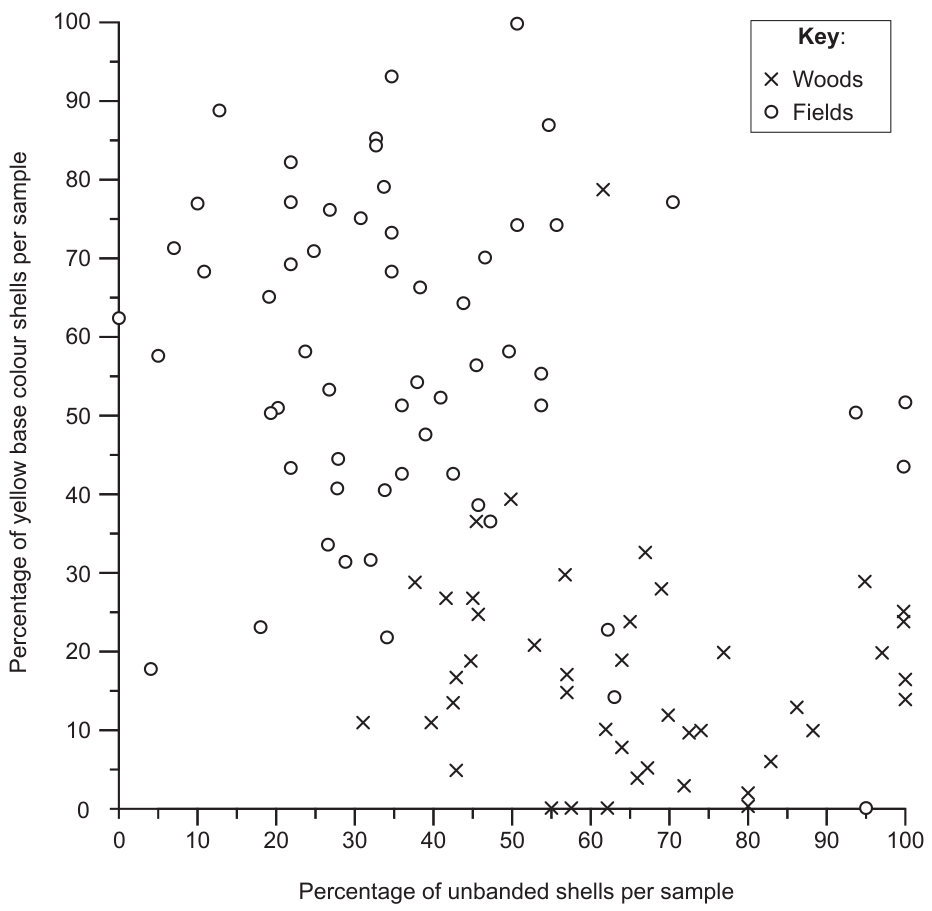
In the early 1950s, scientists studied the proportion of colours and banding of C. nemoralis in woods and fields near Oxford, UK, which differed in the type of plants and background colour. Each data point on the graph represents the percentage of yellow base colour shells and unbanded shells in a sample from either one type of wood or field, although other snail colours were present.
Question image

Question 1(c)

(a)

Using the data in the graph, distinguish between the distribution of C. nemoralis shells in woods and fields.

[ 2 ]

Question 1(f)

(b)

Using the theory of natural selection, explain the differences shown in the graph between the three colours of snail.
[ 3 ]

Question 1

[Maximum number: 4]

Cultivated rice, Oryza sativa, is one of the most important human foods. The two main sub-species of cultivated rice are O. sativa indica and O. sativa japonica. O. rufipogon is a wild species from which they probably evolved.

Question 1(g)

(a)

Using all of the data, discuss whether there is evidence that the two sub-species of O. sativa might have evolved independently from O. rufipogon.

[ 4 ]

Question 3

[Maximum number: 1]

What is a piece of evidence that all living organisms share a common ancestor?

A

They manufacture the same proteins.

B

They obtain energy from glucose.

C

DNA triplets code for the same amino acids.

D

Cells can synthesise all the amino acids.

Question 3

Question 3(b)

(a)

Explain how bonobos could have evolved from chimpanzees by speciation.

[ 3 ]

Question 4

Question 4(b)

(a)

The changes that result from global warming may lead to evolution. Define evolution.

[ 2 ]

Question 19

[Maximum number: 1]

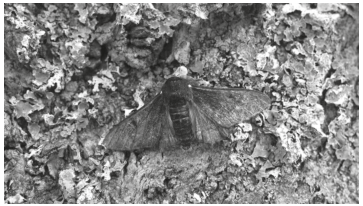
Lichens are returning to the forests of the industrial areas of the United Kingdom due to strict pollution control.

Question image

What is the expected outcome in the population of peppered moths (Biston betularia)?

A

Increased numbers of light-coloured peppered moths

B

Increased industrial melanism in peppered moths

C

Increased predation of peppered moths

D

Increased speciation of peppered moths

Question 4

[Maximum number: 2]

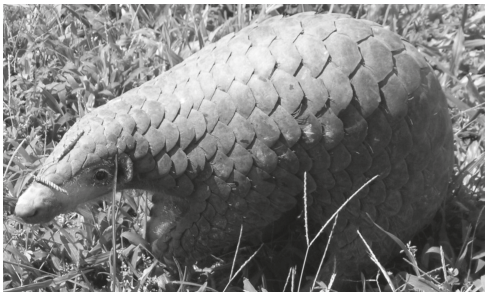
The Chinese pangolin (Manis pentadactyla) is a critically endangered species that has declined in numbers by 80 % since 2000 . It inhabits both forest and grassland, where it uses long, powerful claws to open ant and termite nests and ingests the insects using a long, sticky tongue.

Question image

Question 4(b)

(a)

Outline evidence for evolution from the limbs of mammals such as pangolins.

[ 2 ]

Question 20

[Maximum number: 1]

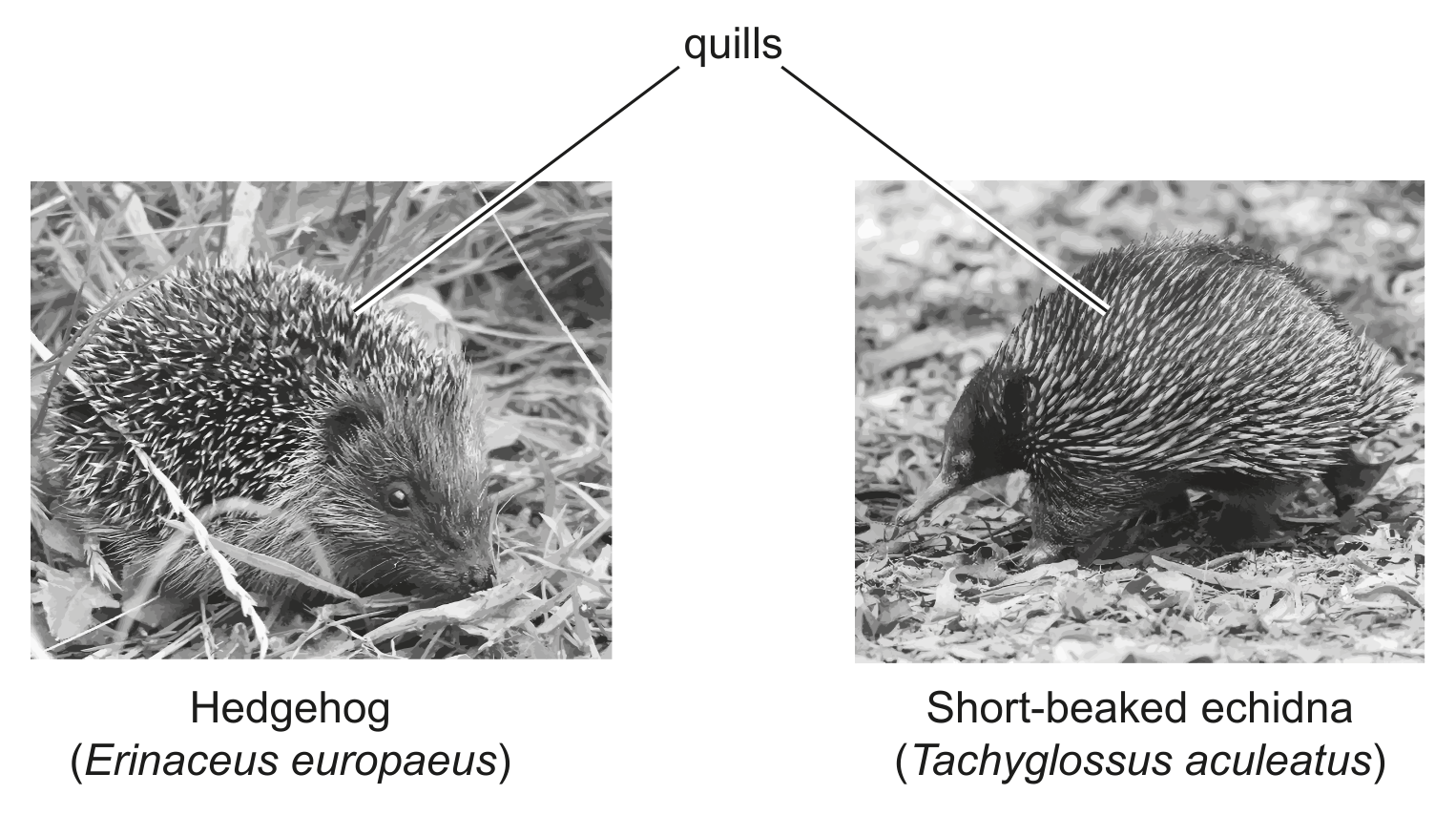
Modified hairs (quills) cover the bodies of hedgehogs (Erinaceus europaeus) and short-beaked echidnas (Tachyglossus aculeatus). However, these structures do not have the same evolutionary origin.

Question image

What is a possible explanation for the presence of quills in both species?

A

Both species diverged gradually, but quills were conserved for successful survival.

B

Quills developed in response to similar environmental pressures.

C

Quills are homologous structures that result from adaptation to a similar predator.

D

They developed by adaptive radiation to survive in slightly different habitats.

Question 20

[Maximum number: 1]

Which is an example of speciation?

A

Selective breeding to produce new varieties of the wheat Triticum aestivum with higher crop yield

B

Evolution of different courtship behaviours in separate populations of the cricket Gryllus rubens

C

Natural selection leading to an increase in the frequency of darker individuals of Biston betularia

D

Selective feeding by koalas (Phascolarctos cinereus) on Eucalyptus species

Question 20

[Maximum number: 1]

Which are examples of homologous structures?

A

The wings of bats and butterflies

B

The fins of fish and whales

C

The hindlimbs of frogs and grasshoppers

D

The forelimbs of primates and penguins

0 selected