Question 1
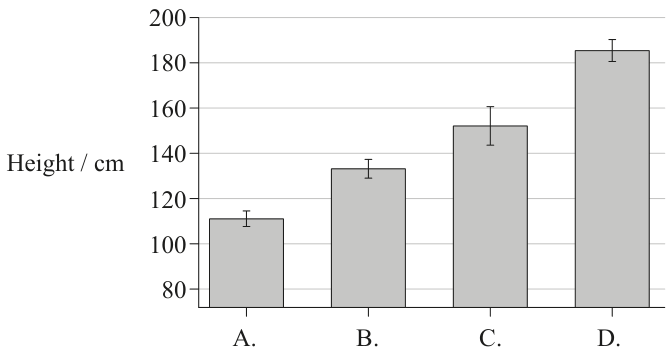
Which population group has the greatest variation in height?
Age group
 EduNinja
Which population group has the greatest variation in height?
Age group
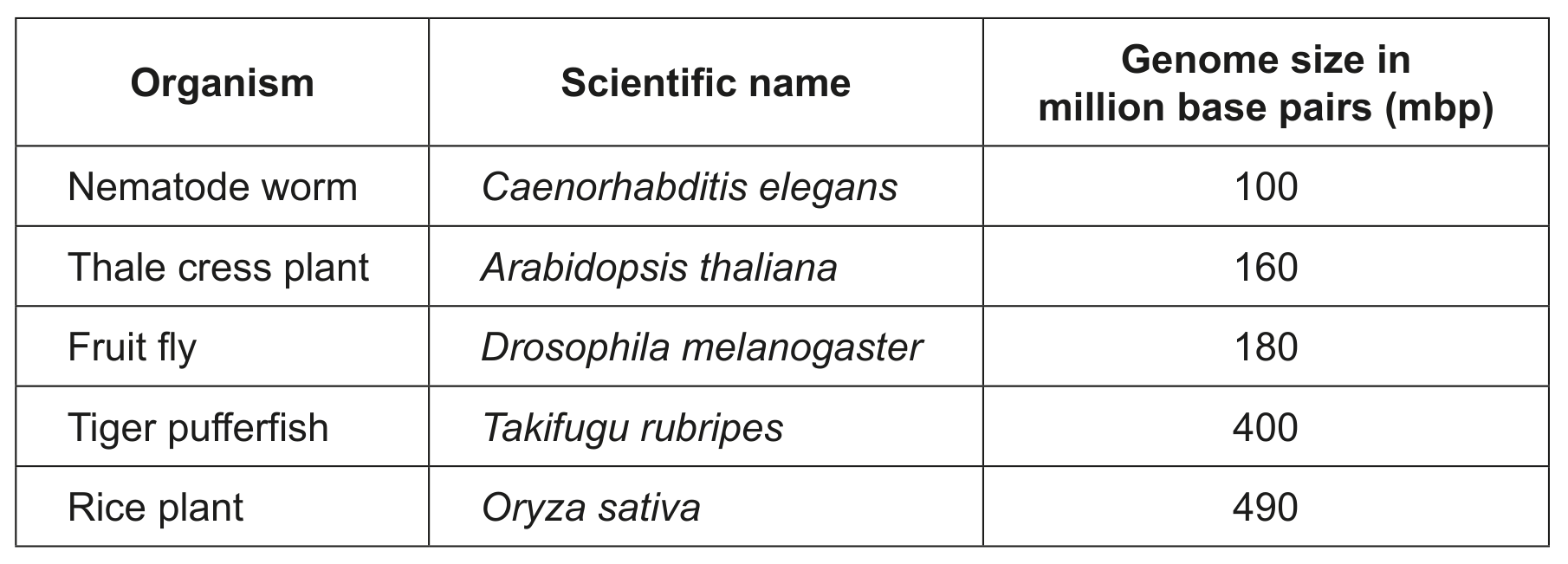
Whole genome sequencing has allowed scientists to compare the genetic content of different organisms. The table shows the genome sizes of some plants and animals.
Discuss the current and potential future uses of whole genome sequencing.
The western gorilla (Gorilla gorilla) is the largest primate. Sex determination in gorillas is the same as in humans. The image shows a karyogram of a gorilla.
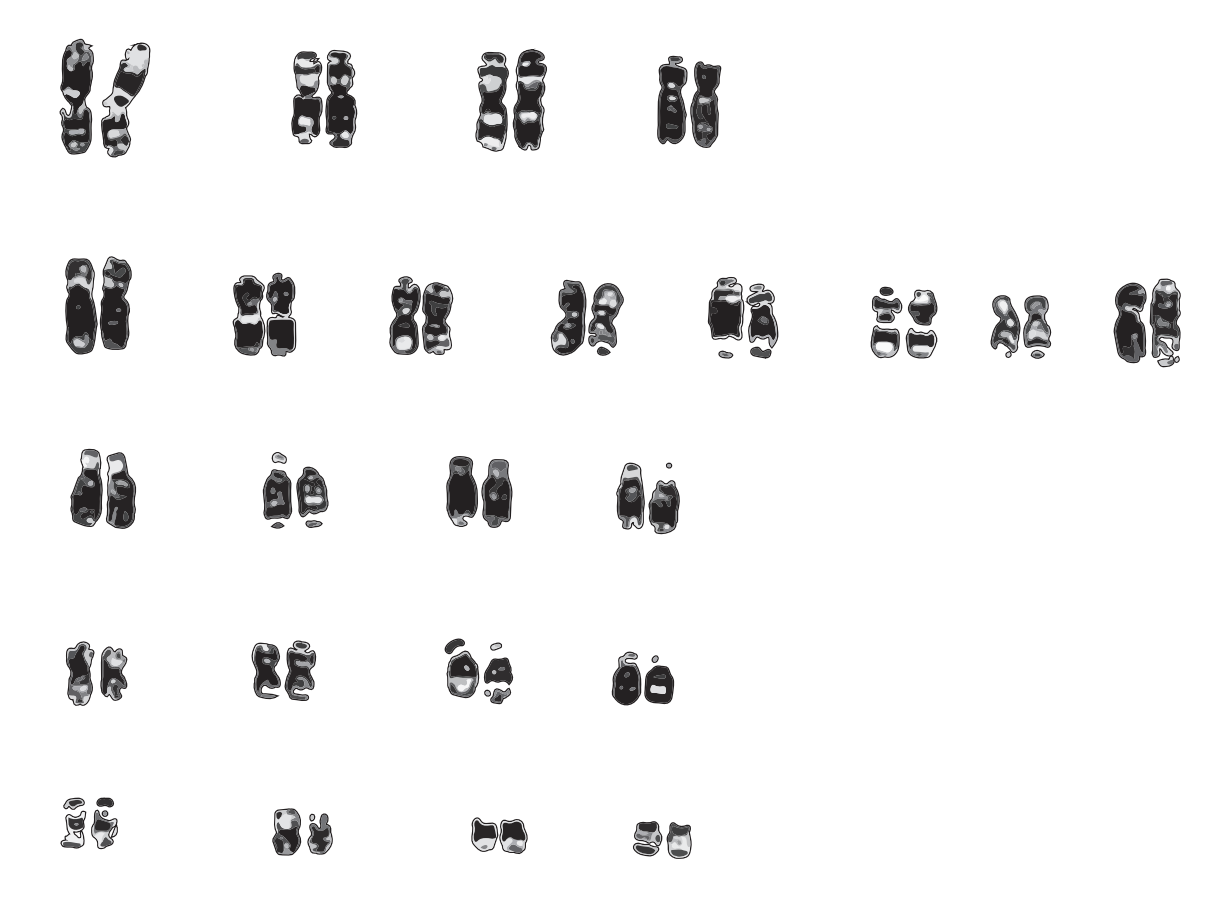
Acrocentric chromosomes have a centromere near one end of the chromosome. Draw a circle around the row on the karyogram that contains all acrocentric chromosomes.
State the chromosome number in this gorilla.
Describe how a karyogram is constructed.
Cultivated rice, Oryza sativa, is one of the most important human foods. The two main sub-species of cultivated rice are O. sativa indica and O. sativa japonica. O. rufipogon is a wild species from which they probably evolved.
State the reason that O. sativa and O. rufipogon are classified as different species.
To investigate whether the sub-species of cultivated rice evolved independently from the wild species, scientists analysed their chromosomes to find areas with similar DNA base sequences. Wild species tend to have many different alleles of genes present on each chromosome, but during the development of a crop plant by artificial selection from a wild species, this diversity drops considerably, increasing the base sequence similarity.
The number of different alleles of the genes on a chromosome can be represented by a diversity index. The following graph of part of chromosome 7 shows the diversity index of O. rufipogon and two varieties of cultivated rice, O. sativa indica and O. sativa japonica. The gene PROG1 allows the plant to stand upright, which is typical of cultivated rice. Its position is indicated by the vertical arrow on the graph.
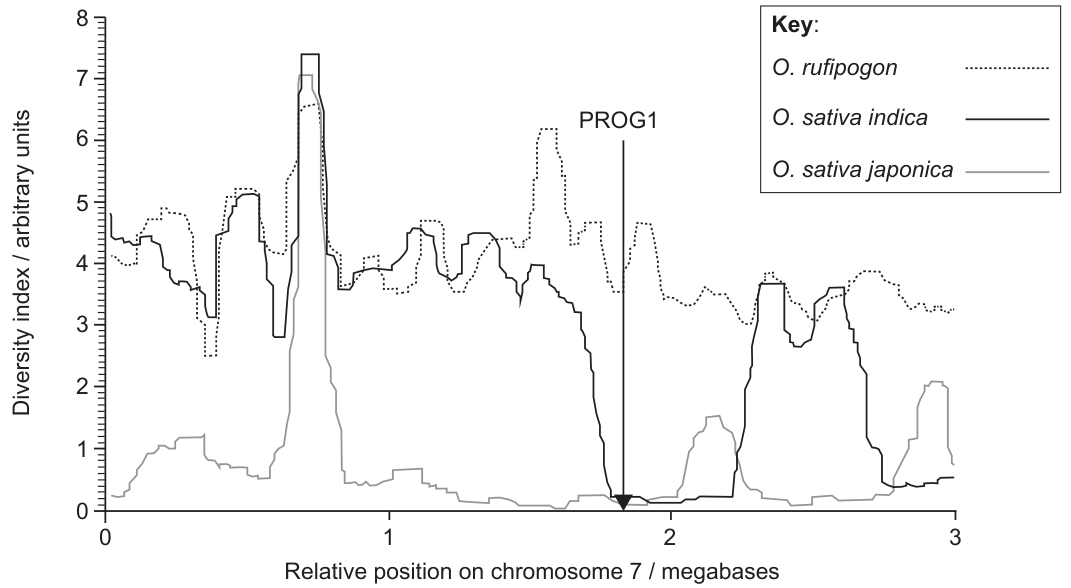
Determine which type of rice has the lowest overall diversity index.
Compare and contrast the trends for O. rufipogon and O. sativa indica.
In another experiment, scientists retrieved genome sequences of the wild rice O. rufipogon taken from a wide range of geographical sites (I, II and III) and those of the two sub-species of O. sativa from gene banks.
The pie charts, presented along with a cladogram, show the proportion of alleles for three genes which confer specific characteristics to O . sativa. Mutations can produce derived alleles that are different from the original ancestral alleles. The control group represents wild rice species other than O. rufipogon.
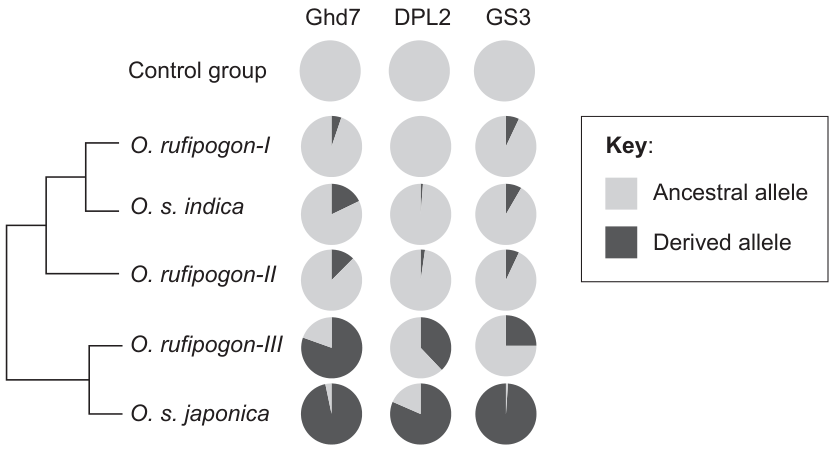
State the proportion of the ancestral allele for the gene GS3 in the O. rufipogon-III population.
Distinguish between the proportion of ancestral and derived alleles for all three genes in O. sativa indica and O. sativa japonica.
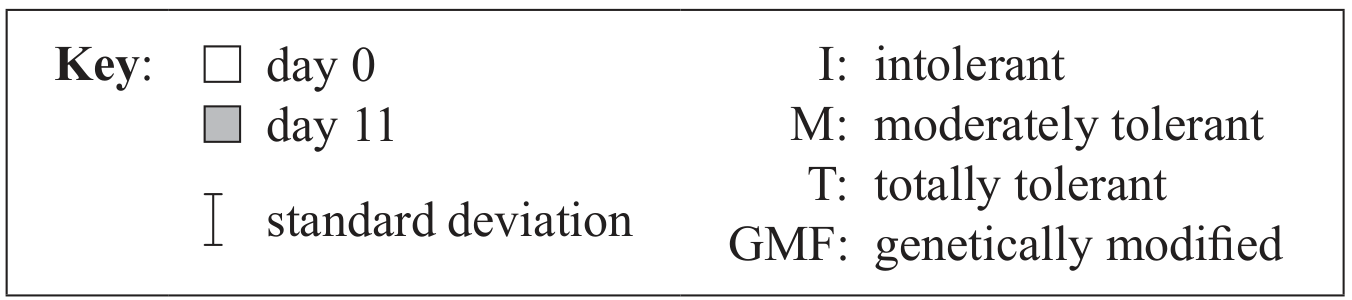
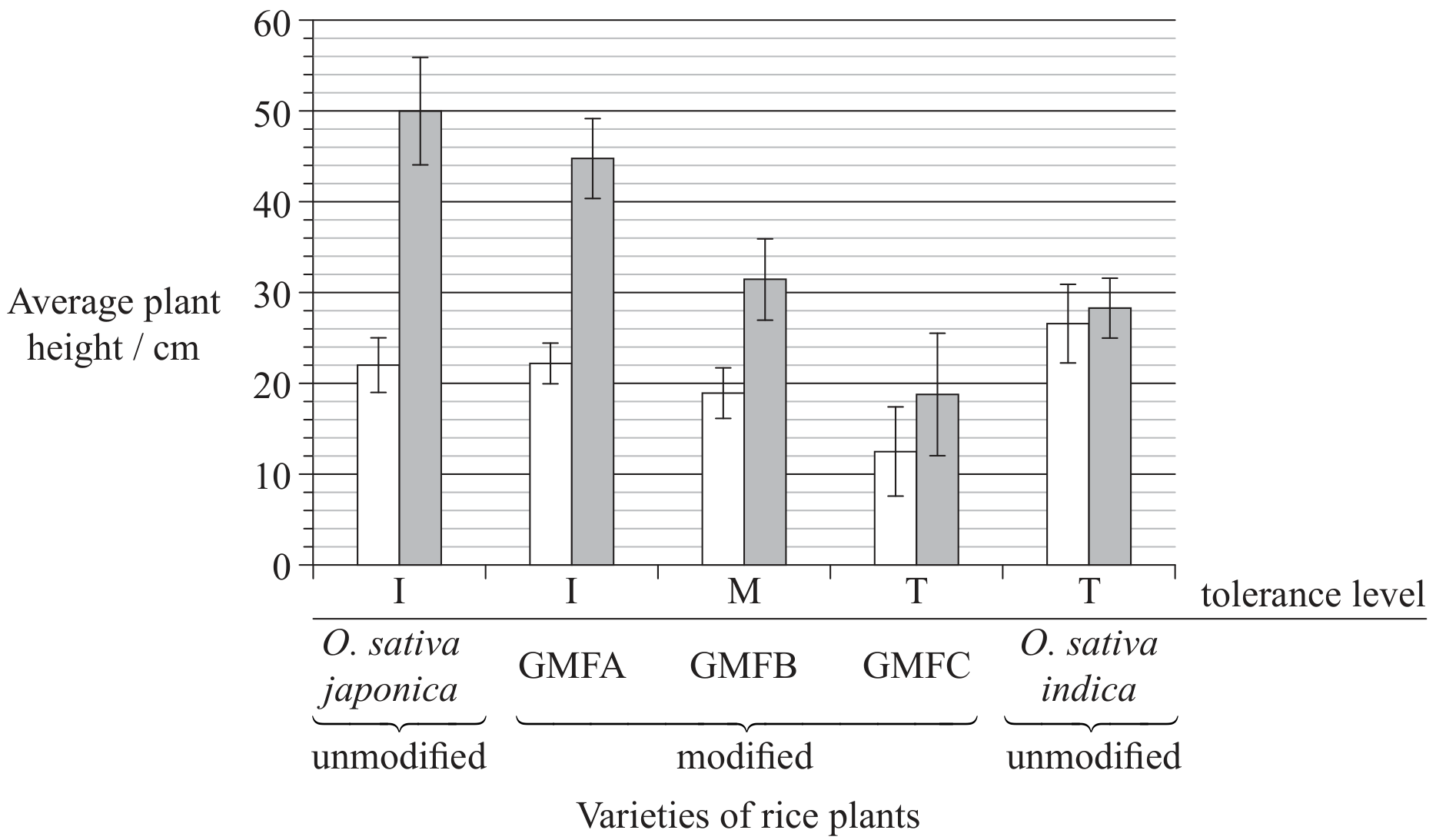
Rice (Oryza sativa) is usually intolerant to sustained submergence under water, although it grows rapidly in height for a few days before dying. This is true for one variety, Oryza sativa japonica. The variety Oryza sativa indica is much more tolerant to submergence.
Three genetically modified forms of O. sativa japonica, GMFA, GMFB and GMFC, were made using different fragments of DNA taken from O. sativa indica.
The plants were then submerged for a period of 11 days. The heights of all the plants were measured at the beginning and at the end of the submergence period.
Outline the use of the binomial system of nomenclature in Oryza sativa.
Psammonobiotus balticus belongs to a group of protists (unicellular eukaryotic organisms) that have a shell surrounding most of the cell, which provides shelter from predators. The graph shows the frequency of varying shell lengths in a population of P. balticus.
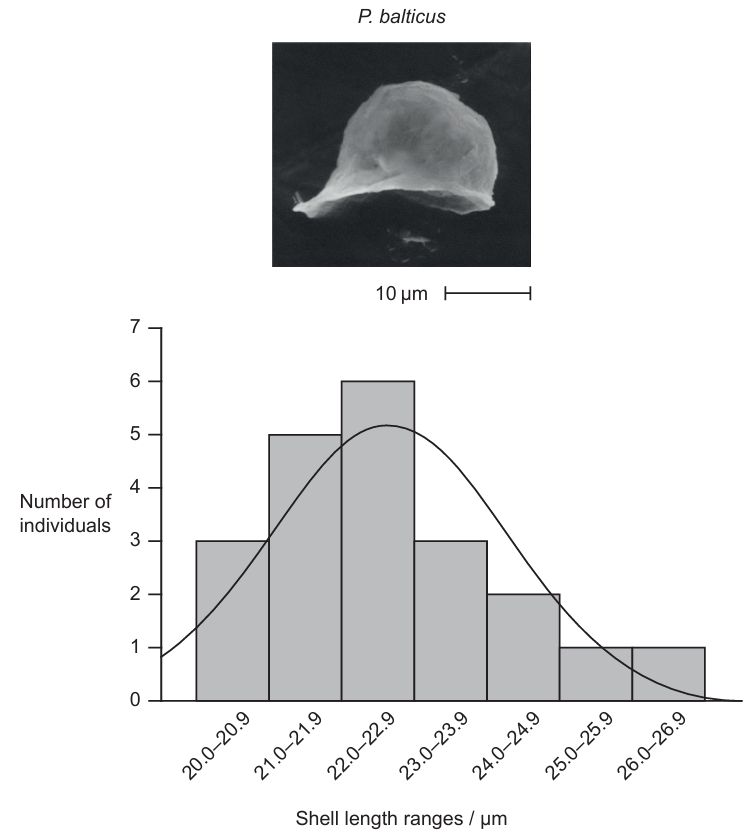
State, giving a reason, the type of variation shown by shell length.
The photomicrograph below shows the protozoan Paramecium caudatum.
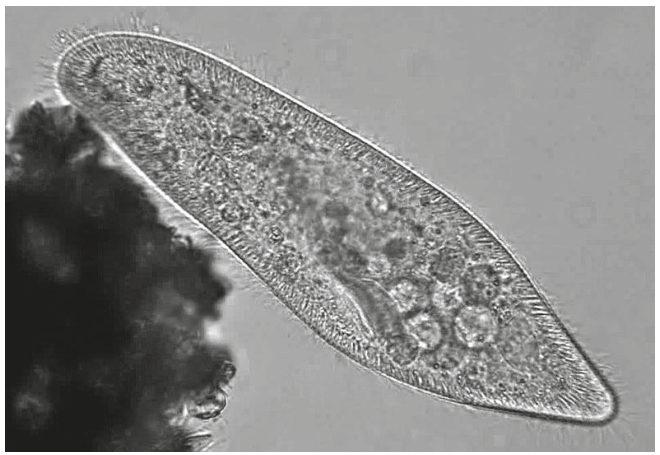
State the genus of this organism.
There can be much variation within a single species, such as dogs (Canis familiaris).
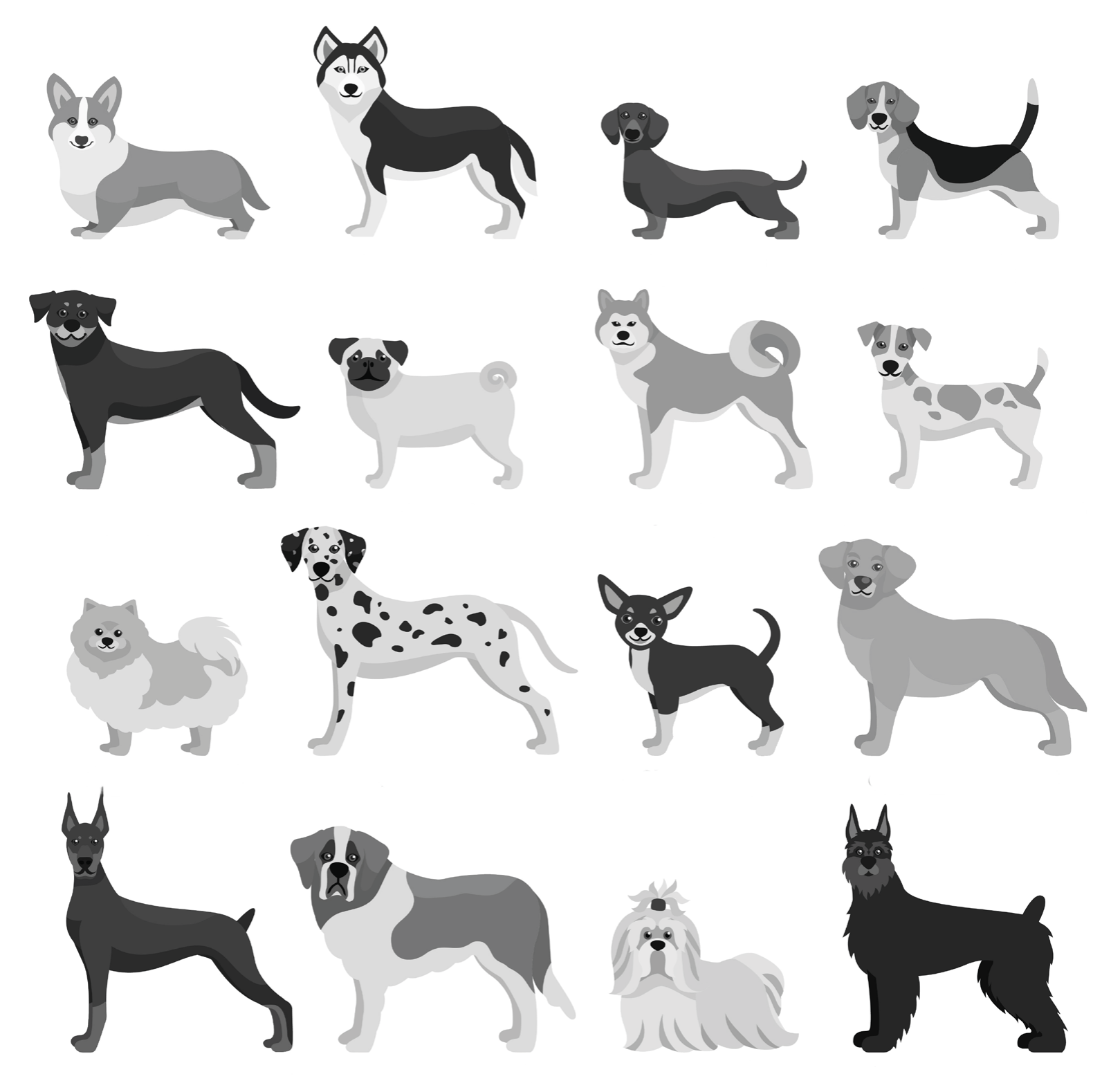
Define species.
Describe how karyotyping can be used to decide if all these dogs are of the same species or not.
The image shows the chromosomes in four cells of an insect at the end of meiosis.
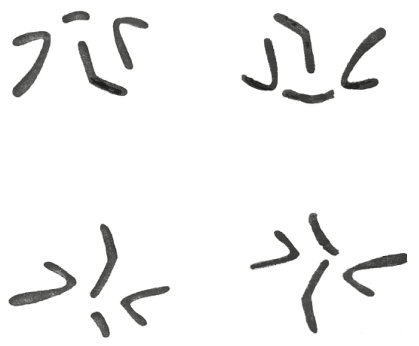
What is the diploid number of this insect?
16
8
4
2
Outline the use of a karyogram during pregnancy.