
EduNinja

Edexcel A-Level Physics AS Slope and Intercept

Edexcel A-Level Physics AS Slope and Intercept
Pearson Edexcel International Advanced Subsidiary/Advanced Level in Physics, Issue 3, July 2021Physics XPH11/YPH11

Review slope and intercept in Edexcel A-Level Physics through best-fit lines, large-triangle gradients and constants read from graph intercepts.

How this is tested

  • calculate a graph gradient with a large triangle and state the physical constant it represents
  • read or calculate a y-intercept, then convert a log intercept back to the original quantity
  • compare a suggested constant with the graph gradient or intercept to judge whether it is valid

Question 4(c)(i)

[Maximum number: 2]

A student investigated the bending of a plastic beam.

The beam, of width w and height h, was supported at either end by two metal rods a distance l apart, as shown.
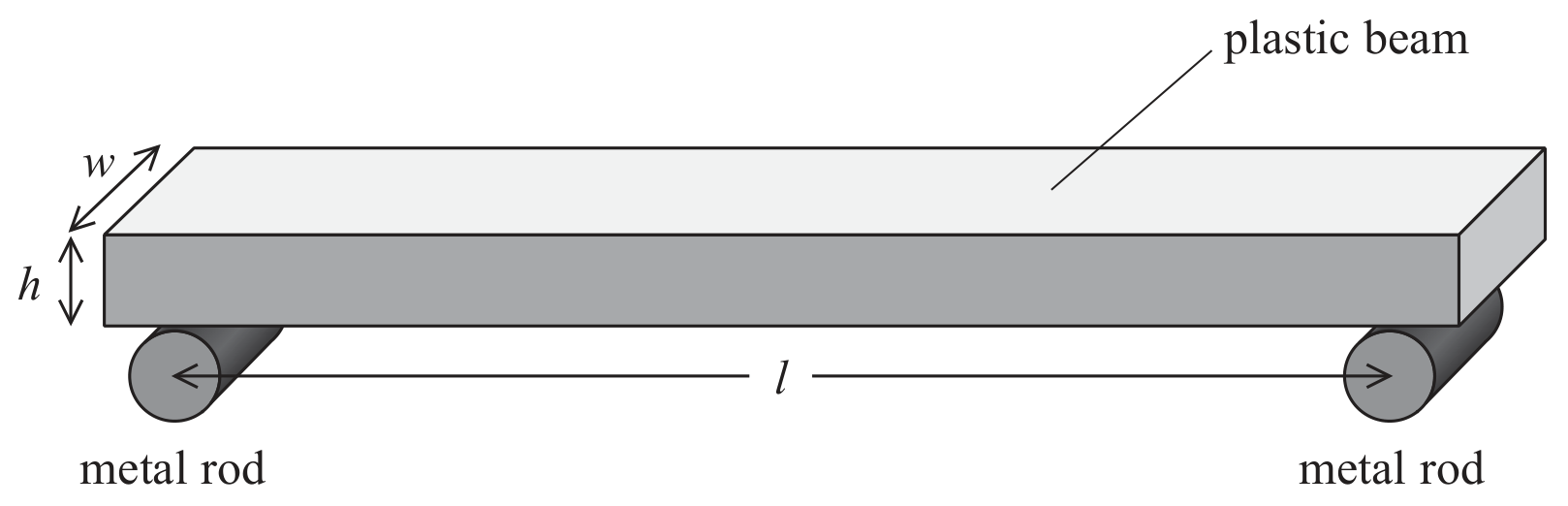
Figure for Question 4(c)(i) — Edexcel A-Level Physics AS

She applied a force F to the middle of the plastic beam by hanging a mass from it.
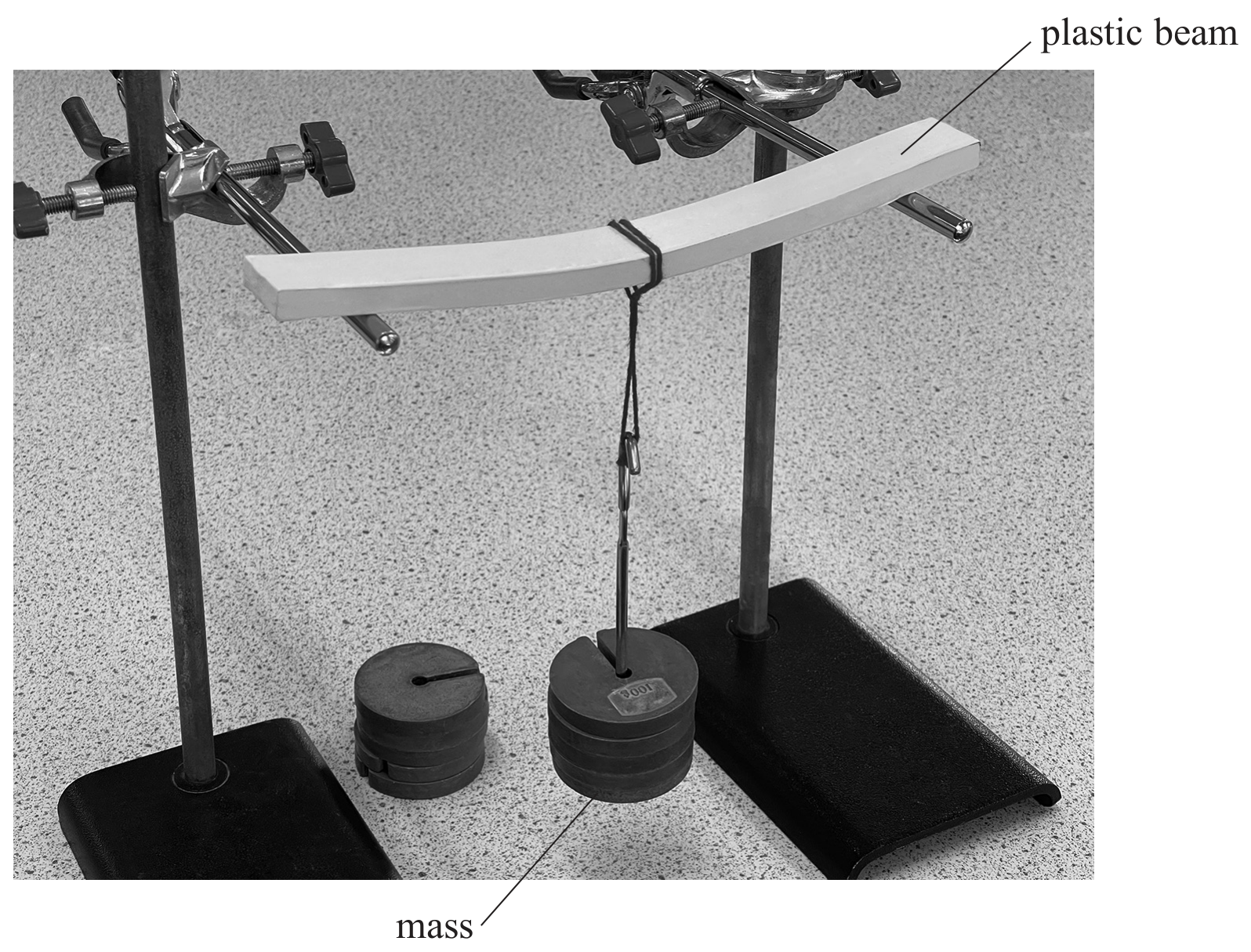
Figure for Question 4(c)(i) — Edexcel A-Level Physics AS

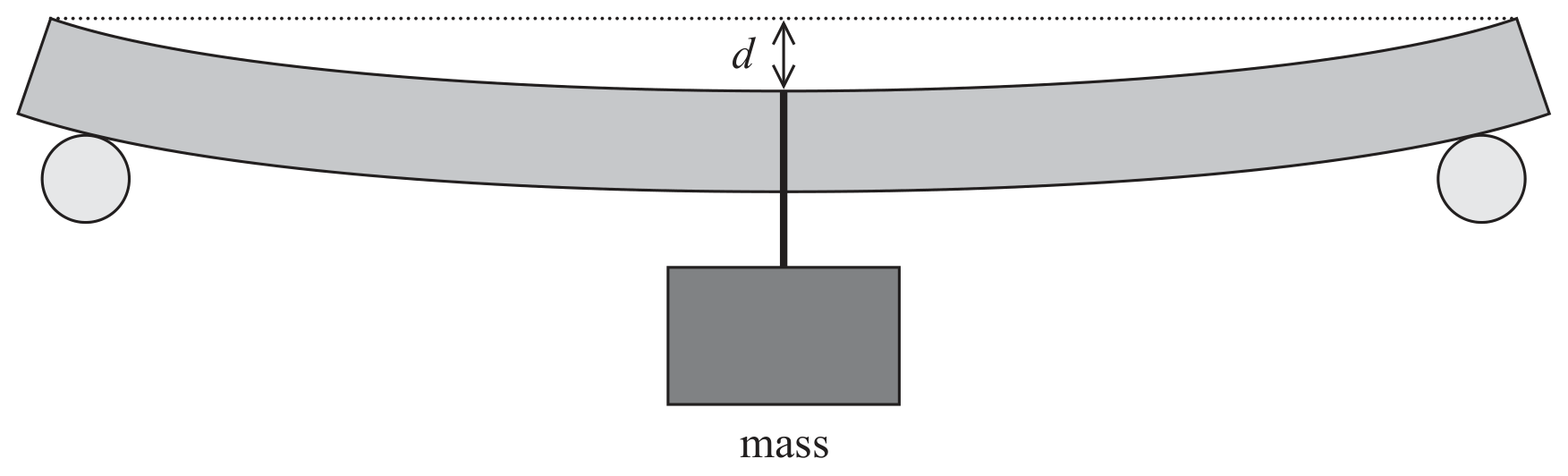
The beam bent downwards as shown.

Figure for Question 4(c)(i) — Edexcel A-Level Physics AS

She measured the vertical distance d moved by the middle of the plastic beam and repeated this measurement for increasing values of F.

She recorded her results in a table, as shown.
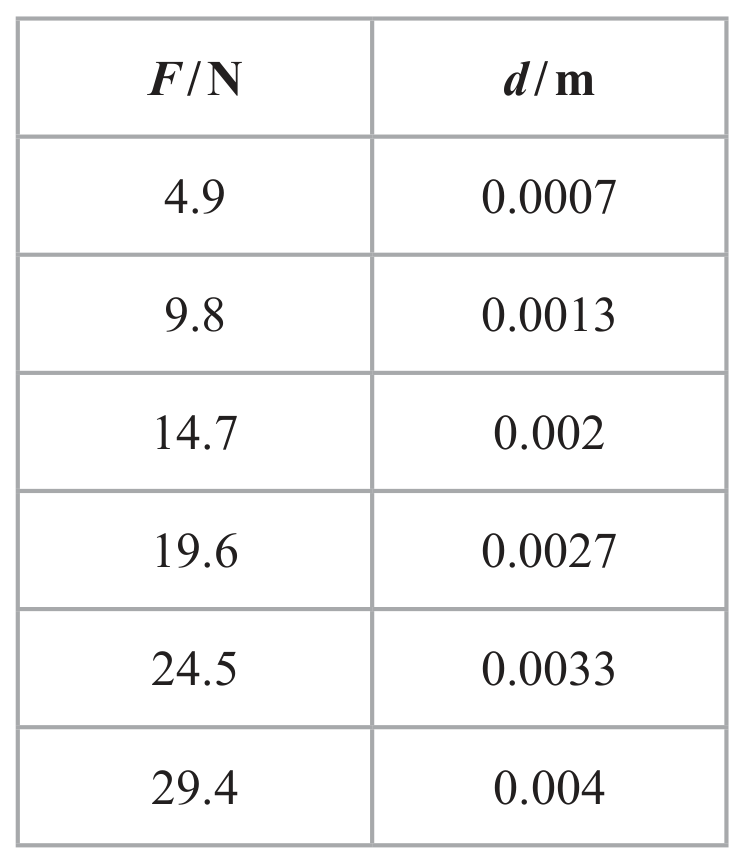
Table for Question 4(c)(i) — Edexcel A-Level Physics AS

The 'bending modulus' E of the plastic beam can be calculated using the equation

E=l3F4wh3dE=\frac{l^{3} F}{4 w h^{3} d}

Show that the gradient of the graph is equal to l34wh3E\frac{l^{3}}{4 w h^{3} E}
(2)