

Question 4(a)(iv)
A student investigated the photoelectric effect using the apparatus shown.
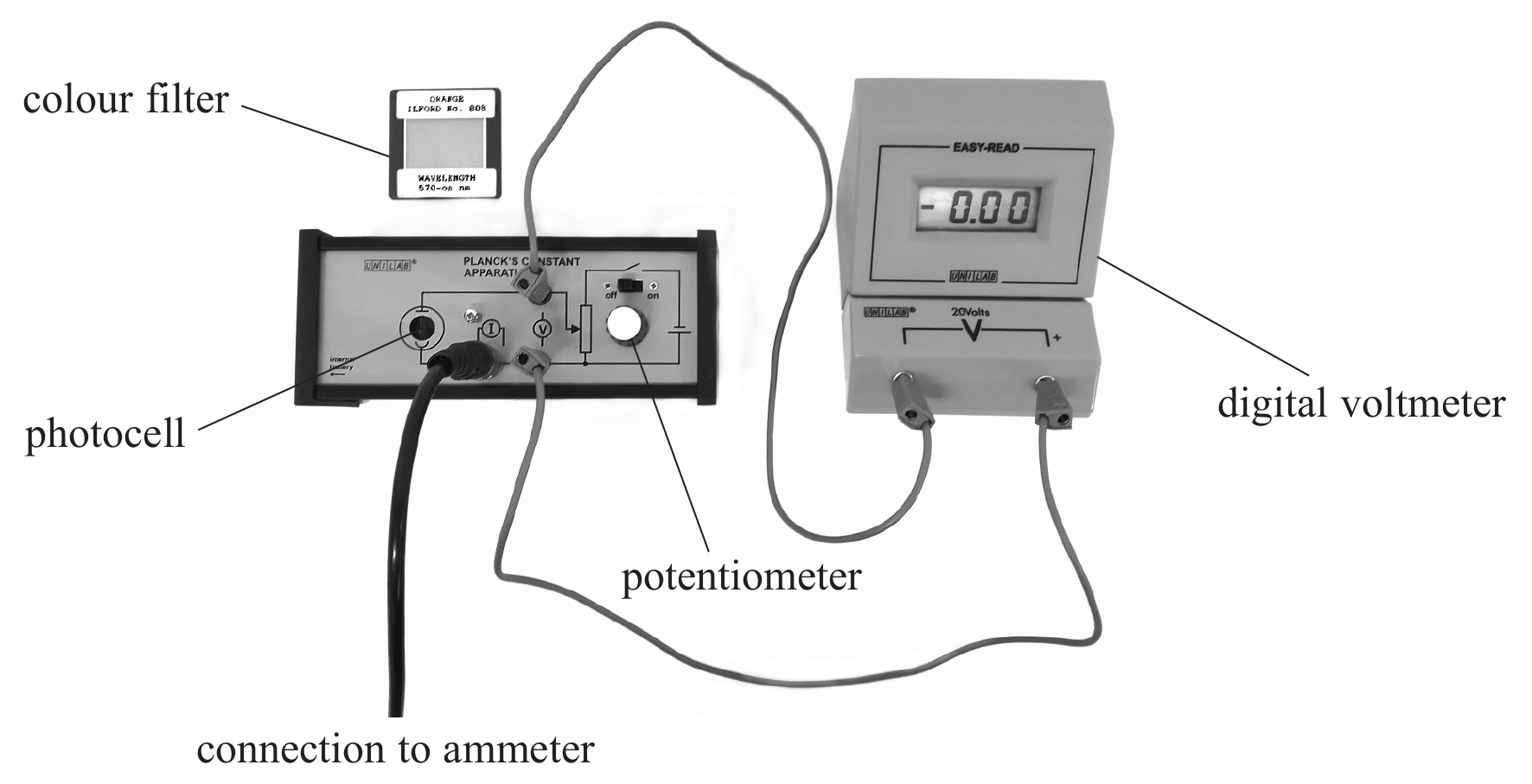
He used a source of white light and colour filters to shine different wavelengths of light onto the photocell.
Photoelectrons were emitted with a range of kinetic energies, creating a small current in the photocell.
Using the potentiometer, the student varied the potential difference across the photocell. As the potential difference across the photocell increased, the current in the photocell decreased.
He measured the potential difference when the current in the photocell was zero.
He calculated the maximum kinetic energy of the photoelectrons for each wavelength of light.
The table shows the student's data.
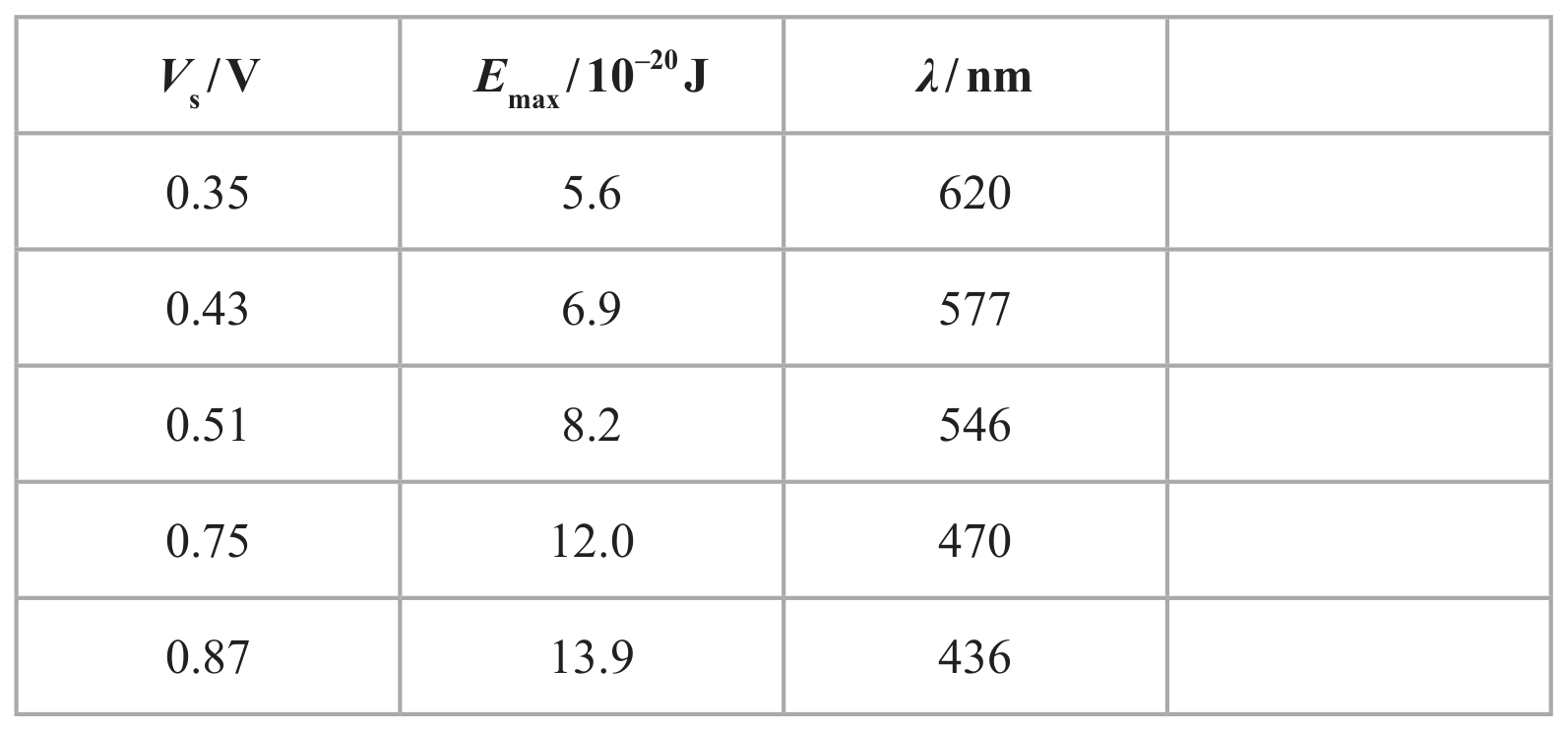
Calculate the percentage difference between h and the accepted value for the Planck constant.
Percentage difference =