
Trace Human Greenhouse Sources
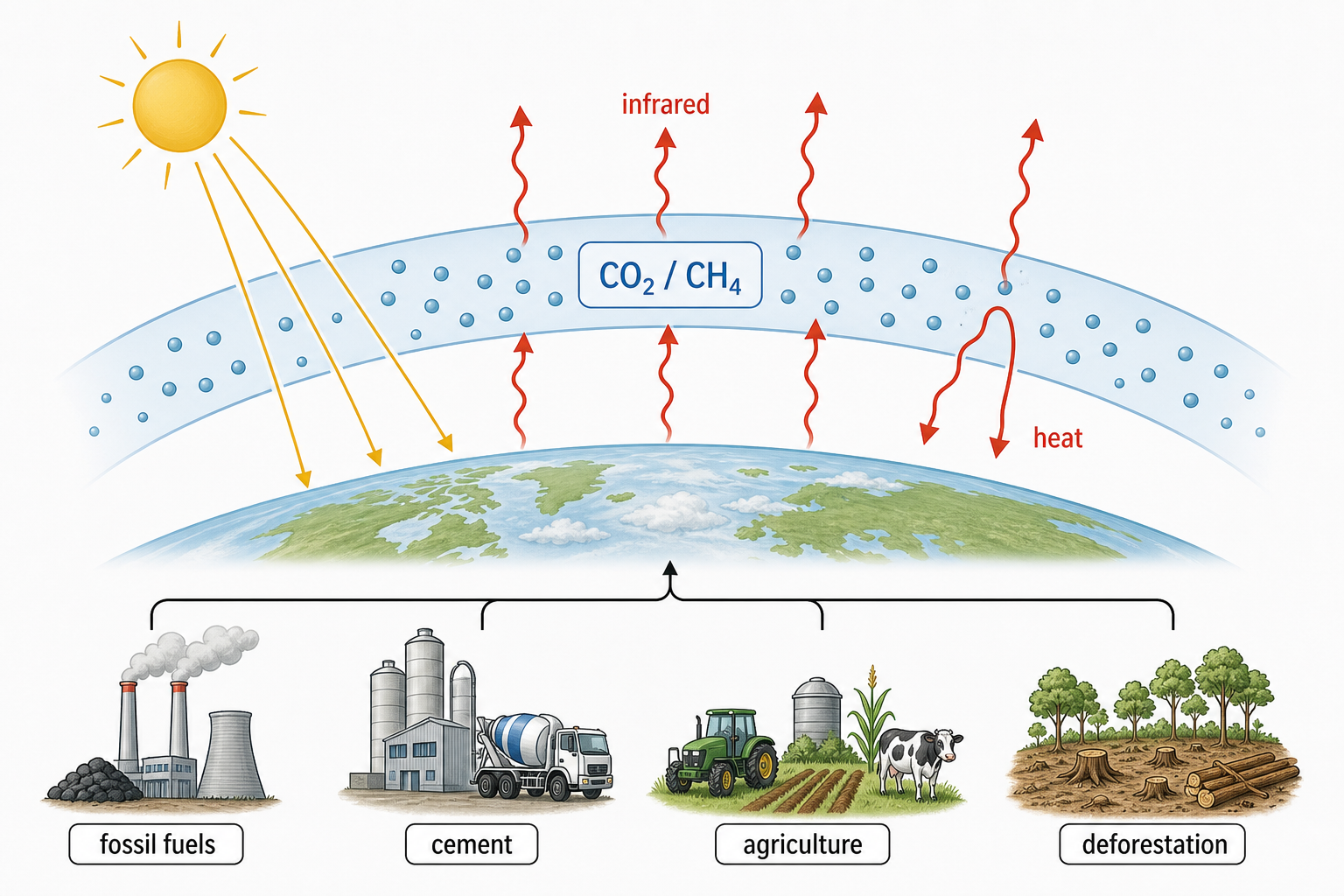
Human activities increase atmospheric carbon dioxide, methane, and other greenhouse gases. The main sources are fossil-fuel combustion, cement production, agriculture, deforestation, and land-use change. The exam chain is source, gas increase, enhanced greenhouse effect, and climate impact.
Human sources increase greenhouse gases, which strengthen heat retention in the atmosphere.
Match each human activity to the greenhouse-gas link.
MatchMatch each human activity to the greenhouse-gas link.
ChooseBuild Feedback Loops
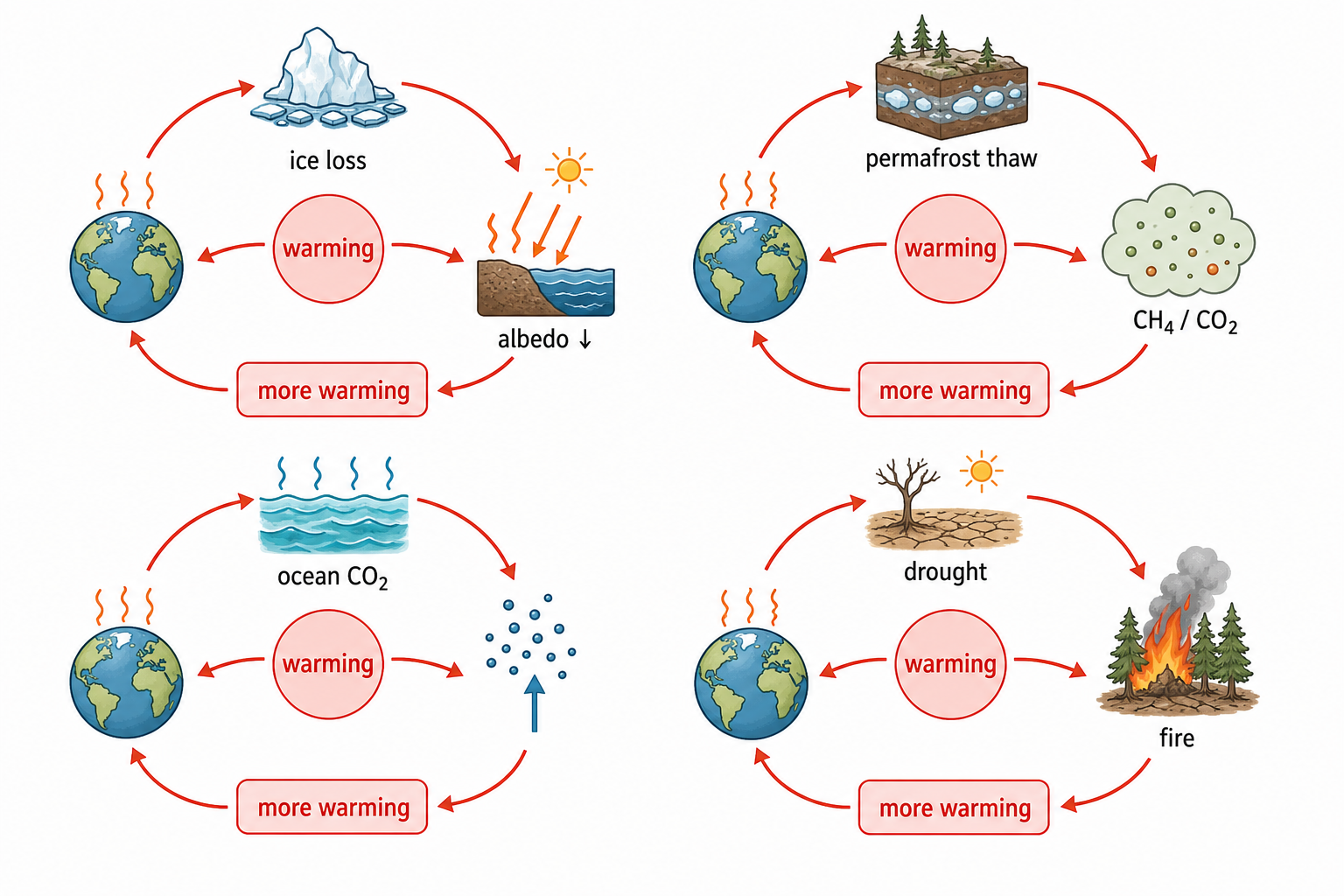
Positive feedback amplifies an initial climate change. Warming can reduce ice cover, lowering albedo and causing more heat absorption. It can thaw permafrost and release methane, reduce ocean CO2 storage, or increase wildfire, each adding further warming pressure.
A positive feedback loop does not just respond to warming; it amplifies it.
Match each feedback to its amplifying step.
MatchMatch each feedback to its amplifying step.
ChooseSpot the Boreal Tipping Point
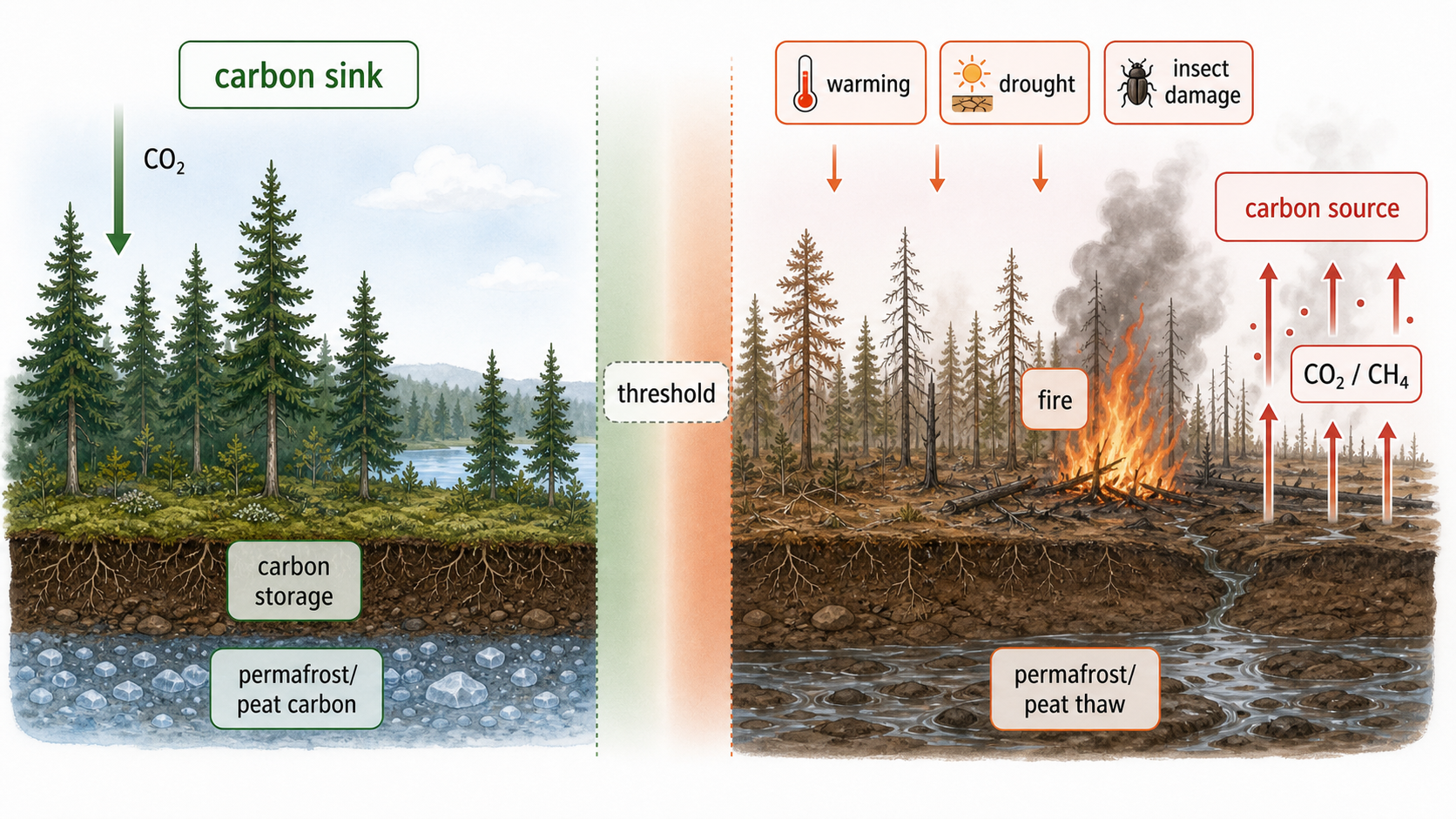
Boreal forests can store carbon, but warming can push them toward becoming carbon sources. Warming, drought, reduced snowfall, browning, insect outbreaks, and fire can reduce growth and increase carbon release. A tipping point risk appears when feedbacks make the forest less able to remain a carbon sink.
A strong answer shows why a sink can become a source, not just that forests are affected.
Sort each factor by its role in boreal tipping risk.
SortSort each factor by its role in boreal tipping risk.
ChooseCompare Ice-Dependent Species
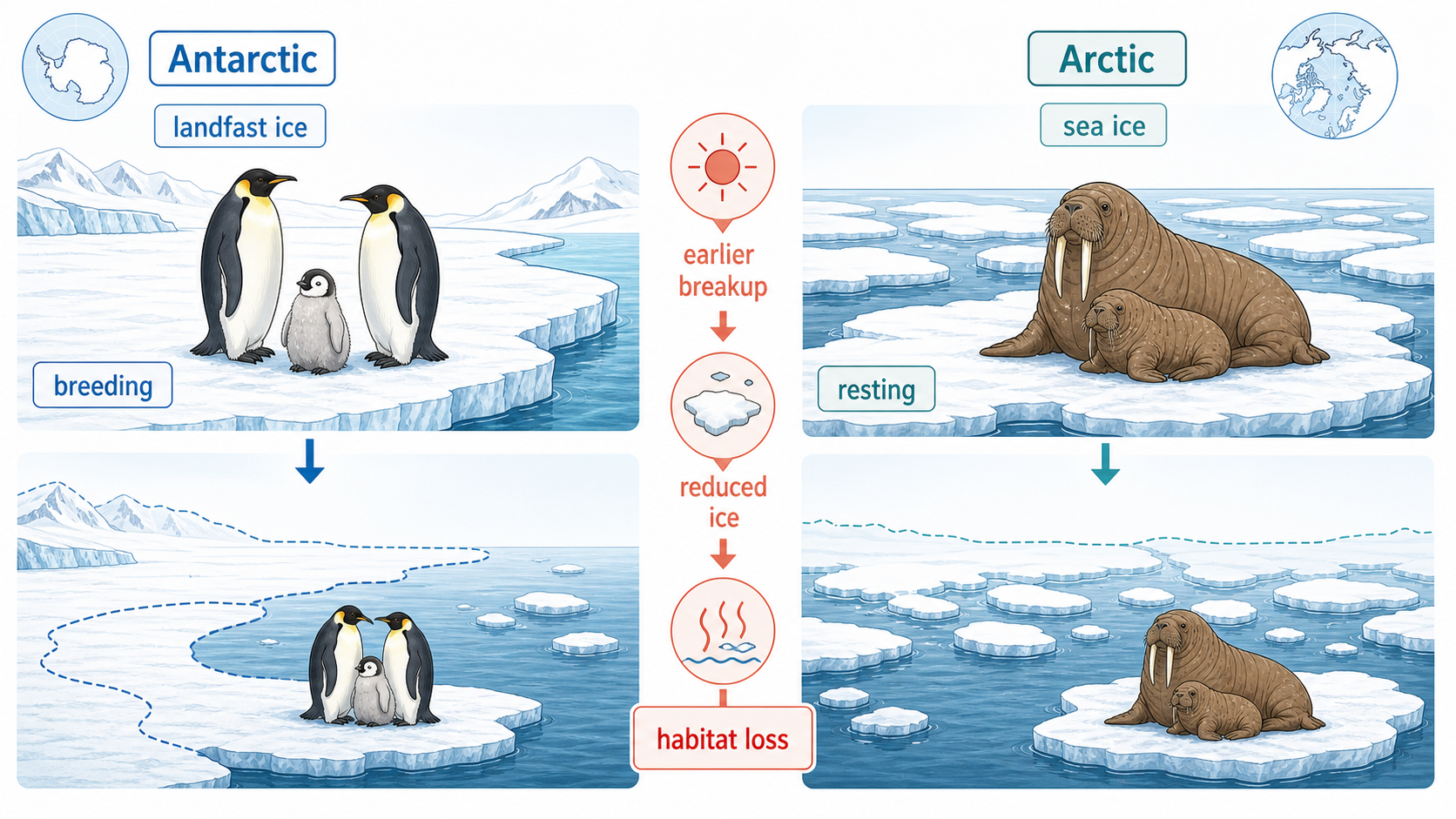
Melting landfast ice and sea ice changes breeding, feeding, and resting habitat. Emperor penguins depend on ice timing and extent for breeding success. Walruses use sea ice for resting and access to feeding areas. A strong answer connects ice change to a specific life-process failure.
A strong answer shows why a sink can become a source, not just that forests are affected.
Match each species to the ice-dependent risk.
MatchMatch each species to the ice-dependent risk.
ChooseFollow Lost Upwelling
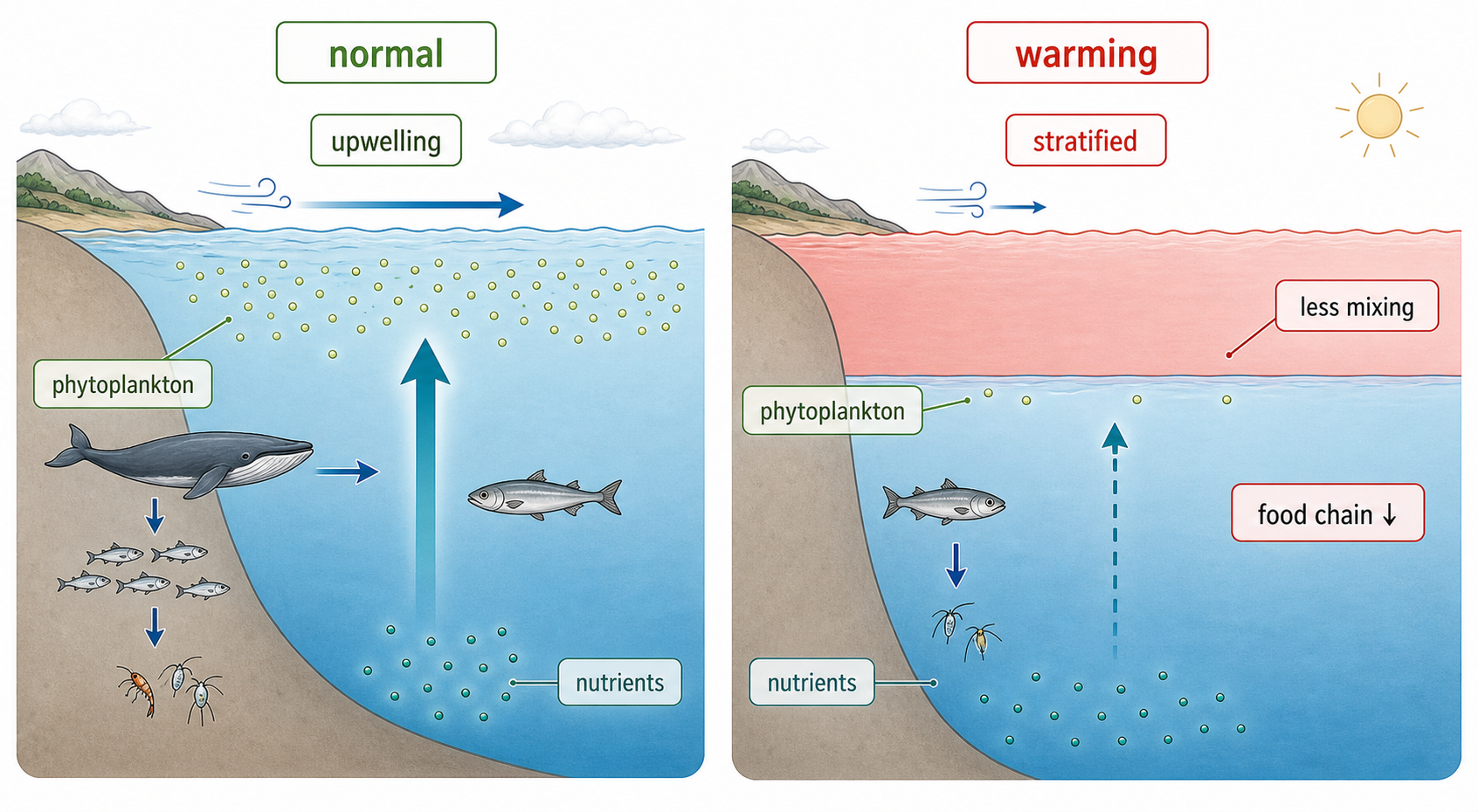
Ocean warming can strengthen stratification, meaning warm surface water mixes less with deeper water. Reduced mixing can reduce nutrient upwelling. With fewer nutrients at the surface, phytoplankton productivity drops, reducing food supply for higher trophic levels.
Reduced upwelling links a physical climate change to lower biological productivity.
Order the lost-upwelling chain.
OrderOrder the lost-upwelling chain.
ChooseRead Range Shifts
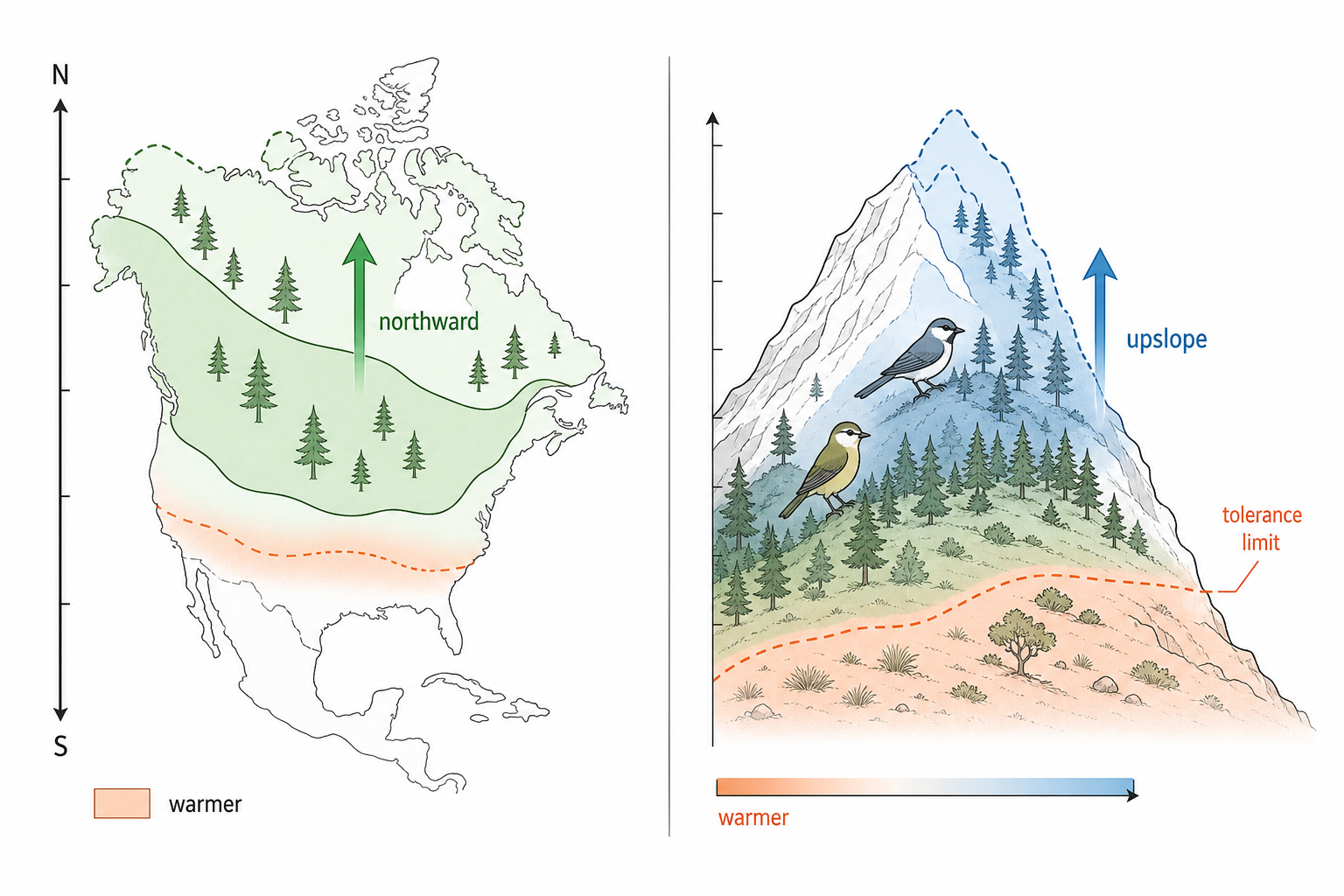
As climate zones move, species ranges can shift poleward, move upslope, or contract. Montane birds and North American tree species show that distribution limits can change when temperature and moisture conditions shift. A range shift is evidence that climate affects where a species can persist.
A range shift is evidence that climate can move the suitable habitat, not that every individual adapts instantly.
Sort each range-change pattern.
SortSort each range-change pattern.
ChooseExplain Reef Collapse Risk
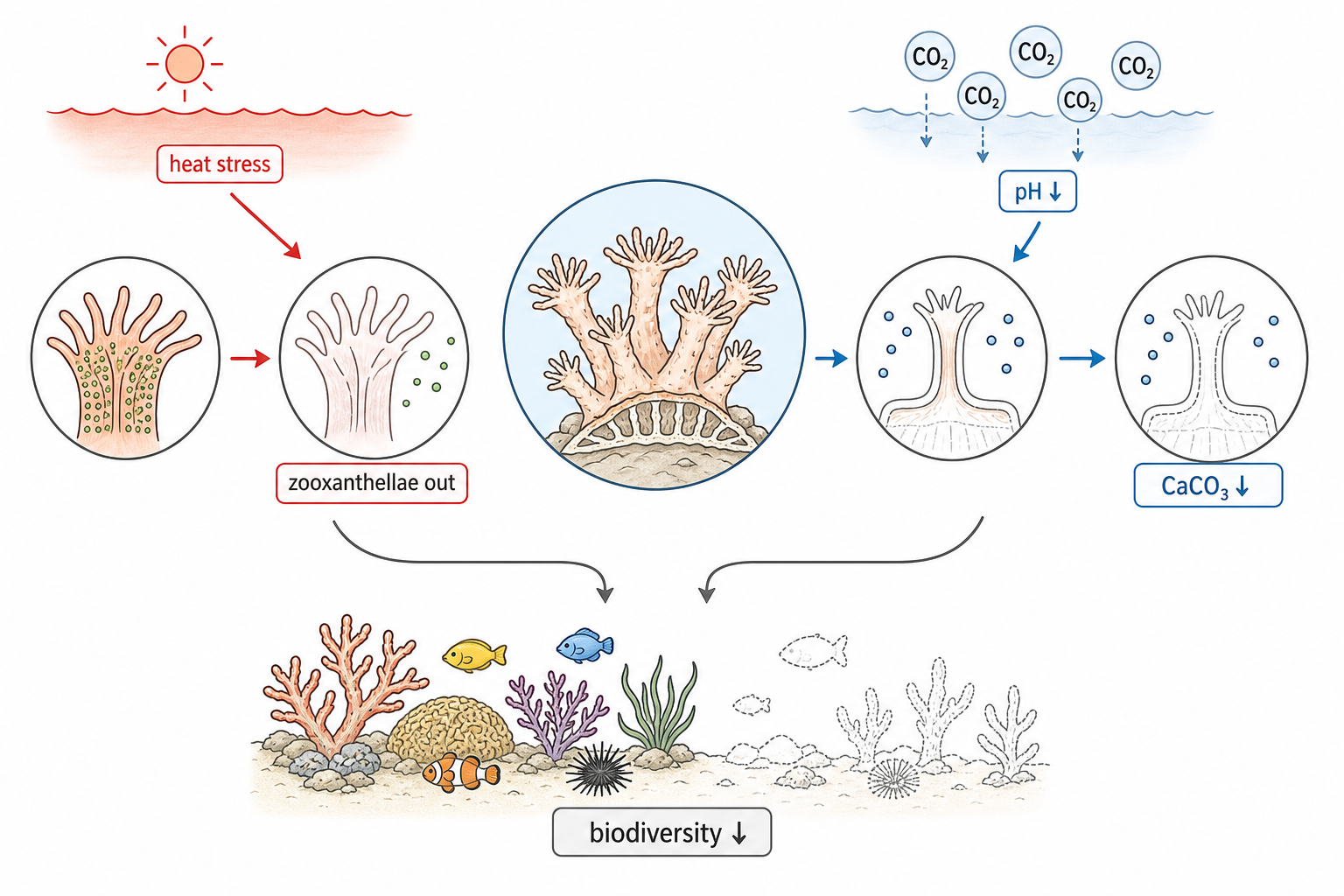
Coral reefs face two linked climate stresses. Warming disrupts the coral-zooxanthellae mutualism, causing bleaching when corals lose photosynthetic symbionts. Ocean acidification lowers carbonate availability and suppresses calcification. Together these threaten reef biodiversity and increase collapse risk.
Do not merge bleaching and acidification: they are two different routes to reef collapse.
Sort each reef stress.
SortSort each reef stress.
ChooseChoose Carbon Stores
Carbon sequestration captures and stores atmospheric carbon dioxide. Afforestation, agroforestry, forest regeneration, and peatland rewetting increase carbon stores by increasing plant biomass or protecting carbon-rich soils. The strongest answers say where carbon is stored and why the method reduces atmospheric CO2.
Match each sequestration method to its carbon-store logic.
MatchRetrieve the SL Climate Chain
ReviewCore D4.3 is secure when every climate impact is explained as a chain: human greenhouse-gas sources or feedbacks change climate conditions, which alter habitats, oceans, carbon stores, or species distributions. Carbon sequestration is the mitigation chain that stores atmospheric CO2.
Match each retrieval cue to its exam-use meaning.
MatchTransfer: Explain Climate Effects on Ecosystems
Exam PracticeCore climate-change transfer answers should not list endangered examples. They should identify the climate driver, explain the physical or chemical mechanism, then state the biological consequence. Use this for greenhouse gases, feedbacks, boreal forests, ice-dependent species, upwelling, range shifts, reefs, and carbon sequestration.
Explain how climate change or a mitigation strategy affects an ecosystem or species.
Explain how climate change or a mitigation strategy affects an ecosystem or species.
ChooseMatch each exam move to the mark it earns.
Match