
Define Ecosystem Stability
Ecosystem stability means a community can remain recognizable over long timescales even while local populations fluctuate. Ancient forests, deserts, and long-lived communities show that stability is not the absence of change; it is persistence of structure and function despite normal variation.
Which statement best defines ecosystem stability?
ChooseUse the Stability Requirements Test
Stable ecosystems need several supports working together. Energy input powers food webs, nutrient cycling keeps materials available, biodiversity and genetic diversity spread risk, and abiotic conditions must stay within tolerance ranges for key species. If one support fails, stability can weaken.
Match each stability requirement to its role.
MatchExplain the Amazon Tipping Point
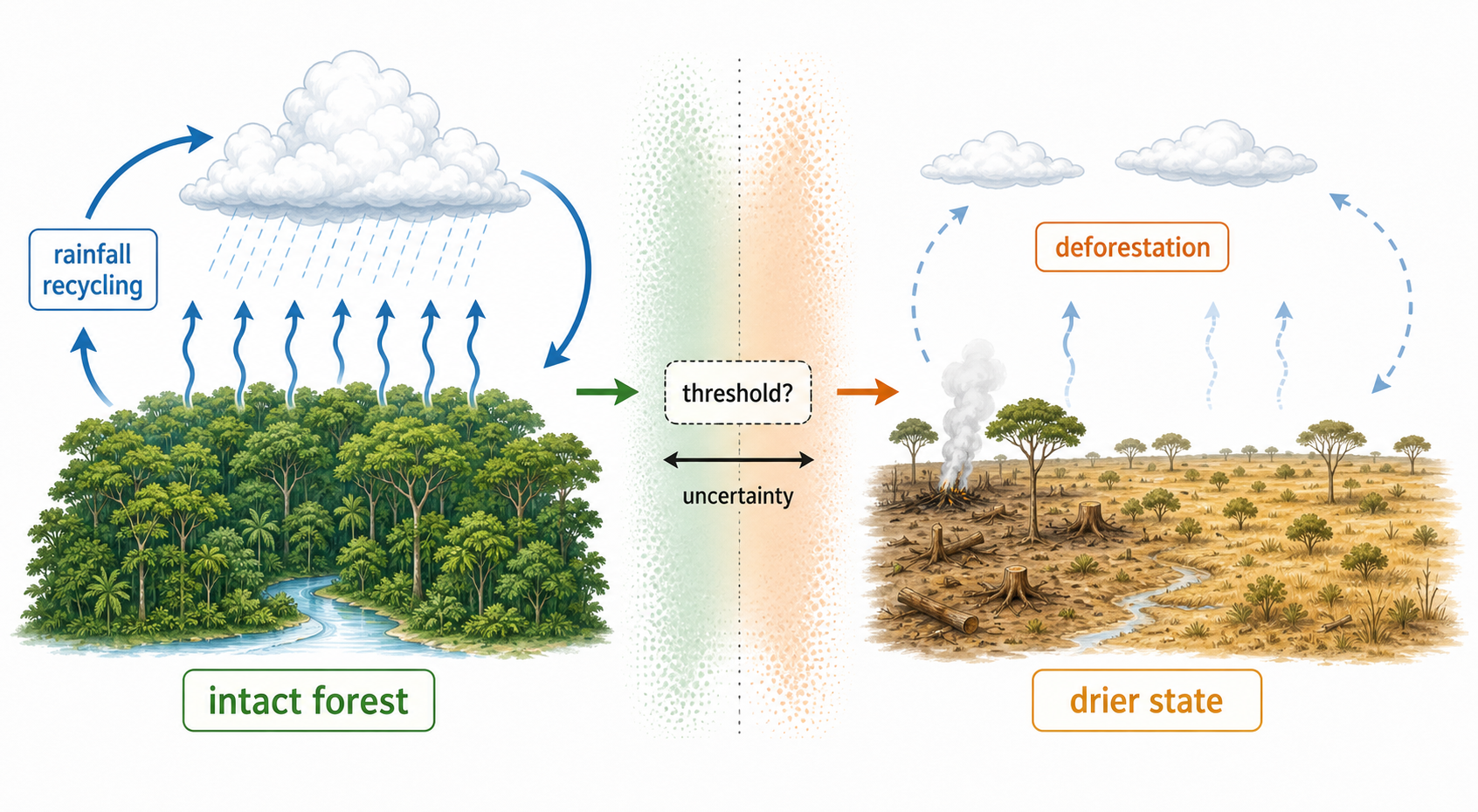
Amazon forest stability depends partly on the forest making its own wet conditions. Deforestation reduces transpiration, rainfall recycling, and regional cooling. If enough forest is lost, reduced rainfall and higher temperature can push rainforest toward a savanna-like tipping point.
The tipping-point risk is about losing enough forest that rainfall recycling can no longer maintain rainforest conditions.
Order the Amazon tipping-point chain.
OrderOrder the Amazon tipping-point chain.
ChooseDesign a Mesocosm Test
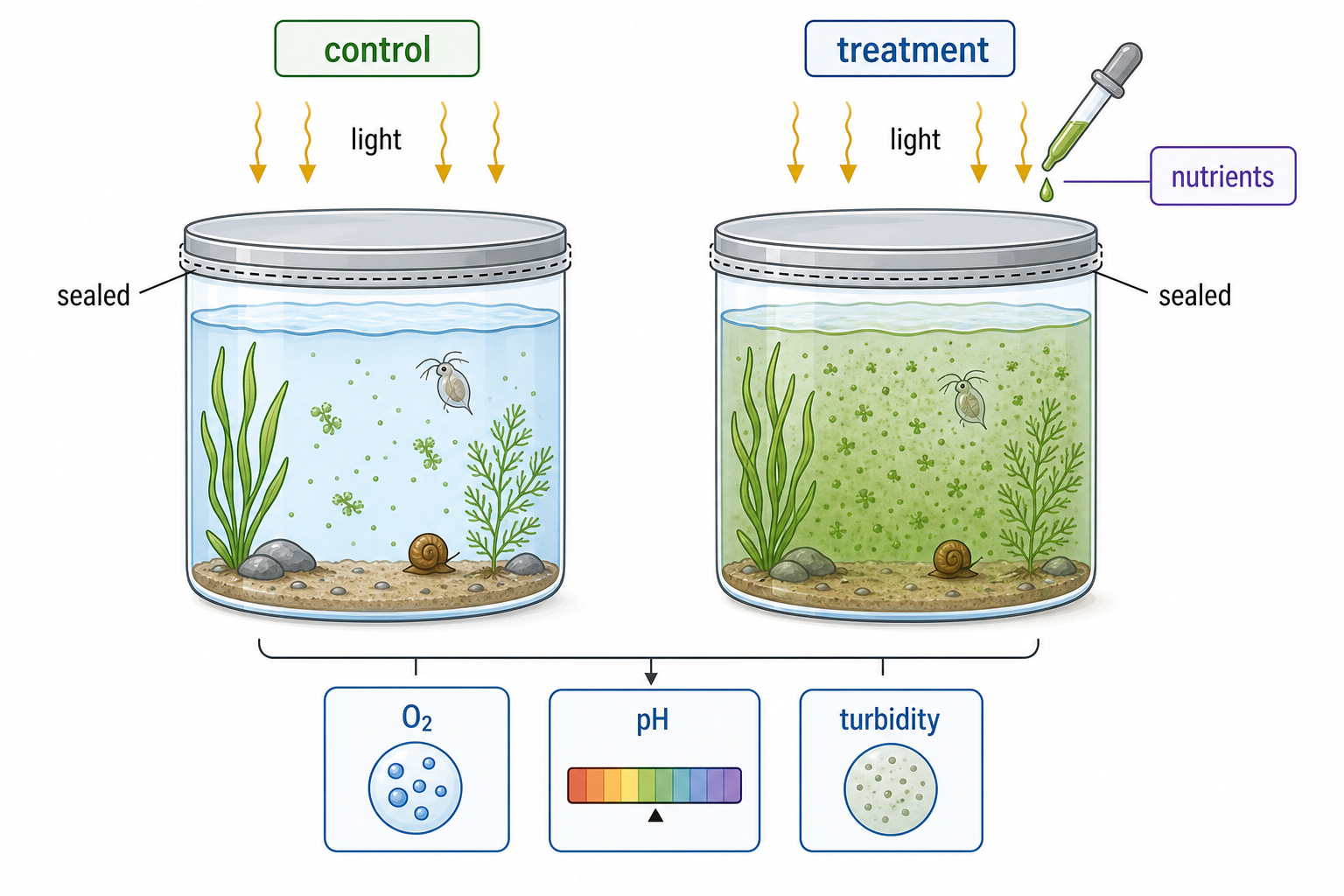
Mesocosms are small model ecosystems used to test stability under controlled conditions. A closed bottle restricts matter exchange, so nutrients and gases must cycle inside. Light can still enter as an energy input. Good mesocosm answers mention what is controlled, what is measured, and what limitation the model has.
A mesocosm is useful only if one variable changes and the control stays comparable.
Sort each feature of a closed bottle mesocosm.
SortSort each feature of a closed bottle mesocosm.
ChoosePredict a Trophic Cascade
A keystone species has a disproportionate effect on community structure. Removing it can change populations at several trophic levels, called a trophic cascade. The exam chain is: keystone species removed, one population changes, feeding pressure changes, and community structure becomes less stable.
Order a trophic cascade after keystone removal.
OrderJudge Sustainable Harvest
Sustainable harvesting removes biomass at or below the replacement rate. If harvest exceeds recovery, the population or stock declines. Managed plant harvests and marine fish stocks need monitoring because the safe harvest rate depends on population recovery, reproduction, and changing conditions.
A fish stock replaces 100 tonnes per year. Which harvest is most sustainable?
ChooseAudit Agriculture Sustainability
Agricultural sustainability depends on maintaining soil, nutrients, biodiversity, water, and climate impacts while producing food. Erosion and leaching remove soil and nutrients. Fertilizers, agrochemicals, irrigation, and carbon footprint can improve yield but also create environmental costs.
Sort each factor as support or risk for sustainability.
SortSequence Eutrophication
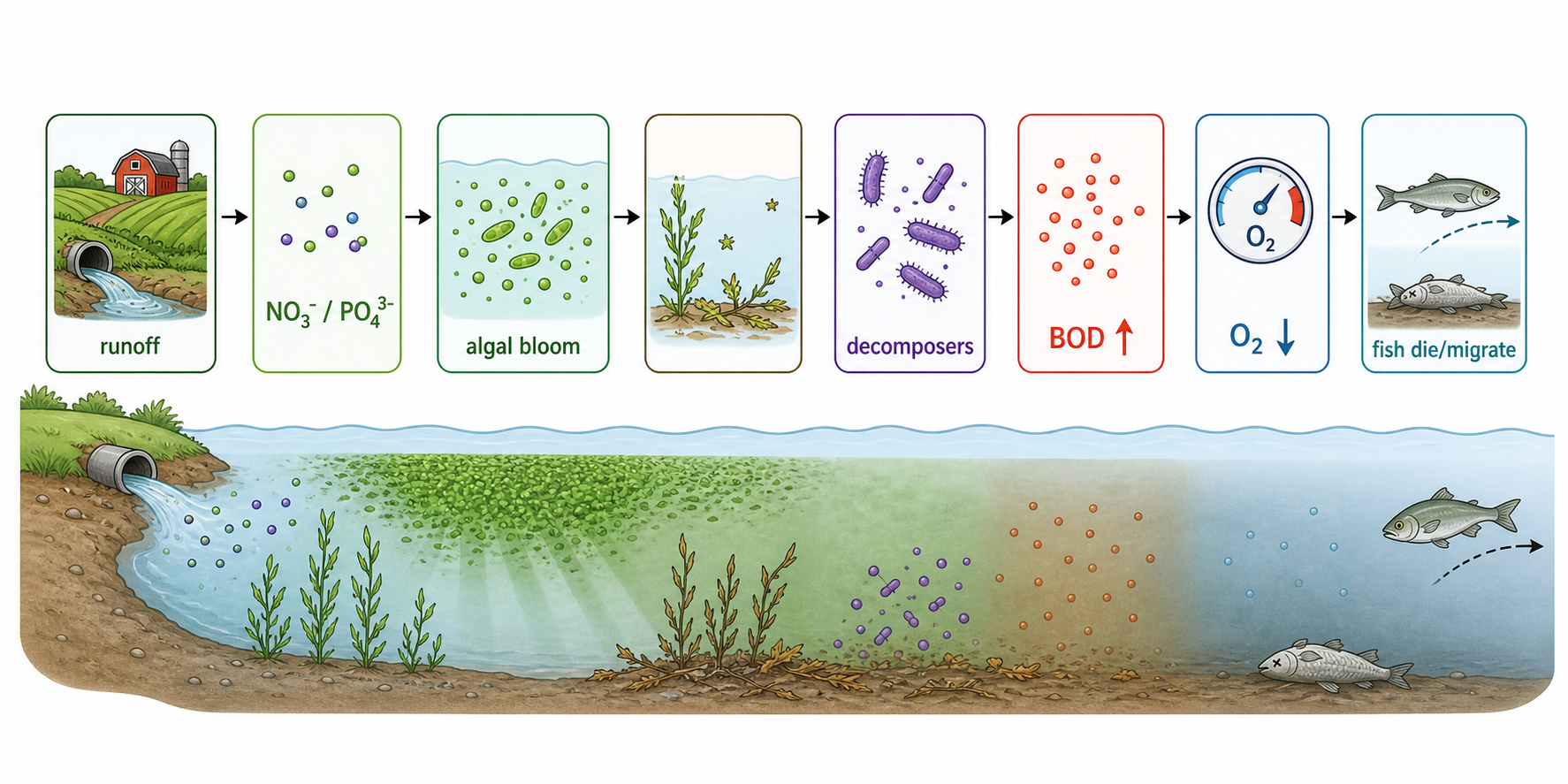
Eutrophication follows a predictable oxygen-loss chain. Nitrate and phosphate enrichment stimulates algal blooms. When algae die, decomposers respire while breaking them down, increasing biochemical oxygen demand. Dissolved oxygen falls, causing hypoxia that harms aquatic life.
Eutrophication is easiest to explain as an ordered chain from nutrient enrichment to hypoxia.
Order eutrophication.
OrderOrder eutrophication.
ChooseTrack Toxins Up Food Chains
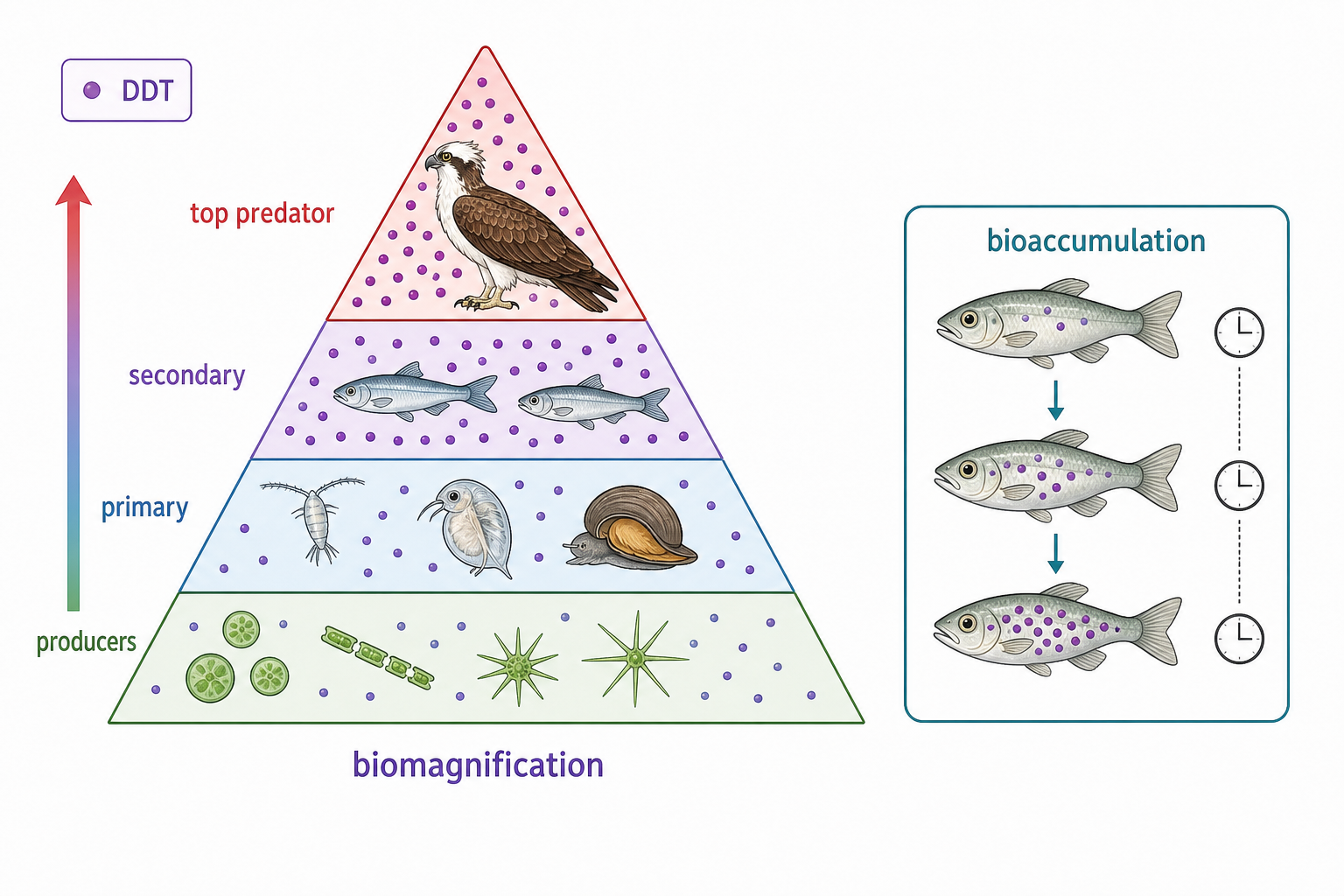
Biomagnification happens when persistent toxins become more concentrated at higher trophic levels. Organisms take in toxins faster than they excrete or break them down, and predators eat many contaminated prey. DDT and mercury are classic examples because top predators receive the highest doses.
Persistent toxins become most concentrated in top predators because biomass and stored pollutants are consumed repeatedly.
Match each biomagnification idea to its explanation.
MatchMatch each biomagnification idea to its explanation.
ChooseCompare Macroplastics and Microplastics
Macroplastics and microplastics both persist in marine ecosystems, but their effects often differ by size. Macroplastics can entangle animals or be ingested. Microplastics form by fragmentation, move through food webs, and can transport toxins. Both can affect feeding, survival, and ecosystem stability.
Sort each plastic impact.
SortChoose Rewilding Moves
Rewilding aims to restore natural processes rather than manage every detail. It can restore trophic interactions, habitat connectivity, and ecosystem dynamics. Keystone species reintroductions may restart trophic cascades, but good rewilding decisions consider risks, habitat suitability, and monitoring.
A reserve wants to reintroduce a keystone predator. Which decision is strongest?
DecisionRetrieve the Core Stability and Change Route
ReviewCore D4.2 is secure when students can judge whether a system is being stabilized or pushed toward change. The route is: identify the stability support or disturbance, explain the mechanism, and state the ecosystem consequence using evidence.
Match each retrieval cue to its exam-use meaning.
MatchTransfer: Explain Ecosystem Stability and Human Impact
Exam PracticeCore transfer questions ask students to explain why an ecosystem remains stable or why a disturbance pushes it toward change. Strong answers do not list threats; they explain mechanisms such as lost rainfall recycling, trophic cascade, overharvest, nutrient enrichment, toxin biomagnification, plastic movement, or restoration through rewilding.
Explain how a named factor can maintain ecosystem stability or push an ecosystem toward change.
Explain how a named factor can maintain ecosystem stability or push an ecosystem toward change.
ChooseMatch each exam move to the mark it earns.
Match