
Define Homeostasis
Homeostasis means keeping the internal environment stable within narrow limits, even when the outside environment or body activity changes. The variables IB likes include body temperature, blood pH, blood glucose, gases, ions, and osmotic concentration. A good answer always names the variable and says it is maintained near a set range.
Sort each item as a homeostatic variable or not.
SortReverse the Change
Negative feedback works like a correction loop. A receptor detects deviation from the set point. A coordinator compares the value and sends signals. Effectors respond in a way that reverses the deviation, bringing conditions back toward normal.
Order a negative-feedback loop.
OrderChoose Insulin or Glucagon
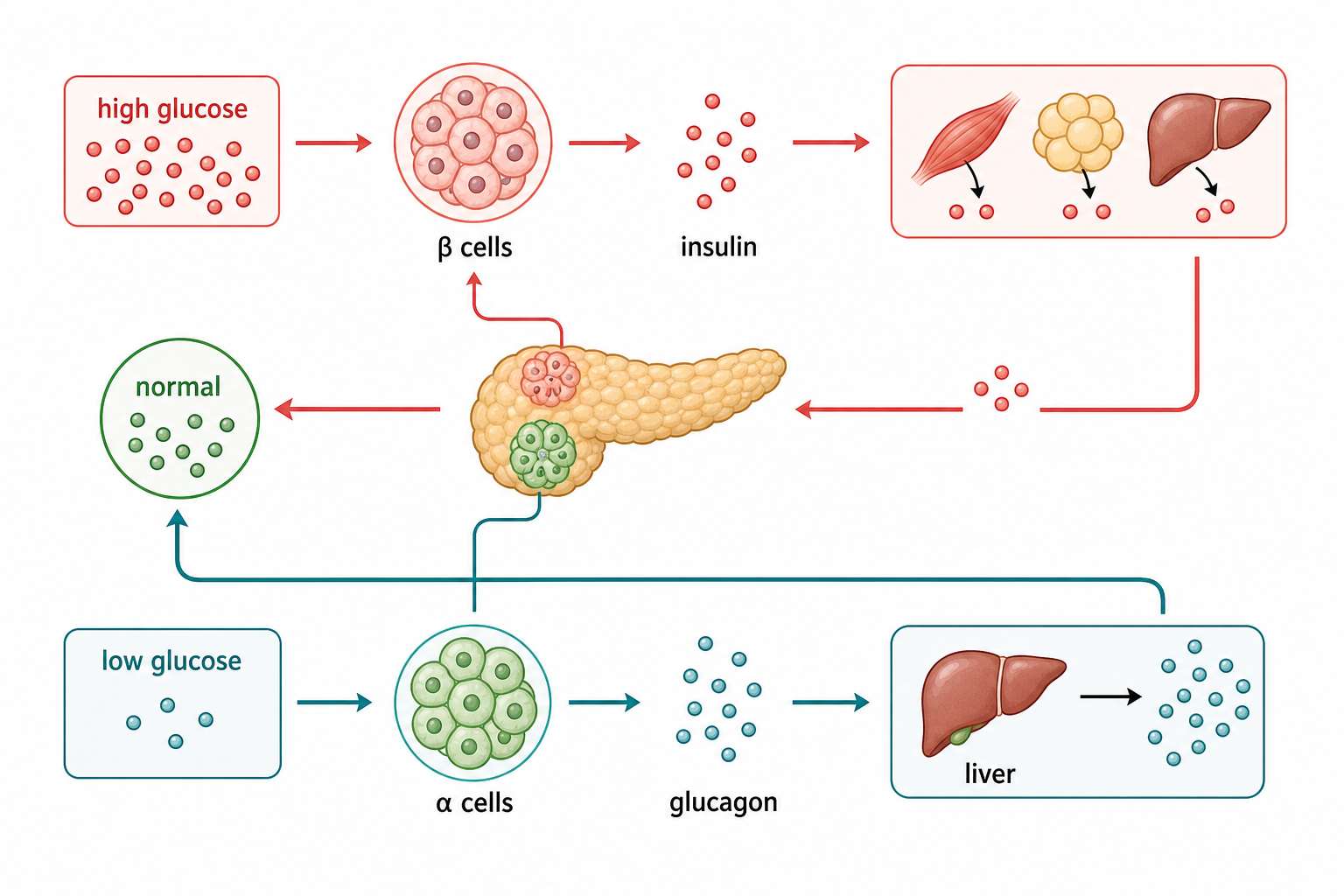
Blood glucose control is a two-hormone negative feedback system. When blood glucose rises, pancreatic beta cells secrete insulin, causing liver and muscle cells to take up glucose and store glycogen. When blood glucose falls, alpha cells secrete glucagon, causing stores to be broken down and glucose released.
Insulin and glucagon are antagonists: one lowers blood glucose, the other raises it.
Match the glucose condition to the hormone response.
MatchMatch the glucose condition to the hormone response.
ChooseCompare Diabetes Types
Type 1 and type 2 diabetes both disrupt blood glucose control, but the cause differs. Type 1 diabetes results from autoimmune destruction of pancreatic beta cells, so insulin secretion is too low. Type 2 diabetes involves failure of insulin receptors or cellular response and is linked to lifestyle risk factors.
Sort each feature into diabetes type.
SortControl Core Temperature
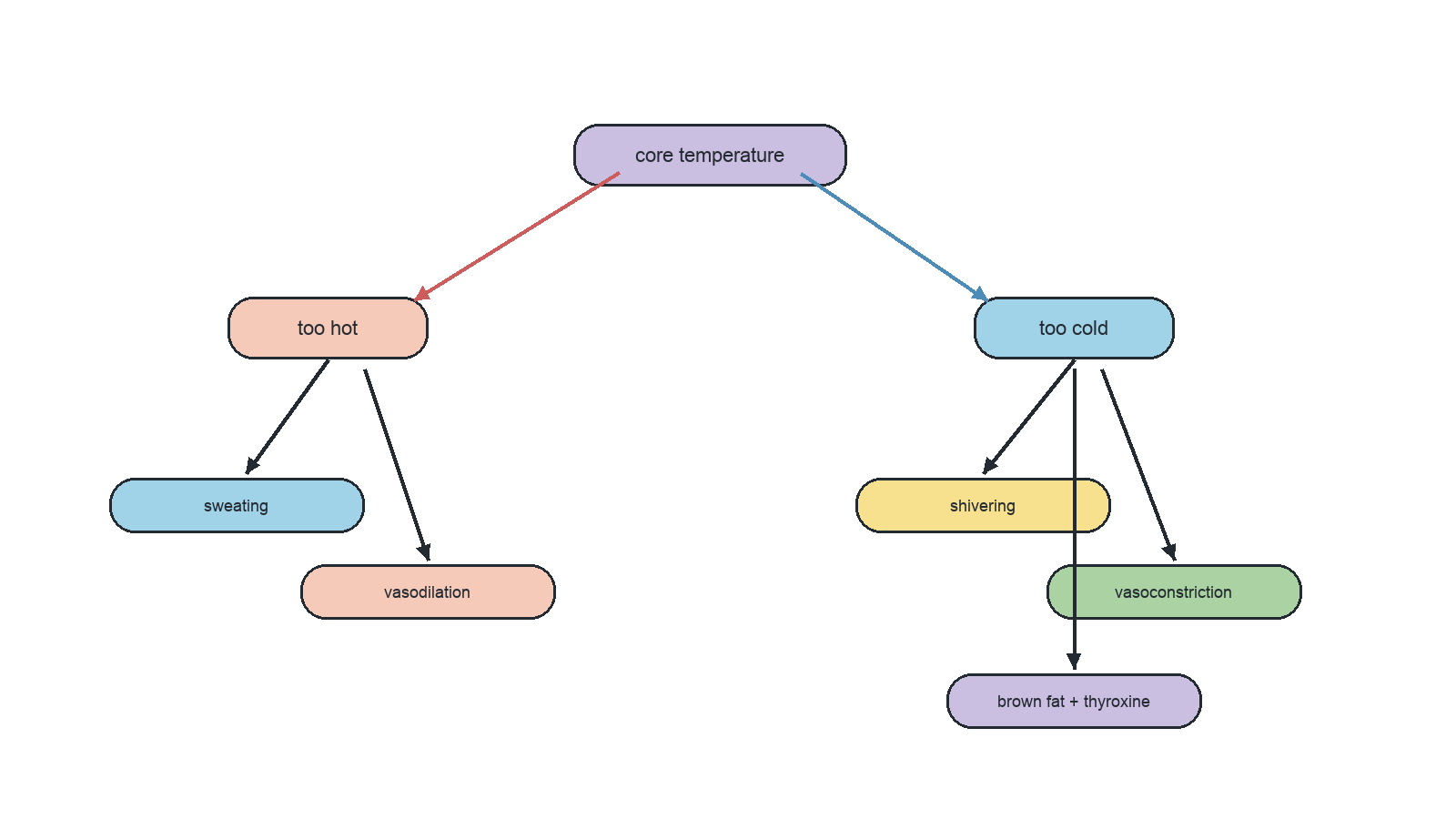
Thermoregulation uses negative feedback to keep core temperature near 37 °C. Thermoreceptors detect temperature changes and signal the hypothalamus. The hypothalamus coordinates effectors in the skin, muscles, liver, and endocrine system to increase heat loss or heat production.
Thermoregulation is negative feedback: detect the temperature shift, then activate effectors that reverse it.
Order the thermoregulation loop.
OrderOrder the thermoregulation loop.
ChooseSort Hot and Cold Responses
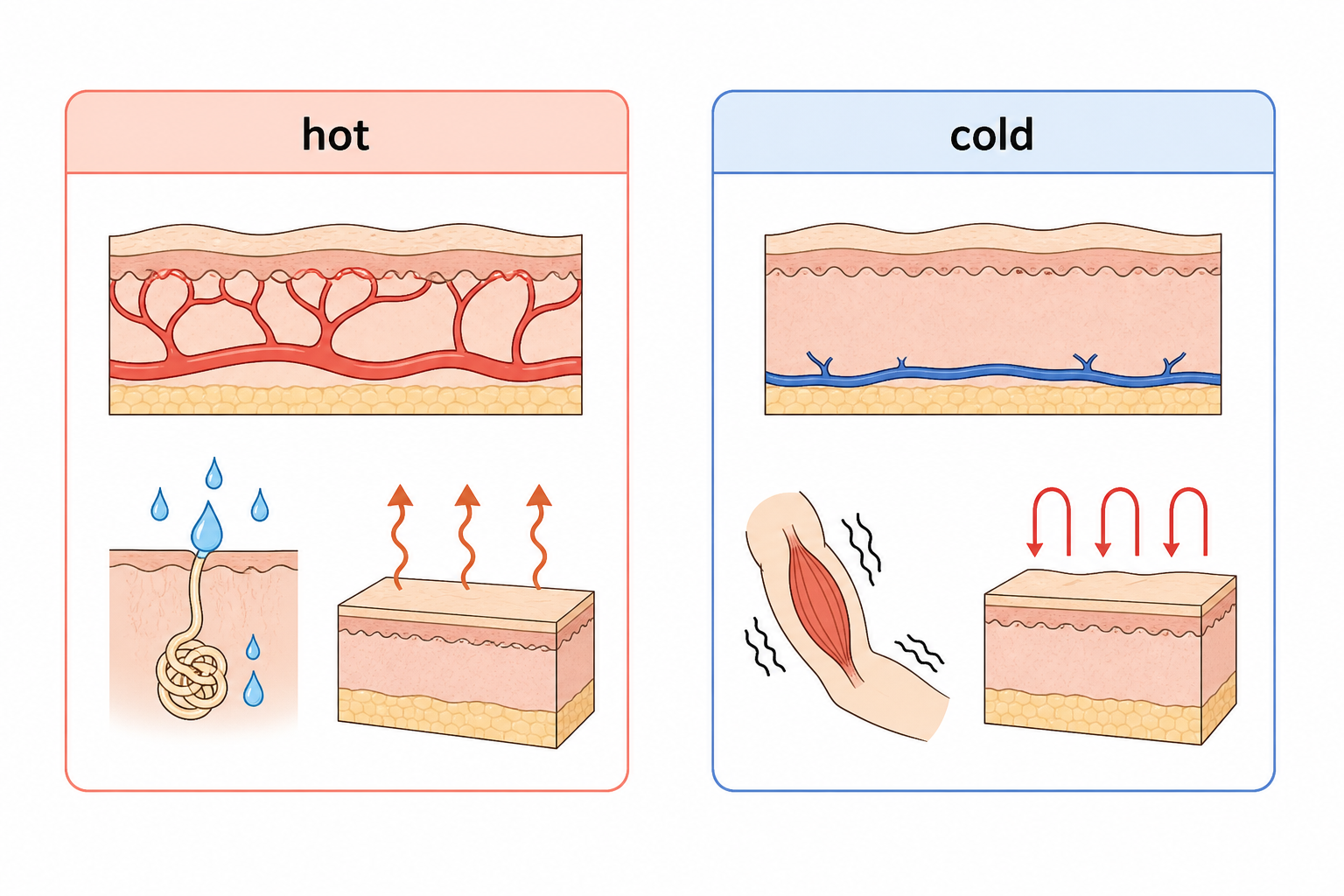
Hot and cold responses are opposite because they must reverse opposite deviations. Cooling uses vasodilation, sweating, and hairs lying flat to increase heat loss. Warming uses vasoconstriction, reduced sweating, shivering, metabolic heat, and brown fat to reduce heat loss or make heat.
Sort each thermoregulation response.
SortRetrieve the Core Homeostasis Route
ReviewCore D3.3 is secure when every example becomes a feedback route: identify the variable, detect deviation, coordinate a response, activate effectors, and reverse the change. Glucose and temperature are the key worked examples.
Match each retrieval cue to its exam-use meaning.
MatchTransfer: Explain Core Homeostasis
Exam PracticeCore homeostasis answers should use a control-loop structure, not a list of responses. The response starts with the variable and set point, then explains how the body detects deviation and activates the response that reverses it. Apply that loop to glucose, diabetes, or temperature.
Explain how negative feedback maintains a homeostatic variable such as blood glucose or core temperature.
Explain how negative feedback maintains a homeostatic variable such as blood glucose or core temperature.
ChooseMatch each exam move to the mark it earns.
Match