
Sexual vs. asexual reproduction
Asexual reproduction uses mitosis without gametes or fertilization, so offspring are clones of the parent. Sexual reproduction uses meiosis and fertilization, so alleles are reshuffled and offspring show genetic variation. High-scoring answers link the method to clone production or variation, not just to the number of parents.
Sort each phrase into asexual reproduction or sexual reproduction.
SortRole of meiosis and gamete fusion
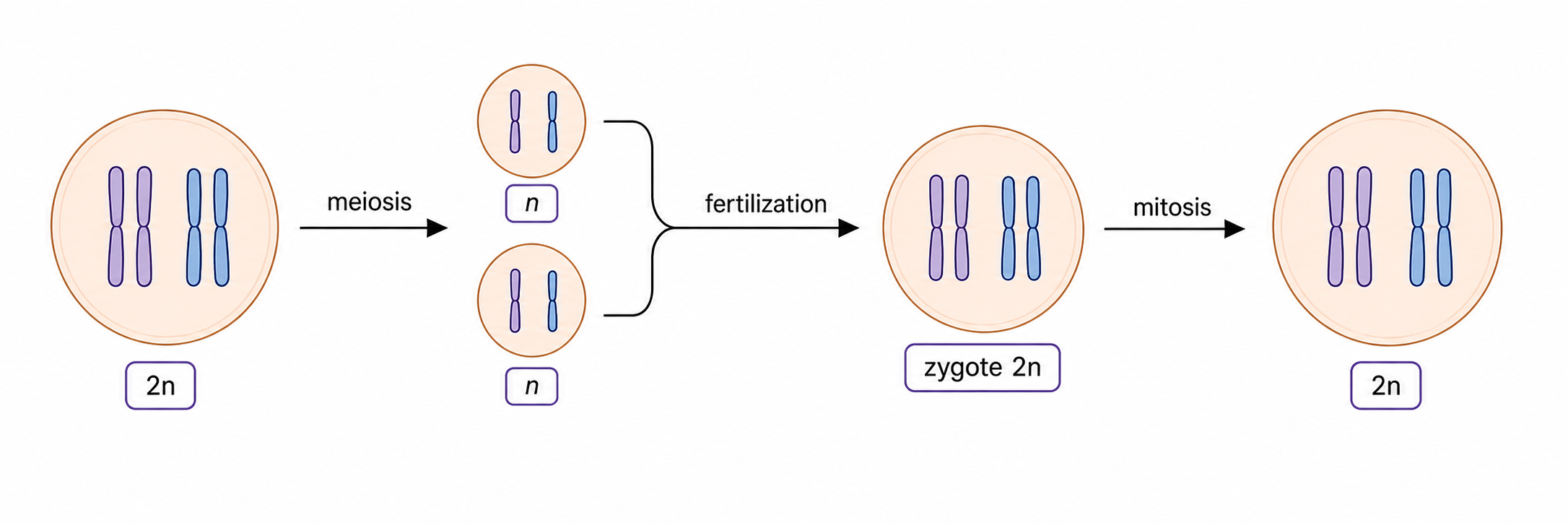
Meiosis makes haploid gametes, which prevents chromosome number doubling every generation. Fertilization then fuses two haploid gametes to restore the diploid number. Because different gametes meet at random, each zygote receives a unique combination of maternal and paternal chromosomes.
Meiosis halves chromosome number; fertilization restores it and creates a unique zygote.
Put the sexual life-cycle events in order.
OrderPut the sexual life-cycle events in order.
ChooseMale vs. female sexes
In biology, male and female are defined by gamete type, not by body size or behaviour. Male gametes are small, numerous, and usually motile. Female gametes are larger, fewer, and contain resources for early development. That resource difference explains why eggs are bigger and sperm are produced in high numbers.
Match the gamete feature to the sex it defines.
MatchHuman reproductive system anatomy
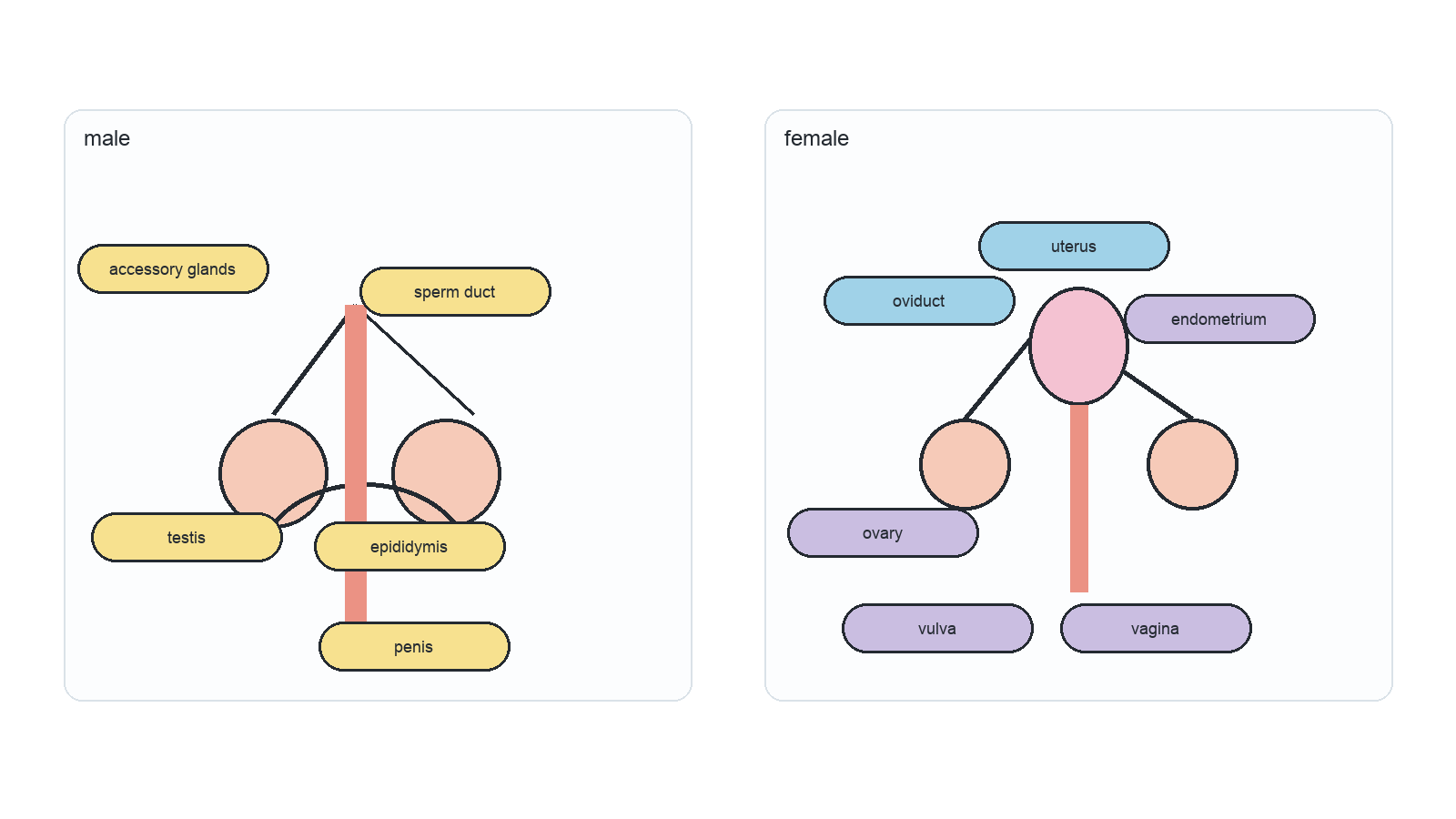
Learn reproductive anatomy as routes and functions. In males, testes make sperm, the epididymis stores sperm, sperm ducts move sperm, glands add fluid, the urethra carries semen, and the penis delivers it. In females, ovaries release eggs, oviducts are where fertilization normally occurs, the uterus and endometrium support pregnancy, and the cervix, vagina, and vulva form the lower reproductive tract.
Structure labels are strongest when tied to the route taken by gametes or embryos.
Label the route from gamete production to fertilization and implantation.
LabelLabel the route from gamete production to fertilization and implantation.
ChooseOvarian and uterine cycles
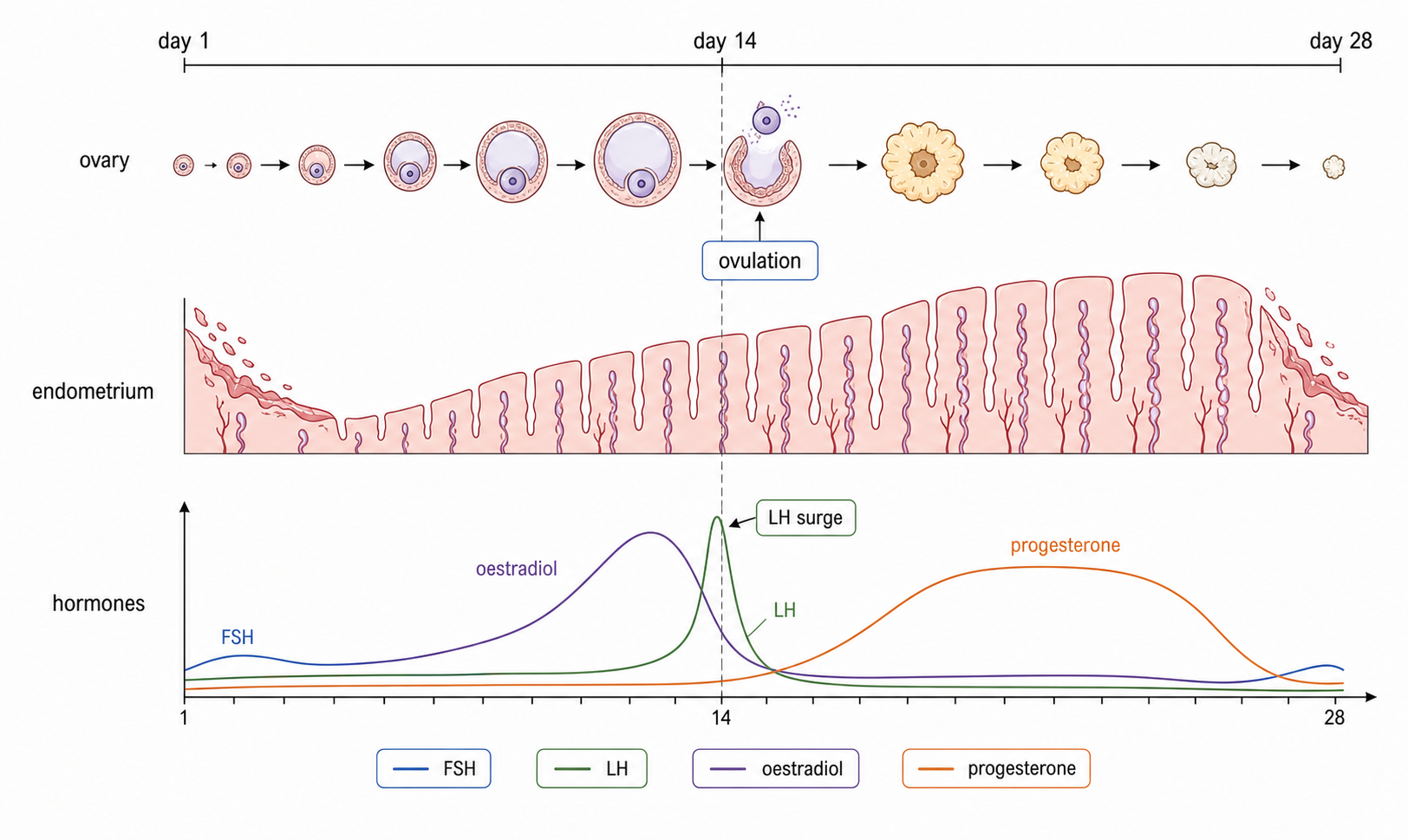
The ovarian and uterine cycles are one coordinated story. FSH stimulates follicle growth. Rising oestradiol rebuilds the endometrium and, when high enough, triggers the LH surge. LH causes ovulation. The corpus luteum secretes progesterone, which maintains the endometrium. If pregnancy does not occur, progesterone and oestradiol fall, so the endometrium breaks down in menstruation.
Ovarian hormone changes explain both ovulation and endometrium changes.
Order the cycle chain from follicle growth to menstruation.
OrderOrder the cycle chain from follicle growth to menstruation.
ChooseFertilization in humans
Human fertilization normally occurs in the oviduct after sperm reaches the egg. The sperm and egg membranes fuse, the sperm nucleus enters, and the paternal and maternal nuclei combine. The result is a diploid zygote whose genome contains chromosomes from both parents.
Which sentence would earn the fertilization mark?
ChooseIn vitro fertilization (IVF)
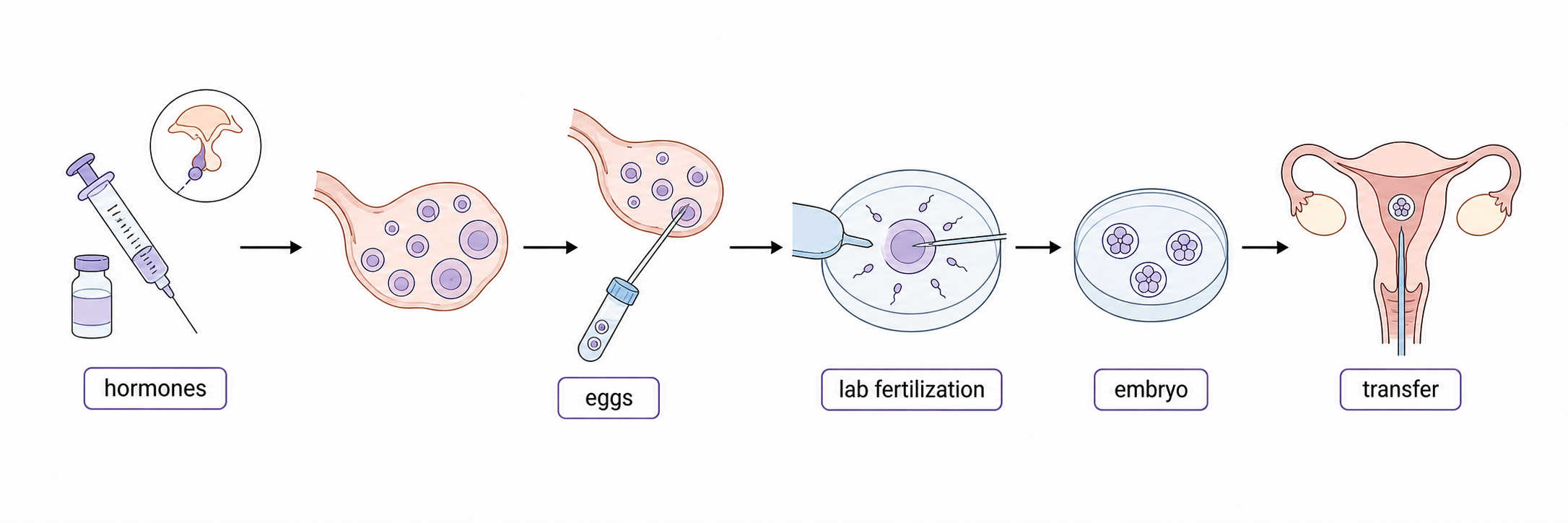
IVF is a controlled sequence, not just fertilization in a dish. Hormones stimulate superovulation and control egg maturation so several eggs can be collected. Eggs are fertilized outside the body, embryos are cultured briefly, and one or more embryos are transferred to the uterus for possible implantation.
IVF uses hormones to obtain multiple eggs before fertilization outside the body.
Order the IVF steps.
OrderOrder the IVF steps.
ChooseSexual reproduction in flowering plants
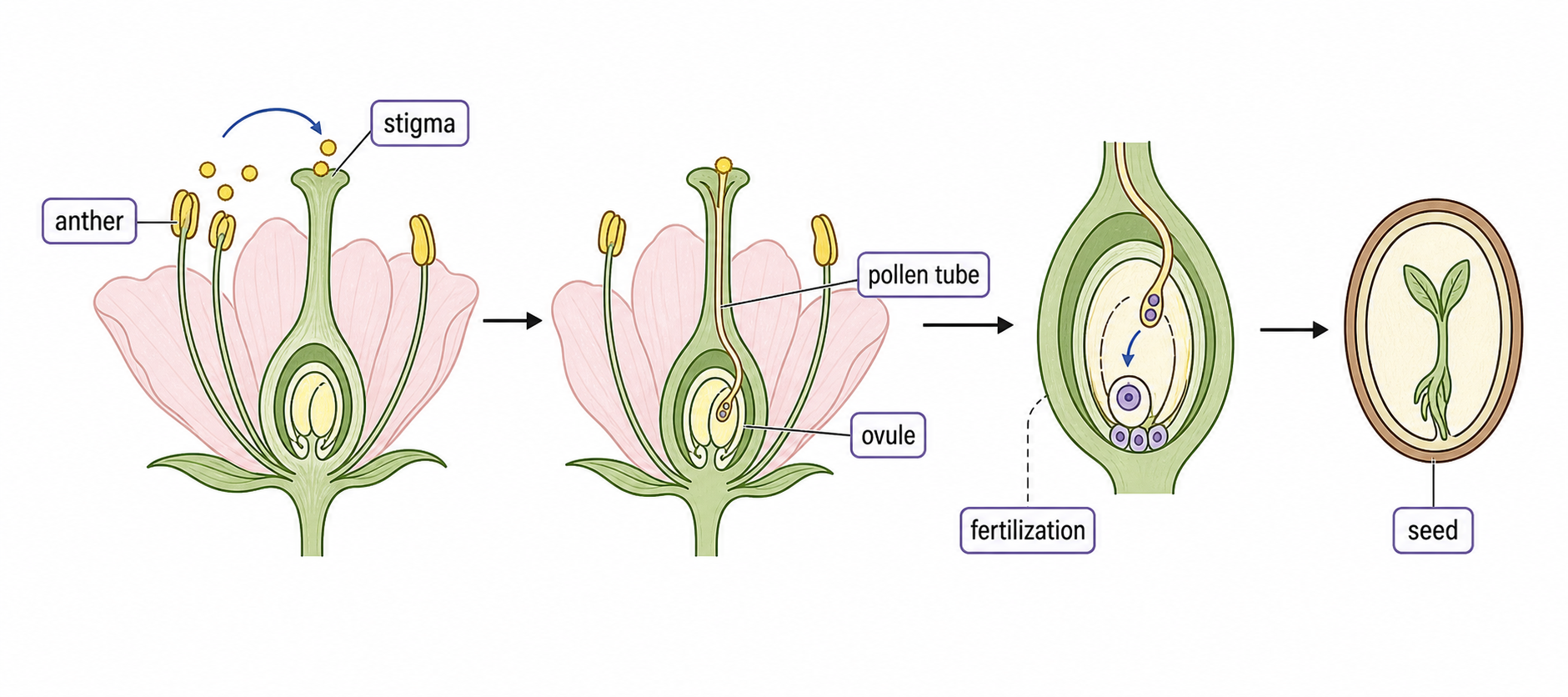
Flowering plants reproduce sexually when male gametes from pollen reach female gametes in ovules. Pollination places pollen on the stigma. A pollen tube grows down toward the ovule, carrying male gametes. Fertilization forms an embryo inside a seed.
Pollination transfers pollen; fertilization produces the embryo inside the seed.
Order the flowering-plant reproduction route.
OrderOrder the flowering-plant reproduction route.
ChooseInsect-pollinated flower features
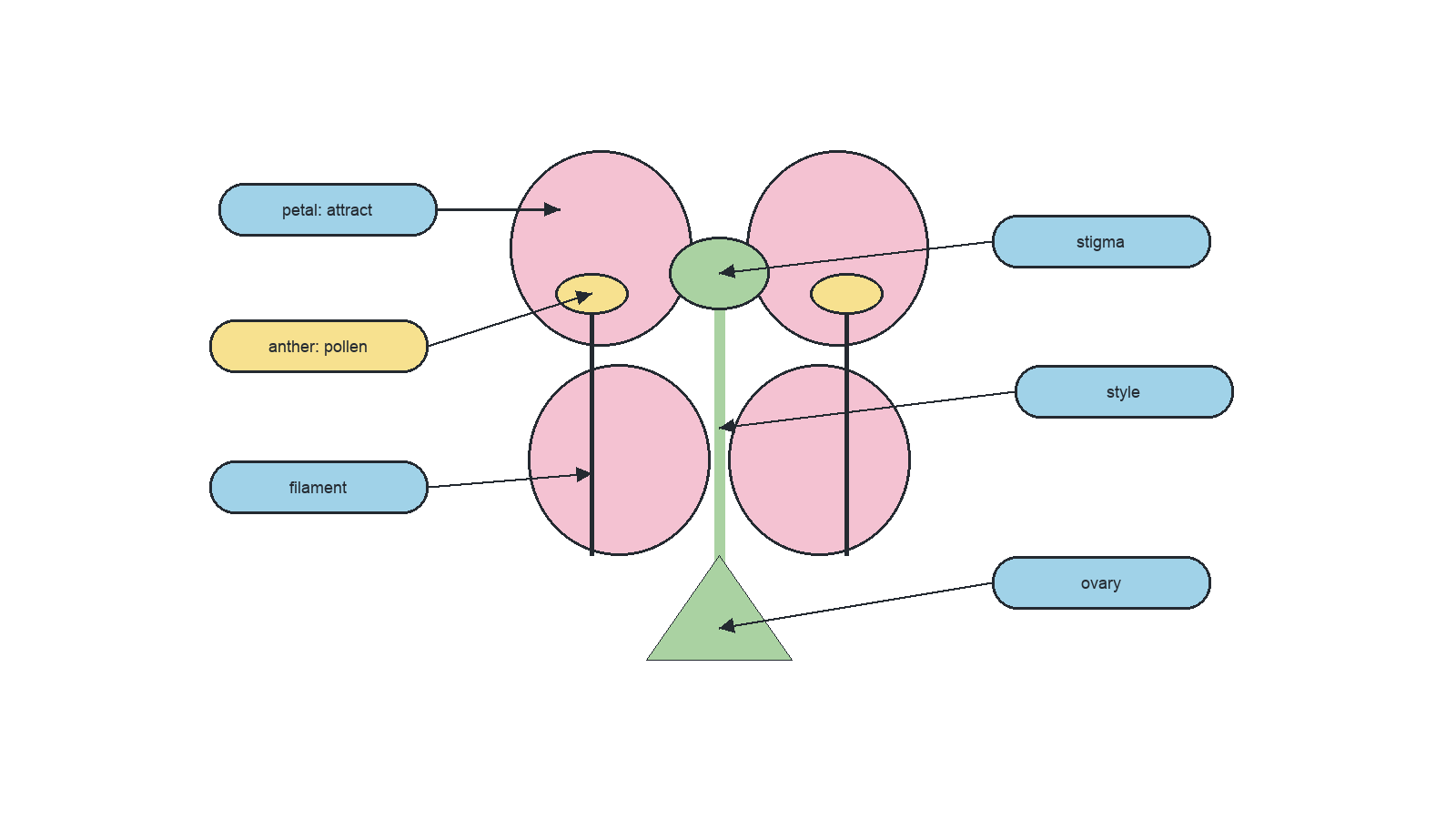
Insect-pollinated flowers are built to attract an animal and make pollen stick. Petals, scent, and nectar attract insects. Sticky pollen attaches to the insect, and a sticky stigma receives pollen. The positions of anthers and stigma matter because they put the insect in contact with the parts that transfer pollen.
Flower structures improve the chance that insects move pollen from anther to stigma.
Match each flower feature to its pollination function.
MatchMatch each flower feature to its pollination function.
ChoosePromoting cross-pollination
Cross-pollination means pollen moves between different plants, which increases genetic variation. Plants promote it by separating male and female functions. Dioecy puts male and female flowers on different plants. Self-incompatibility blocks self-pollen. Different maturation times prevent a flower from using its own pollen when it is receptive.
Match each mechanism to how it promotes cross-pollination.
MatchSelf-incompatibility mechanisms
Self-incompatibility is a recognition system. The stigma or style identifies pollen from the same plant or same compatibility type and blocks pollen-tube growth. This prevents self-fertilization, reduces inbreeding, and supports genetic variation through outcrossing.
Spot the error: self-incompatibility helps a plant fertilize itself when pollinators are rare.
Spot ErrorsSeed dispersal and germination
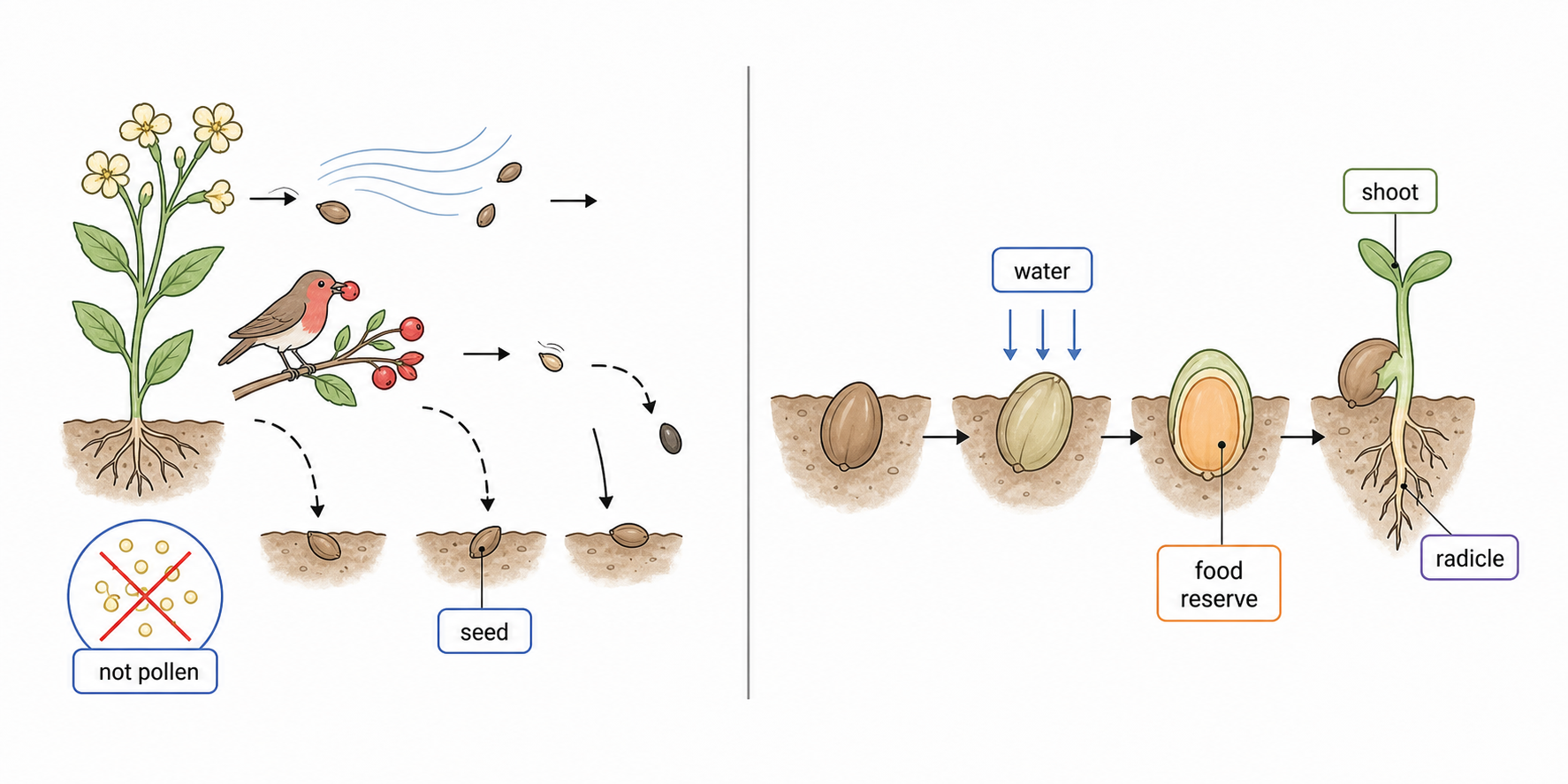
Seed dispersal and germination solve different problems. Dispersal moves offspring away from the parent, reducing competition and spreading offspring into new places. Germination begins when a seed takes up water; enzymes become active and mobilize stored food reserves so the embryo can grow.
Dispersal spreads seeds; germination restarts embryo growth.
Sort each phrase into dispersal or germination.
SortSort each phrase into dispersal or germination.
ChooseRetrieve the Core Reproduction Route
ReviewCore D3.1 route: reproduction creates offspring, gametes or pollen move, fertilization or germination follows, and the consequence is variation, embryo formation, seed production, or successful early growth.
Match each retrieval cue to its exam-use meaning.
MatchTransfer: Explain Core Reproduction
Exam PracticeCore D3.1 exam questions usually combine reproduction strategy with gamete formation, fertilization, human cycles, IVF, plant pollination, or seed germination. Treat each answer as a route: name the process, say what moves or changes, then give the biological consequence.
Explain how reproductive processes increase the chance of successful offspring production in animals or flowering plants.
Explain how reproductive processes increase the chance of successful offspring production in animals or flowering plants.
ChooseMatch each exam move to the mark it earns before attempting the full answer.
Match