
Generate New Cells
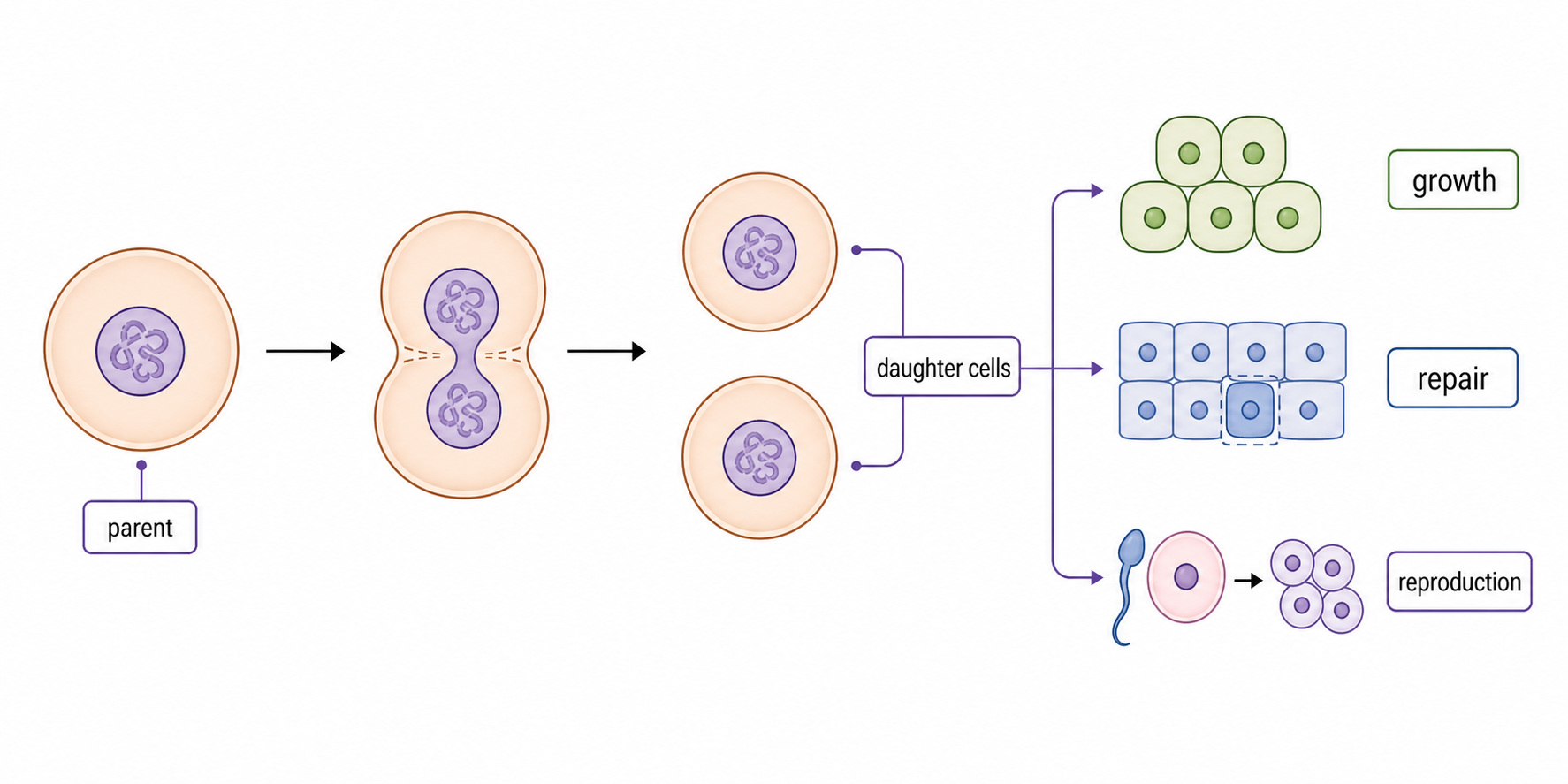
All cells arise from pre-existing parent cells by cell division. The point of the process is not just making more cells: daughter cells are needed for growth, replacement, repair, or reproduction.
Cell division supplies new daughter cells.
Match each reason for division.
MatchMatch each reason for division.
ChooseSplit Cytoplasm by Cytokinesis
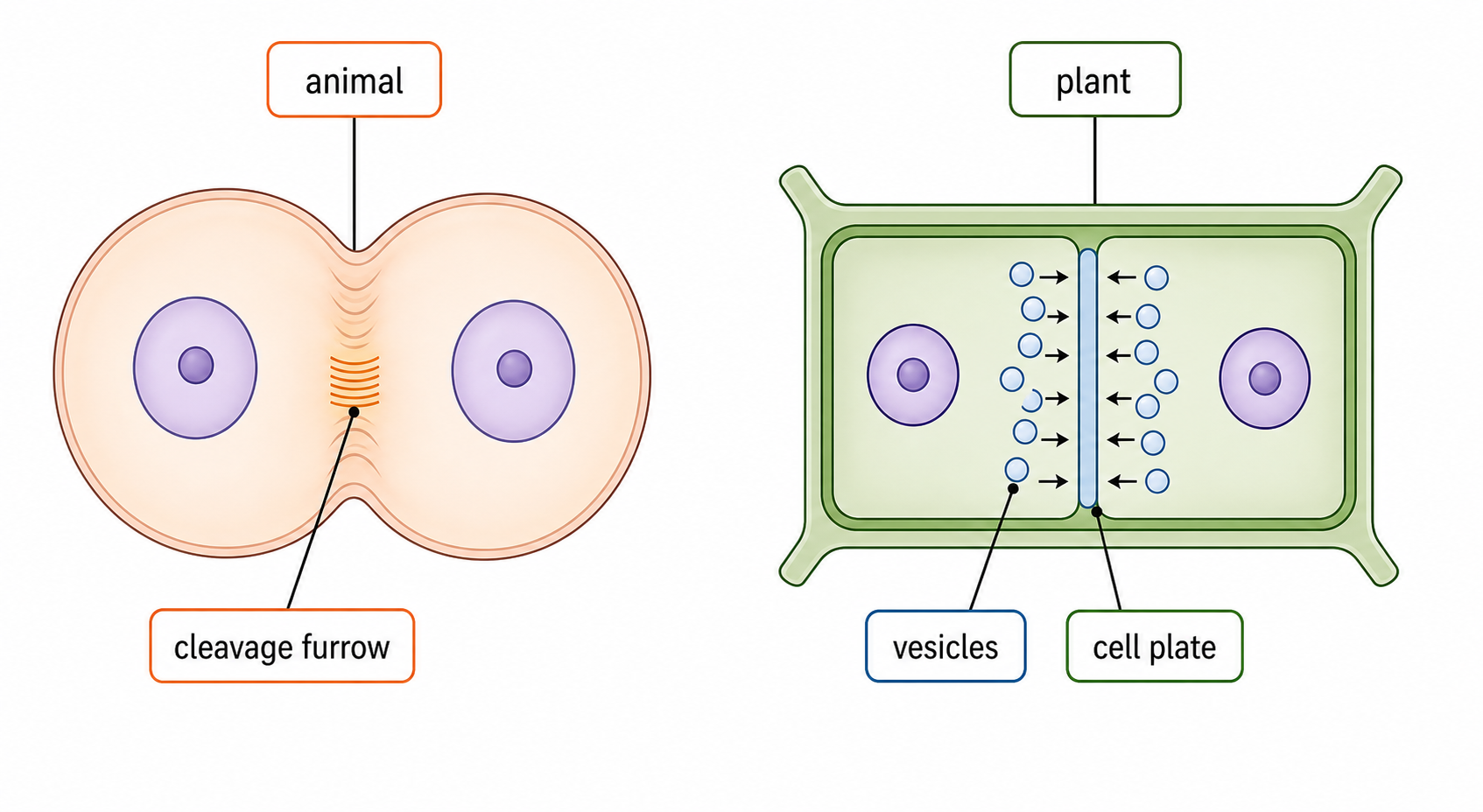
Cytokinesis is the division of cytoplasm after nuclear division. Animal cells use a contractile ring to pinch the cell membrane inward, while plant cells form a vesicle-derived cell plate that becomes the new partition between cells.
Same goal, different mechanism.
Sort each cytokinesis feature.
SortSort each cytokinesis feature.
ChooseCompare Equal and Unequal Cytokinesis
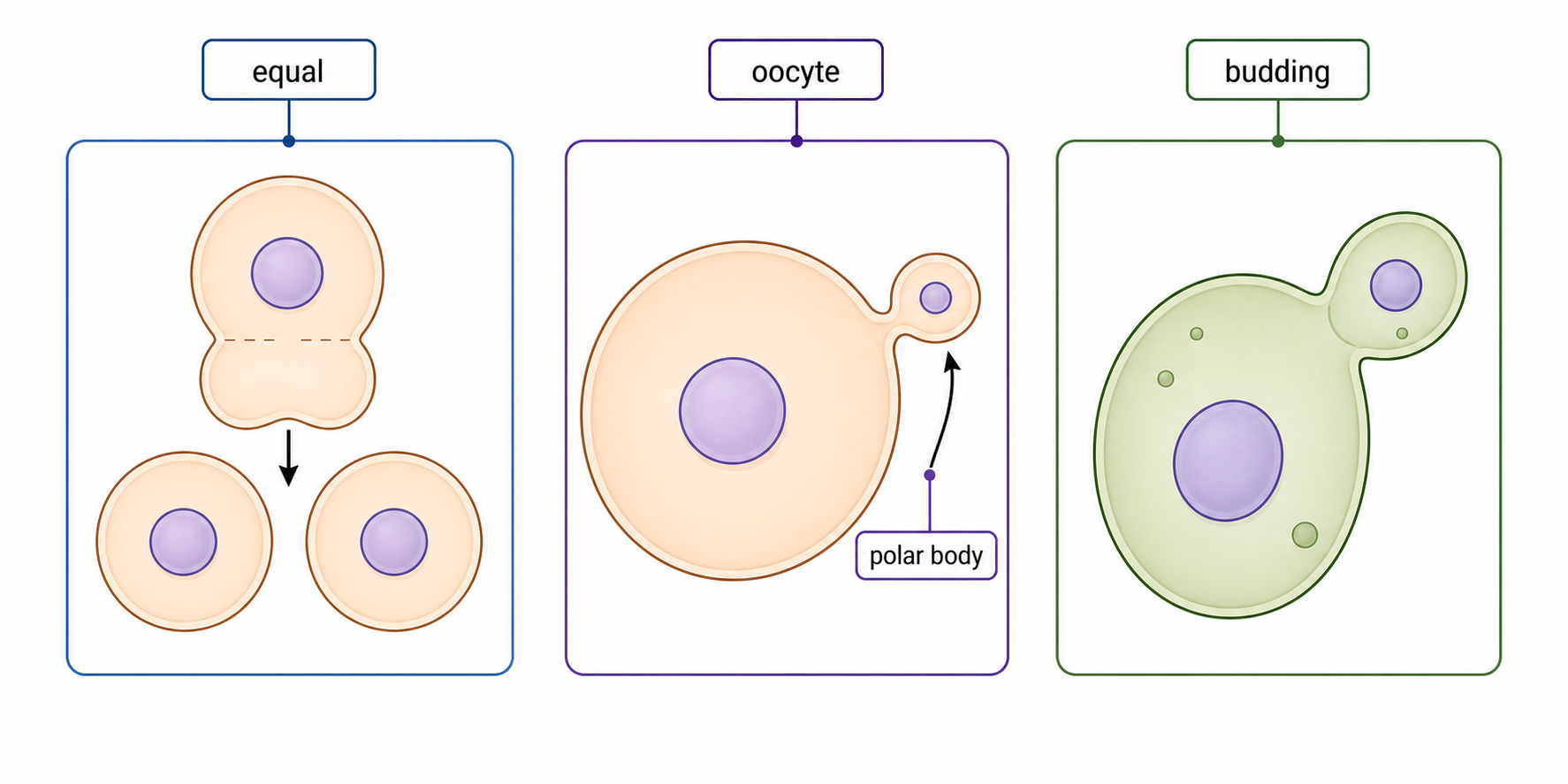
Cytokinesis can be equal or unequal. Equal cytokinesis gives daughter cells similar amounts of cytoplasm, while unequal cytokinesis gives one cell more cytoplasm than the other, as in oogenesis and yeast budding.
Cytoplasm can be shared equally or unequally.
Match the cytokinesis example.
MatchMatch the cytokinesis example.
ChooseChoose Mitosis or Meiosis
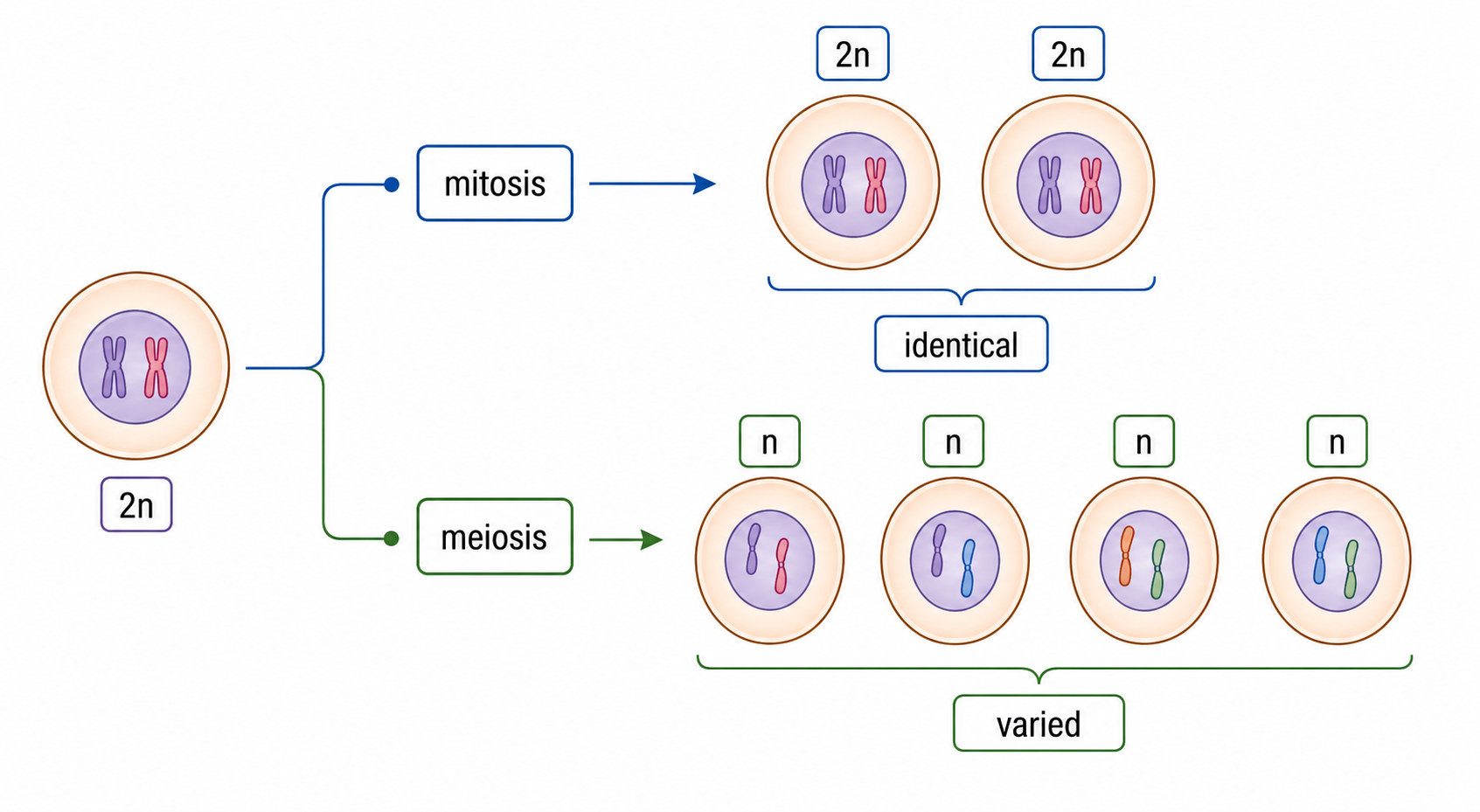
Mitosis and meiosis solve different problems. Mitosis maintains chromosome number for growth, repair, and asexual reproduction, while meiosis halves chromosome number for gametes and generates genetic diversity.
Choose division type by purpose and chromosome number.
Sort each role.
SortSort each role.
ChoosePrepare Chromosomes in Interphase
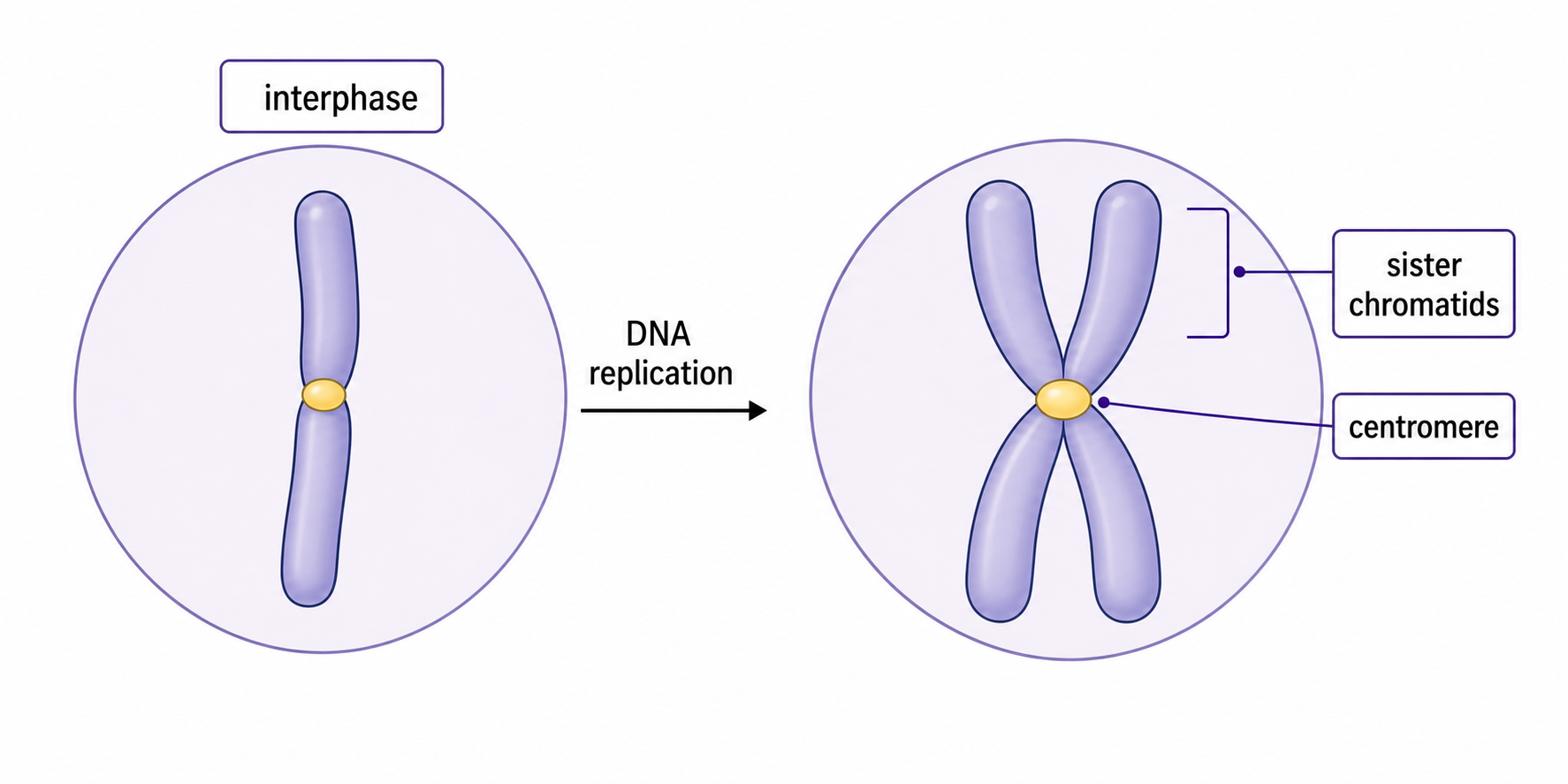
DNA must be replicated in interphase before chromosomes can be separated. Replication produces chromosomes made of sister chromatids, and the sister chromatids remain joined at centromeres until they separate during nuclear division.
Replication prepares chromosomes for separation.
Put chromosome preparation and separation in order.
OrderPut chromosome preparation and separation in order.
ChooseUse Shared Division Machinery
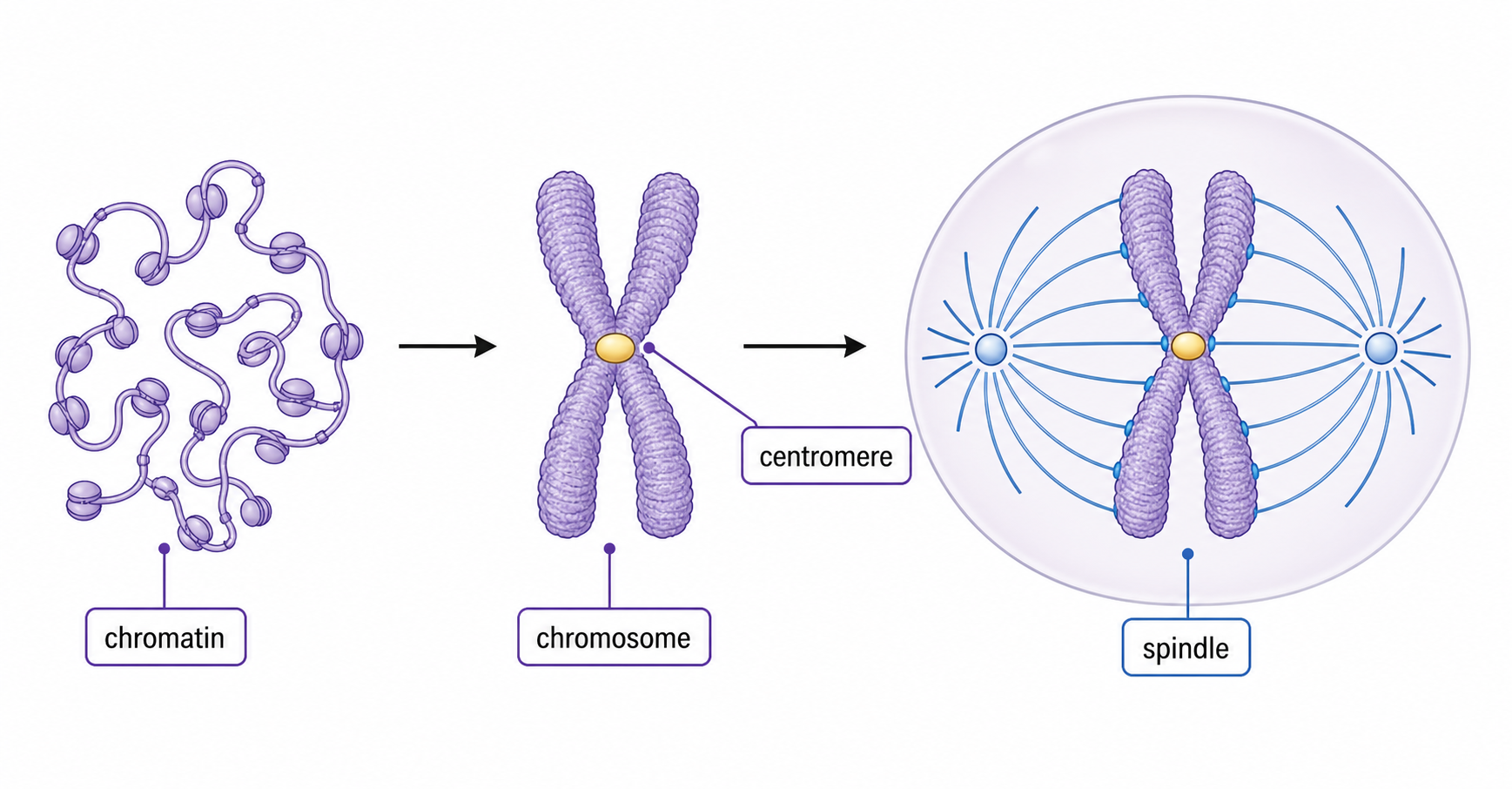
Mitosis and meiosis share machinery for moving DNA safely. Chromatin condenses into movable chromosomes using histones and nucleosomes, while spindle microtubules and motor proteins organize chromosome movement.
Packaging and movement machinery work together.
Match each structure to its role.
MatchMatch each structure to its role.
ChooseSequence Mitosis
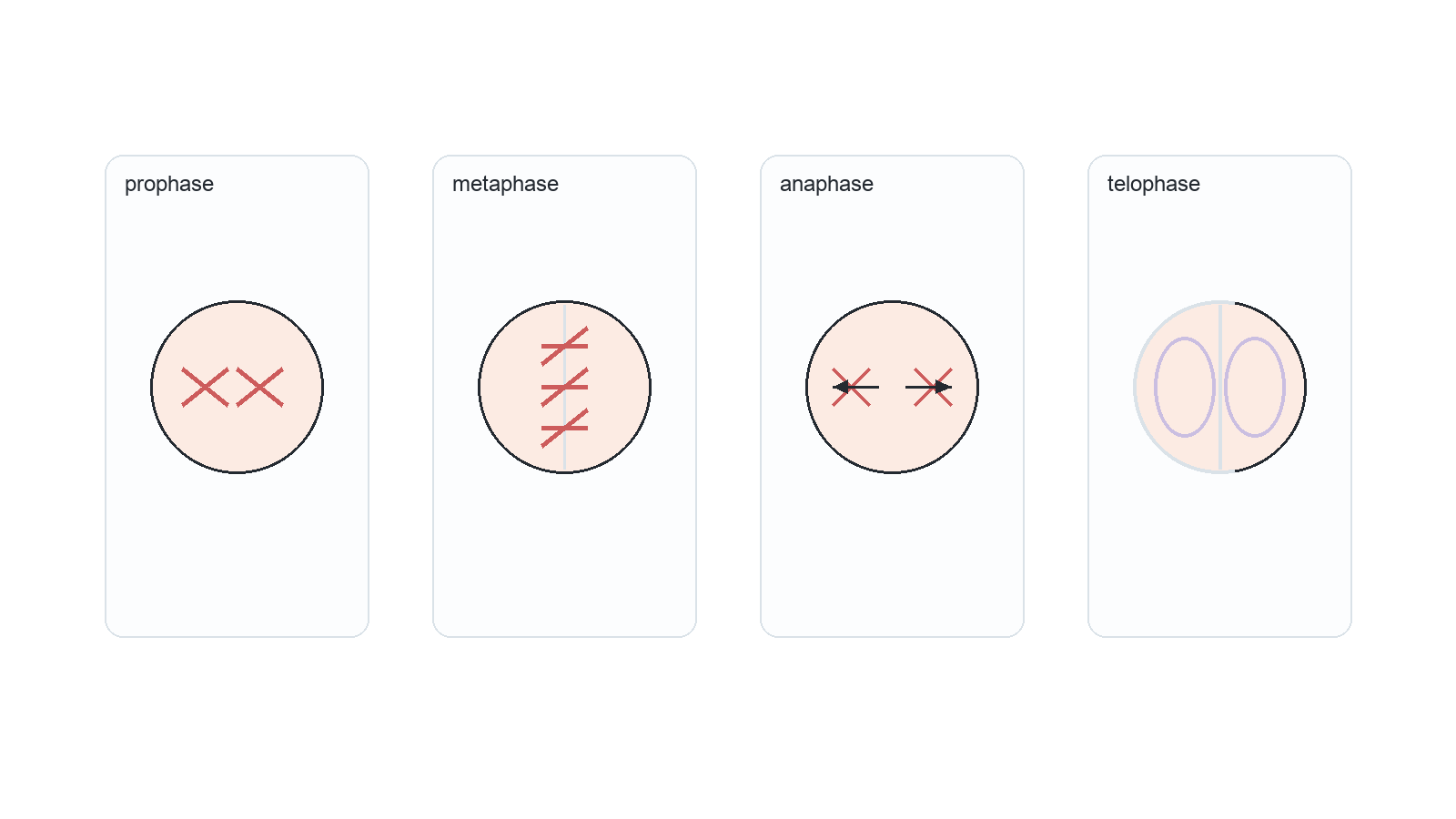
Mitosis is easiest to learn as a movement sequence. In prophase chromosomes condense, in metaphase they align at the equator, in anaphase sister chromatids separate, and in telophase nuclei reform around identical chromosome sets.
Use chromosome position to read mitosis.
Put mitosis phases in order.
OrderPut mitosis phases in order.
ChooseIdentify Mitosis in Images
PracticeTo identify mitosis phases in diagrams, micrographs, or root-tip squashes, look at chromosome cues. Condensed but not aligned suggests prophase, alignment at the equator suggests metaphase, separated chromatids suggest anaphase, and reforming nuclear membranes suggest telophase.
Phase ID comes from visual evidence.
Match the visual cue to the phase.
MatchMatch the visual cue to the phase.
ChooseReduce Chromosome Number in Meiosis
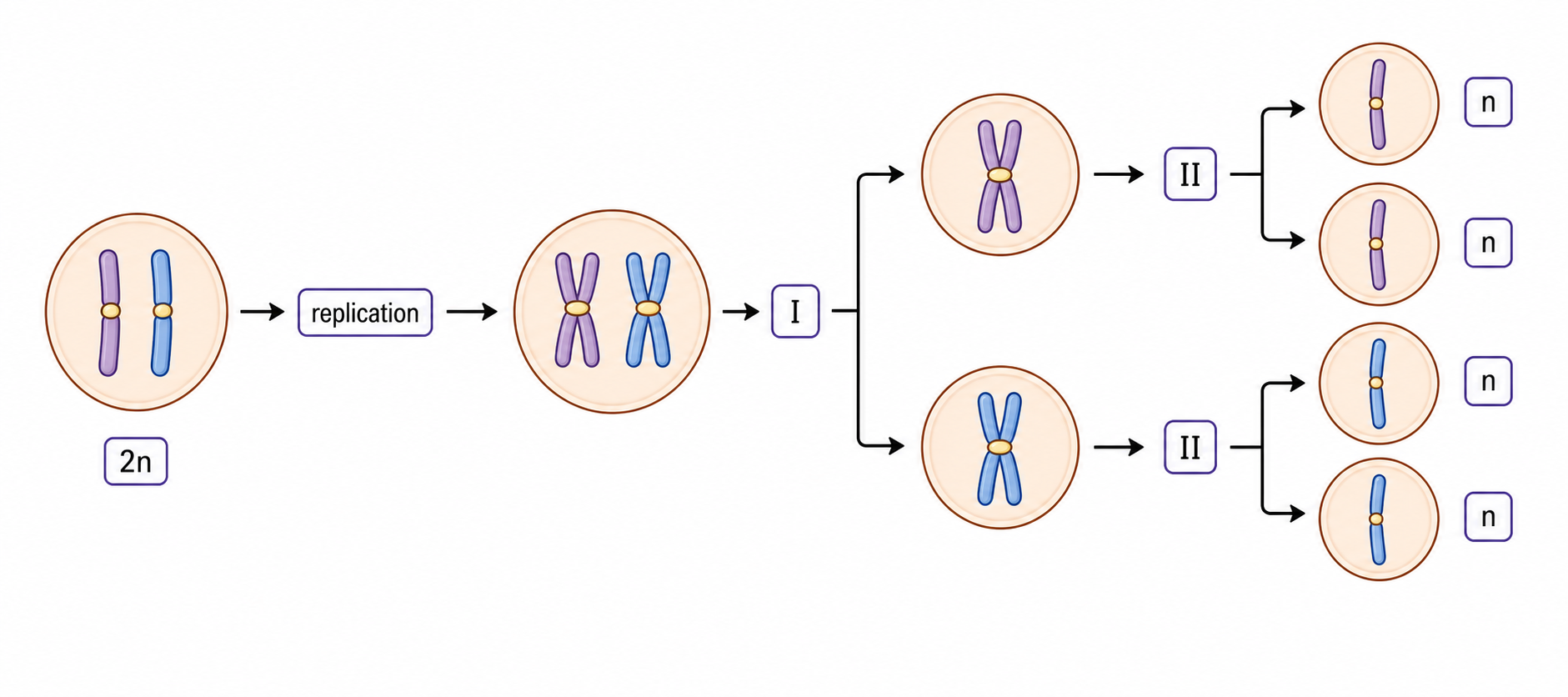
Meiosis is reduction division because it halves chromosome number. After one round of DNA replication, there are two nuclear divisions; homologous chromosomes separate in meiosis I, producing haploid nuclei.
Meiosis reduces chromosome number through homologue separation.
Put reduction division in order.
OrderPut reduction division in order.
ChooseExplain Non-disjunction and Down Syndrome
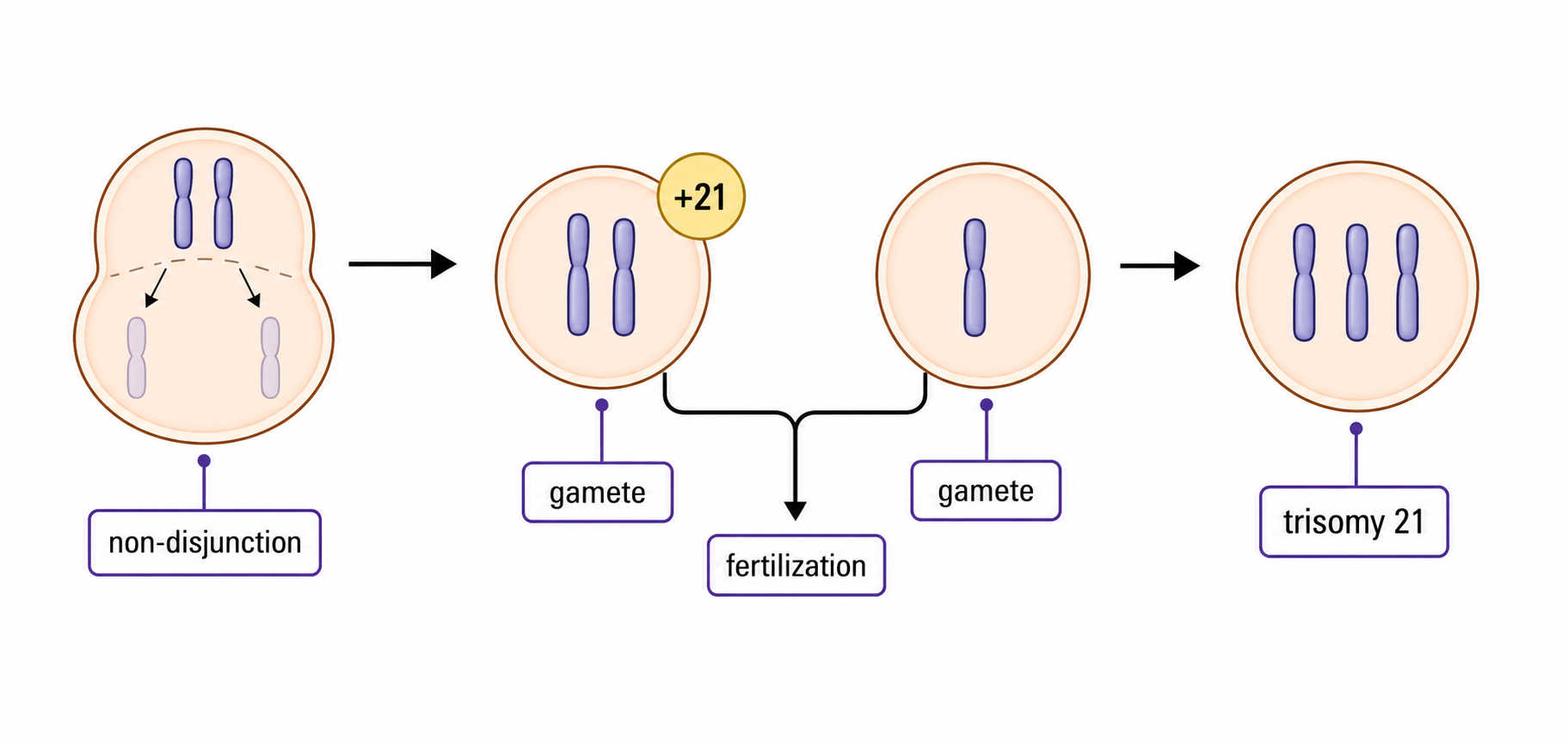
Non-disjunction means chromosomes fail to separate properly in meiosis. If homologues or sister chromatids fail to separate, a gamete can receive an abnormal chromosome number; after fertilization, trisomy 21 usually results in Down syndrome.
Failed separation can change chromosome number.
Which explanation best links meiosis to Down syndrome?
ChooseWhich explanation best links meiosis to Down syndrome?
ChooseGenerate Variation in Meiosis
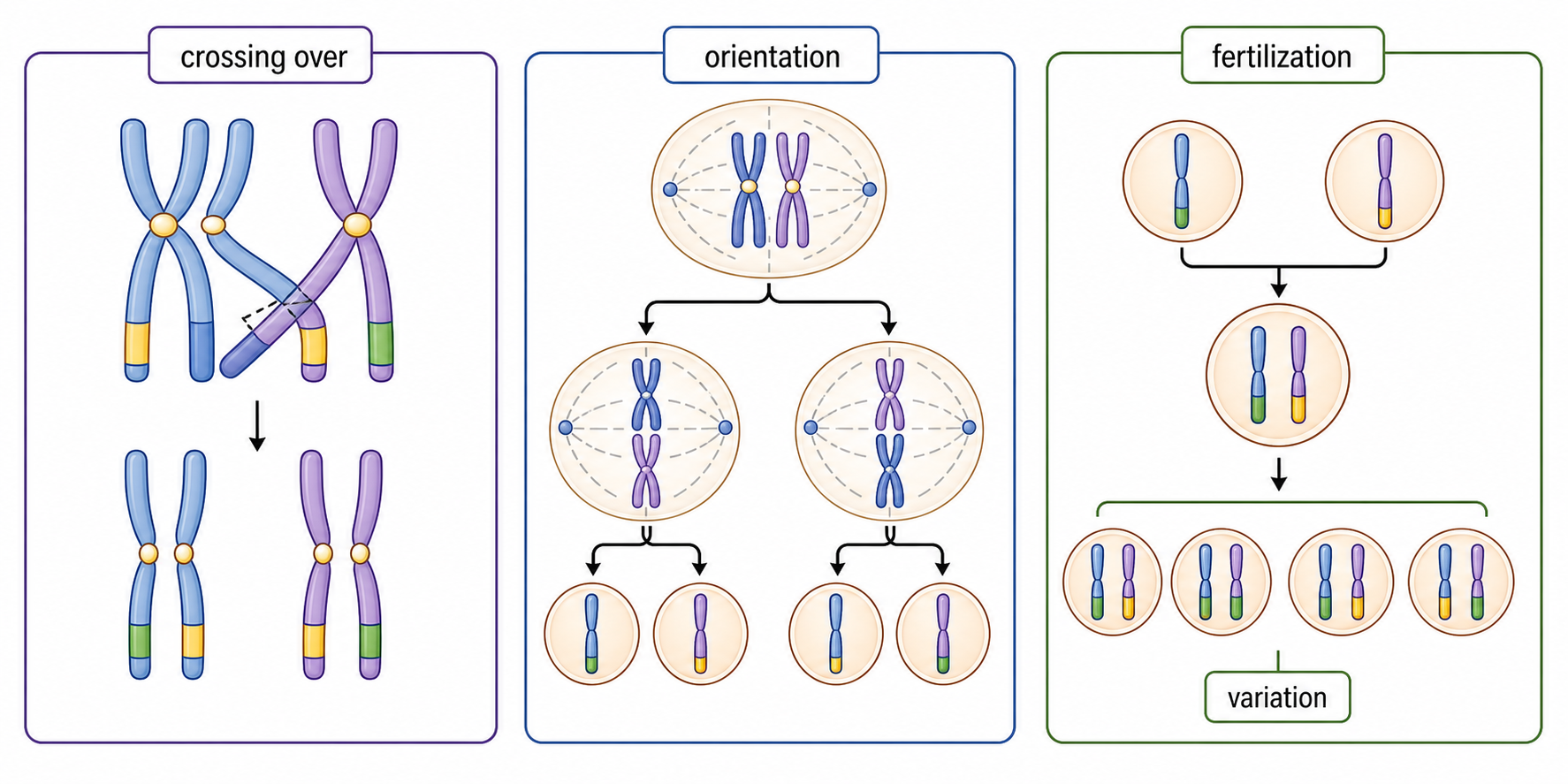
Meiosis generates variation by reshuffling allele combinations. Crossing over at chiasmata exchanges DNA between non-sister chromatids, random orientation of bivalents shuffles maternal and paternal homologues, and fertilization combines gametes to create new allele combinations.
Meiosis reshuffles alleles before fertilization combines gametes.
Match each source of variation.
MatchMatch each source of variation.
ChooseTransfer: Explain Core Cell Division
Exam PracticeAll cells arise from pre-existing parent cells by cell division, producing daughter cells for growth, replacement, repair, or reproduction. Cytokinesis splits cytoplasm after nuclear division; animal cells use a contractile ring and plant cells form a vesicle-derived cell plate. Equal cytokinesis gives daughter cells similar amounts of cytoplasm, while unequal cytokinesis occurs in oogenesis and yeast budding. Mitosis maintains chromosome number for growth, repair, and asexual reproduction; meiosis halves chromosome number for gametes and generates genetic diversity. DNA replication in interphase produces chromosomes with sister chromatids joined at centromeres until separation. Mitosis and meiosis both condense chromatin into movable chromosomes; histones, nucleosomes, spindle microtubules, and motor proteins organize movement. In mitosis, prophase condenses chromosomes, metaphase aligns them at the equator, anaphase separates chromatids, and telophase reforms nuclei, producing identical nuclei. Mitosis phases are identified in diagrams, micrographs, and root-tip squashes using chromosome condensation, equator alignment, separation, and nuclear membrane cues. Meiosis has two nuclear divisions after one round of DNA replication; homologous chromosomes separate in meiosis I, producing haploid nuclei. Non-disjunction is failed separation of homologues or sister chromatids in meiosis; Down syndrome usually results from trisomy 21 after non-disjunction. Crossing over at chiasmata exchanges DNA between non-sister chromatids; random orientation of bivalents and fertilization create new allele combinations.
Put the answer frame in order.
OrderUse this for SL/core questions about cell origin, cytokinesis, mitosis versus meiosis, replicated chromosomes, mitosis phase identification, meiosis reduction division, non-disjunction/Down syndrome, and variation.
Use this for SL/core questions about cell origin, cytokinesis, mitosis versus meiosis, replicated chromosomes, mitosis phase identification, meiosis reduction division, non-disjunction/Down syndrome, and variation.
Common loss: saying meiosis and mitosis have the same outcome, identifying mitosis phases by memorized names without visual cues, or explaining Down syndrome without non-disjunction and trisomy 21.