
Classify Gene Mutations
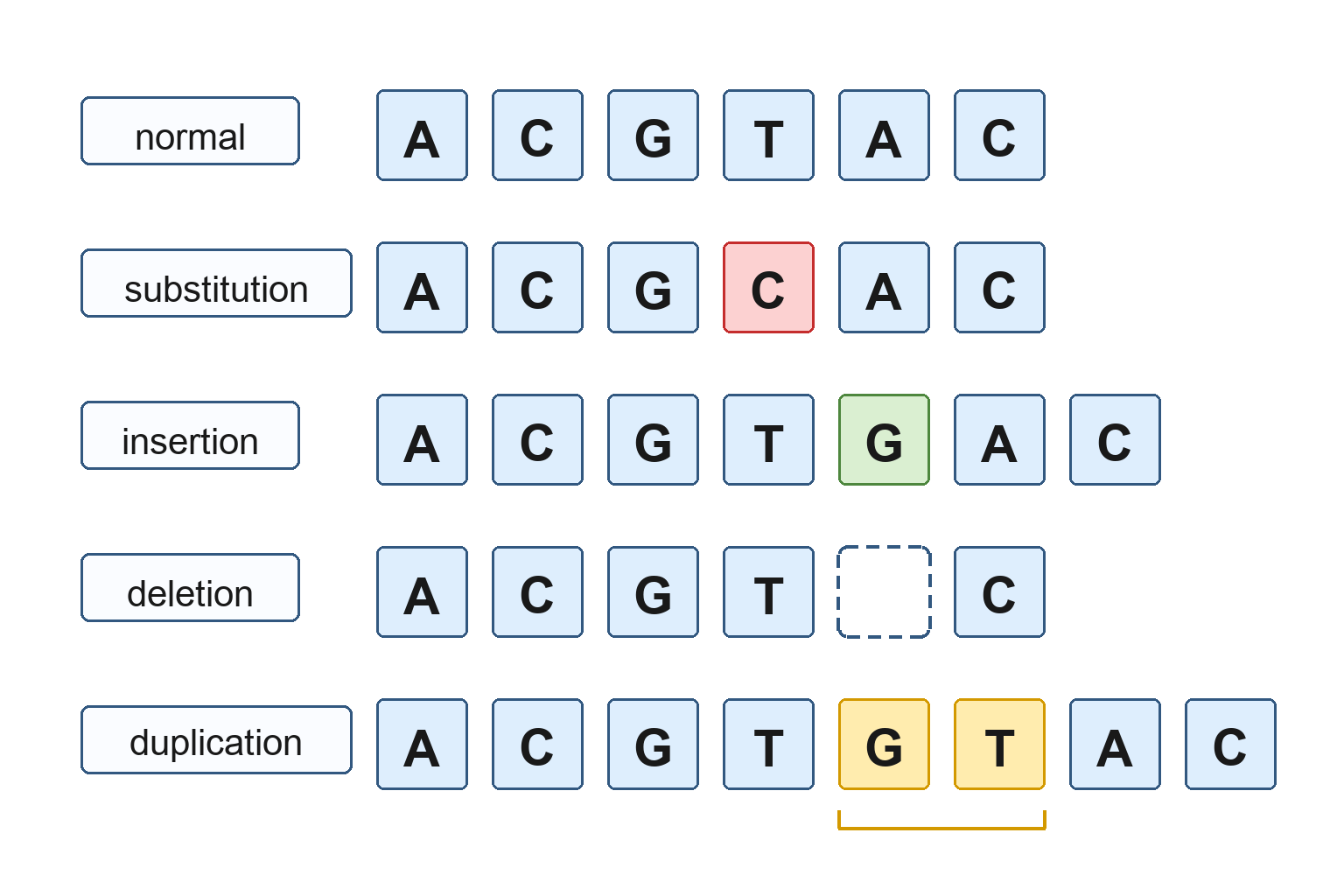
A gene mutation is a change in the base sequence of DNA. Start by classifying what changed: a substitution replaces one base, an insertion adds base(s), a deletion removes base(s), and a duplication repeats a section.
Classify mutation by what happens to bases.
Sort each DNA change.
SortSort each DNA change.
ChoosePredict Substitution Effects
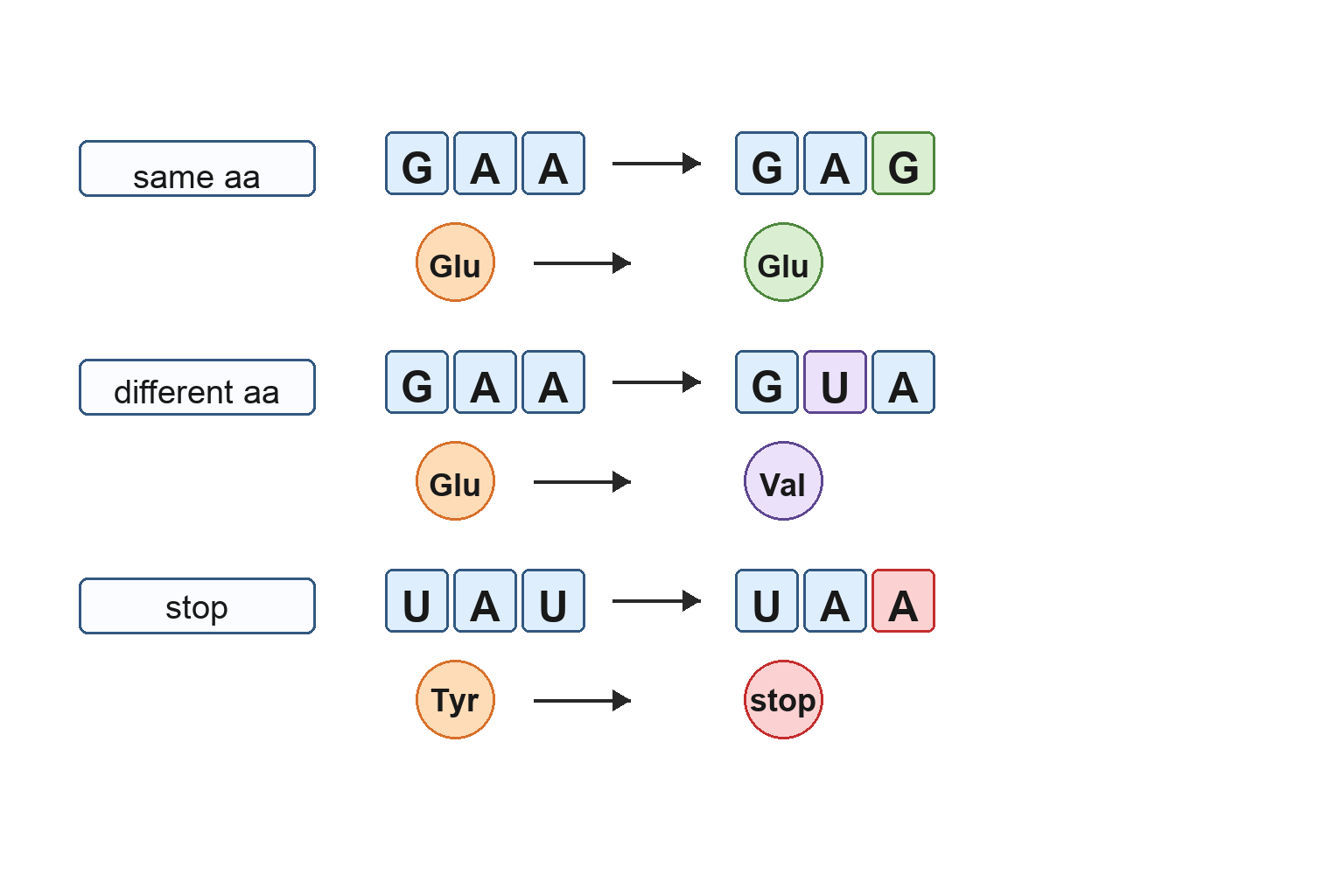
A base substitution replaces one base and can create a single nucleotide polymorphism, or SNP. Its effect depends on the codon: because the genetic code is degenerate, a substitution may be silent, missense, or nonsense.
Substitution effect depends on the genetic code.
Match each substitution outcome.
MatchMatch each substitution outcome.
ChooseSpot Frameshift Risk
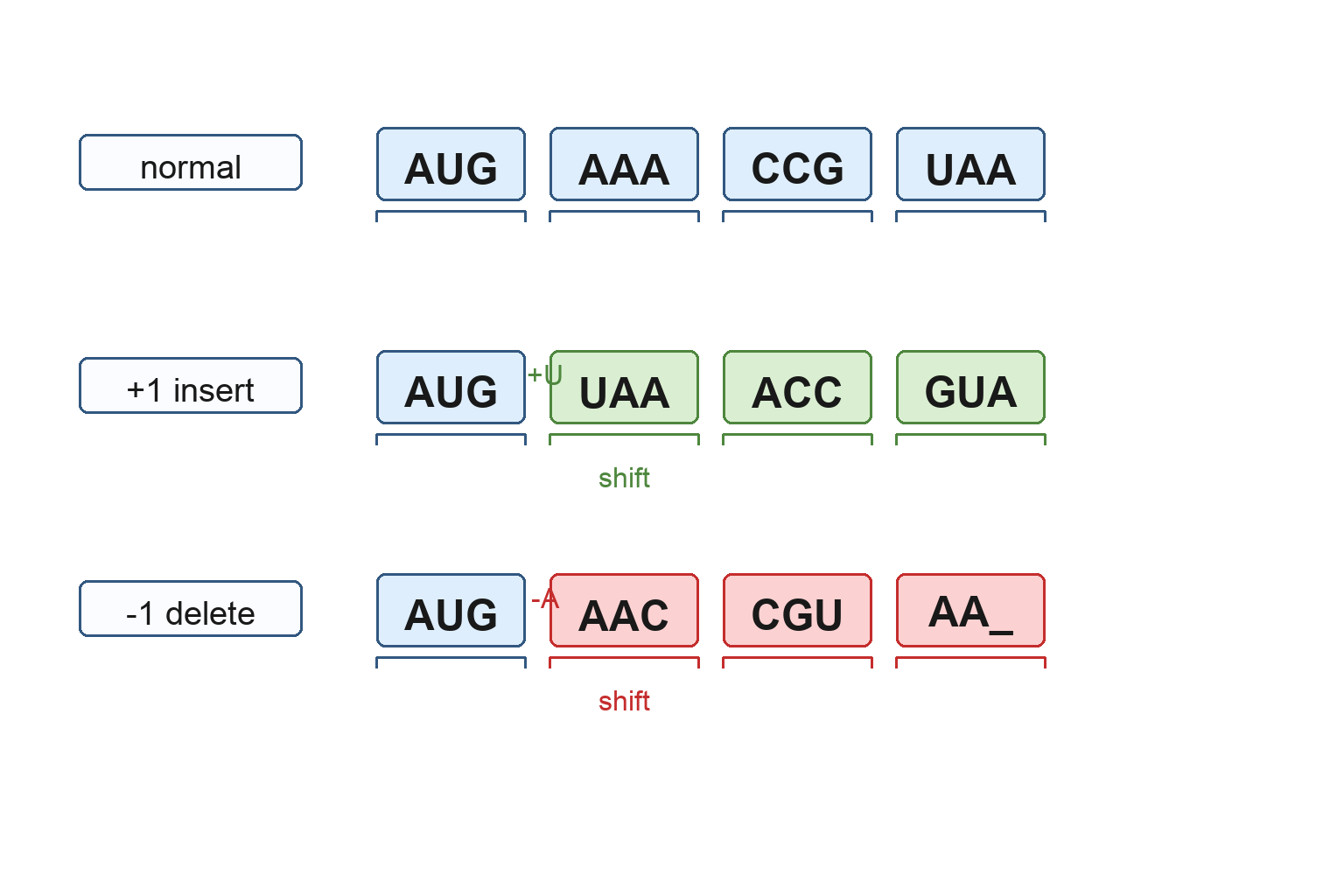
Insertions and deletions are most disruptive when they are not in multiples of three. Because codons are read in triplets, adding or removing one or two bases shifts the reading frame, changing downstream codons and often disrupting protein function.
A frameshift changes how all later triplets are read.
Which mutation is most likely to cause a frameshift?
ChooseWhich mutation is most likely to cause a frameshift?
ChooseTrace Mutation Causes
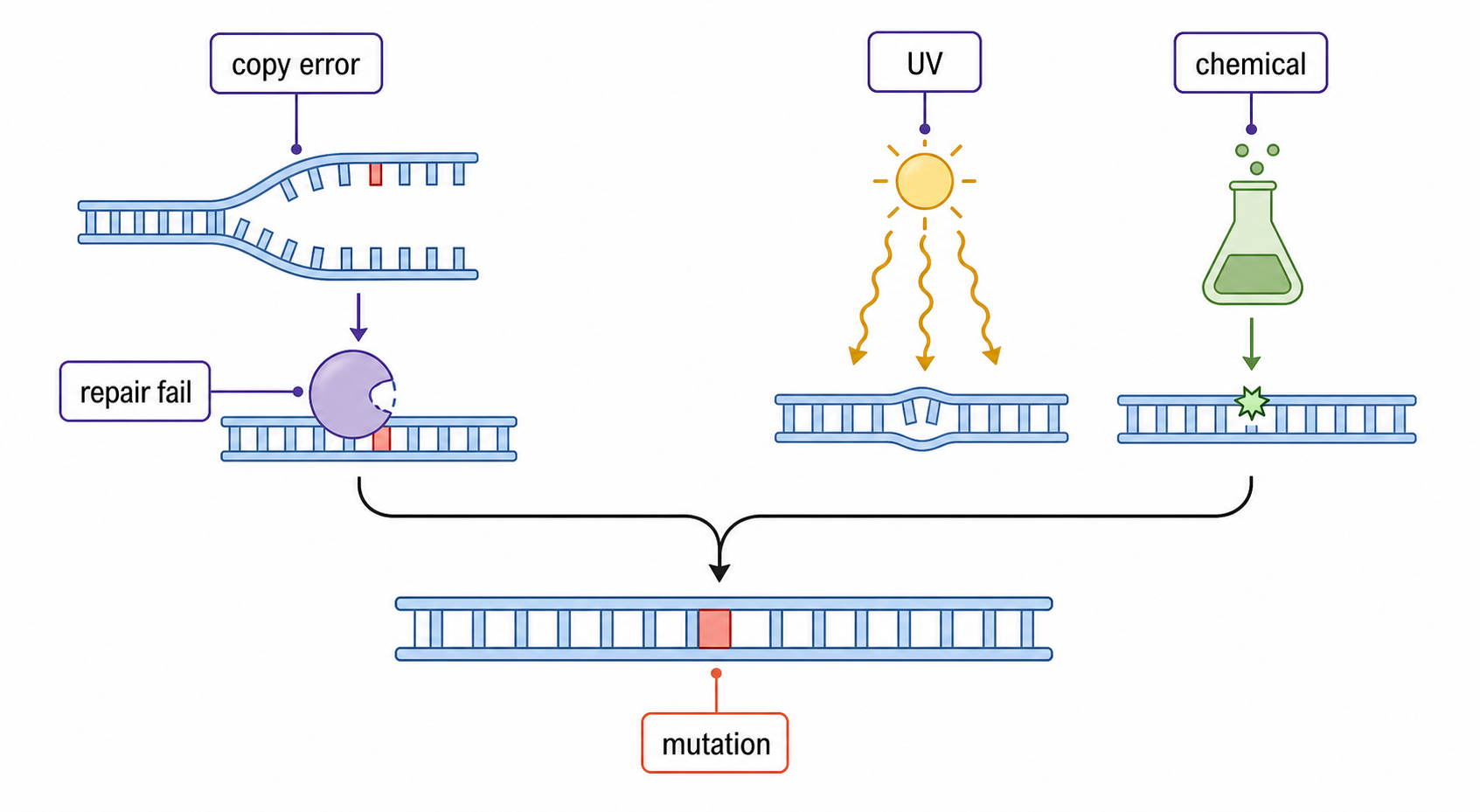
Mutations can arise without an external mutagen, for example from replication errors, repair errors, or chromosome damage. Mutagens increase mutation risk and include chemicals, ionizing radiation, and ultraviolet radiation.
Mutation causes include internal errors and external mutagens.
Sort each mutation cause.
SortSort each mutation cause.
ChooseExplain Random Mutation
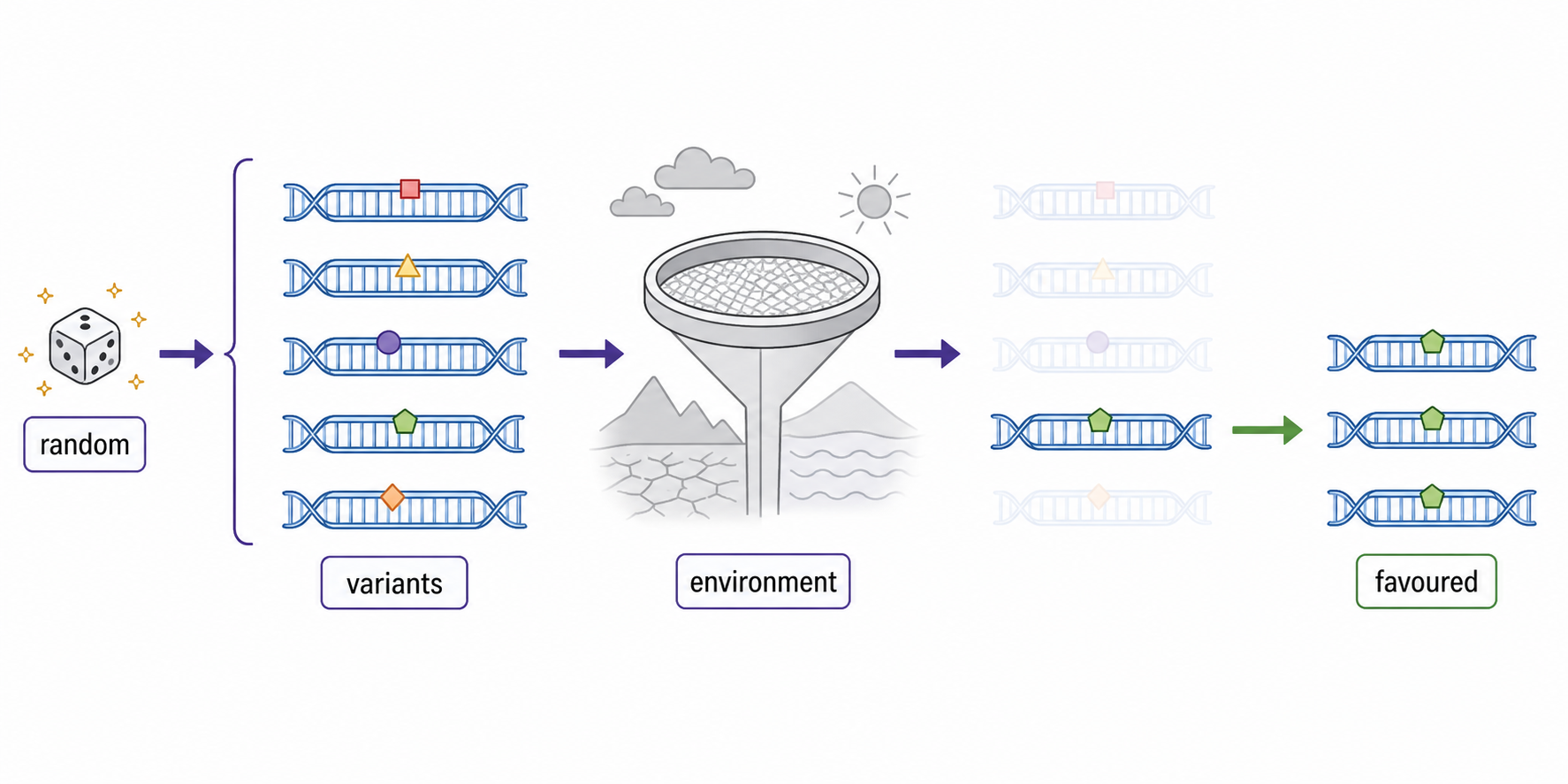
Mutation is random with respect to what the organism needs. A mutation does not appear because it would be useful; instead, mutation creates variation and selection may later increase useful variants. Mutation rate can still vary with DNA sequence, gene expression, repair, and mutagen exposure.
Mutation appears first; selection filters later.
Spot the error: bacteria mutate because antibiotics are present and they need resistance.
Spot ErrorsSpot the error: bacteria mutate because antibiotics are present and they need resistance.
ChooseSeparate Germ-line and Somatic Effects
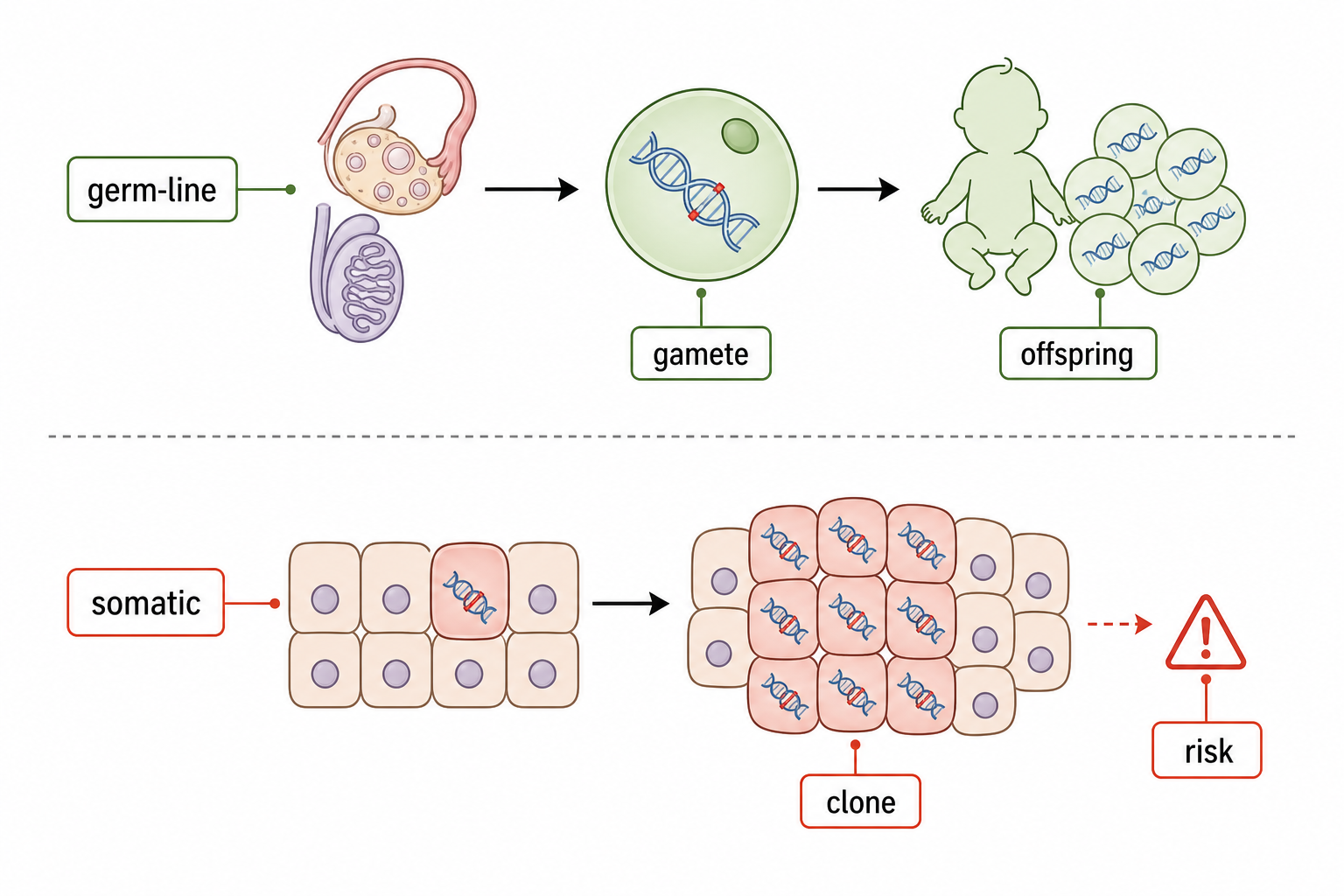
The consequence of a mutation depends on the cell lineage. Germ-line mutations occur in cells that lead to gametes and can be inherited by offspring; somatic mutations occur in body cells, affect only descendant body cells, and can contribute to cancer.
Cell lineage determines inheritance.
Sort each consequence.
SortSort each consequence.
ChooseUse Mutation as Variation Source
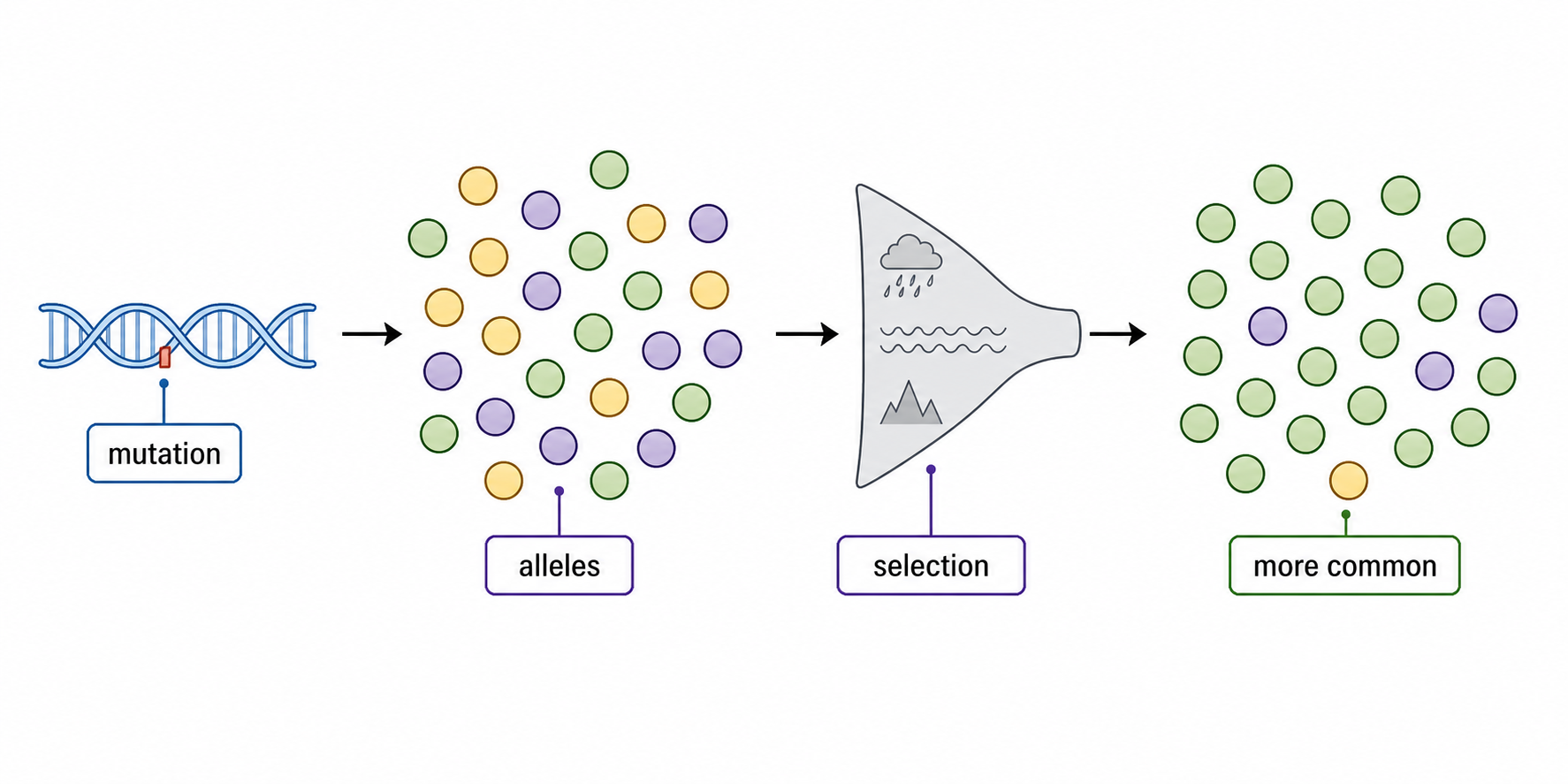
Mutation is the original source of new alleles and genetic variation. Many mutations are neutral or harmful, but without mutation there would be no new DNA variants for natural selection to act on.
Mutation supplies variation before selection.
Match each evolutionary idea.
MatchMatch each evolutionary idea.
ChooseTransfer: Explain Core Mutation Effects
Exam PracticeGene mutations are changes in the base sequence of DNA; main types are substitution, insertion, deletion, and duplication. Base substitutions can create SNPs and change codons; degeneracy can make substitutions silent, missense, or nonsense. Insertions or deletions not in multiples of three cause frameshifts that alter downstream codons and often disrupt protein function. Mutations can arise from replication errors, repair errors, or chromosome damage; mutagens include chemicals, ionizing radiation, and ultraviolet radiation. Mutations occur randomly with respect to organism need or advantage; mutation rate varies with DNA sequence, gene expression, repair, and mutagen exposure. Germ-line mutations can be inherited by offspring; somatic mutations affect only descendant body cells and can contribute to cancer. Mutation is the original source of new alleles and genetic variation; many are neutral or harmful, but variation supplies material for natural selection.
Put the answer frame in order.
OrderUse this for SL/core questions about mutation types, substitution consequences, frameshifts, mutation causes, randomness, germ-line versus somatic effects, cancer risk, and variation for natural selection.
Use this for SL/core questions about mutation types, substitution consequences, frameshifts, mutation causes, randomness, germ-line versus somatic effects, cancer risk, and variation for natural selection.
Common loss: naming the mutation type without explaining codon/protein effect, saying mutations occur because organisms need them, or saying every mutation is inherited.