
Transcribe DNA Into mRNA
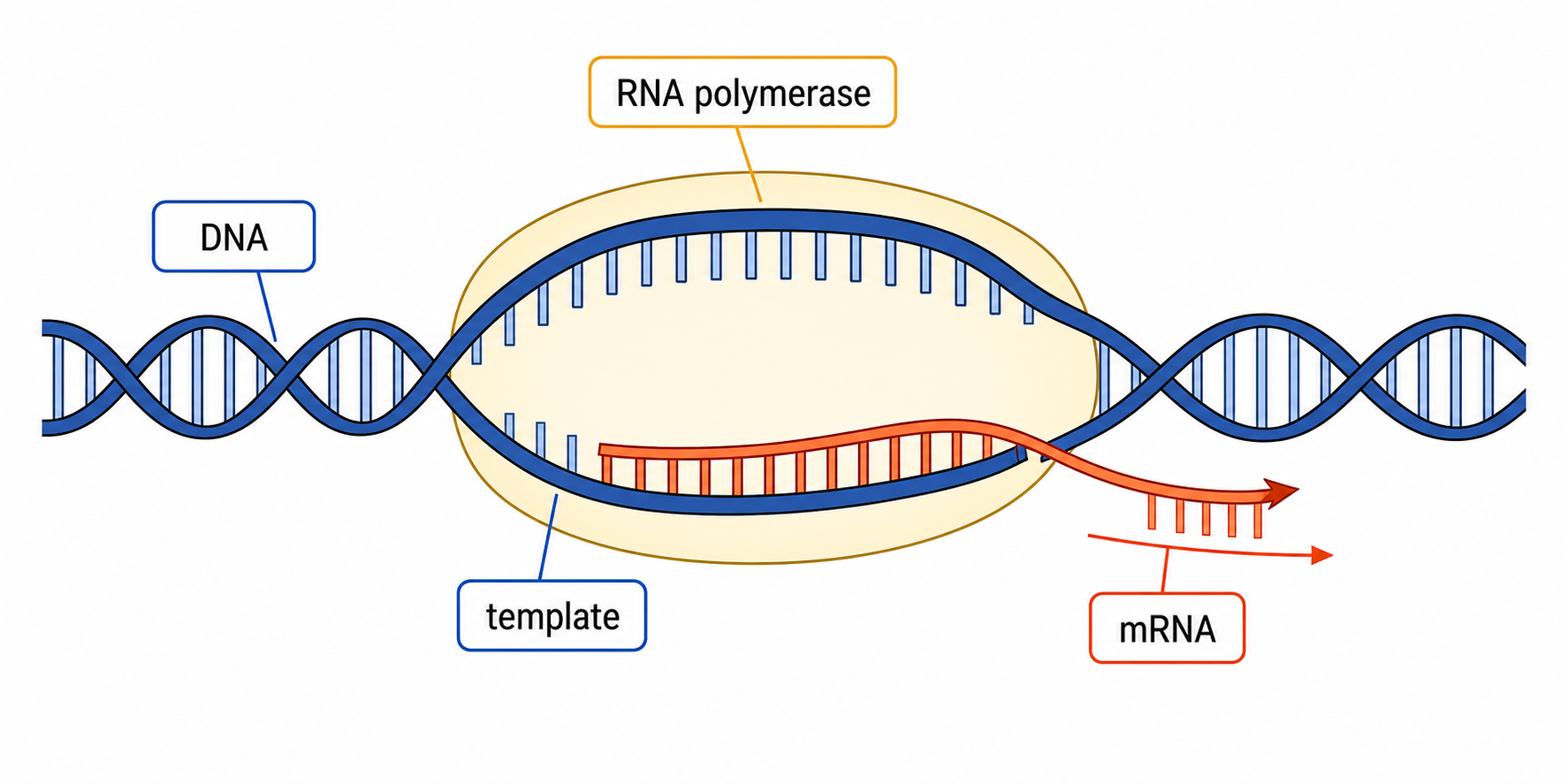
Transcription is the copying step that makes mRNA from a gene. RNA polymerase uses the DNA template strand to synthesize a complementary RNA strand, so the gene information becomes a mobile mRNA copy that can be translated at a ribosome.
mRNA is the mobile copy of gene information.
Put transcription in order.
OrderPut transcription in order.
ChooseUse RNA Base Pairing
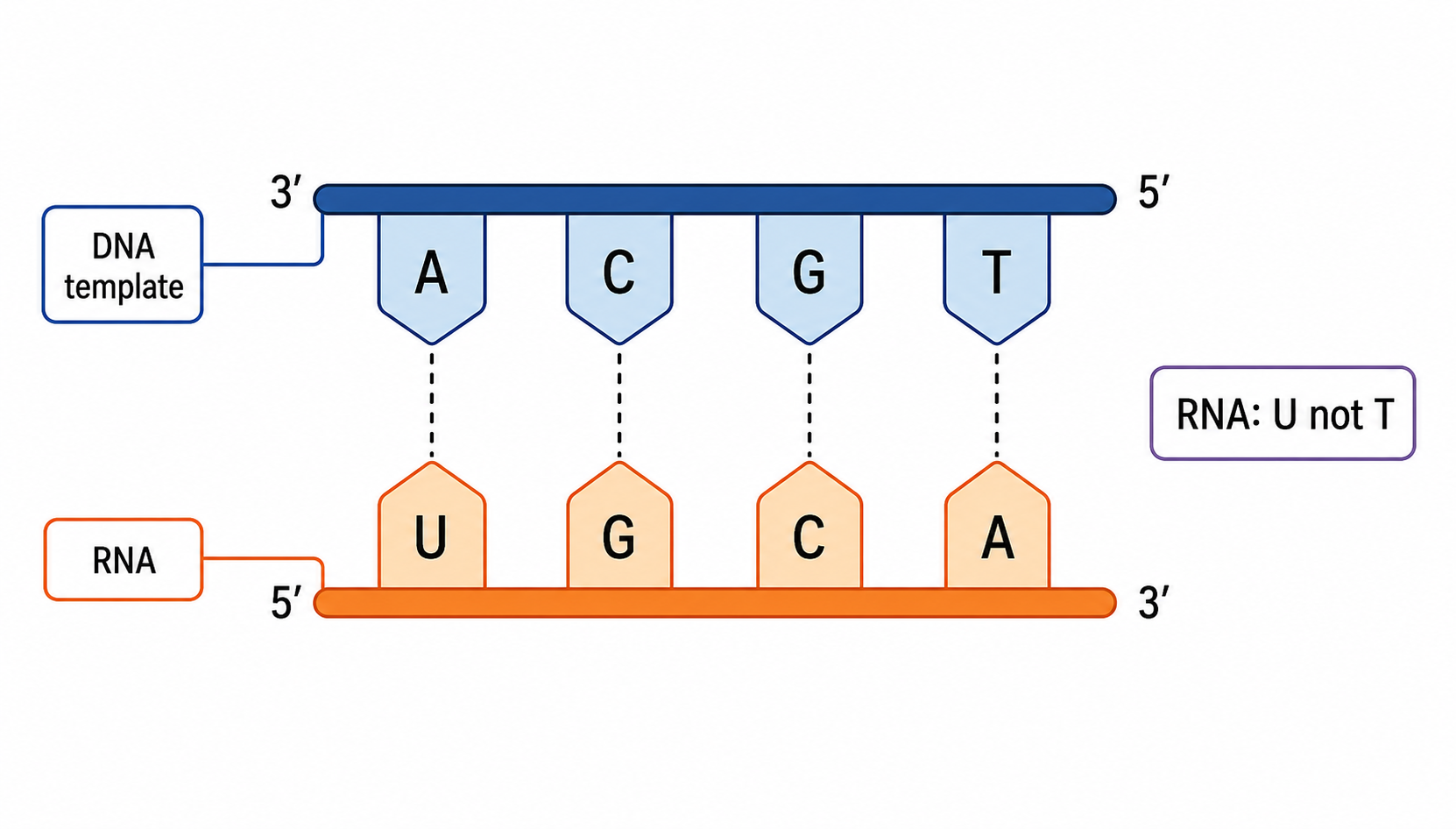
During transcription, free RNA nucleotides align with the DNA template by complementary base pairing and hydrogen bonding. The exam trap is uracil: DNA adenine pairs with RNA uracil, while cytosine pairs with guanine.
RNA uses uracil during transcription.
A DNA template triplet is TAC. What mRNA codon is made?
ChooseA DNA template triplet is TAC. What mRNA codon is made?
ChooseKeep the DNA Template Stable
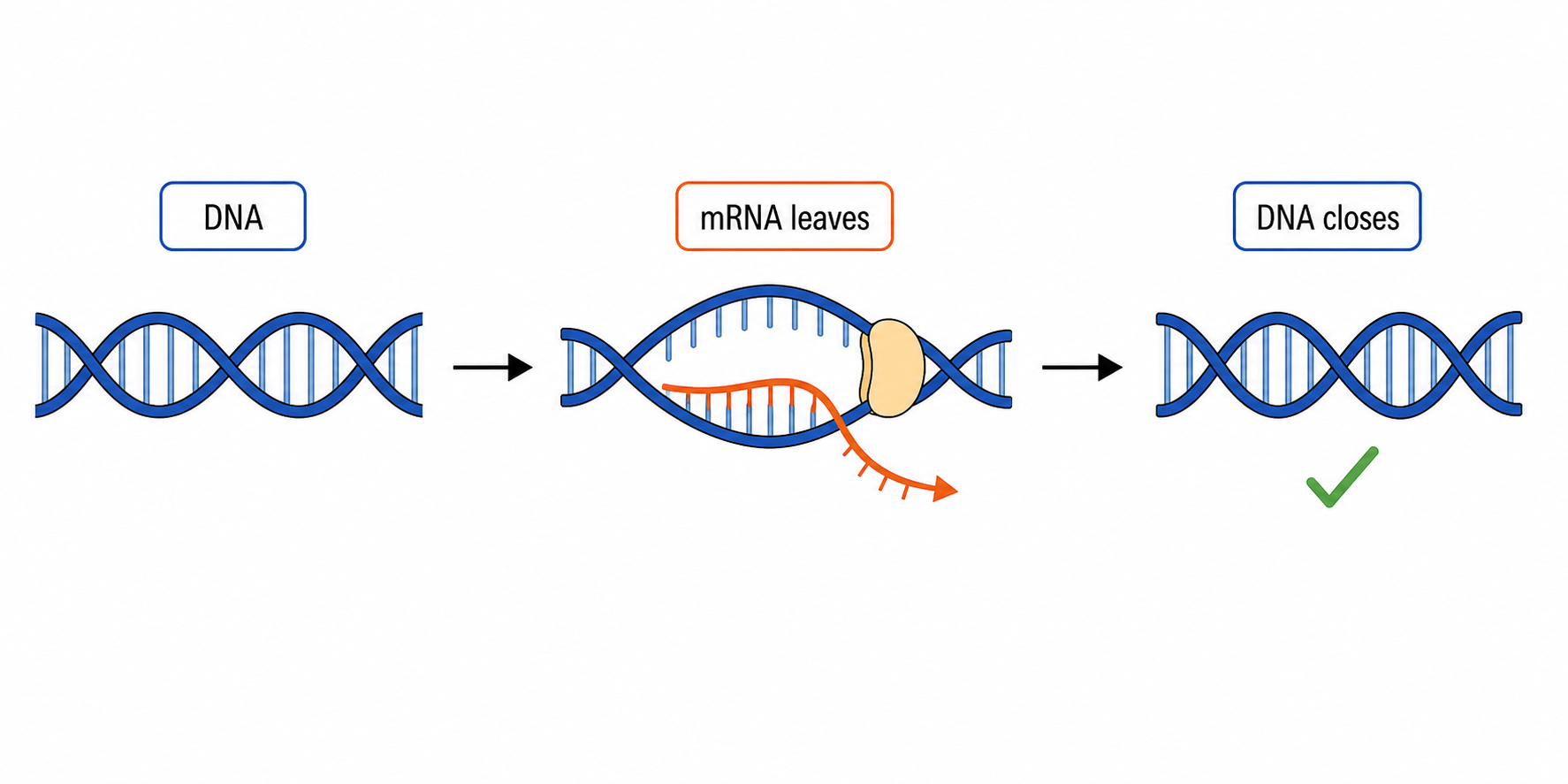
The DNA template is read during transcription, but its base sequence is not altered. Temporary base pairing guides RNA synthesis, while the DNA sugar-phosphate backbone and base pairing preserve the stored genetic information.
The DNA template is read, not rewritten.
Spot the error: transcription changes the DNA sequence into RNA.
Spot ErrorsSpot the error: transcription changes the DNA sequence into RNA.
ChooseControl Gene Expression
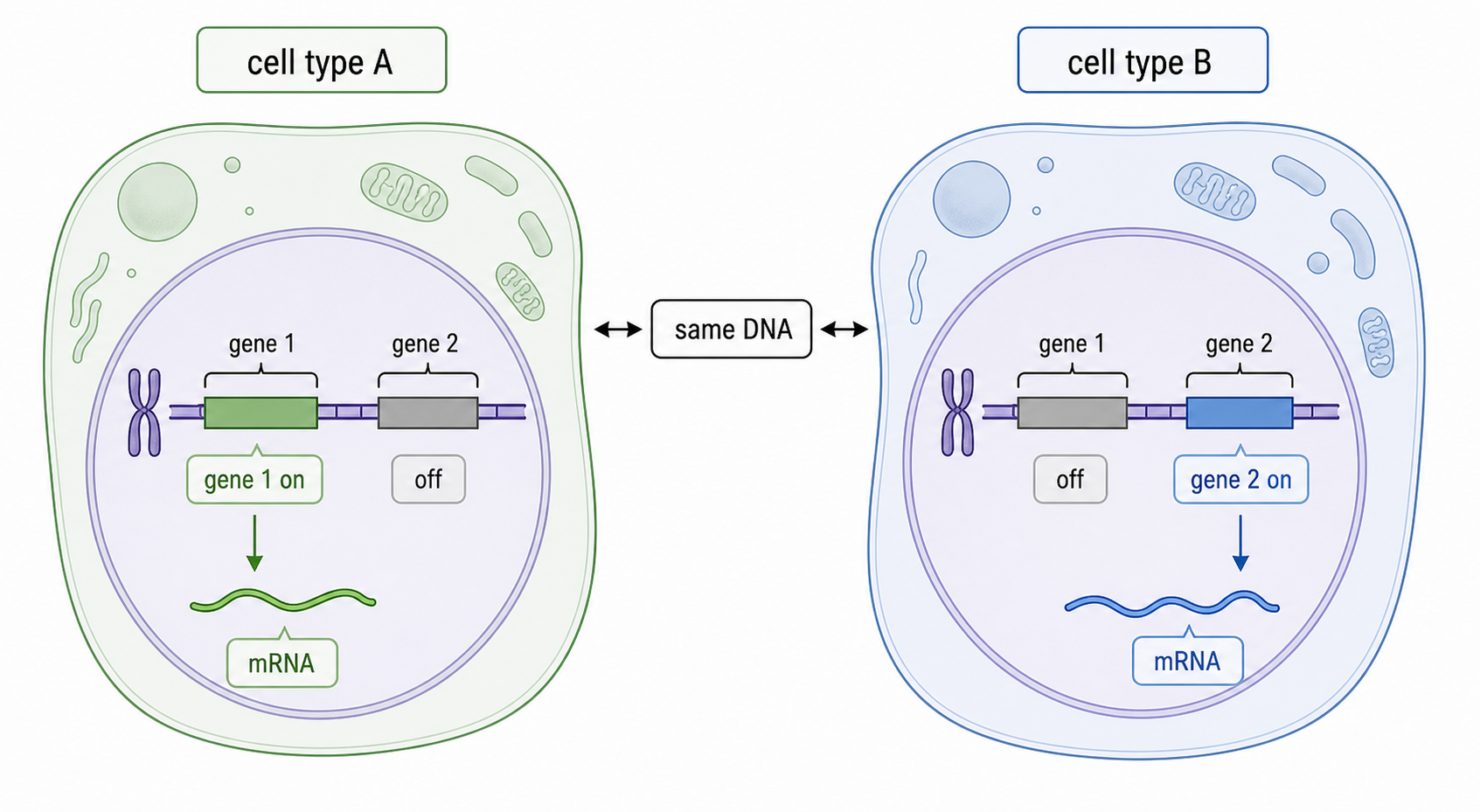
Transcription is the first stage of gene expression because a gene must be transcribed before its protein can be made. Cells regulate which genes are transcribed according to tissue type, developmental stage, and signals, so different cells can make different proteins from the same genome.
Gene expression starts with transcription choice.
Sort each statement.
SortSort each statement.
ChooseTranslate mRNA Into Polypeptide
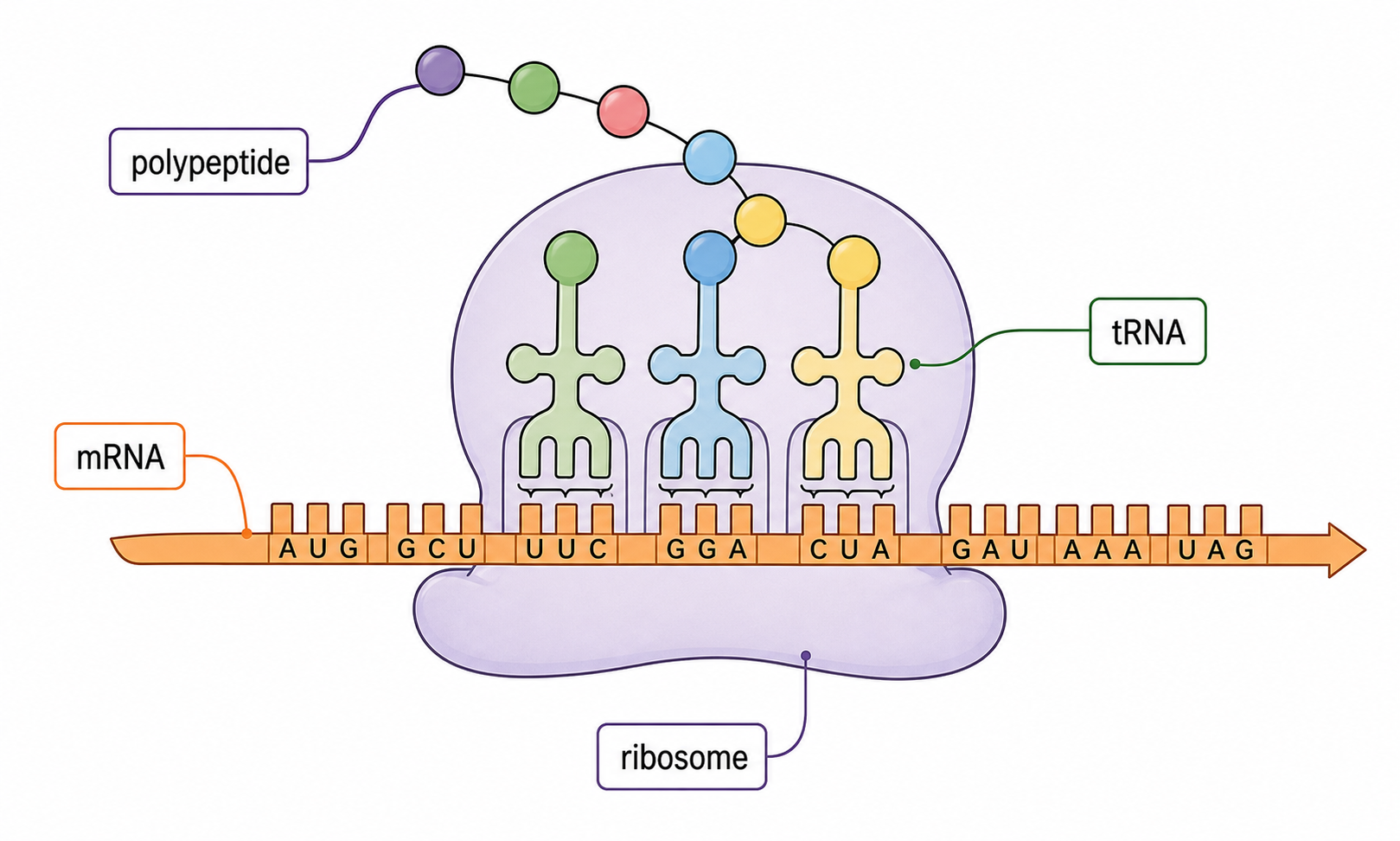
Translation is the decoding step at the ribosome. The ribosome reads mRNA codons, and the order of codons determines the order of amino acids in the growing polypeptide.
mRNA codon order determines polypeptide order.
Put translation information flow in order.
OrderPut translation information flow in order.
ChooseAssign mRNA, tRNA, and Ribosome Jobs
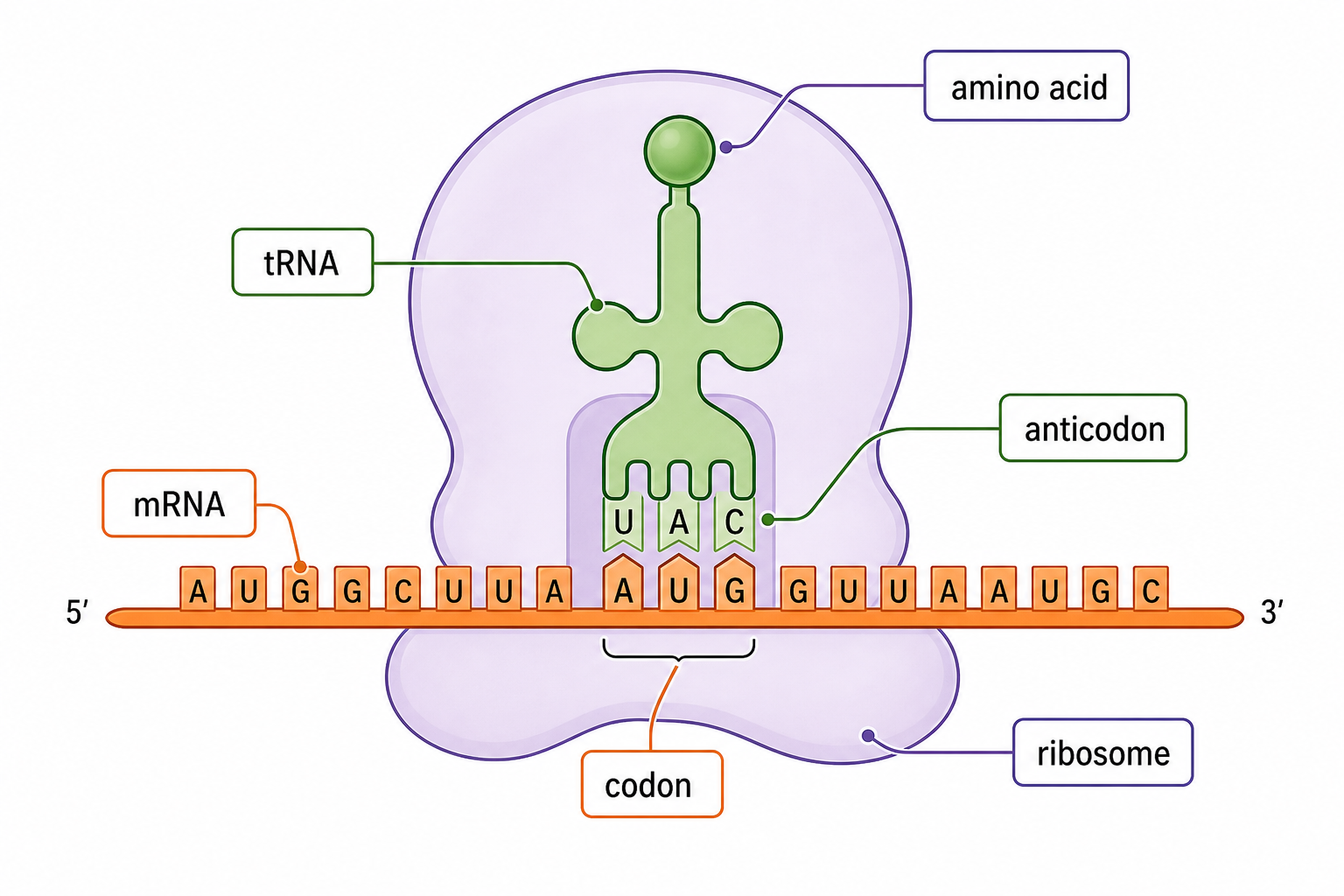
Translation needs three jobs working together: mRNA provides codons, tRNA carries activated amino acids and has anticodons, and the ribosome holds mRNA and tRNAs in position so peptide bonds can form.
Each translation component has a different role.
Match each translation component to its role.
MatchMatch each translation component to its role.
ChoosePair Codon and Anticodon
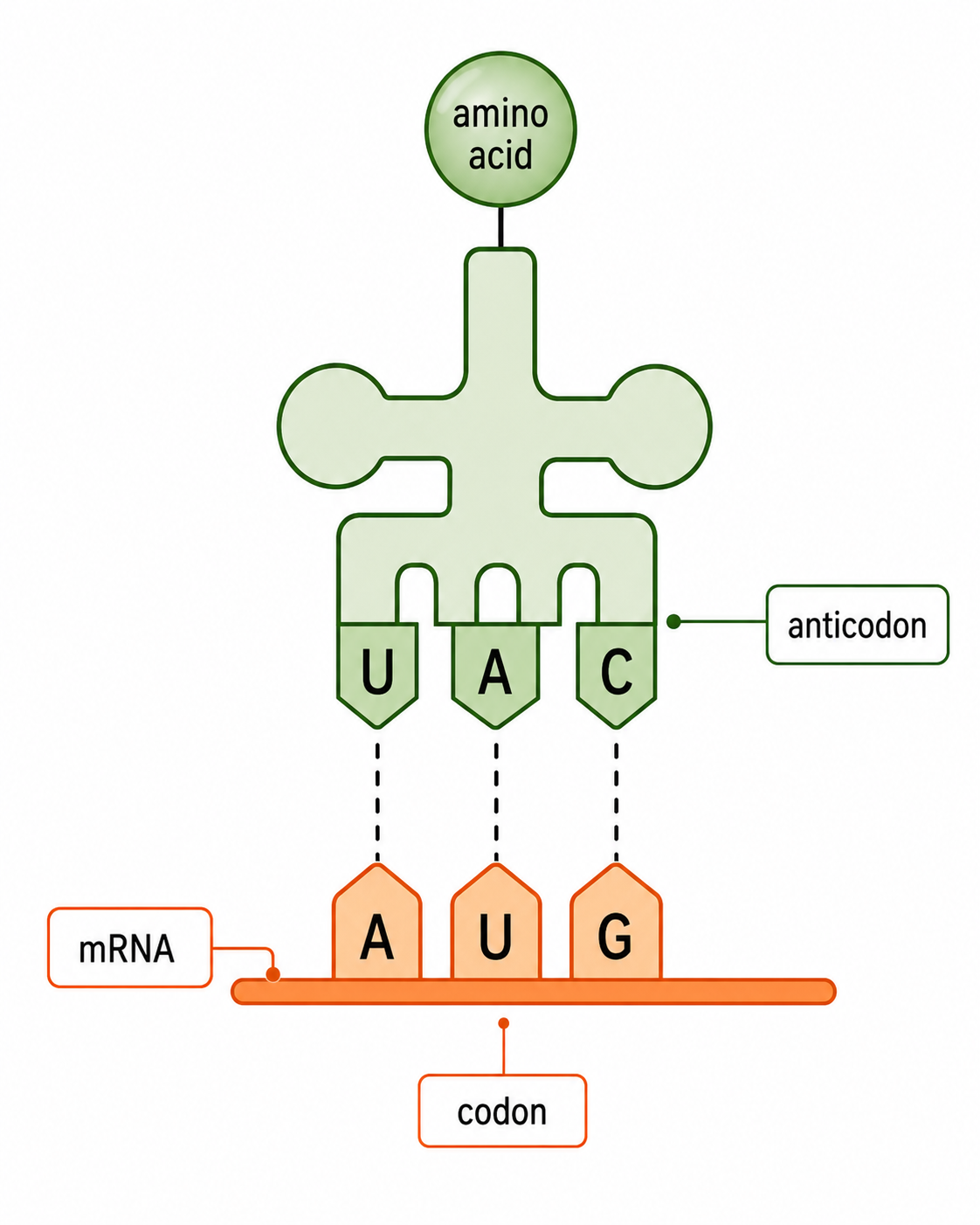
Correct translation depends on two matching steps. A tRNA anticodon pairs with a complementary mRNA codon by hydrogen bonding, and that tRNA is attached to a specific amino acid, so the correct amino acid is added to the growing polypeptide.
Anticodon pairing positions the correct amino acid.
An mRNA codon is AUG. Which anticodon pairs with it?
ChooseAn mRNA codon is AUG. Which anticodon pairs with it?
ChooseDecode Genetic Code Features
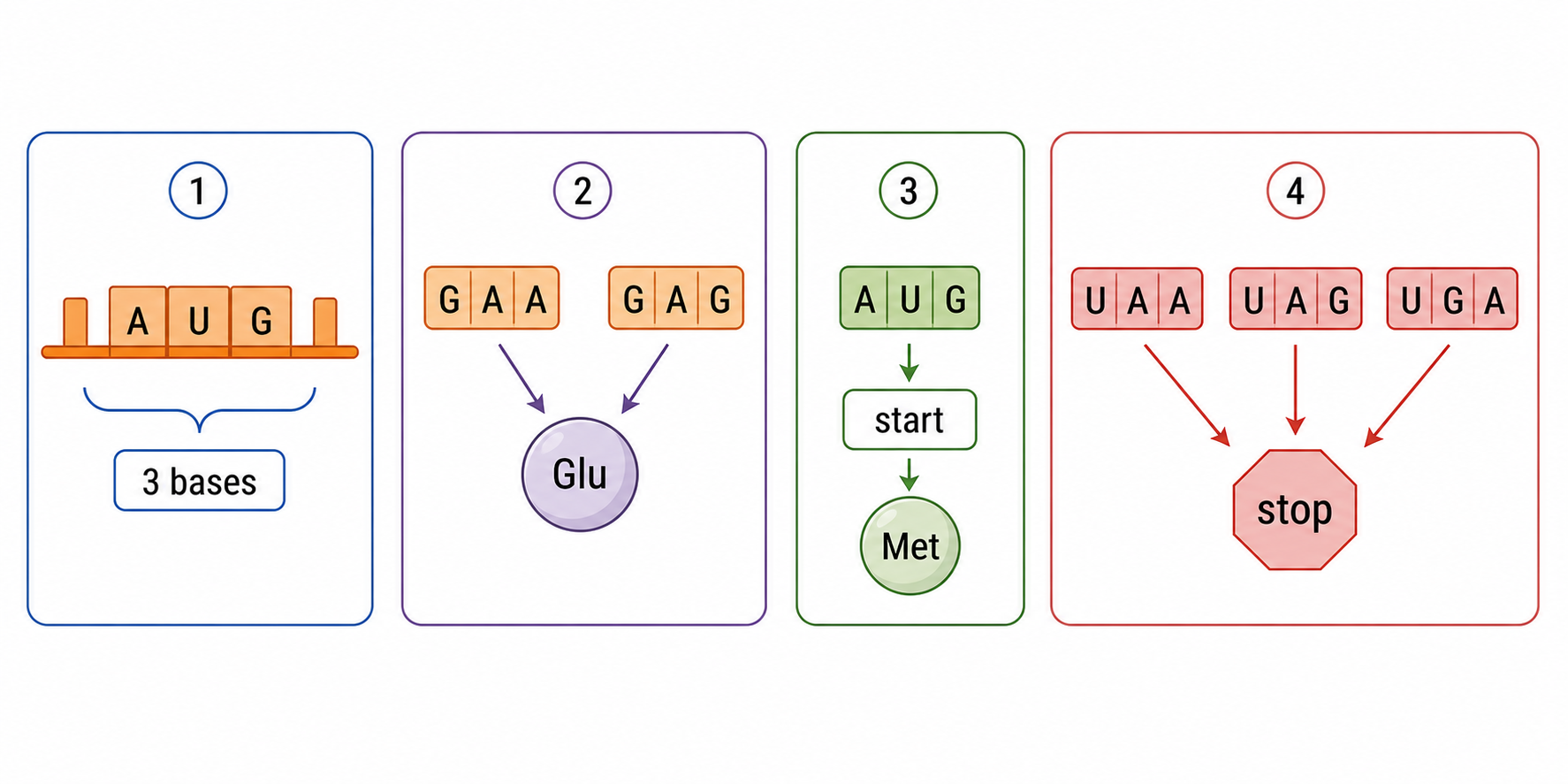
The genetic code describes how mRNA codons are read. It is triplet because three bases make one codon, degenerate because several codons can specify the same amino acid, and almost universal because most organisms use the same code; codons can specify amino acids, a start signal, or stop signals.
The genetic code is a rulebook for mRNA codons.
Match each genetic-code feature.
MatchMatch each genetic-code feature.
ChooseUse the Genetic Code Table
Practice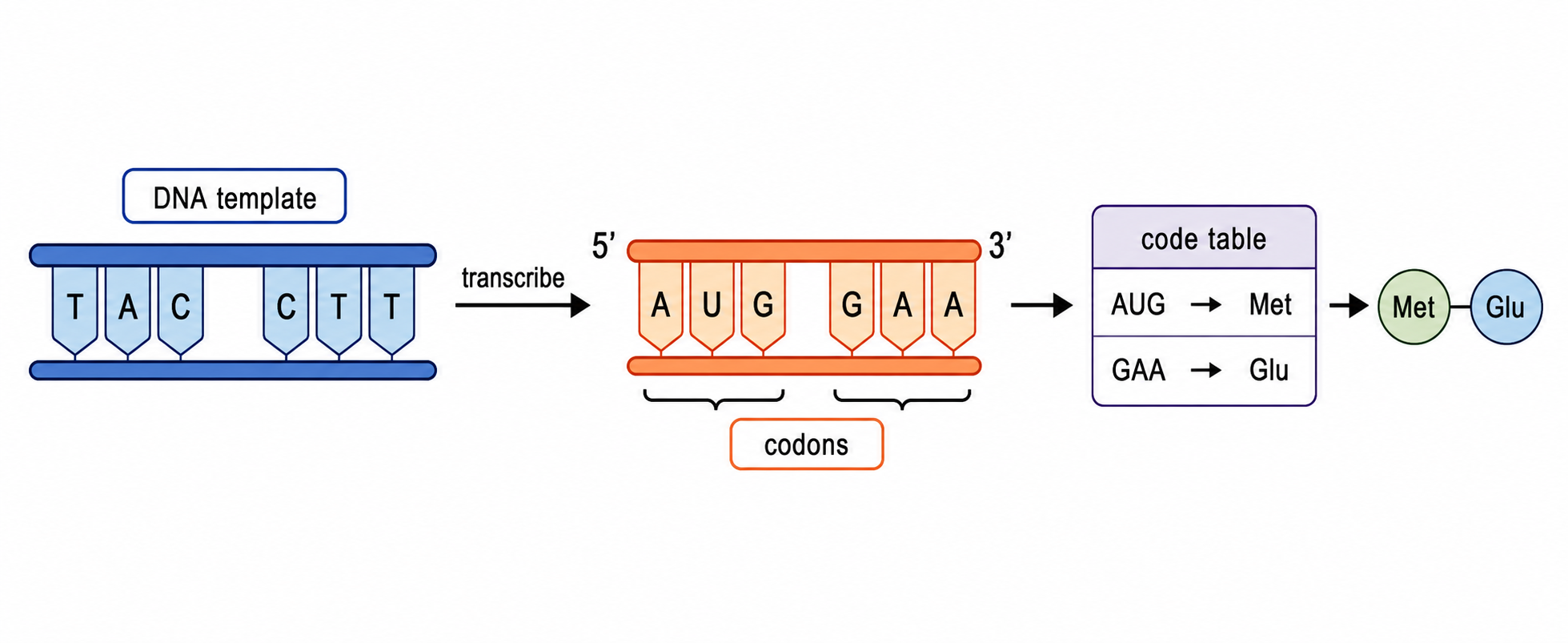
Genetic code tables use mRNA codons, not DNA triplets. If a question gives template DNA, first transcribe it into complementary mRNA, then read the mRNA codons 5' to 3' to find amino acids.
The code table reads mRNA.
Put the code-table workflow in order.
OrderPut the code-table workflow in order.
ChooseElongate the Polypeptide
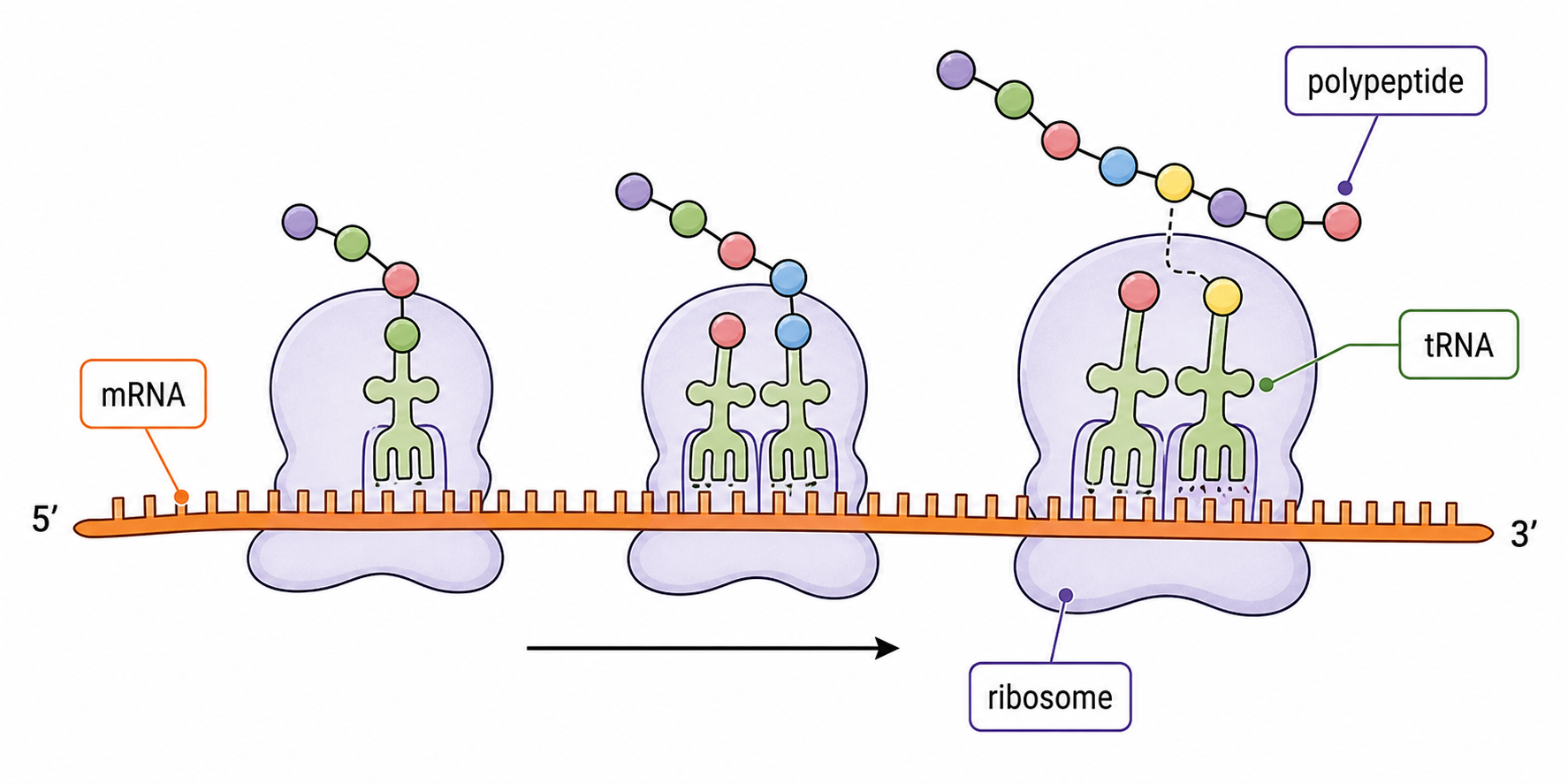
During elongation, the ribosome moves along mRNA one codon at a time from start to stop. tRNAs bring amino acids, peptide bonds join them, and multiple ribosomes can translate the same mRNA at once as a polysome.
Elongation adds amino acids codon by codon.
Put translation elongation in order.
OrderPut translation elongation in order.
ChooseLink Mutation to Protein Change
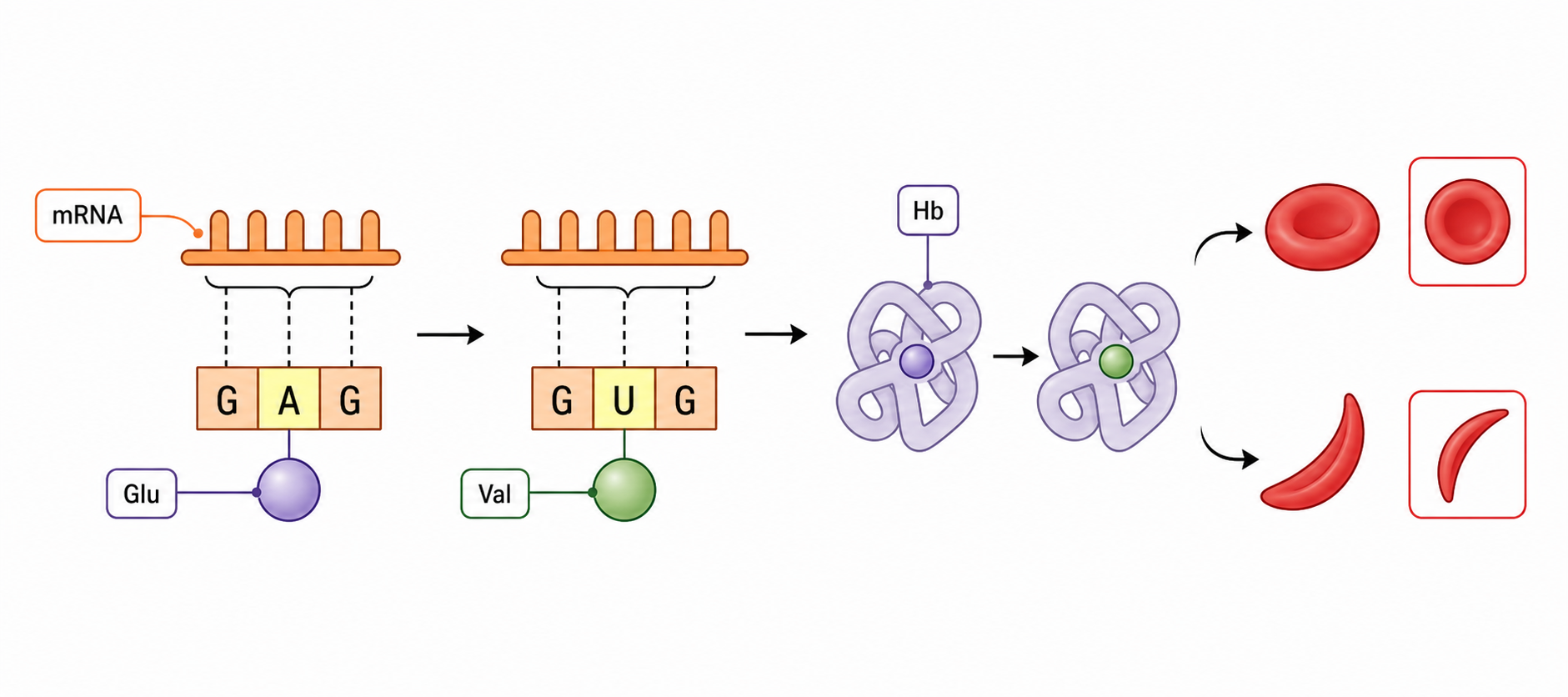
A mutation can change a DNA base sequence, which can change an mRNA codon and therefore the amino acid sequence. A changed primary structure may alter protein folding and function; sickle-cell haemoglobin is the key example of an amino acid change affecting haemoglobin structure.
Protein effects depend on sequence and folding.
Put the mutation effect chain in order.
OrderPut the mutation effect chain in order.
ChooseTransfer: Explain Core Protein Synthesis
Exam PracticeTranscription makes mRNA as a mobile copy of gene information; RNA polymerase synthesizes RNA complementary to the DNA template strand. Free RNA nucleotides align by complementary base pairing and hydrogen bonding; DNA adenine pairs with RNA uracil and cytosine pairs with guanine. DNA template strands are transcribed without altering the base sequence; the sugar-phosphate backbone and base pairing preserve genetic information. Transcription is the first stage of gene expression; cells regulate which genes are transcribed according to tissue, stage, and signals. Translation decodes mRNA at ribosomes to synthesize polypeptides; mRNA codon order determines amino acid sequence. mRNA provides codons, tRNA carries activated amino acids with anticodons, and ribosomes hold mRNA and tRNAs so peptide bonds can form. tRNA anticodons pair with complementary mRNA codons by hydrogen bonding; specific tRNA-amino acid attachment helps ensure correct amino acid addition. The genetic code is triplet, degenerate, and almost universal; codons specify amino acids, a start signal, or stop signals. Genetic code tables use mRNA codons, not DNA triplets; convert template DNA to mRNA first, then read codons 5' to 3'. Ribosomes move along mRNA one codon at a time from start to stop; peptide bonds join amino acids and multiple ribosomes can form a polysome. Mutations can change codons and therefore amino acid sequence; changed primary structure may alter folding and function, such as sickle-cell haemoglobin.
Put the answer frame in order.
OrderUse this for SL/core questions about transcription, RNA base pairing, gene expression, translation, tRNA/ribosome roles, genetic code table use, elongation, and mutation effects.
Use this for SL/core questions about transcription, RNA base pairing, gene expression, translation, tRNA/ribosome roles, genetic code table use, elongation, and mutation effects.
Common loss: reading DNA triplets directly in a code table, swapping codon and anticodon, or naming mutation without linking codon, amino acid, primary structure, folding, and function.