
Open the Ecosystem Boundary
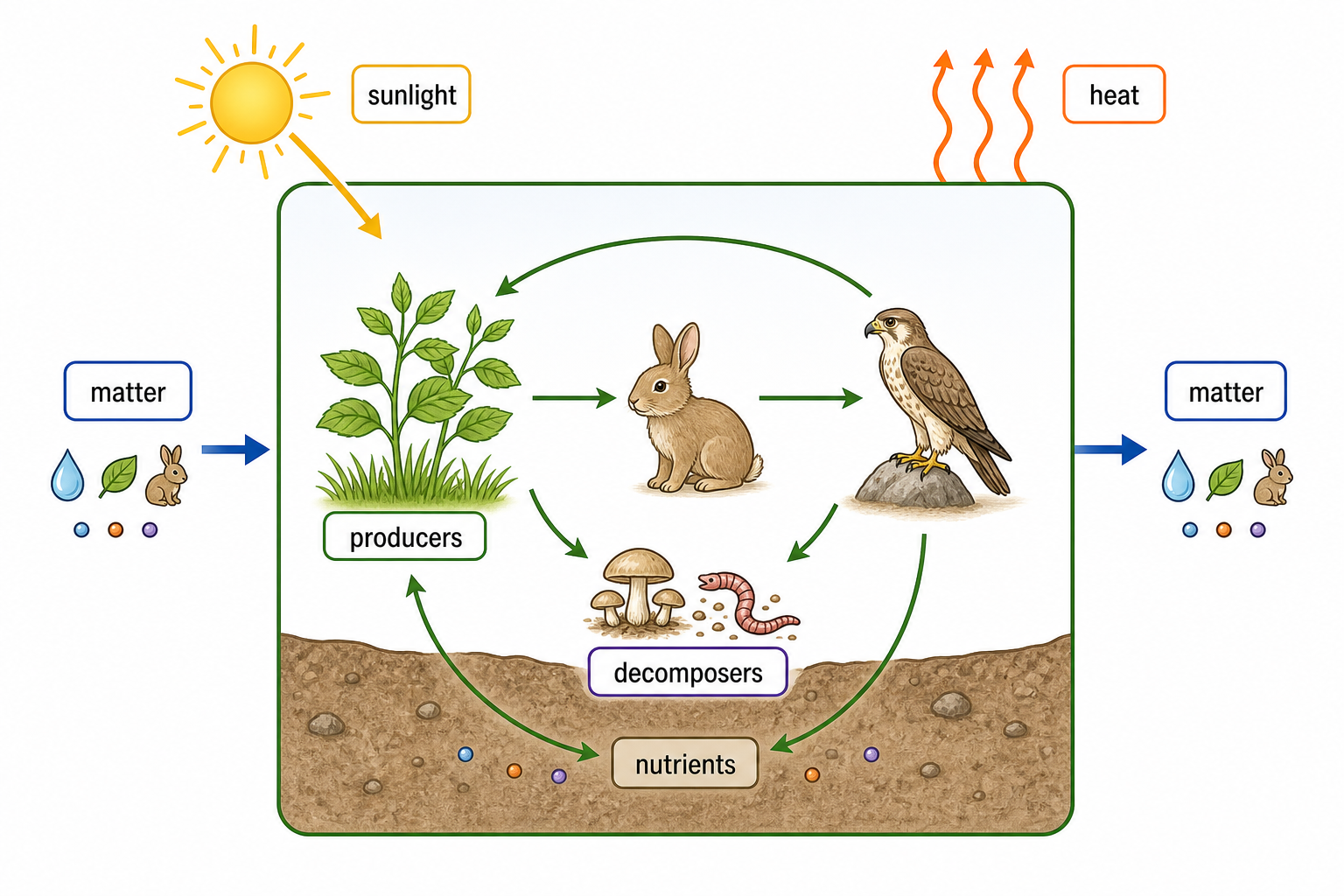
An ecosystem is an open system because energy and matter cross its boundary. Energy usually enters as sunlight and leaves as heat, while matter such as carbon, water, and mineral nutrients can enter, leave, or recycle through organisms and decomposers.
Open ecosystems exchange energy and matter with surroundings.
Match each movement to energy or matter.
MatchMatch each movement to energy or matter.
ChooseTrace Sunlight Into Food Webs
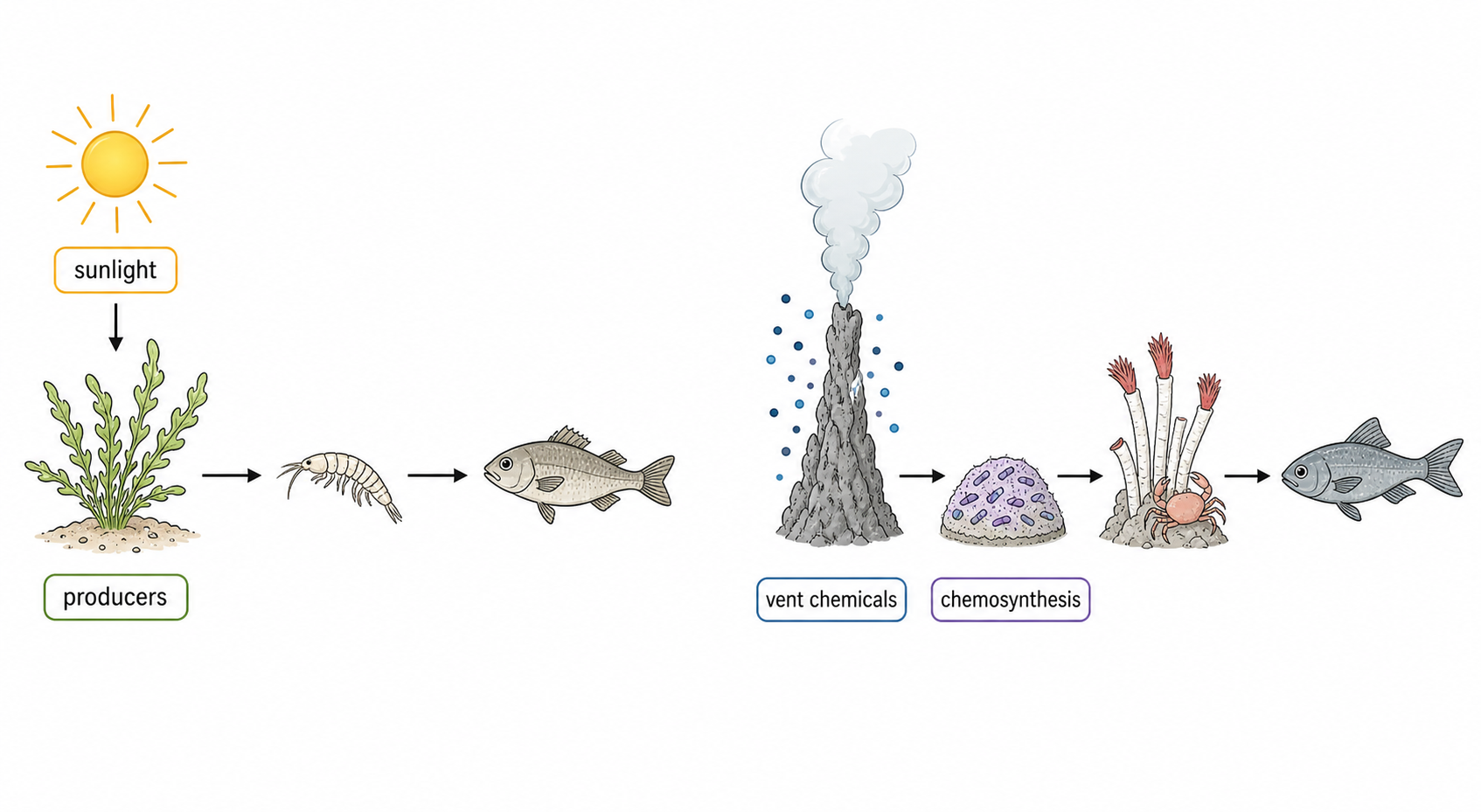
Sunlight is the principal energy source for most ecosystems because photoautotrophs capture light and convert it into chemical energy in biomass. The exceptions are important: caves and deep-ocean vents may depend on chemosynthesis rather than sunlight.
Most ecosystems begin with sunlight; some begin with chemical energy.
Sort each ecosystem by main energy source.
SortSort each ecosystem by main energy source.
ChooseFollow Chemical Energy
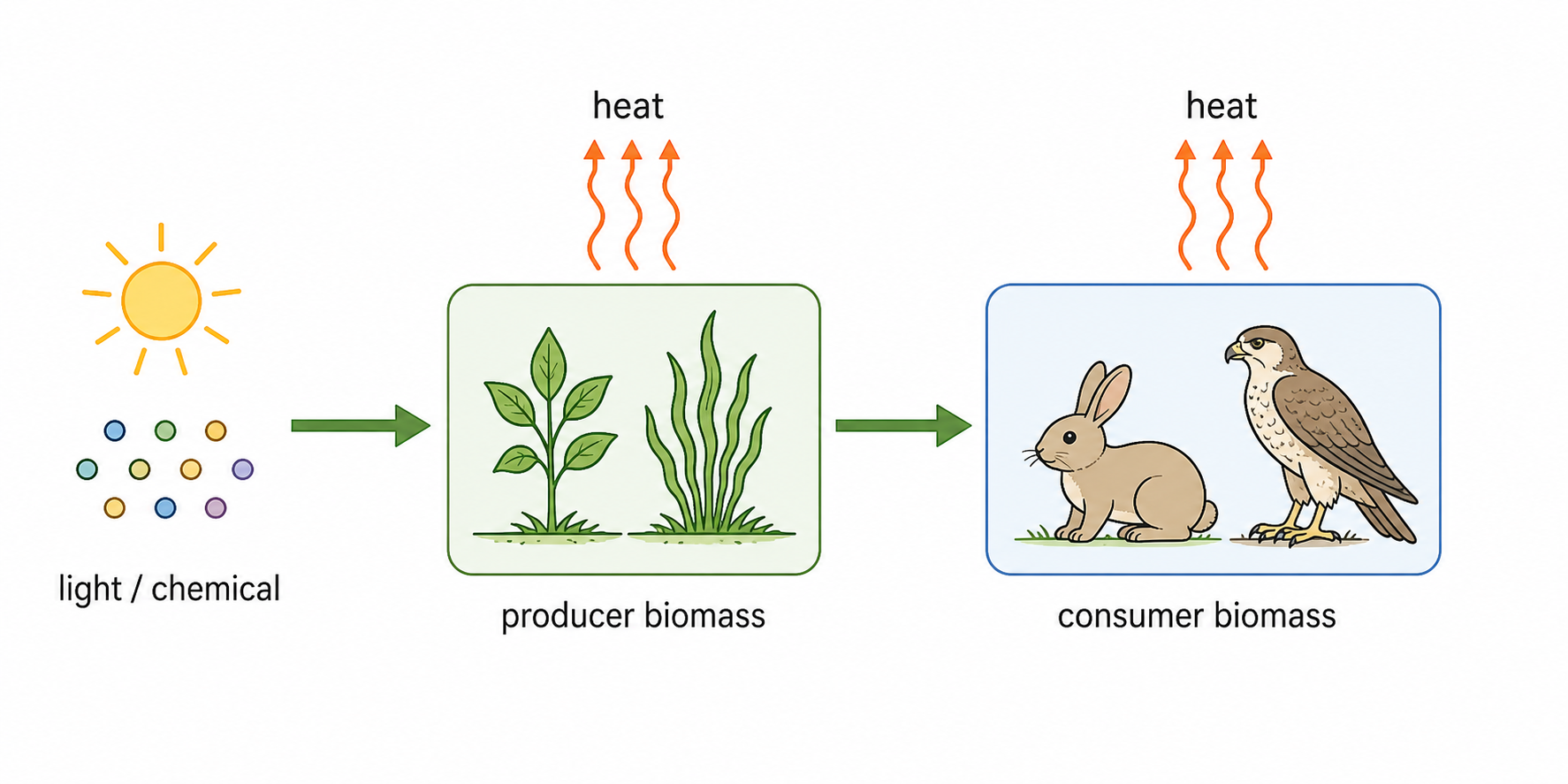
Chemical energy flows when producers build carbon compounds and consumers obtain those compounds by feeding. The transfer is not a closed loop: energy enters as light or chemical energy, moves through biomass, and eventually leaves ecosystems as heat.
Energy flow is one-way through ecosystems.
Put the energy transfer story in order.
OrderPut the energy transfer story in order.
ChooseRead a Food Chain and Web
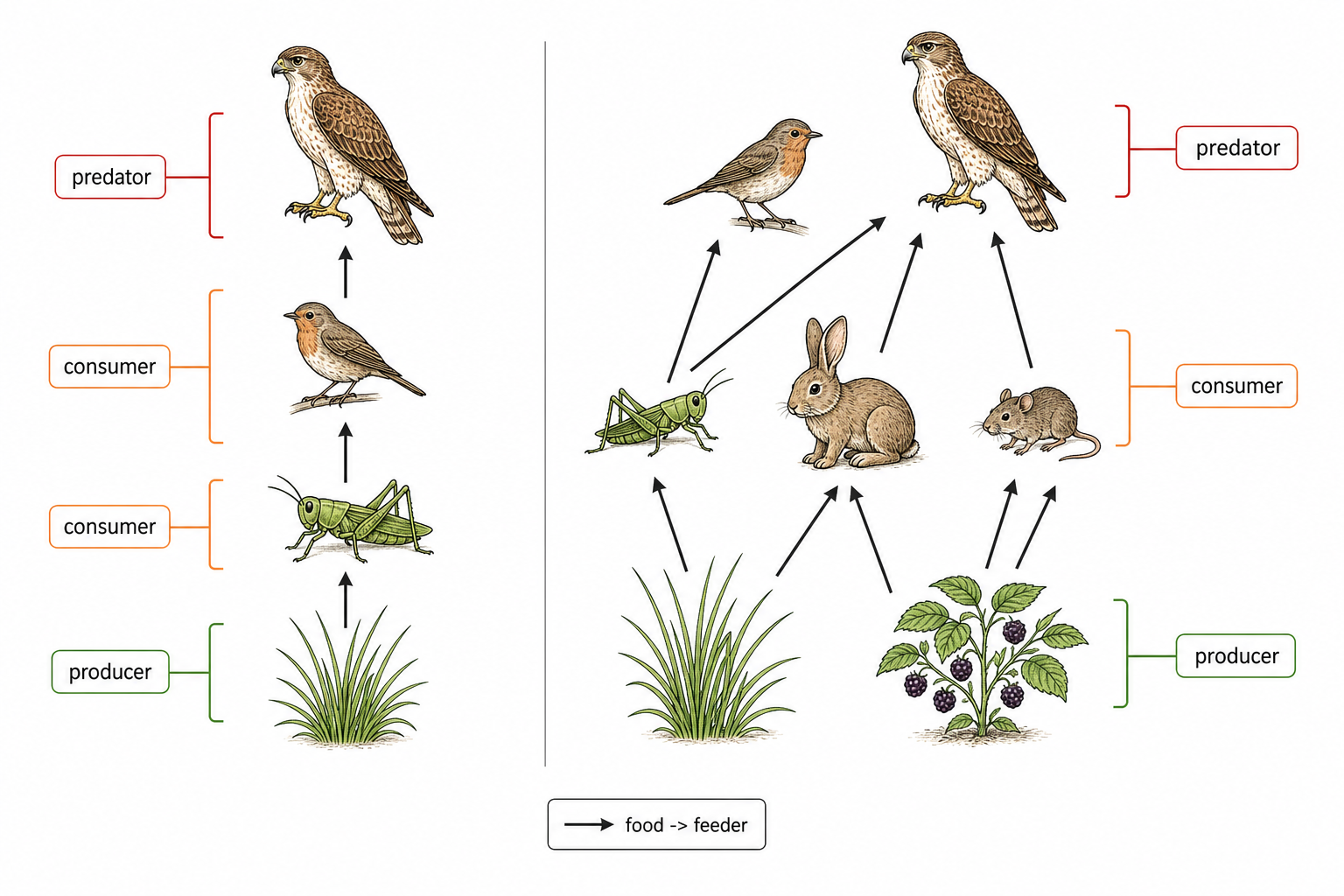
Food chains and food webs model feeding relationships in communities. The arrow direction is the exam trap: arrows point from the organism being eaten to the organism that eats it, because they show the direction of energy and biomass transfer.
Arrows show transfer, not attack direction.
Label the arrow direction in the food web.
LabelLabel the arrow direction in the food web.
ChooseFeed the Decomposer Pathway
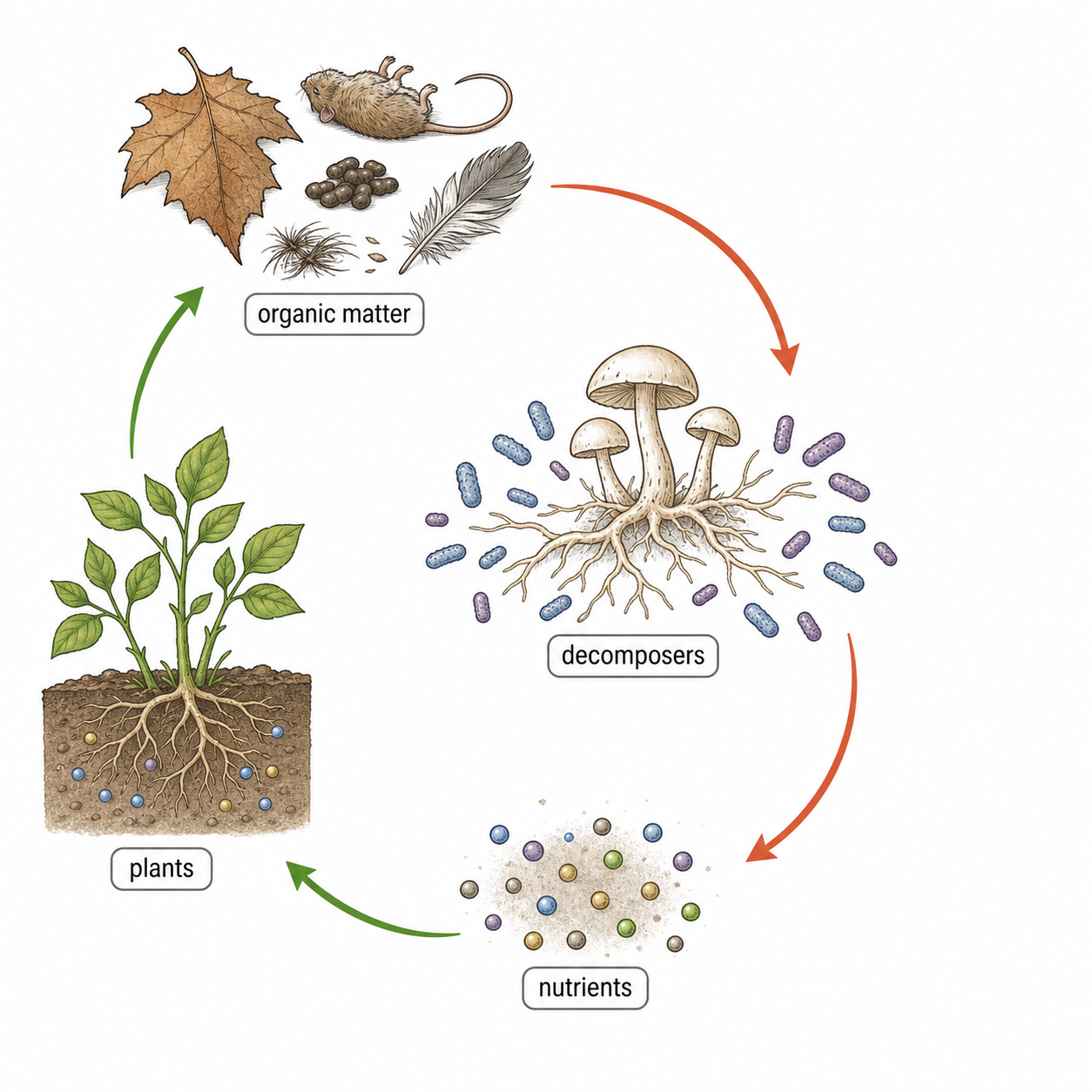
Decomposers are not an afterthought; they are the route by which dead material and waste stay useful in ecosystems. They obtain energy from carbon compounds in detritus such as dead organisms, faeces, fallen leaves, and shed tissues, while decomposition returns inorganic nutrients for producers.
Decomposers connect detritus to nutrient recycling.
Match each material to the decomposer pathway.
MatchMatch each material to the decomposer pathway.
ChooseDefine Autotrophs
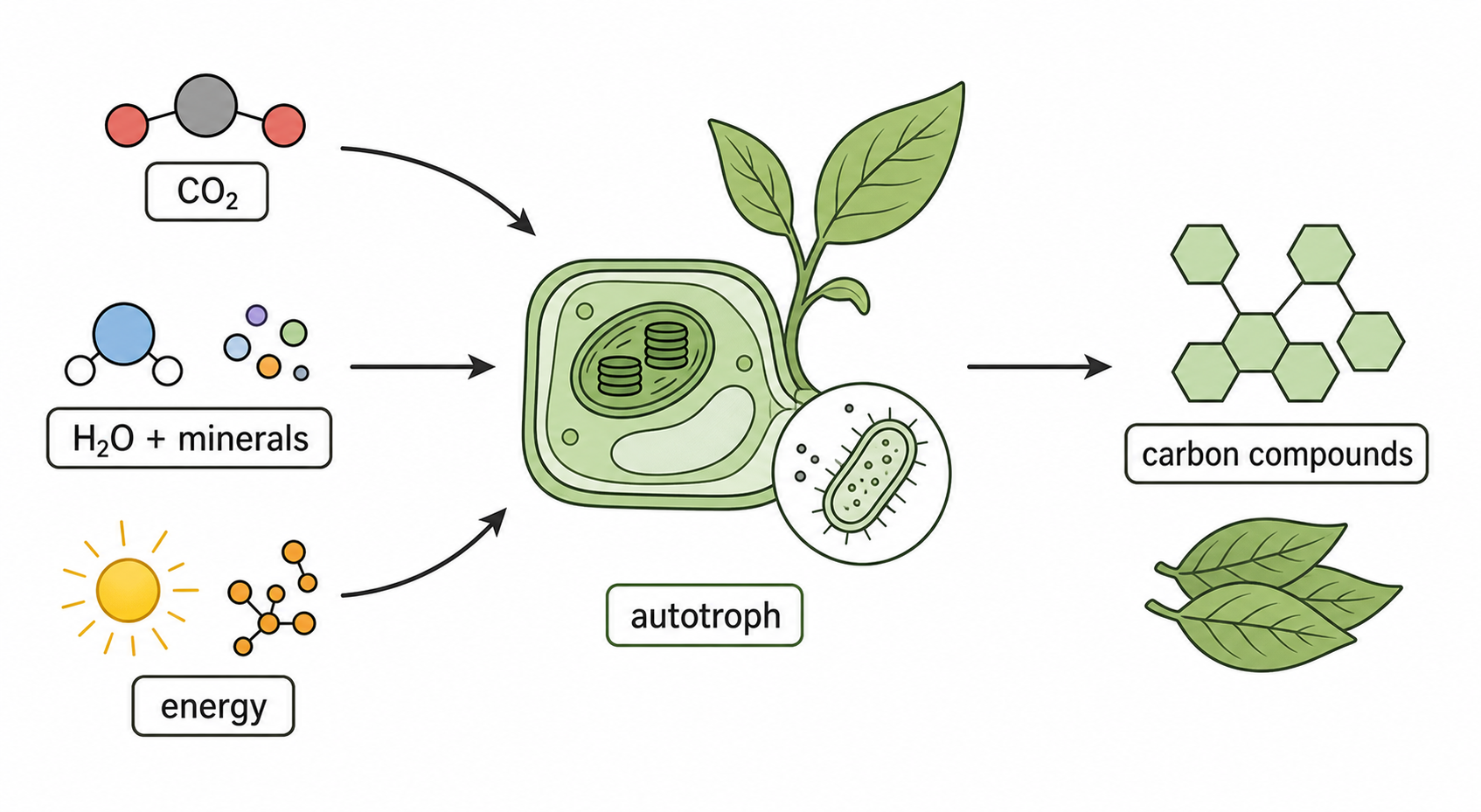
Autotrophs are self-feeders because they synthesize carbon compounds from simple inorganic substances. They use an external energy source, either light or chemical energy, to fix carbon and build biomass that can support the rest of the food web.
Autotrophs build the carbon compounds food webs depend on.
Which sentence best defines an autotroph?
ChooseWhich sentence best defines an autotroph?
ChooseCompare Energy Sources
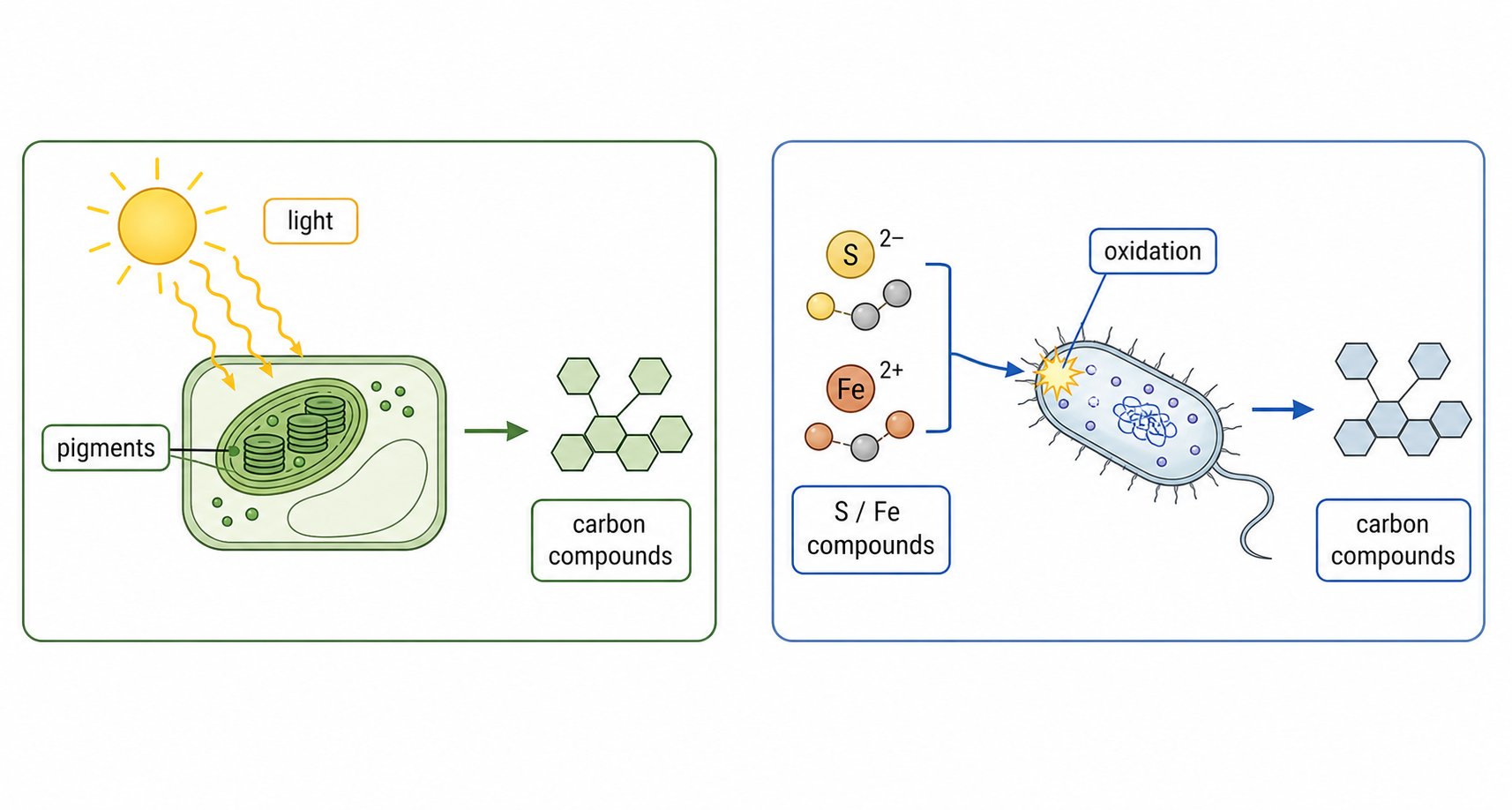
Photoautotrophs and chemoautotrophs are both autotrophs because they build carbon compounds from inorganic carbon. The difference is energy source: photoautotrophs use light captured by photosynthetic pigments, while chemoautotrophs use oxidation of inorganic substances such as iron or sulfur compounds.
Autotroph type depends on energy source.
Sort the energy-source statements.
SortSort the energy-source statements.
ChooseDefine Heterotrophs
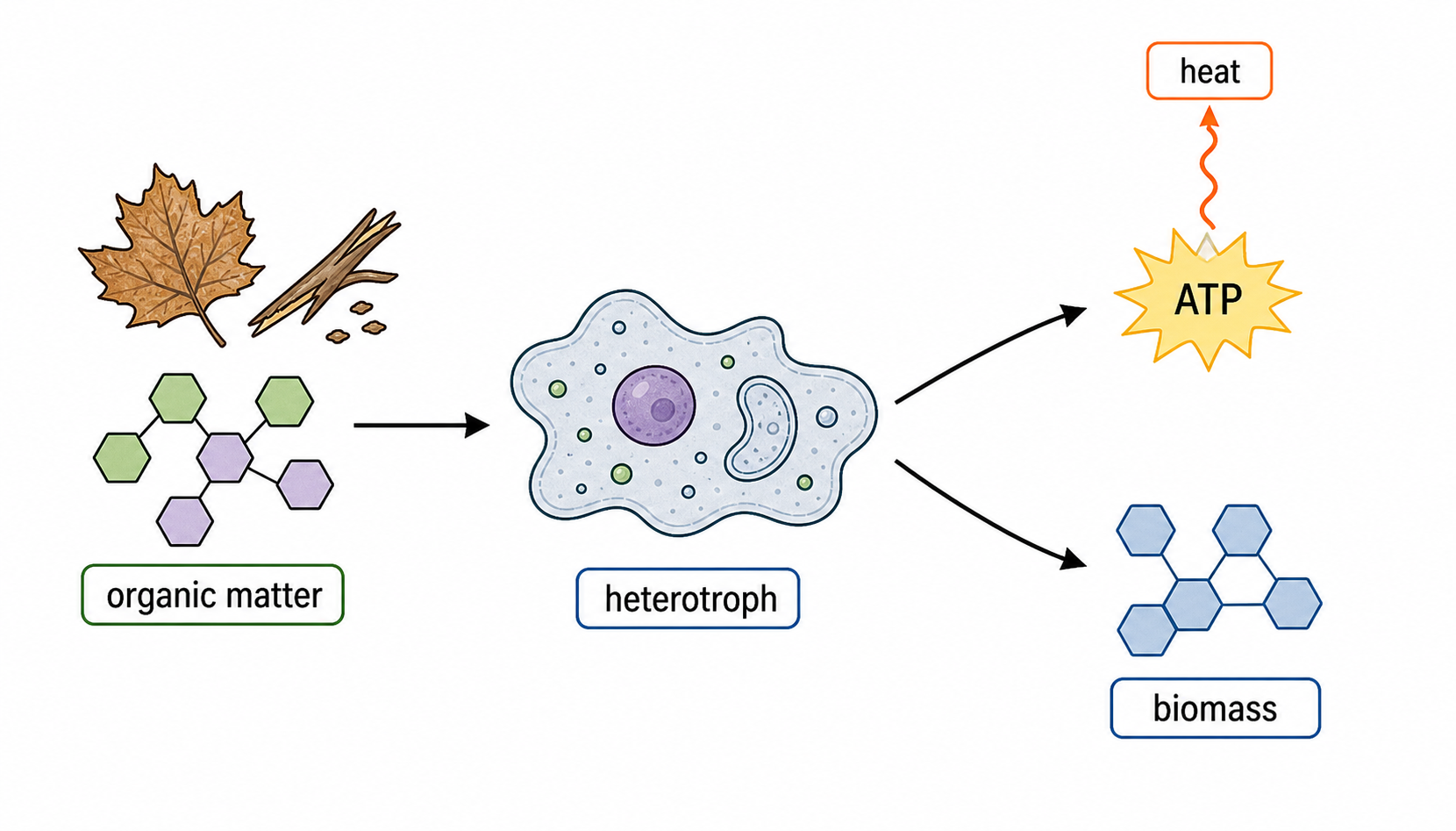
Heterotrophs obtain carbon compounds from other organisms or organic matter instead of fixing carbon from simple inorganic substances. They use these compounds for cell respiration and to synthesize their own biomass.
Food supplies carbon compounds for energy and growth.
Match each organism type to its carbon source.
MatchMatch each organism type to its carbon source.
ChooseExplain Energy Release
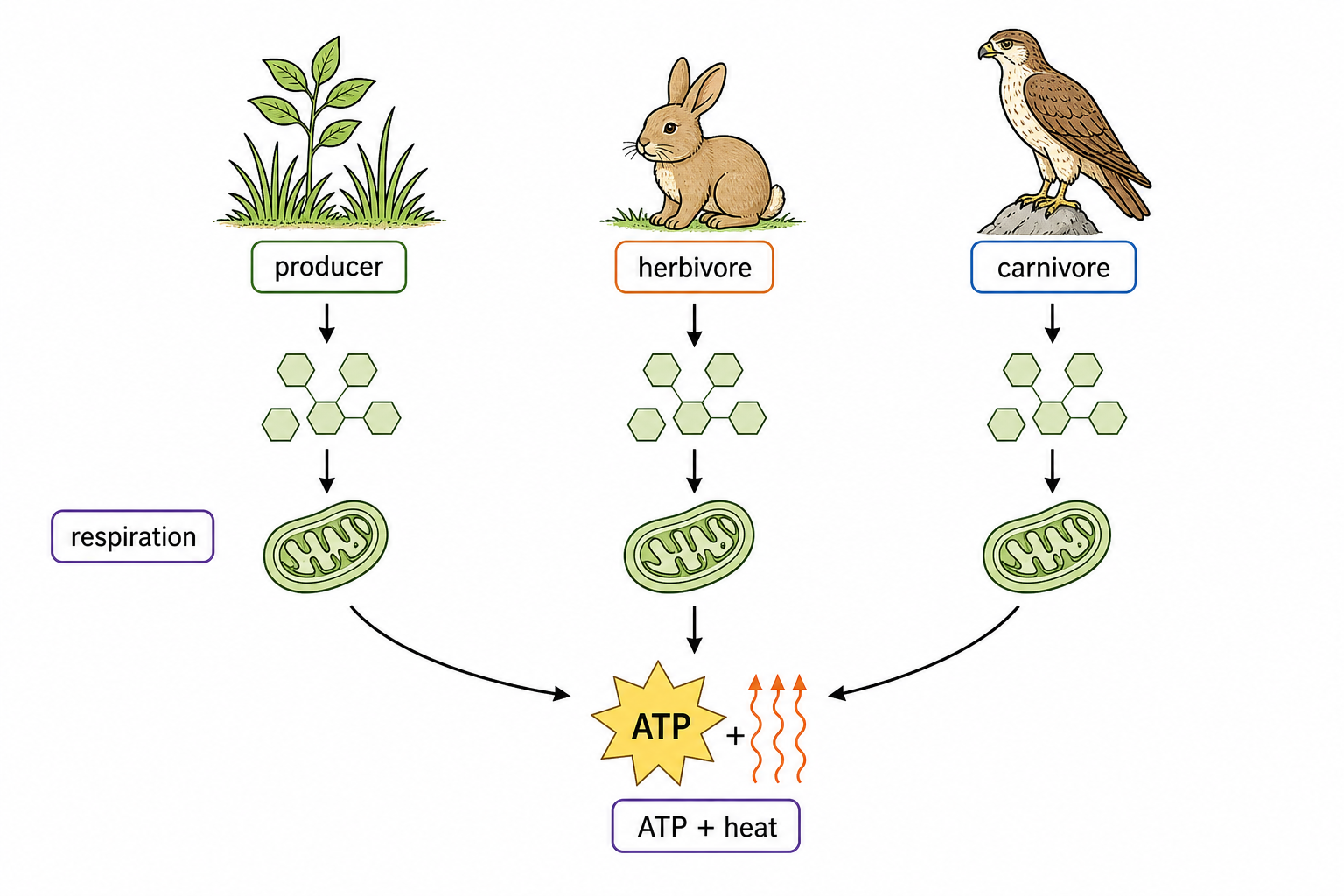
Both autotrophs and heterotrophs release usable energy by cell respiration. In respiration, carbon compounds are oxidized, energy is transferred to ATP for cell work, and some energy is released as heat at every trophic level.
All trophic levels respire and lose heat.
Put the energy-release mechanism in order.
OrderPut the energy-release mechanism in order.
ChooseSort Trophic Levels
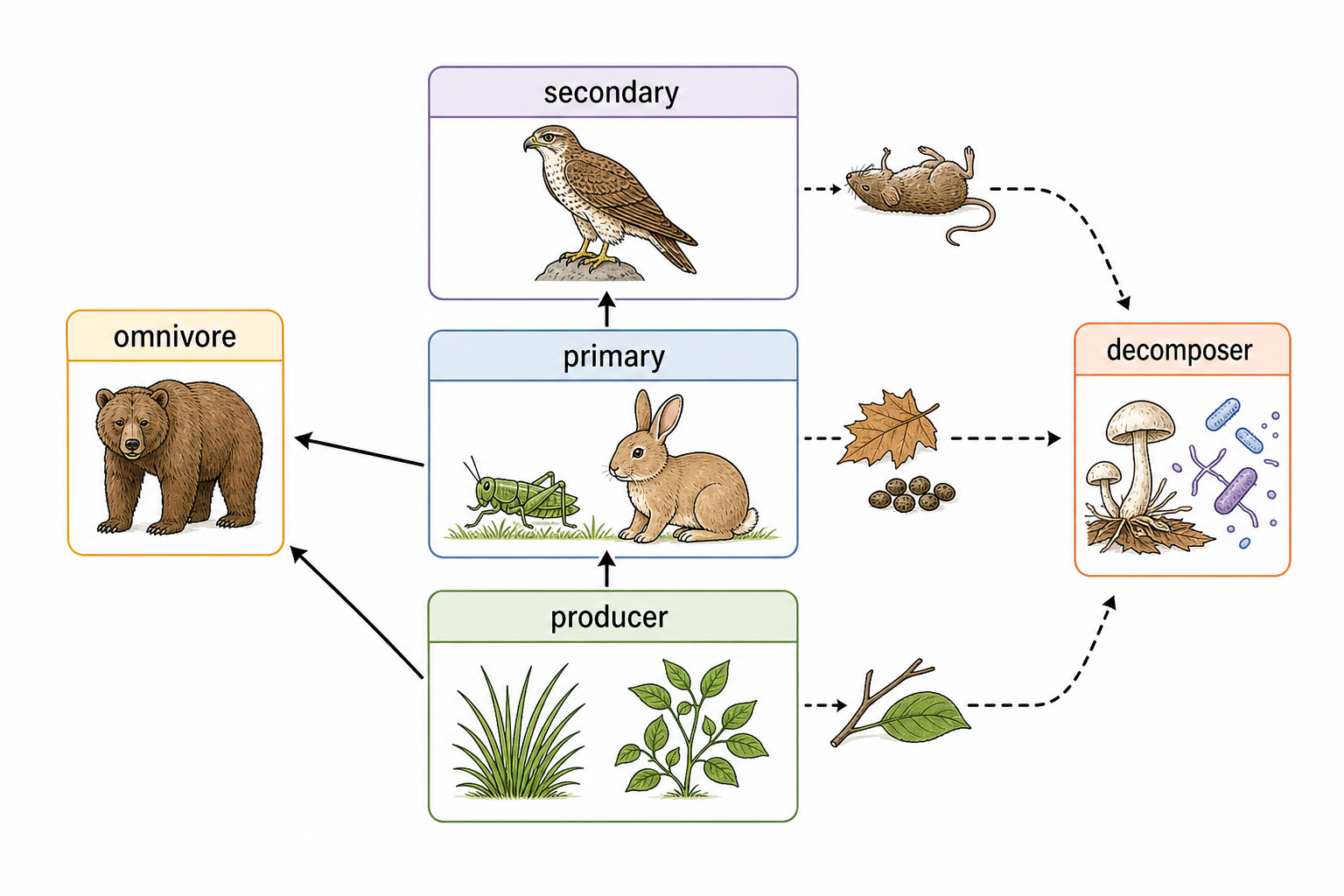
Trophic levels classify organisms by feeding position: producers make biomass, primary consumers feed on producers, and higher consumers feed on other consumers. Omnivores and decomposers can feed across more than one trophic level, so classify them by what they are eating in the specific food web.
Classify trophic level by feeding position.
Sort each feeding role.
SortSort each feeding role.
ChooseRead an Energy Pyramid
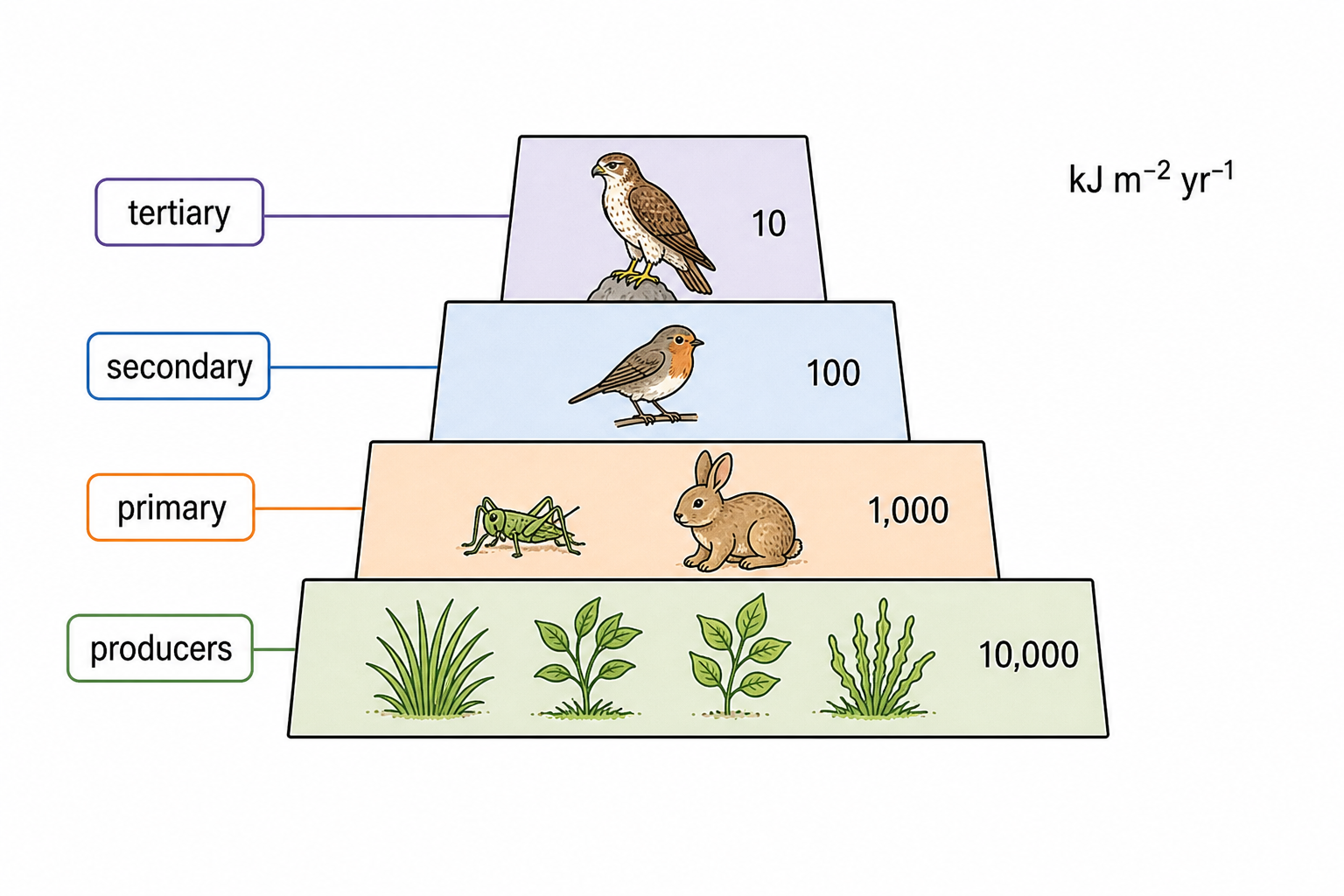
An energy pyramid represents energy flow per unit area per unit time, often shown as kJ m-2 yr-1. Each bar shows the energy available to one trophic level, so the pyramid narrows because less energy is available after each transfer.
Energy pyramids show rate of energy flow.
Predict what happens to bar width higher up an energy pyramid.
PredictPredict what happens to bar width higher up an energy pyramid.
ChooseExplain Transfer Losses
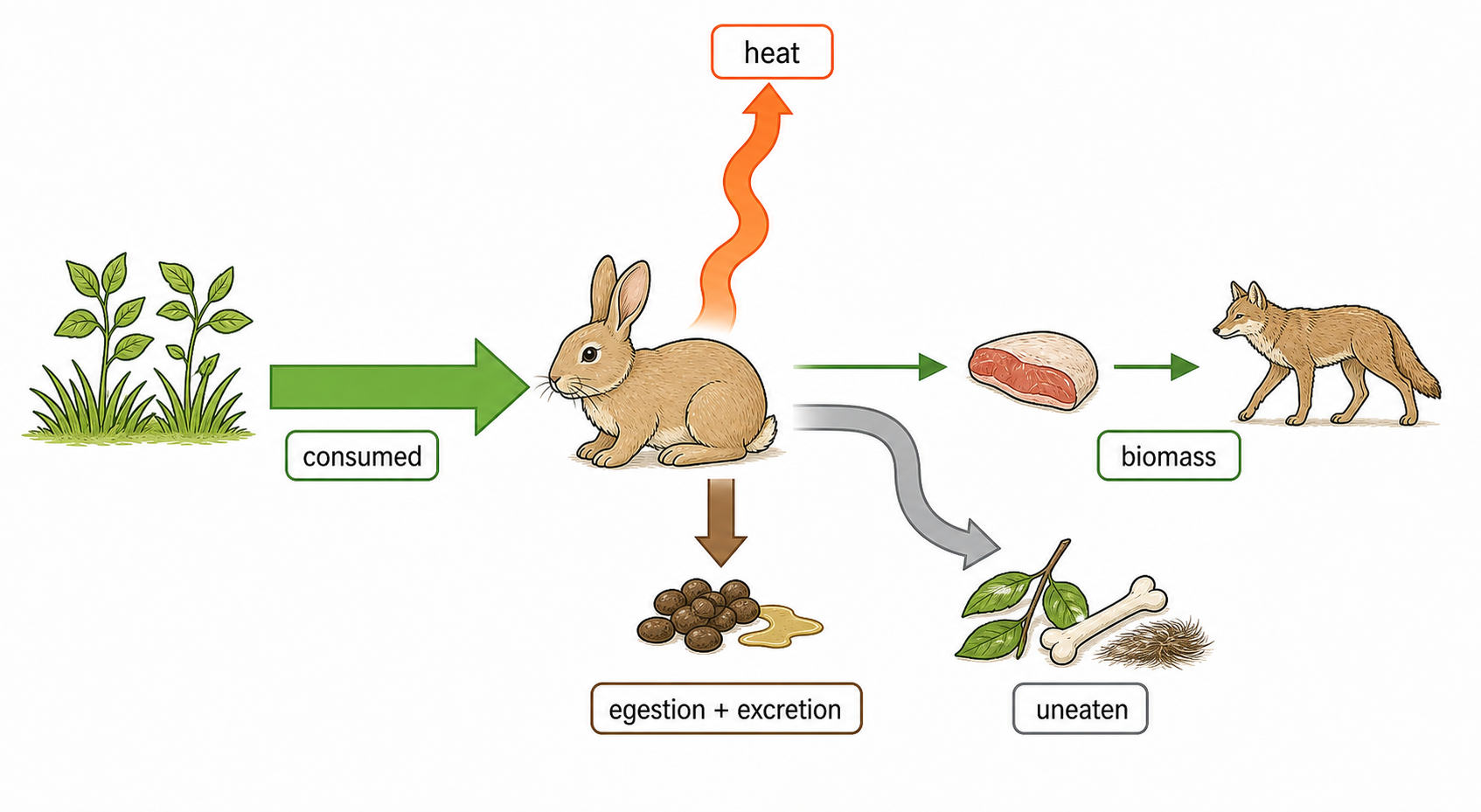
Energy availability decreases at each transfer because not all biomass or chemical energy becomes the next trophic level. Losses occur through respiration and heat, egestion, excretion, and uneaten biomass, so only part of the energy is transferred onward.
Only some energy becomes the next trophic level.
Sort each route in a trophic transfer.
SortSort each route in a trophic transfer.
ChooseLocate Heat Loss
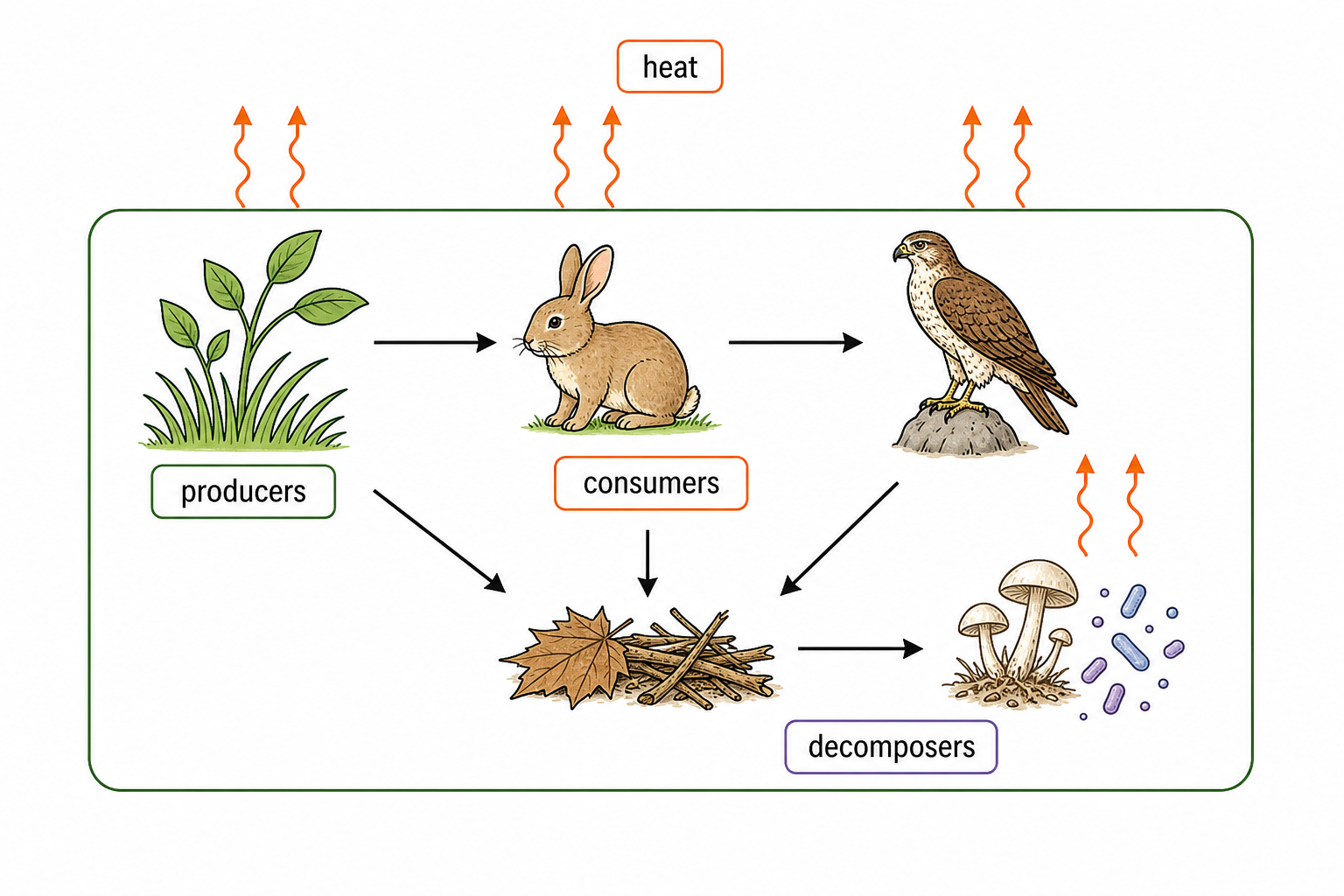
Cell respiration converts some chemical energy to heat in all trophic levels. Because heat dissipates to the environment, ecosystems cannot recycle energy in the same way they recycle chemical elements.
Respiration heat leaves the system.
Which statement explains why energy is not recycled?
ChooseWhich statement explains why energy is not recycled?
ChooseLimit Trophic Levels
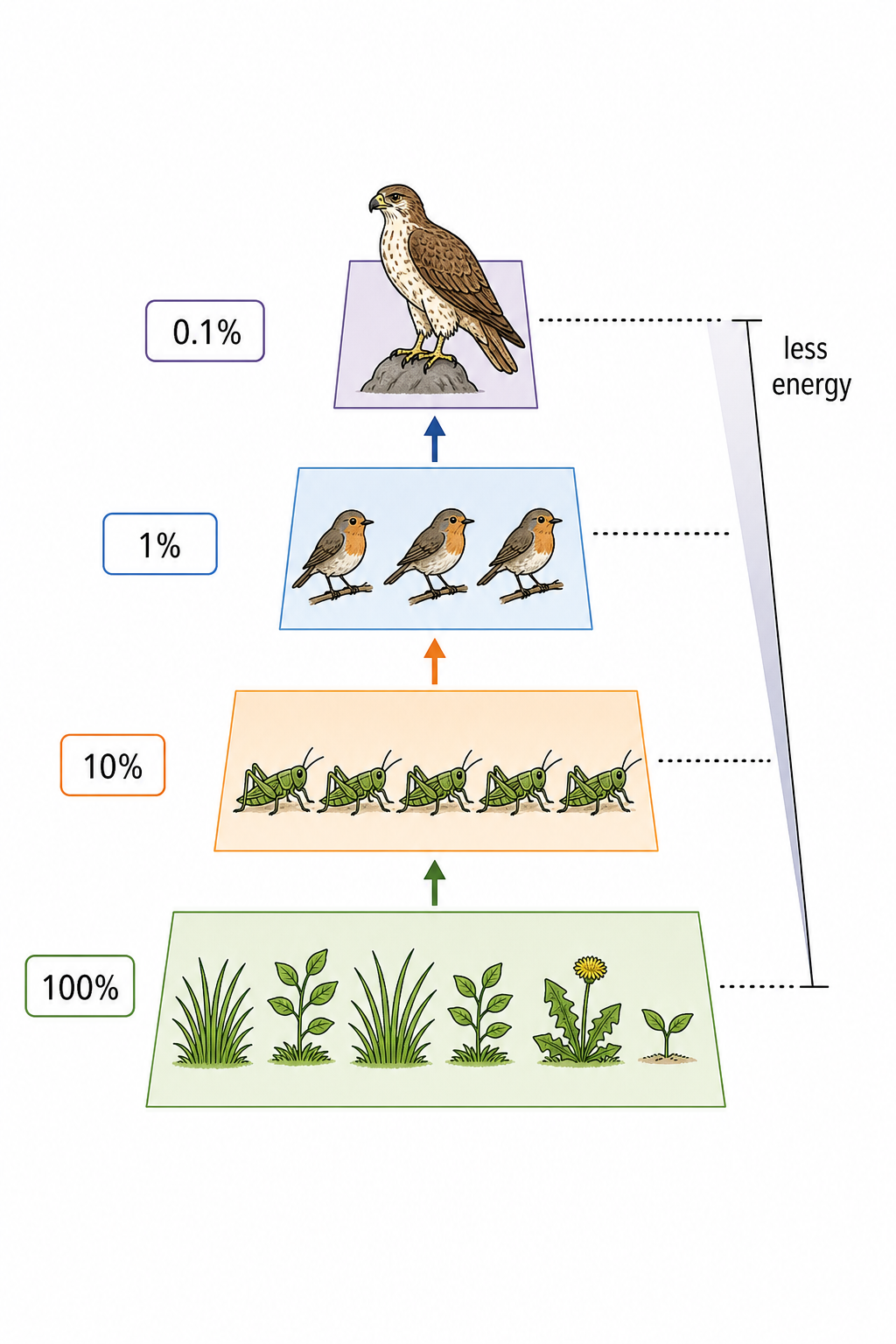
Large energy losses at each trophic transfer restrict food chains to only a few trophic levels. Because upper levels receive less energy to build biomass, they usually support less biomass and fewer individuals.
Energy availability limits trophic levels.
Predict the effect of very low transfer efficiency.
PredictPredict the effect of very low transfer efficiency.
ChooseDefine Primary Production
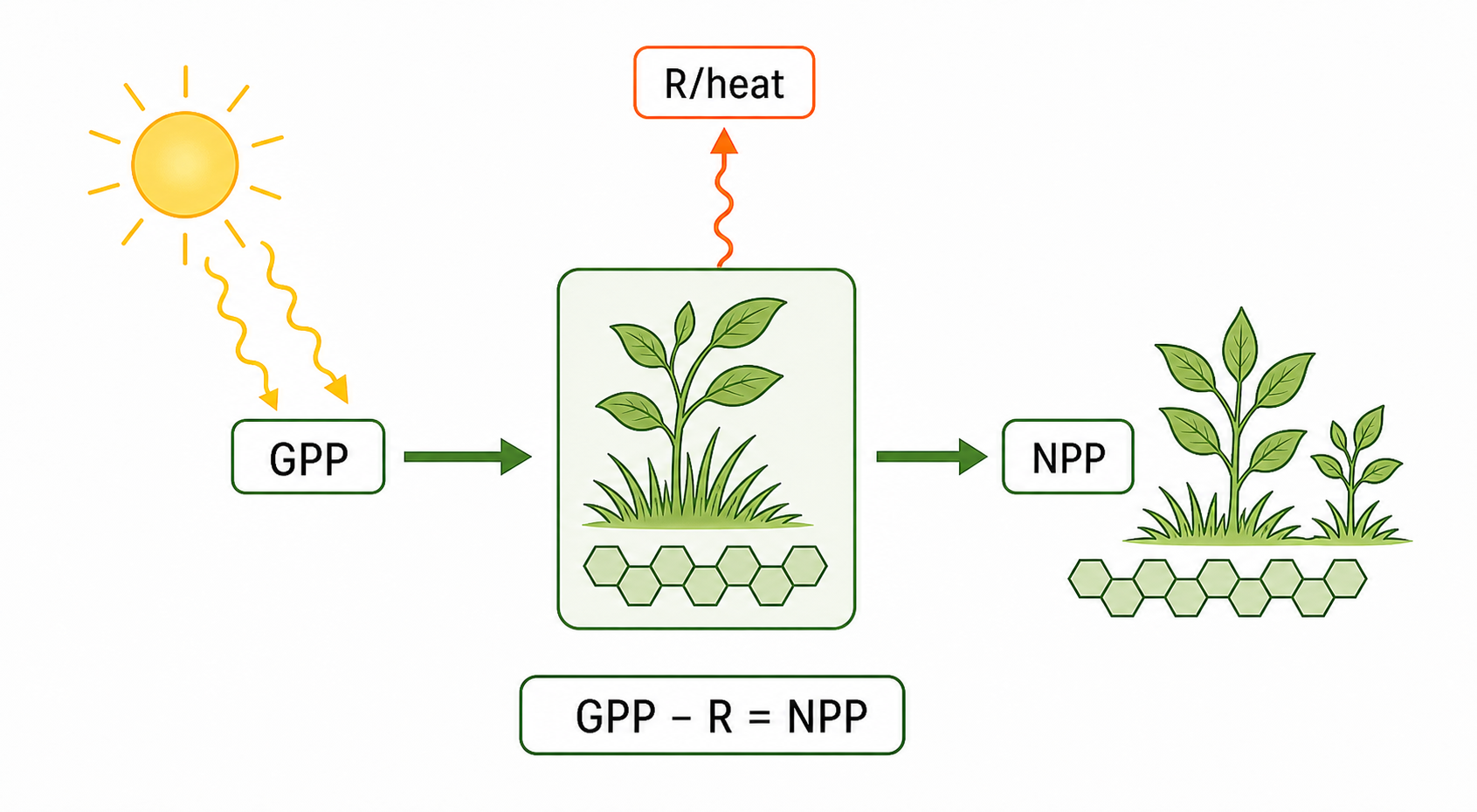
Primary production is the accumulation of carbon compounds in autotroph biomass. Gross primary production is the total carbon fixed by producers; net primary production is what remains after producer respiration, so NPP = GPP - respiration.
Net primary production is producer gain after respiration.
A producer fixes 1000 kJ m-2 yr-1 and uses 400 in respiration. What is NPP?
ChooseA producer fixes 1000 kJ m-2 yr-1 and uses 400 in respiration. What is NPP?
ChooseDefine Secondary Production
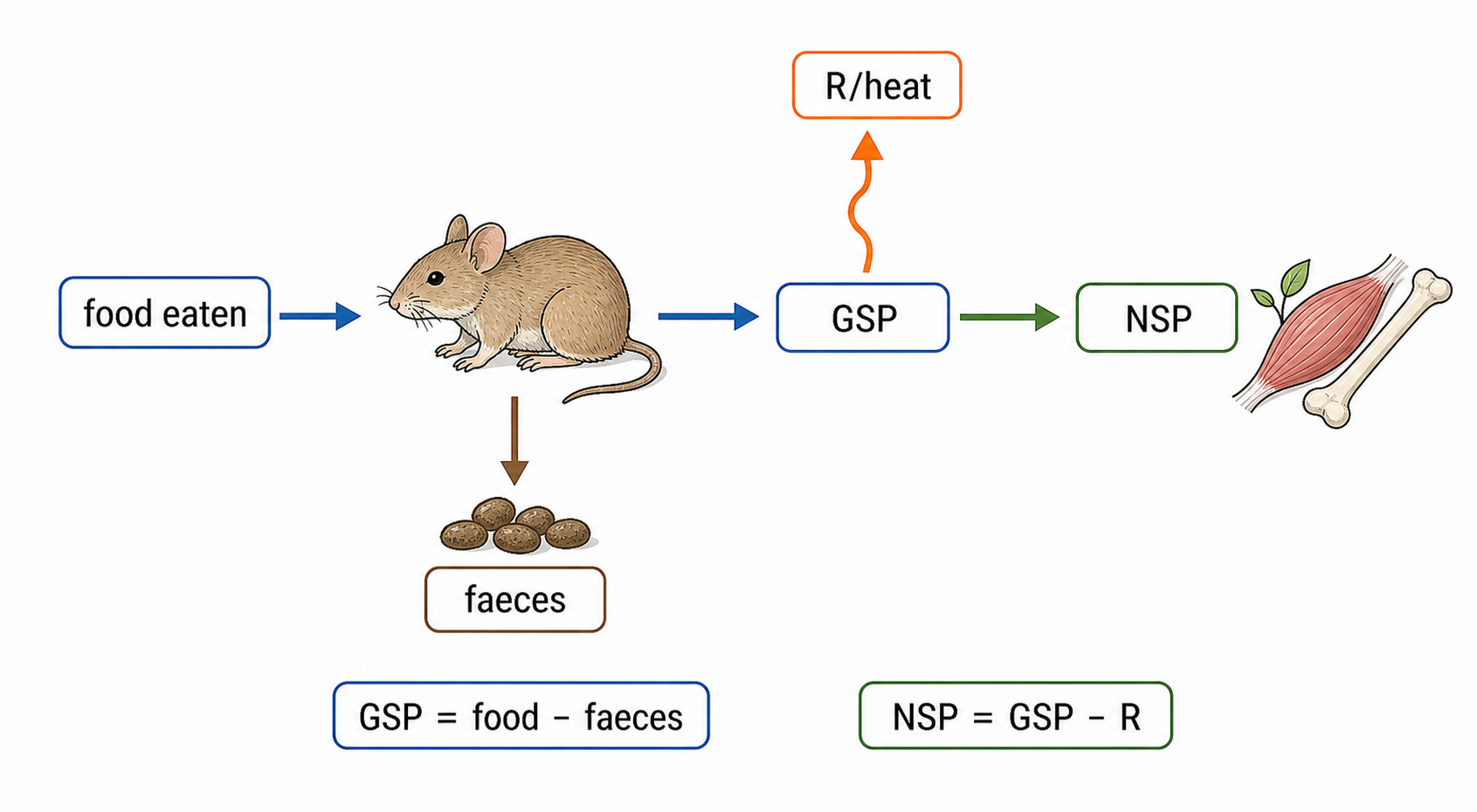
Secondary production is biomass accumulation by heterotrophs. It depends on how much food is taken in, how much is assimilated rather than egested, how much energy is lost in respiration, and how much remains to convert into new biomass.
Secondary production is the new heterotroph biomass.
Put the secondary production pathway in order.
OrderPut the secondary production pathway in order.
ChooseMap the Carbon Cycle
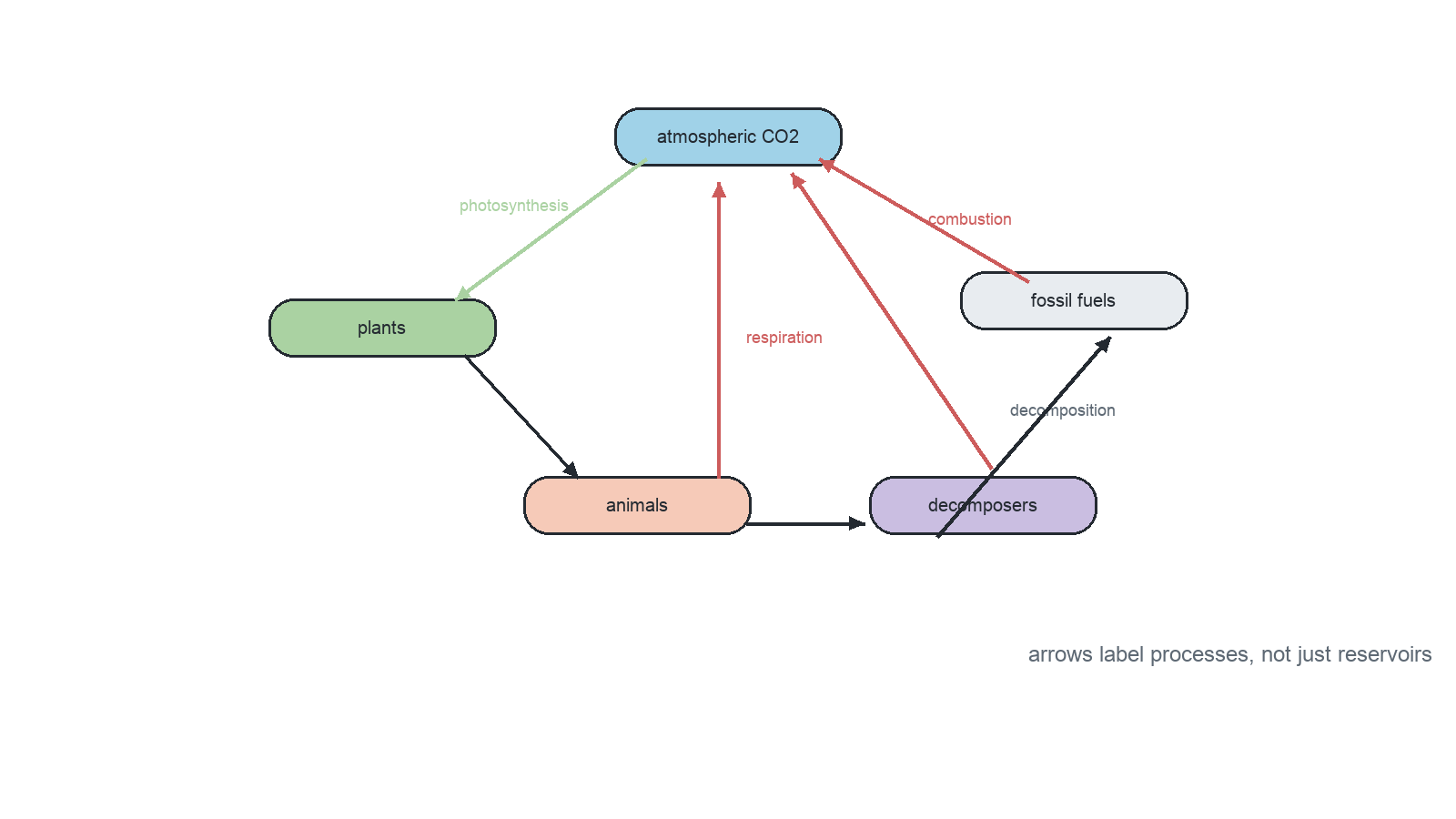
Carbon cycle diagrams show carbon stores as boxes and fluxes as labelled arrows. A mark-worthy diagram includes CO2, photosynthesis, feeding, respiration, decomposition, fossil fuels, and combustion, with arrows showing the process that moves carbon between stores.
Carbon moves between stores through labelled fluxes.
Label the missing carbon-cycle arrows.
LabelLabel the missing carbon-cycle arrows.
ChooseSeparate Sinks and Sources
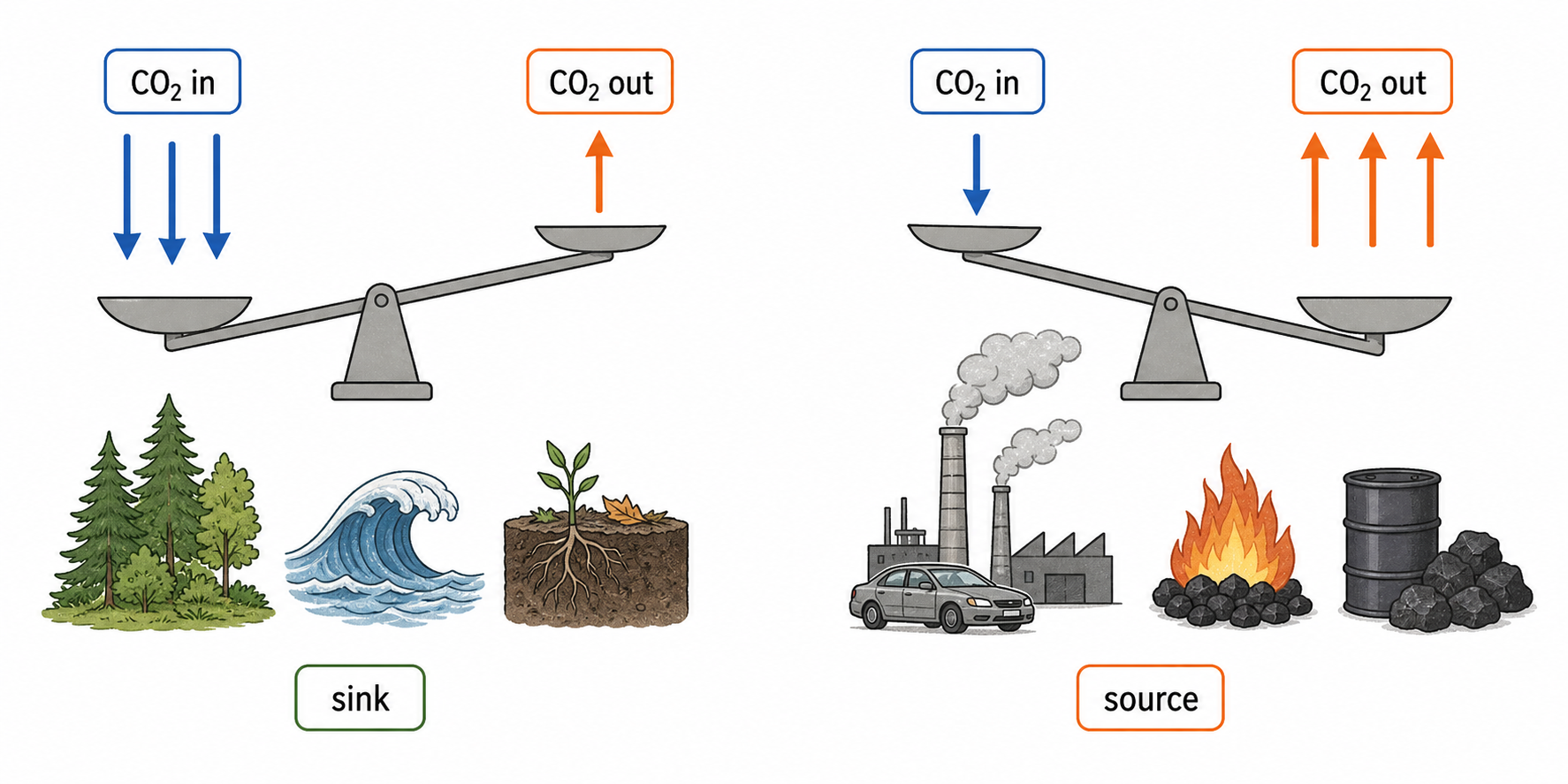
A carbon sink absorbs more carbon than it releases, while a carbon source releases more carbon than it absorbs. Forests, soils, and oceans can act as sinks; fossil fuel combustion is a source because it adds CO2 to the atmosphere.
Sinks and sources are defined by net carbon flux.
Sort each example by net carbon flux.
SortSort each example by net carbon flux.
ChooseLink Combustion to CO2
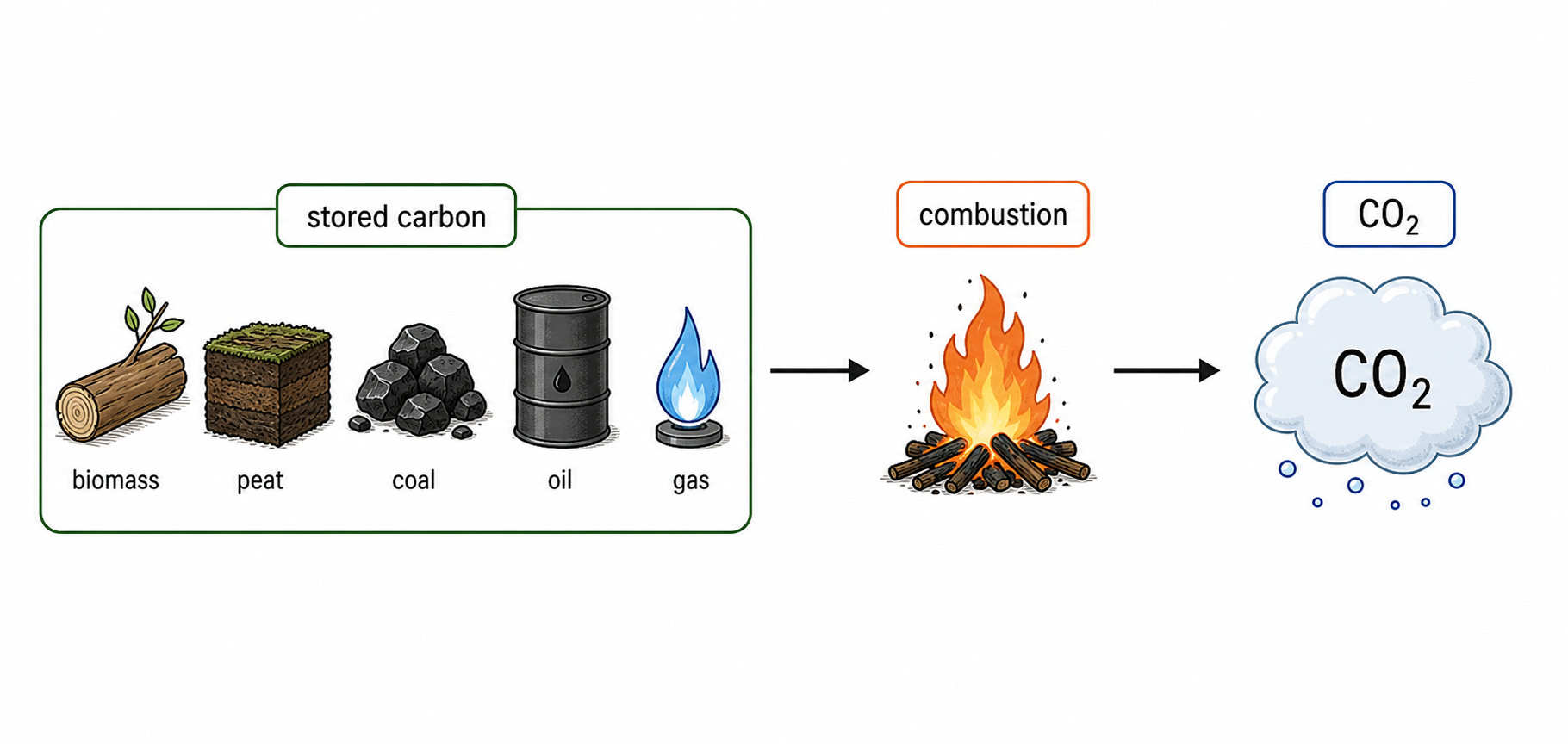
Combustion releases CO2 because carbon compounds in biomass, peat, coal, oil, or natural gas are oxidized. Draining peat exposes stored organic matter to decomposition and oxidation, while forest fires rapidly transfer carbon from biomass to atmospheric CO2.
Combustion changes carbon stores into atmospheric CO2.
Match each process to the carbon flux.
MatchMatch each process to the carbon flux.
ChooseInterpret the Keeling Curve
Practice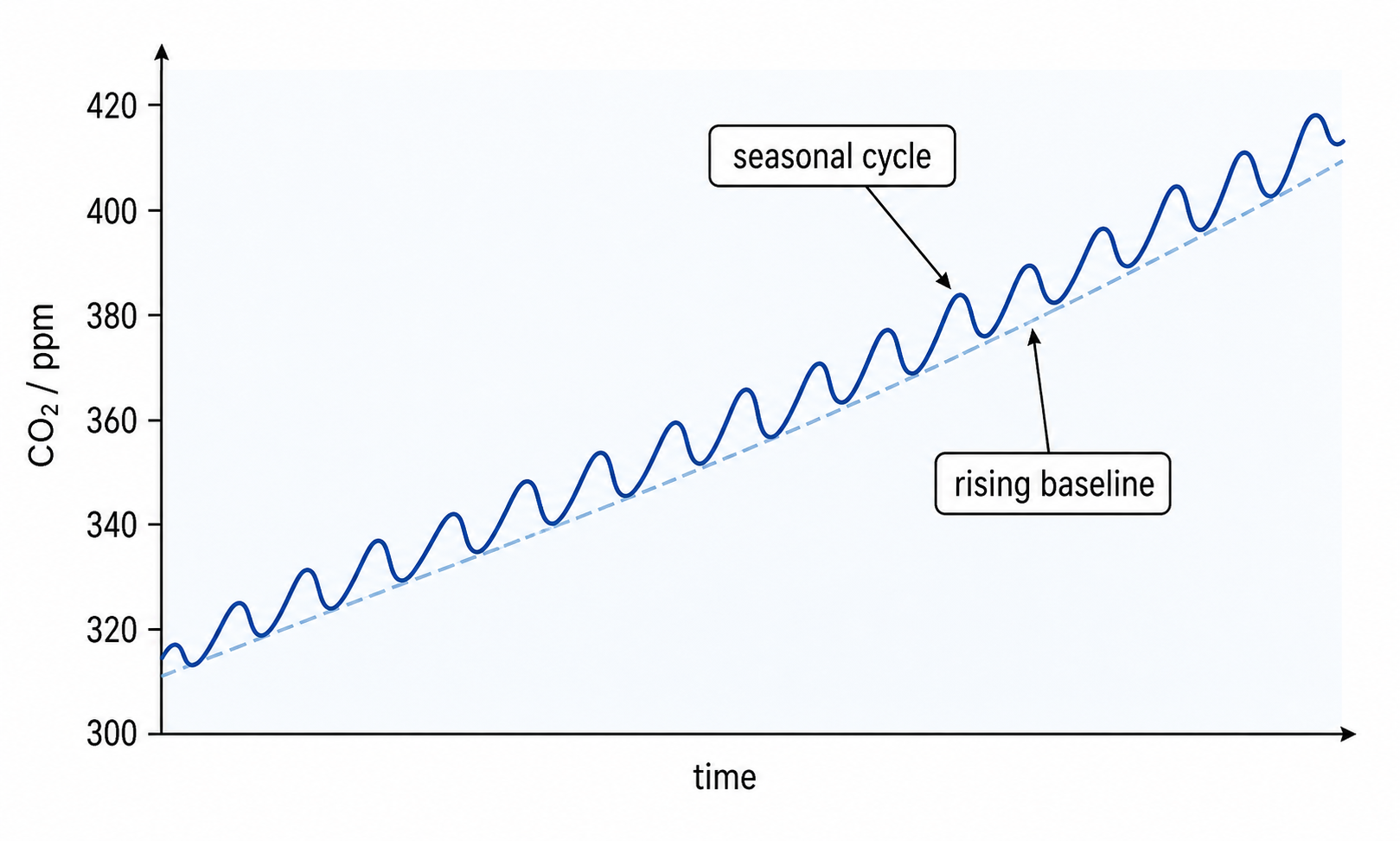
The Keeling Curve records atmospheric CO2 at Mauna Loa since the late 1950s. Read two patterns separately: the long-term rise reflects CO2 release from combustion, while the annual oscillation reflects seasonal Northern Hemisphere photosynthesis and respiration.
Separate long-term trend from seasonal oscillation.
Interpret the two visible patterns in the Keeling Curve.
GraphInterpret the two visible patterns in the Keeling Curve.
ChooseConnect Photosynthesis and Respiration
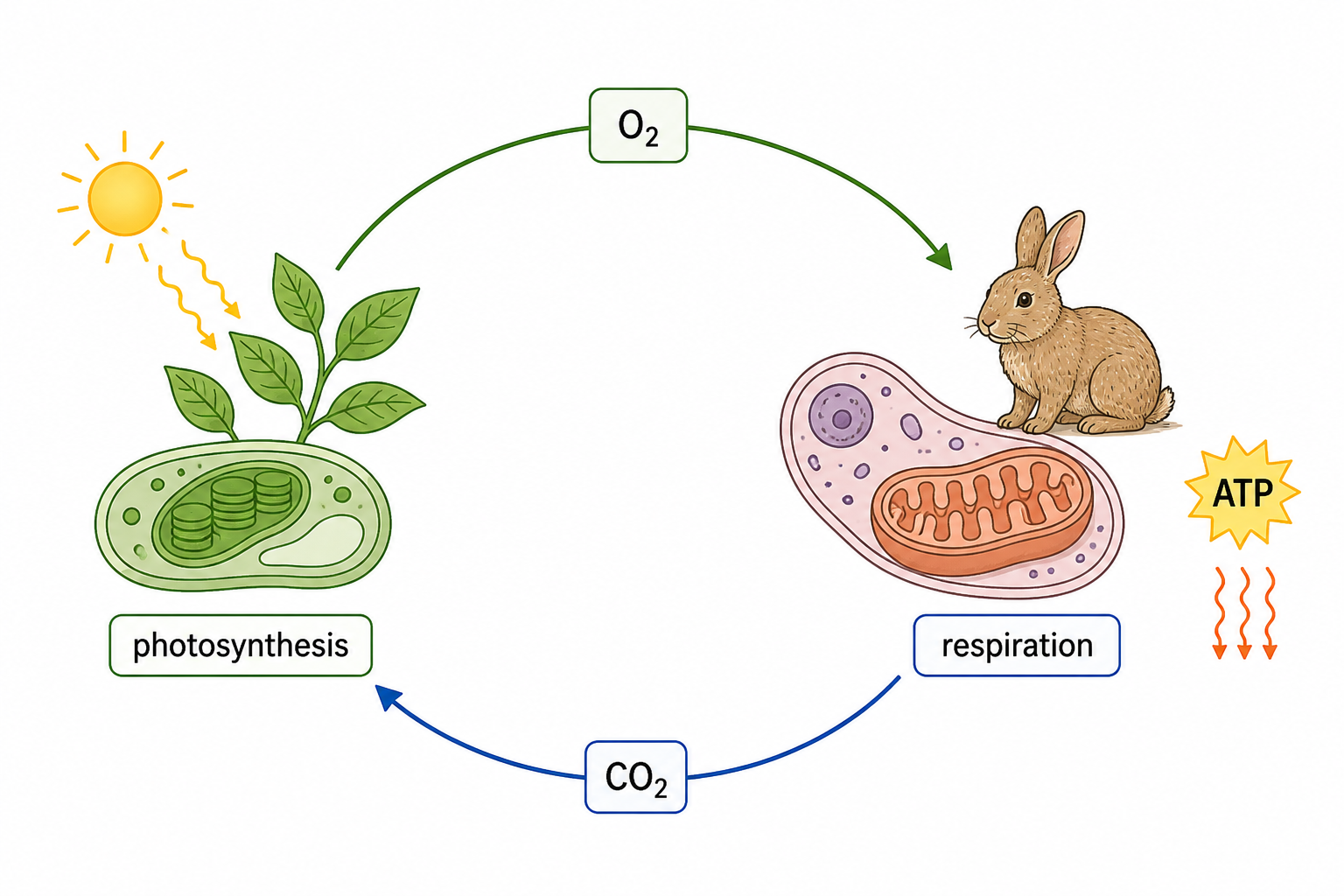
Photosynthesis and aerobic respiration depend on each other through gas exchange. Photosynthesis supplies atmospheric O2 used in aerobic respiration, while respiration supplies CO2 used by photosynthesis, linking autotrophs and heterotrophs in carbon and oxygen cycling.
The two processes are linked by CO2 and O2.
Complete the gas-cycling loop.
OrderComplete the gas-cycling loop.
ChooseRecycle Chemical Elements
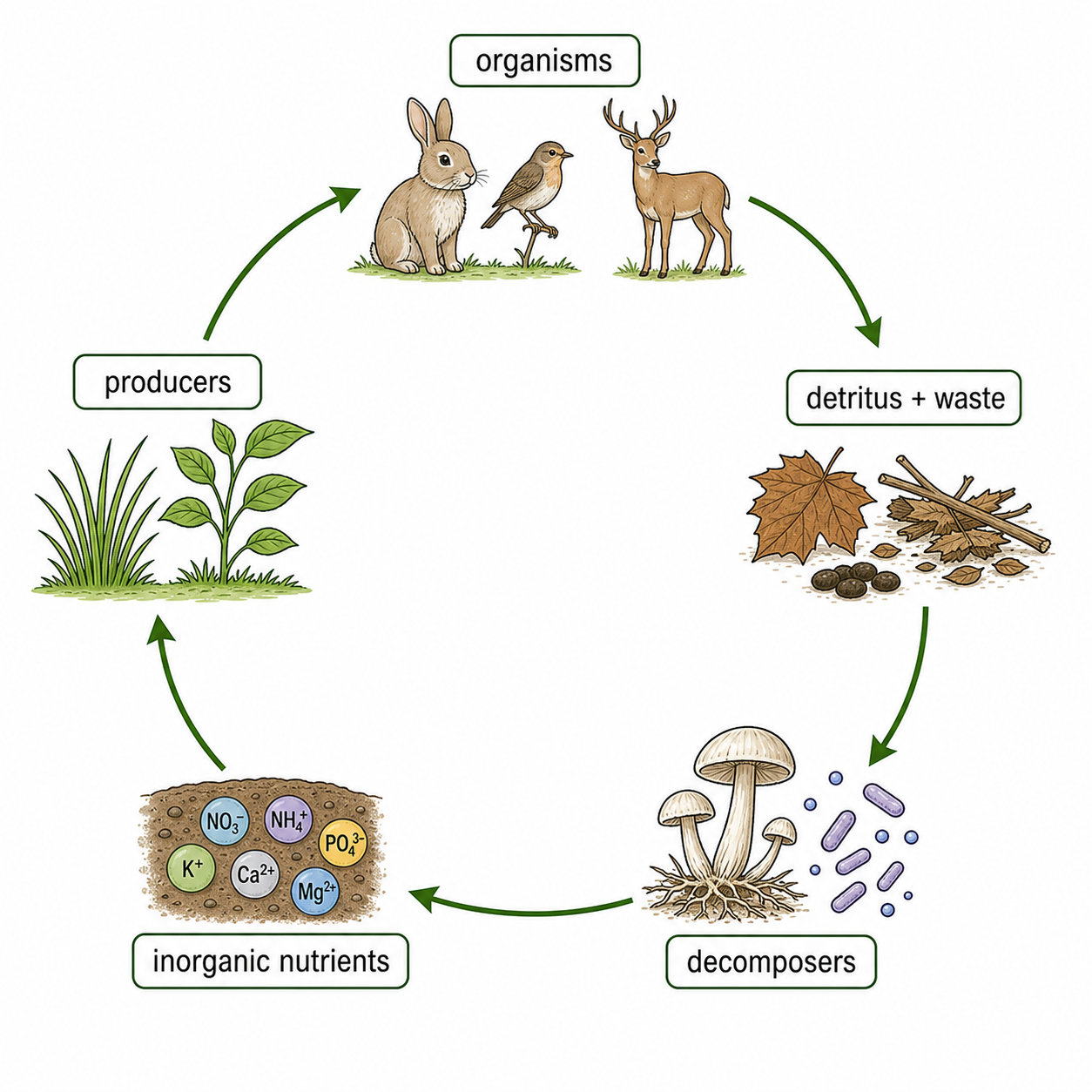
All chemical elements required by organisms are recycled in ecosystems. Decomposers break down detritus and waste into inorganic nutrients, producers absorb those nutrients, and the elements re-enter biomass.
Decomposers make elements available again.
Match the matter-cycling step to its role.
MatchMatch the matter-cycling step to its role.
ChooseTransfer: Explain Energy and Matter
Exam PracticeEnergy-and-matter questions use a connected system model. Ecosystems are open systems exchanging energy and matter with surroundings; energy flows while matter can enter, leave, and recycle. Sunlight is the principal energy source for most ecosystems, with caves and deep-ocean vents supported by chemosynthesis as exceptions. Chemical energy flows from producers to consumers through feeding; energy enters as light or chemical energy and leaves as heat. Food chains and food webs model feeding relationships; arrows point in the direction of energy and biomass transfer. Decomposers obtain energy from carbon compounds in detritus such as dead organisms, faeces, fallen leaves, and shed tissues. Autotrophs synthesize carbon compounds from simple inorganic substances using external energy sources to fix carbon and build biomass. Photoautotrophs use light captured by photosynthetic pigments; chemoautotrophs use oxidation of inorganic substances such as iron or sulfur compounds. Heterotrophs obtain carbon compounds from other organisms or organic matter and use them for respiration and biomass synthesis. Both autotrophs and heterotrophs release energy by cell respiration; oxidation of carbon compounds transfers energy to ATP and heat. Trophic levels classify producers, primary consumers, and higher consumers; omnivores and decomposers may feed across more than one trophic level. Energy pyramids represent energy flow per unit area per unit time, with each bar showing energy available to one trophic level. Energy availability decreases at each transfer because of respiration, heat, egestion, excretion, and uneaten biomass. Cell respiration converts some chemical energy to heat in all trophic levels; heat dissipates, so energy cannot be recycled. Large energy losses restrict food chains to a few trophic levels; higher levels usually support less biomass and fewer individuals. Primary production is accumulation of carbon compounds in autotroph biomass; gross production minus respiration gives net primary production. Secondary production is biomass accumulation by heterotrophs and depends on food intake, assimilation, respiration losses, and biomass conversion. Carbon cycle diagrams show stores as boxes and fluxes as labelled arrows, including CO2, photosynthesis, feeding, respiration, decomposition, fossil fuels, and combustion. Carbon sinks absorb more carbon than they release; carbon sources release more carbon than they absorb. Combustion of biomass, peat, coal, oil, and natural gas releases CO2; draining peat and forest fires increase carbon flux to the atmosphere. The Keeling Curve records atmospheric CO2 at Mauna Loa since the late 1950s; long-term rise reflects combustion and annual oscillation reflects Northern Hemisphere photosynthesis. Photosynthesis supplies atmospheric O2 used in aerobic respiration; respiration supplies CO2 used by photosynthesis, linking autotrophs and heterotrophs. All chemical elements required by organisms are recycled; decomposers convert detritus and waste into inorganic nutrients for producers.
Put the C4.2 exam answer frame in order.
OrderUse this for exam questions that combine ecosystem openness, food-web arrows, trophic levels, energy pyramids, transfer efficiency, production, carbon cycling, Keeling Curve evidence, and decomposer recycling.
Use this for exam questions that combine ecosystem openness, food-web arrows, trophic levels, energy pyramids, transfer efficiency, production, carbon cycling, Keeling Curve evidence, and decomposer recycling.
Common loss: saying energy is recycled, reversing food-web arrows, forgetting pyramid units, or describing carbon-cycle arrows without naming the flux process.