
Name Pathogens
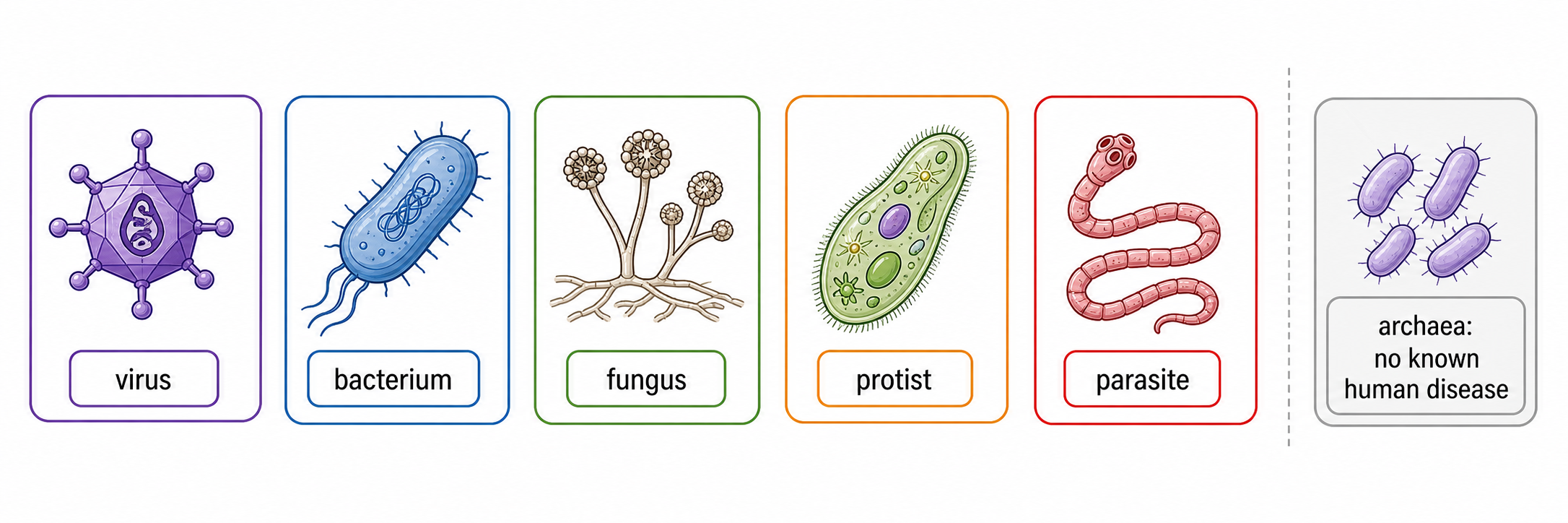
Pathogens are disease-causing viruses, bacteria, fungi, protists, or parasites. Archaea are not currently known to cause human infectious diseases, so they should not be listed with the main pathogen groups in this topic.
Use the category list before learning the body responses to those pathogens.
Match each defence idea to its role.
MatchMatch each defence idea to its role.
ChooseTrace First Barriers
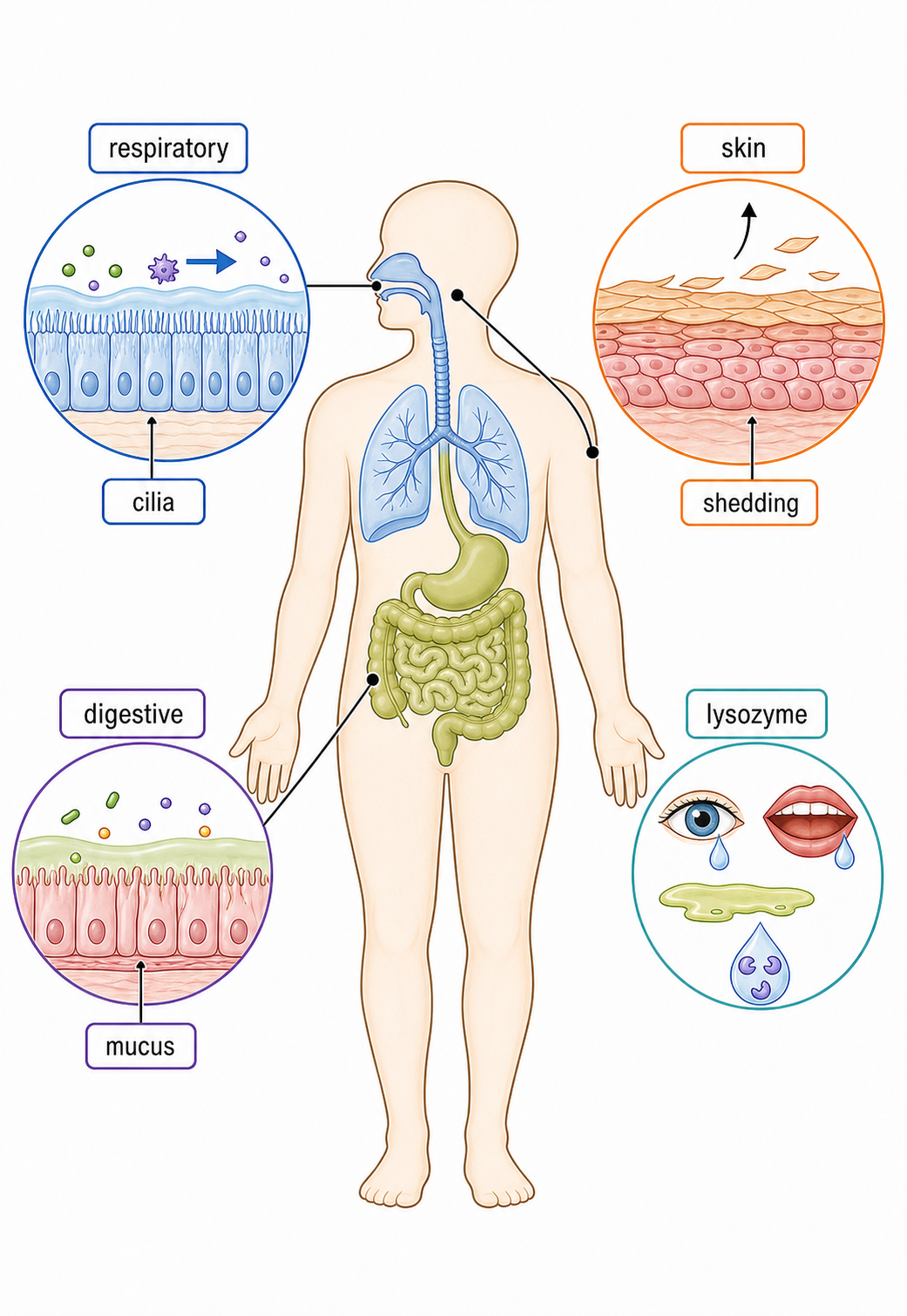
Keratinized skin and constant shedding make a tough outer barrier, while lysozyme, mucus, and cilia help exposed surfaces trap or destroy pathogens. Mucous membranes protect respiratory and digestive surfaces by catching microbes in mucus and moving them away from sensitive tissues.
Primary defences protect the surfaces where pathogens first arrive.
Put the defence mechanism in order.
OrderPut the defence mechanism in order.
ChooseSequence Blood Clotting
PracticeWhen tissue is damaged, platelets and damaged tissue release clotting factors at the wound and start a cascade. Thrombin converts fibrinogen to fibrin, trapping blood cells and sealing entry points so the wound becomes a physical barrier again.
Put the blood-clotting steps into the correct order.
OrderCompare Immune Systems
Innate immunity acts quickly and broadly against many threats, and it does not become more specific over life. Adaptive immunity targets particular antigens and produces memory cells, so later exposure can trigger a stronger, faster response.
Compare innate and adaptive immunity using speed, specificity, and memory.
CompareFollow A Phagocyte
Practice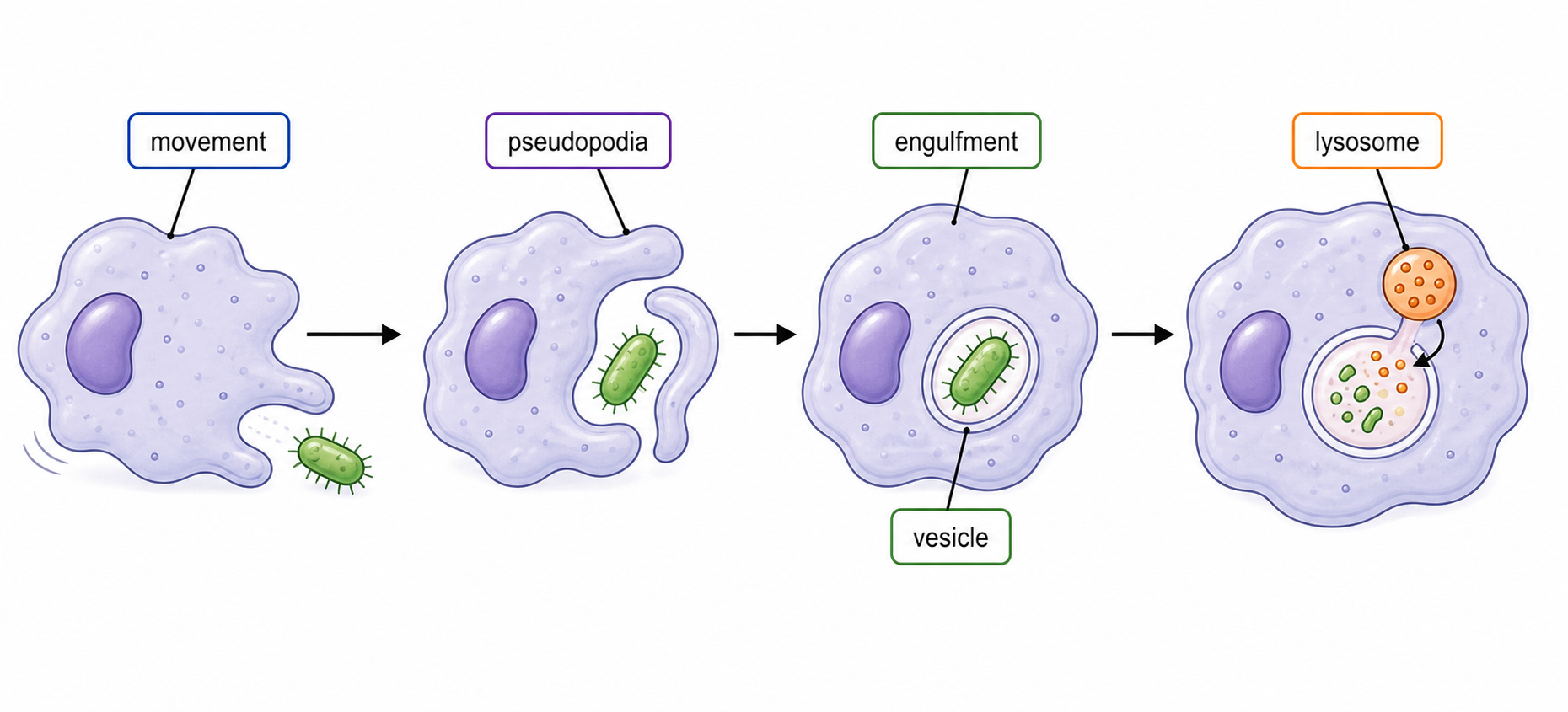
Phagocytes use amoeboid movement to reach infection sites after leaving the blood. They recognize, engulf, and digest pathogens using lysosomal enzymes, so the pathogen is destroyed inside the phagocyte.
A phagocyte has to move, engulf, and digest to finish the job.
Put the phagocyte response in order, starting from movement toward an infection site.
OrderPut the phagocyte response in order, starting from movement toward an infection site.
ChooseMap Lymphocyte Jobs
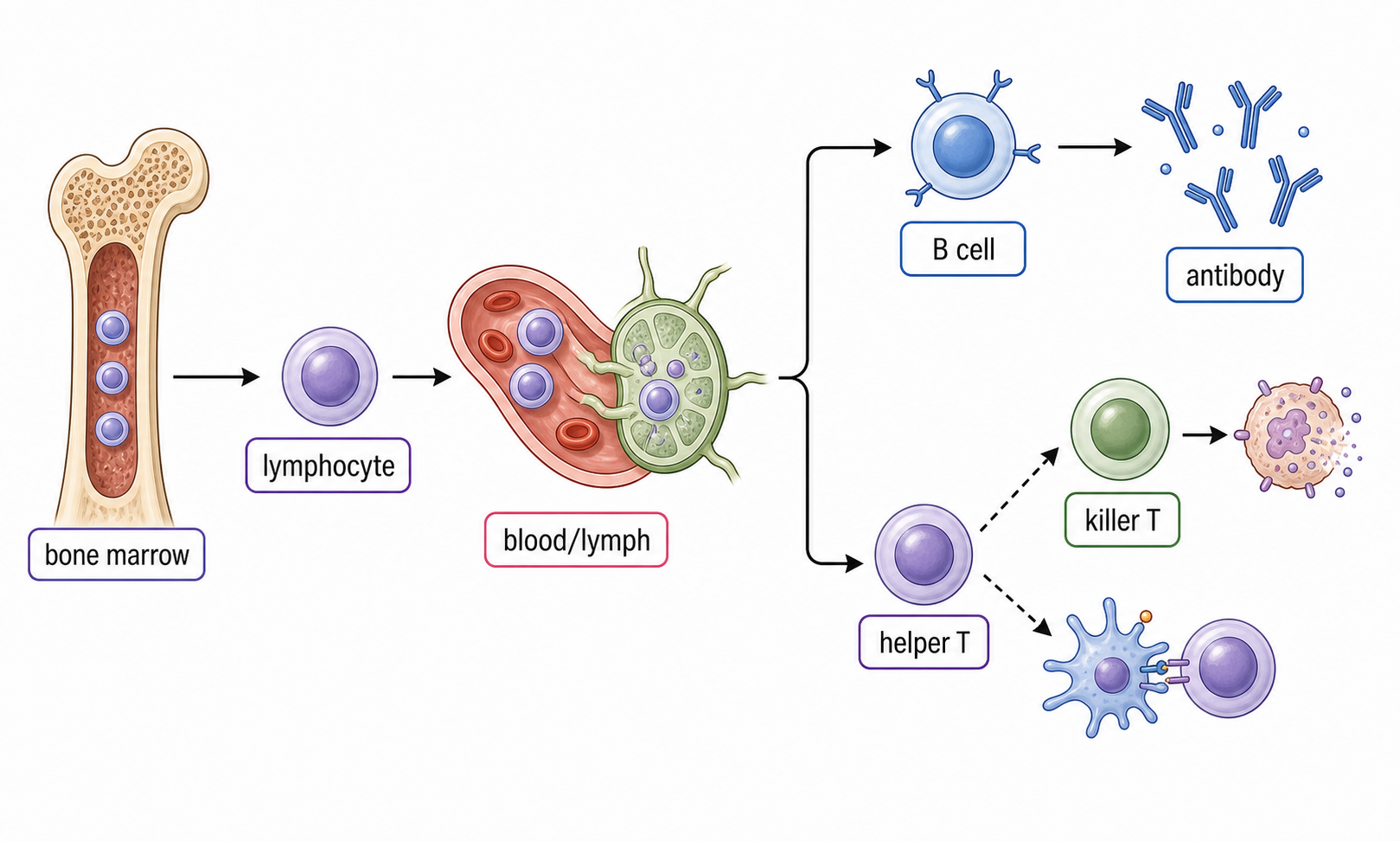
Lymphocytes originate in bone marrow and circulate through the blood, lymph, and lymph nodes so they can meet antigens. After activation, B-cells produce antibodies, while T-cells either assist immune responses or destroy infected cells directly.
Lymphocytes share routes through the body, but their jobs are not interchangeable.
Match each defence idea to its role.
MatchMatch each defence idea to its role.
ChooseDefine Antigens
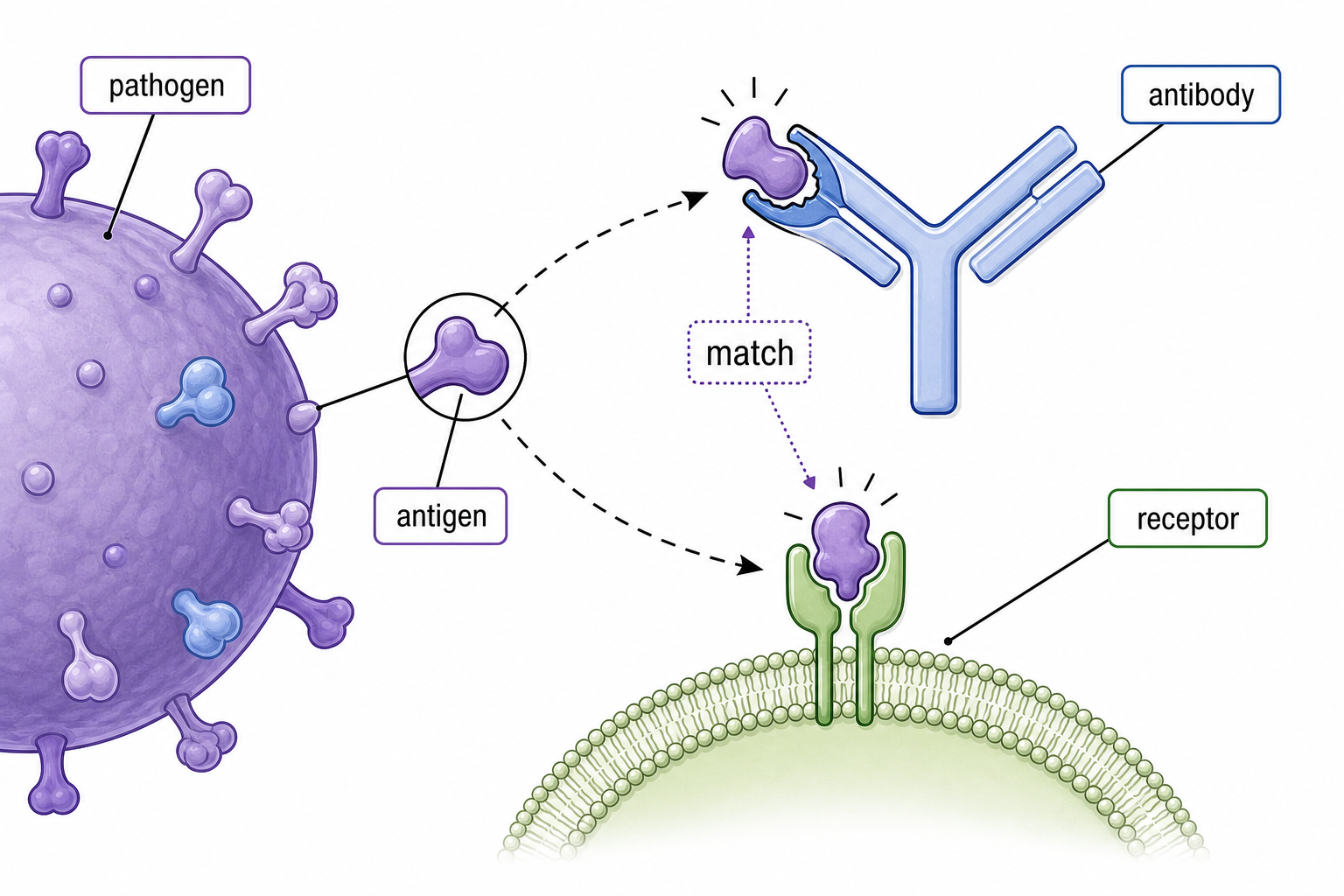
Antigens are non-self molecules that trigger specific immune responses. They are often proteins or glycoproteins recognized by antibodies or lymphocyte receptors, which is why adaptive immunity can target one pathogen feature specifically.
An antigen is the recognizable target on or from a pathogen, not the antibody itself.
Match each defence idea to its role.
MatchMatch each defence idea to its role.
ChooseActivate A B Cell
PracticeA B-cell binds antigen, internalizes it, and presents antigen fragments with MHC proteins. Helper T-cells activated by the same antigen then stimulate B-cell activation, linking antigen recognition to the start of antibody production.
Order the main steps in B-cell activation.
OrderExplain Plasma Clones
Activated B-cells divide by mitosis through clonal selection, so many cells with the same antigen specificity are produced. Plasma cells rich in rough ER secrete large amounts of one specific antibody, which makes the clone effective against that one antigen.
Put the defence mechanism in order.
OrderPredict Secondary Response
Memory B-cells and T-cells remain after the primary response declines. Re-exposure triggers faster, stronger secondary immunity because those memory cells can respond before the body has to build the whole response from the start again.
Put the defence mechanism in order.
OrderJudge HIV Risk
PracticeHIV is transmitted through infected blood, semen, vaginal fluids, or breast milk when those fluids can enter another person. Transmission risk depends on fluid exchange, barriers, and viral load, so route of exposure matters more than casual contact.
Decide which scenario carries higher HIV transmission risk and justify the choice.
DecisionExplain AIDS Progression
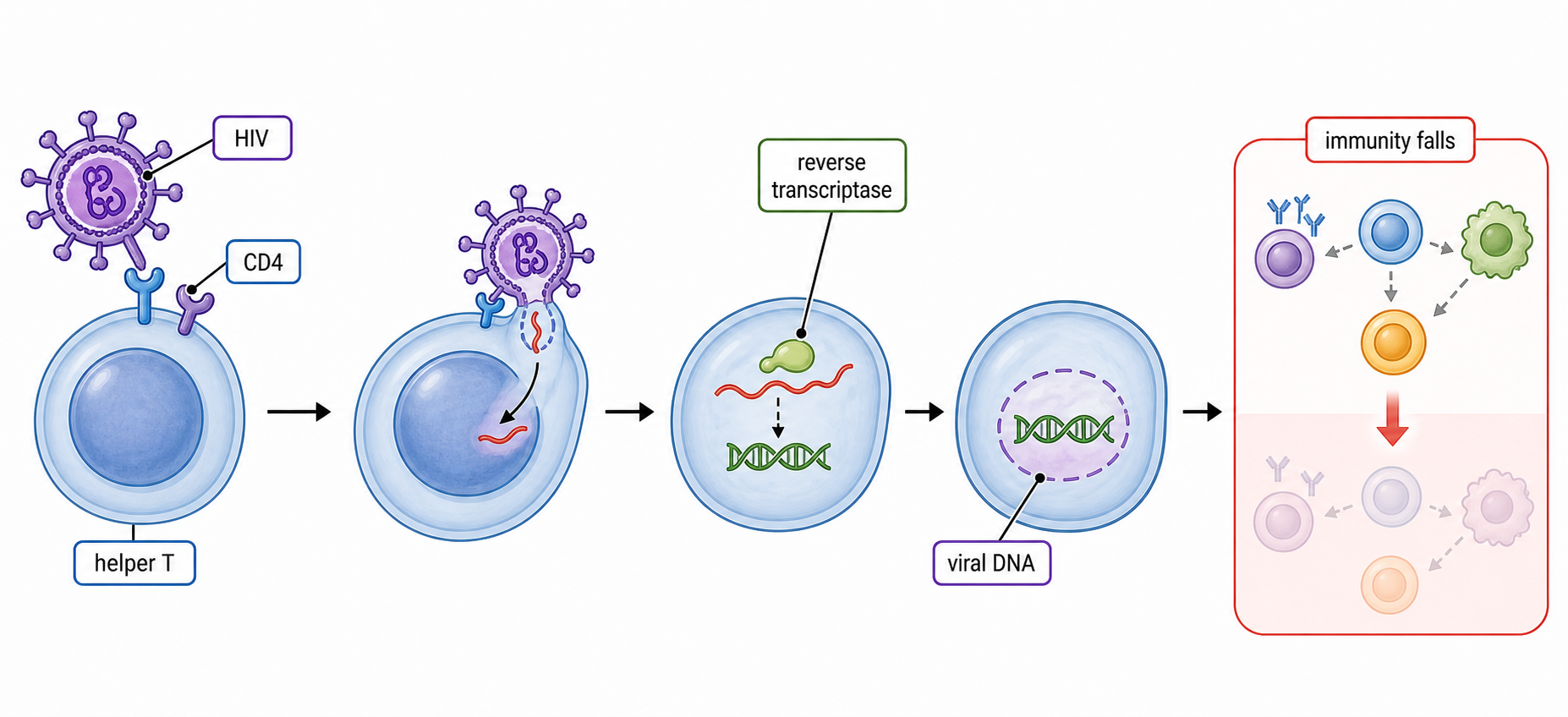
HIV infects helper T-cells using CD4 receptors and reverse transcriptase to copy its genetic material inside the host cell. AIDS results when helper T-cell loss weakens antibody production and immune coordination, so the adaptive immune system can no longer organize an effective response.
The key idea is not only infection, but loss of immune coordination after helper T-cells are damaged.
Put the defence mechanism in order.
OrderPut the defence mechanism in order.
ChooseChoose The Right Drug
Antibiotics work by blocking bacterial processes that are absent from eukaryotic cells, such as bacterial cell-wall synthesis or bacterial ribosome function. They do not treat viruses, because viruses rely on host-cell machinery and require antivirals that target viral replication processes instead.
Match each defence idea to its role.
MatchExplain Resistance Selection
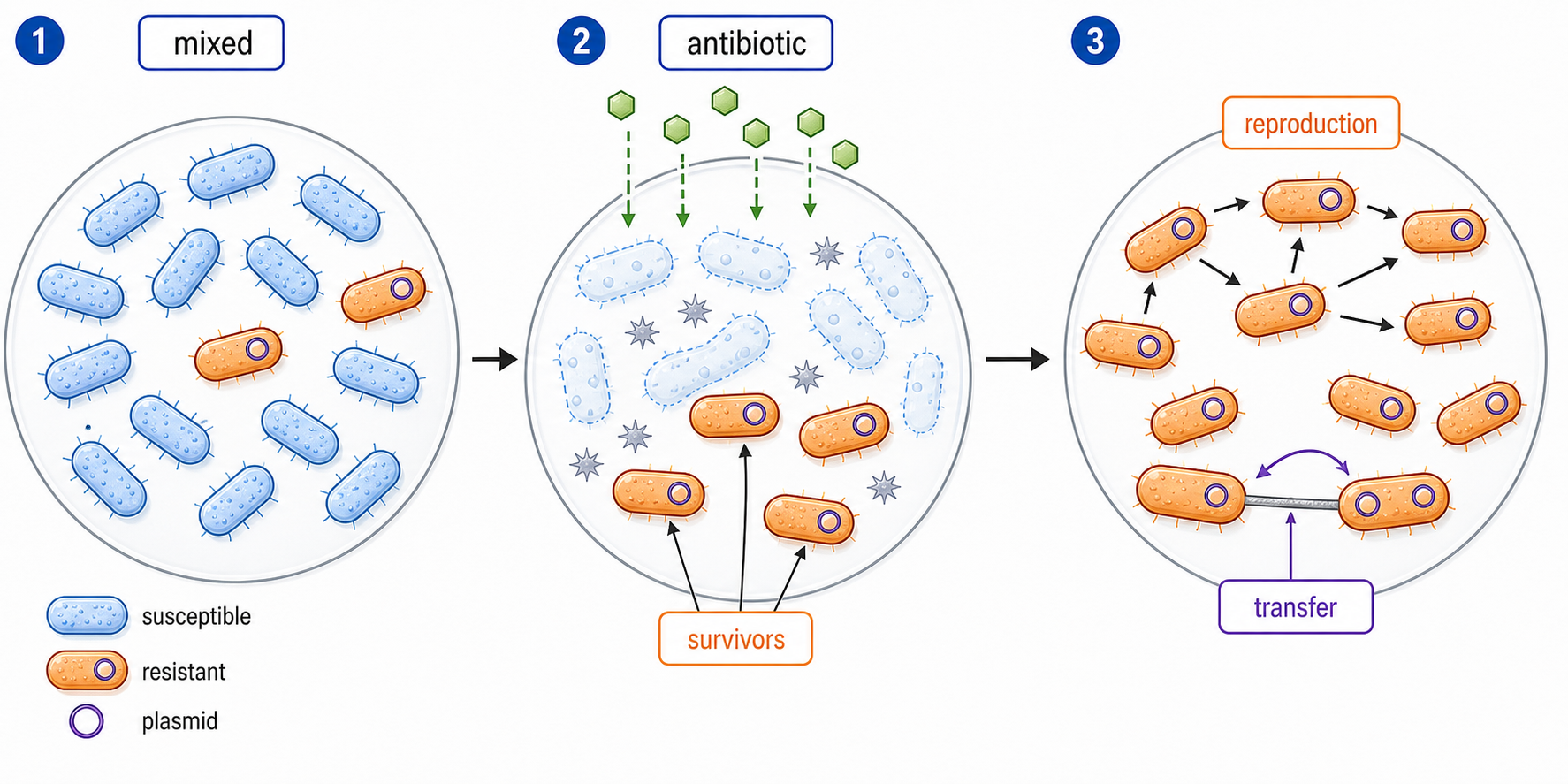
Antibiotic use selects resistant variants that survive and reproduce while susceptible bacteria die. Multi-resistant strains arise through mutation, plasmids, and overuse of antibiotics, so repeated selection pressure makes resistance spread through the population.
This is a natural-selection story, not a purposeful response by single cells.
Put the defence mechanism in order.
OrderPut the defence mechanism in order.
ChooseTrace Zoonotic Spillover
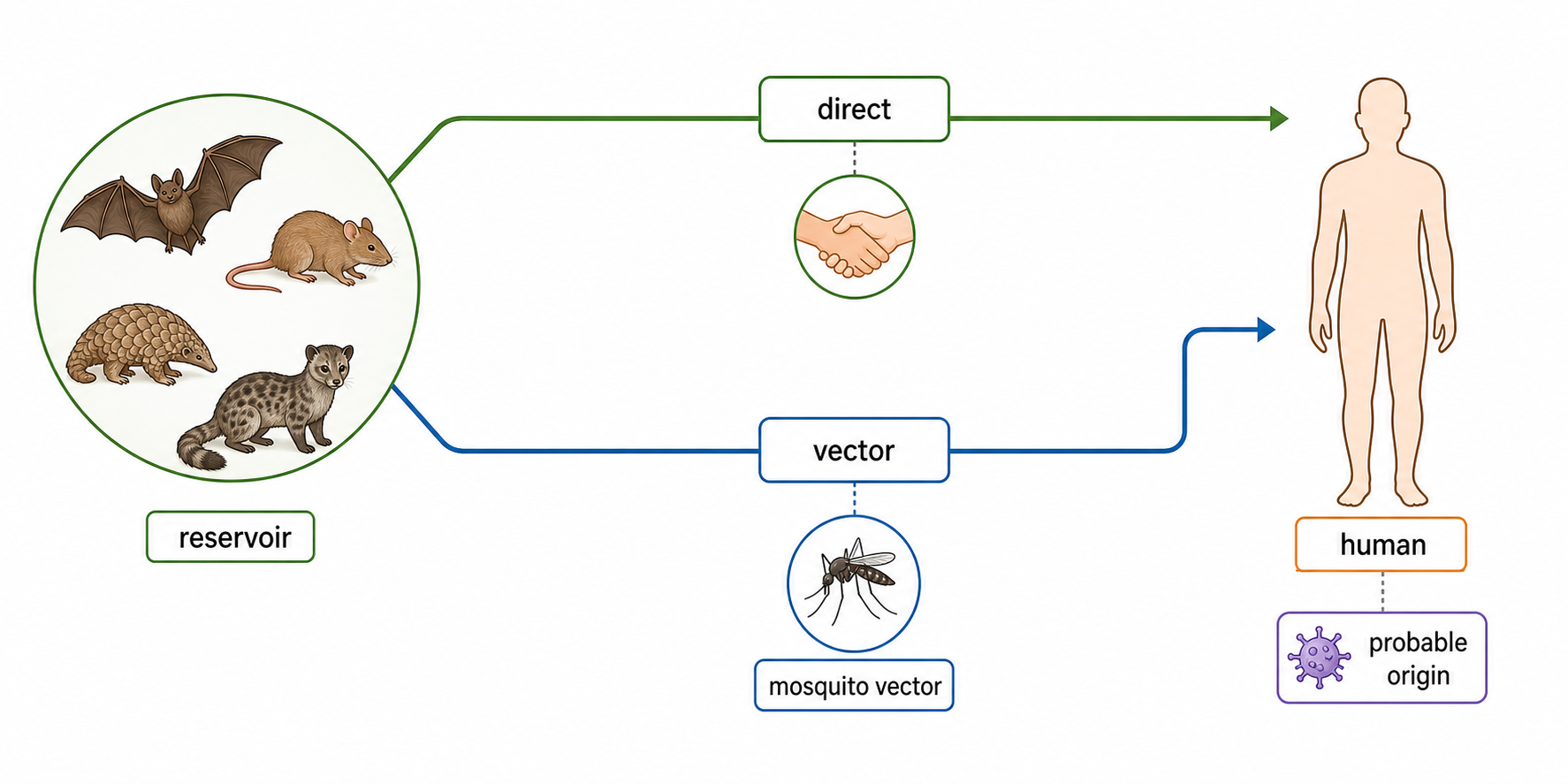
Zoonoses transfer from animal reservoirs to humans, sometimes through vectors such as biting insects. Examples include rabies, tuberculosis, Japanese encephalitis, and COVID-19, so the key question is always which animal reservoir or spillover route started the human infection.
A zoonosis is about the source route: animal reservoir first, human infection later.
Put the defence mechanism in order.
OrderPut the defence mechanism in order.
ChooseExplain Vaccination
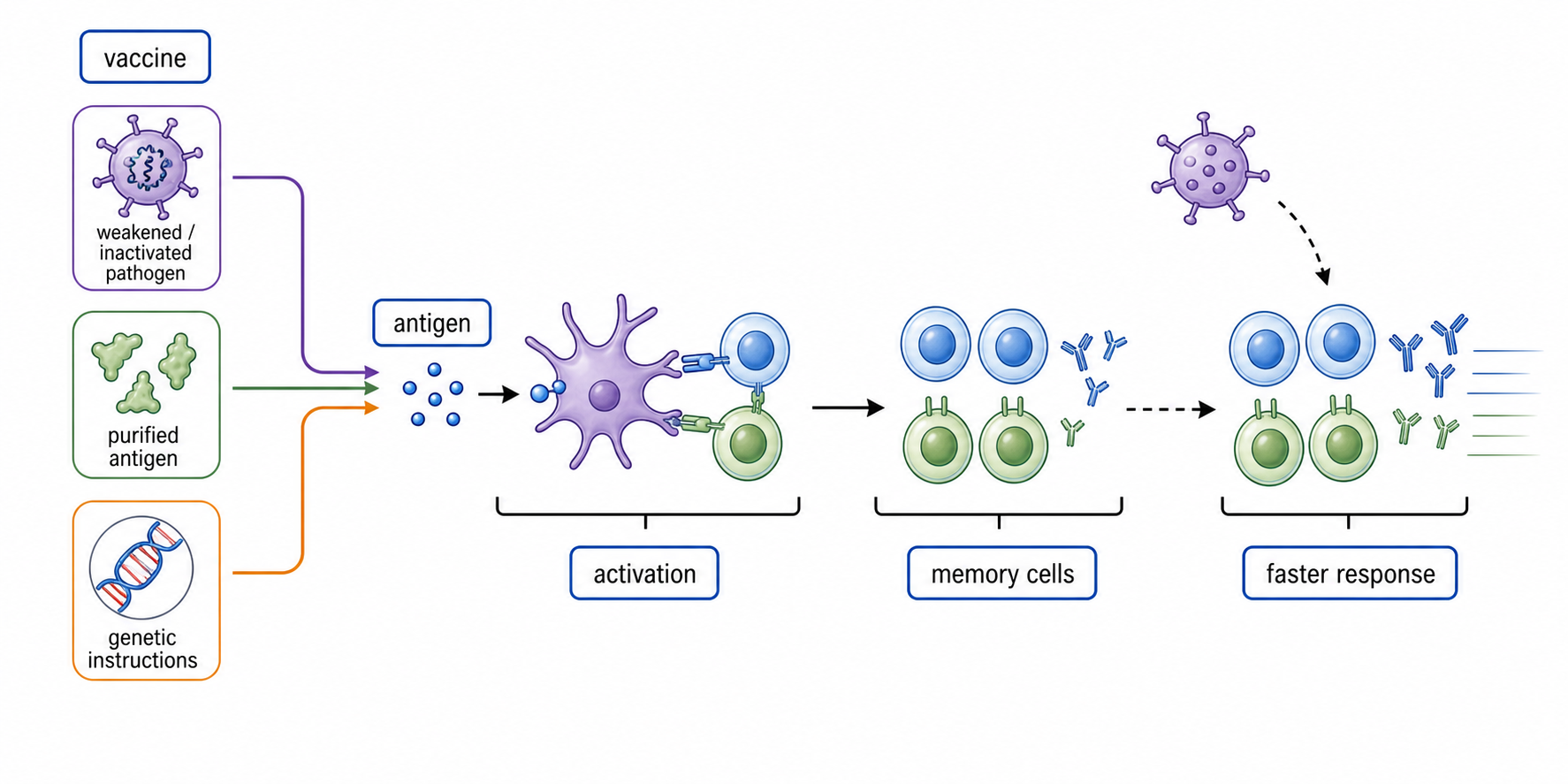
Vaccines can contain weakened or inactivated pathogens, selected antigens, or genetic instructions that make the body produce an antigen briefly. Immunization with these materials produces active artificial immunity because the adaptive immune system responds and forms memory cells without the full natural disease.
Different vaccine inputs lead to the same core outcome: adaptive memory before infection.
Put the defence mechanism in order.
OrderPut the defence mechanism in order.
ChooseModel Herd Immunity
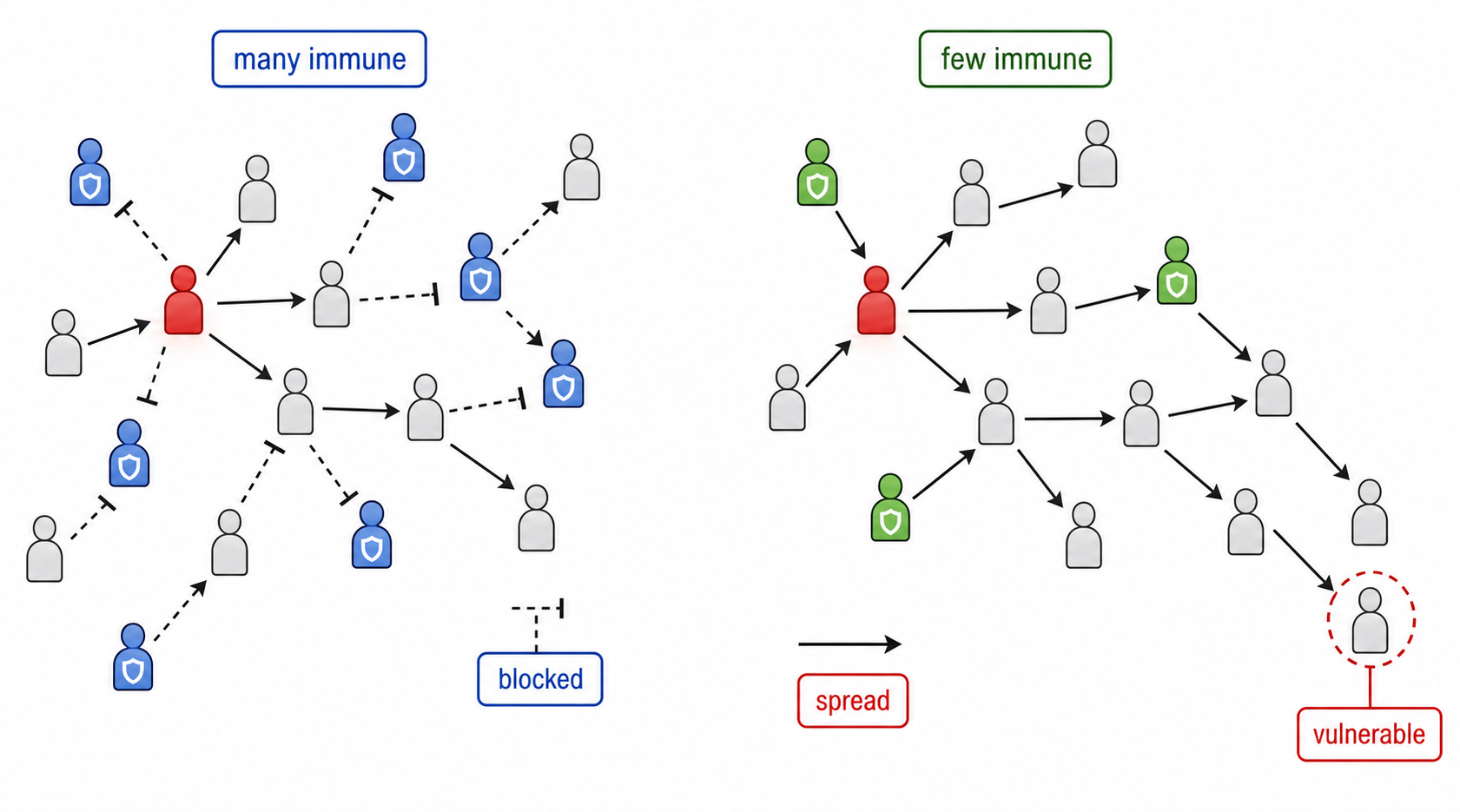
Herd immunity indirectly protects susceptible people when many are immune, because transmission chains break before reaching every available host. Thresholds depend on transmission route and pathogen contagiousness, so one percentage does not fit every disease.
The key pattern is whether a chain of transmission can keep finding new susceptible hosts.
Two communities have the same pathogen, but one has many more immune individuals. Predict which community better protects an unvaccinated vulnerable person.
PredictTwo communities have the same pathogen, but one has many more immune individuals. Predict which community better protects an unvaccinated vulnerable person.
ChooseEvaluate COVID Data
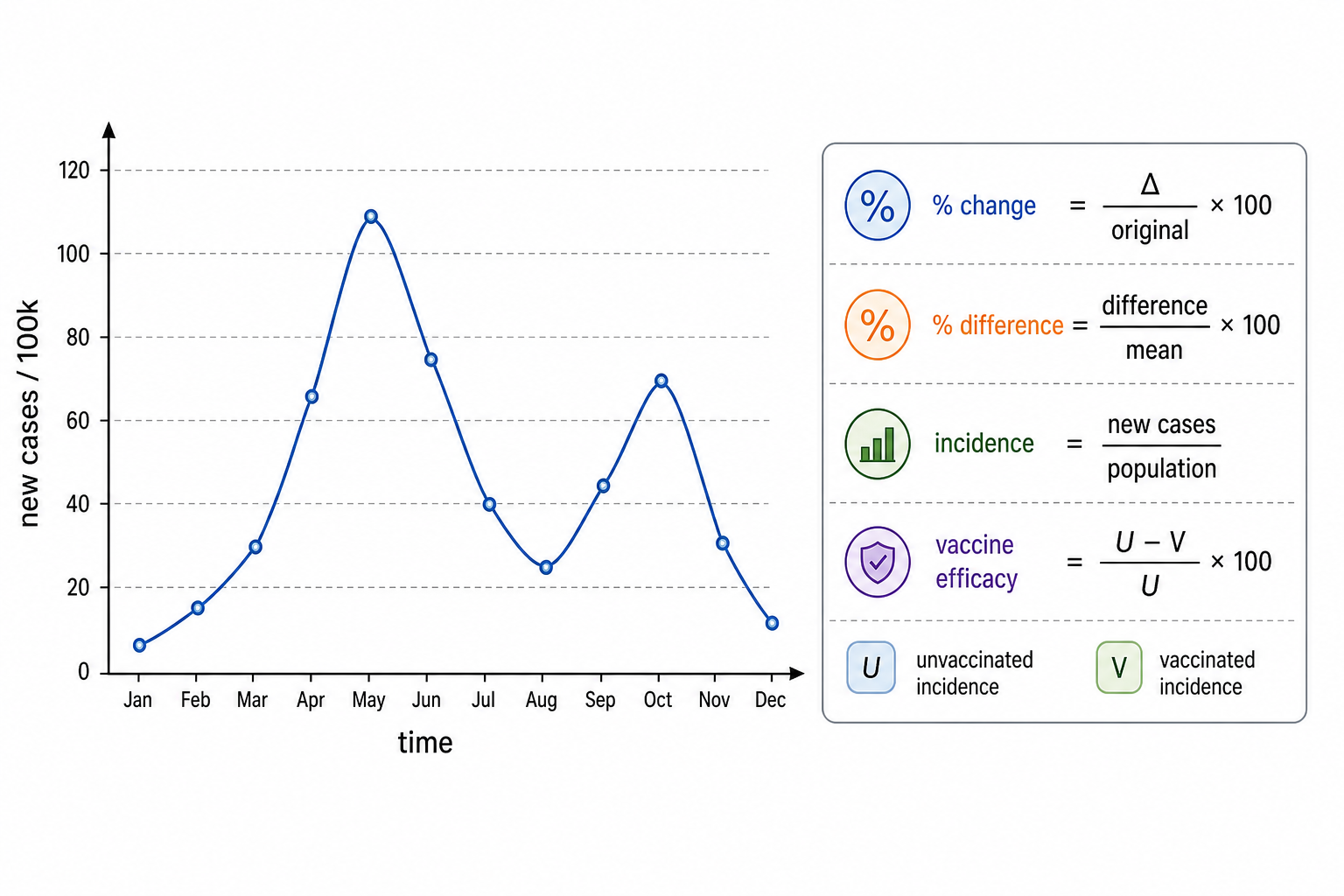
Evaluate COVID-19 data using source reliability, trends, and controlled comparisons before trusting a claim. You should also be able to calculate percentage change, percentage difference, incidence, and vaccine efficacy so the comparison is both numerically correct and biologically fair.
The visual should help students separate trend reading from calculation choices.
Use the mini dataset to decide what the trend shows and which calculation answers each question.
GraphUse the mini dataset to decide what the trend shows and which calculation answers each question.
ChooseTransfer: Explain Defence Against Disease
Exam PracticeDefence against disease is a layered response. Pathogens are disease-causing viruses, bacteria, fungi, protists, or parasites; archaea are not currently known to cause human infectious diseases. Keratinized skin, shedding, lysozyme, mucus, and cilia are primary defences; mucous membranes protect respiratory and digestive surfaces. Platelets and damaged tissue release clotting factors at wounds; thrombin converts fibrinogen to fibrin, trapping blood cells and sealing entry points. Innate immunity is broad, rapid, and does not become more specific over life; adaptive immunity is antigen-specific and produces memory cells. Phagocytes use amoeboid movement to reach infection sites; they recognize, engulf, and digest pathogens using lysosomal enzymes. B-cells produce antibodies after activation; T-cells assist or destroy infected cells; lymphocytes originate in bone marrow and circulate through blood, lymph, and lymph nodes. Antigens are non-self molecules that trigger specific immune responses; they are often proteins or glycoproteins recognized by antibodies or lymphocyte receptors. B-cells bind antigen, internalize it, and present it with MHC proteins; helper T-cells activated by the same antigen stimulate B-cell activation. Activated B-cells divide by mitosis through clonal selection; plasma cells rich in rough ER secrete large amounts of one specific antibody. Memory B- and T-cells remain after the primary response declines; re-exposure triggers faster, stronger secondary immunity. HIV is transmitted through infected blood, semen, vaginal fluids, or breast milk; transmission risk depends on fluid exchange, barriers, and viral load. HIV infects helper T-cells using CD4 receptors and reverse transcriptase; AIDS results when helper T-cell loss weakens antibody production and immune coordination. Antibiotics block bacterial processes absent from eukaryotic cells; they do not treat viruses; antivirals target viral replication processes. Antibiotic use selects resistant variants that survive and reproduce; multi-resistant strains arise through mutation, plasmids, and overuse of antibiotics. Zoonoses transfer from animal reservoirs to humans, sometimes through vectors; examples include rabies, tuberculosis, Japanese encephalitis, and COVID-19. Vaccines contain weakened/inactivated pathogens, antigens, or genetic instructions; immunization produces active artificial immunity and memory cells. Herd immunity indirectly protects susceptible people when many are immune; thresholds depend on transmission route and pathogen contagiousness. Evaluate COVID-19 data using source reliability, trends, and controlled comparisons; calculate percentage change, percentage difference, incidence, and vaccine efficacy.
Put the defence answer frame in order.
OrderUse this for exam questions that combine body defences, immune specificity, HIV/AIDS, antibiotics, resistance, zoonoses, vaccination, herd immunity, and outbreak data interpretation.
Use this for exam questions that combine body defences, immune specificity, HIV/AIDS, antibiotics, resistance, zoonoses, vaccination, herd immunity, and outbreak data interpretation.
Common loss: naming an immune cell, pathogen, treatment, or graph calculation without explaining the mechanism or consequence.