
Link Parts Into Responses
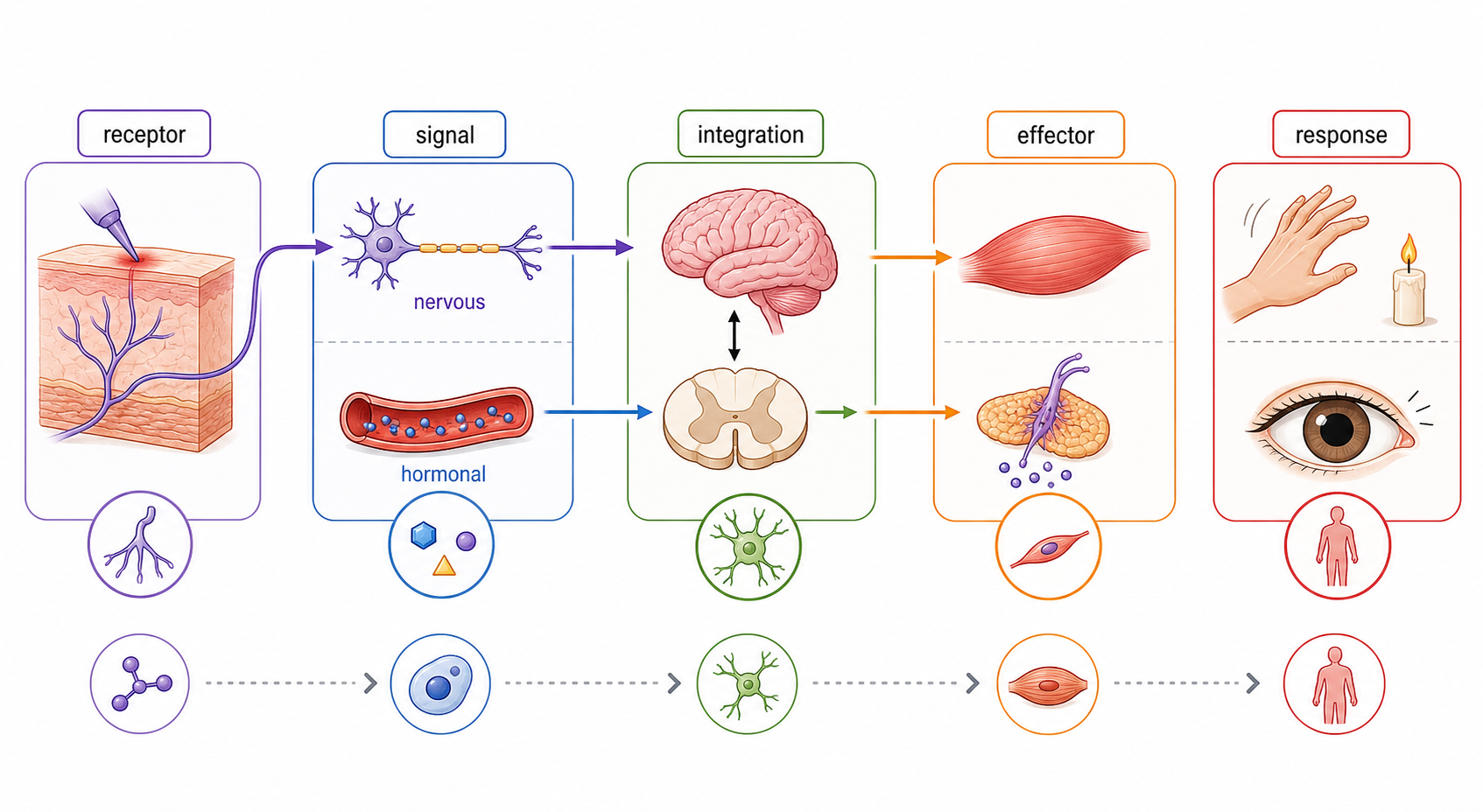
Integration lets interacting parts coordinate an overall biological function. A useful answer traces input, communication, integration, output, and response across molecular, cellular, organ, organism, and ecosystem levels.
Integration means separate parts acting as one coordinated system.
Match each idea to its integration role.
MatchMatch each idea to its integration role.
ChooseBuild The Body Hierarchy
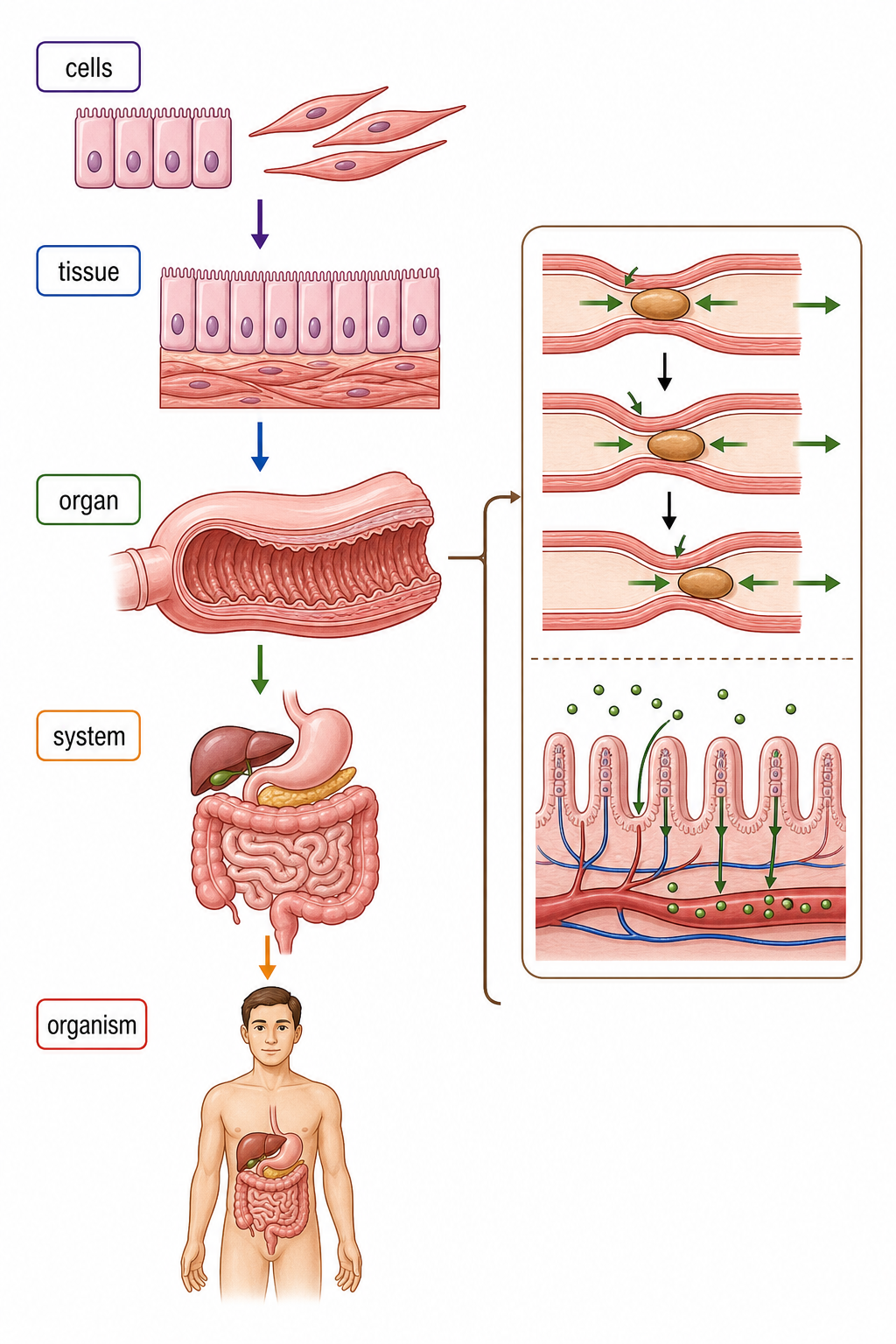
Cells form tissues, organs, organ systems, and whole organisms. Emergent properties arise when subsystems interact, such as gut peristalsis and absorption: no single smooth-muscle cell digests a meal, but coordinated tissues and organs move and absorb food.
Higher levels do things that isolated cells cannot do alone.
Match each idea to its integration role.
MatchMatch each idea to its integration role.
ChooseConnect Organs By Signals
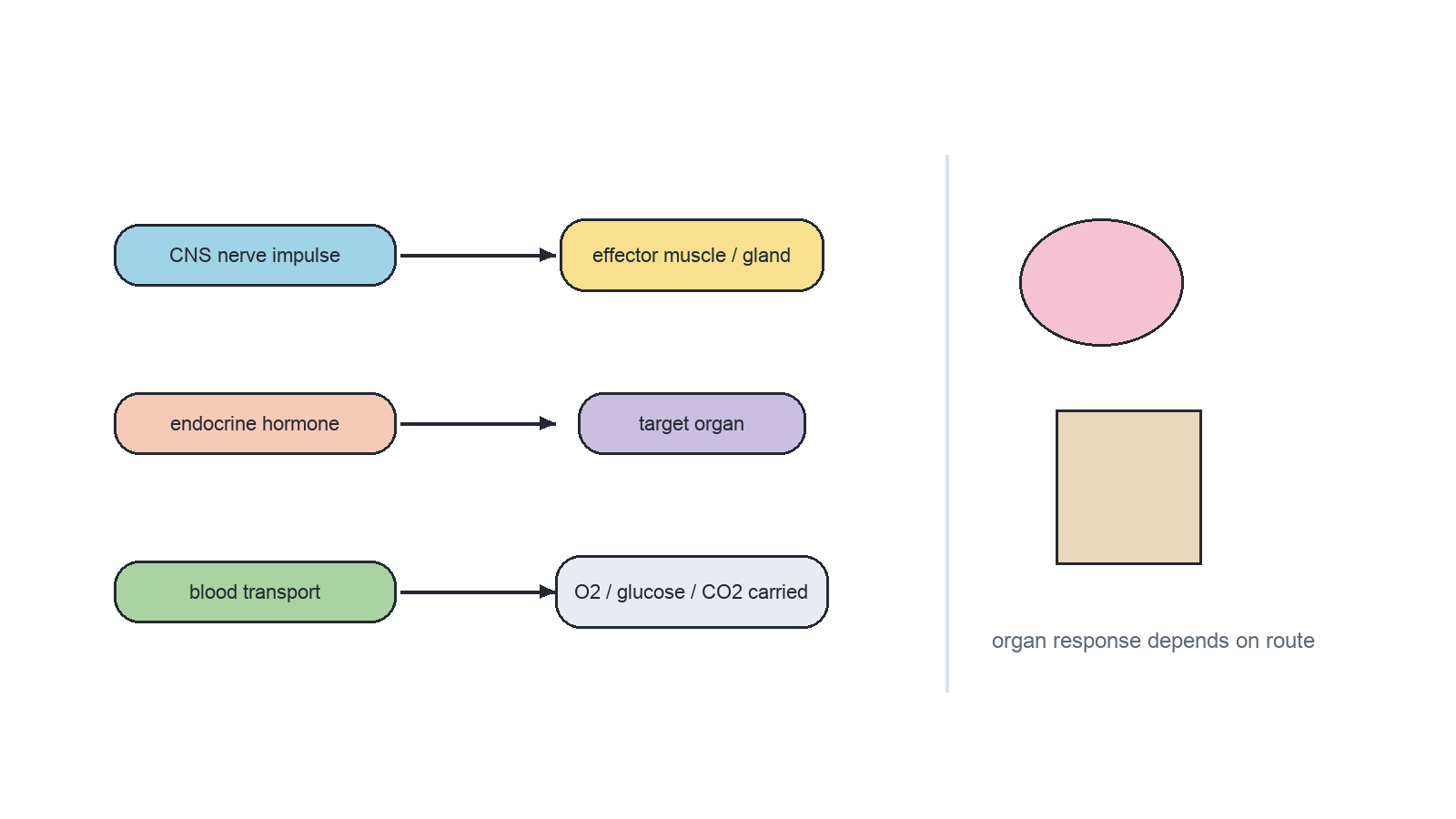
Organs are integrated by nervous signals, hormones, and blood transport. Nerves send fast targeted messages, hormones send slower blood-borne messages, and transport links nutrients, gases, wastes, hormones, and energy substrates between organs.
Fast nerves, slower hormones, and material transport integrate organs.
Put the cause-and-response chain in order.
OrderPut the cause-and-response chain in order.
ChooseCombine Inputs In The Brain
Practice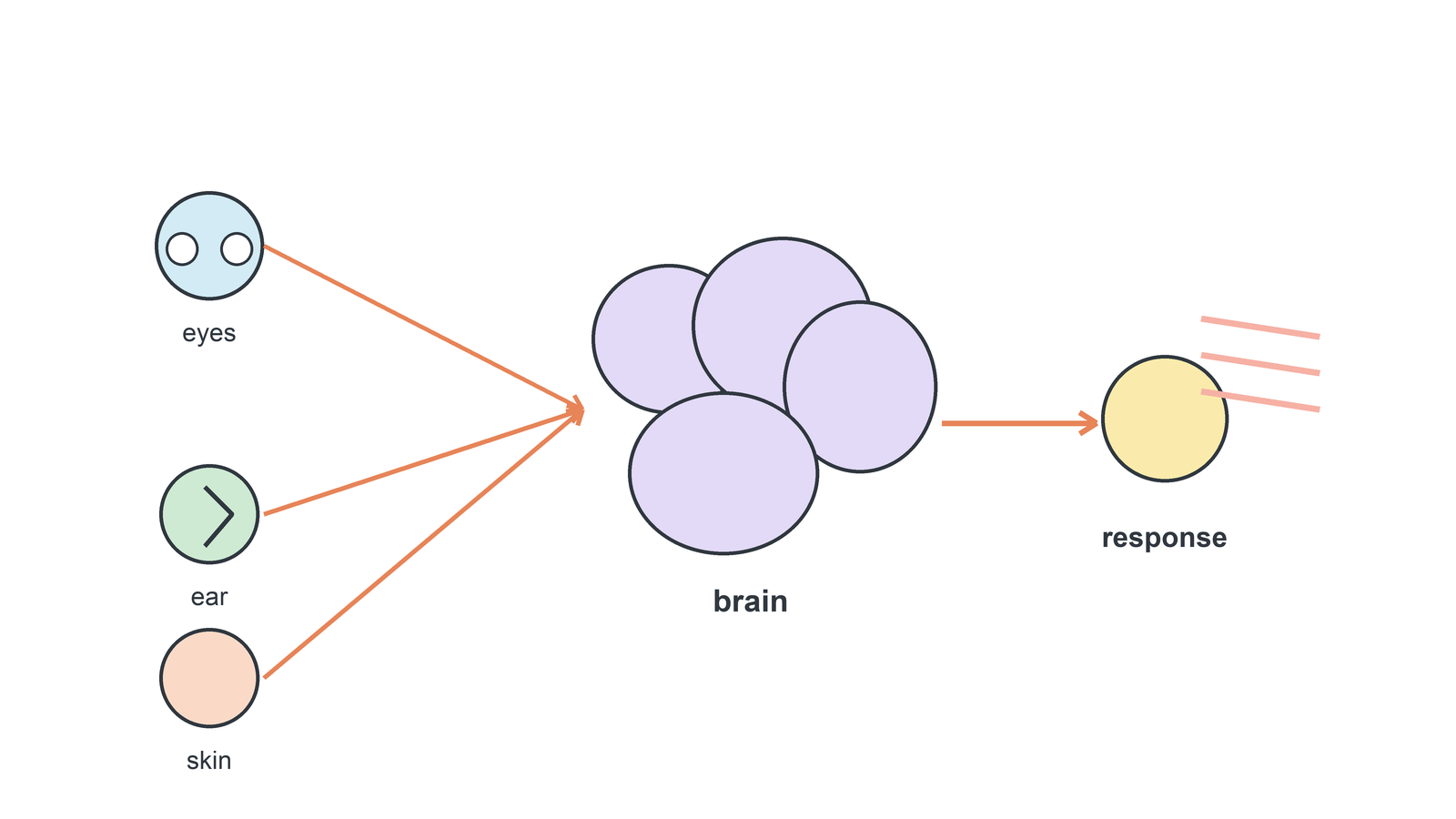
The brain integrates sensory input and coordinates complex responses. The cerebral hemispheres combine inputs for perception, learning, and memory, while the cerebellum, hypothalamus, and medulla have distinct roles in movement, endocrine control, and autonomic regulation.
A student says the brain only receives sensory input. Improve the answer by adding what the brain does with combined inputs.
ChooseUse The Spinal Cord Fast
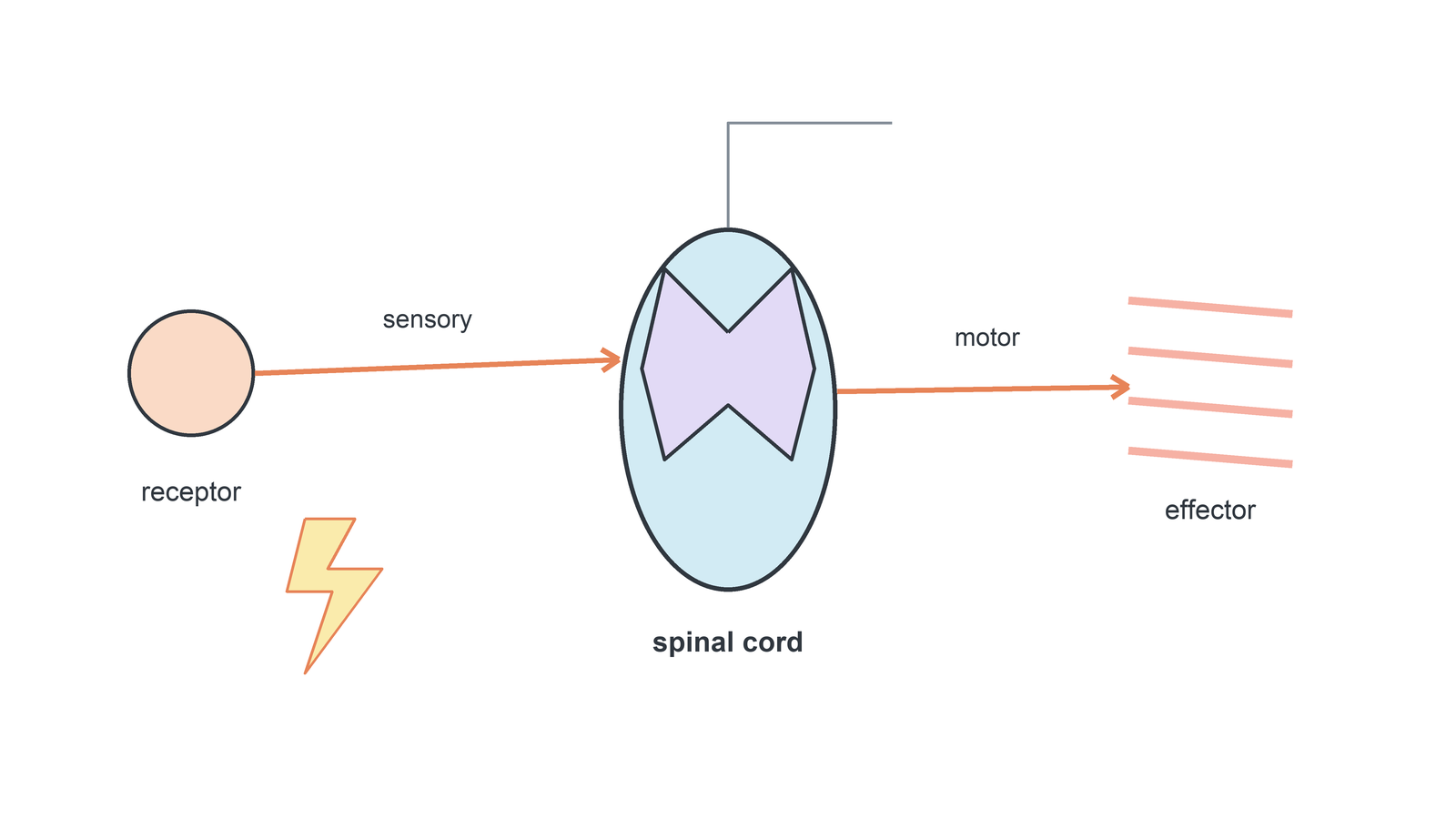
The spinal cord links brain and peripheral nervous system. It integrates unconscious processes such as reflex arcs, so a withdrawal response can begin before the brain has produced conscious awareness of pain.
Spot the error: 'A pain reflex must wait for the brain to decide before the muscle contracts.'
Spot ErrorsSend Input To The CNS
Sensory neurons carry impulses from receptors to spinal cord and brain. Receptor cells convert stimuli into nerve impulses; some inputs are integrated in spinal reflexes, while others reach the cerebral hemispheres for conscious perception.
Match each idea to its integration role.
MatchSend Output To Muscles
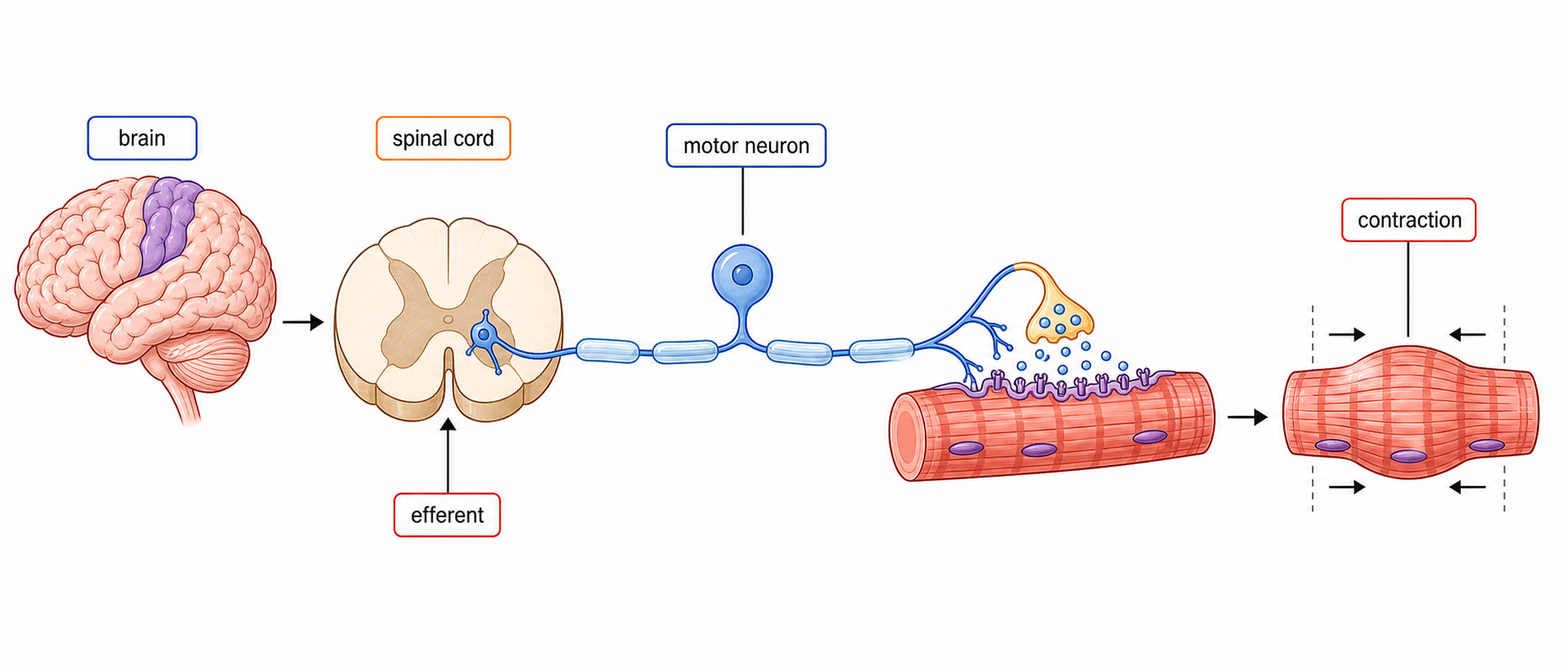
Motor neurons carry impulses from CNS to skeletal muscle effectors. For voluntary movement, cerebral hemispheres coordinate output so muscles are stimulated to contract in a controlled pattern.
Motor output turns CNS processing into muscle contraction.
Match each idea to its integration role.
MatchMatch each idea to its integration role.
ChooseRead A Mixed Nerve
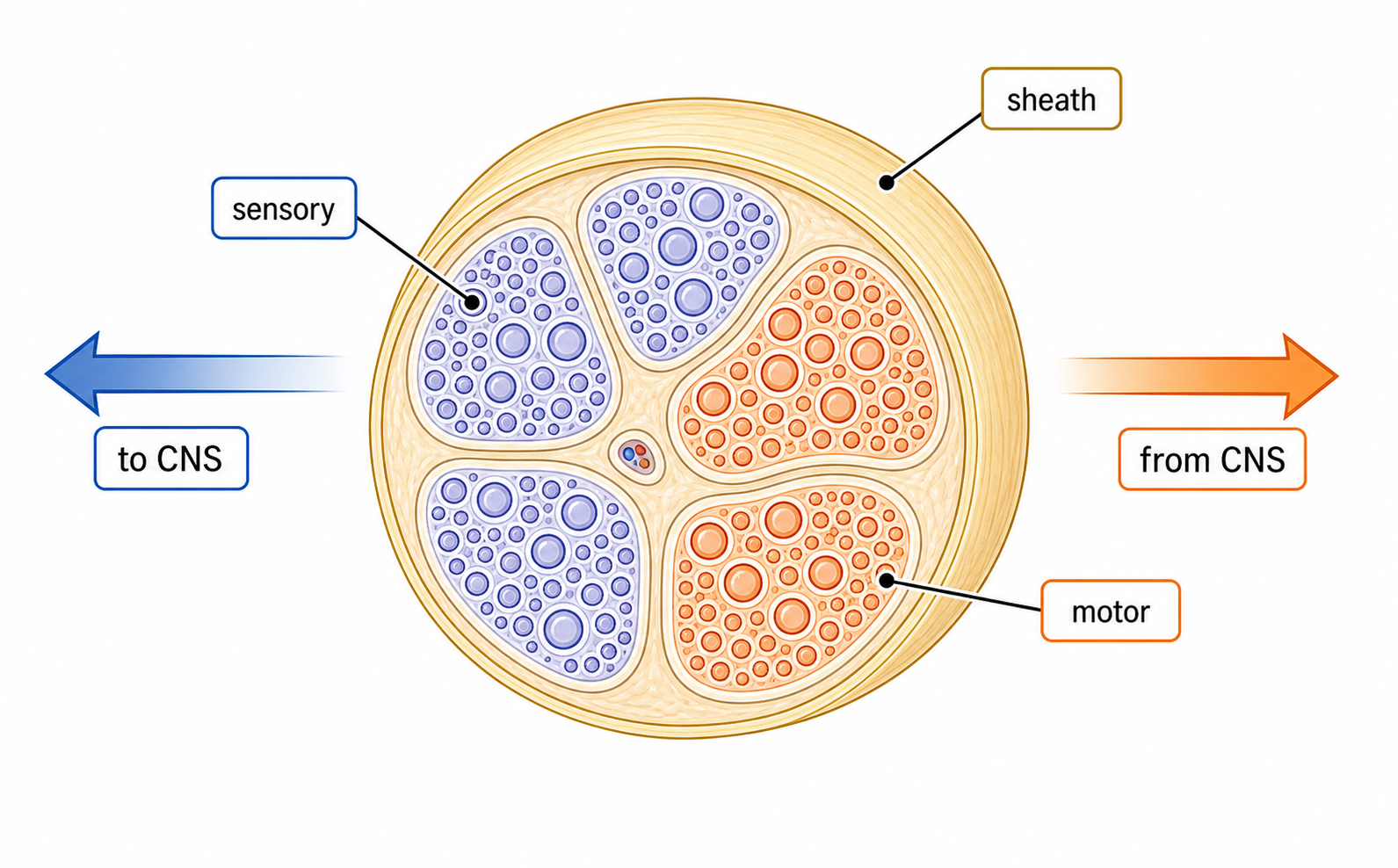
Nerves are bundles of sensory and motor nerve fibres in connective tissue. Mixed nerves carry impulses both to and from the CNS, so one nerve can contain afferent sensory fibres and efferent motor fibres.
Mixed nerves carry two traffic directions in one bundle.
Match each idea to its integration role.
MatchMatch each idea to its integration role.
ChooseTrace A Pain Reflex
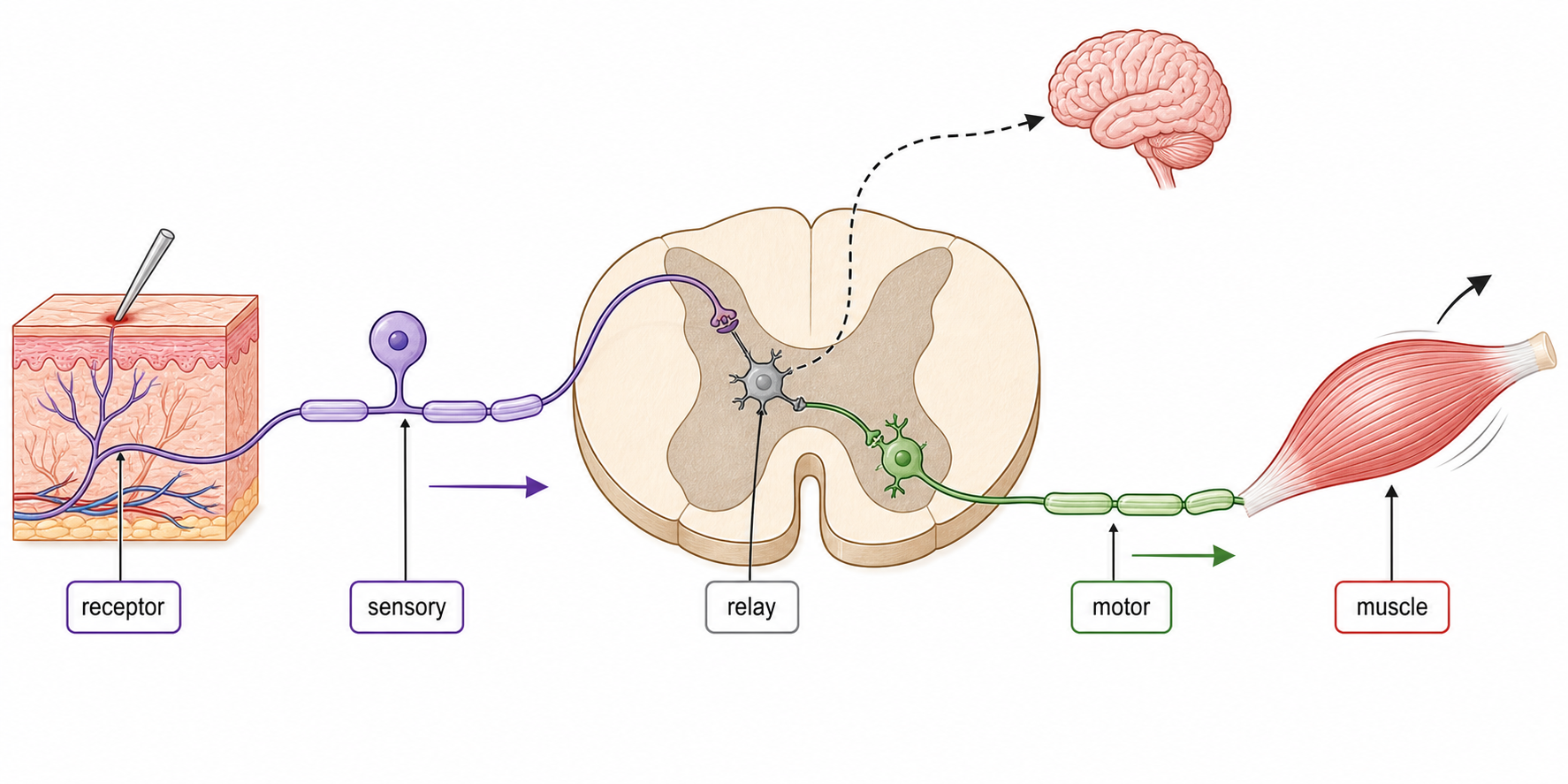
Pain reflexes are rapid involuntary withdrawal responses. Reflex arcs use receptors, sensory neurons, relay neurons, motor neurons, and skeletal muscle, so the limb can withdraw before conscious decision-making.
A spinal reflex protects first; conscious perception follows.
Put the cause-and-response chain in order.
OrderPut the cause-and-response chain in order.
ChooseSmooth A Movement
Practice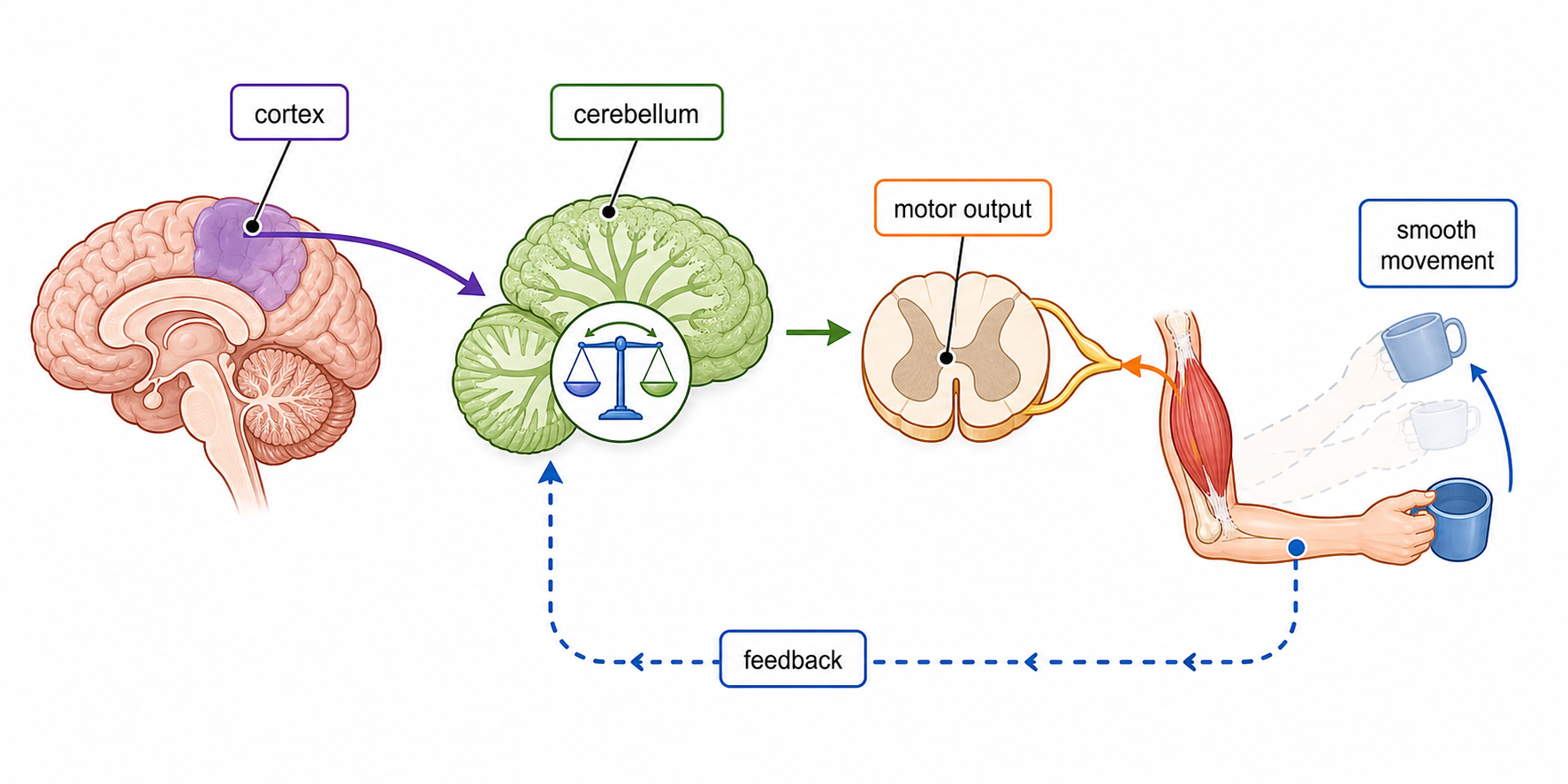
The cerebellum coordinates timing and force of skeletal muscle contractions. It compares intended movement with sensory feedback so balance, posture, and smooth learned movements can be adjusted continuously.
Support Cerebellum Role with an inspectable mobile visual.
A student says the cerebellum starts every voluntary movement. Improve the answer.
ChooseA student says the cerebellum starts every voluntary movement. Improve the answer.
ChooseTime Sleep With Melatonin
The pineal gland secretes melatonin according to light-dark cycles. Darkness raises melatonin, while light input from the retina via the hypothalamic suprachiasmatic nucleus suppresses secretion, helping set the sleep-wake rhythm.
Spot the error: 'Melatonin is high in bright daylight, so it keeps humans awake.'
Spot ErrorsPrepare For Vigorous Activity
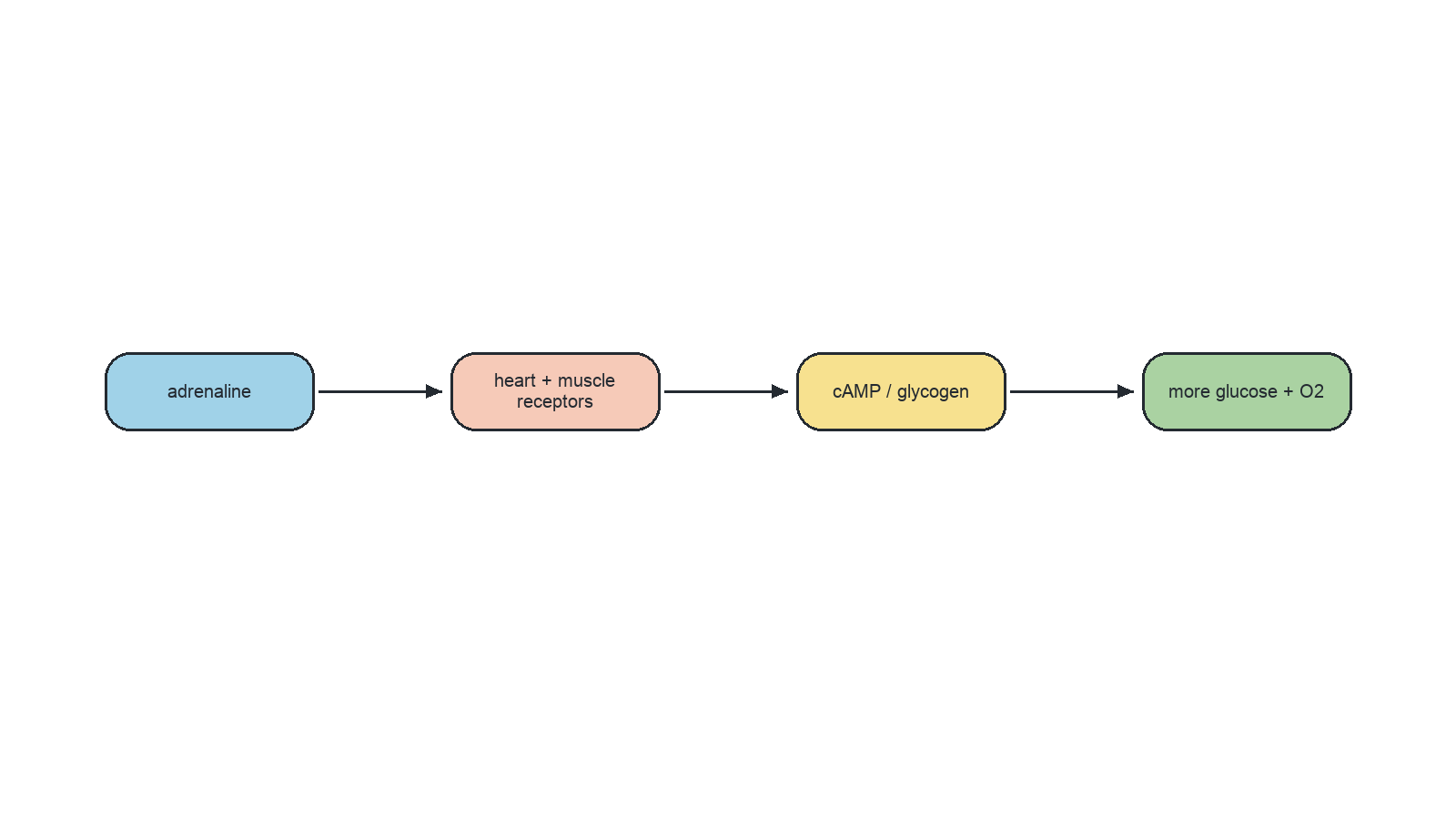
Adrenal glands secrete epinephrine during stress or danger. Epinephrine circulates in blood and prepares the body for vigorous activity by increasing heart rate, ventilation, blood flow to skeletal muscles, and respiratory substrate availability.
Match each idea to its integration role.
MatchLink Brain To Endocrine Glands
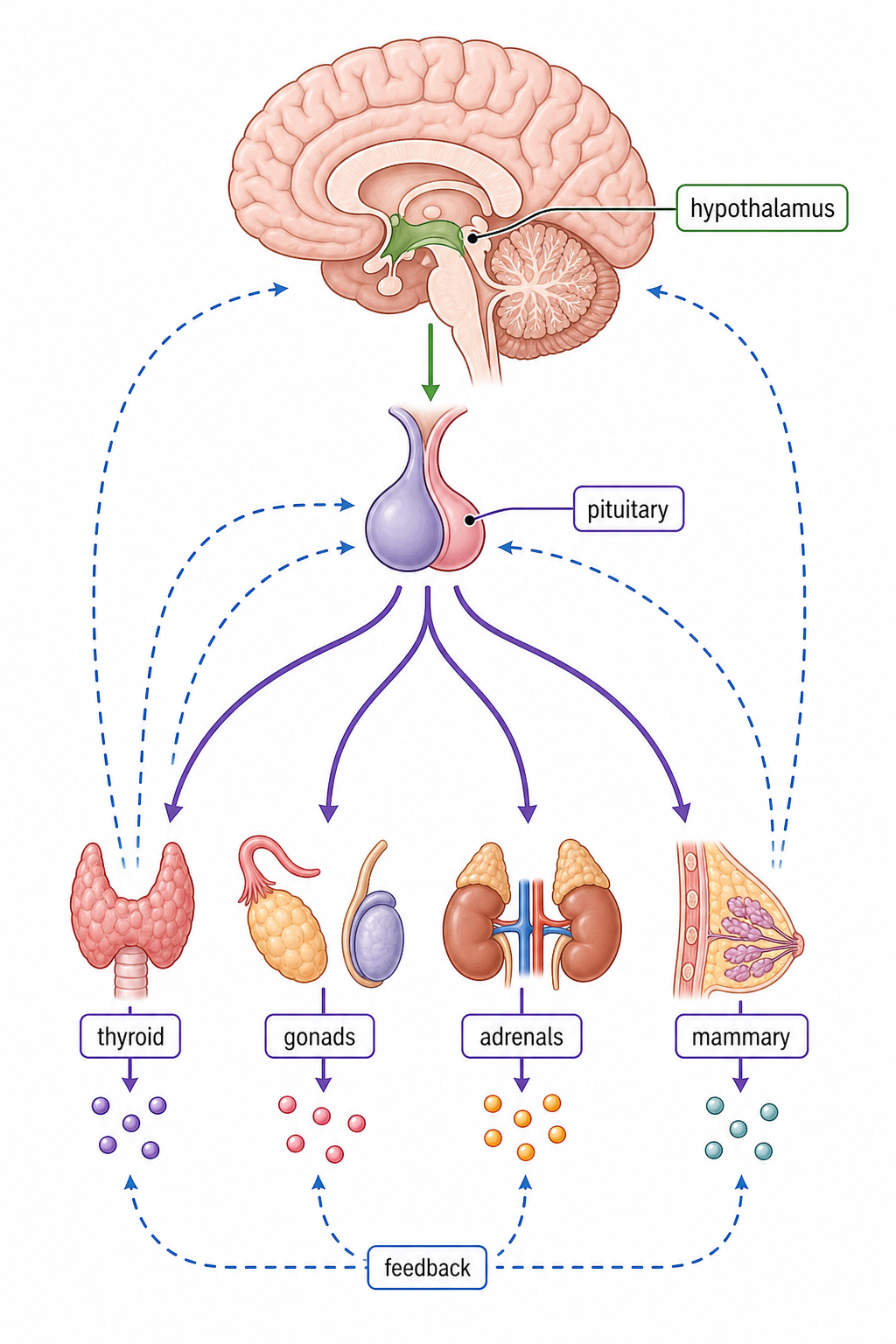
The hypothalamus links nervous inputs to endocrine control. It regulates the pituitary gland, whose hormones influence other endocrine glands including thyroid, gonads, adrenals, and mammary glands.
The hypothalamus-pituitary link turns nervous information into endocrine control.
Match each idea to its integration role.
MatchMatch each idea to its integration role.
ChooseAdjust Heart Rate
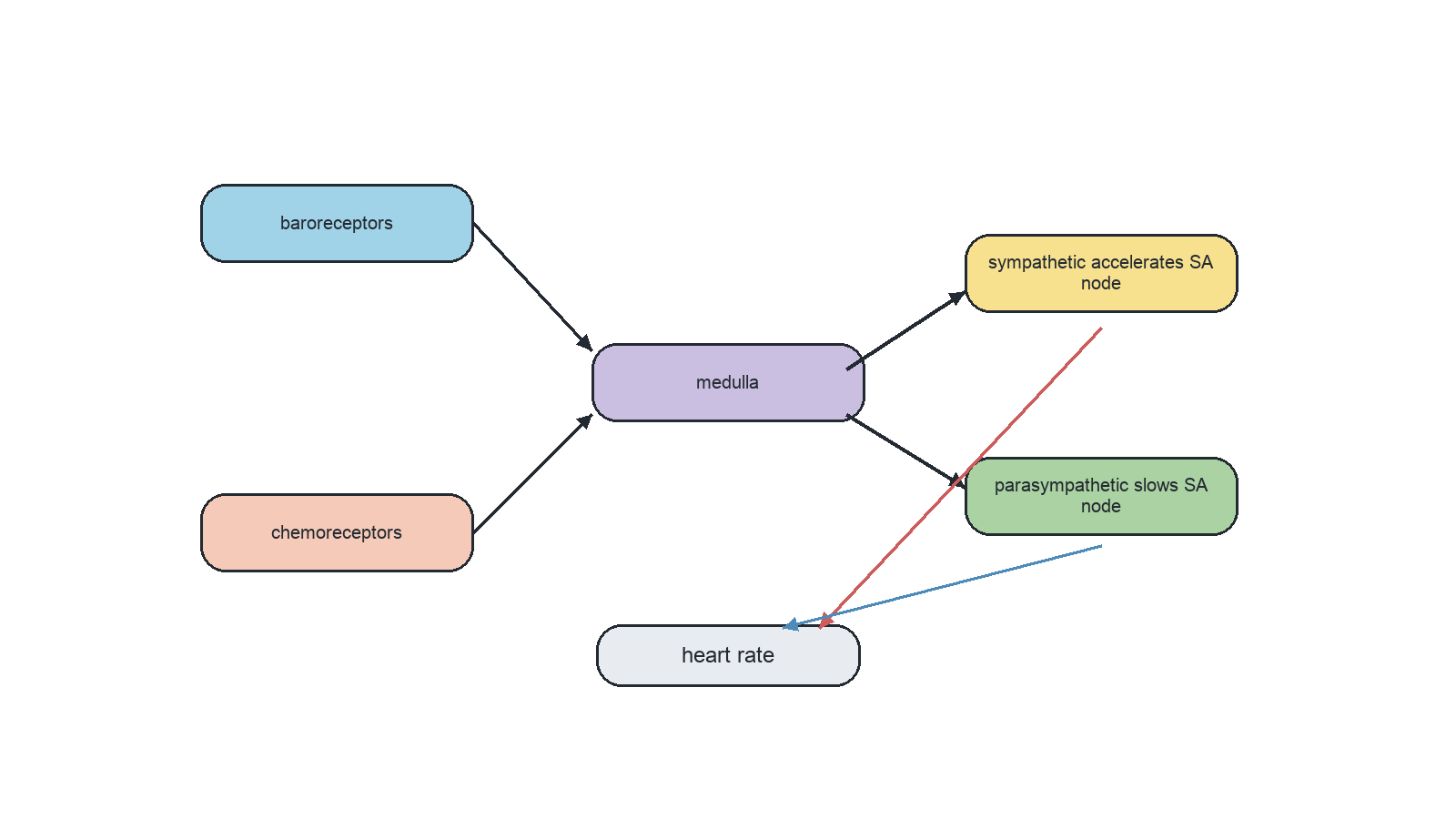
Baroreceptors in the aortic arch and carotid sinuses monitor blood pressure; chemoreceptors monitor CO₂, pH, and O₂. The medulla coordinates autonomic output to the heart, changing sinoatrial node activity, heart rate, and stroke volume.
Heart-rate control is sensory input plus medulla output to the heart.
Match each idea to its integration role.
MatchMatch each idea to its integration role.
ChooseChange Ventilation
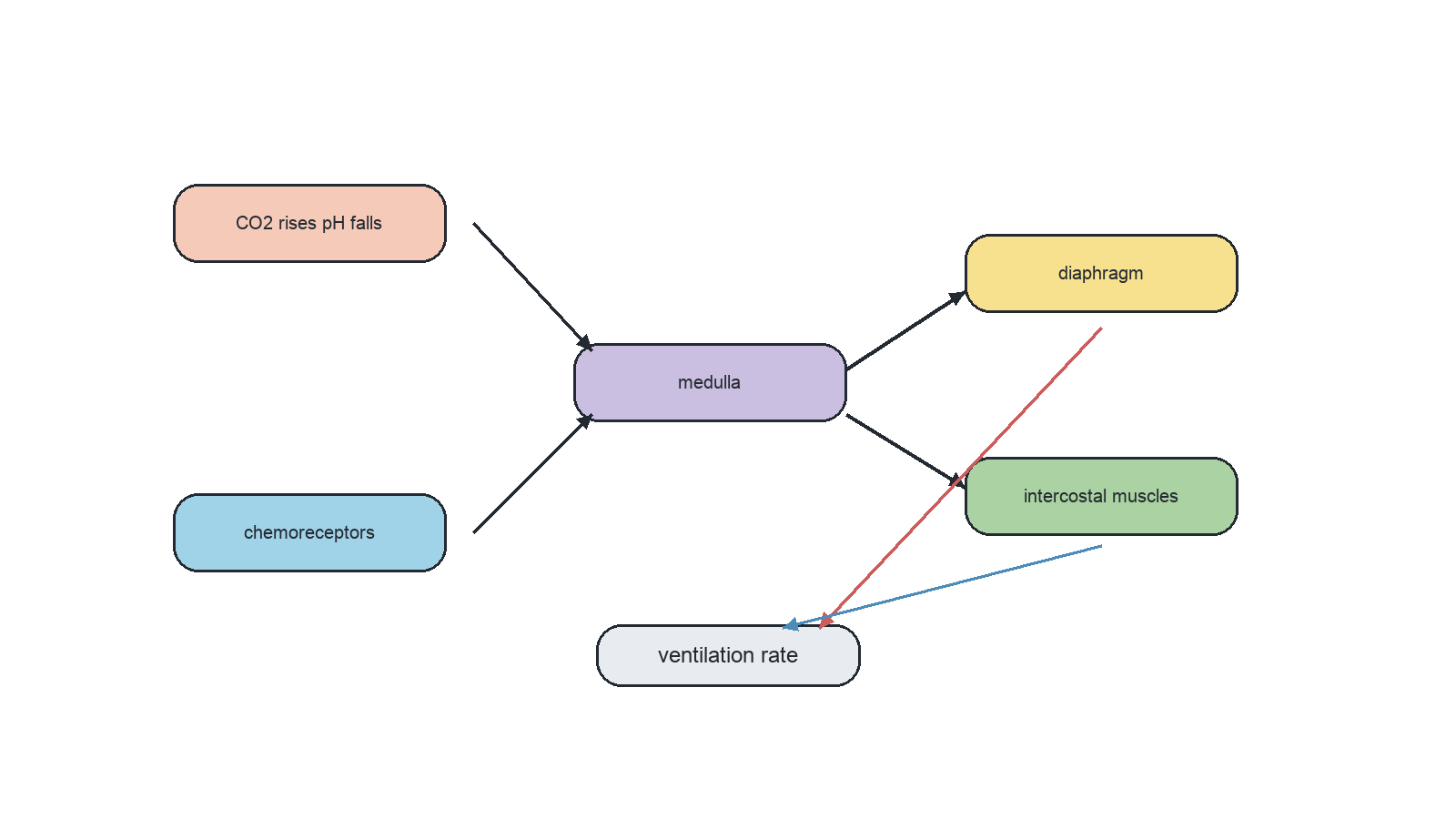
Chemoreceptors detect CO₂-driven pH changes in blood and cerebrospinal fluid. The medulla sends signals to the diaphragm and intercostal muscles to change ventilation rate and ventilation volume, removing CO₂ faster when exercise raises respiration.
CO₂-driven pH change is the key monitored variable.
Put the cause-and-response chain in order.
OrderPut the cause-and-response chain in order.
ChooseCoordinate Gut Movement
PracticeThe CNS controls voluntary swallowing and egestion. Between those endpoints, the enteric nervous system coordinates involuntary peristalsis in gut smooth muscle so material moves continuously through the alimentary canal.
Explain why swallowing can be voluntary but most gut movement is not consciously controlled.
ChooseCore Transfer: Explain Body-System Integration
Exam PracticeBody-system integration lets interacting parts coordinate an overall biological function; systems interact across molecular, cellular, organ, organism, and ecosystem levels. Cells form tissues, organs, organ systems, and whole organisms; emergent properties arise when subsystems interact, such as gut peristalsis and absorption. Organs are integrated by nervous signals, hormones, and blood transport; transport links nutrients, gases, wastes, hormones, and energy substrates between organs. The brain integrates sensory input and coordinates complex responses; cerebral hemispheres, cerebellum, hypothalamus, and medulla have distinct roles. The spinal cord links brain and peripheral nervous system; it integrates unconscious processes such as reflex arcs. Sensory neurons carry impulses from receptors to spinal cord and brain; inputs may reach cerebral hemispheres for conscious perception. Motor neurons carry impulses from CNS to skeletal muscle effectors; voluntary muscle contraction is coordinated through cerebral hemispheres. Nerves are bundles of sensory and motor nerve fibres in connective tissue; mixed nerves carry impulses both to and from the CNS. Pain reflexes are rapid involuntary withdrawal responses; reflex arcs use receptors, sensory neurons, relay neurons, motor neurons, and skeletal muscle. The cerebellum coordinates timing and force of skeletal muscle contractions; it maintains balance, posture, and smooth learned movements. The pineal gland secretes melatonin according to light-dark cycles; melatonin modulates sleep timing as part of circadian rhythms. Adrenal glands secrete epinephrine during stress or danger; it increases heart rate, ventilation, and respiratory substrate availability. The hypothalamus links nervous inputs to endocrine control; pituitary hormones regulate glands including thyroid, gonads, adrenals, and mammary glands. Baroreceptors monitor blood pressure; chemoreceptors monitor CO2, pH, and O2; the medulla adjusts sinoatrial node activity by sympathetic and parasympathetic nerves. Chemoreceptors detect CO2-driven pH changes in blood and cerebrospinal fluid; the medulla alters diaphragm and intercostal muscle activity to change ventilation rate. The CNS controls voluntary swallowing and egestion; the enteric nervous system coordinates involuntary peristalsis in gut smooth muscle.
Put the cluster answer frame in order.
OrderUse this for questions that combine nervous, endocrine, transport, and feedback control in body-system integration.
Use this for questions that combine nervous, endocrine, transport, and feedback control in body-system integration.
Common loss: naming the organ, hormone, or plant response without the mechanism that links cause to effect.