
Compare Neuron Types
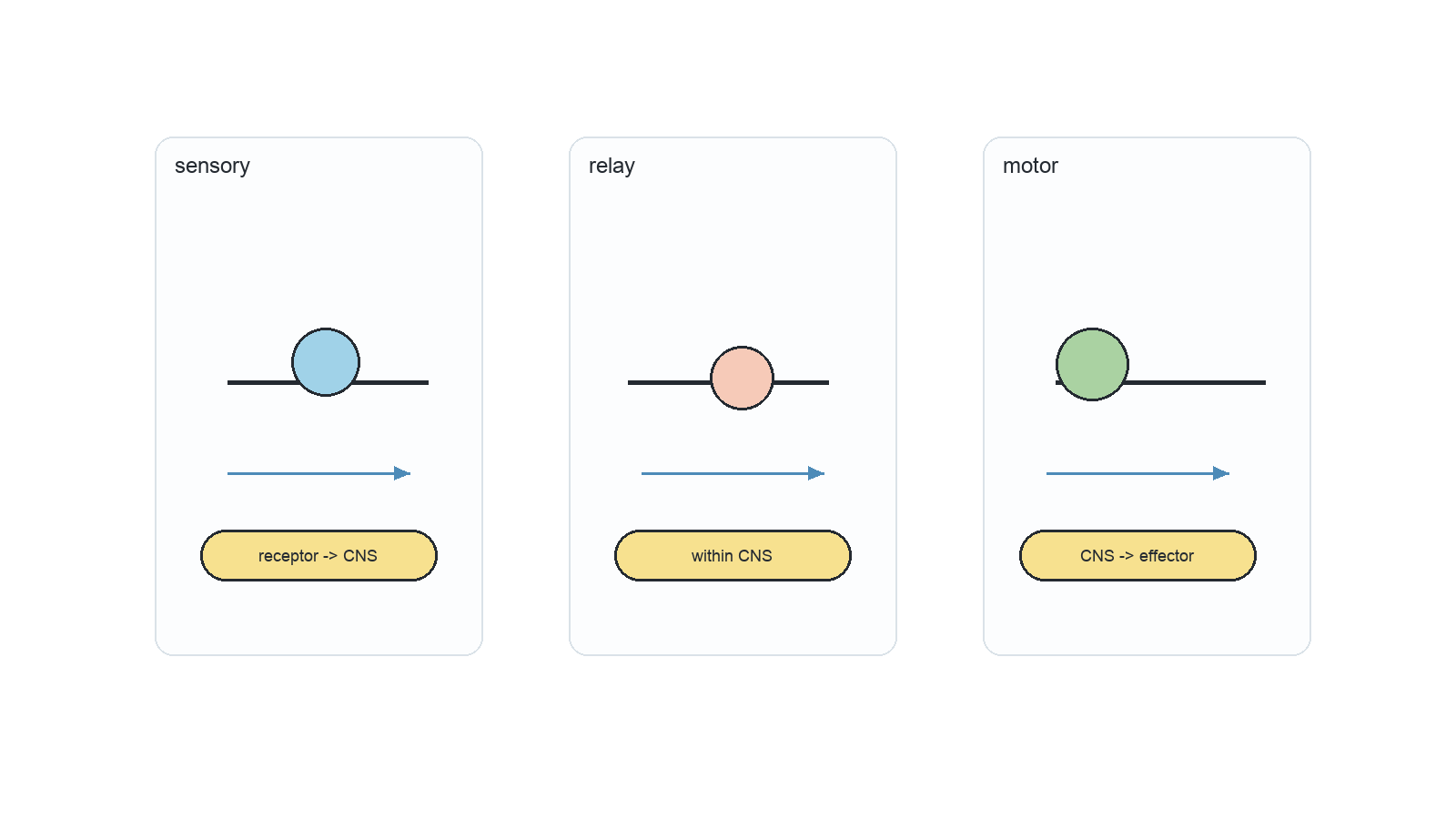
Neurons carry electrical impulses in the nervous system. Motor, sensory, and relay neurons differ in axon, dendrite, dendron, and cell body arrangement, and those differences fit whether the cell carries signals from receptors, between neurons, or to effectors.
Match each neuron type to its main route.
MatchBuild Resting Potential
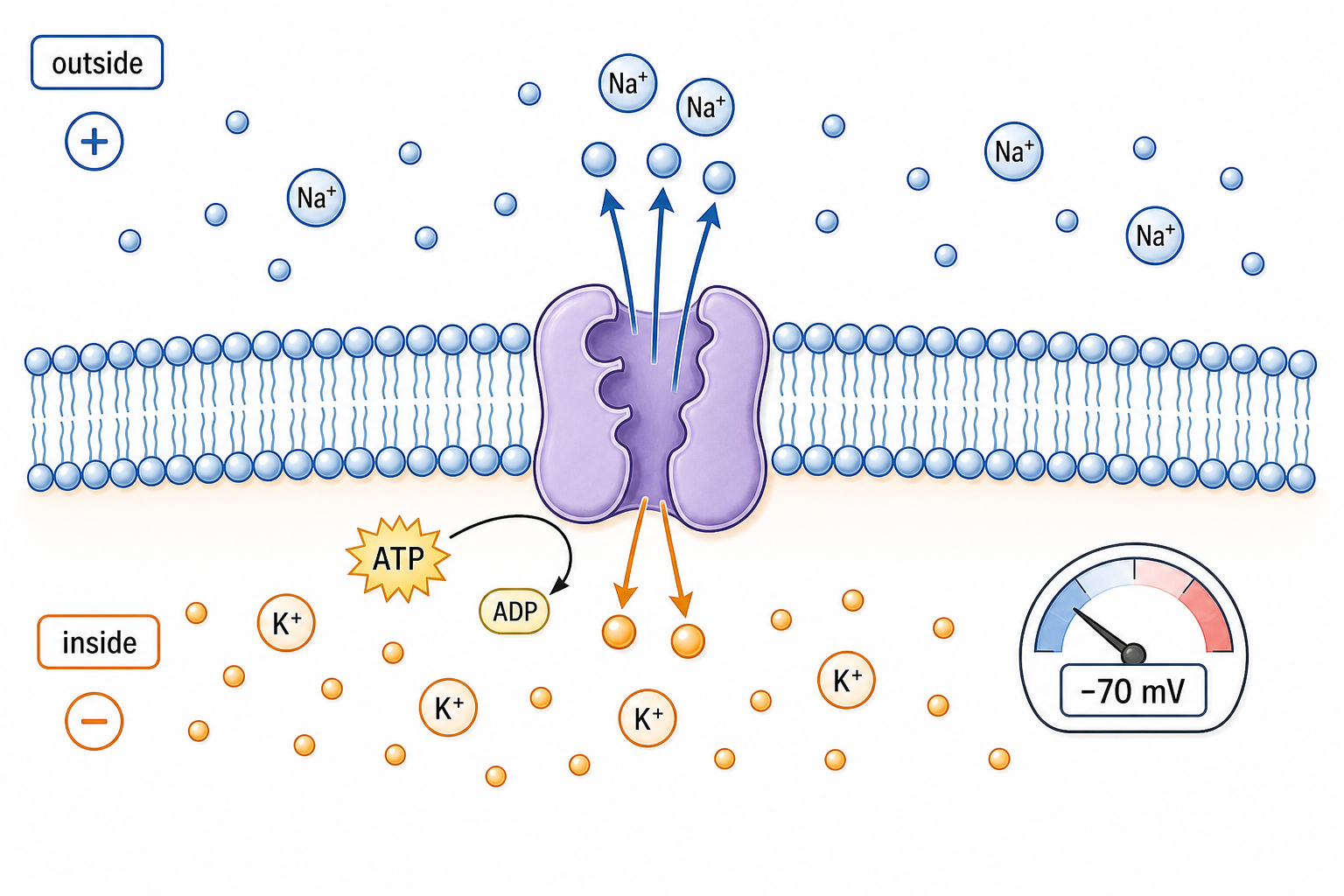
Resting potential is an maintained ion-gradient state, not the action potential itself. The sodium-potassium pump uses ATP to move 3 Na+ out and 2 K+ in, keeping the inside of the axon about -70 mV relative to outside.
Place the pump labels and voltage labels on the resting axon membrane.
LabelTrace An Action Potential
PracticeA nerve impulse is a propagated action potential along a nerve fibre. It starts when threshold opens voltage-gated sodium channels; sodium enters, the membrane depolarizes, and that local voltage change helps trigger the next region of membrane.
A patch of axon membrane reaches threshold. Predict the first channel event and voltage change.
PredictExplain Faster Impulses
Larger axon diameter lowers resistance and increases impulse speed because current spreads more easily through the axoplasm; squid giant axons are the classic unmyelinated comparison. Myelin sheaths and nodes of Ranvier enable faster saltatory conduction because depolarization is regenerated only at the gaps.
Match each feature to why impulse speed increases.
MatchLocate A Synapse
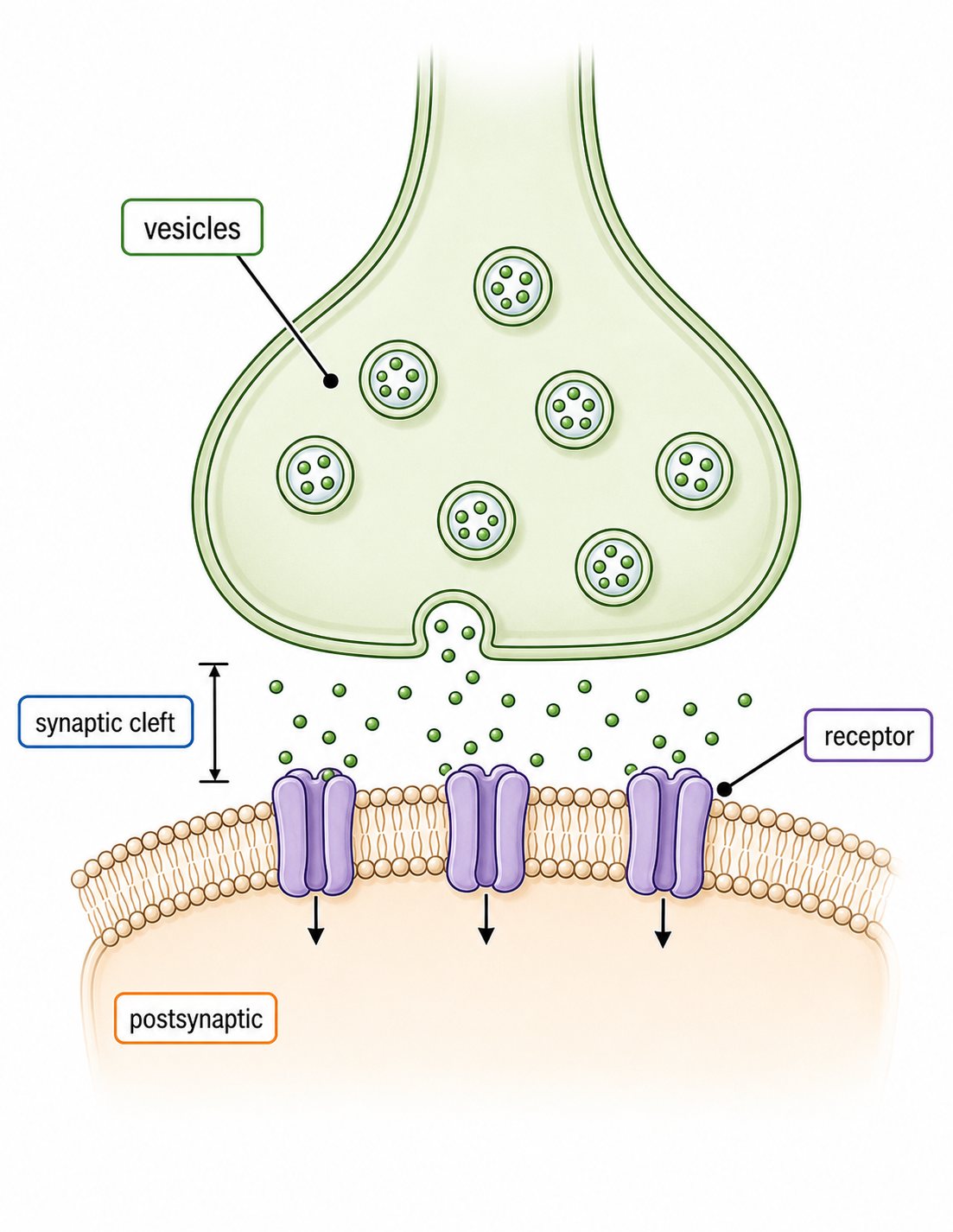
Synapses connect neurons to neurons, muscles, or glands. Chemical synapses transmit one way across a narrow synaptic cleft because the presynaptic terminal releases transmitter and the postsynaptic membrane carries the receptors that respond.
Place the synapse labels in signal order.
LabelTrigger Neurotransmitter Release
Practice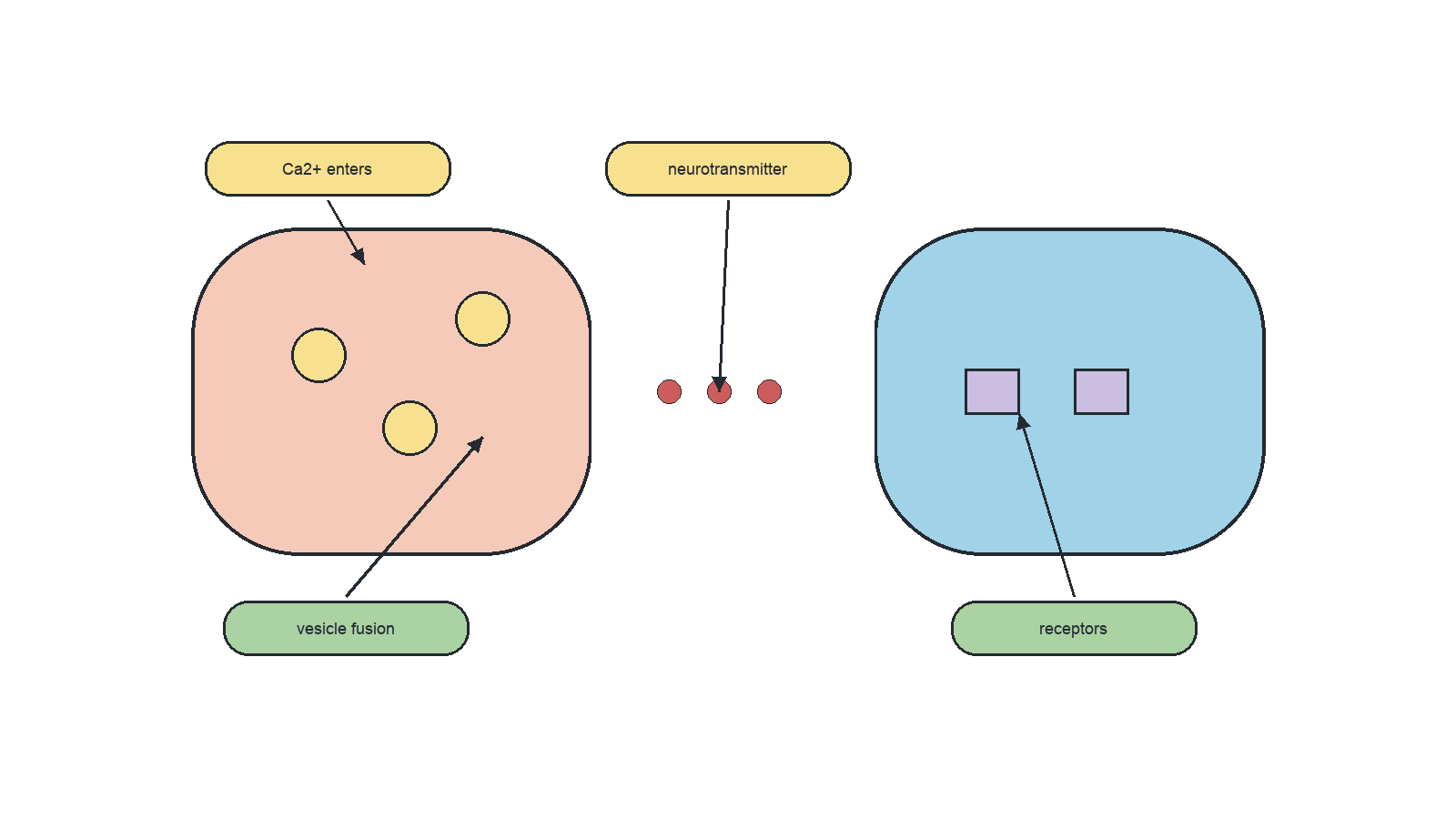
At the presynaptic terminal, action potentials open voltage-gated Ca²⁺ channels. Ca²⁺ causes vesicle fusion and neurotransmitter exocytosis into the cleft, converting the electrical arrival signal into chemical release.
Put the presynaptic events in the correct order.
OrderRaise The Postsynaptic Voltage
After release, neurotransmitters such as acetylcholine diffuse and bind transmembrane receptors on the postsynaptic membrane. EPSPs depolarize the membrane and make threshold more likely, so each excitatory synapse adds a small step toward firing.
Match the synaptic event to its effect on the postsynaptic neuron.
Match