
Trap Light In Membranes
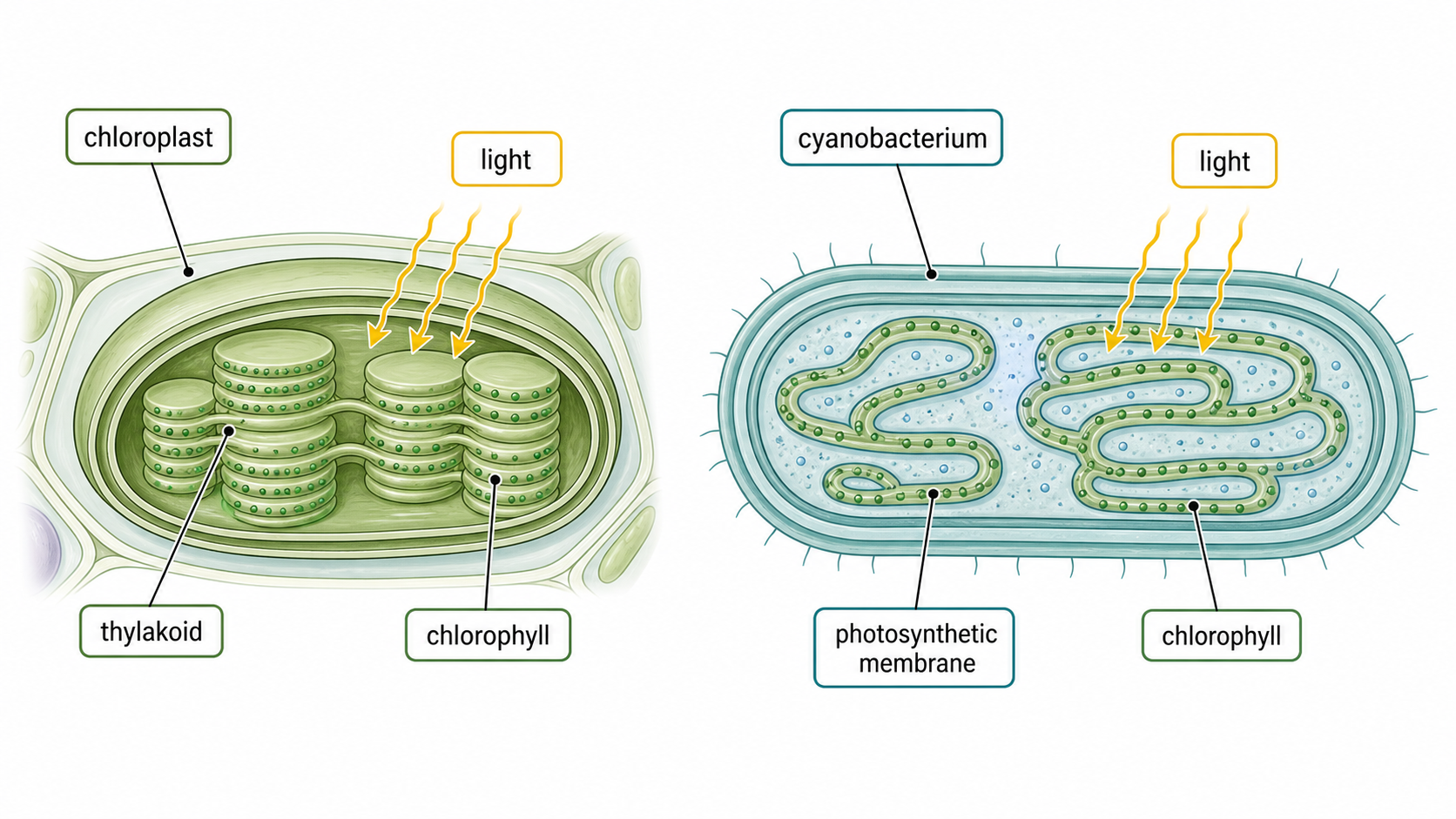
Photosynthesis converts light energy into chemical energy in carbon compounds. Photoautotrophs use chlorophyll to capture light; in plants it is in chloroplast thylakoid membranes, while cyanobacteria use chlorophyll in internal membranes instead of chloroplasts.
Match each phrase to the correct part of the opening idea.
MatchBuild Glucose, Release Oxygen
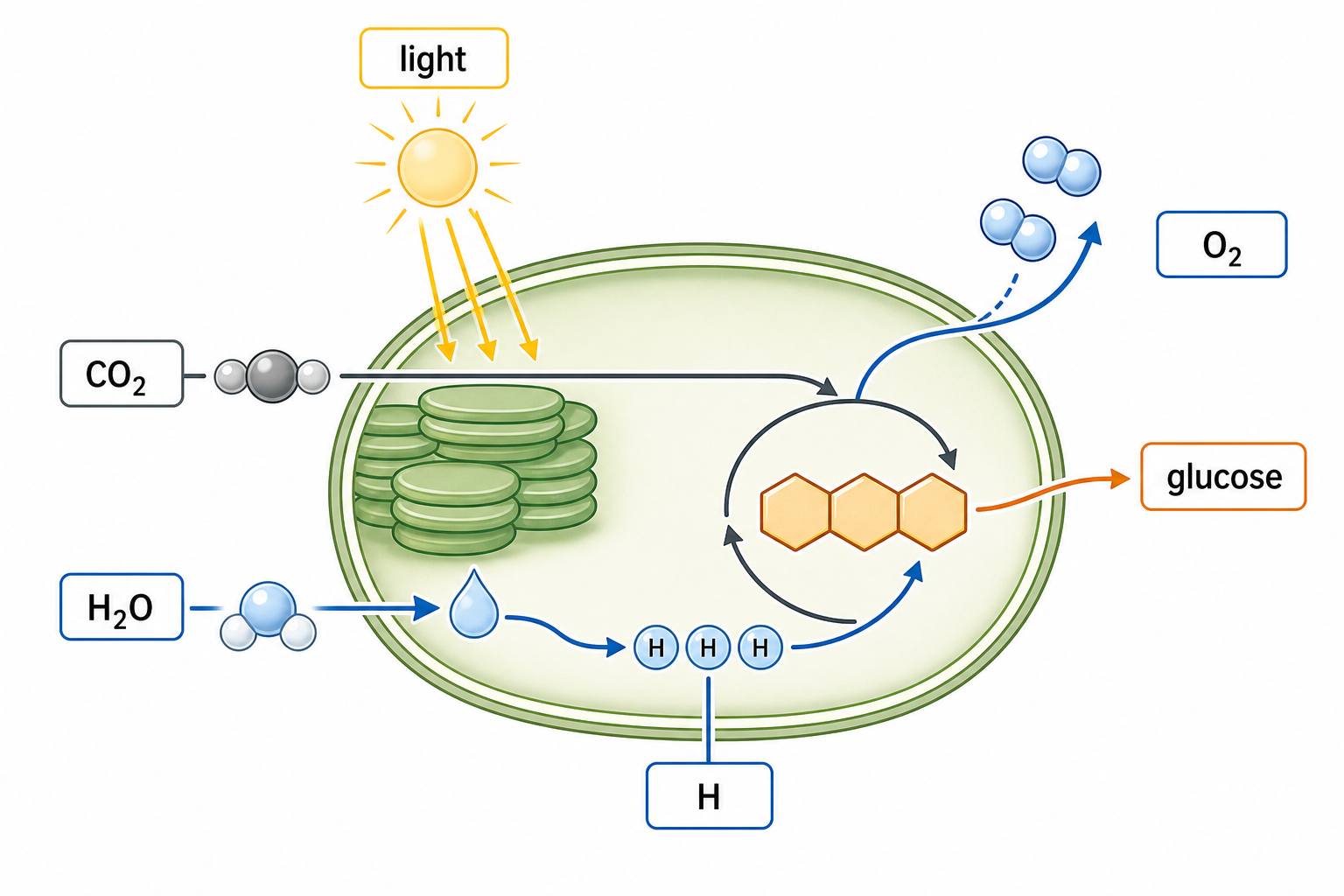
The photosynthesis equation maps the sources of atoms and products. Carbon dioxide is reduced to carbohydrate using hydrogen from water. Glucose represents the main stored product, though many compounds are synthesized. Oxygen is released from photolysis of water, not directly from CO2; oxygenic photosynthesis occurs in plants, algae, and cyanobacteria.
Match each input or process to its source role.
MatchRead A Chromatogram
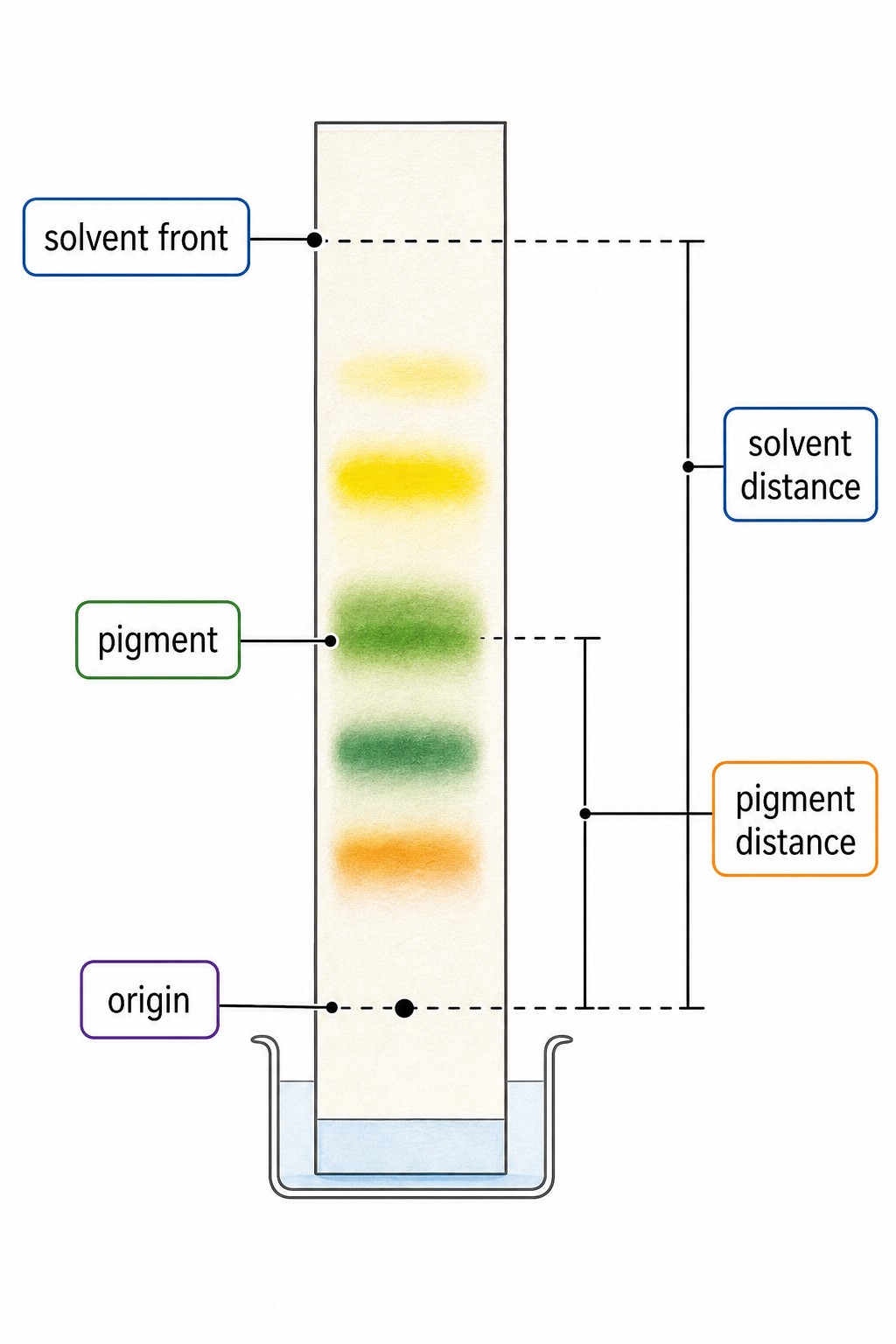
Paper chromatography separates chlorophylls and accessory pigments because pigments differ in solubility and attraction to the paper. Use Rf as a ratio: distance moved by pigment divided by distance moved by solvent front. A larger Rf means the pigment moved further relative to the solvent.
A pigment moved 3 cm and the solvent front moved 5 cm. Which answer is correct?
ChooseCompare Spectra
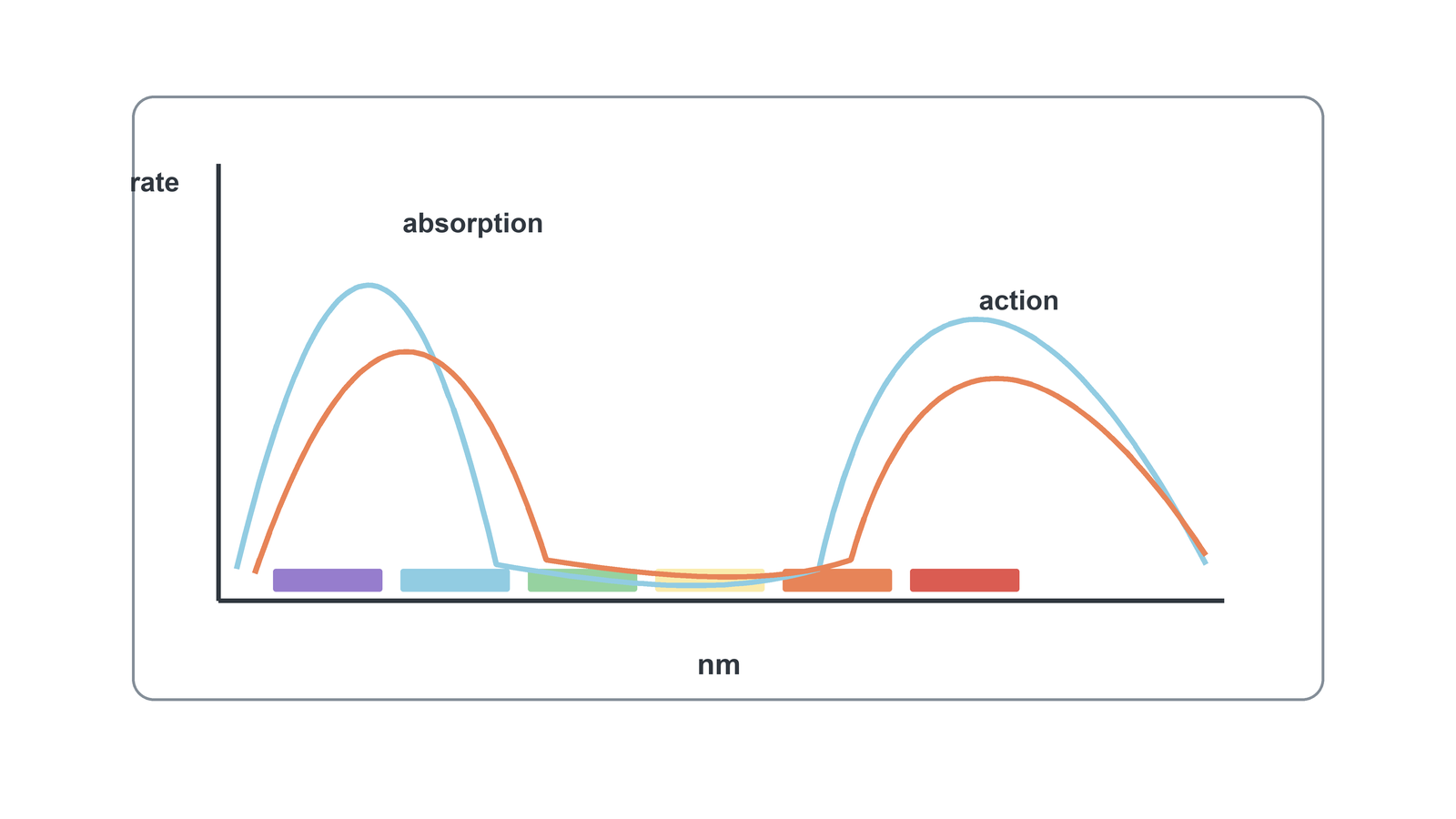
Spectra questions test whether you know what the graph is measuring. Chlorophyll and accessory pigments absorb specific wavelengths; absorbed light excites electrons for light-dependent reactions. An absorption spectrum shows wavelengths absorbed by pigments, while an action spectrum shows wavelengths most effective for photosynthesis rate, often using oxygen production or CO2 uptake.
A graph uses oxygen production at different wavelengths. What kind of spectrum is it?
GraphTest Limiting Factors
Practice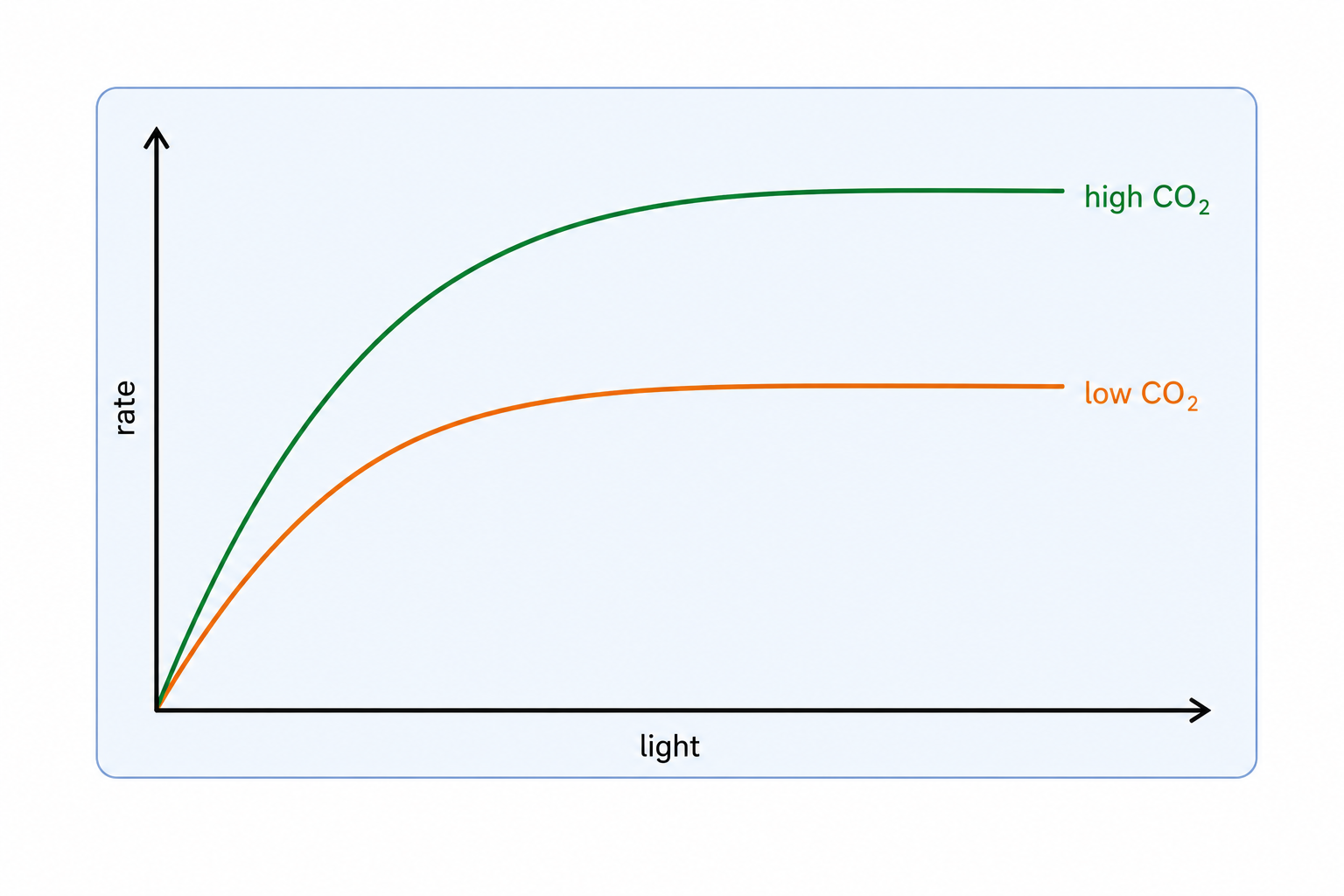
Limiting-factor experiments ask what is currently holding photosynthesis back. Light intensity, CO2 concentration, and temperature can limit photosynthesis. Investigations change one variable and estimate rate from O2 production or CO2 uptake per unit time while other variables are controlled. When a graph plateaus, the tested factor is no longer limiting.
Predict what happens to photosynthesis rate as light intensity increases and then stops increasing.
PredictJudge CO2 Enrichment Evidence
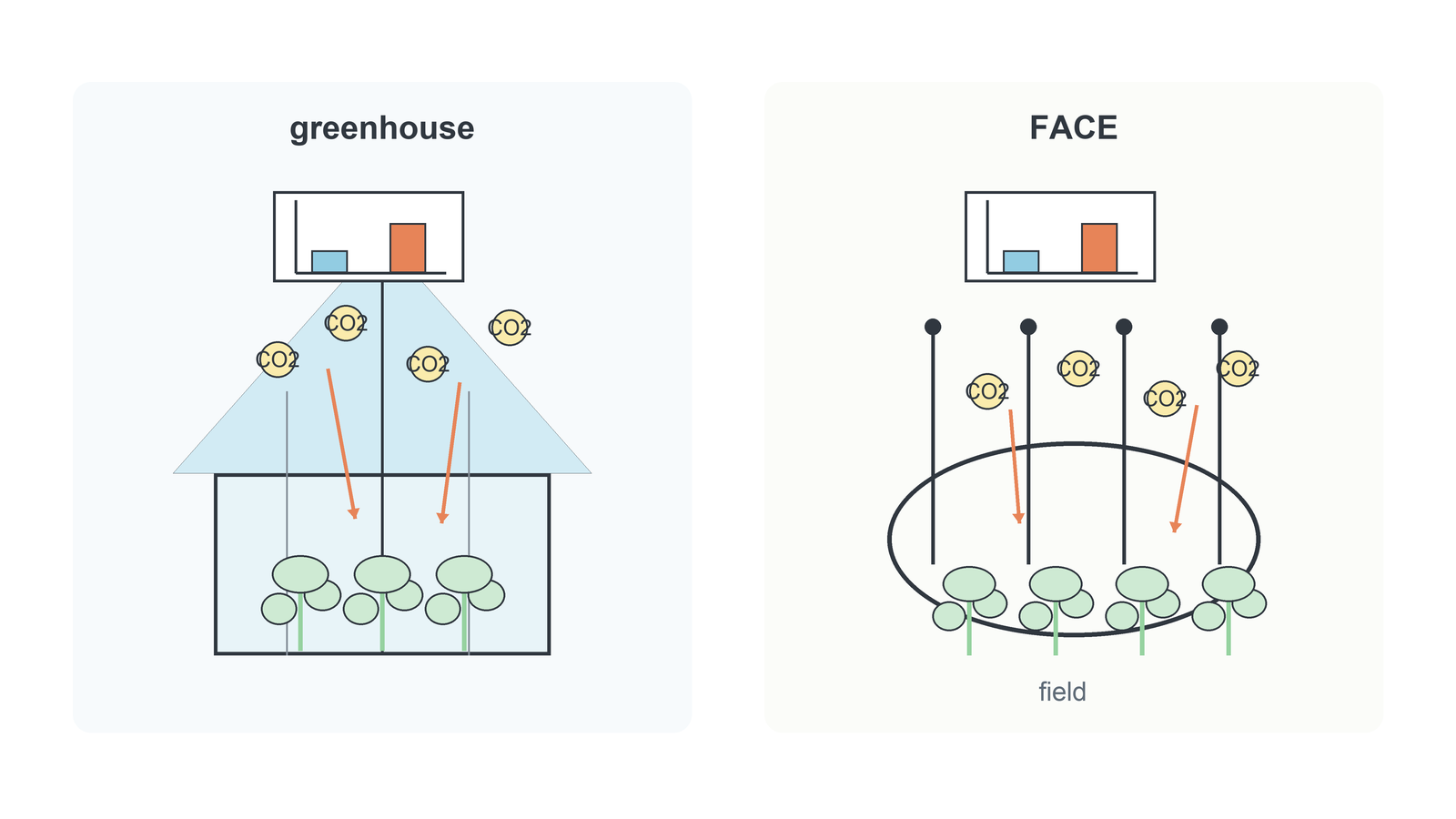
CO2 enrichment tests whether increased CO2 raises photosynthesis or growth. Greenhouse experiments are controlled but less natural; FACE experiments enrich CO2 in open air and compare realistic crop and ecosystem responses. The teacher move is to ask: was CO2 really limiting, and were water, nutrients, temperature, and species differences controlled or considered?
Which conclusion is strongest after a CO2 enrichment experiment shows little growth increase?
ChooseSL Transfer: Explain Core Photosynthesis
Exam PracticePhotosynthesis converts light energy into chemical energy in carbon compounds. Carbon dioxide is reduced to carbohydrate using hydrogen from water, glucose is the main stored product, and released oxygen comes from photolysis of water. Pigment evidence is tested with chromatography and Rf, spectra questions separate absorption from action, and rate/evidence questions use limiting factors, controls, and CO2 enrichment context.
Match each exam cue to the answer move.
MatchUse this for SL/core questions on photosynthesis definition, source of carbohydrate/oxygen, pigment separation, spectra, limiting factors, and CO2 enrichment evidence.
Use this for SL/core questions on photosynthesis definition, source of carbohydrate/oxygen, pigment separation, spectra, limiting factors, and CO2 enrichment evidence.
Do not confuse oxygen source, spectrum type, or a limiting-factor plateau.