
Define Habitat And Microhabitat
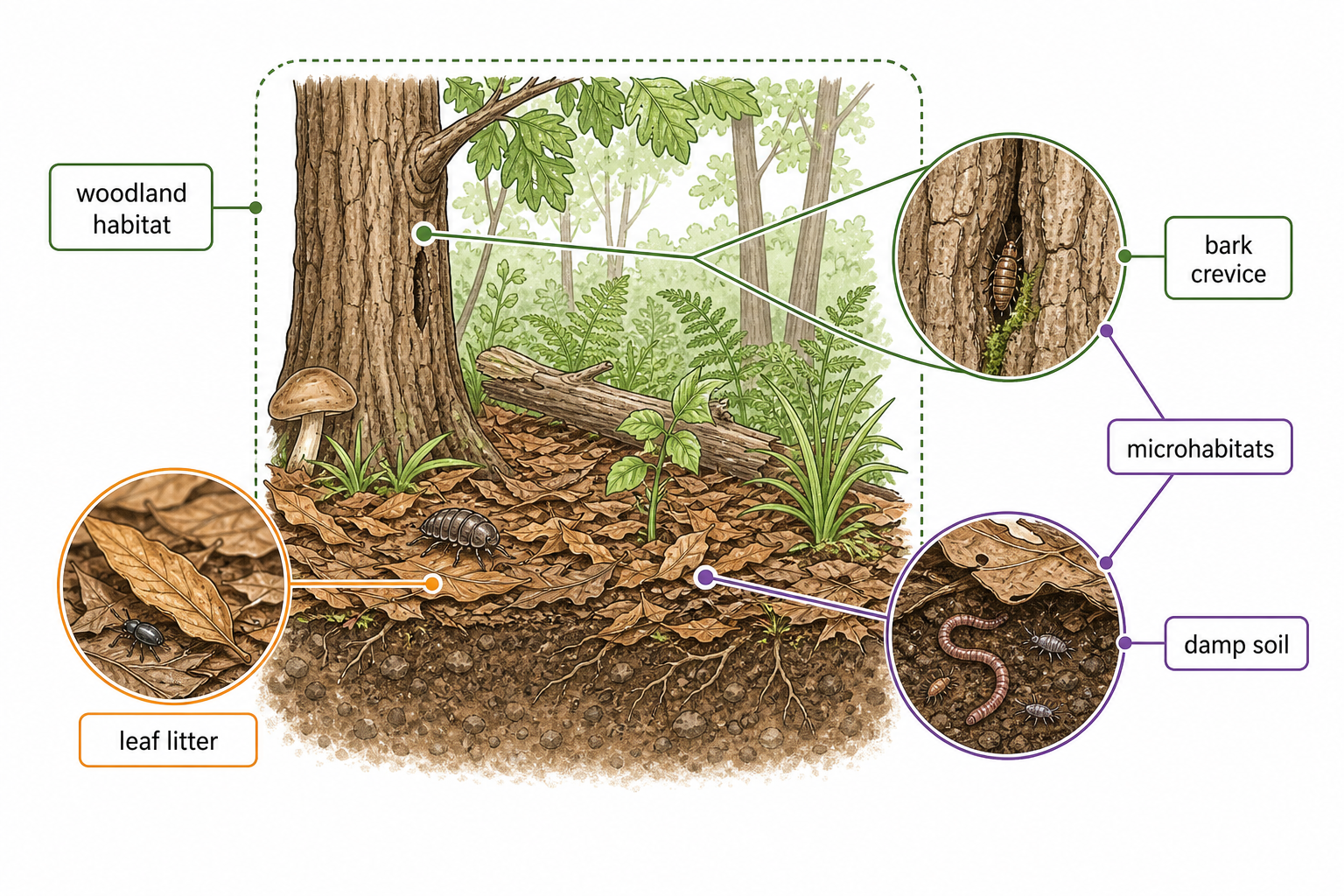
A habitat is the place where an organism, population, species, or community lives. A habitat description can include geographic location, physical position, and ecosystem type. A microhabitat is a small area with abiotic or biotic conditions different from the surrounding habitat, such as bark crevices compared with the wider woodland.
A microhabitat is part of a habitat, not a different biome.
Sort each description as habitat or microhabitat.
SortSort each description as habitat or microhabitat.
ChooseLink Pressure To Adaptation
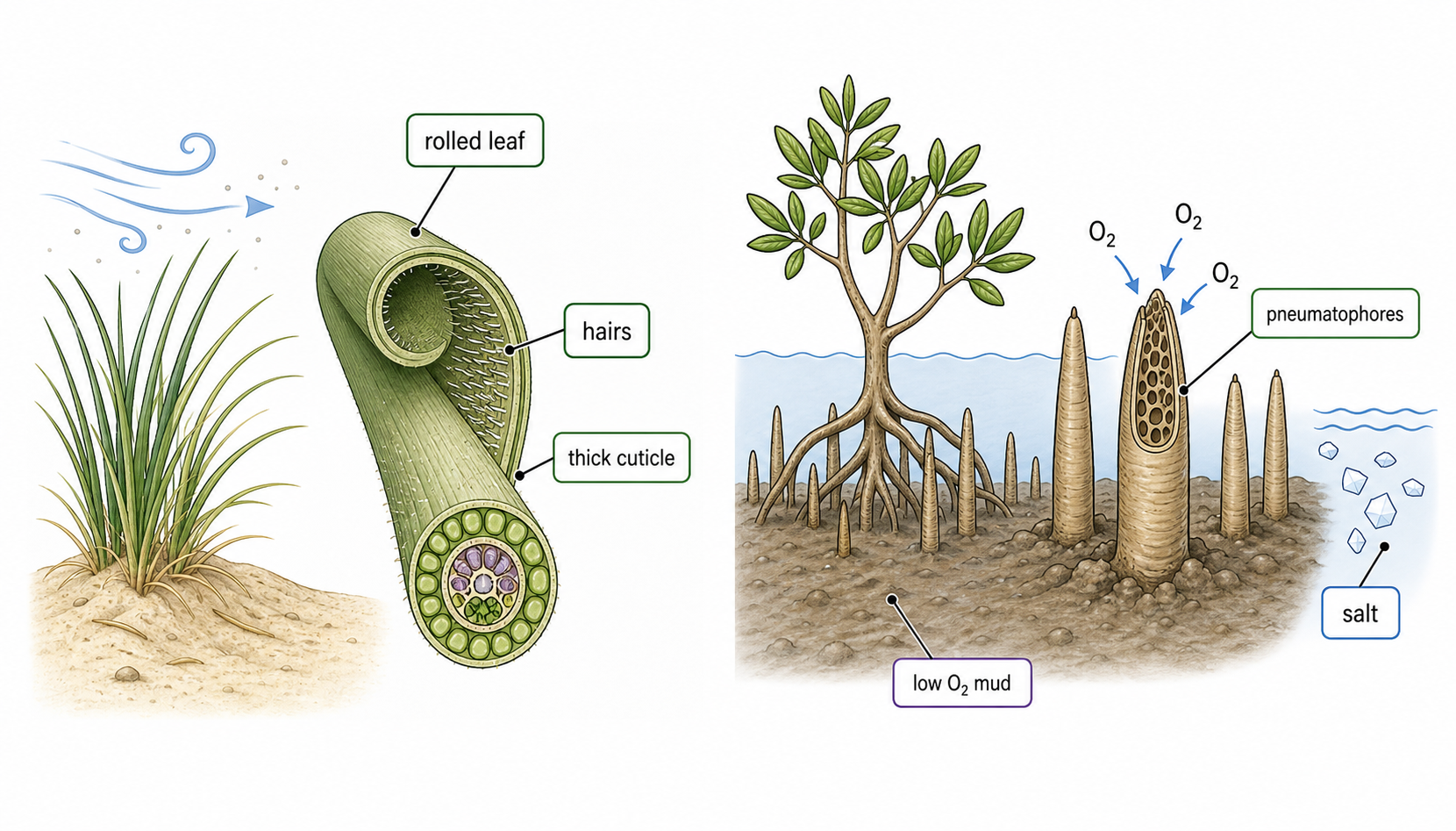
Adaptations improve survival under abiotic conditions such as water availability, salinity, oxygen concentration, and wind. Marram grass survives dunes with rolled hairy leaves and a thick cuticle that reduce water loss. Mangroves live in saline, low-oxygen swamps using aerial roots or pneumatophores for gas exchange and salt exclusion or salt excretion to deal with salinity.
Each feature is useful because it solves a named abiotic problem.
Match each adaptation to the abiotic pressure it solves.
MatchMatch each adaptation to the abiotic pressure it solves.
ChooseExplain Limiting Factors
Species distribution depends on abiotic variables such as temperature, salinity, pH, light, rainfall, humidity, and substratum. A limiting factor restricts survival, growth, reproduction, or activity when it is too low or too high. For plants, common limiting factors include light, water, mineral nutrients, carbon dioxide, and temperature.
Sort each factor as abiotic or not abiotic.
SortRead A Tolerance Curve
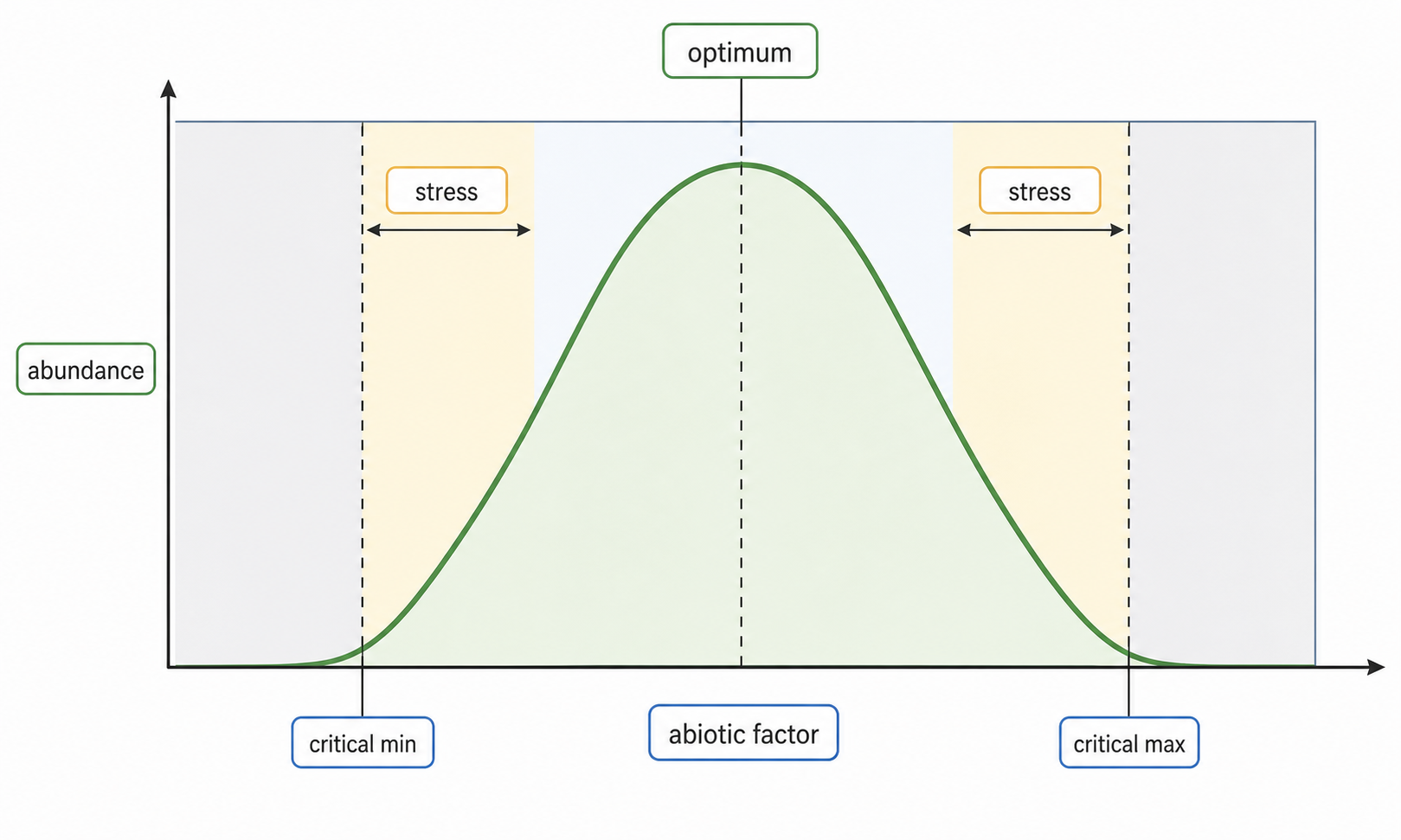
A tolerance curve shows how abundance or performance changes across an environmental gradient. The range of tolerance lies between critical minimum and maximum limits. The optimum zone supports highest survival, growth, abundance, and reproduction. Zones of stress show reduced performance, and zones of intolerance explain absence.
Use the curve to explain where a species thrives, struggles, or disappears.
Match each tolerance-curve zone to its meaning.
MatchMatch each tolerance-curve zone to its meaning.
ChooseWhy Coral Reefs Form Here
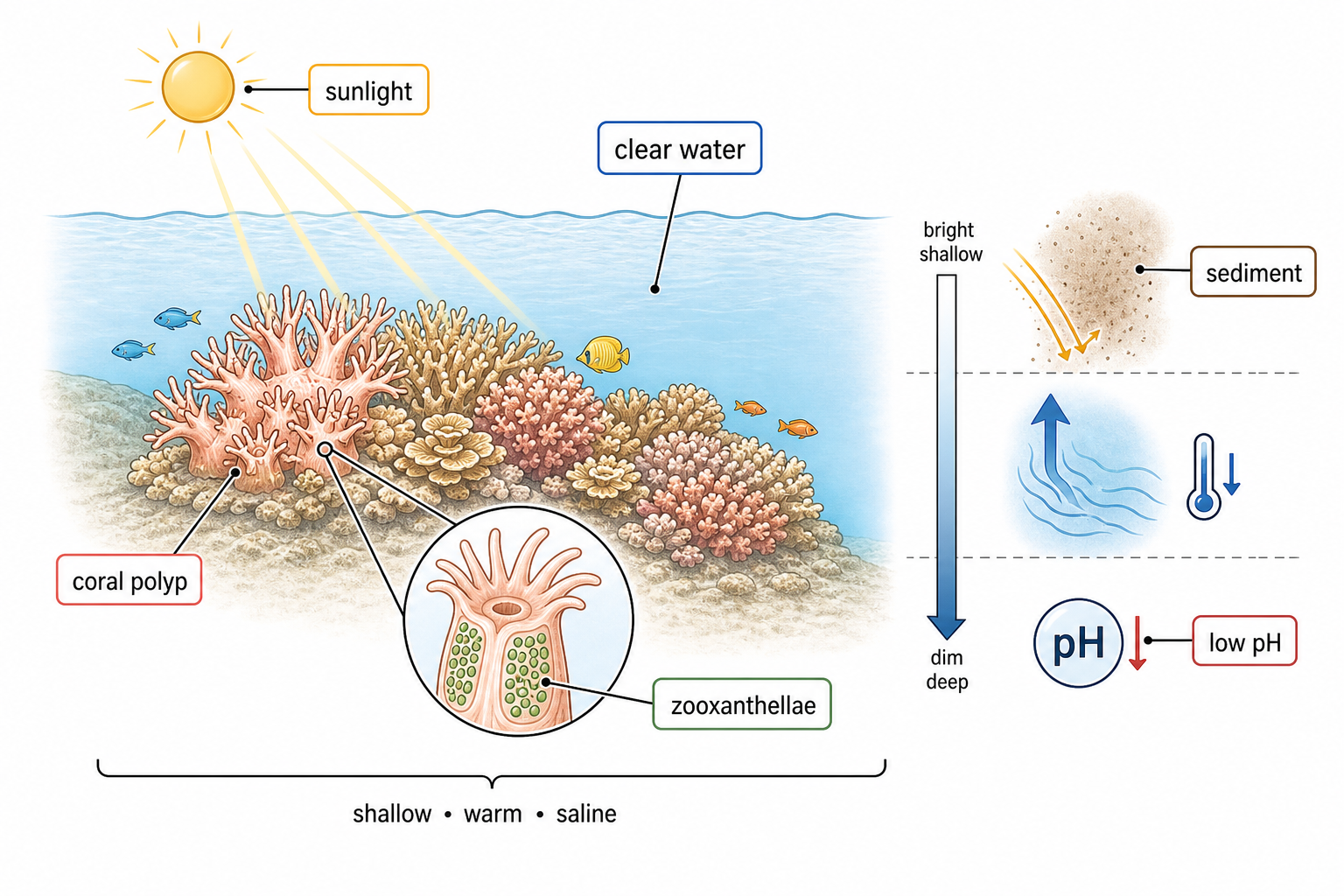
Coral reef formation is limited by several abiotic conditions. Reef-building corals need warm, shallow, clear, sunlit, saline water with suitable pH. They rely on photosynthetic symbiotic algae, so light is essential. Low nutrients, sediment, cold water, ocean acidification, or reduced light can limit reef formation.
Reef formation depends on both abiotic conditions and coral-algal symbiosis.
Which condition would most directly limit photosynthetic symbionts in reef-building corals?
ChooseWhich condition would most directly limit photosynthetic symbionts in reef-building corals?
ChoosePredict A Biome From Climate
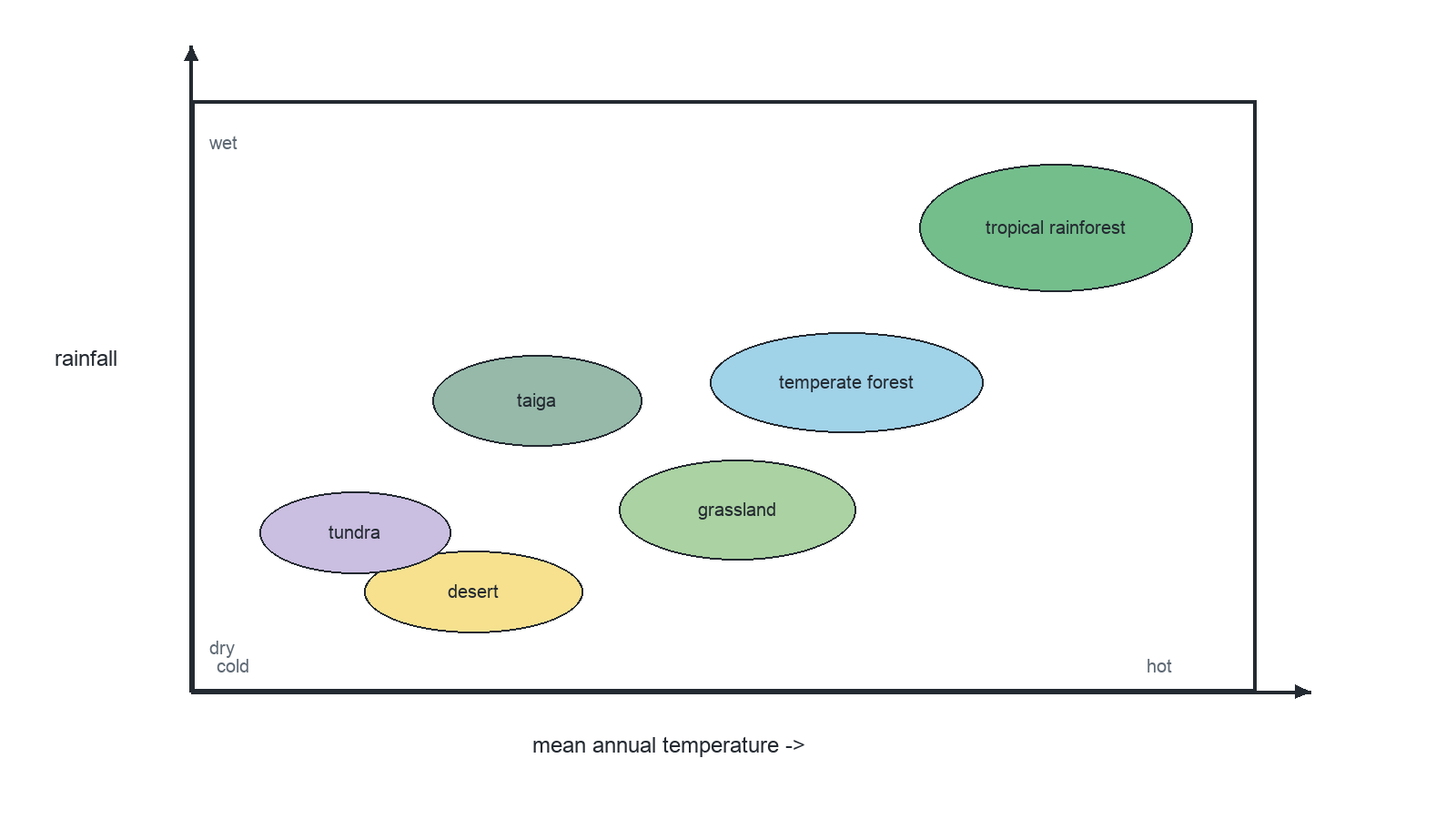
Terrestrial biome distribution is mainly determined by temperature, rainfall, and insolation. These conditions affect water availability and photosynthesis rate, so they shape productivity and vegetation. Latitude and seasonal variation help explain rainforest, temperate forest, taiga, grassland, tundra, and desert distribution. Biomes are groups of ecosystems with similar communities due to similar abiotic conditions, and convergent evolution can produce similar forms in similar biomes.
Use temperature and rainfall together; one variable alone is not enough to predict a biome.
Match the climate clue to the likely biome pattern.
MatchMatch the climate clue to the likely biome pattern.
ChooseCompare Desert And Rainforest Strategies
Practice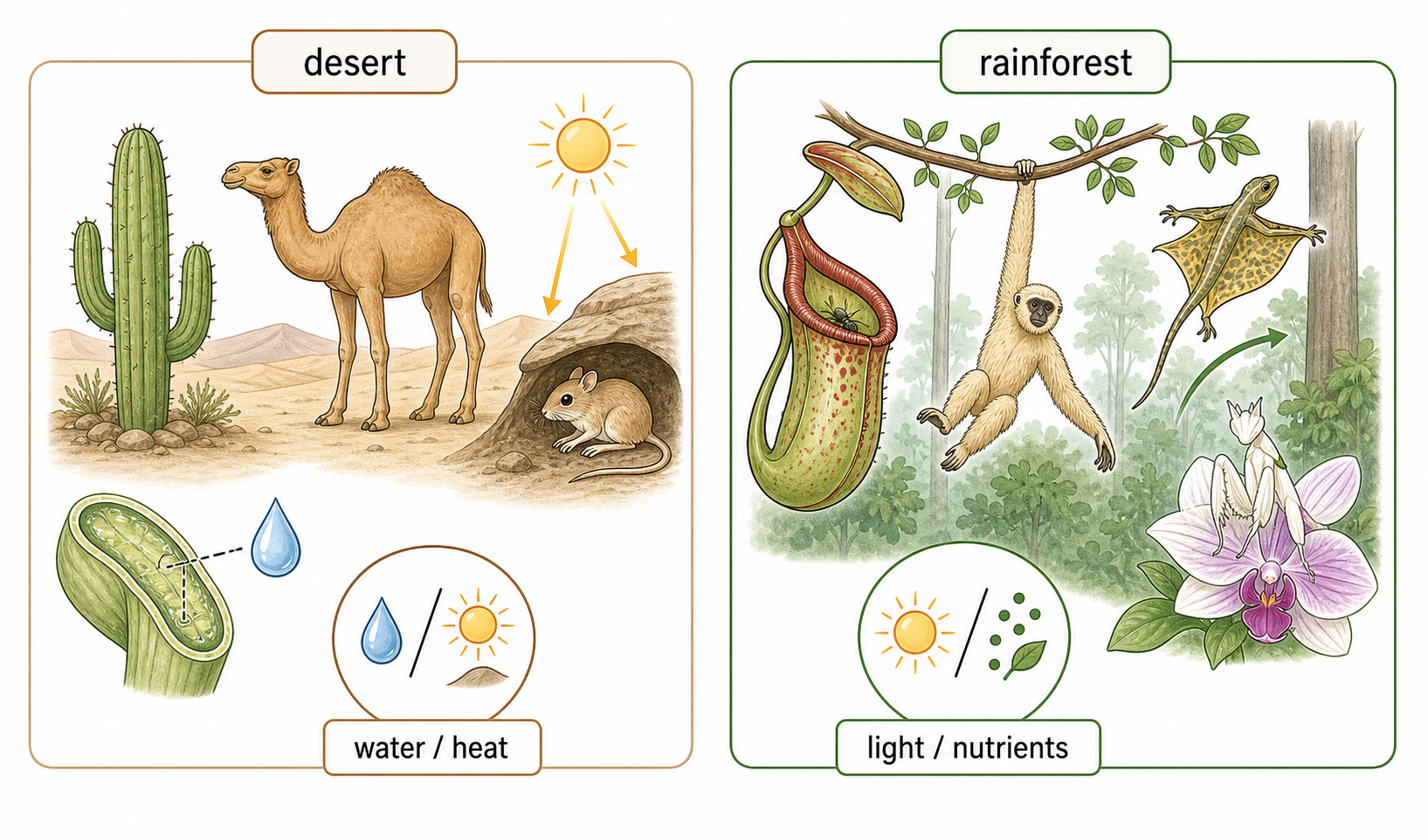
Hot desert adaptations solve heat and water scarcity. Strategies include expire, evade, or endure: some organisms complete life cycles quickly after rain, avoid heat by burrowing or nocturnal activity, or endure drought with water storage and reduced water loss. Camels, cacti, scorpions, and kangaroo rats show water-saving, heat-avoidance, or storage adaptations. Tropical rainforest adaptations solve a different set of problems: intense competition, nutrient-poor soils, and crowded vertical space. Examples include pitcher plant nutrient capture, gibbon brachiation, flying lizard gliding, and orchid mantis mimicry.
Name the pressure first, then the adaptation that solves it.
Sort each adaptation by the environmental problem it solves.
SortSort each adaptation by the environmental problem it solves.
ChooseTransfer: Explain Environment, Limits, And Adaptation
Exam PracticeA strong answer defines the place as a habitat or microhabitat, names the abiotic factor, and shows how it limits distribution through a tolerance range. Named examples then secure the marks: coral reefs require specific light, temperature, salinity, pH, and clear shallow water; biomes are predicted from temperature, rainfall, and insolation; desert and rainforest organisms show adaptations matched to their environmental pressures.
Use this for questions on habitat, abiotic factors, tolerance curves, coral reefs, biomes, and adaptations in deserts or rainforests.
Use this for questions on habitat, abiotic factors, tolerance curves, coral reefs, biomes, and adaptations in deserts or rainforests.
Do not list examples without linking each one to the environmental pressure and survival advantage.