
EduNinja
IB Biology SL/Notes/B2.2 Organelles and compartmentalization

IB Biology SLB2.2 Organelles and compartmentalizationNotes

Why Organelles Need Compartments
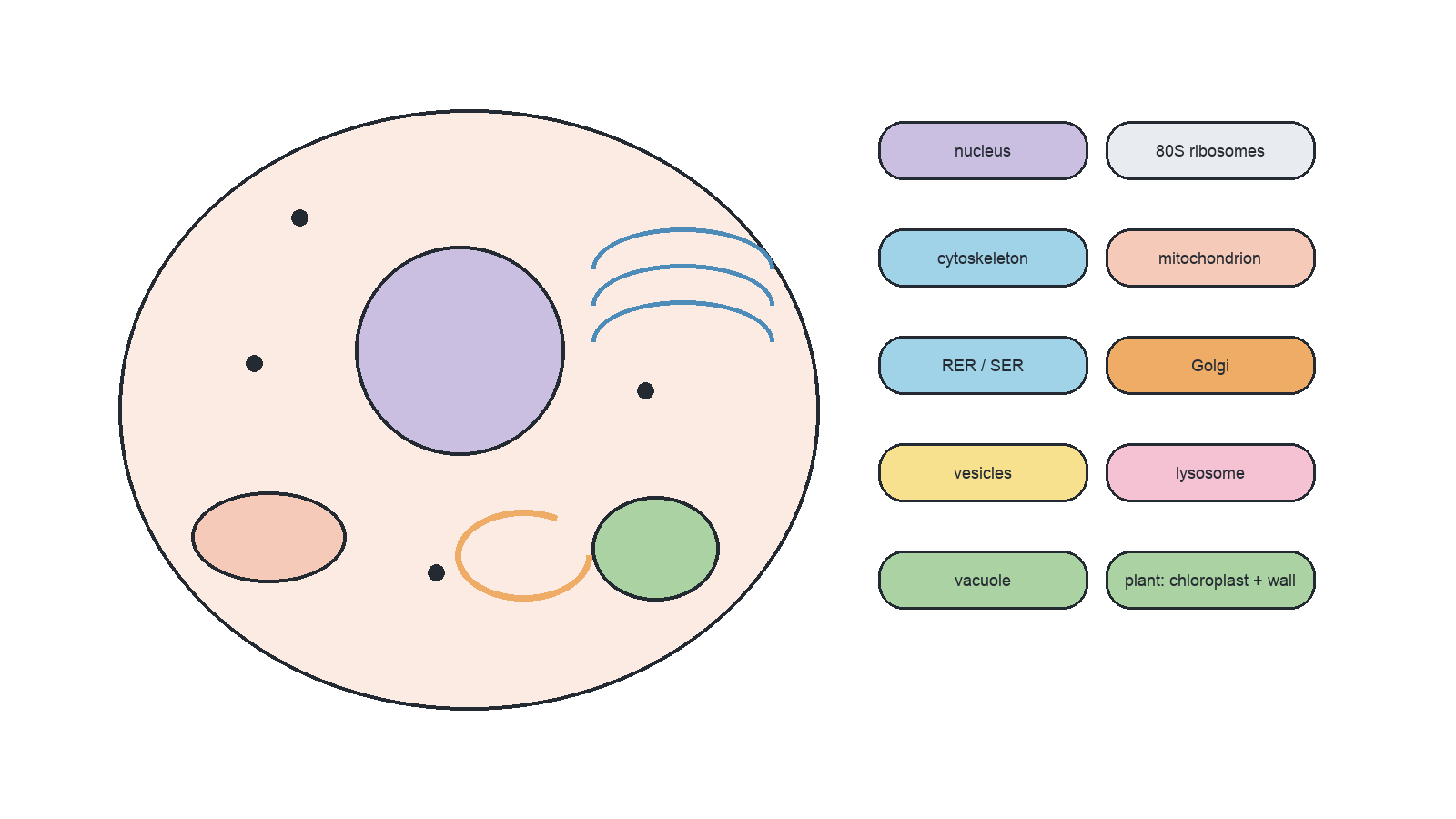
Organelles create compartments that support specific cell functions. An organelle is a discrete cell subunit with a specific job. Separation helps because enzymes and substrates can be concentrated, the right pH can be maintained, and damaging reactions can be kept away from the cytoplasm.

IB counts nucleus, chloroplasts, mitochondria, vesicles, ribosomes, and the plasma membrane as organelles.
Cell wall, cytoskeleton, and cytoplasm are not usually considered organelles in this syllabus wording.
Compartmentalization is useful when it creates a local reaction space, such as acidic digestion in lysosomes.

Organelles matter because separate spaces let cells run different chemistry at the same time.

Sort the structures, then say the rule that made the sorting possible.

Sort
Unsorted
9
not usually an organelle
0
organelle: discrete functional subunit
0

Sort the structures, then say the rule that made the sorting possible.

Choose

Nucleus Separates Editing From Translation
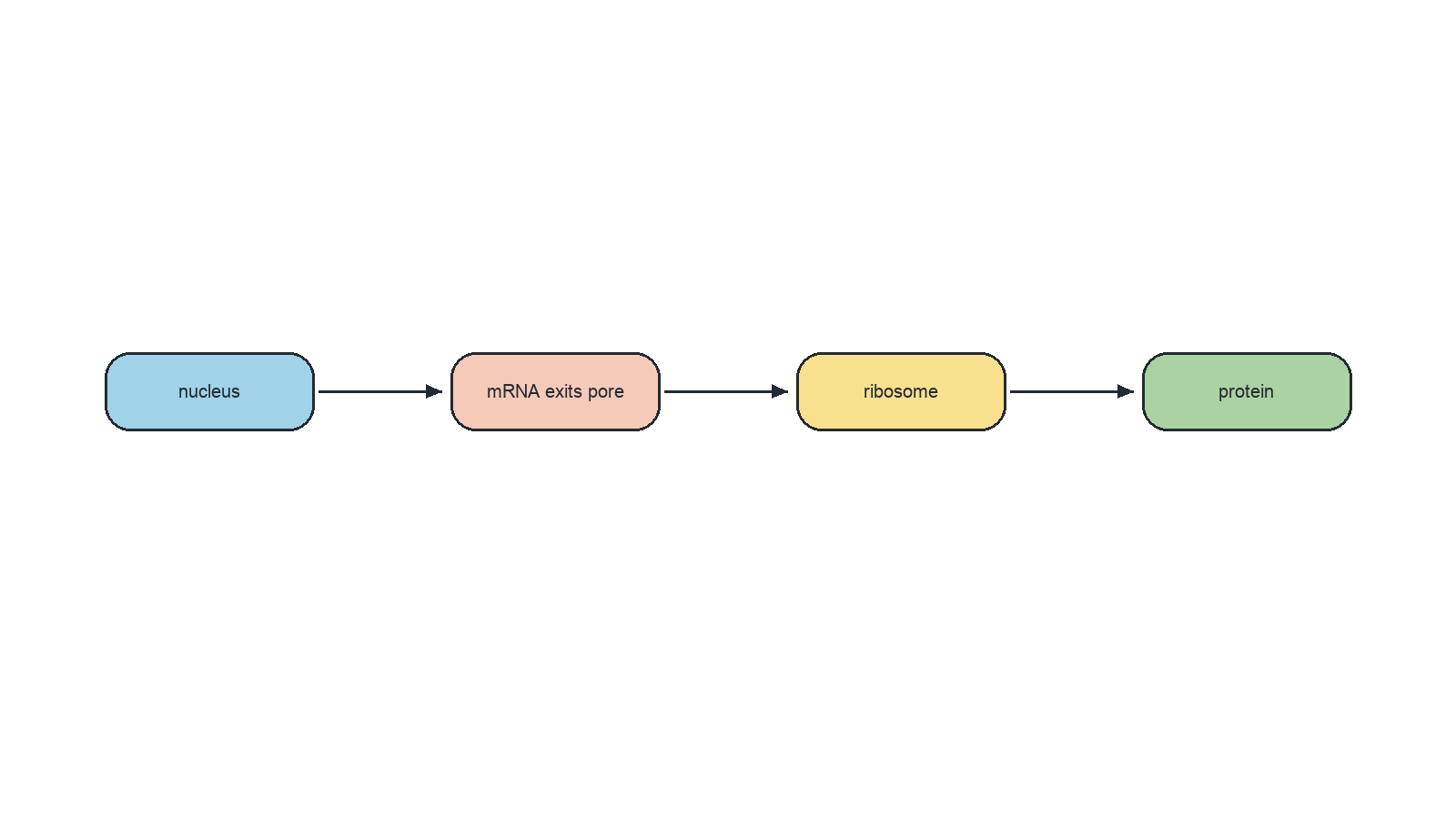
The nucleus is the easiest example of compartmentalization helping control. DNA stays inside the nucleus; transcription makes pre-mRNA there; splicing can remove introns before mature mRNA is exported through nuclear pores for translation in the cytoplasm.

Separating transcription and translation gives eukaryotic cells time to process RNA first.
Nuclear pores regulate traffic; they are selective protein-lined channels, not open gaps.
DNA should not be described as leaving the nucleus for translation.

Put the nucleus-to-cytoplasm gene-expression steps in order.

Order
1
transcription makes pre-mRNA
2
DNA remains inside the nucleus
3
introns are removed by RNA splicing
4
mature mRNA exits through a nuclear pore
5
ribosomes translate mRNA in the cytoplasm

SL Transfer: Explain Why Compartments Matter

Exam Practice

A strong answer does not say only “organelles make cells efficient.” It gives a concrete reason: compartments concentrate enzymes and substrates, maintain suitable pH, separate incompatible reactions, and let the nucleus process RNA before translation.

For compartmentalization, name the controlled condition or separated process.
For the nucleus, say transcription and RNA processing happen before cytoplasmic translation.
For organelle classification, use discrete functional subunit.
Fill Blanks
Complete the exam skeleton: Compartments can concentrateand, maintain suitable, and separate transcription fromin eukaryotic cells.
Word bank
0/4

Use this when a question asks why eukaryotic compartmentalization is useful or why the nucleus is separated from cytoplasm.

Organelles are discrete subunits adapted for specific functions.
Compartmentalization can concentrate enzymes and substrates in one place.
Compartments can maintain suitable pH or other local conditions for reactions.
Incompatible or damaging reactions can be isolated, such as acidic lysosomal digestion.
The nuclear envelope separates transcription/RNA processing from translation.

Use this when a question asks why eukaryotic compartmentalization is useful or why the nucleus is separated from cytoplasm.

Do not give a vague “more efficient” answer without saying what is concentrated, separated, or controlled.