
Define Evolution As Population Change
Evolution is cumulative change in heritable characteristics of a population. Three words do the work: heritable, population, and generations. A muscle gained during one organism’s life is acquired, not inherited in the Darwinian sense, so it is not evolution by itself. Evolution is measured when inherited traits become more or less common across generations.
Which sentence defines evolution correctly?
ChooseUse Molecular Evidence For Common Ancestry
Molecular evidence gives two levels of support for evolution. Shared universals such as DNA, the genetic code, ATP use, and core metabolism support common ancestry. Sequence differences in DNA, RNA, and proteins then help compare relatedness and divergence: fewer differences usually suggest a more recent common ancestor, while more differences suggest longer separation.
Use molecular universals for common ancestry and sequence differences for divergence.
Match each molecular clue to what it supports.
MatchMatch each molecular clue to what it supports.
ChooseUse Selective Breeding As Visible Evidence
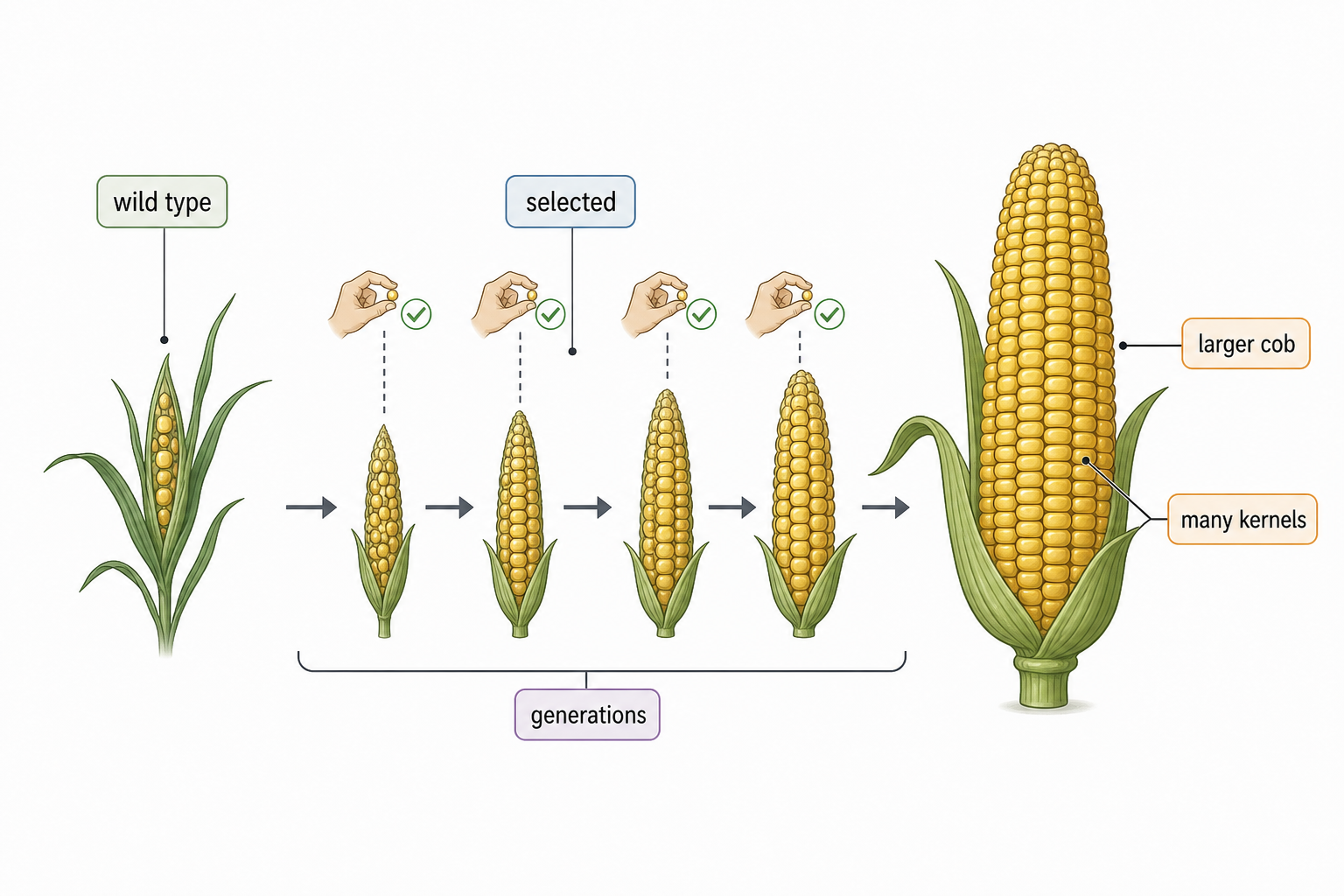
Selective breeding is useful because it makes selection visible. Humans choose which organisms reproduce, so heritable traits can change rapidly over generations. Pigeons, domesticated animals, Brassica crops, wheat, and maize show that strong selection can shift inherited traits away from the wild form. This supports Darwin’s idea that natural selection can also change populations, only with environmental selection instead of human choice.
Selection can push visible trait change quickly when breeders control reproduction.
Match each example to the selective-breeding idea it shows.
MatchMatch each example to the selective-breeding idea it shows.
ChooseSeparate Homology From Convergence
Practice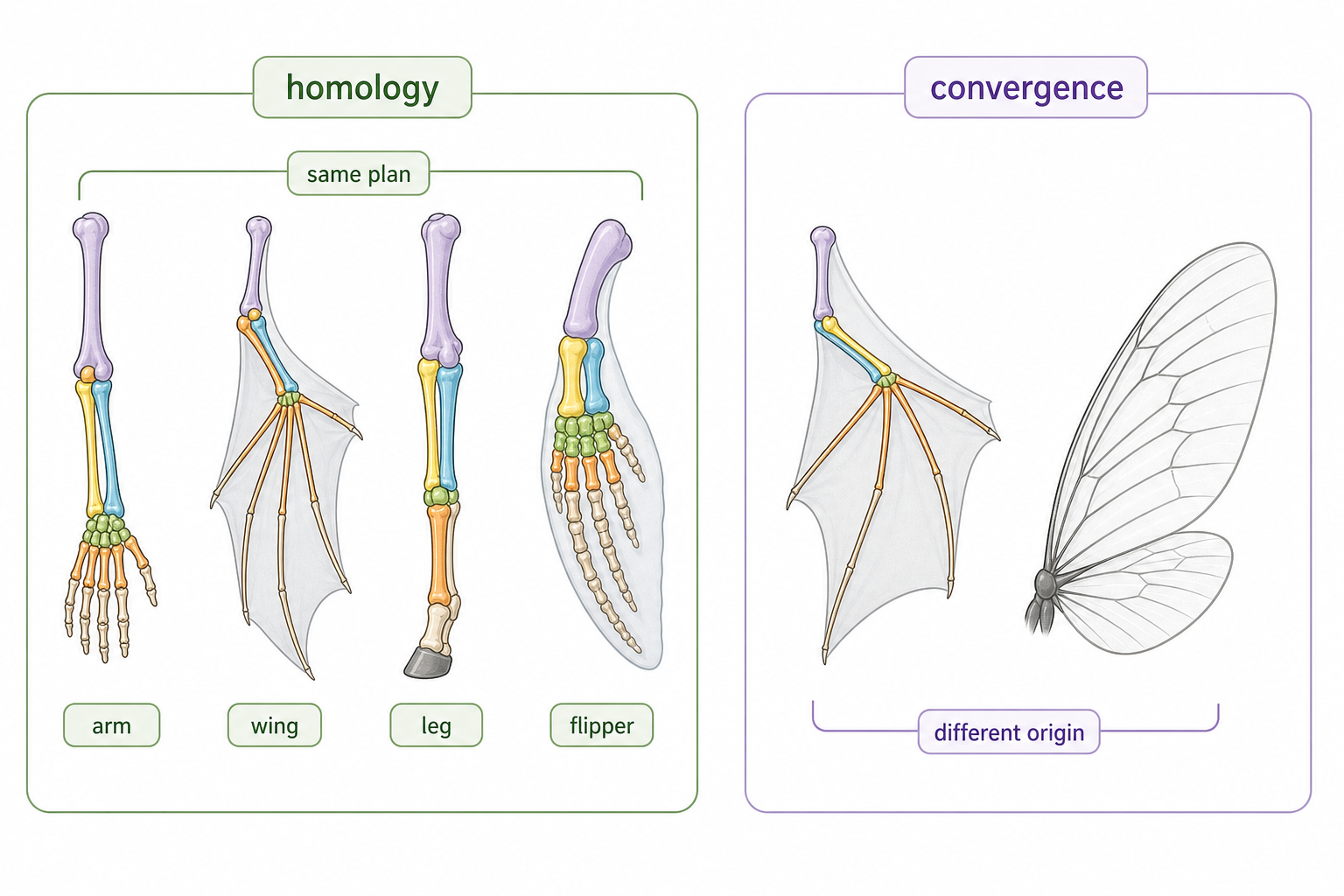
Homologous and analogous structures answer different questions. Homologous structures share ancestry even if their functions differ; vertebrate pentadactyl limbs support divergent evolution and adaptive radiation. Analogous structures have similar functions but different evolutionary origins; bat and insect wings are similar because similar selection pressures produced convergence.
Homology asks whether the structure shares ancestry; analogy asks whether similar function evolved independently.
Sort each example into homologous or analogous/convergent evidence.
SortSort each example into homologous or analogous/convergent evidence.
ChooseTrace How Speciation Begins
Practice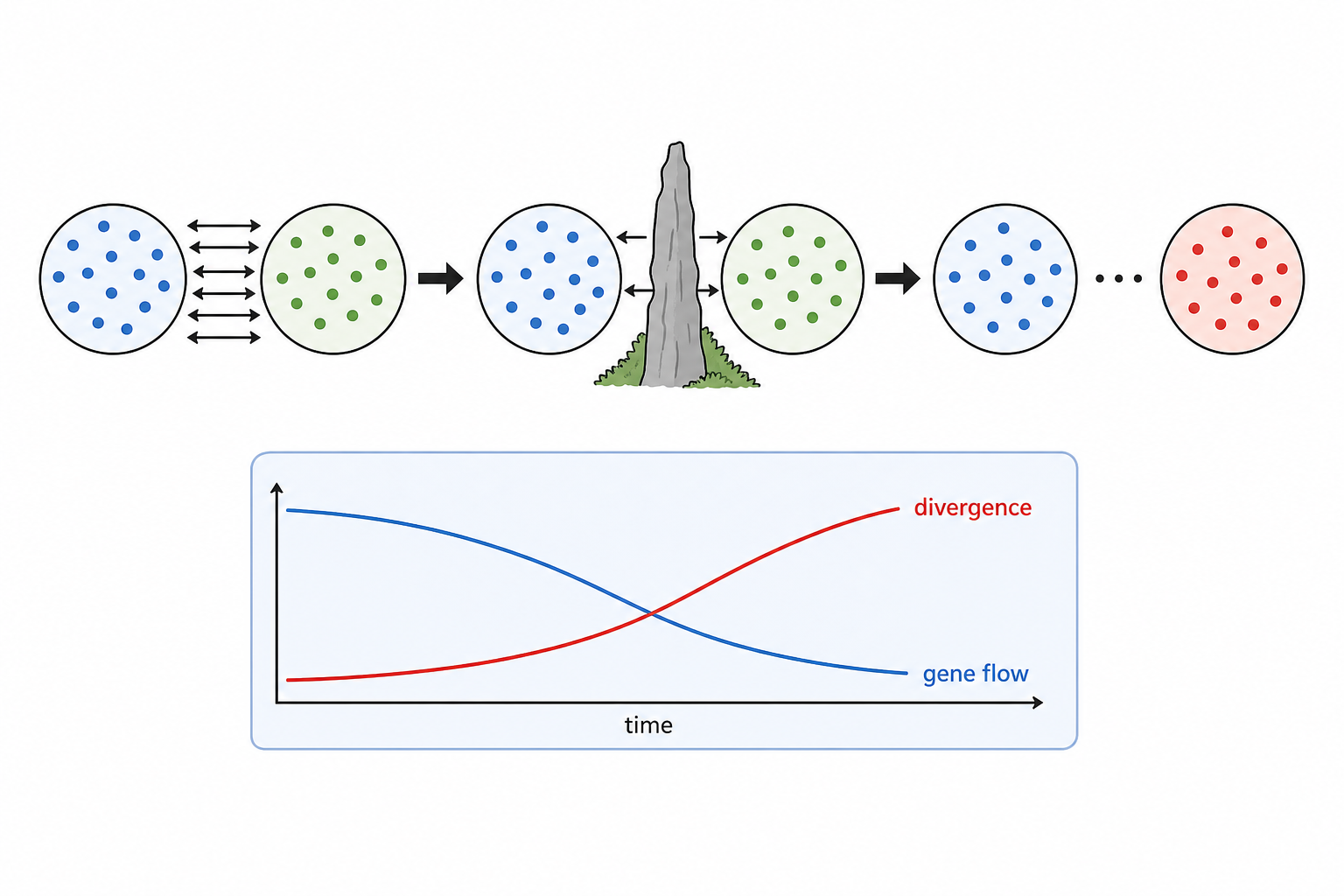
Speciation means one pre-existing species splits into new species. The key switch is reduced gene flow. Once gene pools are isolated, selection, mutation, and genetic drift can make them diverge. Geographic separation and different selection pressures often start the process; chimpanzees and bonobos illustrate river-linked isolation and later divergence.
Speciation begins when gene flow drops and separated gene pools start changing independently.
Put the speciation mechanism in order.
OrderPut the speciation mechanism in order.
ChooseSL Transfer: Evidence To Speciation
Exam PracticeThe core A4.1 answer moves from evidence to mechanism. Define evolution as heritable population change across generations. Use molecular universals and sequence differences, selective breeding, homology, and convergence as evidence for common ancestry and divergence. Then explain speciation as reduced gene flow followed by divergence of isolated gene pools through selection, mutation, and drift.
Match each core idea to its exam role.
MatchUse this for combined questions on evidence for evolution or how speciation begins.
Use this for combined questions on evidence for evolution or how speciation begins.
Evolution is cumulative change in heritable characteristics of a population across generations. Evidence includes shared DNA, genetic code, ATP use and core metabolism, plus DNA/RNA/protein sequence differences that indicate relatedness. Selective breeding shows that heritable traits can change rapidly under selection. Homologous structures such as pentadactyl limbs support common ancestry, while analogous structures such as bat and insect wings show convergence. Speciation begins when reproductive isolation reduces gene flow, allowing separated gene pools to diverge through selection, mutation and genetic drift.
Listing examples without explaining whether they support common ancestry, convergence, or speciation.