
Set The Scene: Early Earth
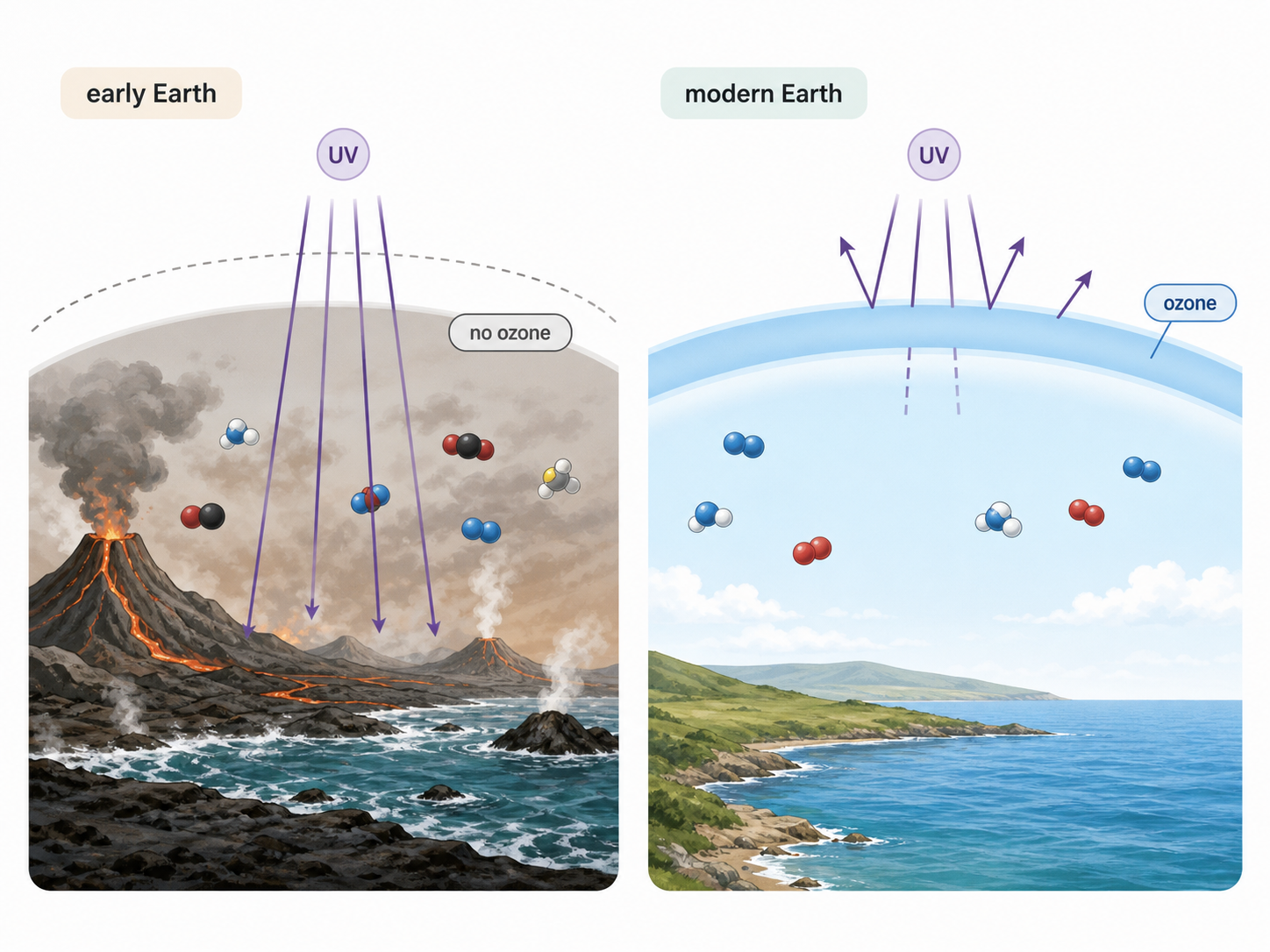
Early Earth was volcanic, hot, and oxygen-poor, with high carbon dioxide, methane, water vapour, and little free oxygen. Because there was no protective ozone layer, intense UV reached the surface. That energy matters because it could help form small organic molecules before cells existed.
Which answer makes the best exam link from early Earth conditions to origin chemistry?
ChooseDecide What Counts As A Cell
A first cell is not just a molecule and not just a bag. A cell must keep chemistry inside a boundary, carry genetic information, and run metabolism. Viruses are useful exam traps: they contain genetic material, but they depend on host cells for metabolism, so they are not self-sustaining cells. Put together, life requires heredity, variation, compartmentalization, and Darwinian evolution, with metabolism making the system self-sustaining.
Sort each feature by what it proves.
SortBuild The Four-Step Origin Model
PracticeOrigin-of-cells models require four linked steps: small organic molecules form, polymers join, self-replication with variation begins heredity and evolution, and membranes package chemistry. Protocell-first, gene-first, and metabolism-first models differ in emphasis, but strong exam answers include the full set of requirements.
Put the model into a mark-worthy order.
OrderDifferent hypotheses may change which came first, but this order is a clean exam answer.
Use Miller-Urey Without Overclaiming
Practice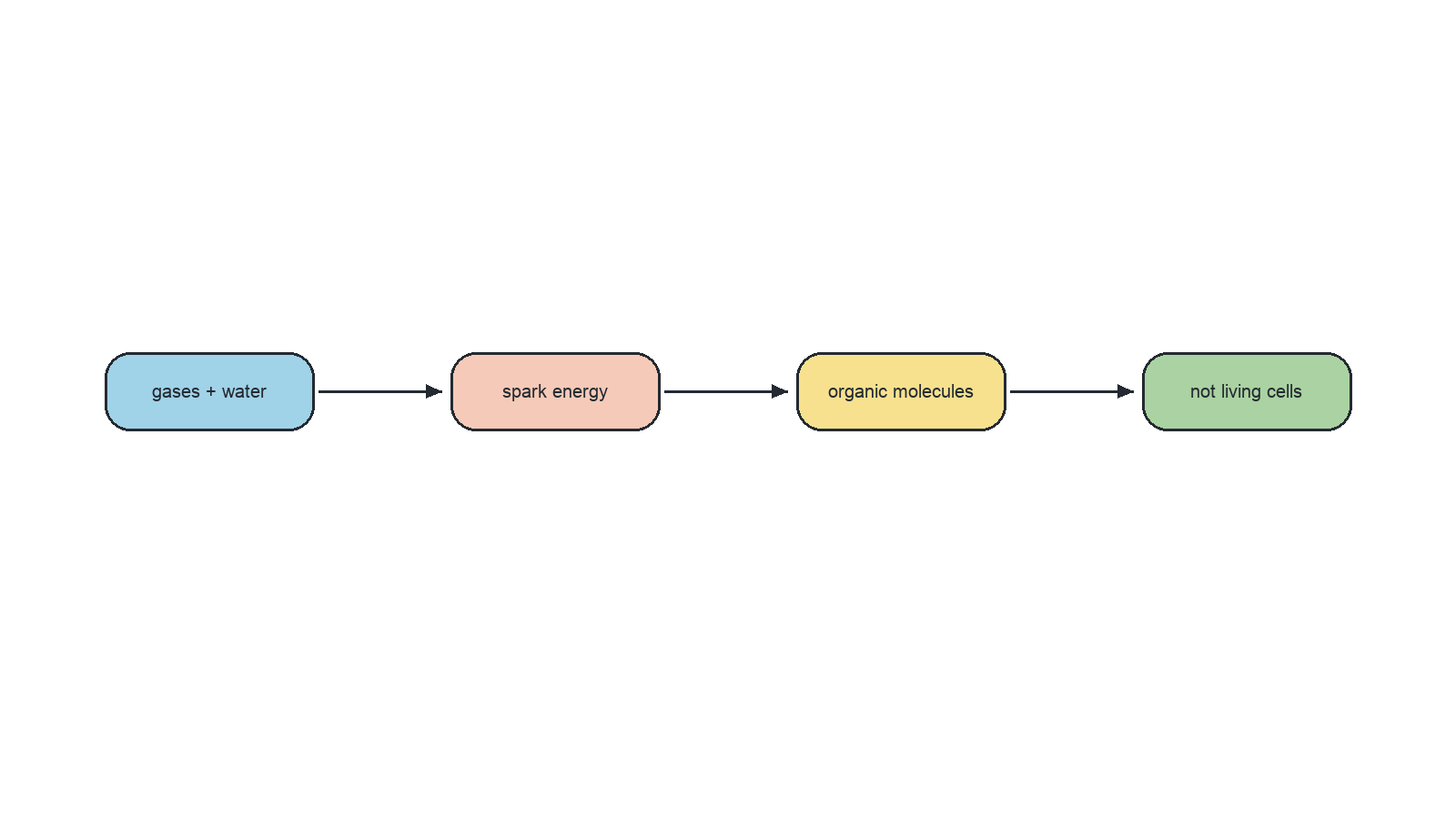
Miller-Urey is an evidence card, not a creation story. In the original experiment, electrical sparks passed through methane, ammonia, hydrogen, and water vapour, and amino acids formed abiotically. Later experiments used different gases and energy sources such as UV or ionizing radiation. Together, they support abiotic formation of organic compounds, but they do not prove that a complete cell formed.
Fix the overclaim.
Spot ErrorsMake A Compartment
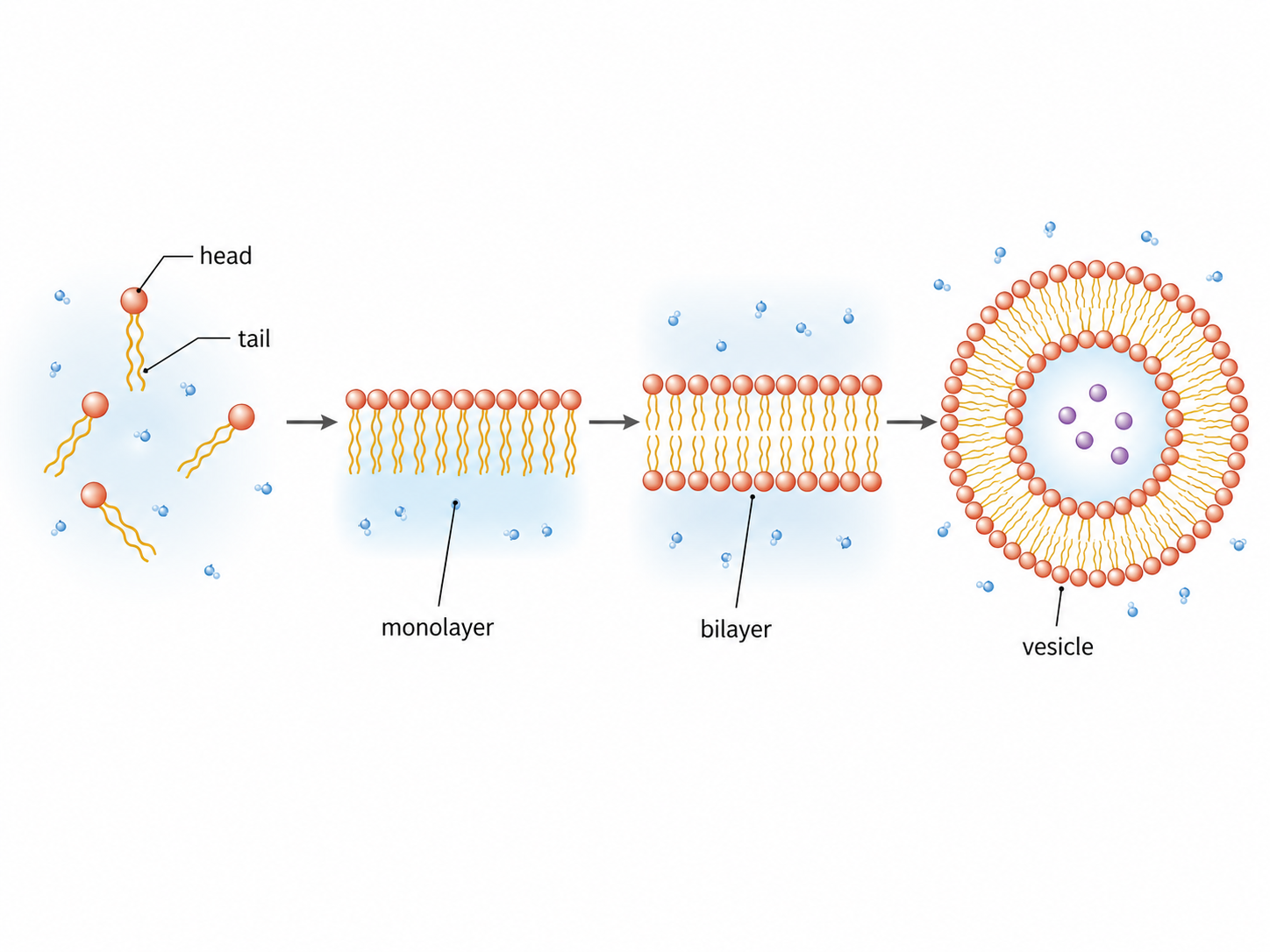
The compartment step is simple but powerful. Fatty acids are amphipathic: one end interacts with water and the other avoids water. In water they can self-assemble into monolayers, bilayers, and vesicles. A vesicle is not alive, but it can enclose monomers and polymers, making internal chemistry different from the surroundings.
Label the vesicle model.
LabelExplain Why RNA Is Plausible
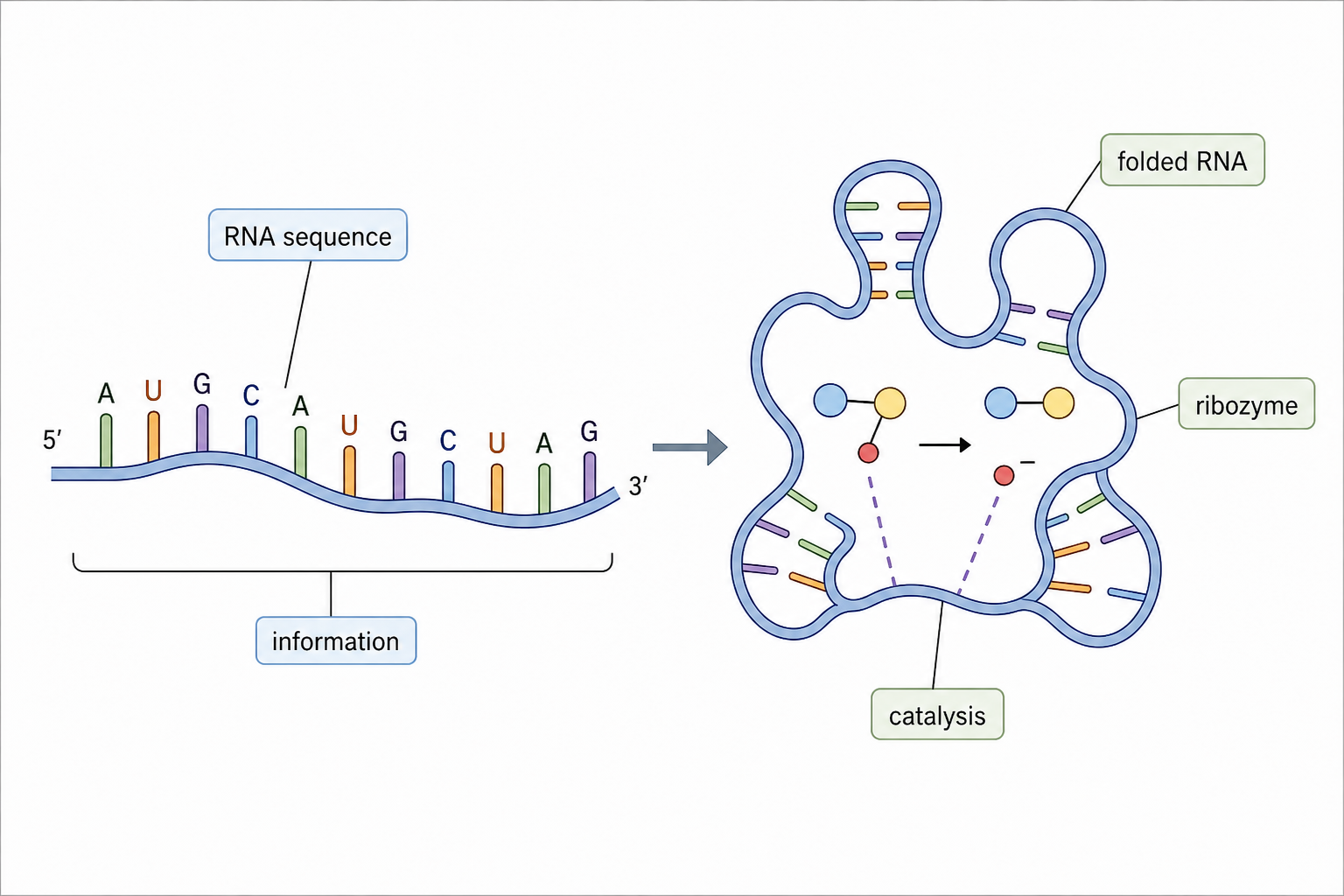
RNA is plausible as an early genetic material because it can do two jobs. Its base sequence can store information, and folded RNA can catalyse reactions as a ribozyme. That is why the RNA world hypothesis places RNA before DNA and protein enzymes: one molecule could help with heredity and catalysis.
Match each RNA-world evidence clue to what it supports.
MatchUse LUCA Evidence Carefully
PracticeLUCA is the last universal common ancestor of living cells, not automatically the first cell. We infer LUCA from what all later life shares: a near-universal genetic code, shared biochemistry, conserved genes, and gene families found across major lineages. This links early origin models to cellular evolution, but it is still an inference from evidence. Genomic studies found shared gene families likely inherited from LUCA, which is why LUCA is an evidence-based inference rather than a guess.
Match each LUCA clue to the claim it supports.
MatchChoose The Right Dating Evidence
Dating questions usually test method choice. Radiometric dating uses radioactive decay in fossils or surrounding rocks to estimate physical age. Molecular clocks use accumulated DNA or protein changes to estimate when lineages diverged. Together these methods suggest first cells and LUCA may date back billions of years, with LUCA around 4 billion years ago, but the dates remain estimates.
Choose the method that matches each evidence claim.
CompareTest The Hydrothermal Vent Hypothesis
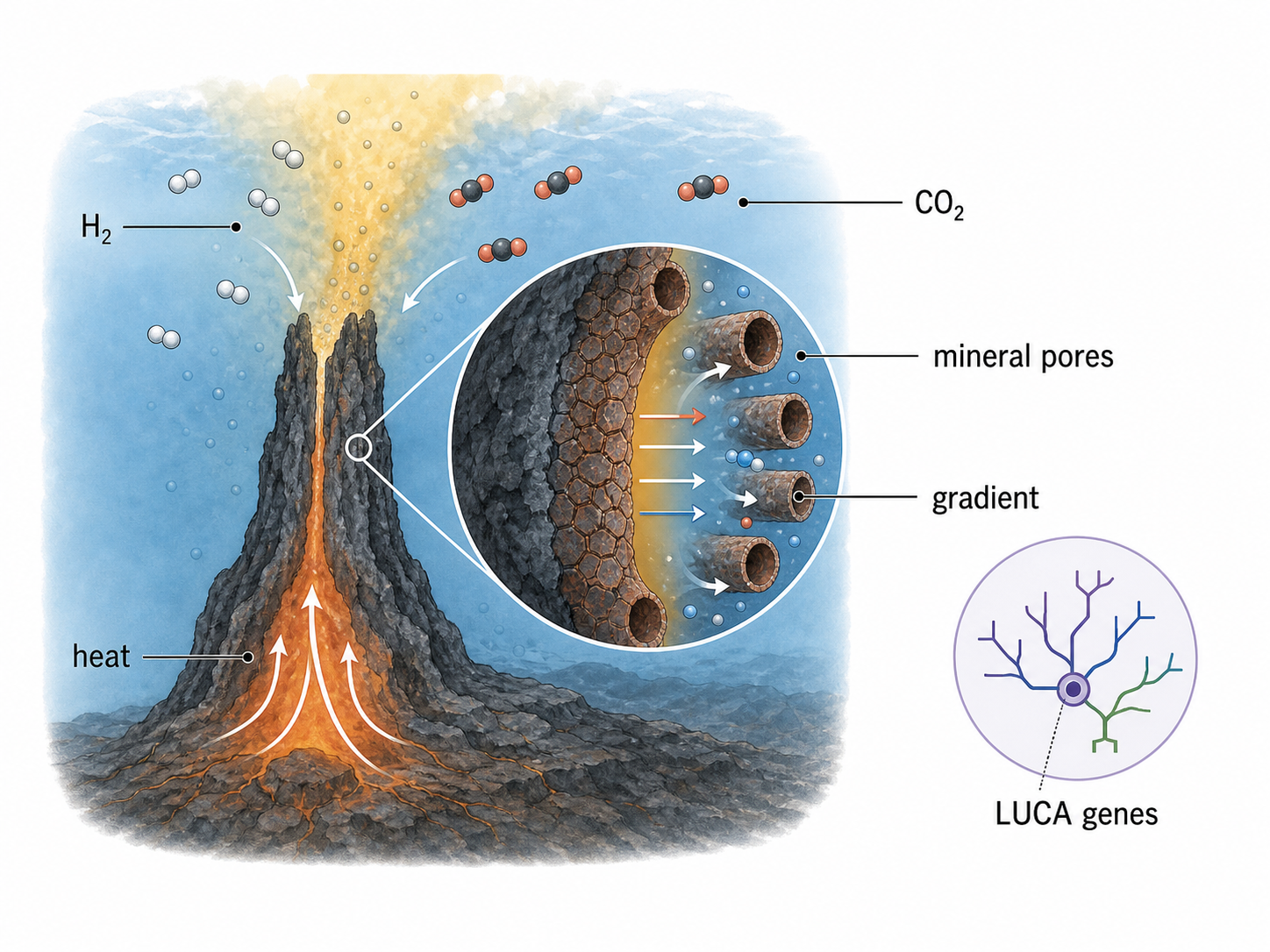
Hydrothermal vents are a strong origin setting because they provide reactants and energy: hydrogen, carbon dioxide, iron-rich minerals, heat, and chemical gradients for chemosynthesis. Nuvvuagittuq haematite tubes are fossil evidence from ancient vent-like settings. Conserved genes also suggest LUCA may have been anaerobic, CO2-fixing, H2-dependent, N2-fixing, and thermophilic. A strong answer connects chemistry with evidence rather than only naming “hot vents”.
Match each vent-origin detail to its exam role.
MatchPull The Whole Origin Argument Together
Exam PracticeA2.1 is usually tested as a connected argument, not as isolated facts. A strong answer builds a chain: early Earth conditions made abiotic organic synthesis plausible; origin models require small molecules, polymers, self-replication, and membranes; experiments and models support parts of the chain; LUCA, dating, and vents provide later evidence and constraints. The highest-scoring habit is to say “supports” when evidence supports, and avoid saying “proves” when it does not.
Match each evidence item to the part of the origin model it supports.
MatchUse this when a question asks you to evaluate how cells could have originated or to discuss evidence for early cellular life.
Use this when a question asks you to evaluate how cells could have originated or to discuss evidence for early cellular life.
Cells could have originated through stages rather than a single jump. Oxygen-poor early Earth with no ozone allowed high-energy conditions that could support abiotic synthesis of organic molecules. These molecules then needed to form polymers, gain self-replication with variation, and become enclosed in membrane compartments. Miller-Urey-style experiments support abiotic organic synthesis, fatty acid vesicles support compartmentalization, and RNA world evidence supports a molecule able to store information and catalyse reactions. LUCA evidence, dating methods, and hydrothermal vent fossils/genes help evaluate when and where early cellular life may have existed, but the evidence supports hypotheses rather than proving an exact sequence.
Listing facts without linking them to the claim, or using “proved” for evidence that only supports a hypothesis.