
Define Homeostasis
Homeostasis means keeping the internal environment stable within narrow limits, even when the outside environment or body activity changes. The variables IB likes include body temperature, blood pH, blood glucose, gases, ions, and osmotic concentration. A good answer always names the variable and says it is maintained near a set range.
Sort each item as a homeostatic variable or not.
SortReverse the Change
Negative feedback works like a correction loop. A receptor detects deviation from the set point. A coordinator compares the value and sends signals. Effectors respond in a way that reverses the deviation, bringing conditions back toward normal.
Order a negative-feedback loop.
OrderChoose Insulin or Glucagon
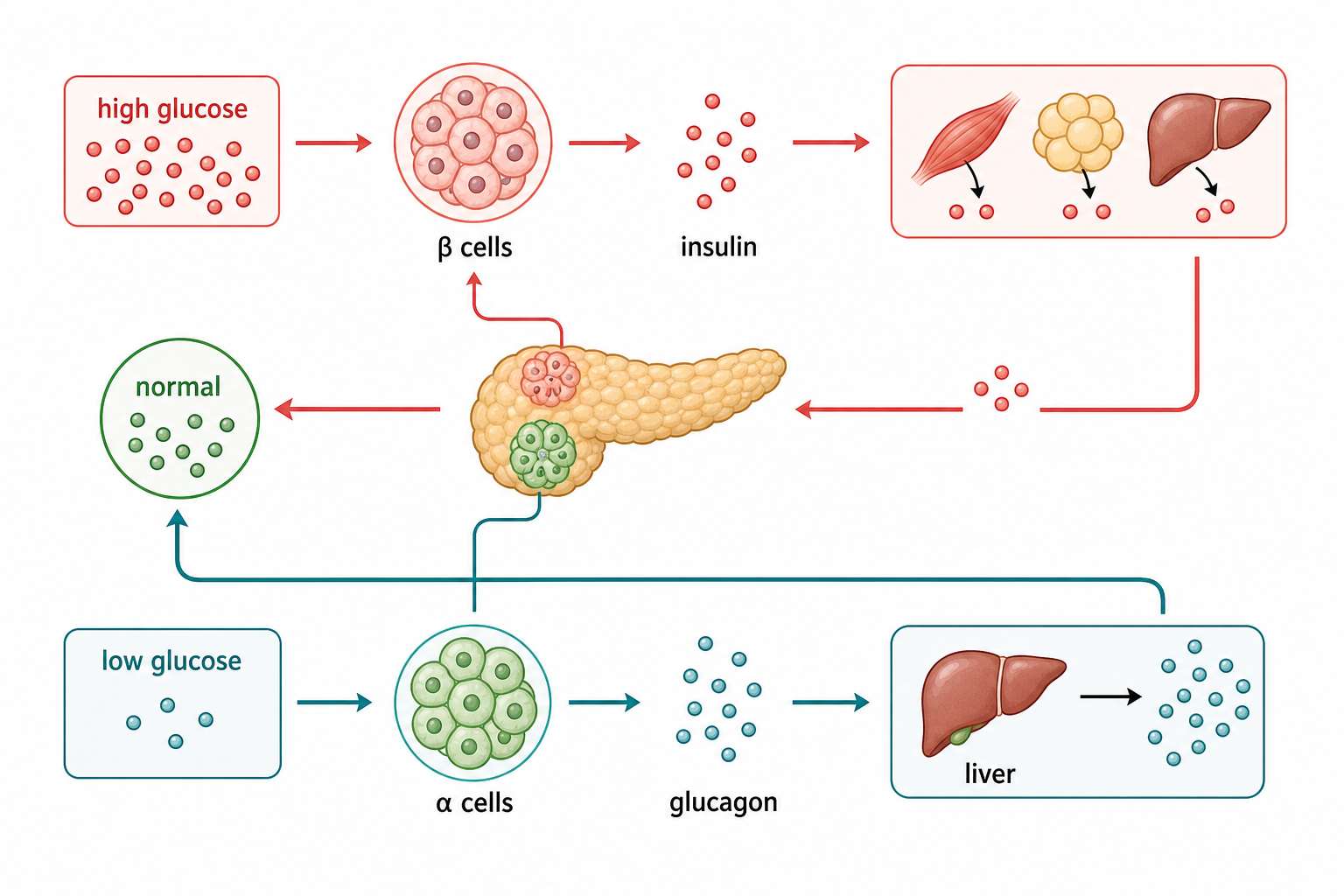
Blood glucose control is a two-hormone negative feedback system. When blood glucose rises, pancreatic beta cells secrete insulin, causing liver and muscle cells to take up glucose and store glycogen. When blood glucose falls, alpha cells secrete glucagon, causing stores to be broken down and glucose released.
Insulin and glucagon are antagonists: one lowers blood glucose, the other raises it.
Match the glucose condition to the hormone response.
MatchMatch the glucose condition to the hormone response.
ChooseCompare Diabetes Types
Type 1 and type 2 diabetes both disrupt blood glucose control, but the cause differs. Type 1 diabetes results from autoimmune destruction of pancreatic beta cells, so insulin secretion is too low. Type 2 diabetes involves failure of insulin receptors or cellular response and is linked to lifestyle risk factors.
Sort each feature into diabetes type.
SortControl Core Temperature
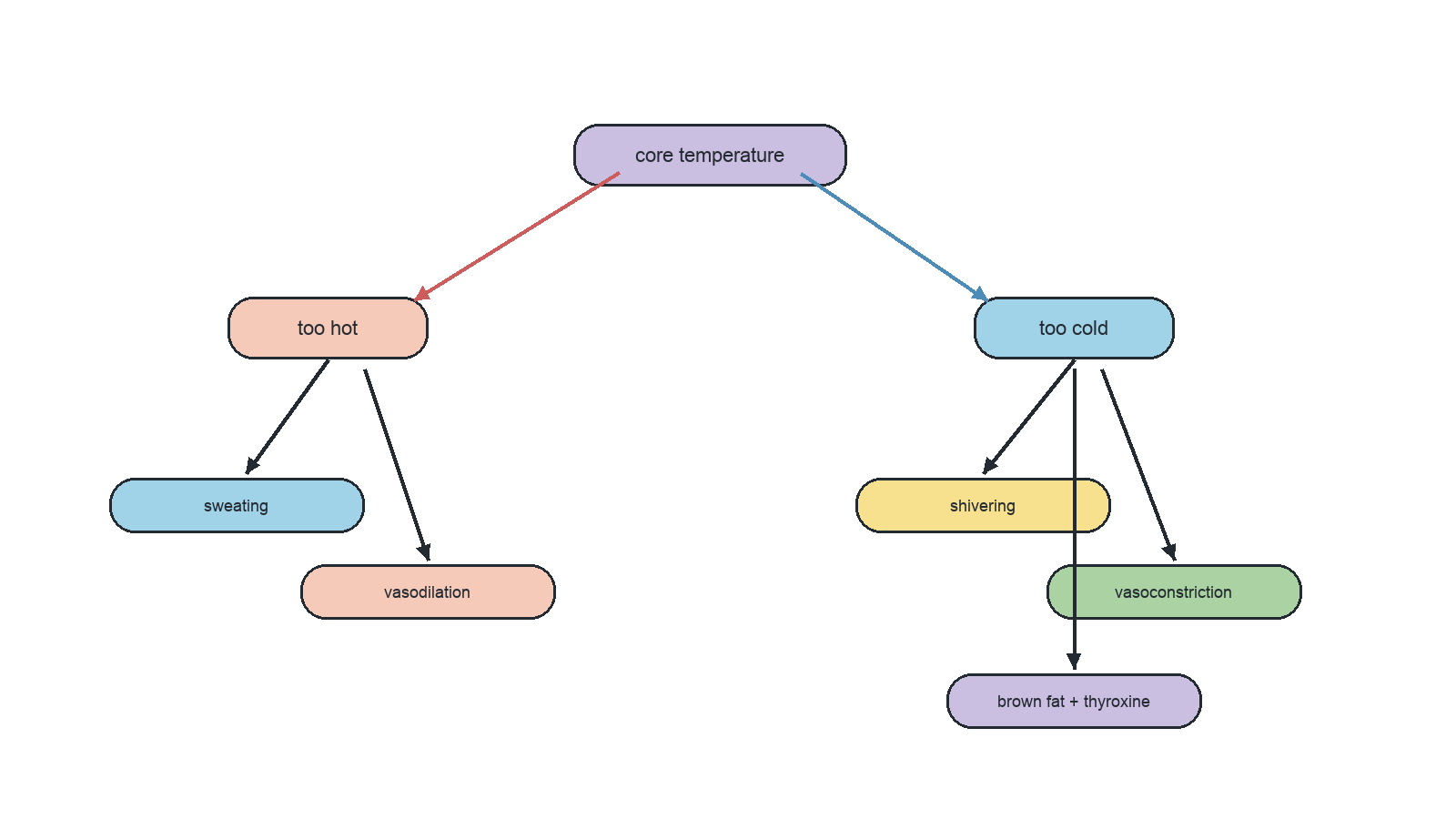
Thermoregulation uses negative feedback to keep core temperature near 37 °C. Thermoreceptors detect temperature changes and signal the hypothalamus. The hypothalamus coordinates effectors in the skin, muscles, liver, and endocrine system to increase heat loss or heat production.
Thermoregulation is negative feedback: detect the temperature shift, then activate effectors that reverse it.
Order the thermoregulation loop.
OrderOrder the thermoregulation loop.
ChooseSort Hot and Cold Responses
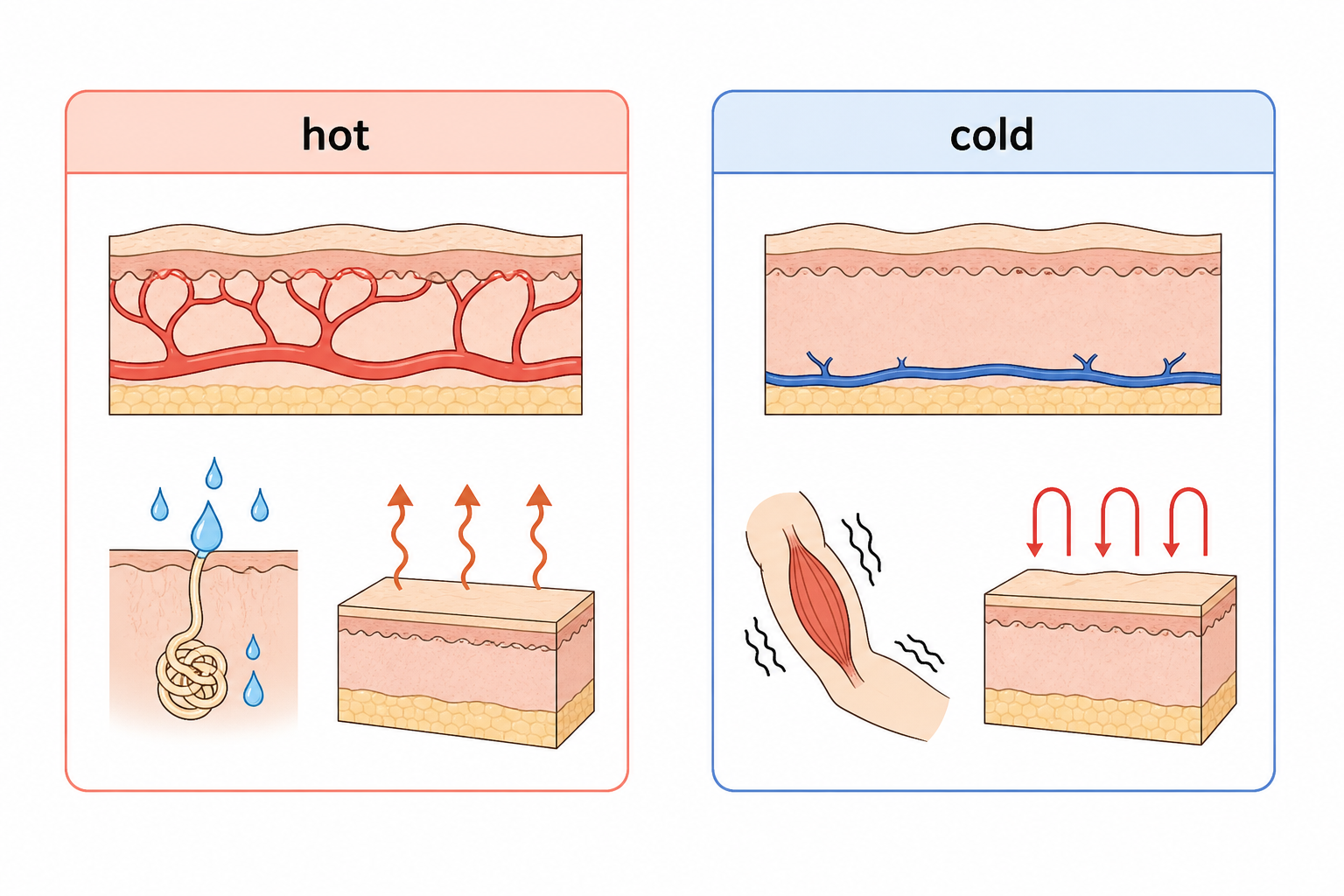
Hot and cold responses are opposite because they must reverse opposite deviations. Cooling uses vasodilation, sweating, and hairs lying flat to increase heat loss. Warming uses vasoconstriction, reduced sweating, shivering, metabolic heat, and brown fat to reduce heat loss or make heat.
Sort each thermoregulation response.
SortKidneys: Excretion and Osmoregulation
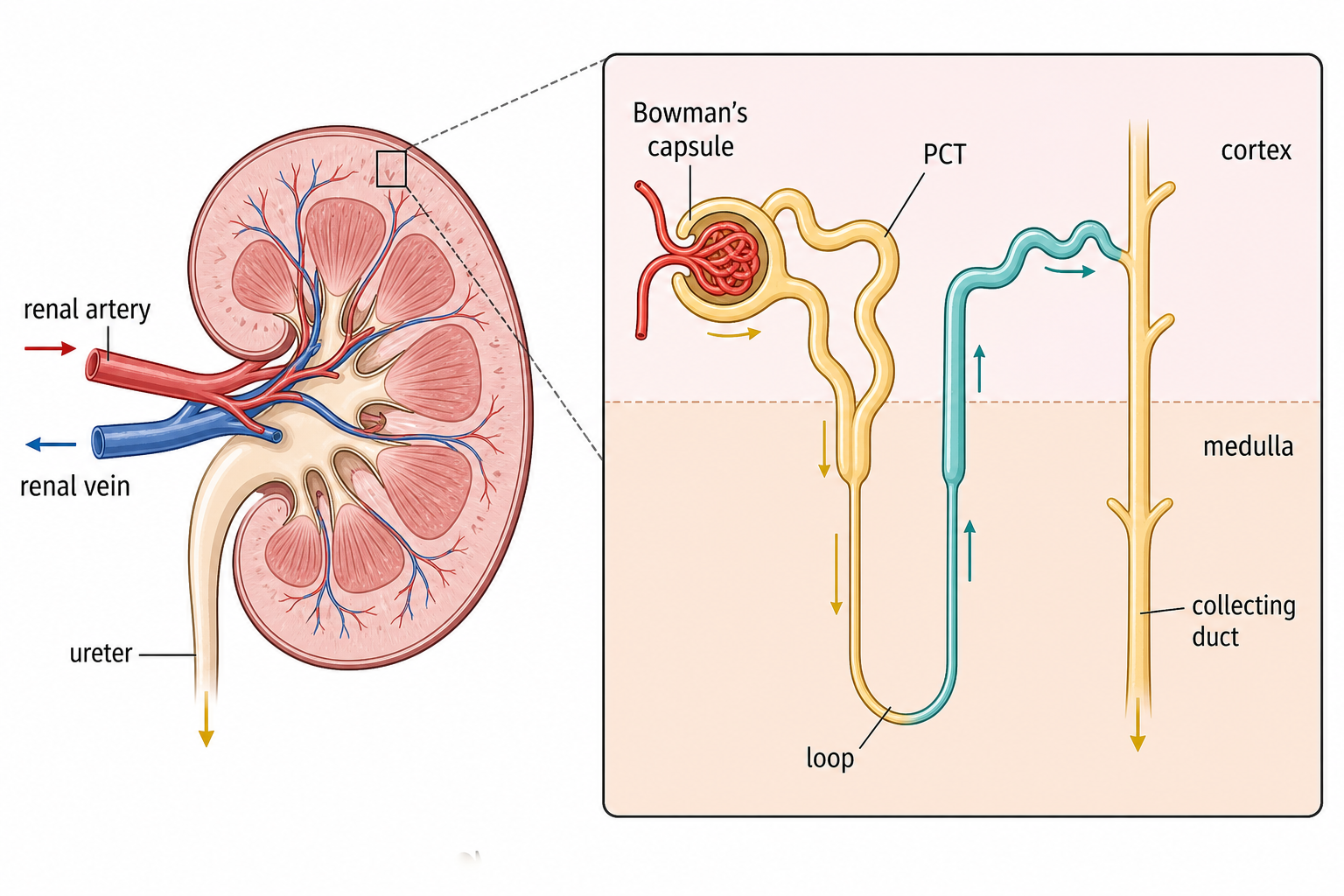
HL kidney questions often mix two jobs. Excretion removes metabolic waste such as urea. Osmoregulation adjusts water and ion concentrations to keep blood composition stable. Nephrons do both by filtering blood, removing urea, and altering what water and ions remain in urine.
The nephron is the kidney unit that links excretion with water and ion balance.
Sort each kidney function.
SortSort each kidney function.
ChooseFilter Then Reabsorb
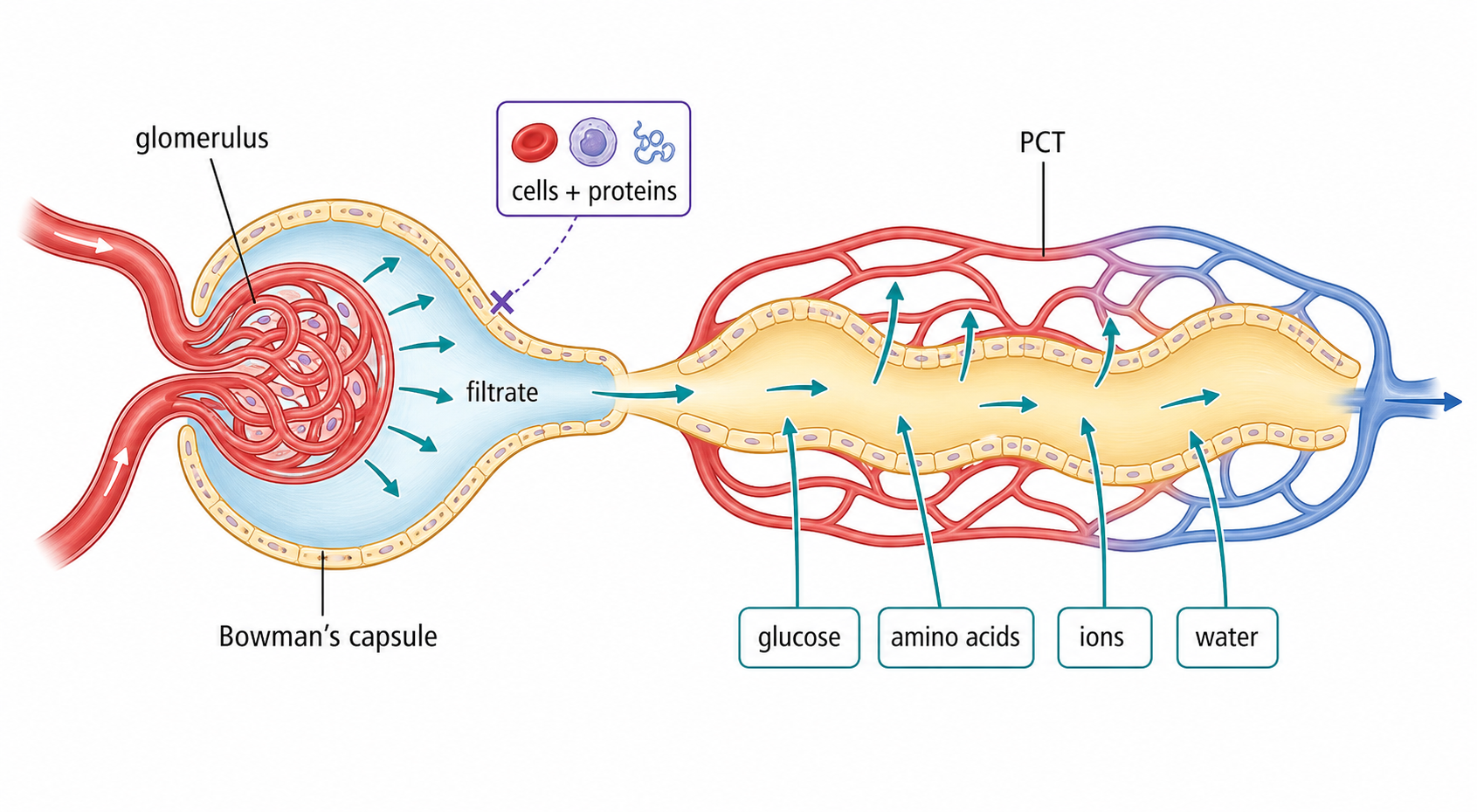
The first nephron step is pressure filtration. High blood pressure in the glomerulus drives water and small solutes into Bowman’s capsule. Then the proximal convoluted tubule selectively reabsorbs useful substances such as glucose, amino acids, ions, and water back into the blood.
Ultrafiltration is broad; selective reabsorption is choosy.
Order early nephron processing.
OrderOrder early nephron processing.
ChooseBuild the Medulla Gradient
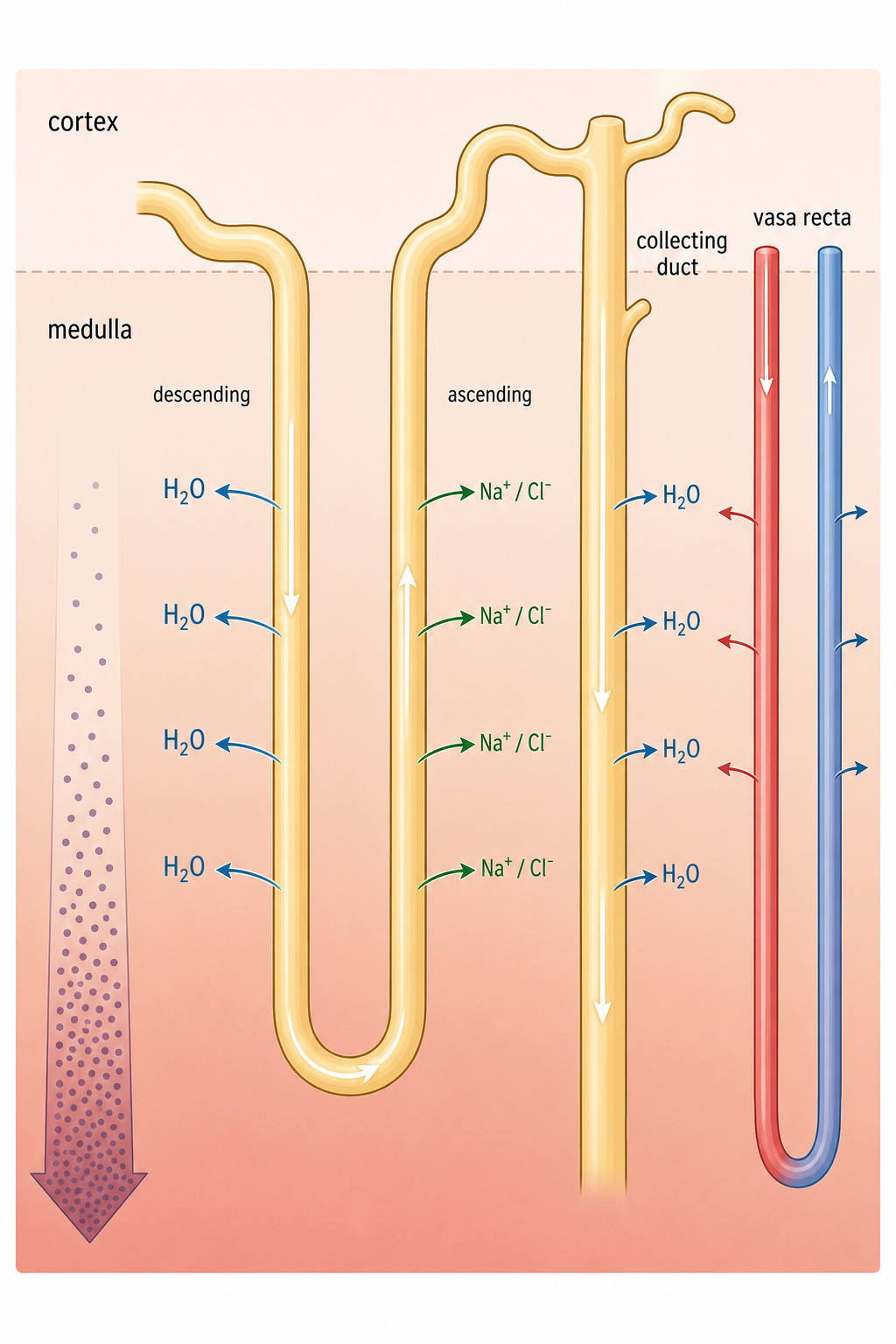
The loop of Henle creates the medulla gradient that allows water conservation. The ascending limb pumps sodium and chloride ions out and is impermeable to water. The descending limb is permeable to water, so water leaves into the salty medulla. This gradient helps the collecting duct reabsorb water later.
The loop does not directly choose urine concentration; it builds the gradient that makes water reabsorption possible.
Match each loop of Henle region to its role.
MatchMatch each loop of Henle region to its role.
ChooseUse ADH to Save Water
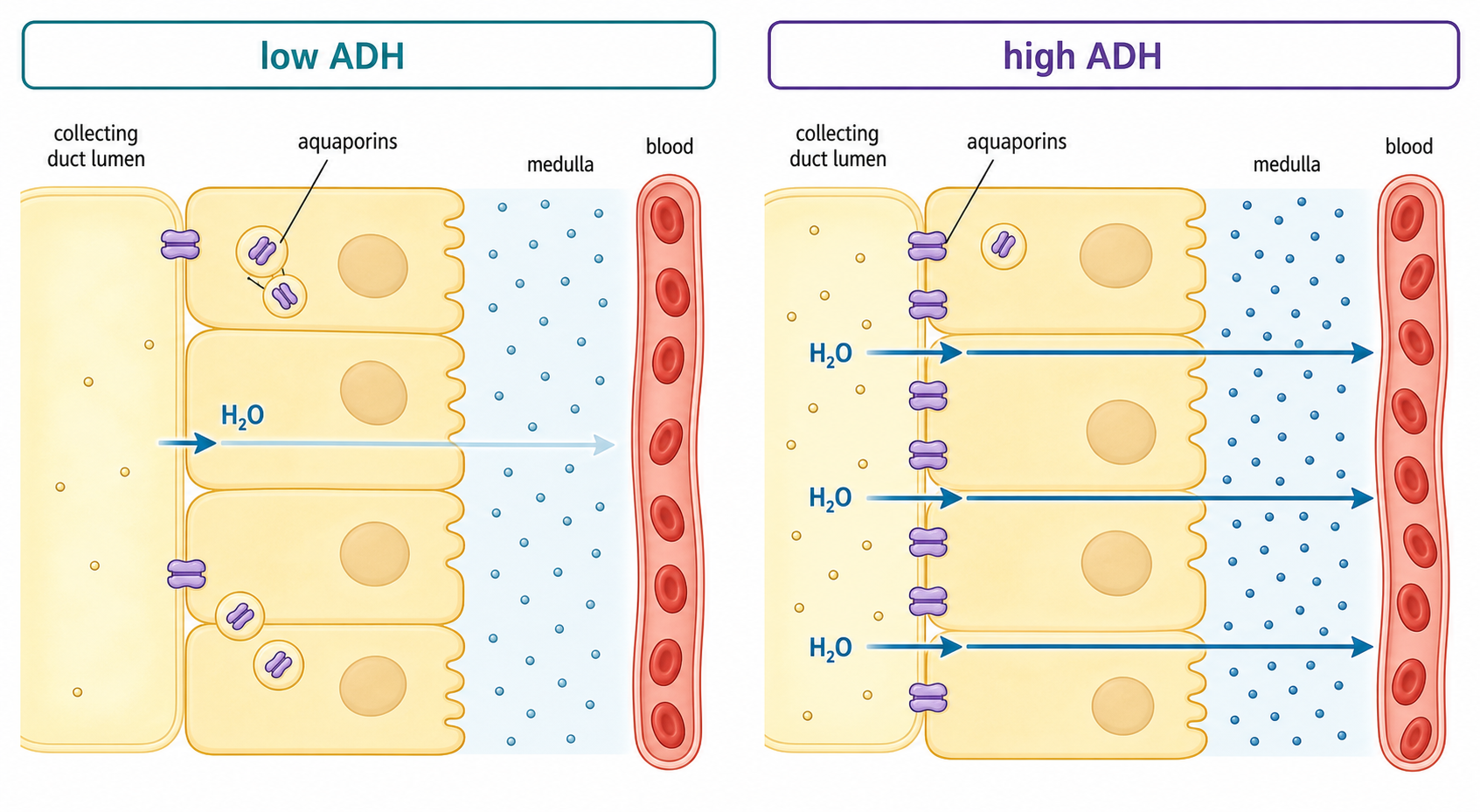
ADH controls how much water is saved in the collecting duct. Hypothalamus osmoreceptors detect high blood osmotic concentration and trigger ADH release from the posterior pituitary. ADH inserts aquaporins in collecting ducts, so more water is reabsorbed and urine becomes more concentrated.
ADH changes collecting duct permeability by changing aquaporin location.
Order the ADH water-saving pathway.
OrderOrder the ADH water-saving pathway.
ChooseRedirect Blood by Activity
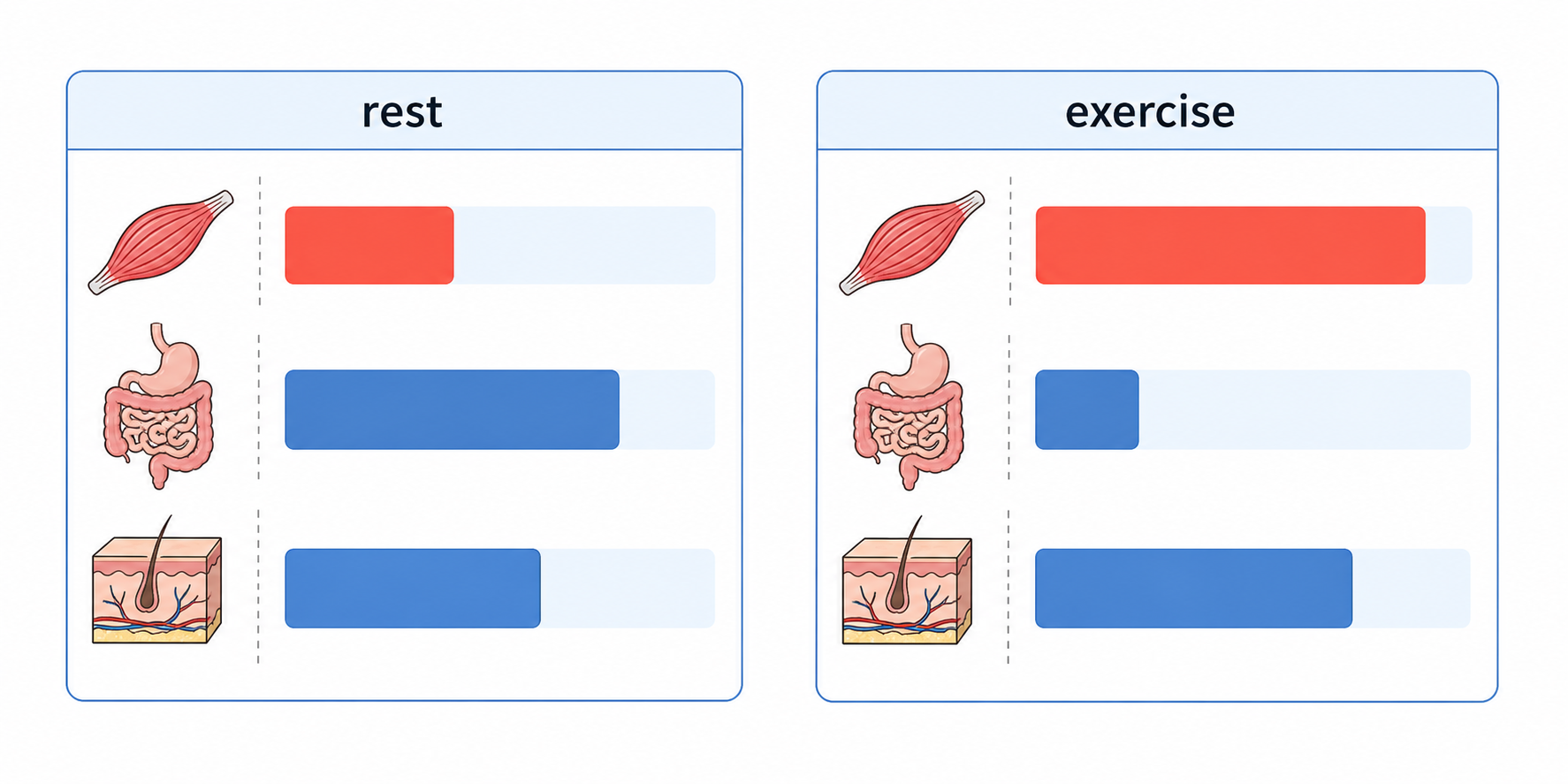
Blood flow is redistributed according to activity. Vasodilation increases flow to active tissues, while vasoconstriction reduces flow to less urgent regions. During exercise and epinephrine release, skeletal muscle receives more blood, while gut or renal flow can be reduced.
Match the activity state to the blood-flow change.
MatchRetrieve the Core Homeostasis Route
ReviewCore D3.3 is secure when every example becomes a feedback route: identify the variable, detect deviation, coordinate a response, activate effectors, and reverse the change. Glucose and temperature are the key worked examples.
Match each retrieval cue to its exam-use meaning.
MatchRetrieve the HL Homeostasis Route
ReviewHL D3.3 adds kidney and circulation mechanisms. The route is still feedback logic: nephrons filter and reabsorb, the loop of Henle builds a gradient, ADH changes collecting duct permeability, and blood vessels redistribute flow according to activity.
Match each retrieval cue to its exam-use meaning.
MatchTransfer: Explain Core Homeostasis
Exam PracticeCore homeostasis answers should use a control-loop structure, not a list of responses. The response starts with the variable and set point, then explains how the body detects deviation and activates the response that reverses it. Apply that loop to glucose, diabetes, or temperature.
Explain how negative feedback maintains a homeostatic variable such as blood glucose or core temperature.
Explain how negative feedback maintains a homeostatic variable such as blood glucose or core temperature.
ChooseMatch each exam move to the mark it earns.
MatchTransfer: Explain HL Kidney and Blood-Flow Control
Exam PracticeHL homeostasis transfer is about structure-function precision. In kidney answers, say where filtration, reabsorption, salt pumping, water movement, ADH, and aquaporins happen. In blood-flow answers, say which vessels dilate or constrict and how activity changes tissue demand.
Explain how kidney nephrons or blood-vessel control maintain internal conditions during changing body demands.
Explain how kidney nephrons or blood-vessel control maintain internal conditions during changing body demands.
ChooseMatch each exam move to the mark it earns.
Match