
See How Solutes Hold Water
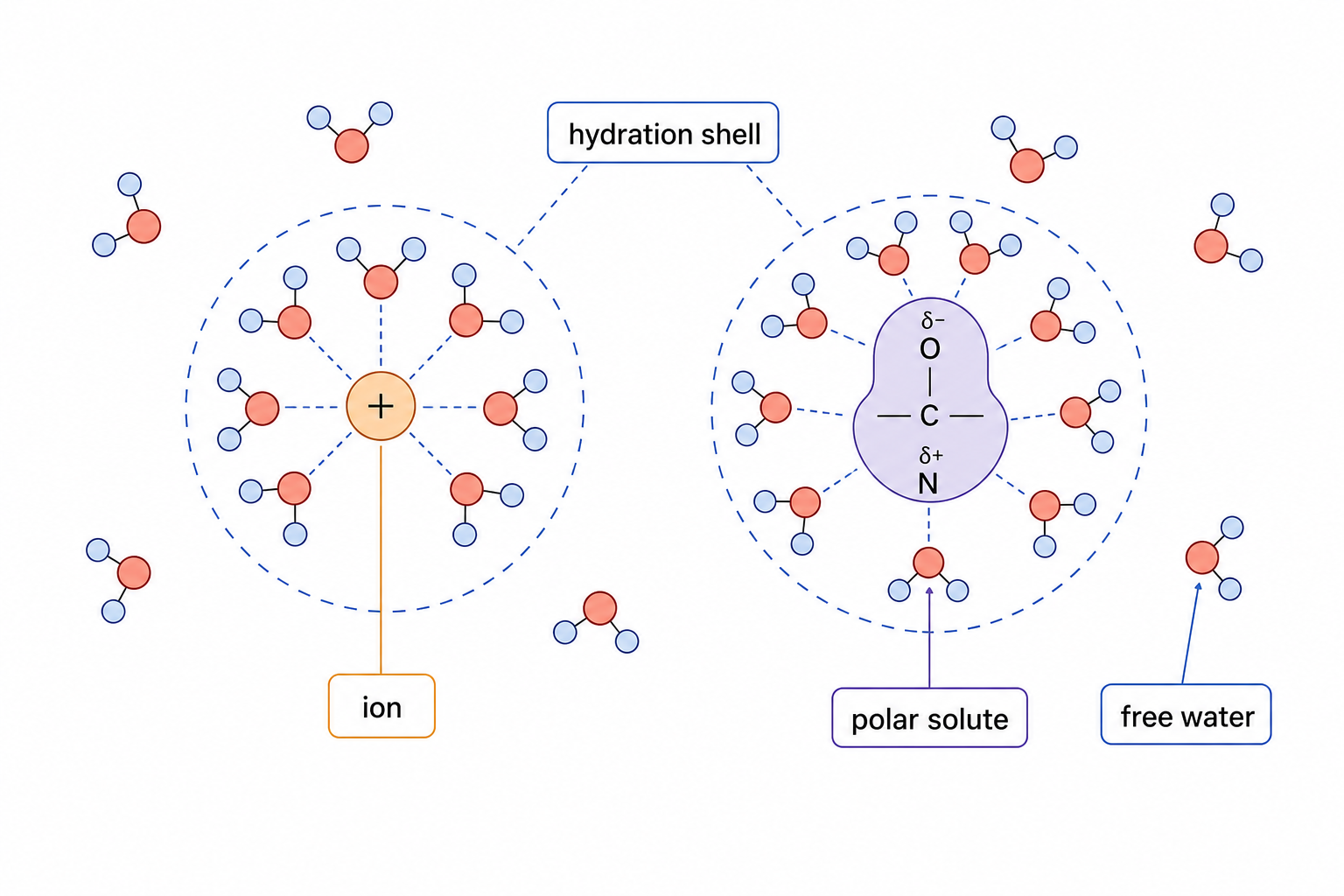
Solutes affect water movement because water molecules interact with them. Around ions and polar solutes, water forms hydration shells; hydrogen bonding and charge attraction reduce the number of freely moving water molecules.
Solutes hold some water in hydration shells.
Match each idea to its effect.
MatchMatch each idea to its effect.
ChoosePredict Osmosis Direction
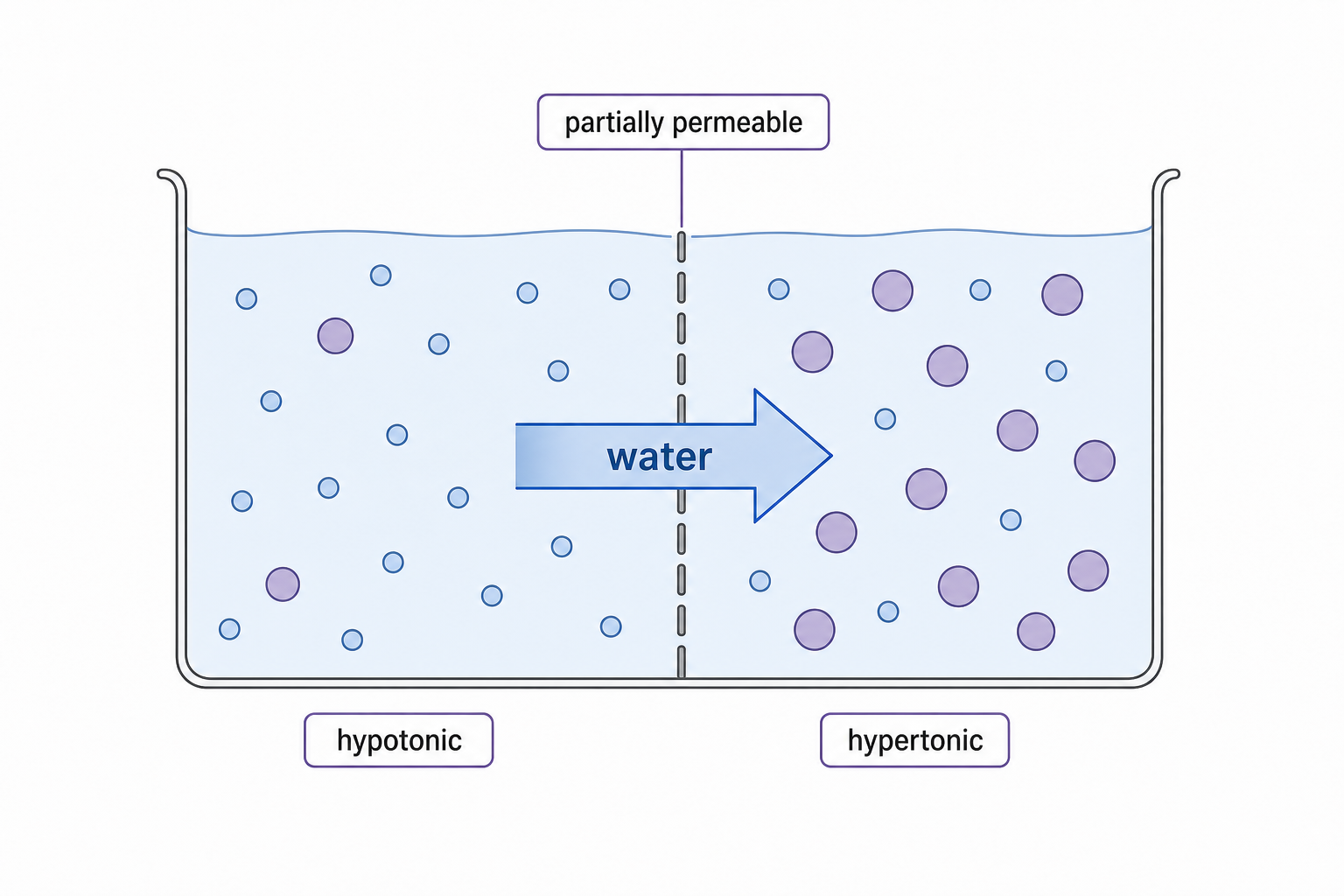
Osmosis is the net movement of water across a partially permeable membrane. In SL wording, water moves from a hypotonic or lower-solute solution toward a hypertonic or higher-solute solution.
Water moves toward the higher solute side.
A cell is placed in a hypertonic solution. What is the best prediction?
ChooseA cell is placed in a hypertonic solution. What is the best prediction?
ChooseJudge Net Osmosis in Cells
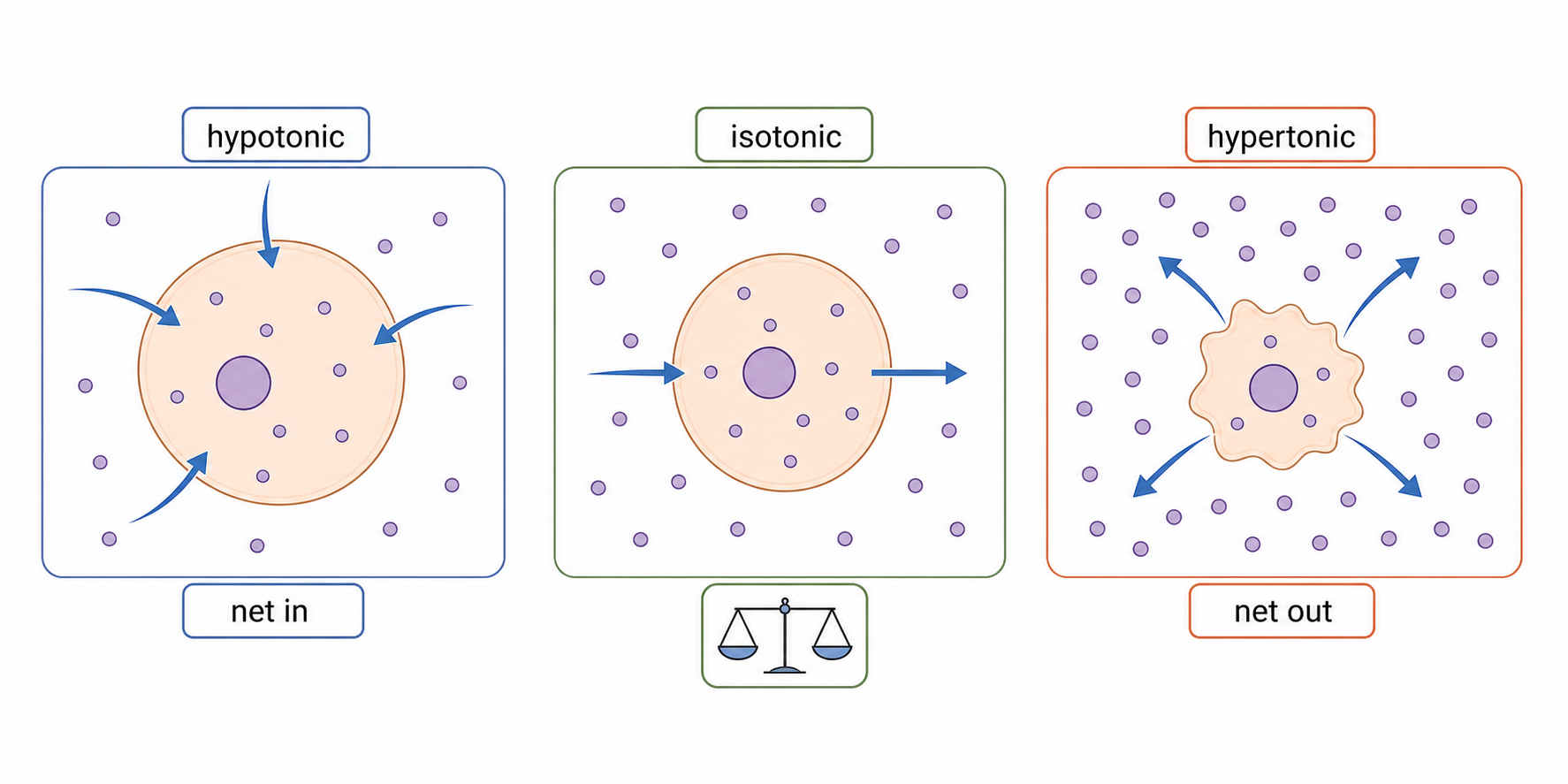
To predict osmosis in cells, compare internal and external solute concentration. A hypotonic outside tends to send water into the cell, a hypertonic outside pulls water out, and an isotonic solution has dynamic water movement in both directions but no net osmosis.
Tonicity predicts net osmosis.
Sort each condition.
SortSort each condition.
ChooseRead Plant Tissue Osmosis Data
Practice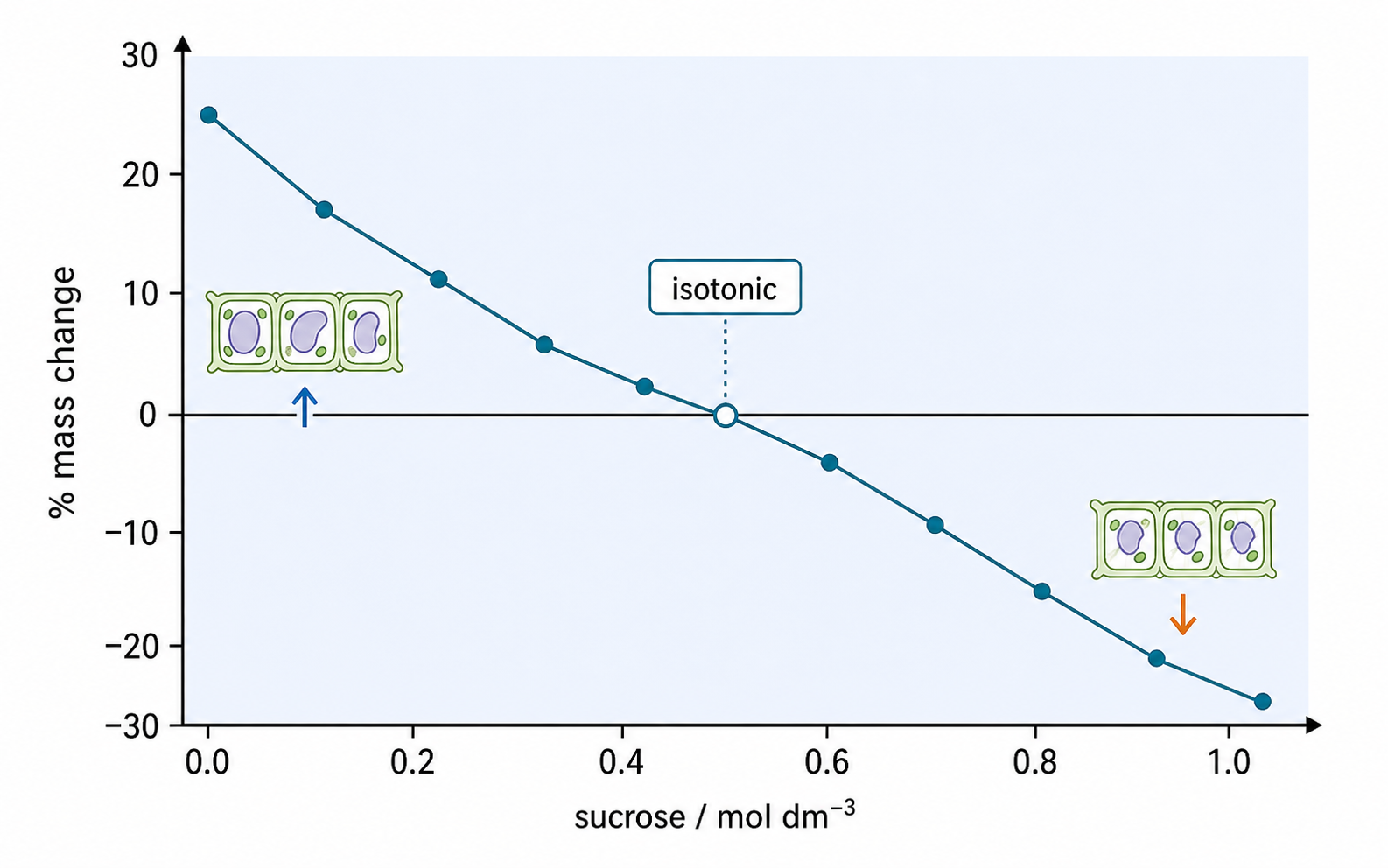
Plant tissue changes mass or length when placed in sucrose solutions because water moves by osmosis. In a percentage change graph, the isotonic or osmotic concentration is estimated where percentage change is zero, because there is no net water gain or loss.
Zero change estimates isotonic concentration.
Use the graph rule.
GraphUse the graph rule.
ChoosePredict Animal Cell Effects
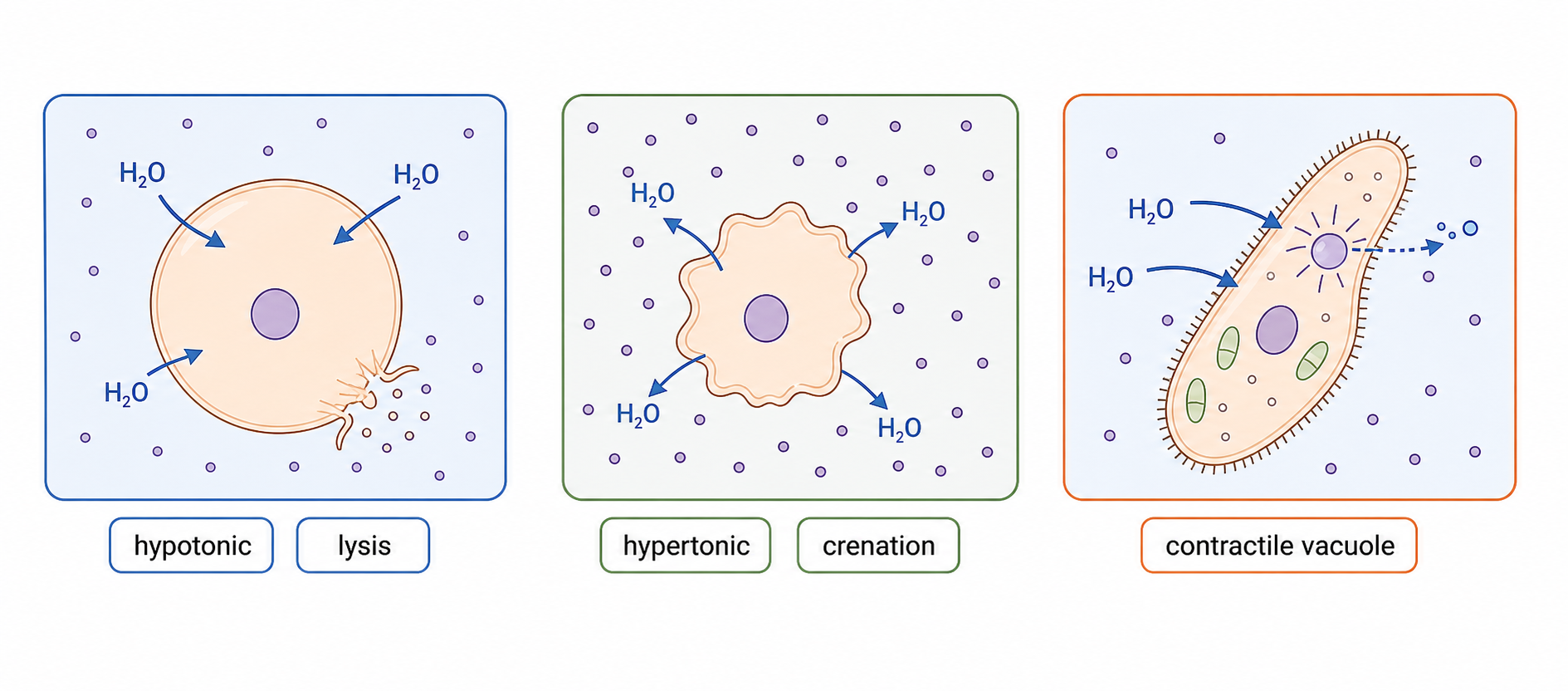
Cells without a wall cannot resist large osmotic volume changes well. Animal cells can lyse in hypotonic solutions as water enters and can crenate in hypertonic solutions as water leaves; freshwater protists use contractile vacuoles to expel excess water.
No wall means larger shape changes.
Match condition to effect.
MatchMatch condition to effect.
ChoosePredict Plant Cell Effects
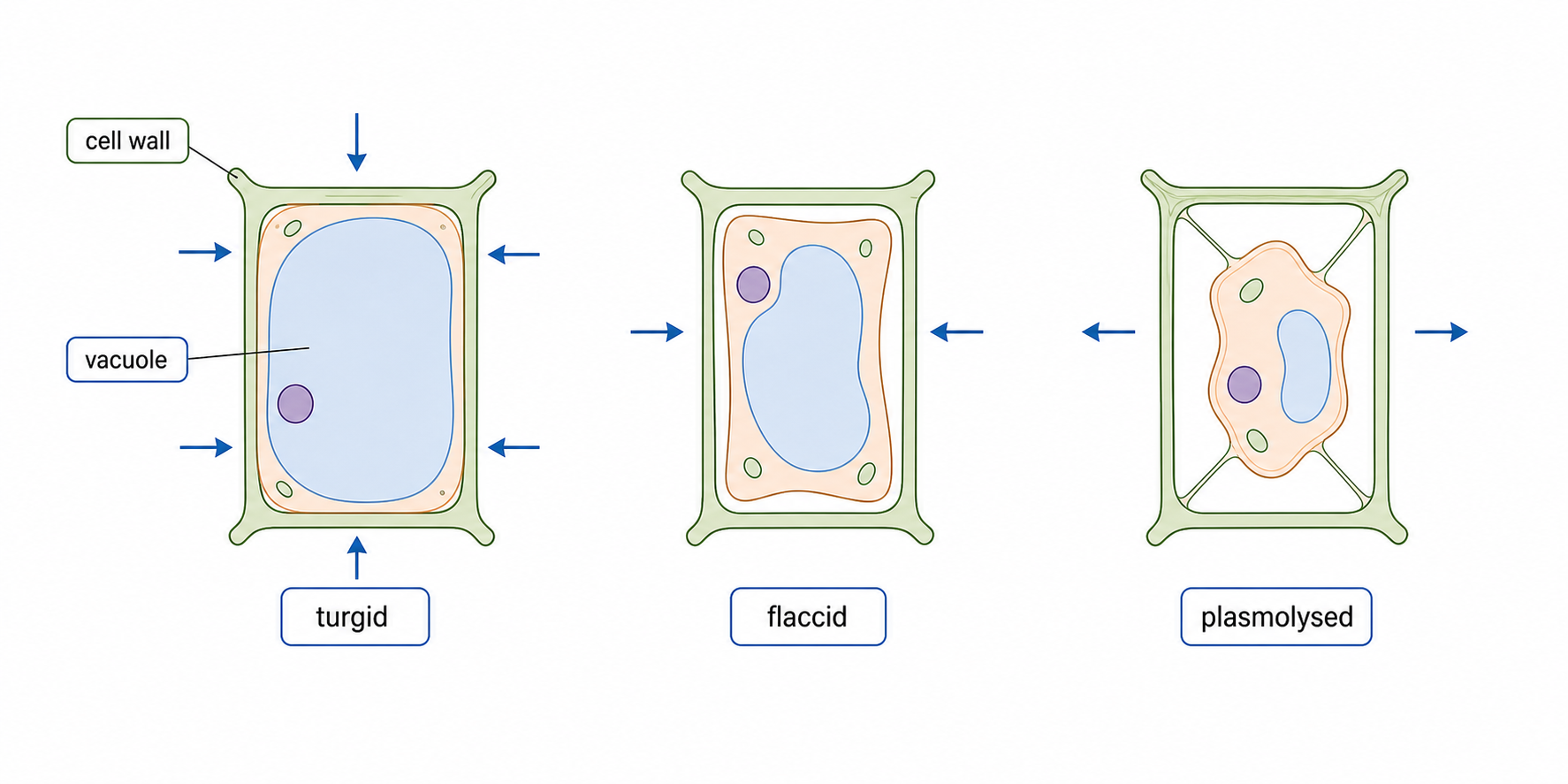
Plant cells respond differently because the wall resists swelling. In hypotonic solutions, water enters, the vacuole swells, and the cell becomes turgid; in hypertonic solutions, water leaves, cells become flaccid, and the plasma membrane can pull away from the wall in plasmolysis.
The wall changes the osmotic outcome.
Sort plant cell outcomes.
SortSort plant cell outcomes.
ChooseUse Isotonic Solutions in Medicine
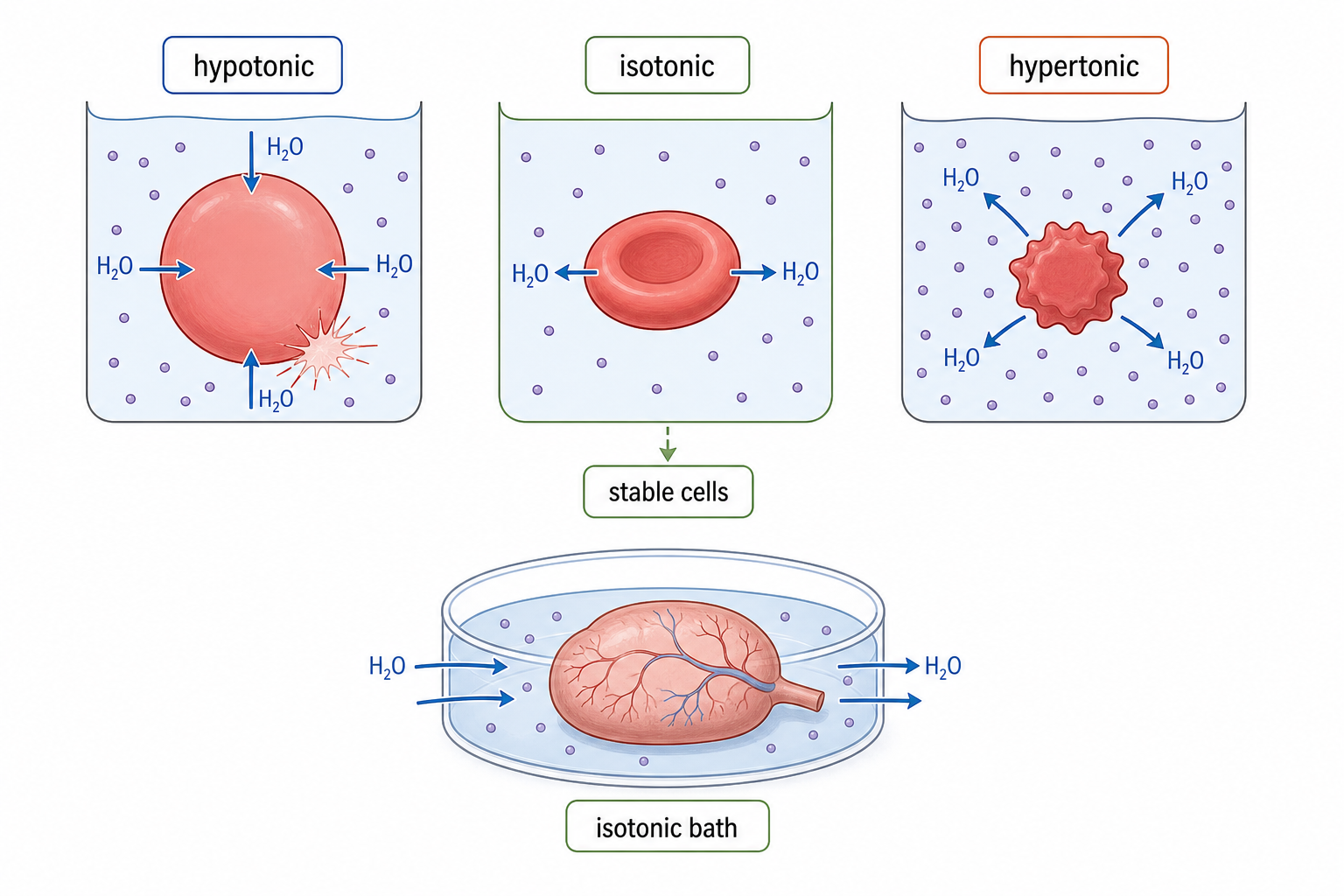
Medical fluids must avoid damaging osmosis. Isotonic saline prevents harmful net water gain or loss in body cells, and IV fluids or transplant organ baths must match tissue osmotic concentration so cells do not lyse, crenate, swell, or shrink.
Matching osmotic concentration protects cells.
Why should IV fluid be isotonic to blood cells?
ChooseWhy should IV fluid be isotonic to blood cells?
ChooseDefine Water Potential
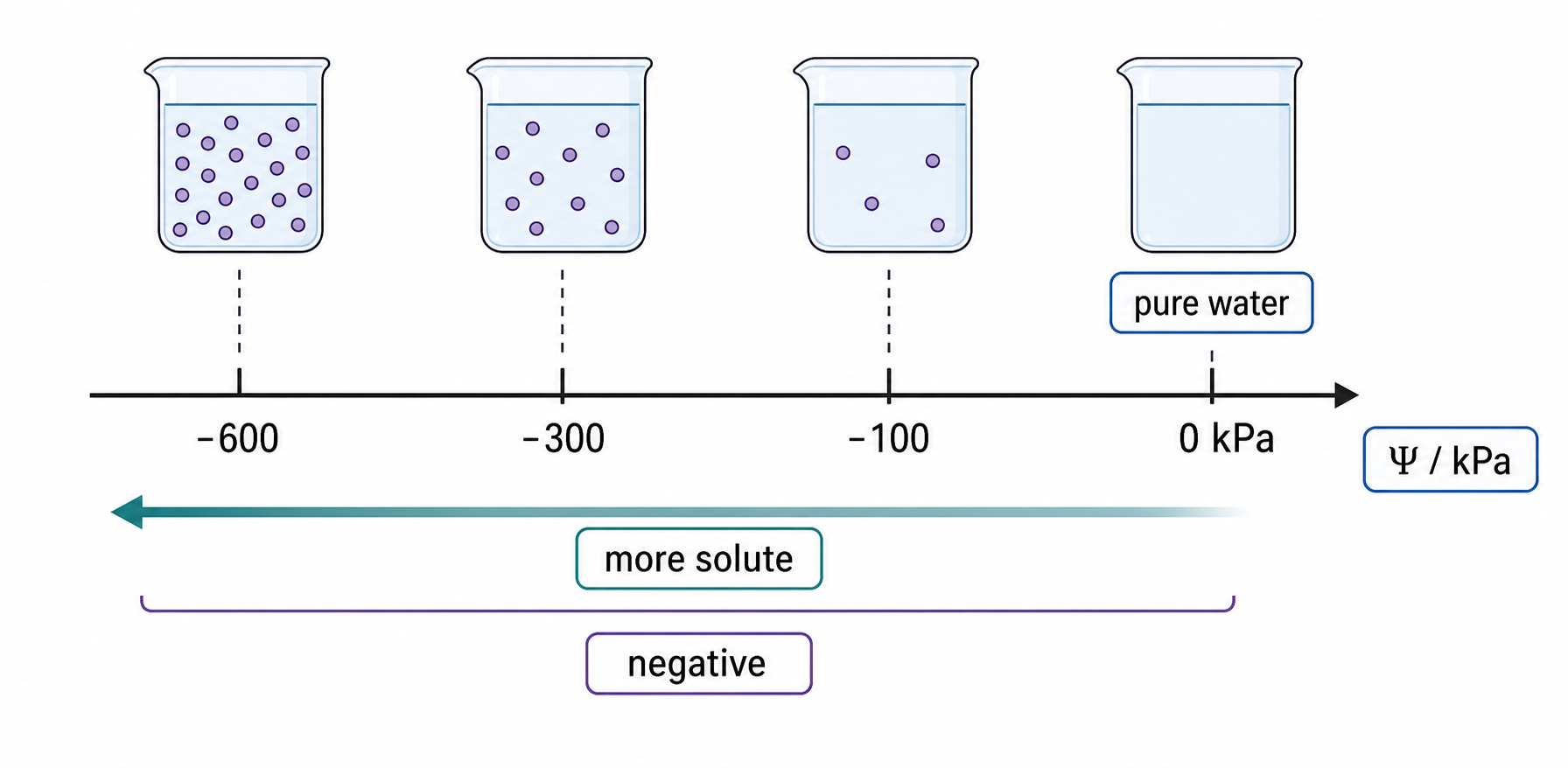
Water potential is the potential energy of water per unit volume, measured in k Pa. Pure water at standard conditions has water potential of 0 k Pa; adding solute usually lowers water potential below zero.
Pure water is the reference point.
Match each water-potential term.
MatchMatch each water-potential term.
ChooseMove from Higher to Lower Potential
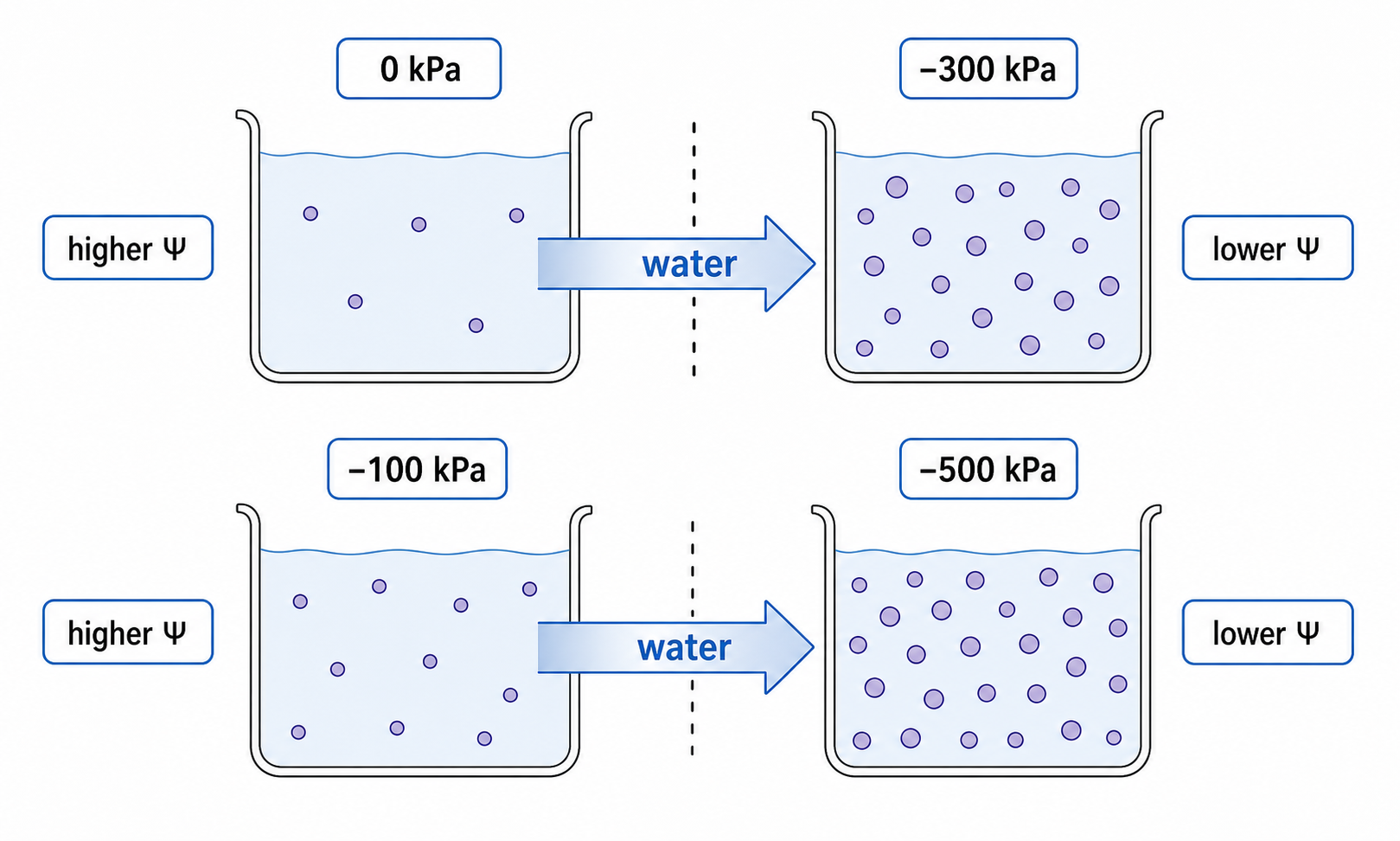
In HL terms, water moves from higher water potential to lower water potential. Because solutes lower water potential by restricting water molecule movement, water moves from a less negative value toward a more negative value.
Water moves toward lower, more negative water potential.
Water is separated by a membrane: side A = -200 k Pa, side B = -600 k Pa. What is the net direction?
ChooseWater is separated by a membrane: side A = -200 k Pa, side B = -600 k Pa. What is the net direction?
ChooseAdd Solute and Pressure Potential
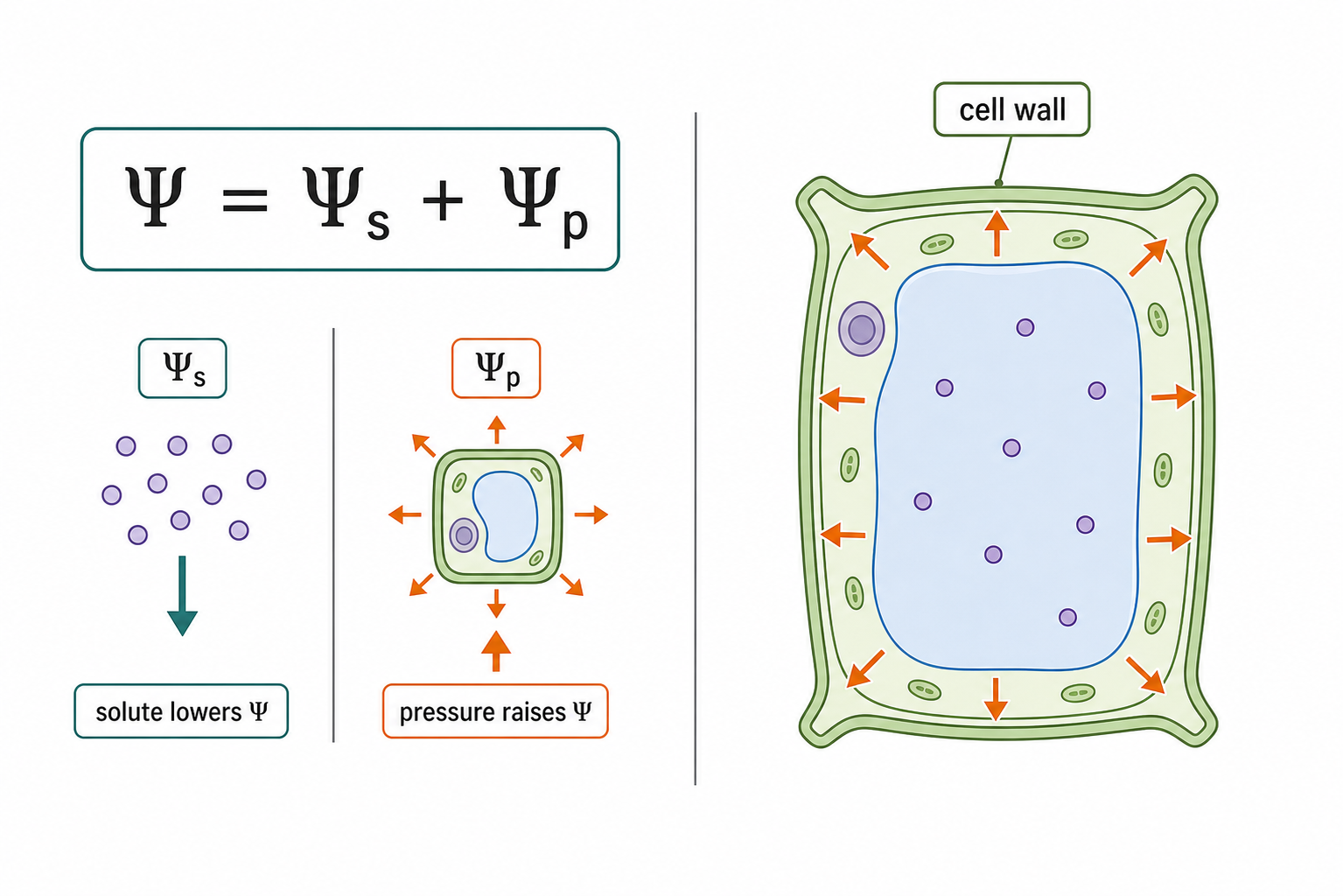
Water potential combines two components: water potential equals solute potential plus pressure potential. Solute potential is zero or negative because solutes lower water potential; pressure potential is often positive in walled cells because the wall resists swelling and creates pressure.
Solute and pressure effects combine.
Match each component.
MatchMatch each component.
ChoosePredict Plant Tissue Water Potential Changes
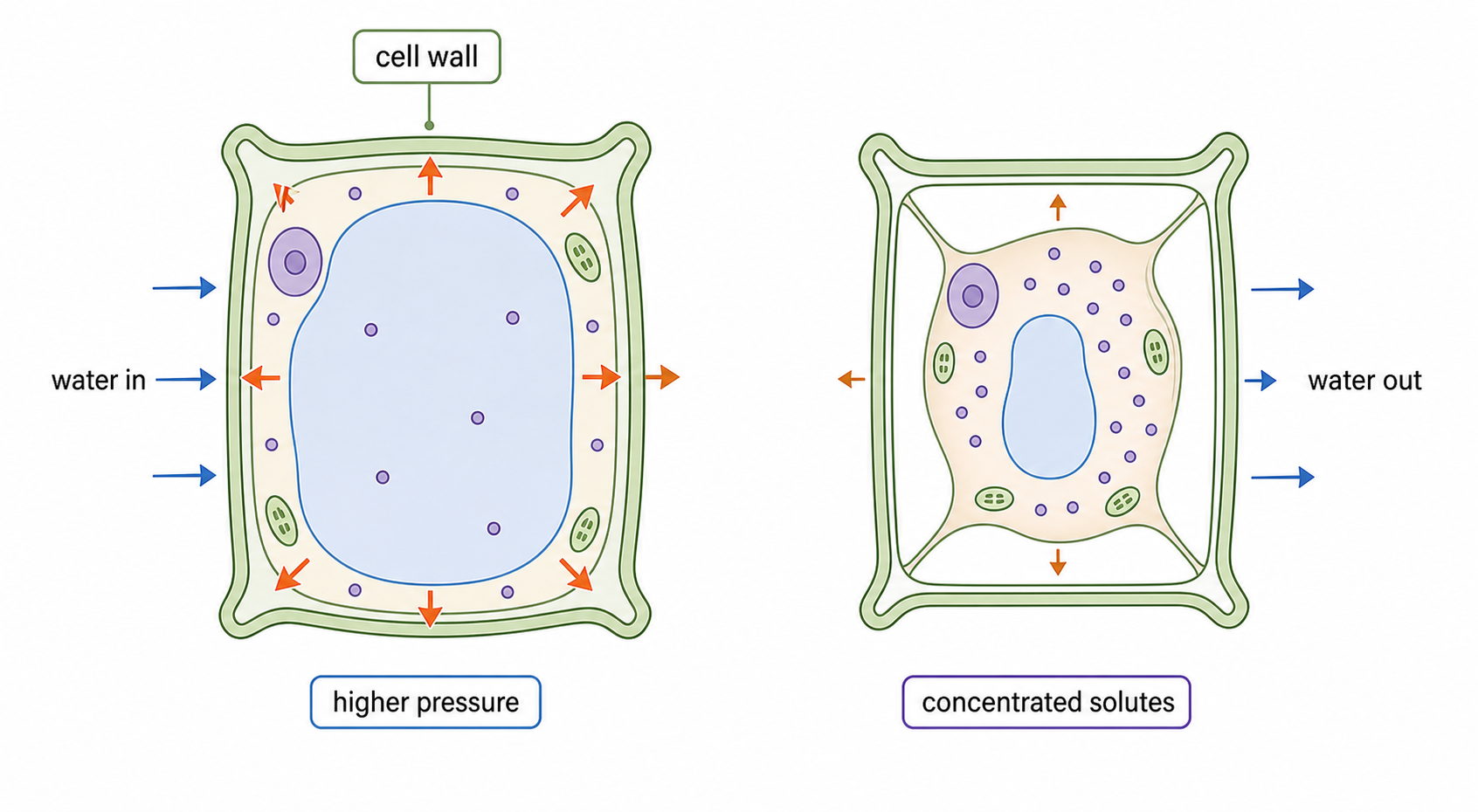
In plant tissue, water movement changes both components of water potential. Water entering cells increases pressure potential as the vacuole presses on the wall and dilutes solutes; water leaving cells lowers pressure potential and makes solute potential more negative because solutes become more concentrated.
Water movement changes pressure and solute concentration.
A plant cell loses water to a hypertonic solution. Predict the component changes.
PredictA plant cell loses water to a hypertonic solution. Predict the component changes.
ChooseTransfer: Explain Core Osmosis Effects
Exam PracticeWater forms hydration shells around ions and polar solutes; hydrogen bonding and charge attraction reduce free water movement. Water moves by osmosis across partially permeable membranes from hypotonic/lower solute solutions toward hypertonic/higher solute solutions. Osmosis direction depends on internal and external solute concentration; isotonic conditions have dynamic water movement but no net osmosis. Plant tissue changes mass or length in sucrose solutions; percentage change graphs estimate isotonic or osmotic concentration. Animal cells can lyse in hypotonic solutions and crenate in hypertonic solutions; freshwater protists use contractile vacuoles to expel excess water. Plant cells become turgid in hypotonic solutions as vacuoles swell; hypertonic solutions cause flaccidity and plasmolysis from water loss. Isotonic saline prevents harmful water gain or loss in body cells; IV fluids and transplant organ baths must match tissue osmotic concentration.
Put the answer frame in order.
OrderUse this for SL/core questions about solvation, osmosis direction, isotonic conditions, plant tissue sucrose graphs, animal and plant cell effects, contractile vacuoles, isotonic saline, IV fluids, and transplant organ baths.
Use this for SL/core questions about solvation, osmosis direction, isotonic conditions, plant tissue sucrose graphs, animal and plant cell effects, contractile vacuoles, isotonic saline, IV fluids, and transplant organ baths.
Common loss: reversing hypo/hypertonic direction, saying isotonic means no water movement, or naming lysis/plasmolysis without explaining net water movement.
Transfer: Explain HL Water Potential
Exam PracticeWater potential is potential energy of water per unit volume, measured in k Pa; pure water at standard conditions has water potential of 0 k Pa. Water moves from higher water potential to lower water potential; solutes lower water potential by restricting water molecule movement. Water potential equals solute potential plus pressure potential; solute potential is zero or negative and pressure potential is often positive in walled cells. Water entering plant cells increases pressure potential and dilutes solutes; water leaving plant cells lowers pressure potential and makes solute potential more negative.
Put the answer frame in order.
OrderUse this for HL questions about water potential definition, k Pa values, higher-to-lower movement, solute potential, pressure potential, and plant tissue component changes.
Use this for HL questions about water potential definition, k Pa values, higher-to-lower movement, solute potential, pressure potential, and plant tissue component changes.
Common loss: treating more negative values as higher water potential, making solute potential positive, or forgetting pressure potential in walled plant cells.