
Expression Links Gene to Phenotype
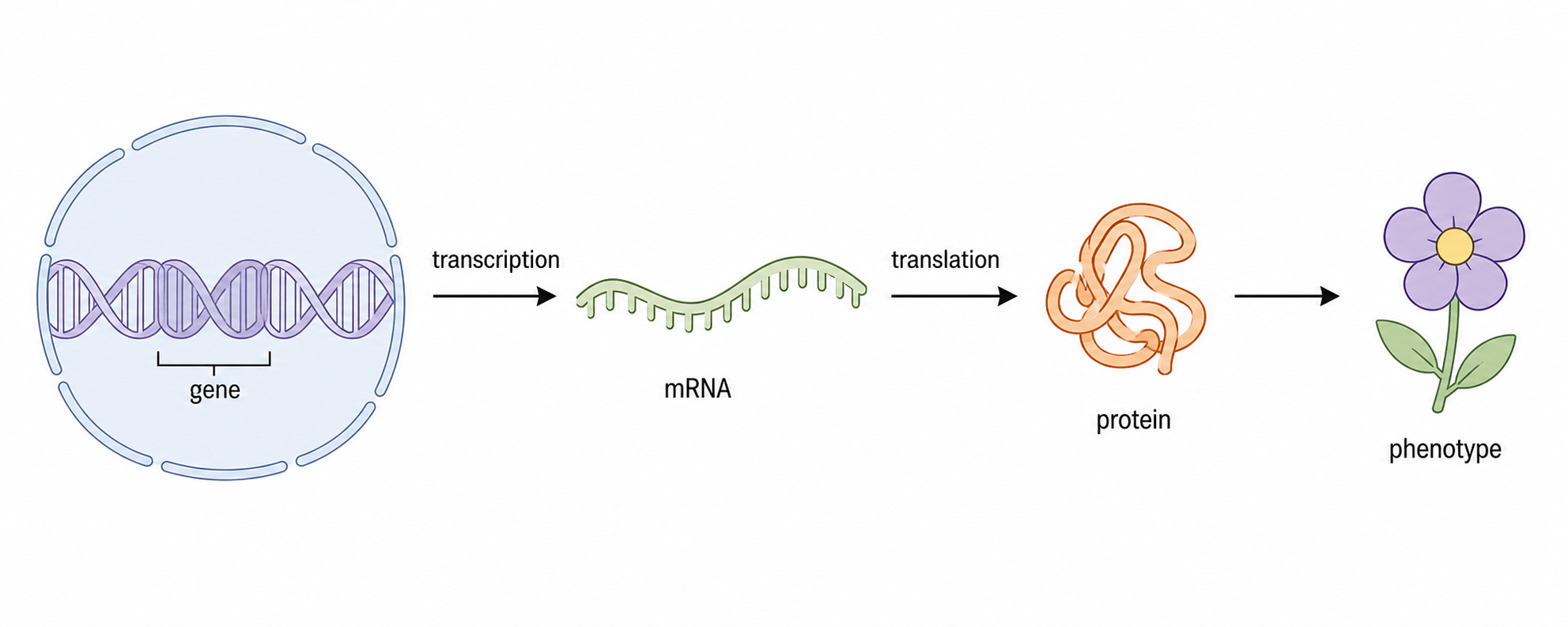
Gene expression is the route from stored DNA information to phenotype. The main stages are transcription to make mRNA, translation to make a polypeptide, and protein function that affects cell activity or phenotype.
Expression connects information to phenotype.
Put the expression route in order.
OrderPut the expression route in order.
ChooseRegulate Transcription
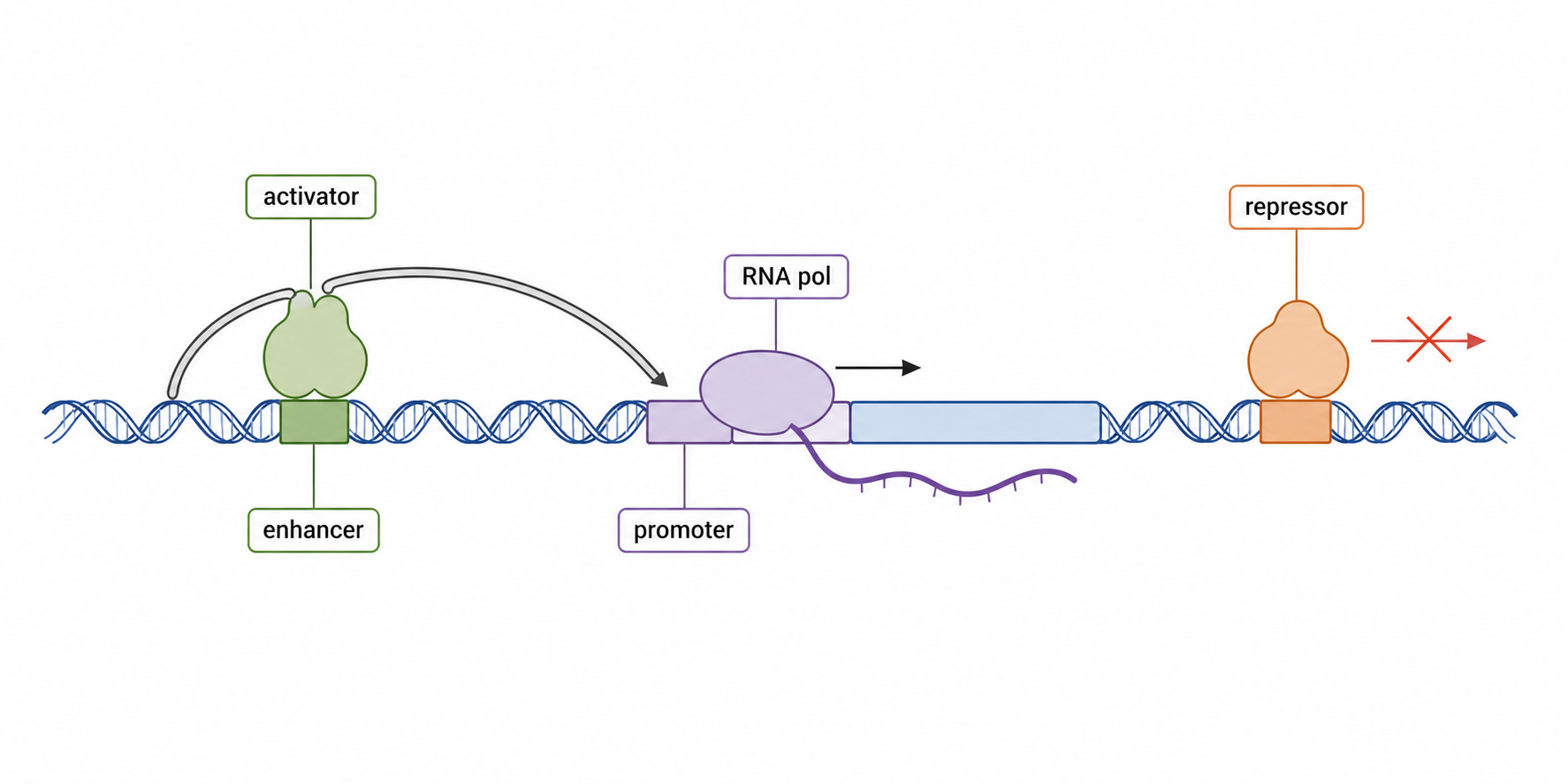
A major control point in gene expression is transcription. Transcription factors bind specific DNA sequences; promoters, enhancers, activators, and repressors change RNA polymerase activity, so the cell makes more or less mRNA from a gene.
Transcription regulation changes mRNA amount.
Match each control element.
MatchMatch each control element.
ChooseControl mRNA Lifetime
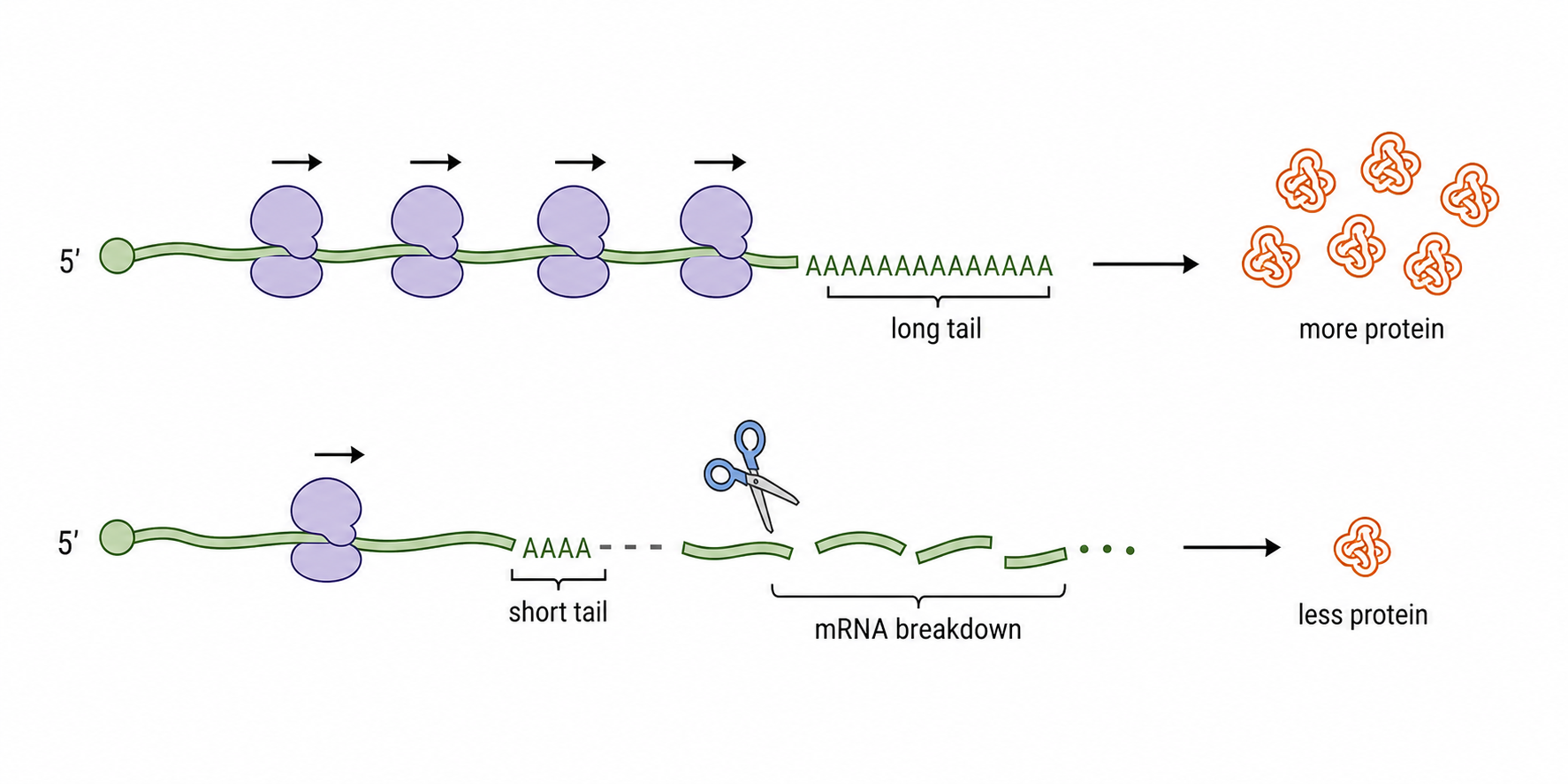
Gene expression can be controlled after transcription by changing mRNA lifetime. If an mRNA is degraded quickly, translation stops sooner; poly-A tail shortening and nucleases help remove mRNA after use.
mRNA lifetime changes protein output.
Predict the effect of faster mRNA degradation.
PredictPredict the effect of faster mRNA degradation.
ChooseBuild Differentiation by Epigenesis
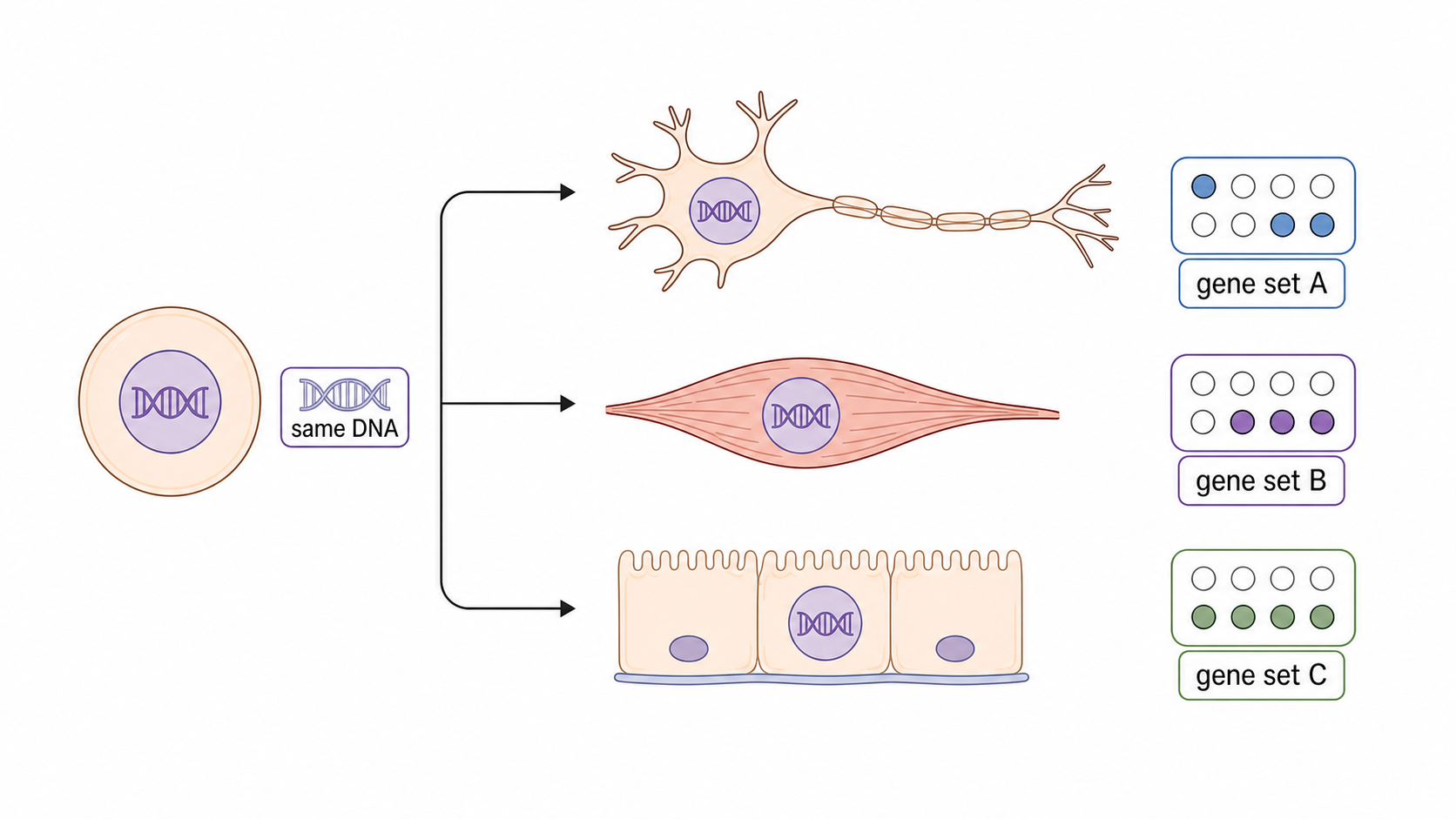
Epigenesis explains how an undifferentiated zygote can give rise to specialized cells. Epigenetic changes alter gene activity without changing the DNA base sequence, so different cell types can keep different expression patterns while sharing the same genome.
Differentiation can be controlled epigenetically.
Spot the error: differentiation requires changing the DNA base sequence in each cell type.
Spot ErrorsSpot the error: differentiation requires changing the DNA base sequence in each cell type.
ChooseSeparate Genome, Transcriptome, Proteome
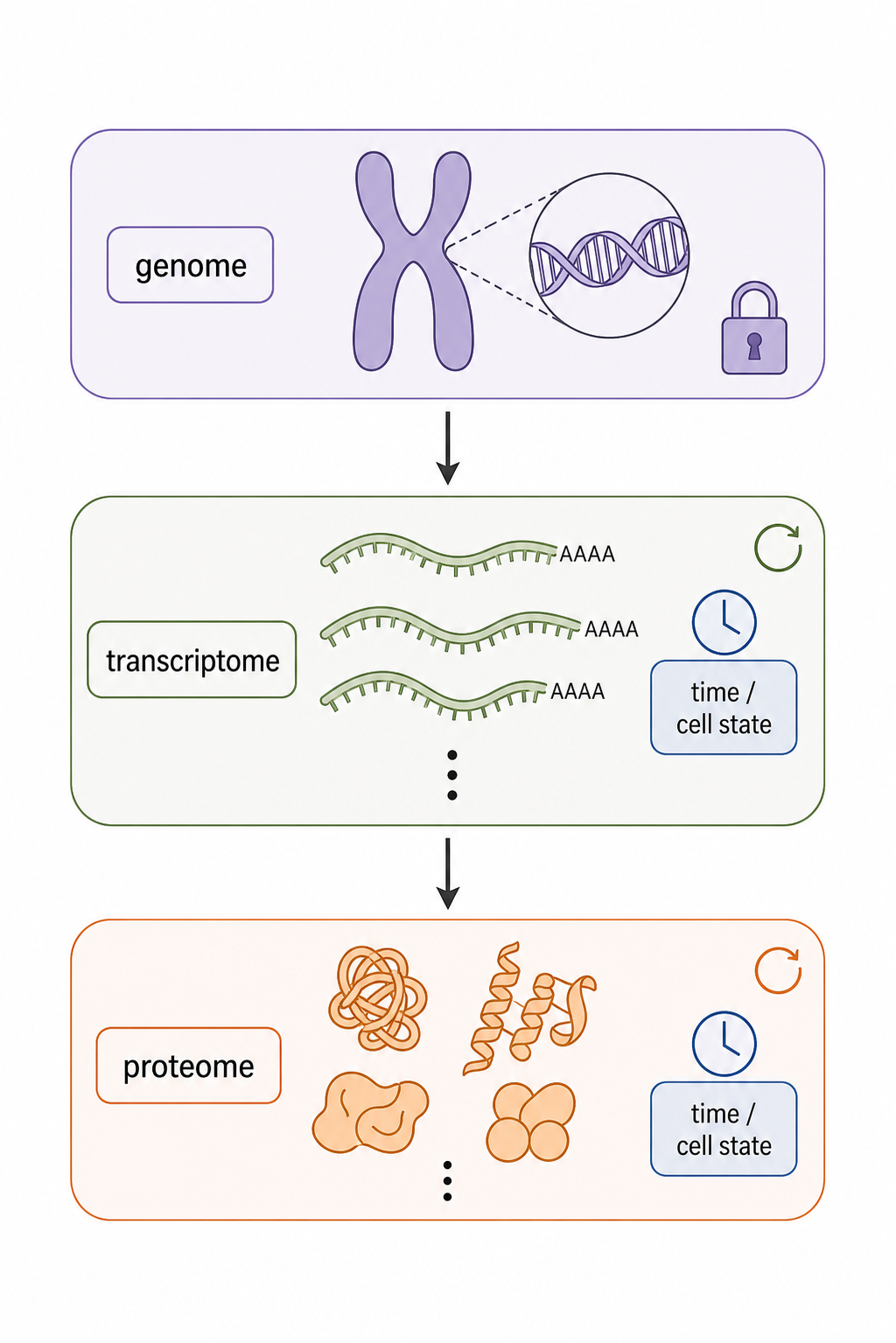
Genome, transcriptome, and proteome describe different layers. The genome is all genetic information, the transcriptome is the set of expressed mRNAs, and the proteome is the dynamic protein set that changes with cell type, time, and environment.
Expression outputs change while the genome may stay the same.
Match each term to its layer.
MatchMatch each term to its layer.
ChooseRead Epigenetic Tags

Epigenetic tags regulate expression by changing access to genes. Promoter DNA methylation usually represses downstream transcription, while histone methylation or acetylation changes chromatin access and therefore gene expression.
Tags change access to the gene.
Sort each epigenetic effect.
SortSort each epigenetic effect.
ChoosePass Epigenetic Patterns
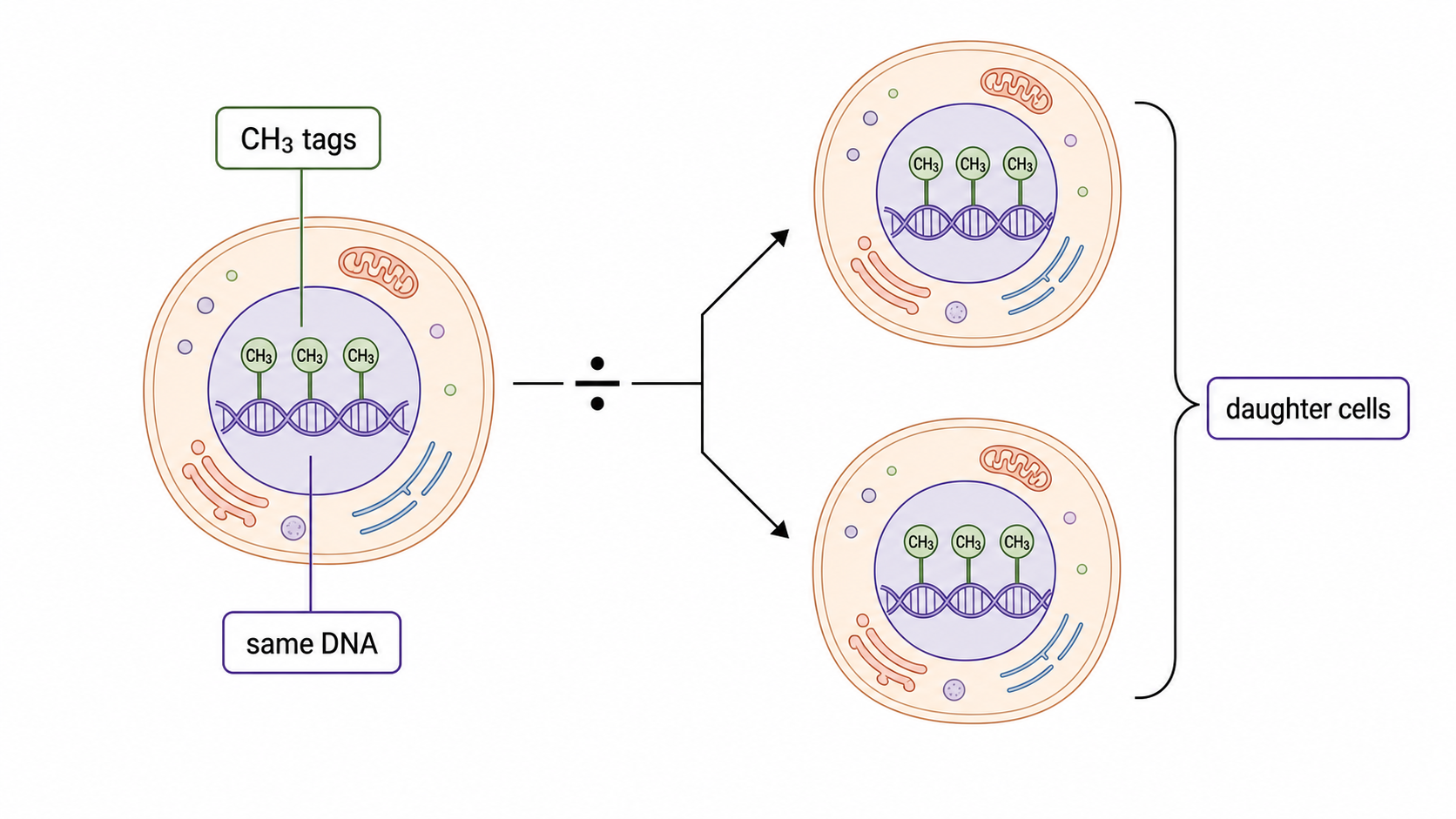
Epigenetic inheritance means a gene-expression state can be passed on without changing the DNA sequence. Persistent DNA methylation or histone tags can survive cell division or, in some cases, gamete formation.
Inherited tags can preserve expression states.
Which statement best describes epigenetic inheritance?
ChooseWhich statement best describes epigenetic inheritance?
ChooseConnect Environment to Expression
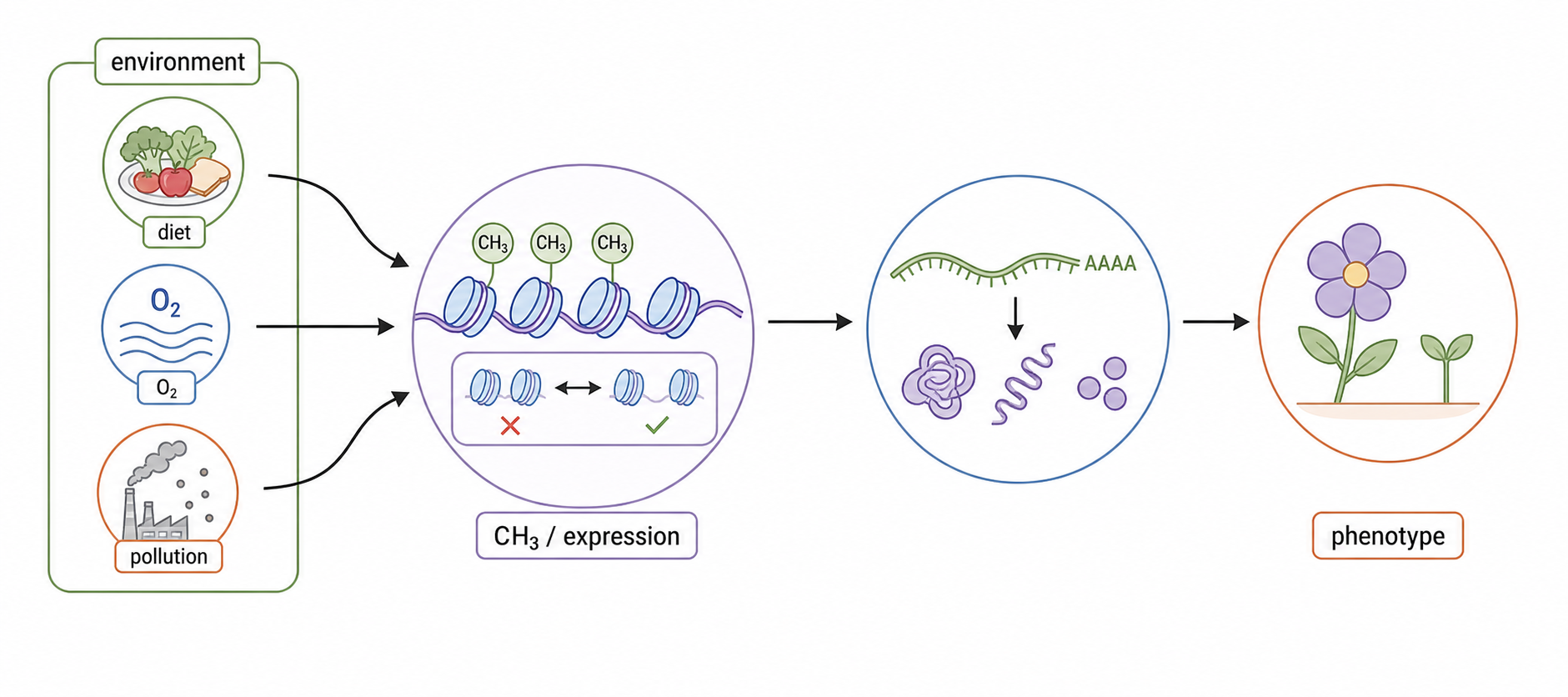
External conditions can alter gene expression. Diet, oxygen, light, drugs, temperature, mutagens, and pollution may affect expression; air pollution is a key example because it can modify DNA and histone methylation linked to lung disease.
Environment can act through expression control.
Match each evidence link.
MatchMatch each evidence link.
ChooseReset or Retain Tags
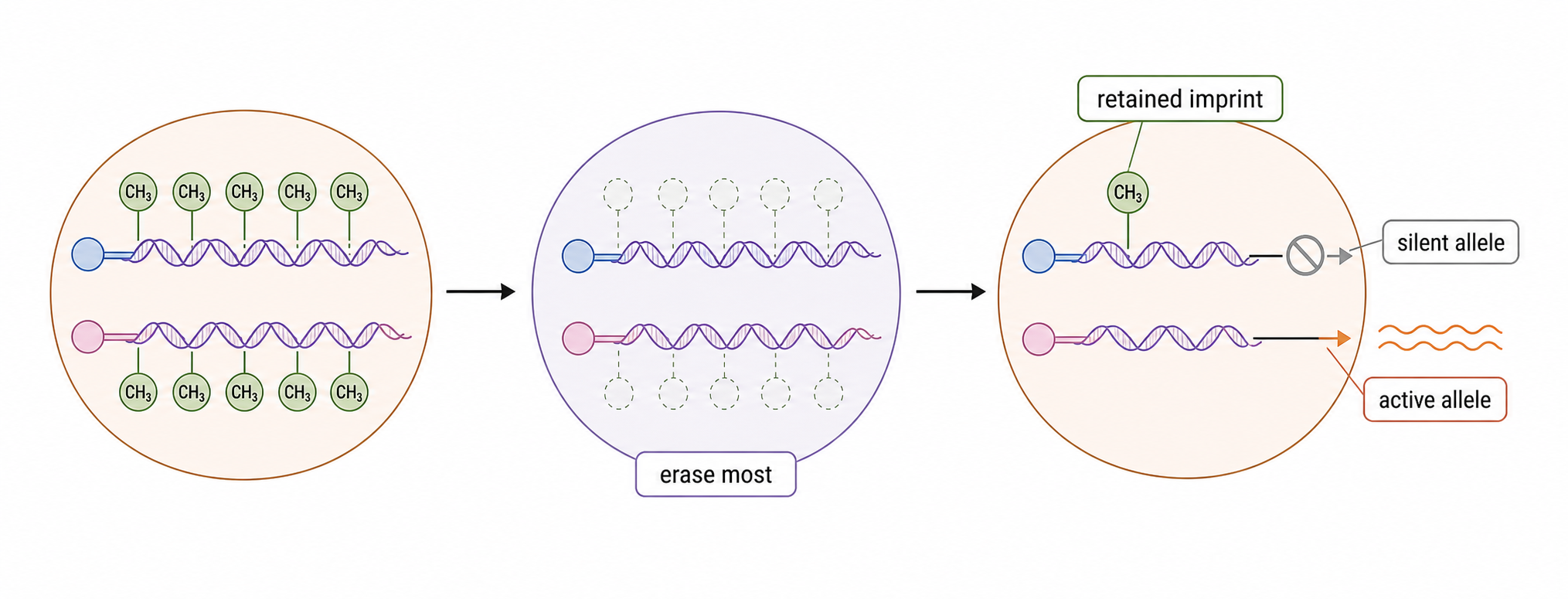
Most epigenetic tags are reset during human egg and sperm development, which limits inheritance of many expression states. The exception to remember is retained imprints: they can silence one parental allele and affect offspring phenotype.
Resetting is common; imprint retention is the exception.
Sort each statement.
SortSort each statement.
ChooseUse Monozygotic Twin Evidence
Practice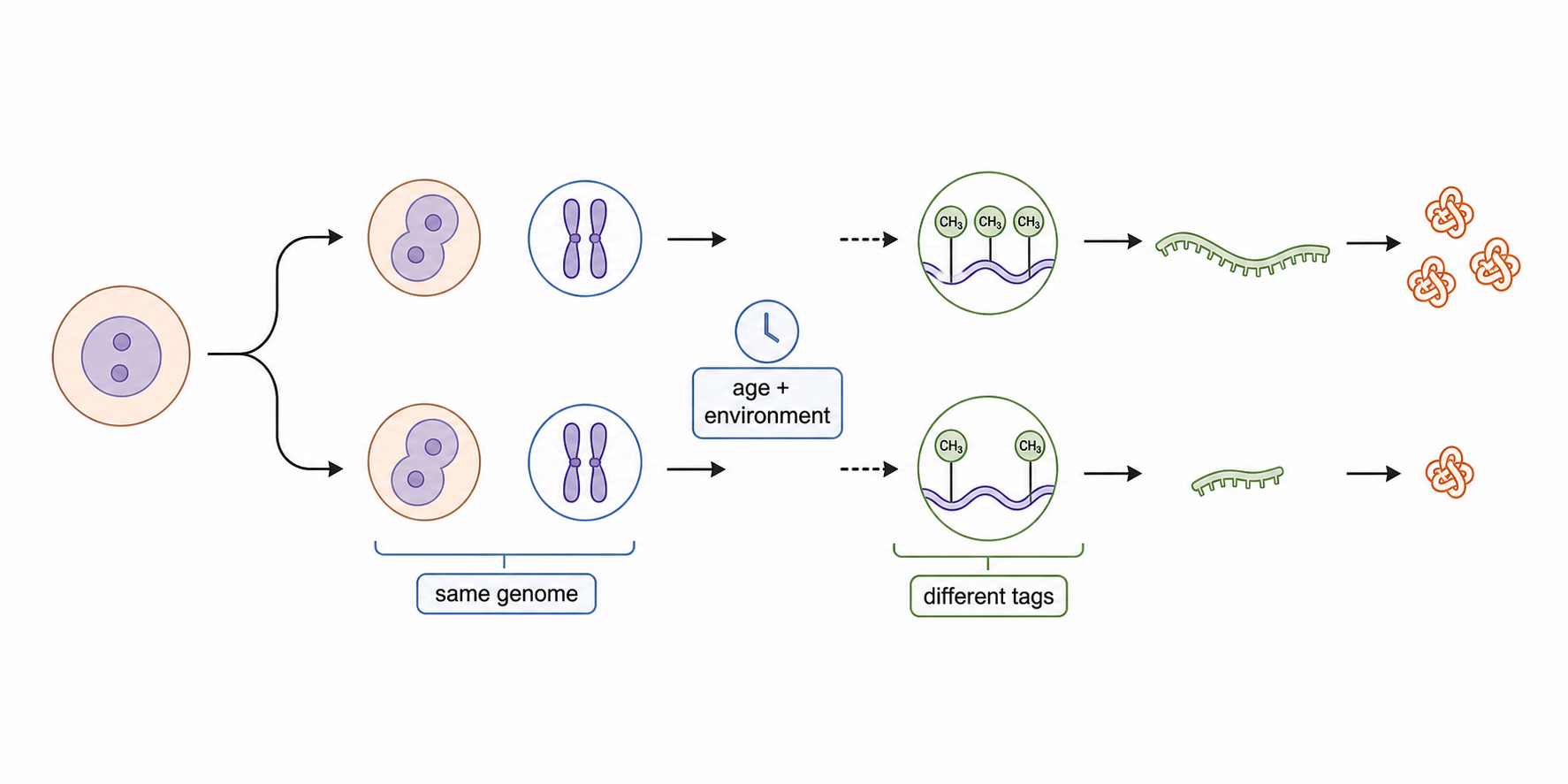
Monozygotic twins share a genome, so they help test genetic versus environmental effects. If twins age in different environments, epigenetic differences can accumulate and may help explain differences in expression or phenotype.
Shared genome makes environmental/epigenetic differences easier to study.
Interpret a twin-study result.
GraphInterpret a twin-study result.
ChooseCompare Hormone and Operon Control
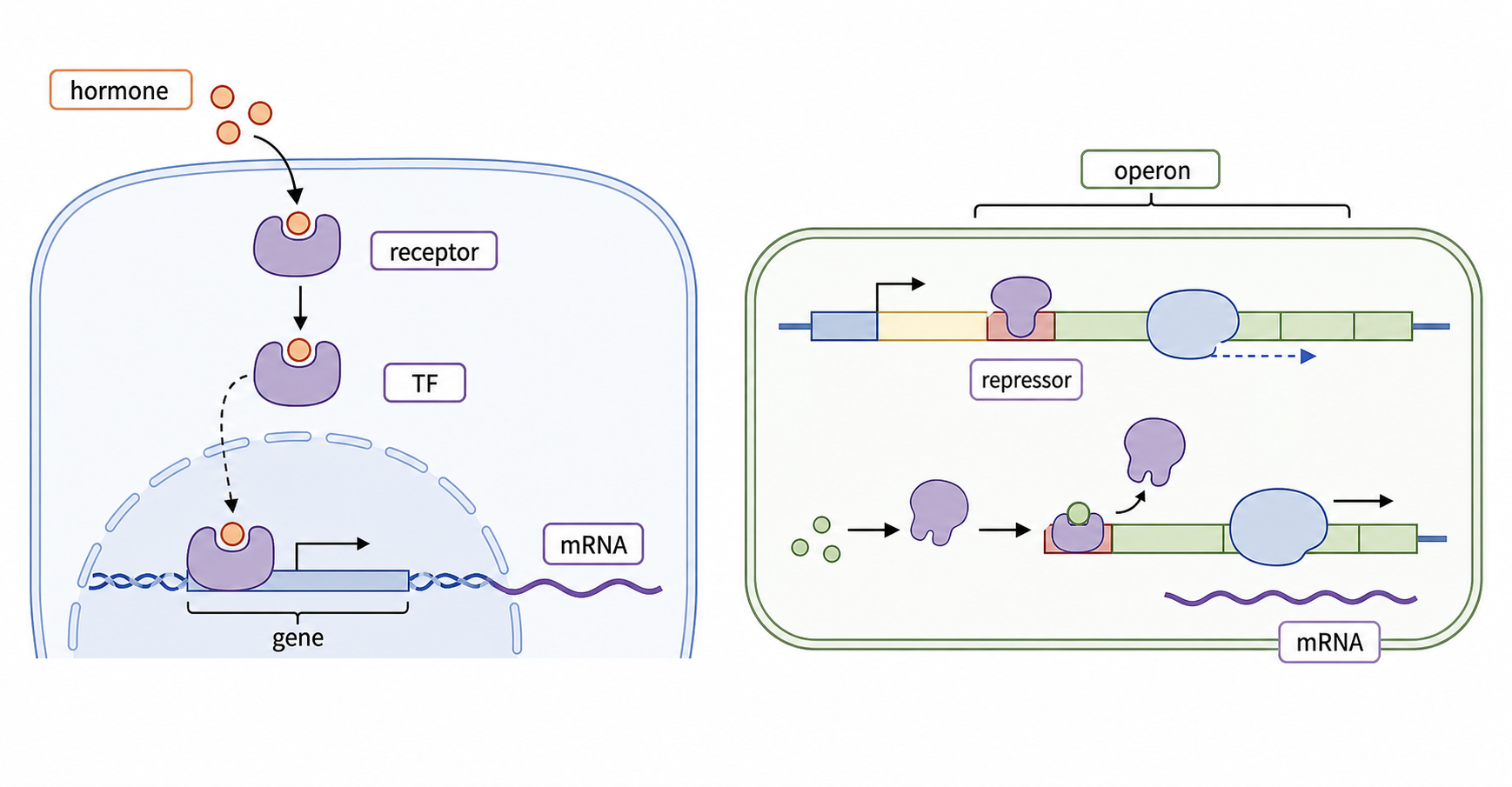
External factors can regulate expression through different systems. In eukaryotes, hormones can act through receptors and transcription factors; in bacteria, lac and trp operons show inducible and repressible gene control.
Different systems control expression in different organisms.
Match each control example.
MatchMatch each control example.
ChooseTransfer: Explain HL Gene Expression Control
Exam PracticeGene expression uses DNA information to affect phenotype through proteins; main stages are transcription, translation, and protein function. Transcription factors bind specific DNA sequences to regulate transcription; promoters, enhancers, activators, and repressors alter RNA polymerase activity. mRNA degradation controls how long translation can continue; poly-A tail shortening and nucleases help remove mRNA after use. Epigenesis develops differentiation patterns from an undifferentiated zygote; epigenetic changes alter gene activity without changing DNA base sequence. Genome is all genetic information; transcriptome is expressed mRNA set; proteome is the dynamic protein set produced by cell type, time, and environment. Promoter DNA methylation usually represses downstream transcription; histone methylation or acetylation changes chromatin access and gene expression. Epigenetic inheritance passes gene-expression changes without DNA sequence change; persistent DNA methylation or histone tags can survive cell division or gamete formation. Diet, oxygen, light, drugs, temperature, mutagens, and pollution can alter expression; air pollution can modify DNA and histone methylation linked to lung disease. Most epigenetic tags are reset during human egg and sperm development; retained imprints can silence one parental allele and affect offspring phenotypes. Monozygotic twins share a genome, helping test genetic versus environmental effects; epigenetic differences can accumulate with age and different environments. Hormones regulate eukaryotic expression through receptors and transcription factors; lac and trp operons show inducible and repressible gene control in bacteria.
Put the expression-control answer frame in order.
OrderUse this for HL questions that combine transcription regulation, mRNA degradation, epigenesis, genome/transcriptome/proteome, methylation/histone tags, epigenetic inheritance, environmental effects, imprinting, twin studies, hormones, and operons.
Use this for HL questions that combine transcription regulation, mRNA degradation, epigenesis, genome/transcriptome/proteome, methylation/histone tags, epigenetic inheritance, environmental effects, imprinting, twin studies, hormones, and operons.
Common loss: saying epigenetic changes alter DNA base sequence, treating non-identical expression as mutation only, or listing tags/signals without explaining mRNA/protein output.