
Compare Neuron Types
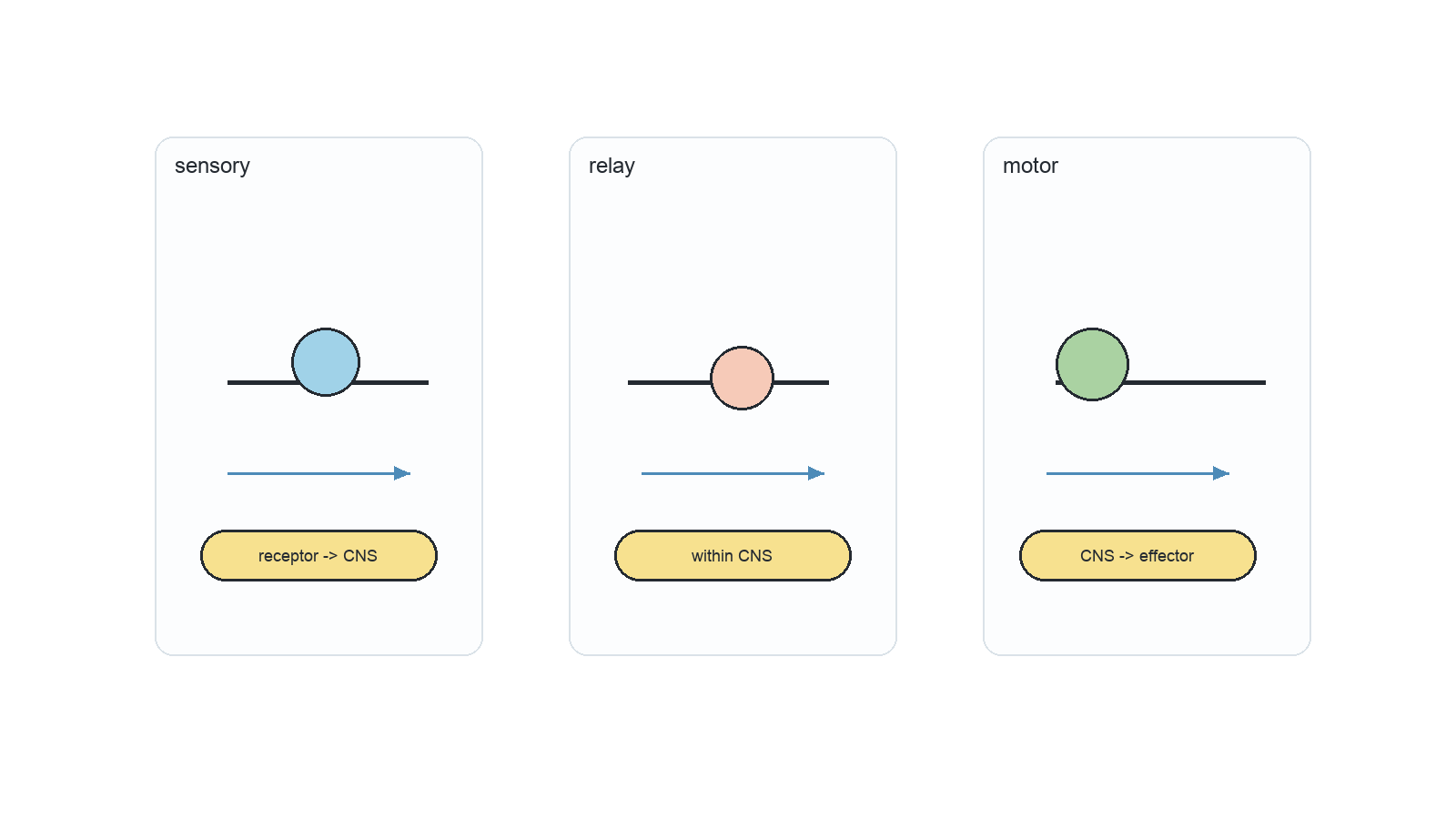
Neurons carry electrical impulses in the nervous system. Motor, sensory, and relay neurons differ in axon, dendrite, dendron, and cell body arrangement, and those differences fit whether the cell carries signals from receptors, between neurons, or to effectors.
Match each neuron type to its main route.
MatchBuild Resting Potential
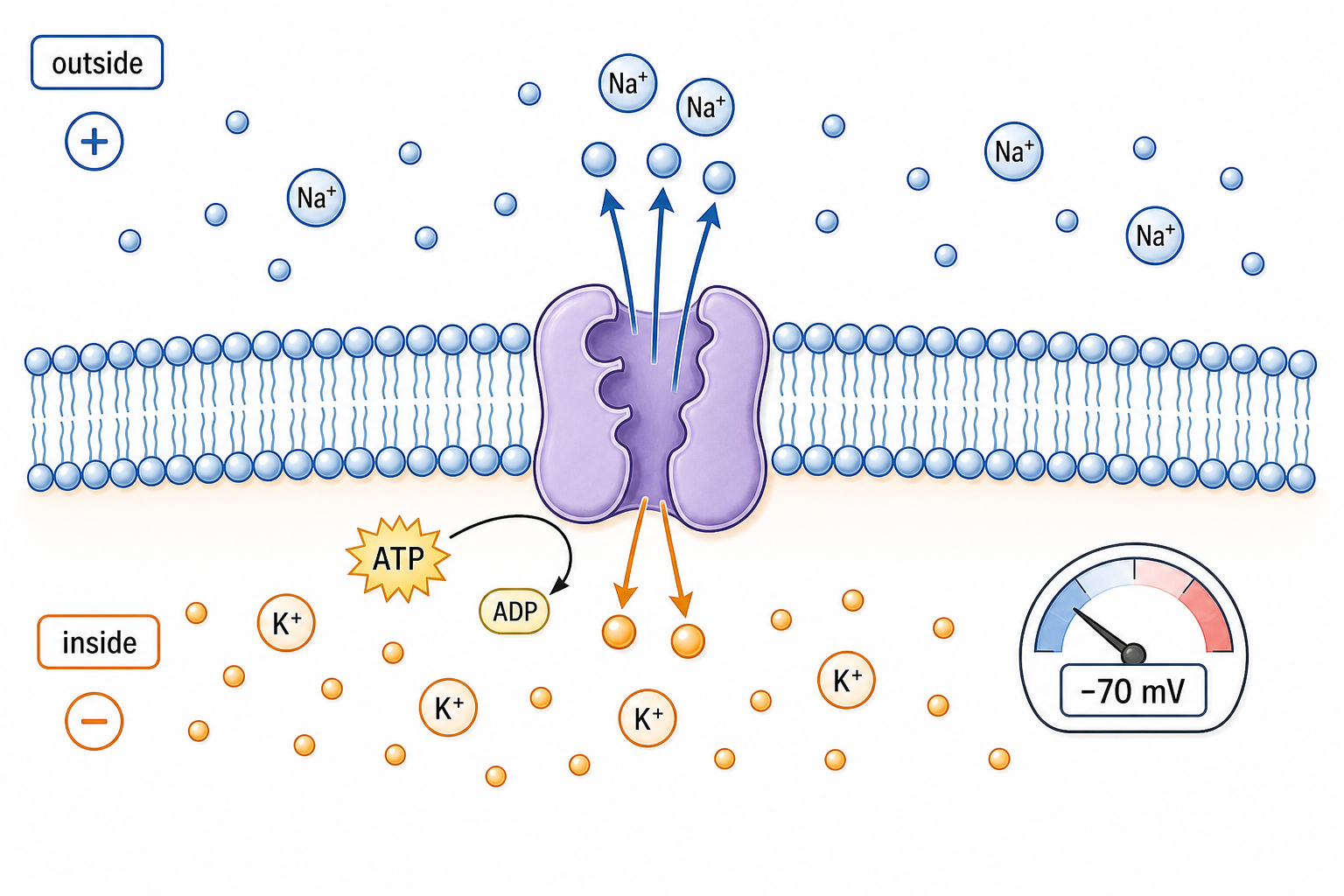
Resting potential is an maintained ion-gradient state, not the action potential itself. The sodium-potassium pump uses ATP to move 3 Na+ out and 2 K+ in, keeping the inside of the axon about -70 mV relative to outside.
Place the pump labels and voltage labels on the resting axon membrane.
LabelTrace An Action Potential
PracticeA nerve impulse is a propagated action potential along a nerve fibre. It starts when threshold opens voltage-gated sodium channels; sodium enters, the membrane depolarizes, and that local voltage change helps trigger the next region of membrane.
A patch of axon membrane reaches threshold. Predict the first channel event and voltage change.
PredictExplain Faster Impulses
Larger axon diameter lowers resistance and increases impulse speed because current spreads more easily through the axoplasm; squid giant axons are the classic unmyelinated comparison. Myelin sheaths and nodes of Ranvier enable faster saltatory conduction because depolarization is regenerated only at the gaps.
Match each feature to why impulse speed increases.
MatchLocate A Synapse
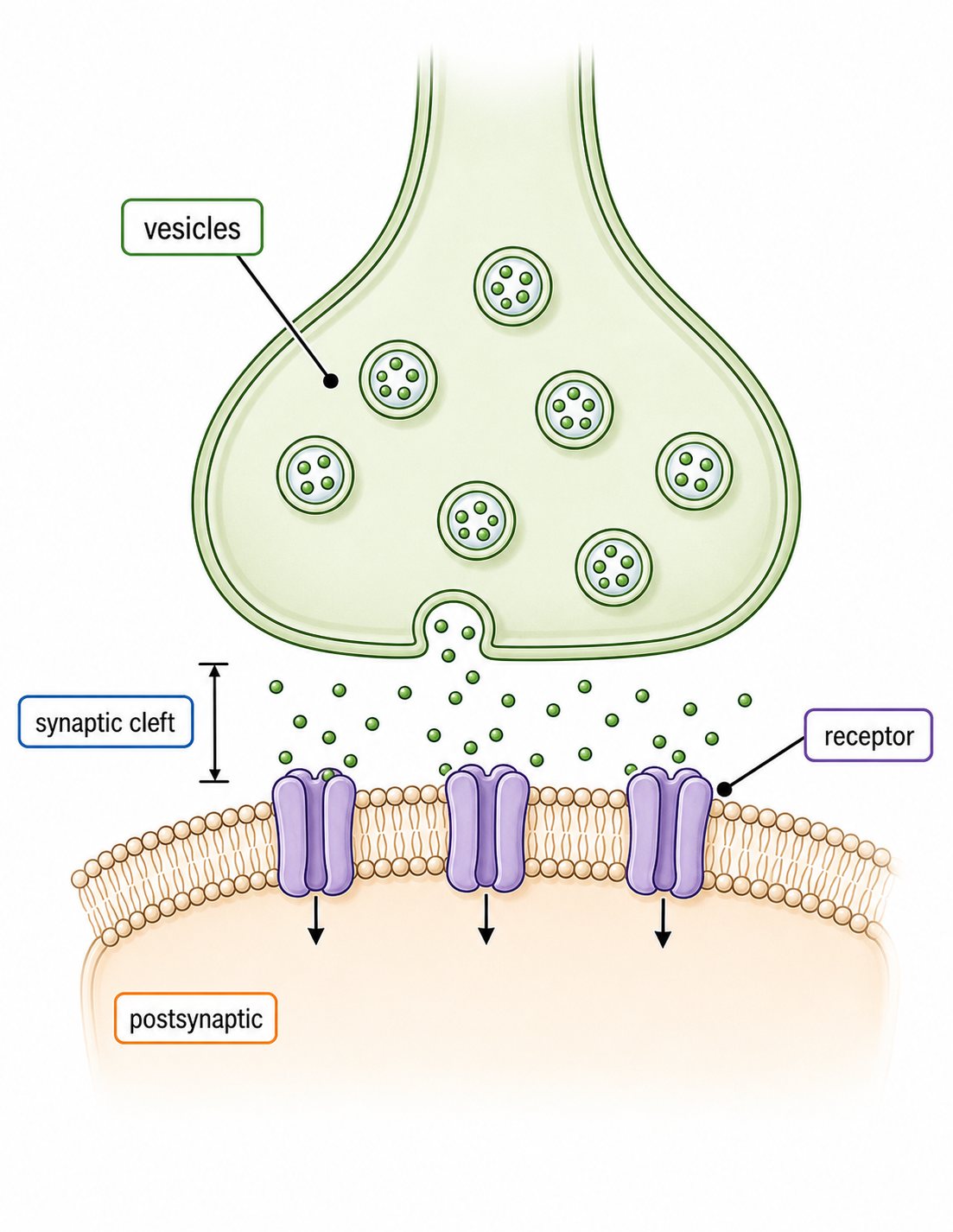
Synapses connect neurons to neurons, muscles, or glands. Chemical synapses transmit one way across a narrow synaptic cleft because the presynaptic terminal releases transmitter and the postsynaptic membrane carries the receptors that respond.
Place the synapse labels in signal order.
LabelTrigger Neurotransmitter Release
Practice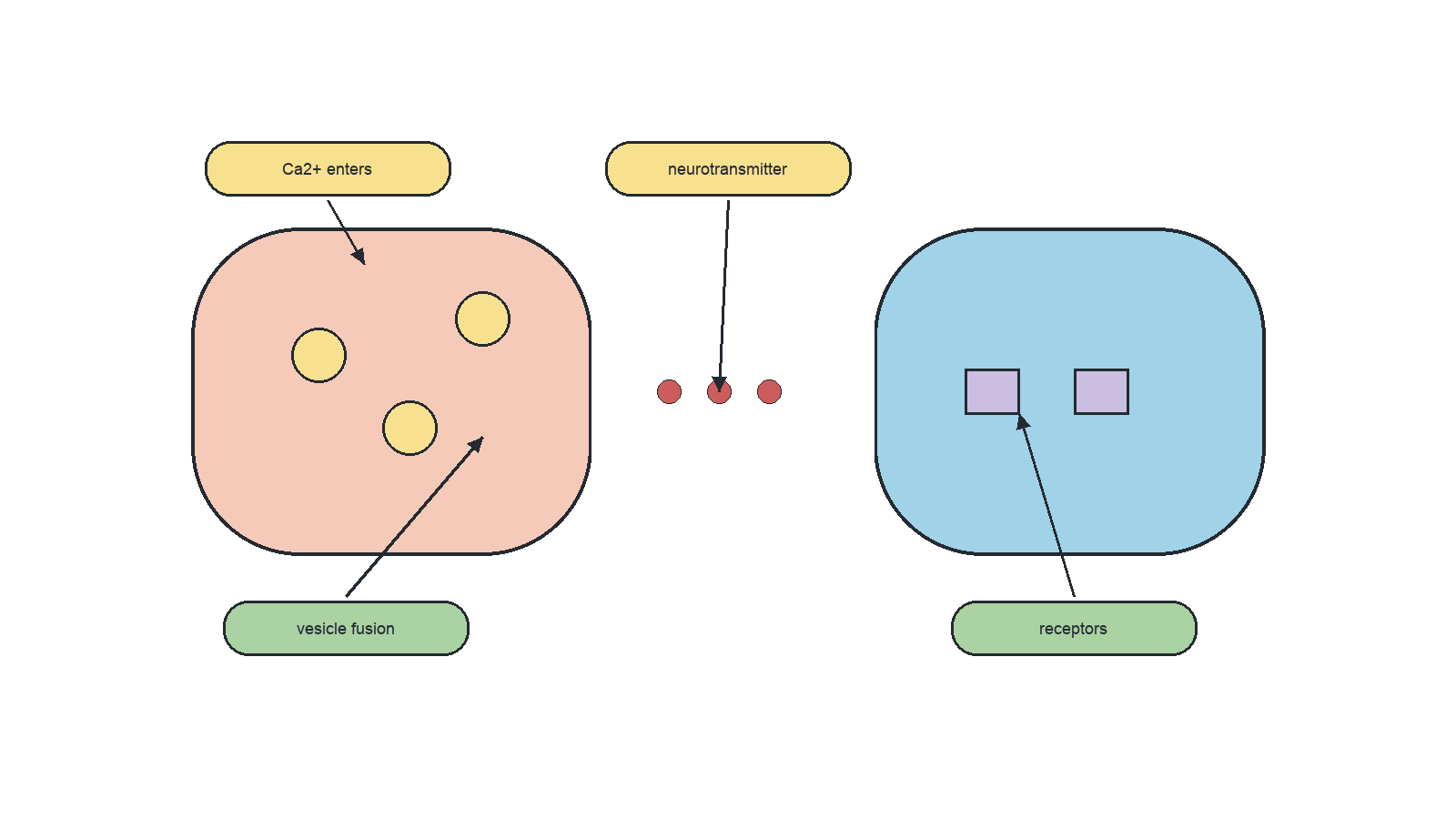
At the presynaptic terminal, action potentials open voltage-gated Ca²⁺ channels. Ca²⁺ causes vesicle fusion and neurotransmitter exocytosis into the cleft, converting the electrical arrival signal into chemical release.
Put the presynaptic events in the correct order.
OrderRaise The Postsynaptic Voltage
After release, neurotransmitters such as acetylcholine diffuse and bind transmembrane receptors on the postsynaptic membrane. EPSPs depolarize the membrane and make threshold more likely, so each excitatory synapse adds a small step toward firing.
Match the synaptic event to its effect on the postsynaptic neuron.
MatchOpen Then Reset Channels
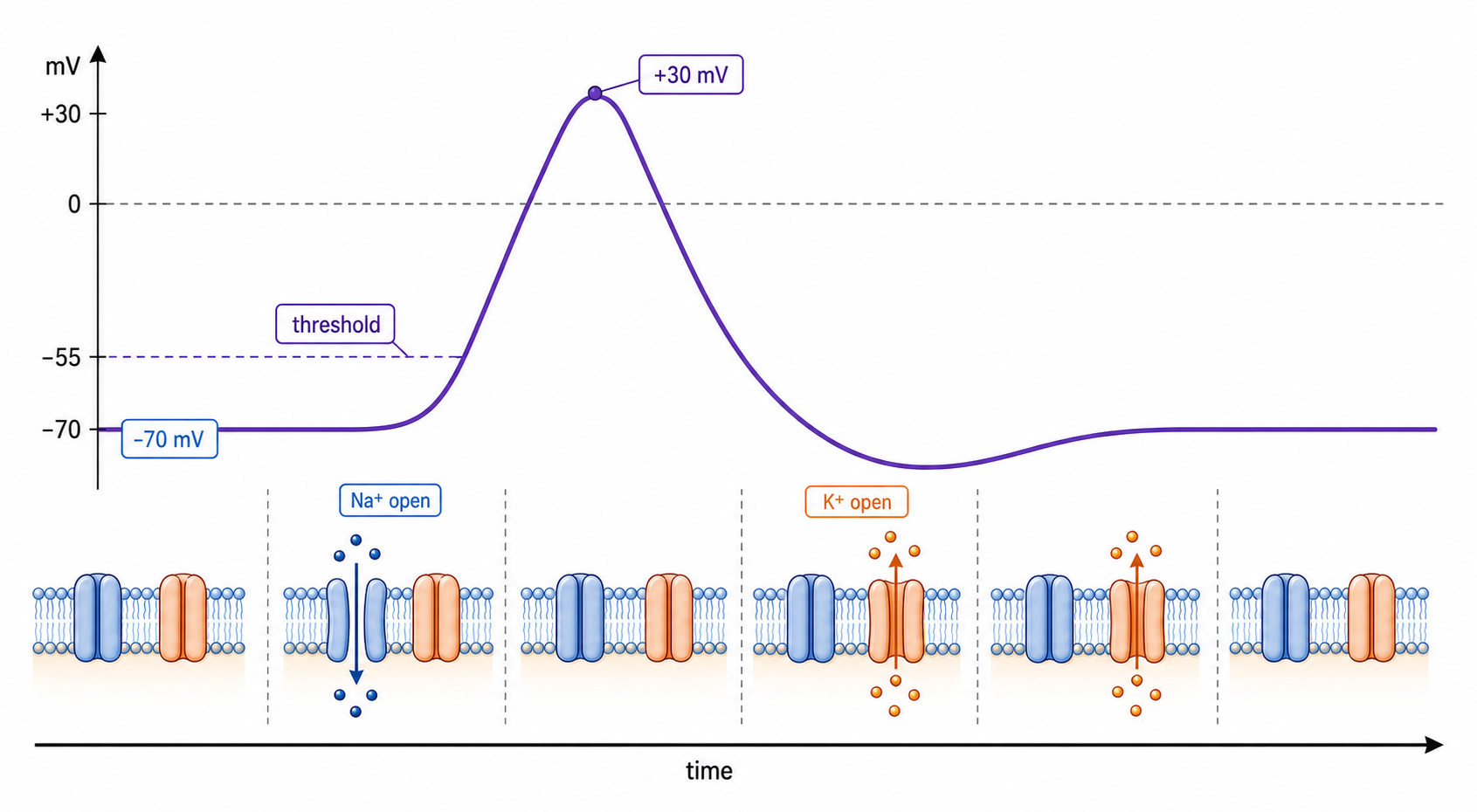
Action potentials reset because sodium and potassium channels open at different times. Na+ entry depolarizes the membrane; delayed K+ exit repolarizes and may briefly hyperpolarize it.
Order the channel events that open and reset an action potential.
OrderFollow Propagation Direction
Local currents from Na⁺ diffusion depolarize the next axon region to threshold. Refractory regions behind the impulse help ensure one-way propagation because recently opened channels cannot immediately generate another spike.
Order one-way action-potential propagation.
OrderRead Oscilloscope Traces
Practice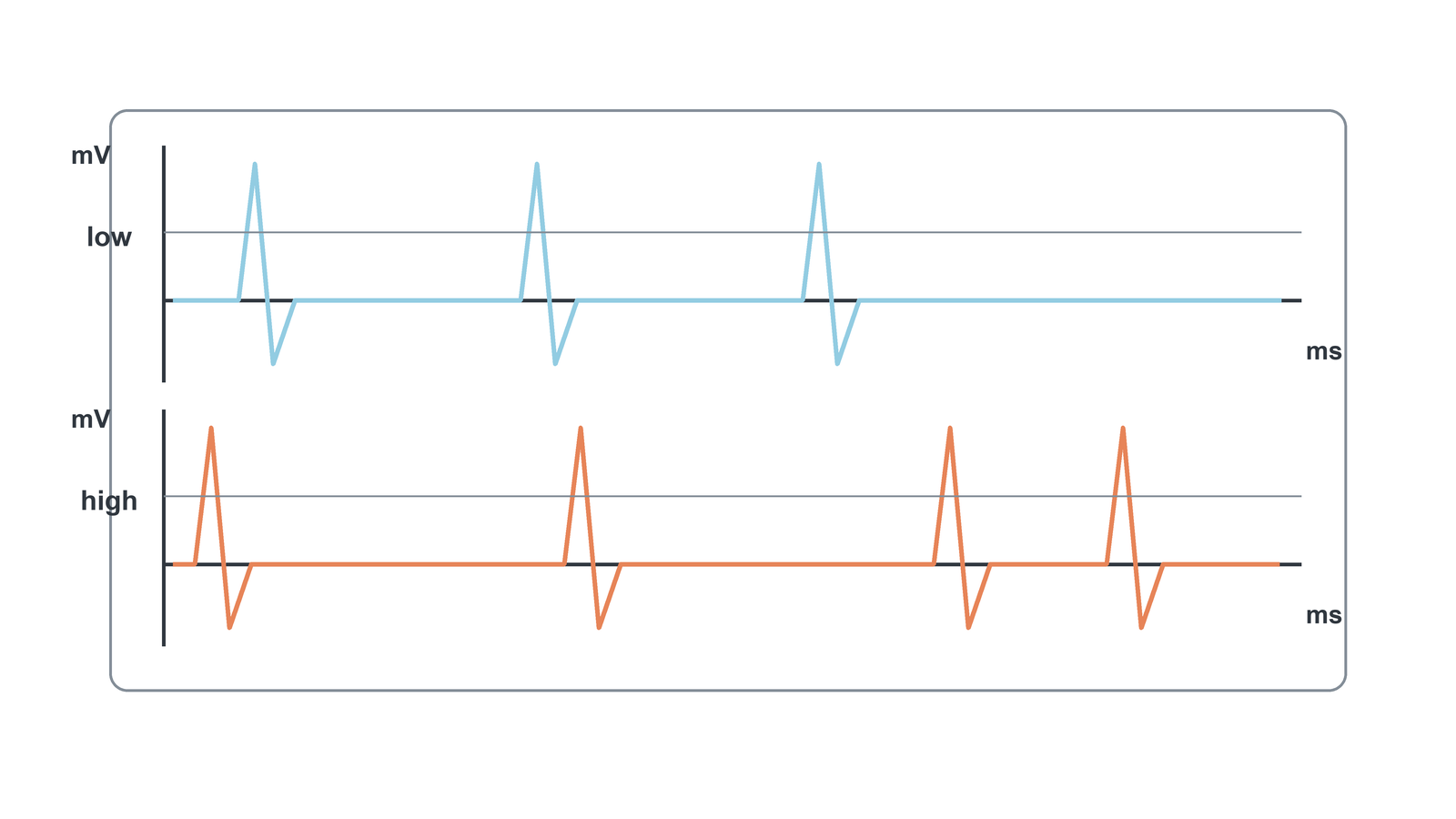
Oscilloscope traces show voltage over time. Stimulus intensity is encoded by impulse frequency, not action-potential height, because a full action potential is all-or-nothing once threshold is reached.
Which trace shows the stronger stimulus, and what feature proves it?
GraphExplain Saltatory Conduction
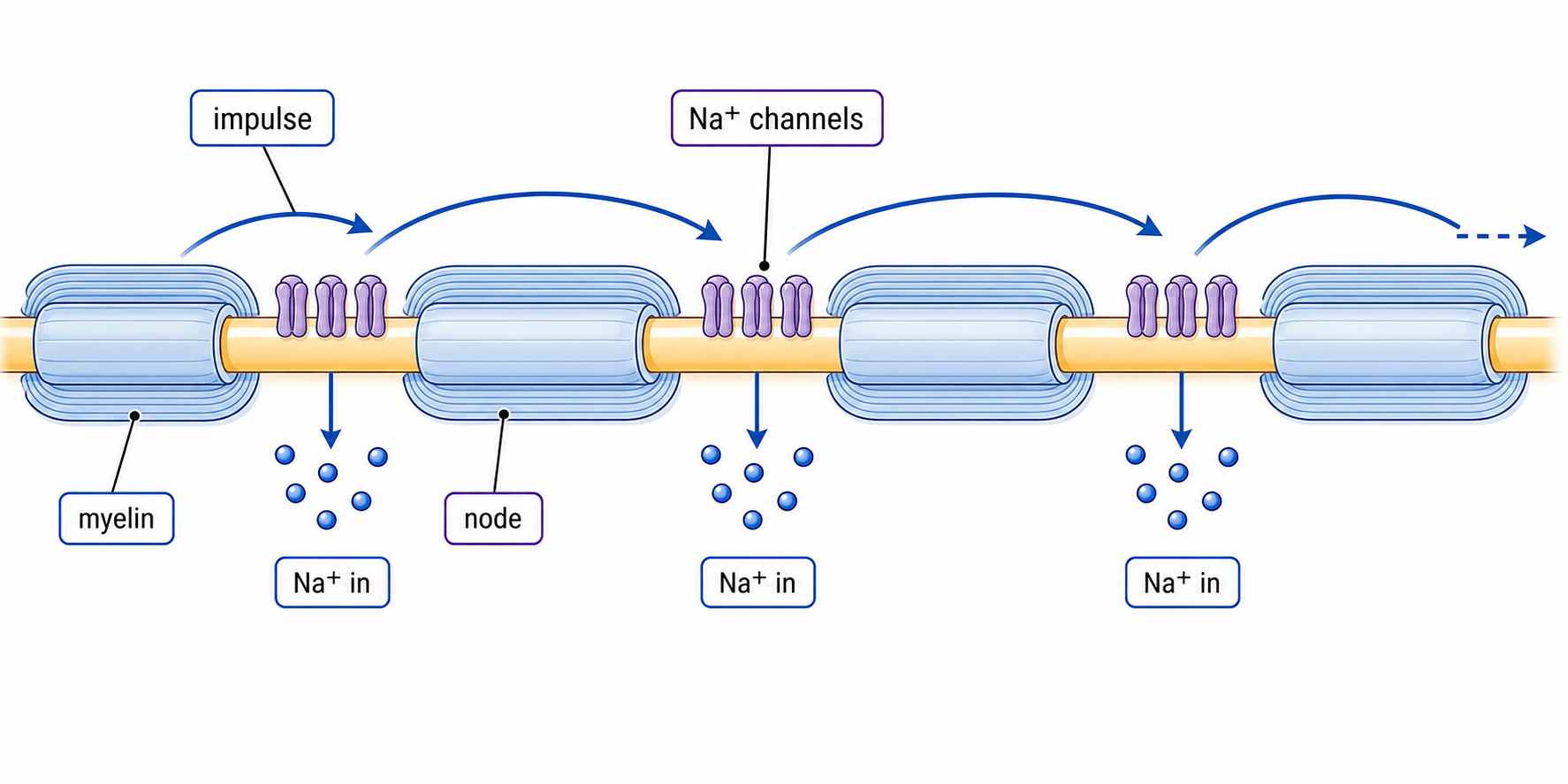
Saltatory conduction jumps node to node and greatly increases speed. Myelin insulates the axon, so action potentials are regenerated mainly at nodes of Ranvier where ion channels are concentrated.
Match each myelinated-axon feature to how it speeds conduction.
MatchPredict Drug Effects
PracticeExogenous chemicals can mimic, block, or prolong neurotransmitter effects. Neonicotinoids bind insect acetylcholine receptors and are not broken down by acetylcholinesterase, causing continued depolarization; cocaine blocks dopamine reuptake so dopamine remains longer in the synapse.
Classify each chemical effect and predict what happens to synaptic signalling.
DecisionCompare Excitation And Inhibition
Inhibitory neurotransmitters such as GABA open Cl⁻ entry or K⁺ exit channels. Hyperpolarization makes threshold harder to reach because the postsynaptic membrane becomes more negative than the resting level.
Sort each synaptic effect into excitation or inhibition.
SortAdd Synaptic Inputs
Practice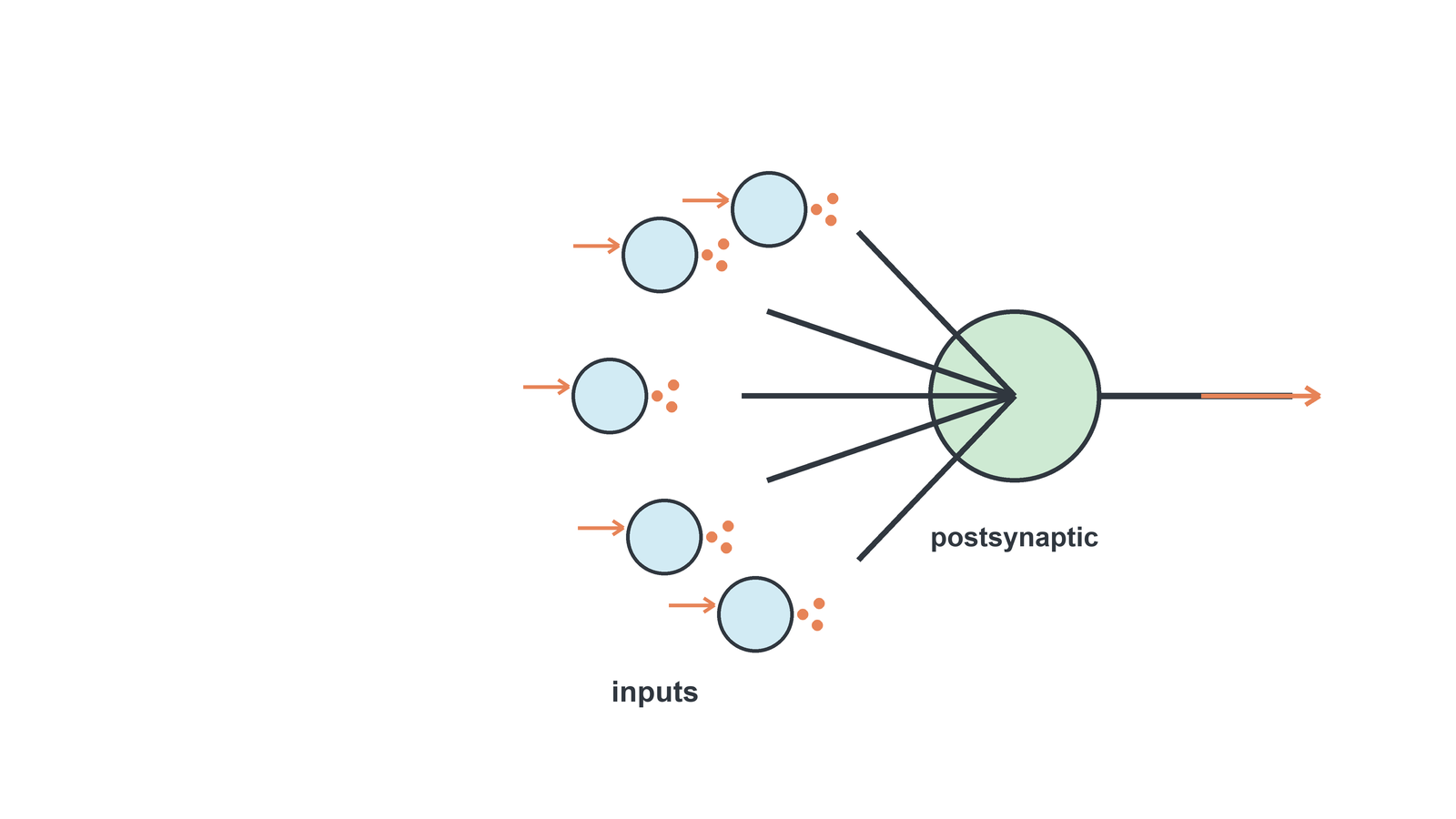
Postsynaptic neurons integrate EPSPs and IPSPs from many synapses. Summation decides whether the net effect reaches threshold: repeated EPSPs can add by temporal summation, while inputs from different synapses combine or cancel by spatial summation.
Compare the input pattern and predict whether the postsynaptic neuron reaches threshold.
PredictFollow The Pain Pathway
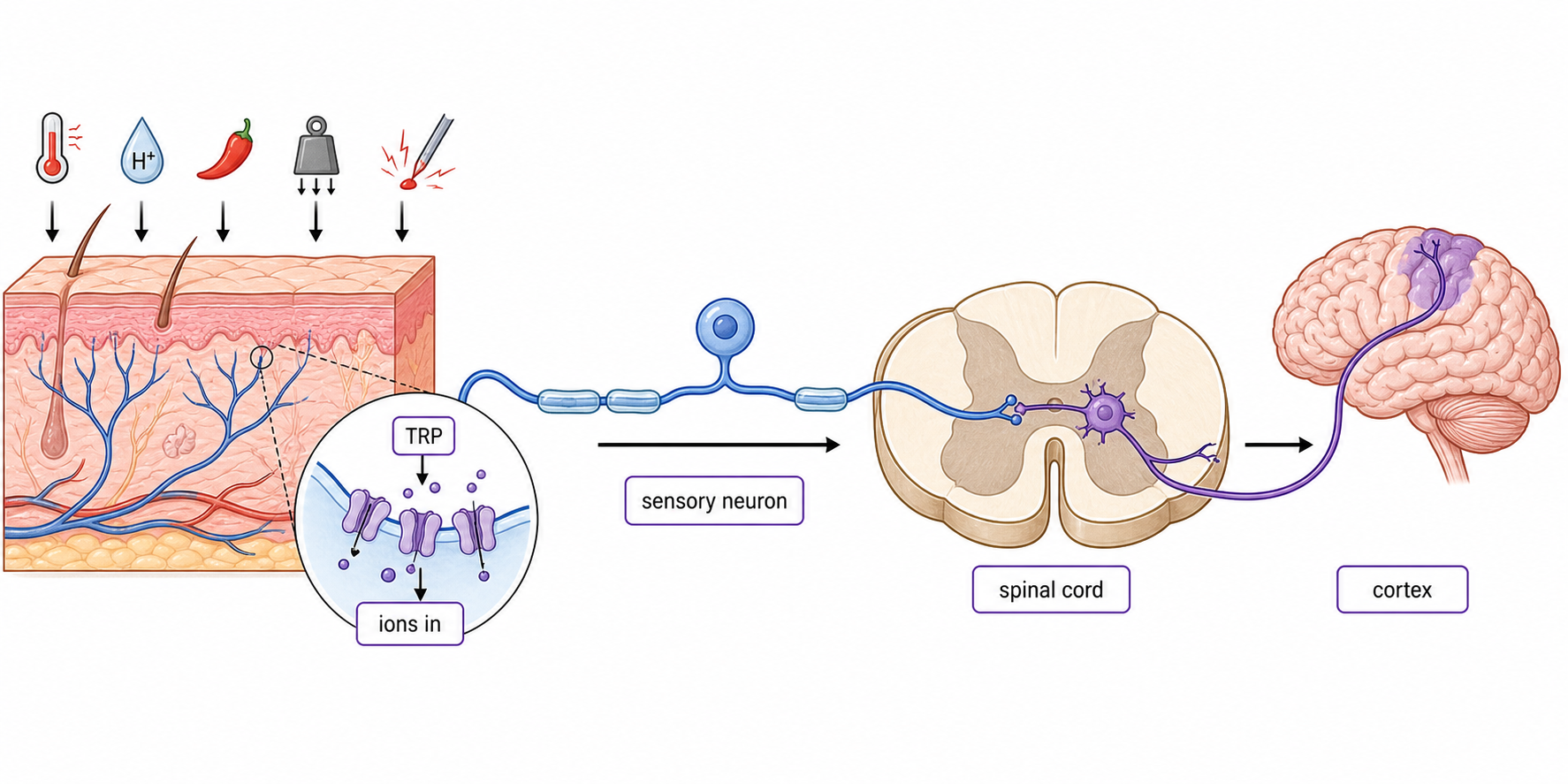
Pain uses free nerve endings with TRP ion channels in skin and other tissues. Heat, acid, capsaicin, pressure, or tissue damage can open positively charged ion channels, depolarize the sensory neuron to threshold, and send impulses through the spinal cord to the brain where pain is perceived.
Match each pain stimulus to the receptor logic.
MatchLink Signals To Consciousness
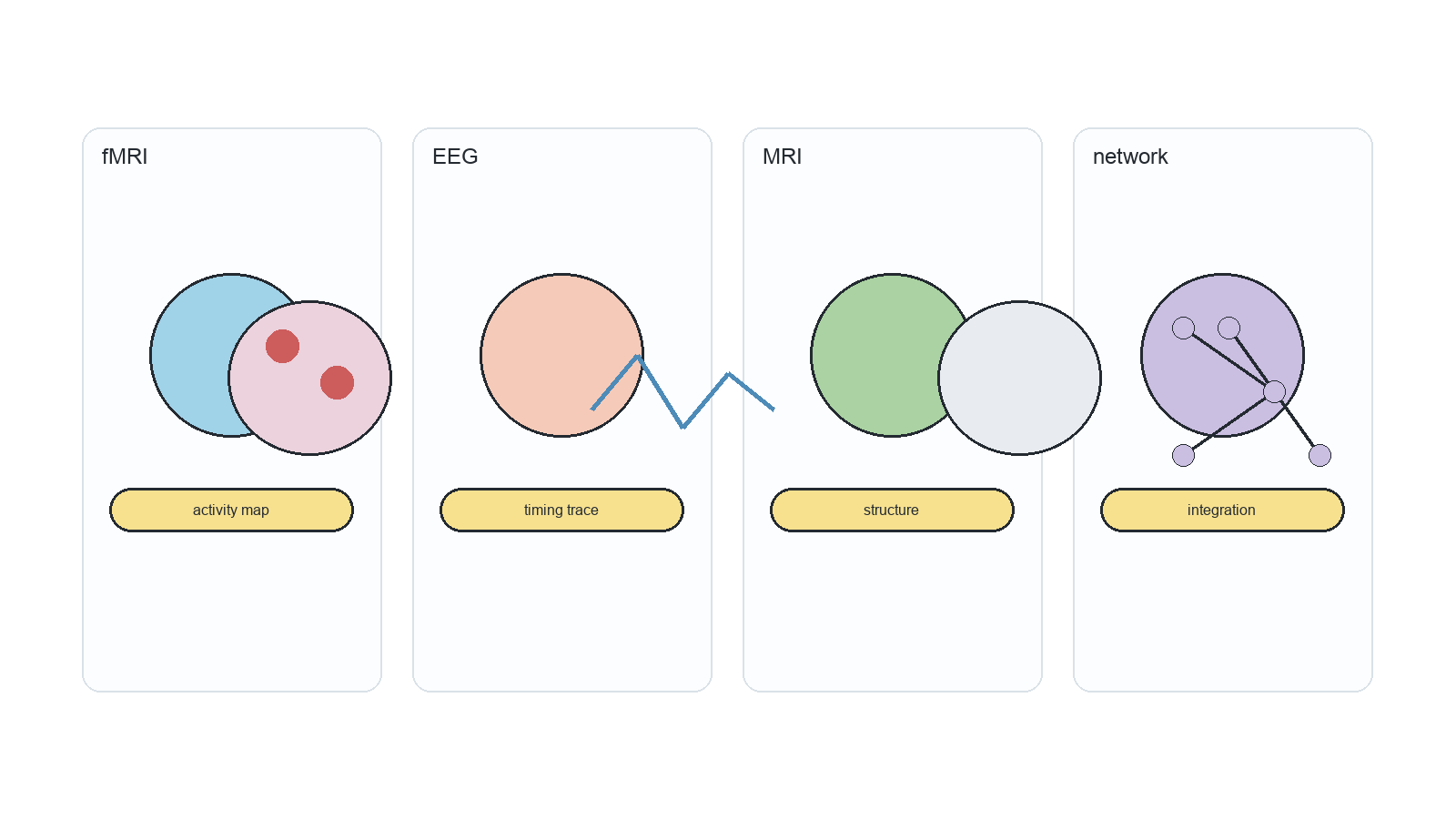
Consciousness is an emergent property: it arises from many interacting neurons and pathways rather than from one isolated site acting alone. EEG, MRI, and fMRI provide evidence for neural correlates of conscious processing because they reveal timing, structure, and changing activity patterns in the brain.
Match each method to the kind of evidence it provides.
MatchSL Transfer: Explain Core Neural Signalling
Exam PracticeNeurons carry electrical impulses in the nervous system; motor, sensory, and relay neurons differ in axon, dendrite, and cell body arrangement. Sodium-potassium pumps use ATP to move 3 Na+ out and 2 K+ in; ion gradients make the resting axon polarized at about -70 mV. A nerve impulse is a propagated action potential along a nerve fibre; stimulus-triggered sodium influx reverses membrane polarity. Larger axon diameter lowers resistance and increases impulse speed; myelin sheaths and nodes of Ranvier enable faster saltatory conduction. Synapses connect neurons to neurons, muscles, or glands; chemical synapses transmit one way across a narrow synaptic cleft. Action potentials open voltage-gated Ca2+ channels in presynaptic terminals; Ca2+ causes vesicle fusion and neurotransmitter exocytosis into the cleft. Neurotransmitters diffuse and bind receptors on the postsynaptic membrane; EPSPs depolarize the membrane and make threshold more likely.
Use the cues to rebuild the exam answer skeleton.
OrderUse this for core questions on neuron type, resting potential, action potential, conduction speed, synapse transmission, and EPSP.
Use this for core questions on neuron type, resting potential, action potential, conduction speed, synapse transmission, and EPSP.
Common loss: naming a structure or ion without explaining its effect on voltage, direction, speed, transmitter release, or evidence quality.
HL Transfer: Explain Neural Control And Evidence
Exam PracticeThreshold opens voltage-gated Na+ channels, causing rapid depolarization; voltage-gated K+ channels then repolarize or briefly hyperpolarize the axon. Local currents from Na+ diffusion depolarize the next axon region; refractory regions behind the impulse help ensure one-way propagation. Oscilloscope traces show resting potential, threshold, and action potential phases; stimulus intensity is encoded by impulse frequency, not action potential size. Myelin insulates axons and ion exchange occurs mainly at nodes of Ranvier; saltatory conduction jumps node to node and greatly increases speed. Exogenous chemicals can mimic, block, or prolong neurotransmitter effects; neonicotinoids bind insect acetylcholine receptors and cocaine blocks dopamine reuptake. Inhibitory neurotransmitters open Cl- entry or K+ exit channels; hyperpolarization makes threshold harder to reach. Postsynaptic neurons integrate EPSPs and IPSPs from many synapses; temporal and spatial summation determine whether threshold is reached. Pain uses free nerve endings with TRP ion channels in skin and other tissues; heat, acid, capsaicin, or tissue damage can trigger impulses perceived as pain. Consciousness emerges from coordinated activity across interacting brain regions; EEG, MRI, and fMRI provide evidence for neural correlates of conscious processing.
Use the cues to rebuild the exam answer skeleton.
OrderUse this for HL questions on action-potential phases, propagation, traces, saltatory conduction, exogenous chemicals, inhibition, summation, pain, and consciousness evidence.
Use this for HL questions on action-potential phases, propagation, traces, saltatory conduction, exogenous chemicals, inhibition, summation, pain, and consciousness evidence.
Common loss: naming a structure or ion without explaining its effect on voltage, direction, speed, transmitter release, or evidence quality.