
ATP Moves Usable Energy
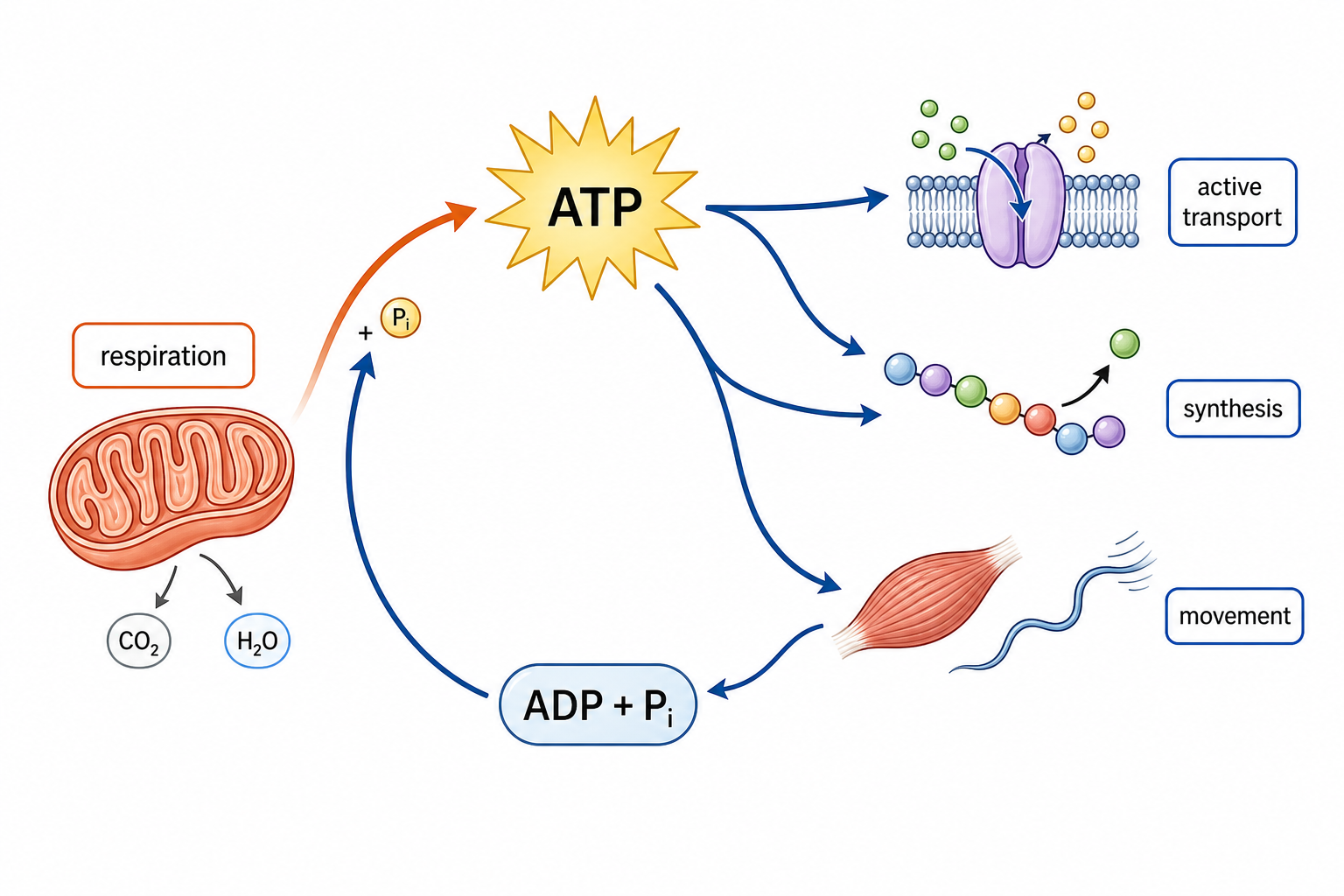
ATP is the cell's immediate energy carrier. Respiration releases energy from organic molecules, then transfers some of that energy into ATP. Because ATP is small and soluble, it can move to reactions that need energy and deliver it in small, controlled amounts.
Use the visual to explain the process, not to memorize decoration.
Match each ATP feature to why it helps the cell.
MatchMatch each ATP feature to why it helps the cell.
ChooseUse And Recycle ATP
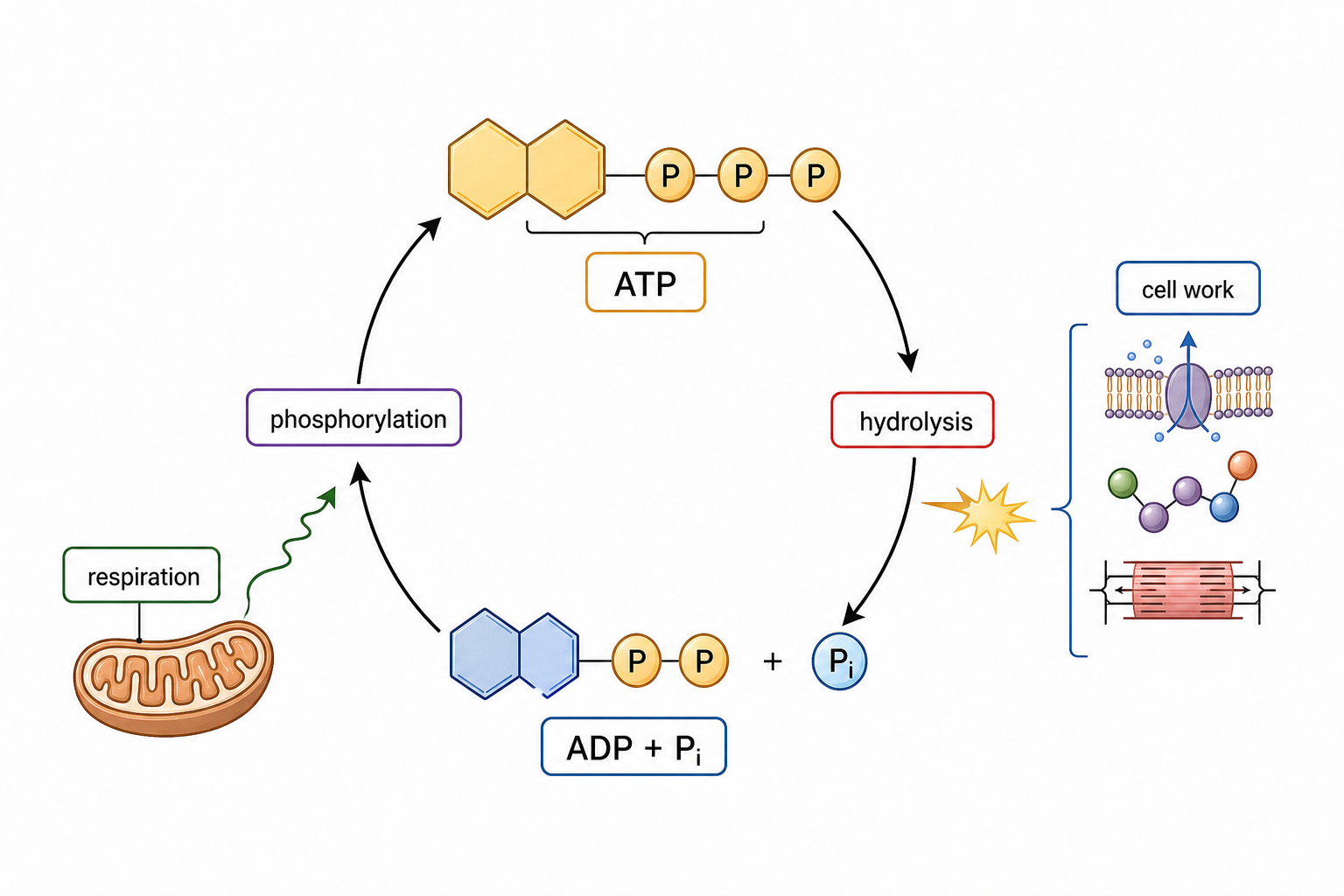
ATP is useful because it is recycled. When ATP is hydrolysed to ADP and phosphate, energy becomes available for cell work. Respiration then phosphorylates ADP back to ATP, so the same molecule system can keep transferring energy again and again. Examples include membrane pumps, macromolecule synthesis, and chromosome movement.
Use the visual to explain the process, not to memorize decoration.
Sort each event into ATP hydrolysis or ATP regeneration.
SortSort each event into ATP hydrolysis or ATP regeneration.
ChooseMap The Respiration System
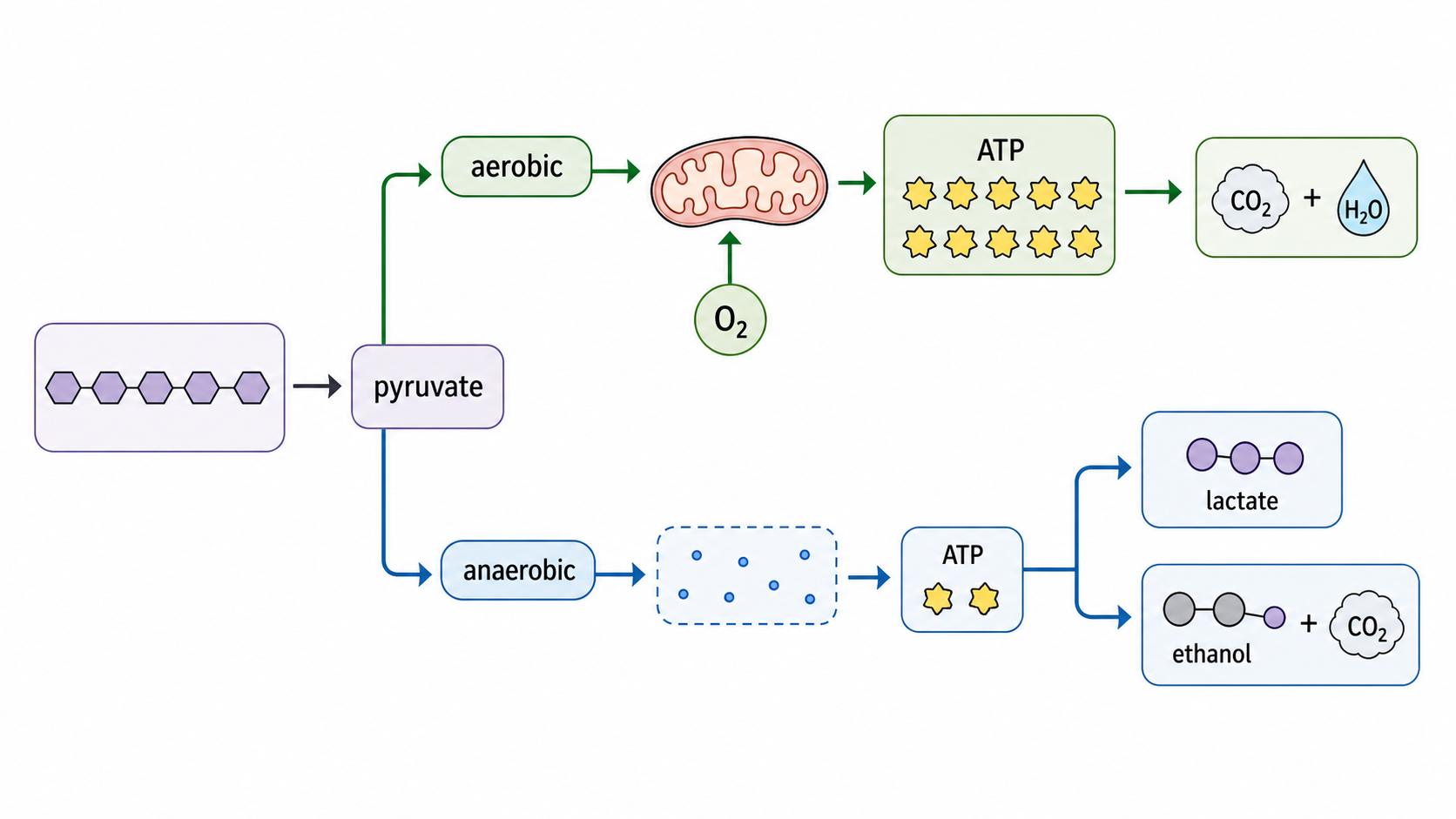
Cell respiration is a system for transferring energy from carbon compounds into ATP. The important idea is control: energy is released in small enzyme-controlled steps. In humans, aerobic respiration uses oxygen and mitochondria for high ATP yield, while anaerobic respiration in cytoplasm allows short-term ATP production without oxygen but produces lactate and much less ATP.
Use the visual to explain the process, not to memorize decoration.
Match each respiration route to its correct description.
MatchMatch each respiration route to its correct description.
ChoosePredict Respiration Rate
Practice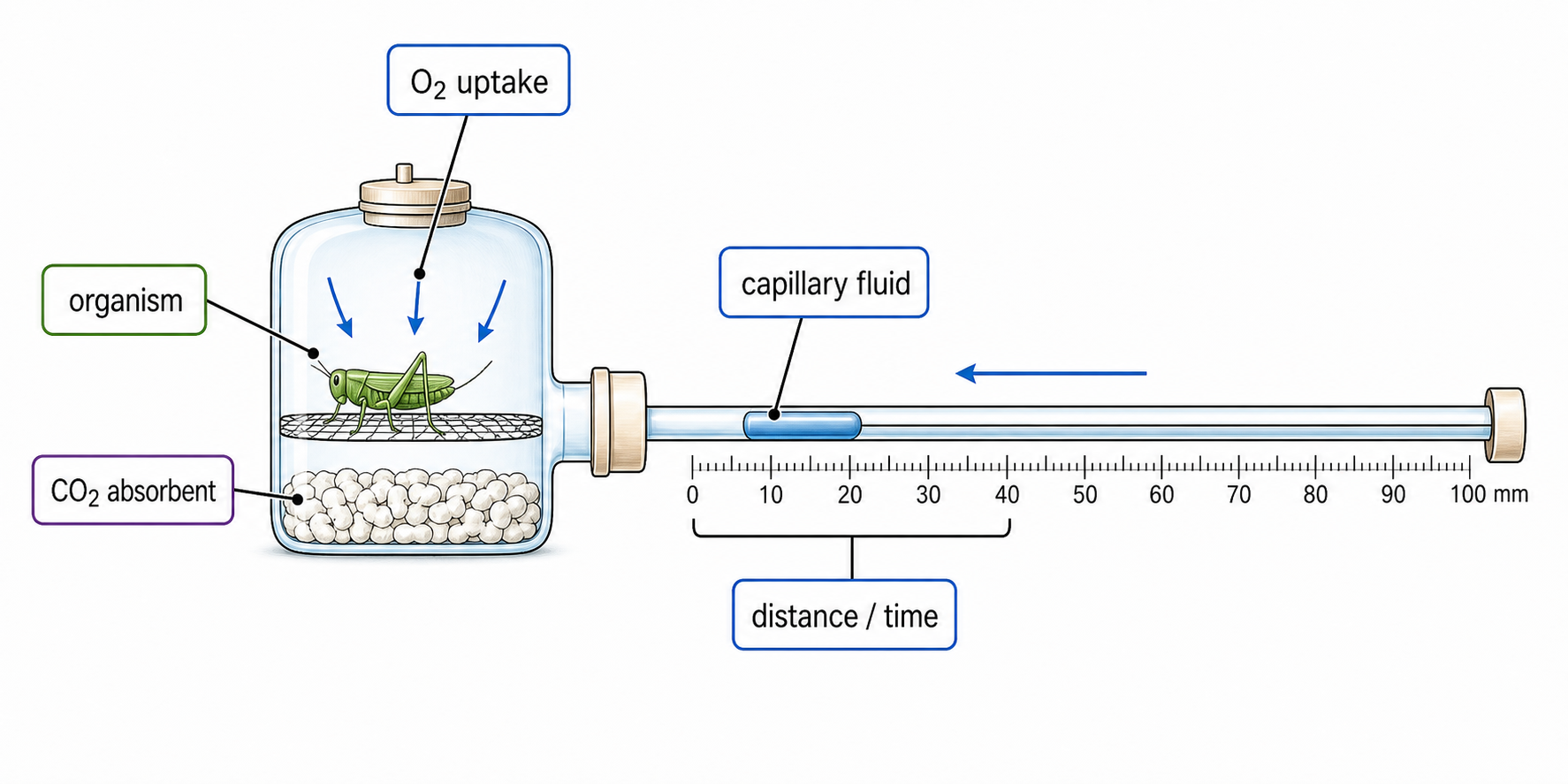
Respiration rate is not guessed; it is measured using a change over time, often oxygen uptake. In a respirometer, carbon dioxide is absorbed, so a pressure drop mainly reflects oxygen being used. Rate changes when temperature, substrate type or amount, oxygen availability, activity level, or mass of living tissue changes. Rate depends on metabolic demand, organism size, oxygen, substrate, temperature, and pH.
Use the visual to explain the process, not to memorize decoration.
A germinating seed respirometer is kept warmer and the fluid moves faster. What is the best interpretation?
ChooseA germinating seed respirometer is kept warmer and the fluid moves faster. What is the best interpretation?
ChooseCarry Hydrogen With NAD
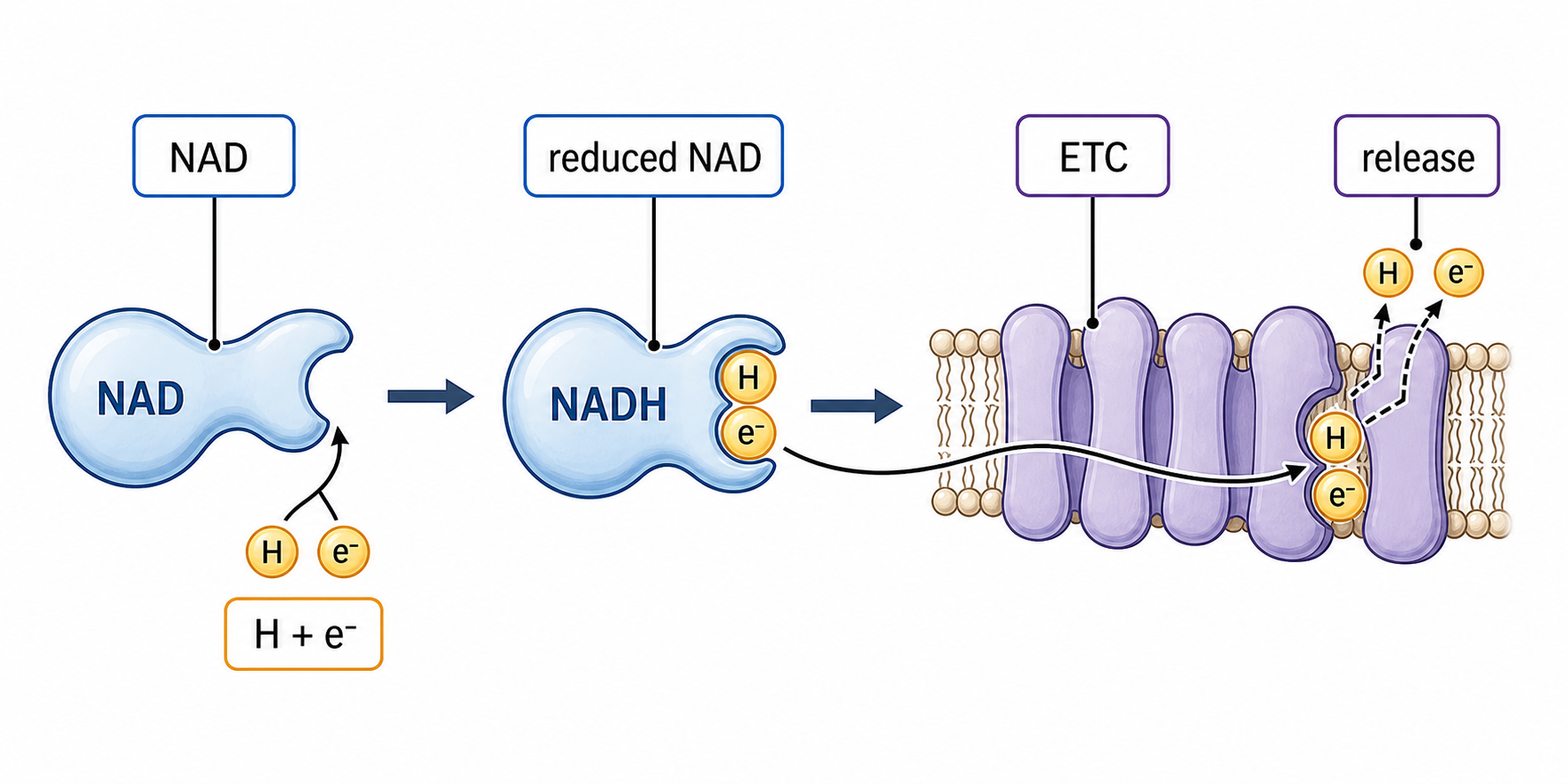
HL respiration becomes easier when you follow hydrogen. NAD is a coenzyme that accepts hydrogen during oxidation reactions, becoming reduced NAD. Reduced NAD carries electrons and protons to the electron transport chain, where their energy helps make ATP.
Use the visual to explain the process, not to memorize decoration.
Complete the carrier sentence: NAD accepts ____ and becomes ____. It carries ____ to the electron transport chain.
ChooseTrace Glycolysis
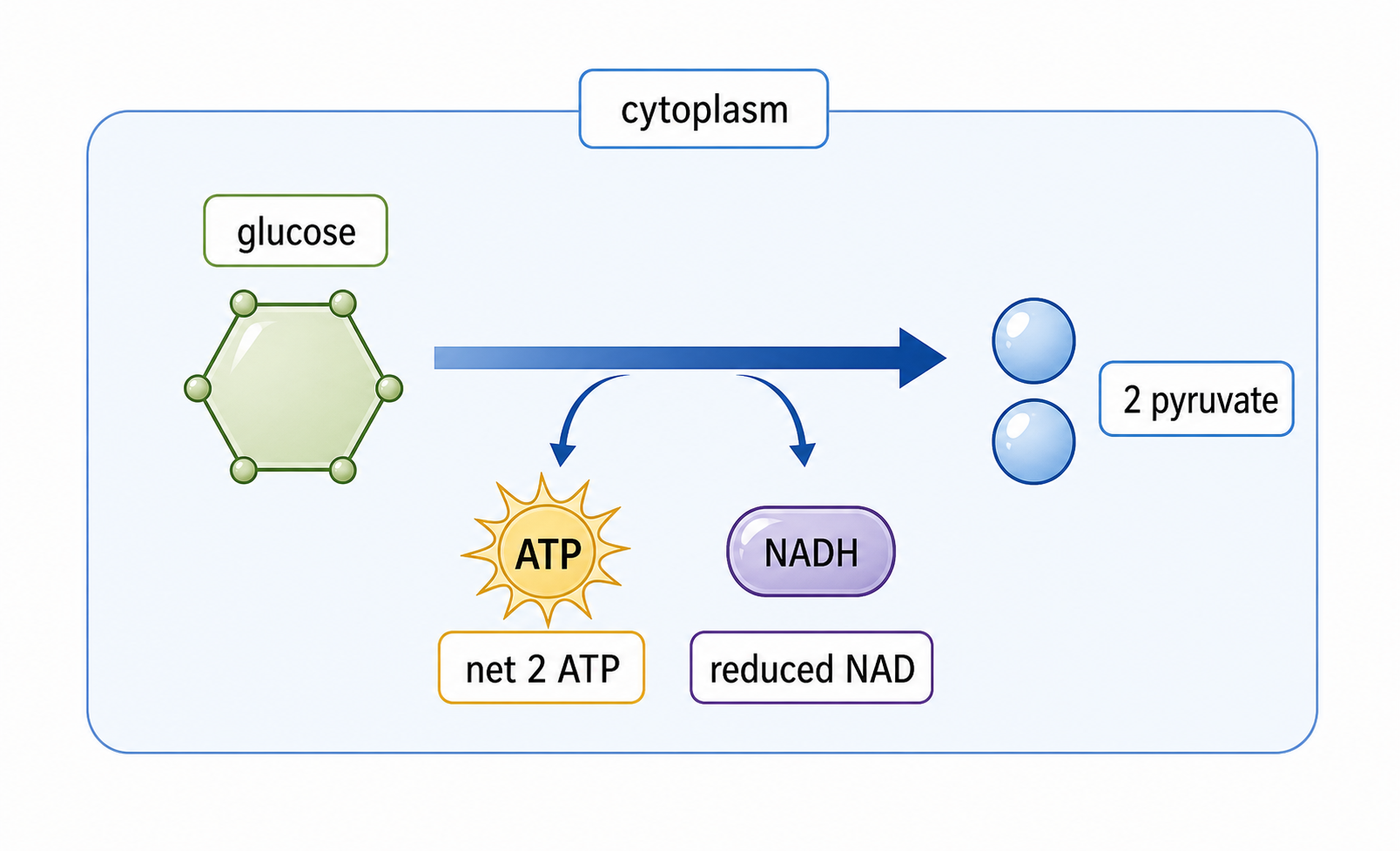
Glycolysis is the cytoplasmic first stage of respiration. One glucose is phosphorylated, split into two three-carbon compounds, oxidized to reduce NAD, and converted to two pyruvate. ATP is used at the start but more ATP is produced later, giving a net gain.
Use the visual to explain the process, not to memorize decoration.
Put the simplified glycolysis story in order.
OrderPut the simplified glycolysis story in order.
ChooseChoose The Pyruvate Fate
Practice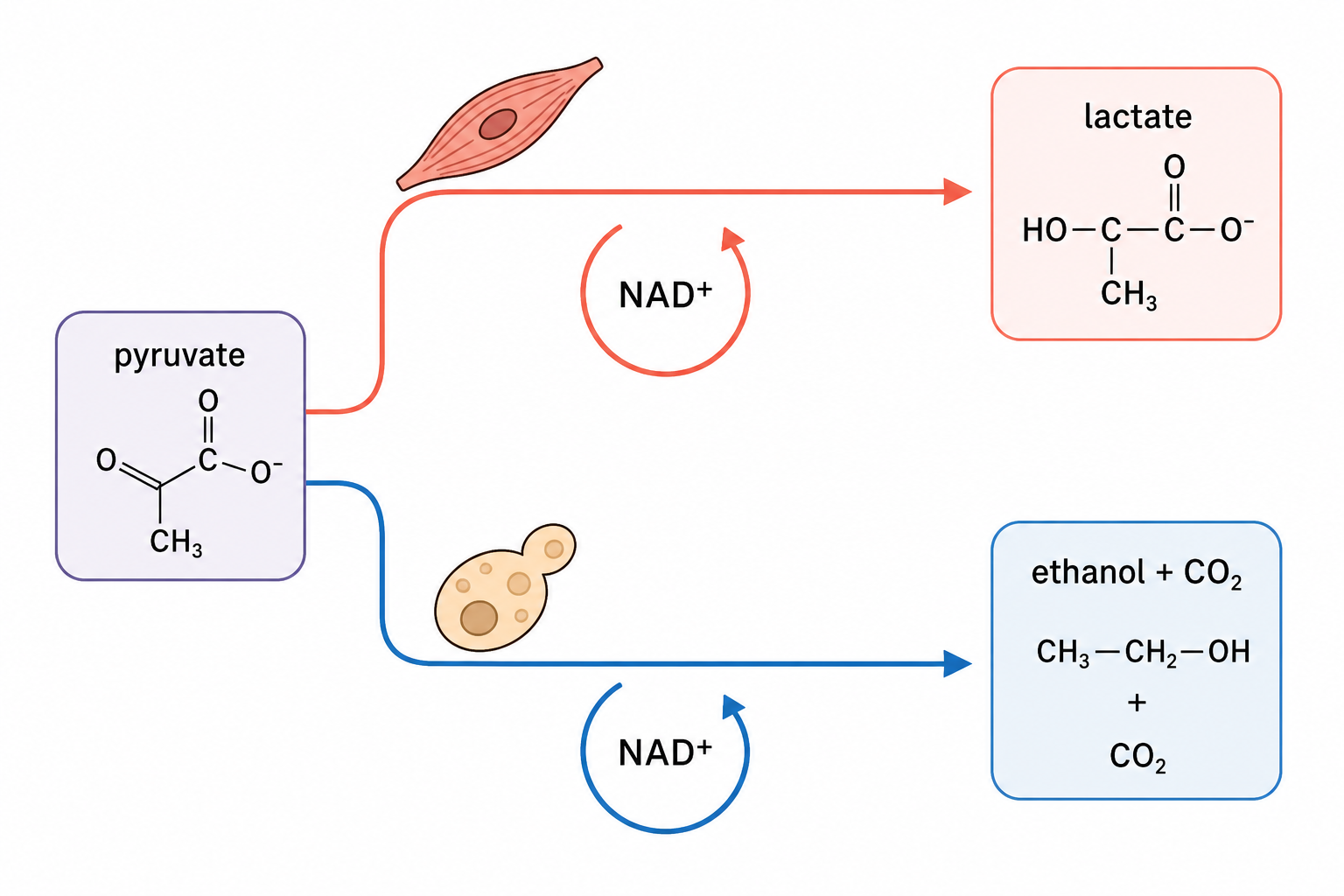
When oxygen is unavailable, pyruvate cannot continue through aerobic respiration. Cells still need glycolysis to make some ATP, so they regenerate NAD. In humans, pyruvate is reduced to lactate. In yeast, pyruvate is converted to ethanol and carbon dioxide. The point is not high ATP yield; the point is keeping glycolysis running. Regenerated NAD allows glycolysis to continue. Fermentation regenerates NAD for glycolysis and is used in baking and brewing.
Use the visual to explain the process, not to memorize decoration.
Sort each statement into human anaerobic respiration or yeast anaerobic respiration.
SortSort each statement into human anaerobic respiration or yeast anaerobic respiration.
ChooseEnter The Krebs Cycle
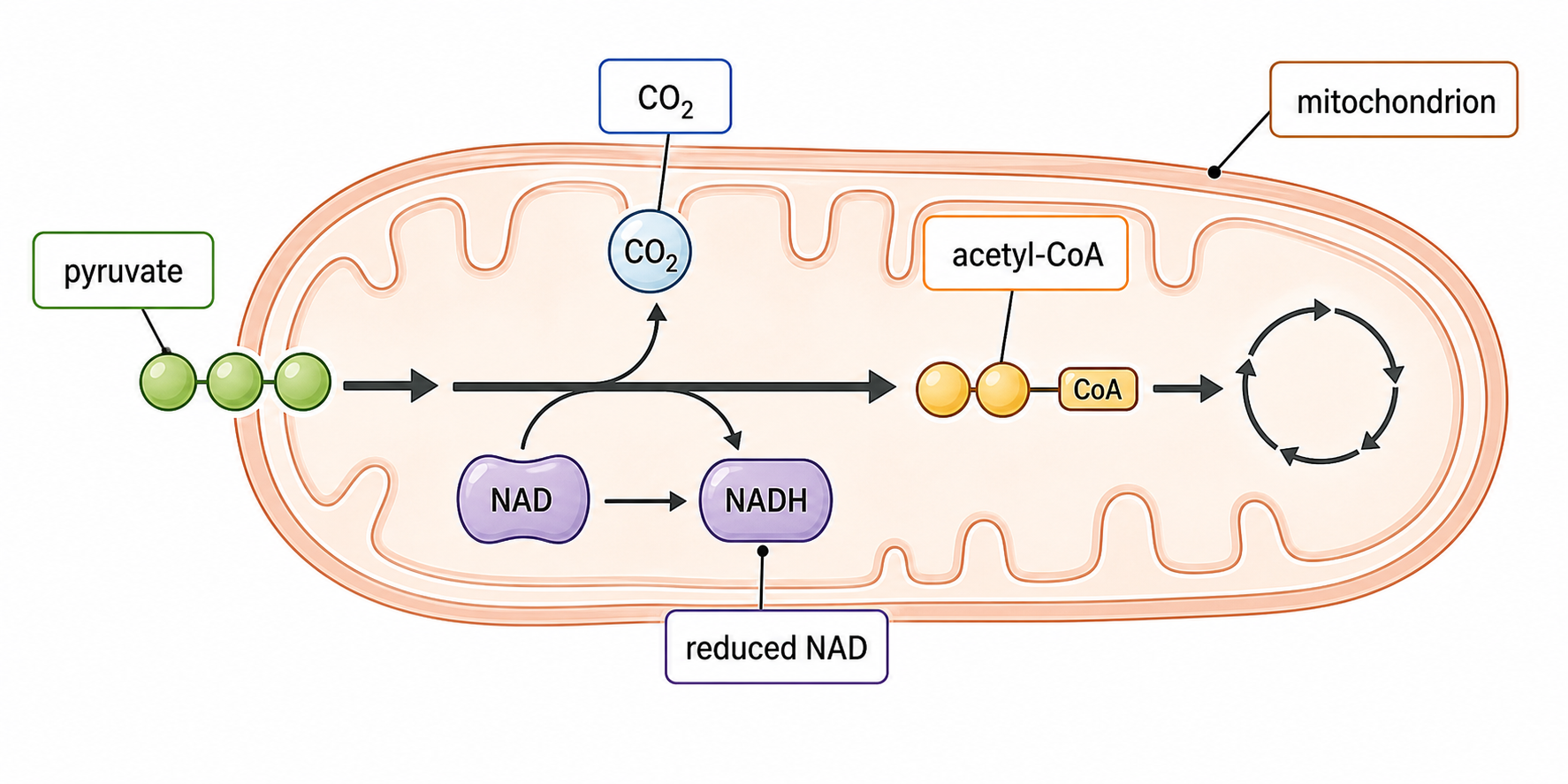
The link reaction prepares pyruvate for the Krebs cycle. Pyruvate enters the mitochondrion, loses carbon dioxide, is oxidized so NAD is reduced, and the remaining two-carbon acetyl group attaches to coenzyme A to form acetyl-CoA.
Use the visual to explain the process, not to memorize decoration.
Match each link reaction event to its meaning.
MatchMatch each link reaction event to its meaning.
ChooseRun The Krebs Cycle
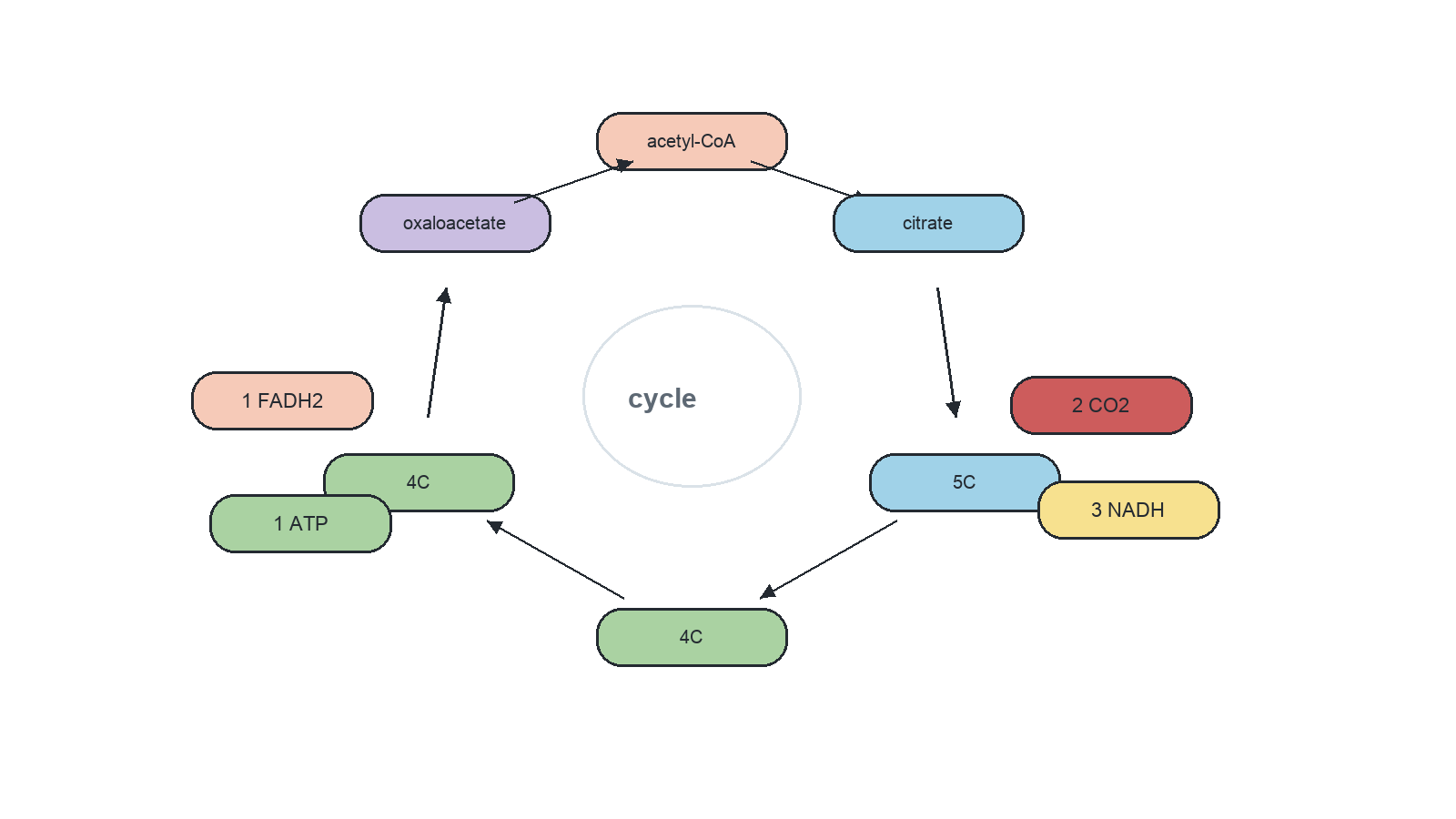
The Krebs cycle is not mainly a big ATP factory by itself. Its main value is that it oxidizes acetyl groups and loads energy onto carriers. Acetyl-CoA combines with oxaloacetate to form citrate, carbon dioxide is released, NAD and FAD are reduced, a small amount of ATP is made, and oxaloacetate is regenerated.
Use the visual to explain the process, not to memorize decoration.
Complete the Krebs sentence: Acetyl-CoA combines with ____ to form citrate. The cycle releases ____ and forms reduced ____ and reduced ____.
ChooseBuild The Proton Gradient
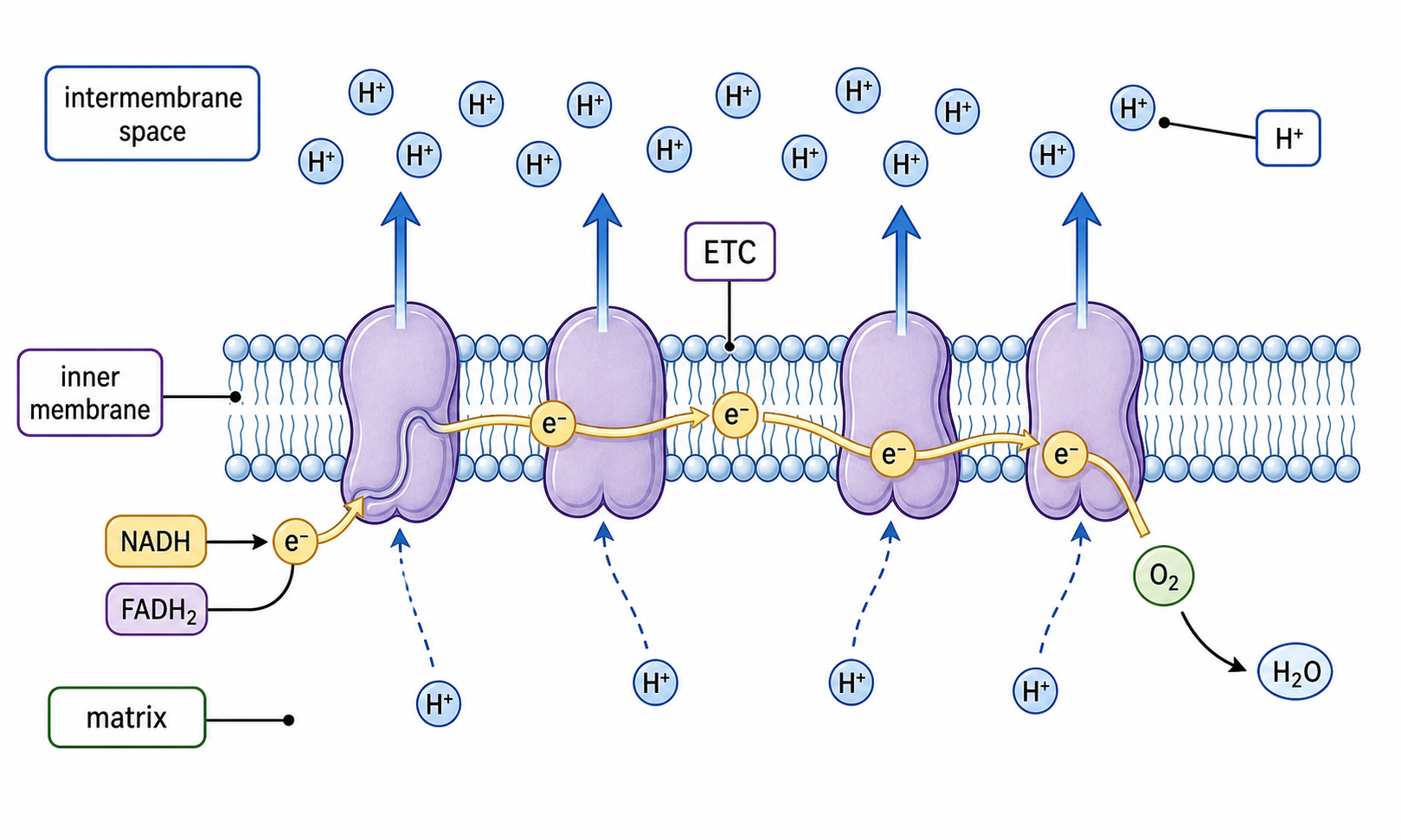
Reduced NAD and reduced FAD deliver electrons to the electron transport chain in the inner mitochondrial membrane. As electrons pass along carriers, released energy pumps protons from the matrix into the intermembrane space. This creates a proton gradient, which stores potential energy for ATP synthesis. Electron transfers release energy while coenzymes are reoxidized.
Use the visual to explain the process, not to memorize decoration.
Put the proton-gradient story in order.
OrderPut the proton-gradient story in order.
ChooseMake ATP With Oxygen
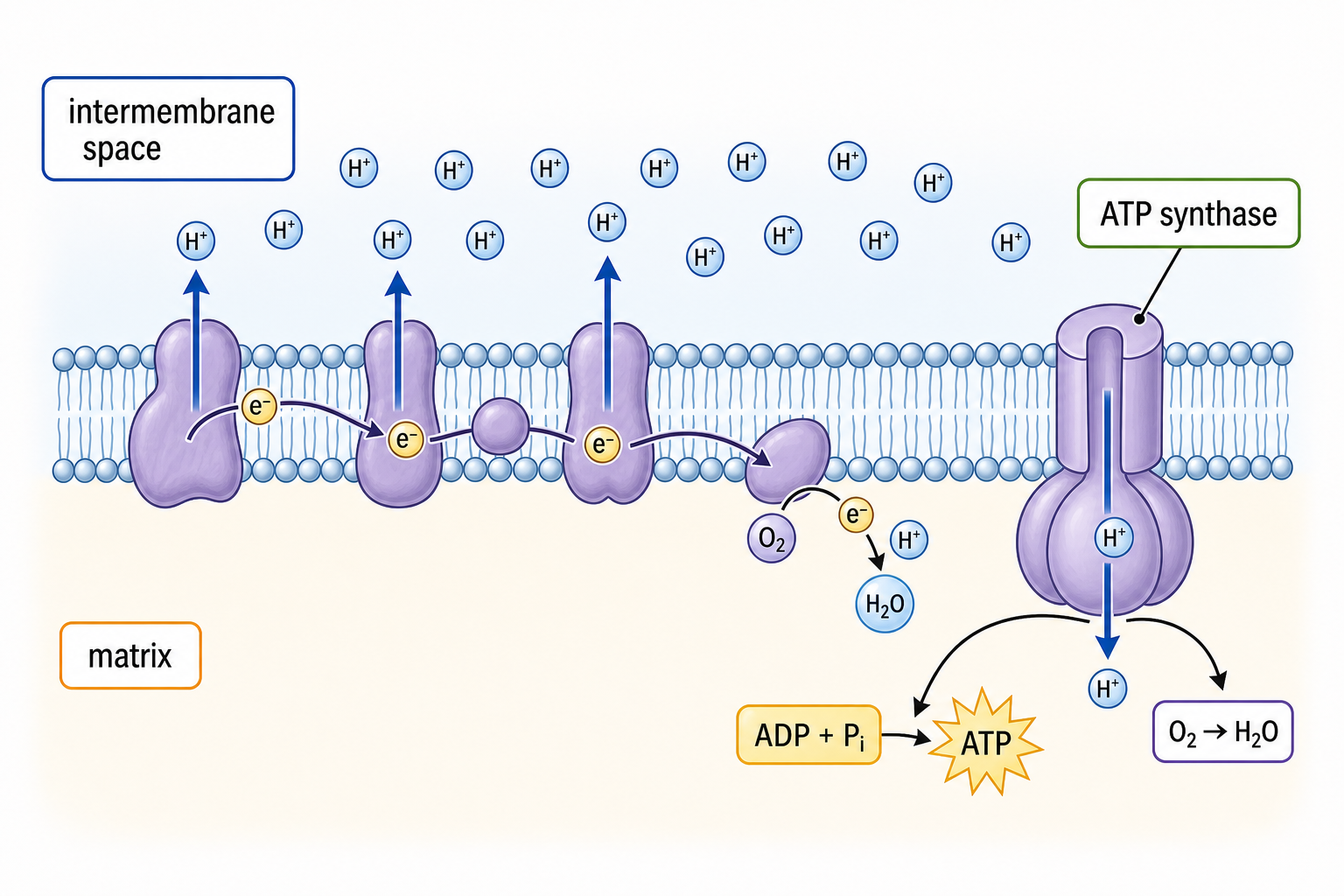
Chemiosmosis is how the gradient becomes ATP. Protons diffuse back into the matrix through ATP synthase, and the released energy phosphorylates ADP to ATP. Oxygen is essential at the end because it accepts electrons and protons, forming water and allowing the electron transport chain to continue.
Use the visual to explain the process, not to memorize decoration.
A poison prevents oxygen from accepting electrons in mitochondria. What happens next?
ChooseA poison prevents oxygen from accepting electrons in mitochondria. What happens next?
ChooseChoose The Best Fuel
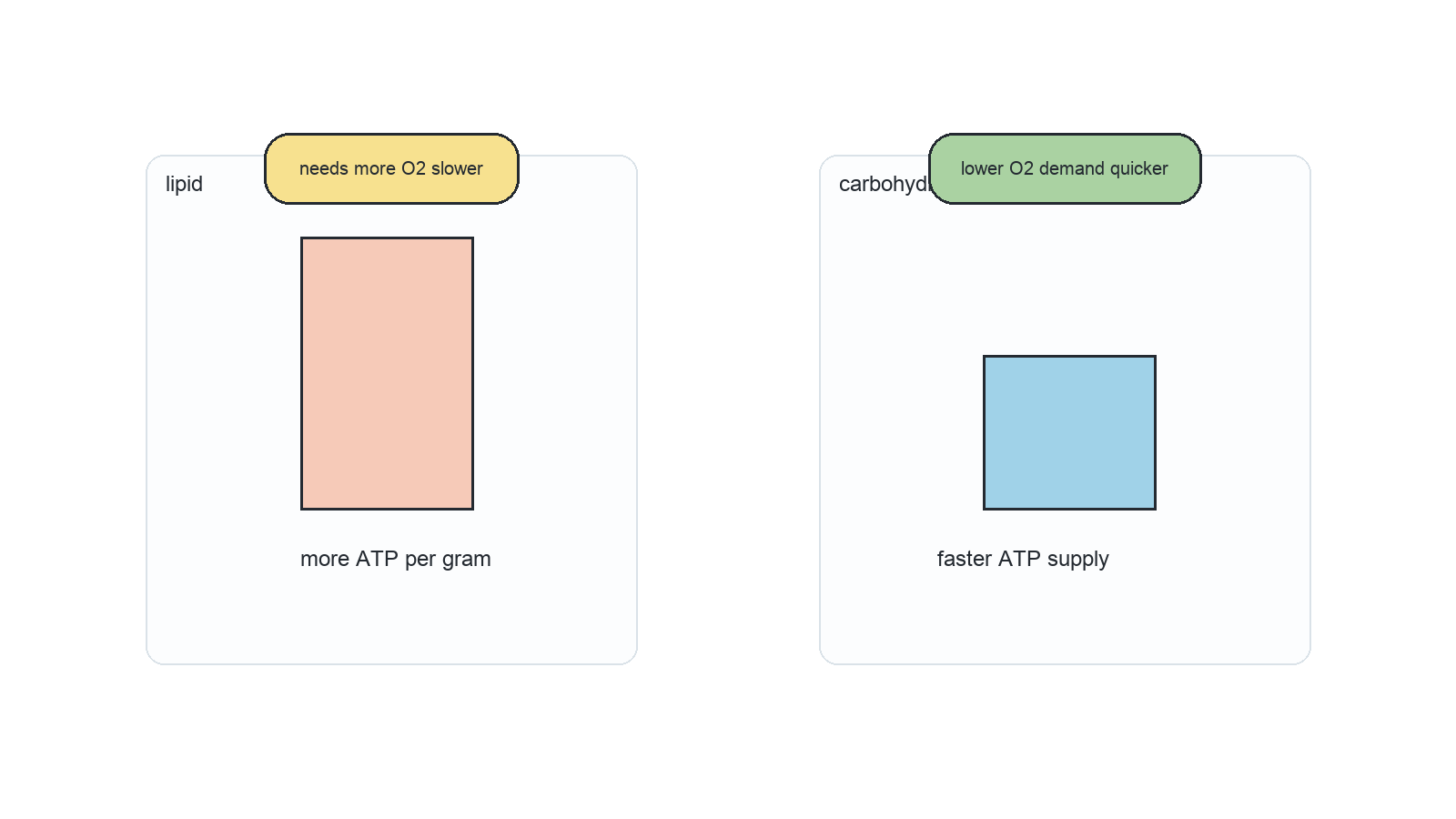
Different respiratory substrates suit different needs. Lipids are more reduced, so they release more energy and produce more ATP and metabolic water per gram. But they require more oxygen and are slower to mobilize. Carbohydrates enter glycolysis quickly and are better for rapid ATP supply.
Use the visual to explain the process, not to memorize decoration.
Match each situation to the better substrate logic.
MatchMatch each situation to the better substrate logic.
ChooseSL Transfer: Explain Core Respiration
Exam PracticeATP is the immediate energy carrier; hydrolysis powers cell work and phosphorylation reloads ATP. Cell respiration transfers energy from carbon compounds into ATP in controlled steps. Aerobic respiration in humans uses oxygen and mitochondria for high ATP yield, while anaerobic respiration in cytoplasm produces lactate and low ATP. Rate evidence comes from oxygen uptake or carbon dioxide production per unit time. Examples include membrane pumps, macromolecule synthesis, and chromosome movement. Rate depends on metabolic demand, organism size, oxygen, substrate, temperature, and pH.
Use this for questions asking how ATP supplies energy, how ATP is recycled, how aerobic and anaerobic respiration differ in humans, or how respiration rate is measured.
Use this for questions asking how ATP supplies energy, how ATP is recycled, how aerobic and anaerobic respiration differ in humans, or how respiration rate is measured.
Do not confuse cellular respiration with breathing, or anaerobic respiration in humans with ethanol fermentation.
HL Transfer: Trace The Respiration Pathway
Exam PracticeIn HL respiration, carbon and hydrogen are followed separately. Glycolysis turns glucose into pyruvate, net ATP, and reduced NAD. Without oxygen, pyruvate becomes lactate in humans or ethanol and carbon dioxide in yeast to regenerate NAD. With oxygen, pyruvate enters the link reaction, forming acetyl-CoA, carbon dioxide, and reduced NAD. The Krebs cycle releases more carbon dioxide and reduced coenzymes. Electron transport uses reduced NAD/FAD to pump protons, chemiosmosis through ATP synthase makes ATP, and oxygen accepts electrons and protons to form water. Substrate comparisons depend on ATP yield, oxygen demand, water production, and speed. Regenerated NAD allows glycolysis to continue. Fermentation regenerates NAD for glycolysis and is used in baking and brewing. Electron transfers release energy while coenzymes are reoxidized.
Put the high-yield aerobic pathway in order.
OrderUse this for HL structured questions asking for the sequence, products, locations, oxygen role, fermentation comparison, or substrate comparison.
Use this for HL structured questions asking for the sequence, products, locations, oxygen role, fermentation comparison, or substrate comparison.
Do not describe the pathway as disconnected stages; marks often come from linking products of one stage to the next.