
Define an Ecological Niche
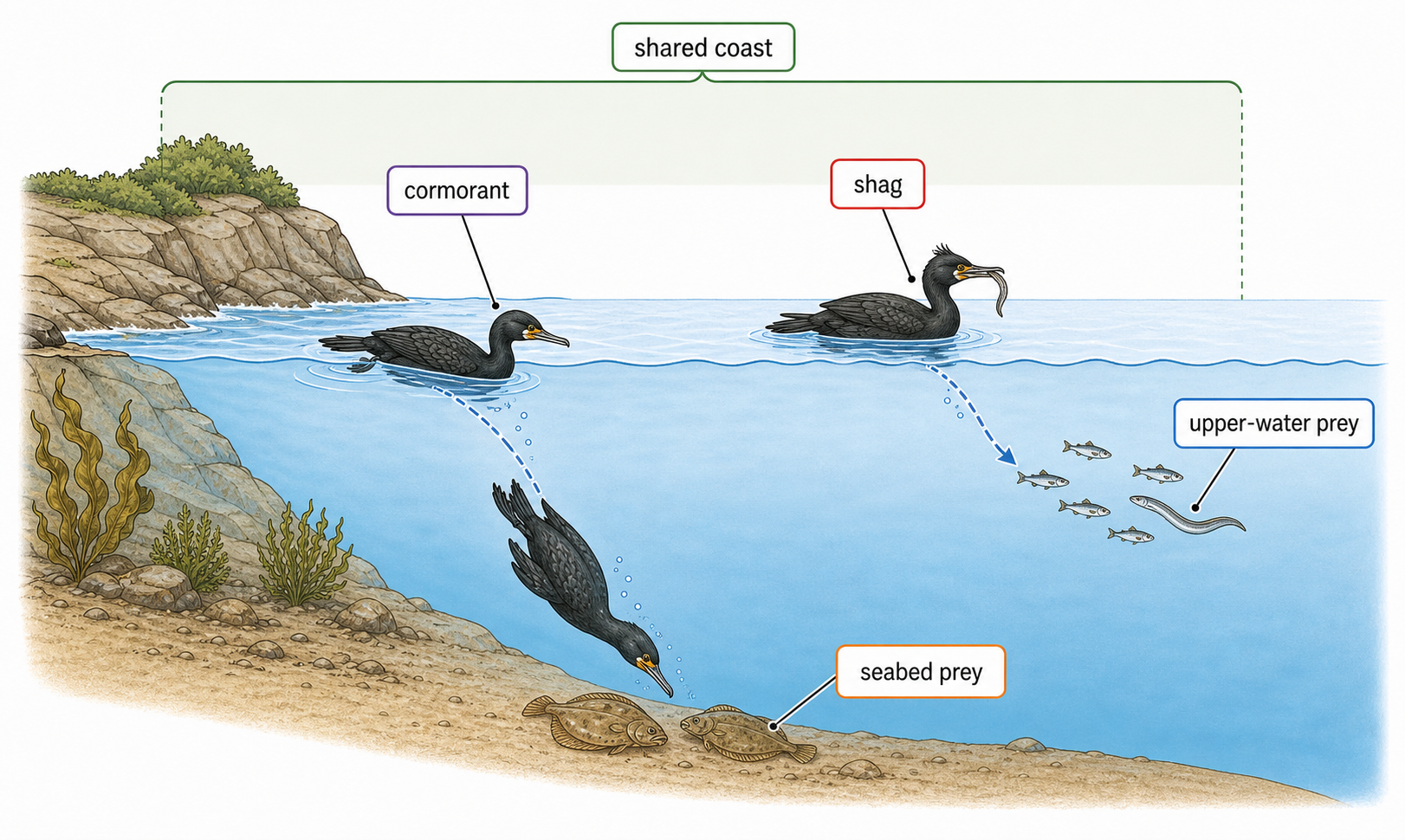
An ecological niche is the role of a species in its community. It includes where the species lives, its abiotic requirements and tolerances, its feeding and activity, reproduction, and interactions with other organisms. Cormorants and shags can use similar coastal habitats but have different niches because their diet and behaviour differ.
A niche is the full role of a species, not just the place where it lives.
Match each niche component to the question it answers.
MatchMatch each niche component to the question it answers.
ChooseSort Oxygen Tolerance Types
Oxygen availability can define microbial niches. Obligate aerobes require oxygen, such as Mycobacterium tuberculosis. Obligate anaerobes are poisoned by oxygen. Facultative anaerobes such as E. coli can switch respiration pathways depending on whether oxygen is present.
Sort each microbe type by oxygen relationship.
SortUse Light as a Nutrition Mode
Photoautotrophs use light energy to make organic molecules from carbon dioxide. Plants, algae, and cyanobacteria contain photosynthetic pigments. Cyanobacteria were early oxygen-producing photosynthetic organisms, so photosynthesis is both a nutrition mode and an ecological role.
Which description fits a photoautotroph?
ChooseRecognize Holozoic Feeding
PracticeHolozoic nutrition is heterotrophic feeding by ingestion of organic matter. Food is digested internally, then absorbed and assimilated. Herbivores, carnivores, and omnivores are consumers with holozoic nutrition.
Order the holozoic nutrition process.
OrderExplain Mixotrophic Nutrition
PracticeMixotrophs combine autotrophic and heterotrophic nutrition. Euglena can photosynthesize using chloroplasts and can ingest bacteria by phagocytosis. Mixotrophy may be obligate or facultative, and it occurs in some plankton and symbioses.
Match each nutrition clue to the correct mode.
MatchTrace Saprotrophic Feeding
Saprotrophs secrete enzymes onto dead organic matter and absorb digestion products. Many fungi and bacteria are saprotrophic decomposers. They recycle inorganic nutrients into ecosystems, but energy is lost as heat through respiration rather than recycled.
Order saprotrophic nutrition.
OrderCompare Archaeal Niches
Archaea show that ecological niches can be metabolically extreme and diverse. Some archaea are photoheterotrophic, some are chemoautotrophic, and some are heterotrophic. Halobacteria use light-driven ion pumps rather than oxygenic photosynthesis. Methanogens and hydrogen-dependent archaea illustrate chemosynthesis and anaerobic niches.
Match each archaeal example to its niche or nutrition clue.
MatchLink Dentition to Diet in Hominids
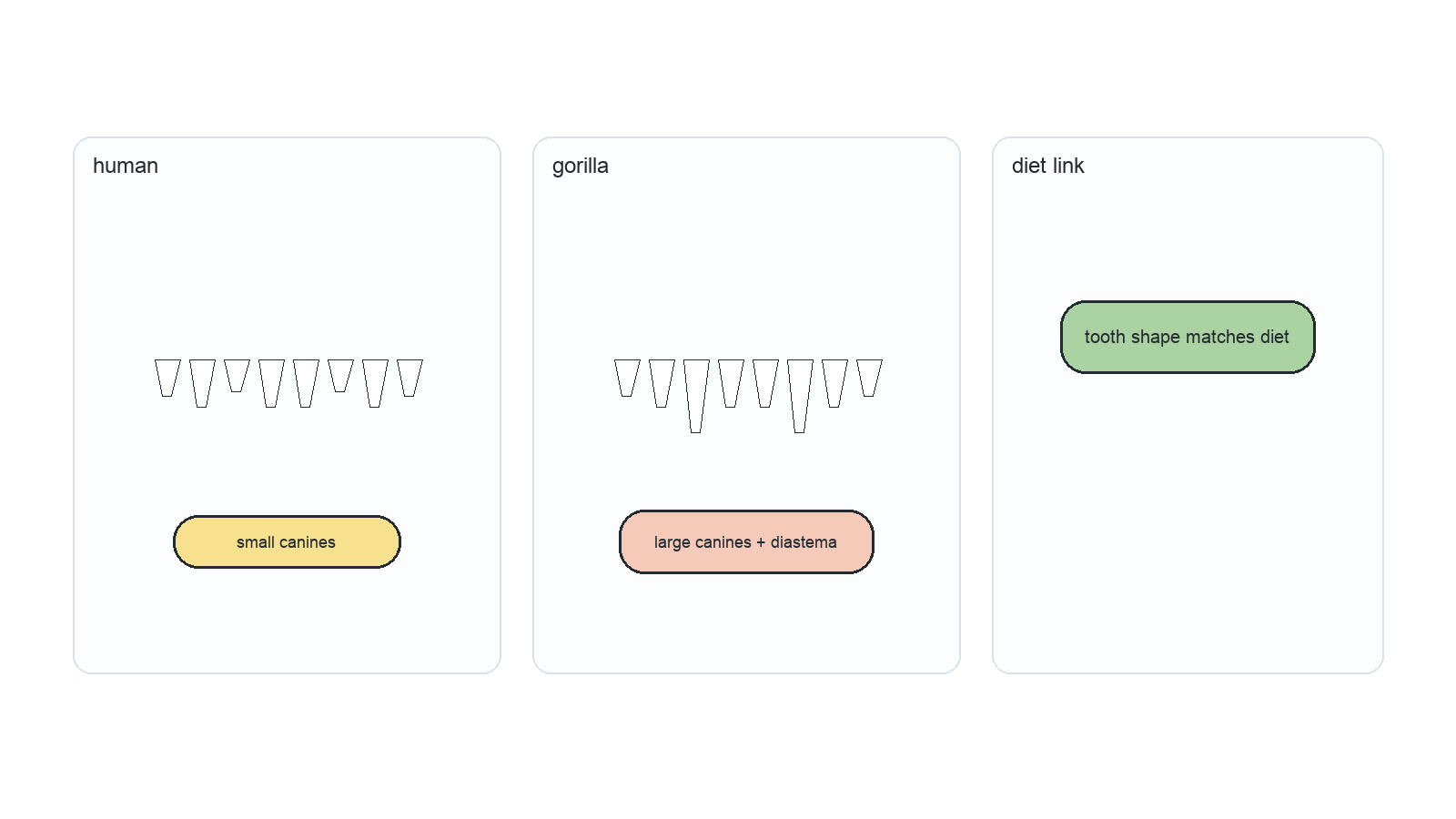
Dentition can show diet and niche in Family Hominidae. Incisors slice, canines tear, and premolars and molars grind food. Gorillas and Paranthropus robustus have robust jaws and large grinding teeth for tough vegetation. Humans have smaller canines, smaller molars, and more gracile skulls linked to an omnivorous diet.
Tooth form reflects what food must be processed.
Match tooth or skull feature to diet interpretation.
MatchMatch tooth or skull feature to diet interpretation.
ChooseMatch Herbivore and Plant Adaptations
PracticeHerbivory creates paired adaptations. Herbivores may have chewing mouthparts, aphid stylets, grinding teeth, long guts, or detoxifying gut bacteria. Plants resist herbivory using spines, stinging hairs, or toxic compounds, with examples such as cacti, stinging nettles, deadly nightshade, oleander, and cassava.
Sort each feature as herbivore adaptation or plant defence.
SortCompare Predator and Prey Adaptations
PracticePredator-prey interactions also create paired adaptations. Predators may use binocular vision, specialized senses, speed, stealth, or venom to find and kill prey. Prey may use wide fields of view, camouflage, mimicry, armour, aposematic colouration, or toxins. Examples include peregrine falcons, hedgehogs, chameleons, coral snake mimicry, poison dart frogs, and bombardier beetles.
Sort each adaptation by whose survival problem it solves.
SortSee How Plants Reach Light
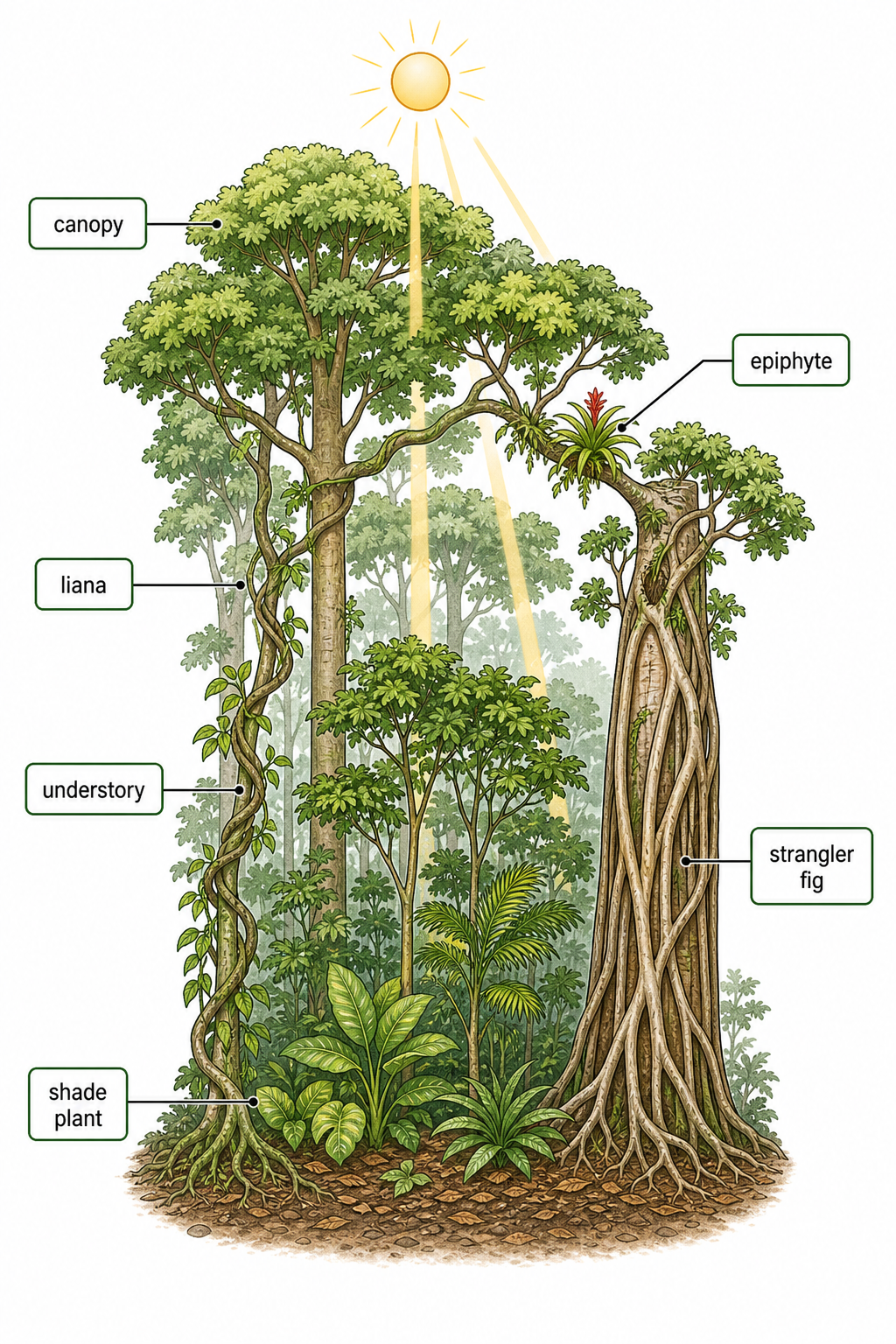
Forest plants compete strongly for light, so plant form can be an adaptation for light harvesting. Forest strata create competition from canopy to ground layer. Canopy trees, lianas, epiphytes, and strangler figs reach light in different ways. Shade-tolerant plants may have large leaves, different pigments, bright flowers, or strong scent.
Plant form helps species occupy different light environments.
Match each plant form to its light-harvesting strategy.
MatchMatch each plant form to its light-harvesting strategy.
ChooseSeparate Fundamental and Realized Niches
PracticeThe fundamental niche is where a species could live based on adaptations and tolerance limits. The realized niche is where it actually lives after biotic and abiotic interactions. Competition, predation, mutualism, dispersal limits, and climate can narrow the realized niche, so realized niche is usually smaller than the fundamental niche.
Match each niche phrase to its meaning.
MatchBuild a Competitive Exclusion Answer
Competitive exclusion occurs when one species outcompetes another for the same limiting resource. The more two niches overlap, the stronger interspecific competition becomes. Gause’s Paramecium experiments showed P. aurelia excluding P. caudatum in mixed culture, while each species could grow alone.
Two Paramecium species grow well alone, but together P. aurelia increases while P. caudatum disappears. What is the best interpretation?
ChooseTransfer: Explain Niches, Nutrition, And Competition
Exam PracticeA niche is the role of a species in a community, including habitat, abiotic tolerances, nutrition, activity, reproduction, and interactions. The evidence should match the question: nutrition mode, oxygen tolerance, feeding adaptation, predator-prey interaction, plant light strategy, fundamental versus realized niche, or competitive exclusion.
Use this for questions on ecological niche, oxygen tolerance, nutrition modes, archaea, feeding adaptations, predator-prey adaptations, plant light harvesting, fundamental vs realized niche, and competitive exclusion.
Use this for questions on ecological niche, oxygen tolerance, nutrition modes, archaea, feeding adaptations, predator-prey adaptations, plant light harvesting, fundamental vs realized niche, and competitive exclusion.
Do not list examples without saying what role, resource, interaction, or limiting factor they demonstrate.