
Why Organelles Need Compartments
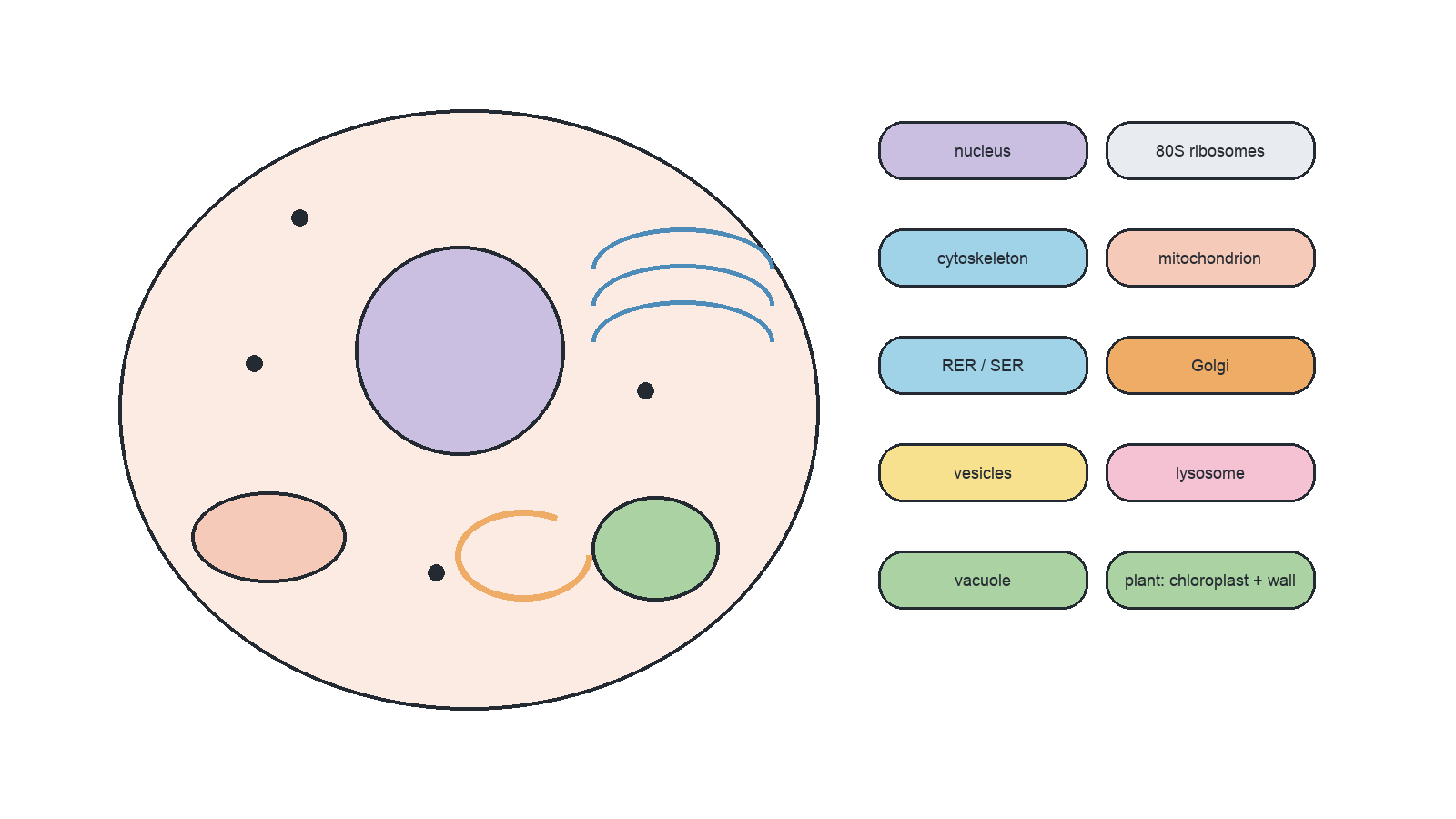
Organelles create compartments that support specific cell functions. An organelle is a discrete cell subunit with a specific job. Separation helps because enzymes and substrates can be concentrated, the right pH can be maintained, and damaging reactions can be kept away from the cytoplasm.
Organelles matter because separate spaces let cells run different chemistry at the same time.
Sort the structures, then say the rule that made the sorting possible.
SortSort the structures, then say the rule that made the sorting possible.
ChooseNucleus Separates Editing From Translation
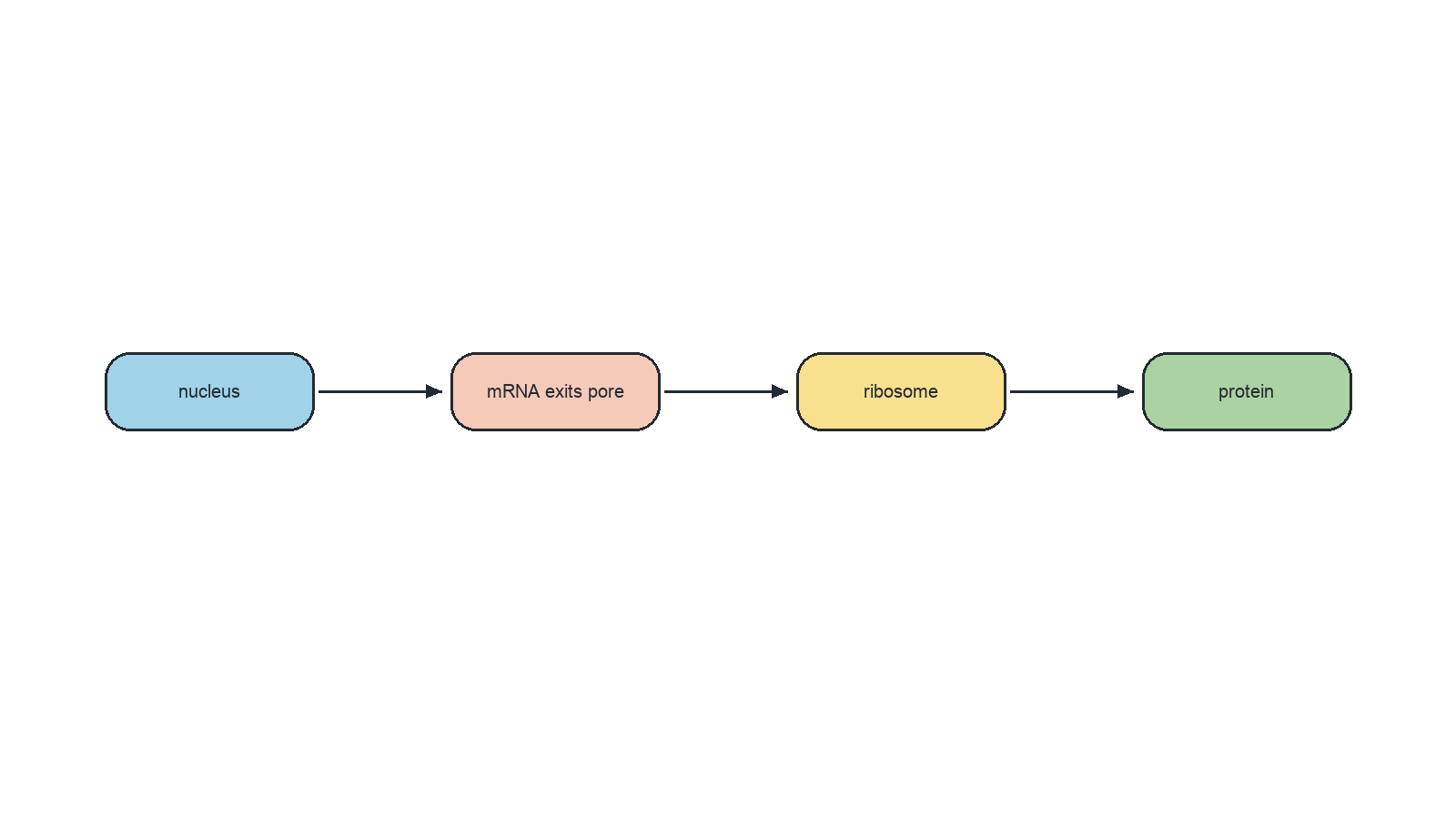
The nucleus is the easiest example of compartmentalization helping control. DNA stays inside the nucleus; transcription makes pre-mRNA there; splicing can remove introns before mature mRNA is exported through nuclear pores for translation in the cytoplasm.
Put the nucleus-to-cytoplasm gene-expression steps in order.
OrderHL Mitochondrion Compartment Map
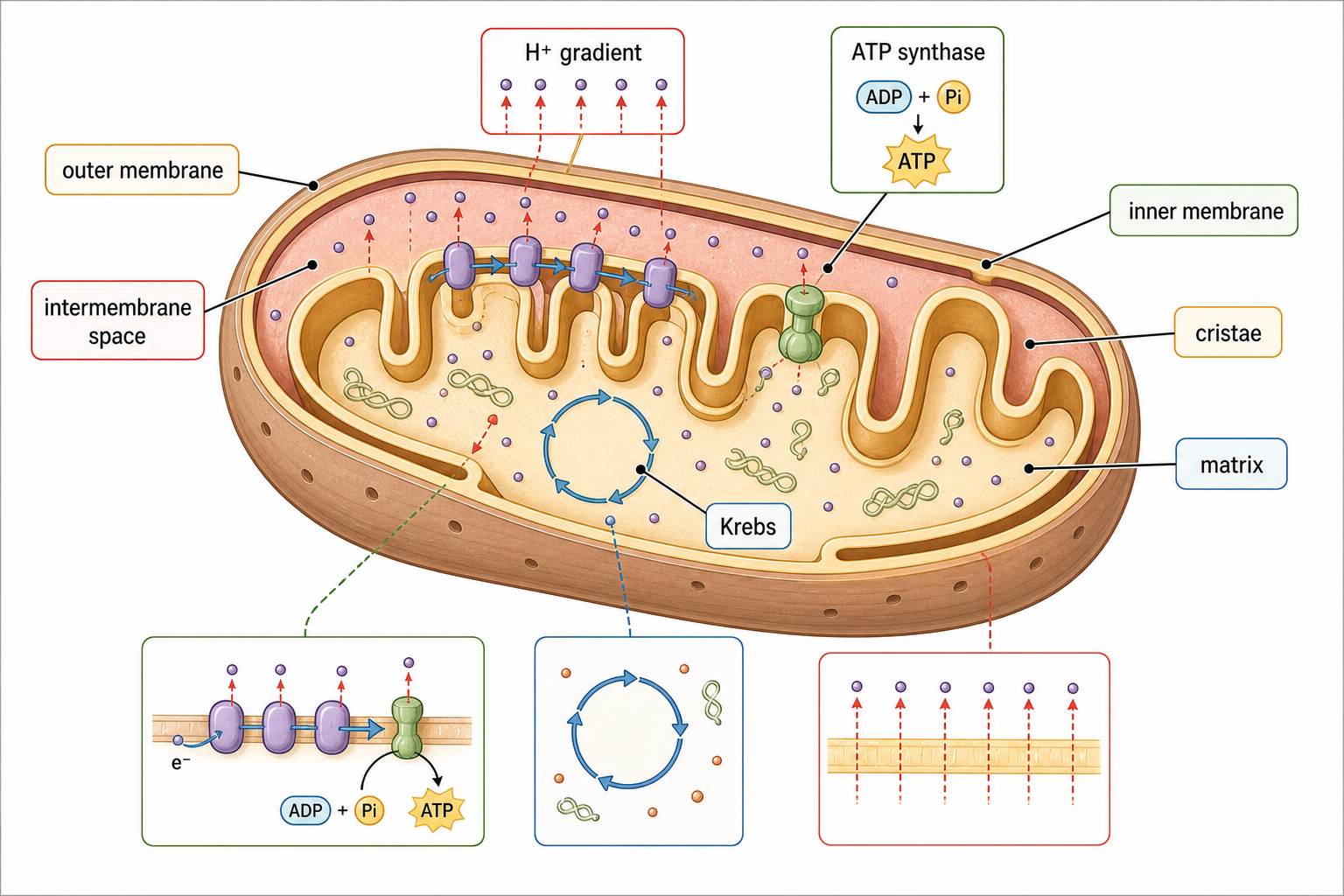
In HL, mitochondria are not just “the site of respiration”; each compartment explains a mark point. The inner membrane folds into cristae for electron transport chains and ATP synthase, the intermembrane space stores protons, and the matrix contains Krebs cycle enzymes.
Pyruvate enters through transport proteins; cristae hold ATP-making machinery; the intermembrane space stores protons; the matrix holds Krebs cycle enzymes.
Match each mitochondrial compartment to the process it supports.
MatchMatch each mitochondrial compartment to the process it supports.
ChooseHL Chloroplast Compartment Map
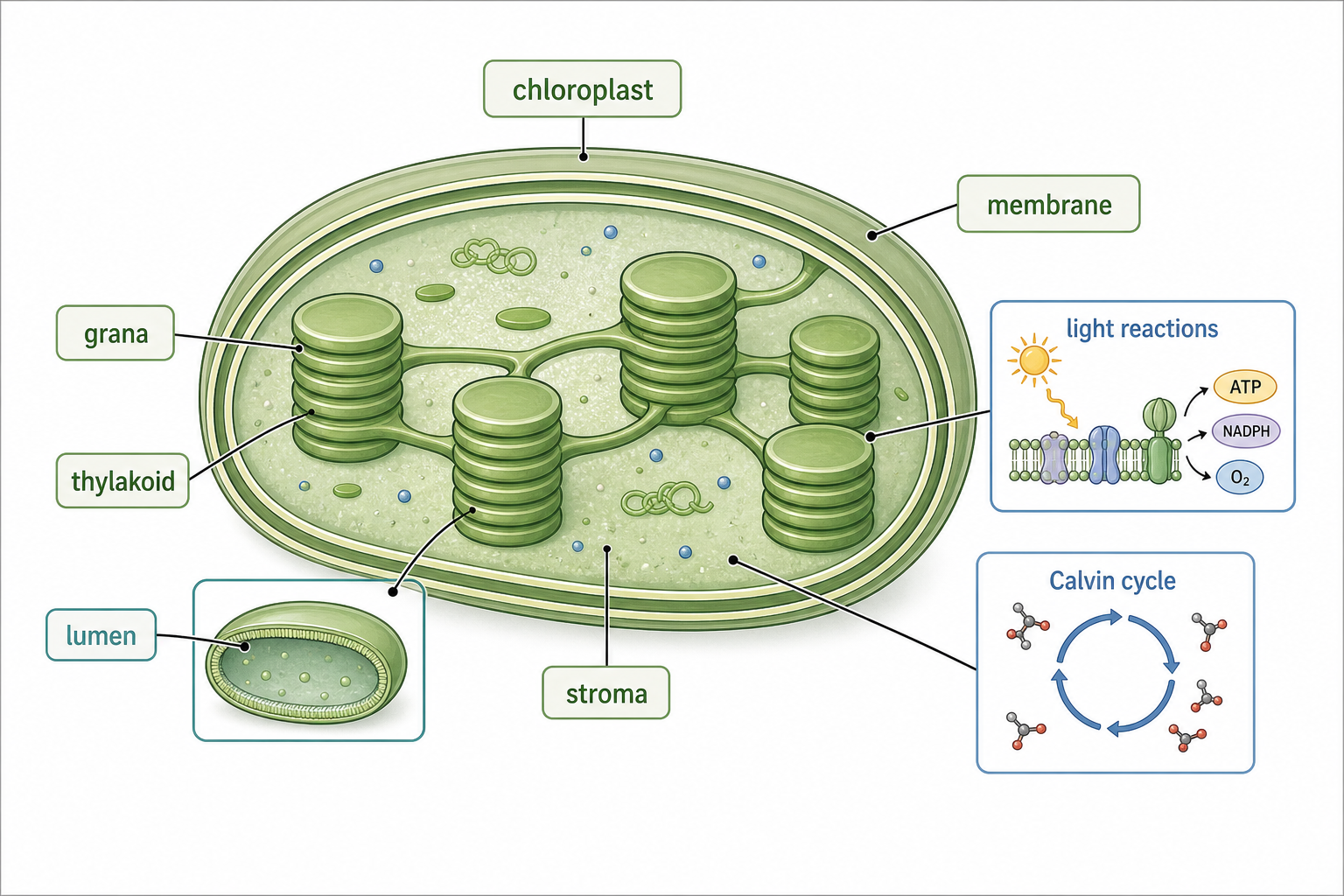
Chloroplast compartments mirror the same exam logic: membranes hold energy-transfer machinery, small spaces build gradients, and fluid compartments hold enzymes. Thylakoid membranes in grana hold photosystems, electron transport chains, and ATP synthase; thylakoid spaces accumulate protons; stroma contains Calvin cycle enzymes.
Thylakoid membranes hold photosystems and ATP synthase; the small thylakoid space builds a proton gradient; the stroma runs the Calvin cycle.
Match each chloroplast structure to its exam function.
MatchMatch each chloroplast structure to its exam function.
ChooseHL Nuclear Envelope Adds Control
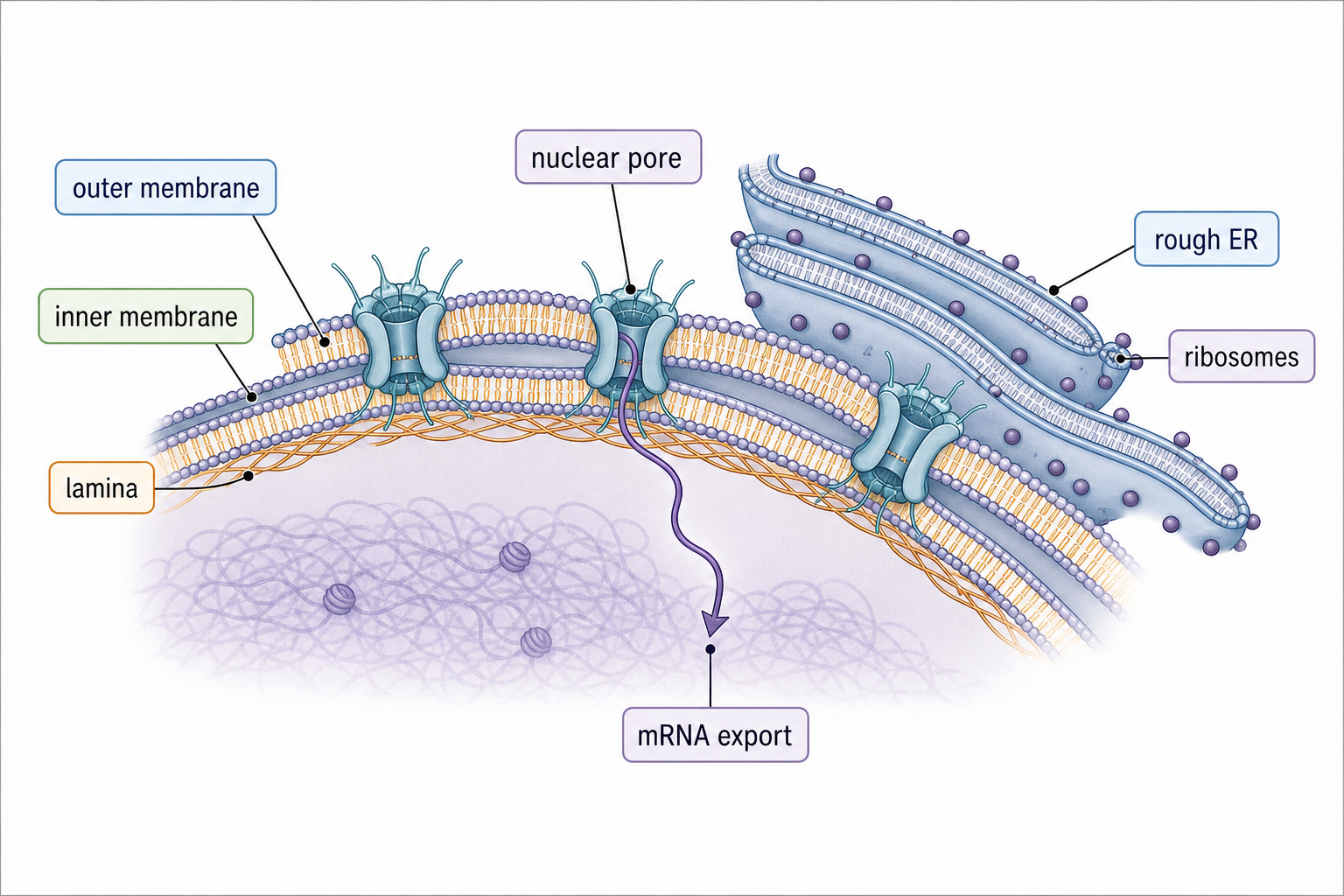
HL adds detail to the nuclear envelope. It is a double membrane continuous with the ER, so it belongs to the endomembrane system. Nuclear pores allow rapid regulated exchange, the lamina supports the nucleus, and the envelope can break into vesicles during cell division.
The nuclear envelope is not just a barrier: pores regulate traffic, lamina supports shape, and ER continuity links it to the endomembrane system.
Which statement best explains a benefit of the nuclear envelope?
ChooseWhich statement best explains a benefit of the nuclear envelope?
ChooseHL Free Ribosomes Versus Rough ER
PracticeRibosomes are chosen by protein destination. Free ribosomes make proteins retained and used in the cytoplasm. Rough ER-bound ribosomes make proteins entering the secretory pathway: secretion, membrane insertion, or lysosomes. Polysomes simply mean many ribosomes translating the same mRNA.
Match the protein to the likely synthesis site.
MatchHL Golgi Modifies Then Sorts
The Golgi is a stack of flattened cisternae receiving vesicles from the RER. It is a processing and sorting station, not the place where polypeptides are first synthesized. Vesicles arrive from rough ER at the cis face; proteins are modified through cisternae by processes such as glycosylation, sulfation, or phosphorylation; vesicles leave from the trans face for lysosomes, membranes, or secretion.
Order the export route through the Golgi system.
OrderHL Vesicles Bud Dock Fuse
PracticeVesicles are the cell’s membrane packets. They bud from one membrane, carry cargo, dock with the correct target, and fuse so the cargo or membrane proteins move to the next compartment. In endocytosis, receptor-mediated uptake can use clathrin-coated pits; in secretion, vesicle fusion releases cargo by exocytosis, including neurotransmitter release.
Put receptor-mediated endocytosis into order.
OrderSL Transfer: Explain Why Compartments Matter
Exam PracticeA strong answer does not say only “organelles make cells efficient.” It gives a concrete reason: compartments concentrate enzymes and substrates, maintain suitable pH, separate incompatible reactions, and let the nucleus process RNA before translation.
Use this when a question asks why eukaryotic compartmentalization is useful or why the nucleus is separated from cytoplasm.
Use this when a question asks why eukaryotic compartmentalization is useful or why the nucleus is separated from cytoplasm.
Do not give a vague “more efficient” answer without saying what is concentrated, separated, or controlled.
HL Transfer: Link Organelle Structure To Function
Exam PracticeHL structure-function answers should link organelle compartments to the process they support. Mitochondria use cristae, intermembrane space, and matrix; chloroplasts use thylakoid membranes, thylakoid space, and stroma. Protein export is a route: rough ER makes entry-pathway proteins, Golgi modifies and sorts, vesicles bud and fuse with targets.
Match the exam clue to the structure-function link it needs.
MatchUse this for HL structure-function questions on mitochondria/chloroplasts, nuclear envelope benefits, and protein or vesicle transport routes.
Use this for HL structure-function questions on mitochondria/chloroplasts, nuclear envelope benefits, and protein or vesicle transport routes.
Do not list organelles generically; each mark usually needs a structure, process, and consequence.