
Define And Measure Biodiversity
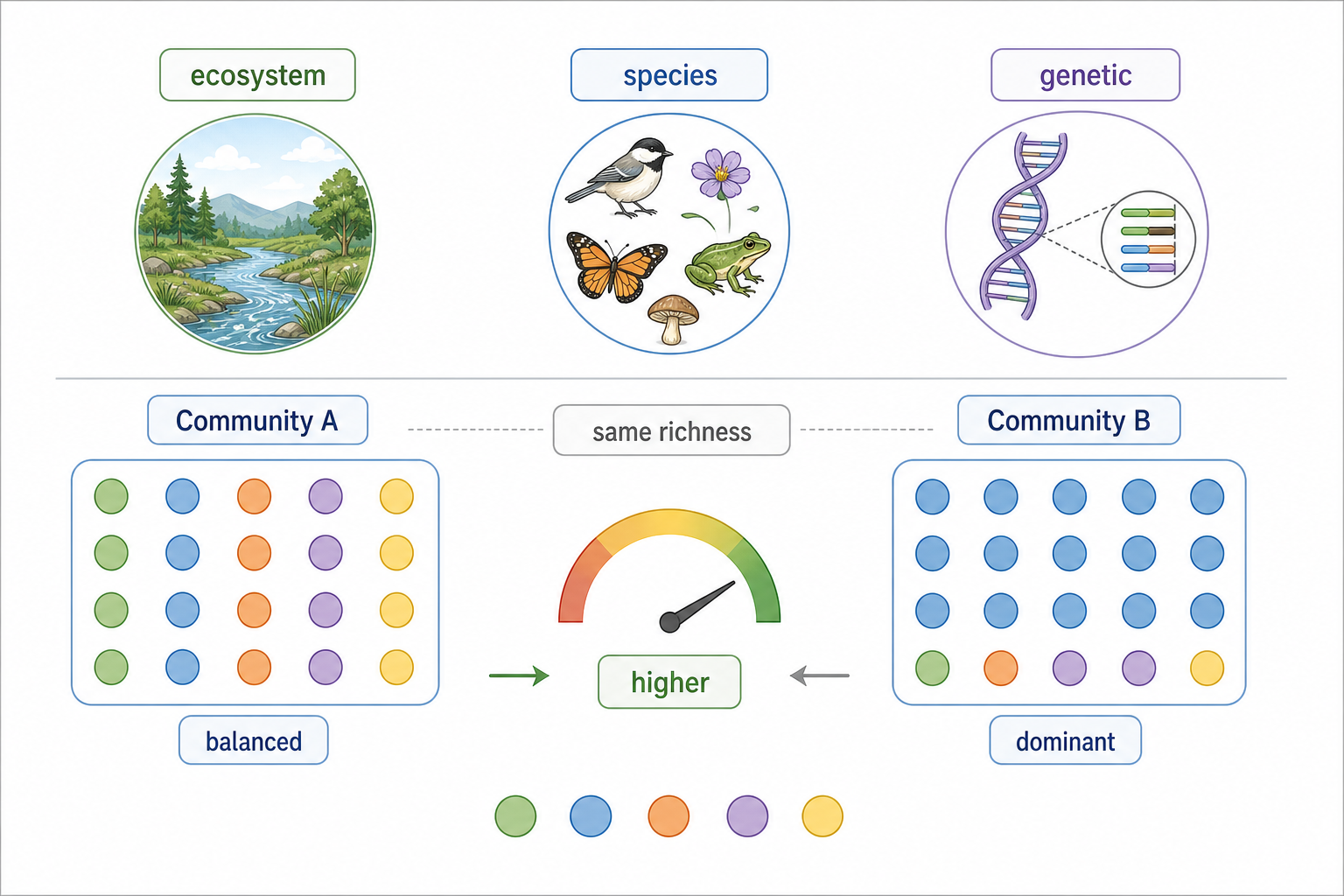
Biodiversity means the variety of life at several levels: ecosystem diversity, species diversity, and genetic diversity. When comparing communities, do not stop at species count. Species diversity depends on richness, the number of species present, and evenness, how evenly individuals are distributed. Simpson’s reciprocal index helps compare communities because it includes both richness and evenness.
Biodiversity is broader than species count, and species diversity changes when evenness changes.
Two communities each contain five species. Community A has similar numbers of each species; Community B is dominated by one species. Which is more diverse?
ChooseTwo communities each contain five species. Community A has similar numbers of each species; Community B is dominated by one species. Which is more diverse?
ChooseCompare Present Diversity With Fossil Evidence
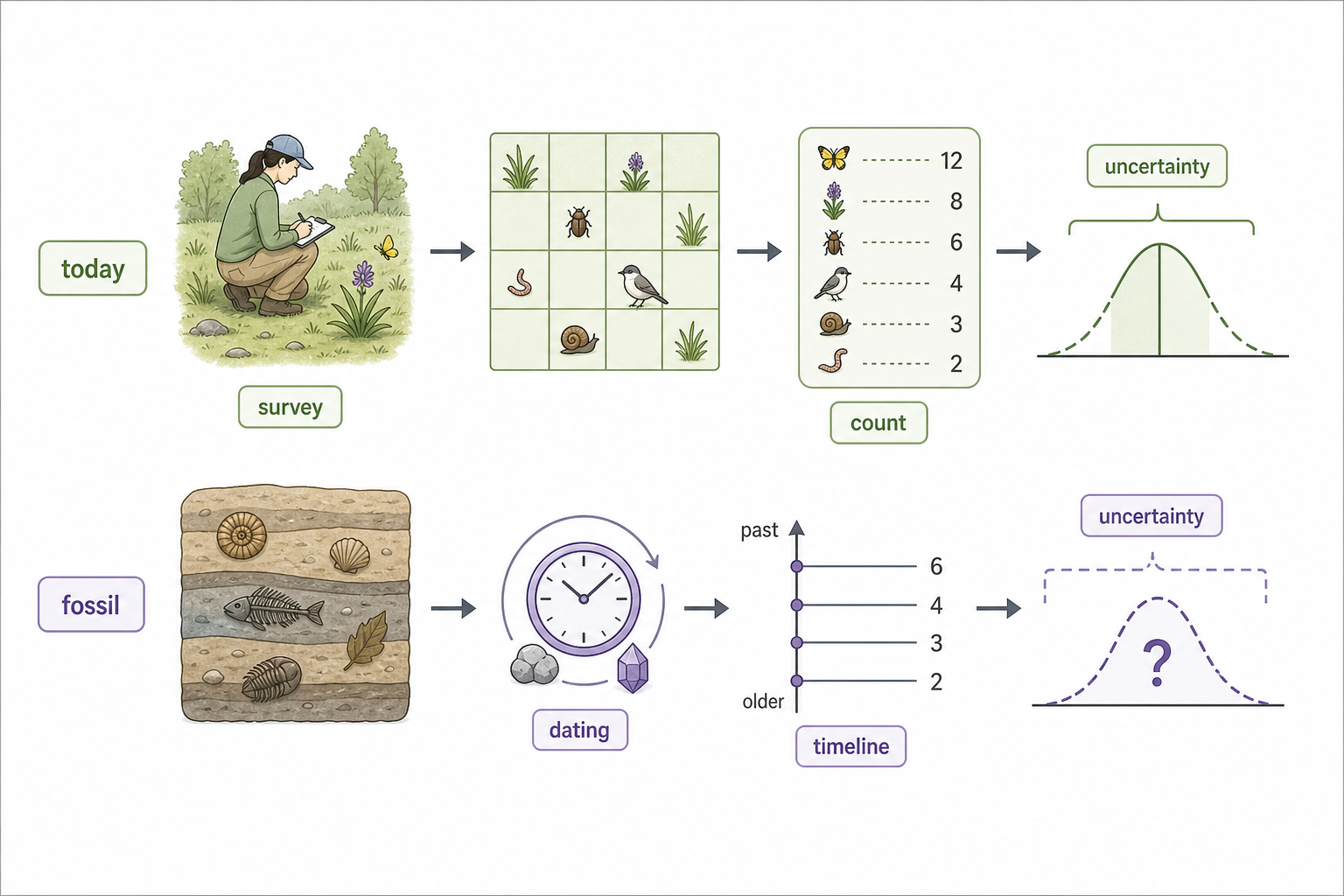
Present biodiversity and past biodiversity are measured through different evidence routes. Today, about 9 million species are estimated, but many are still undescribed. Past biodiversity depends on fossils and radiometric dating, but the fossil record is incomplete because fossilization and preservation are selective. So current species diversity may be higher than in the past, but fossil gaps make the comparison uncertain.
Past biodiversity is reconstructed through a narrower and more incomplete evidence route than present biodiversity.
Match each evidence source to its limitation.
MatchMatch each evidence source to its limitation.
ChooseTrace Human-Driven Extinction
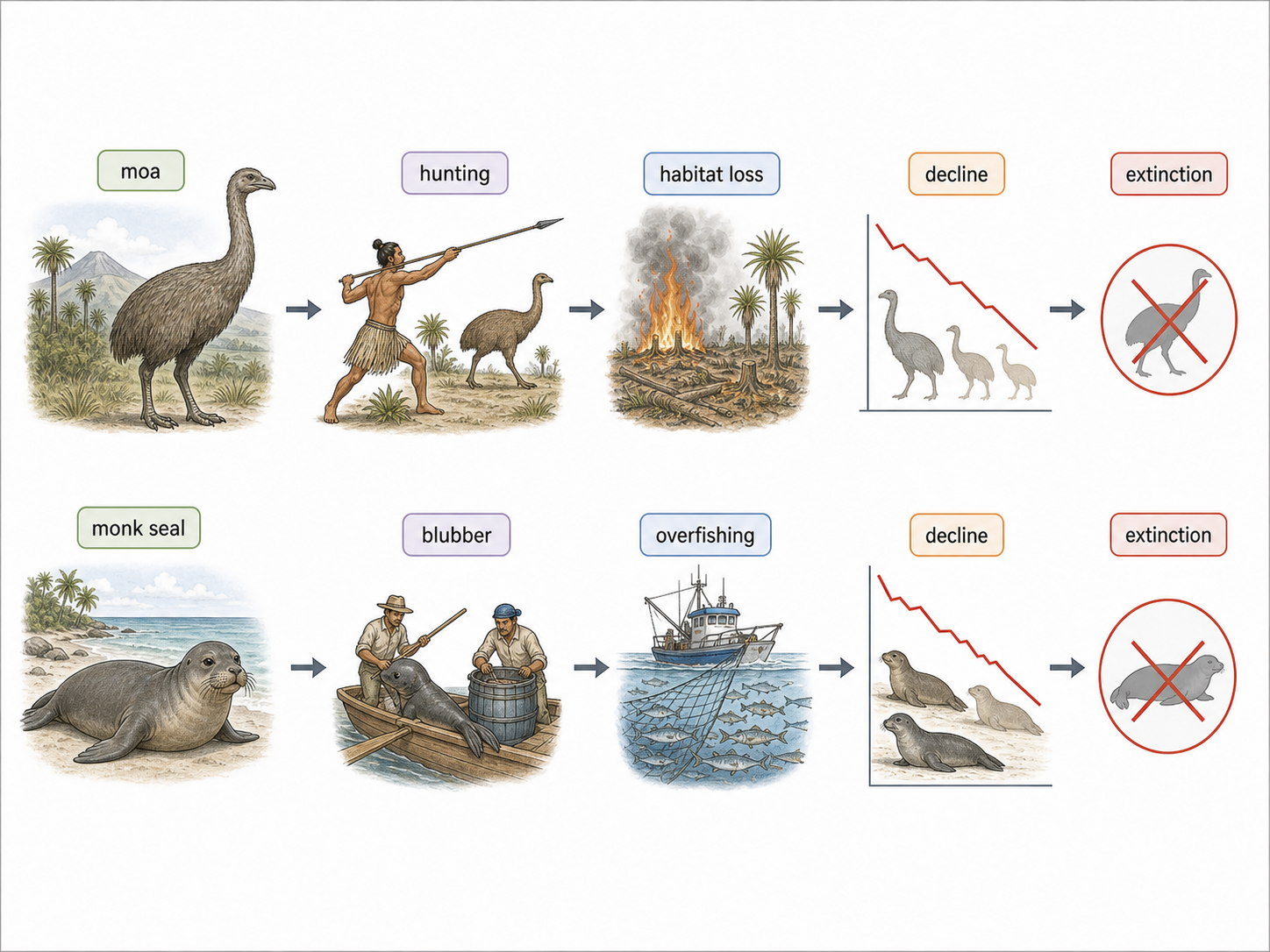
Human activity is driving a sixth mass extinction, so named examples need a cause-and-effect chain. North Island giant moa extinction links to hunting and habitat change. Caribbean monk seal loss links to hunting and food-source depletion, and removing a top predator can alter a food web. Examples earn marks when the human pressure and ecological consequence are clear.
Named extinction cases score best when the human pressure and ecological consequence are both shown.
Match each extinction example to the pressure or consequence.
MatchMatch each extinction example to the pressure or consequence.
ChooseCompare Forest And Reef Ecosystem Loss
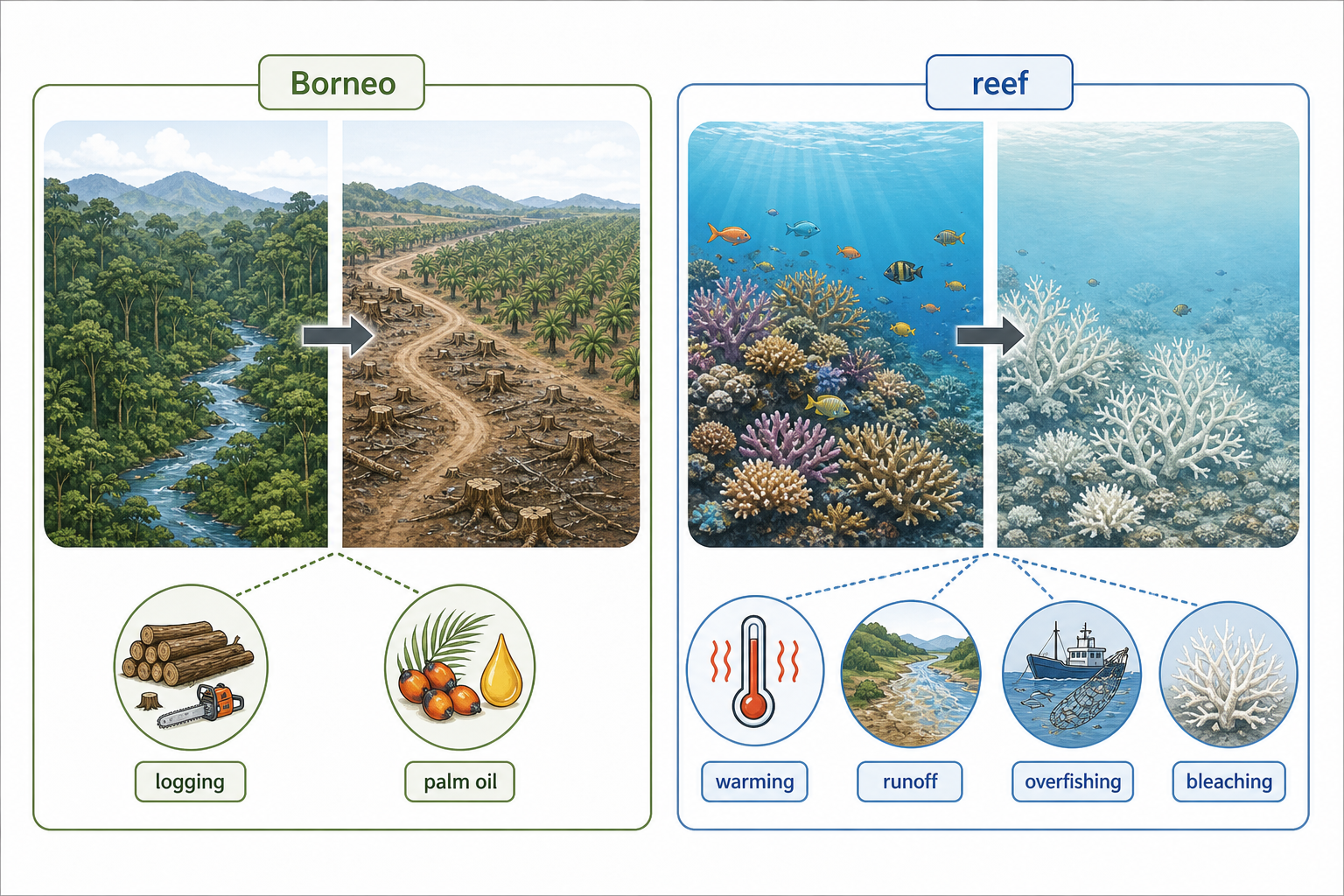
Ecosystem loss is mainly caused by anthropogenic disturbance and habitat conversion, but different ecosystems are damaged in different ways. In Borneo, mixed dipterocarp forests are lost through logging and oil palm plantations, a direct habitat-conversion pathway. In the Great Barrier Reef, biodiversity loss is linked to multiple pressures together: climate change, pollution, fishing, and other human impacts.
Different ecosystems lose biodiversity through different human pressure patterns.
Sort each pressure into the better case example.
SortSort each pressure into the better case example.
ChooseJudge Evidence For A Biodiversity Crisis
PracticeA biodiversity crisis claim needs repeated evidence, not one dramatic observation. IPBES reports and repeated biodiversity surveys show patterns over time. Richness, evenness, and Simpson’s reciprocal index can compare disturbed and undisturbed habitats. Peer-reviewed studies and citizen science can both contribute data, but citizen science needs reliability checks such as sampling design and identification quality.
A disturbed site has lower richness, lower evenness, and a lower Simpson’s reciprocal index than an undisturbed site across several years. What is the best conclusion?
GraphRepeated surveys compare disturbed and undisturbed habitats over time.
Sort Human Drivers Of Biodiversity Loss
PracticeHuman population growth increases demand for food, housing, energy, and land. That demand drives overexploitation, urbanization, deforestation, agriculture, mining, and pollution. Invasive species add another layer: lionfish and water hyacinth can outcompete native species or disrupt ecosystems, especially when human activity moves organisms into new habitats.
Sort each statement into demand, direct driver, or invasive-species disruption.
SortChoose In Situ Or Ex Situ Conservation
PracticeConservation needs multiple approaches because species and threats differ. In situ conservation protects organisms in their natural ecosystems through protected areas, reserve design, corridors, active management, and rewilding. Ex situ conservation protects organisms or genetic material outside the habitat through zoos, captive breeding, botanic gardens, seed banks, and tissue banks. The best answer justifies the method from the threat.
Choose the conservation response that best fits each case.
DecisionExplain EDGE Conservation Priorities
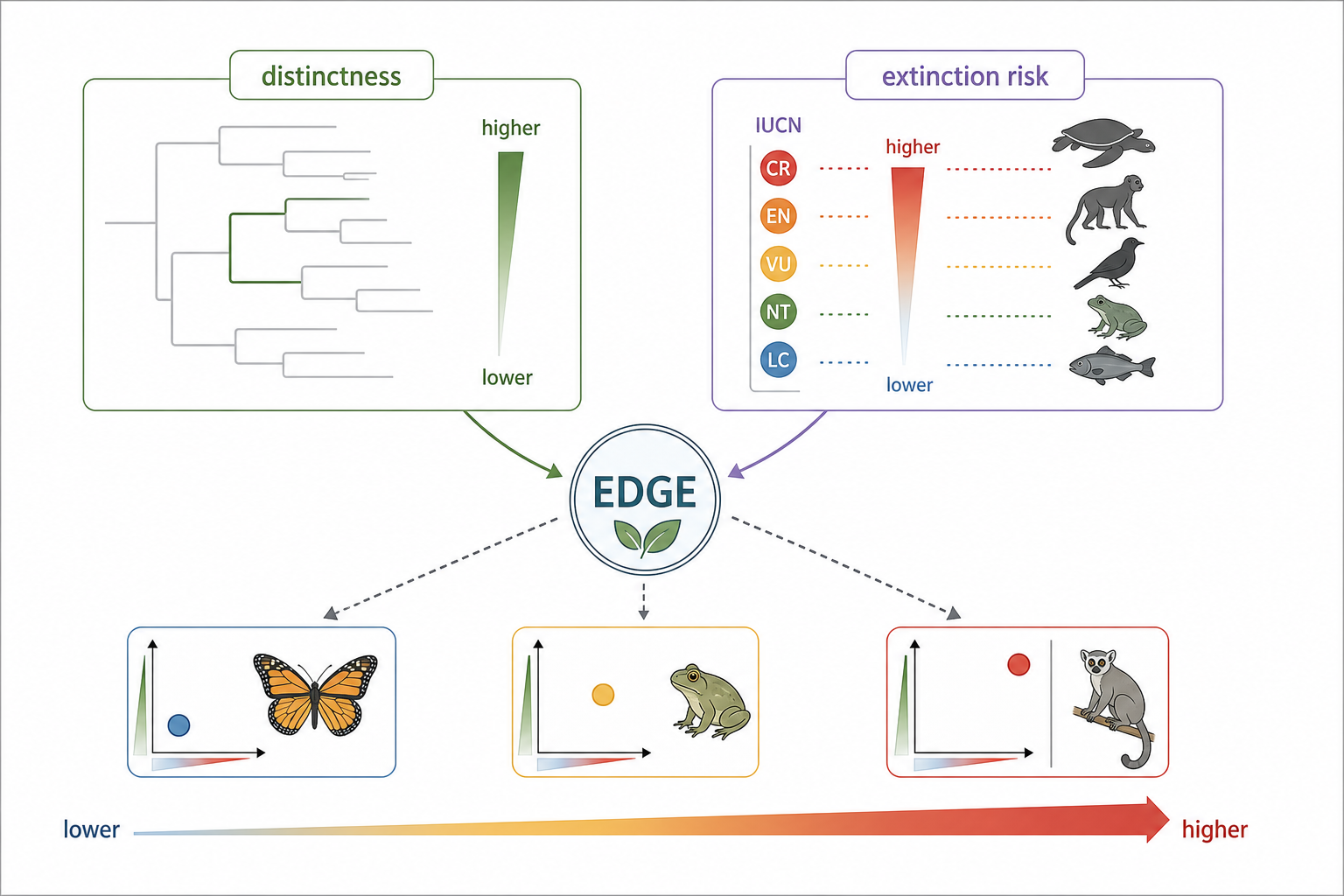
EDGE prioritizes species that are both evolutionarily distinct and globally endangered. Evolutionary distinctness asks how isolated a species is on the tree of life; global endangerment uses extinction risk such as IUCN status. The goal is to prevent disproportionate loss of evolutionary history: losing a highly distinct species can erase a whole unique branch, not just one replaceable member of a crowded group.
EDGE protects species that are both highly threatened and unusually unique on the tree of life.
Match each EDGE term to its meaning.
MatchMatch each EDGE term to its meaning.
ChooseTransfer: Build A Conservation Argument
Exam PracticeA strong conservation answer follows a chain: define biodiversity, measure evidence of decline, identify human drivers, then justify conservation action. Biodiversity includes ecosystem, species, and genetic diversity; species diversity uses richness and evenness. Evidence comes from estimates, fossils, repeated surveys, IPBES reports, and indices. Drivers include extinction pressure, ecosystem conversion, population-driven resource demand, pollution, and invasive species. Responses include in situ, ex situ, and EDGE prioritization.
Match each conservation prompt to the best answer tool.
MatchUse this for combined conservation questions about biodiversity measurement, evidence of decline, human drivers, conservation methods, or EDGE priorities.
Use this for combined conservation questions about biodiversity measurement, evidence of decline, human drivers, conservation methods, or EDGE priorities.
Biodiversity includes ecosystem, species and genetic diversity, and species diversity depends on both richness and evenness, which can be compared using Simpson’s reciprocal index. Evidence for decline comes from IPBES reports and repeated surveys comparing disturbed and undisturbed habitats, while past biodiversity remains uncertain because the fossil record is incomplete. Human drivers include population growth, overexploitation, habitat conversion, pollution and invasive species; named examples include moa extinction, Caribbean monk seal loss, Borneo forest conversion and Great Barrier Reef stress. Conservation should match the threat: in situ methods protect habitats and ecological relationships, ex situ methods provide rescue or genetic backup, and EDGE prioritizes species that are both evolutionarily distinct and globally endangered.
Writing a generic conservation paragraph without measurement, evidence, named drivers, or a justified response.