
Variation Inside Species
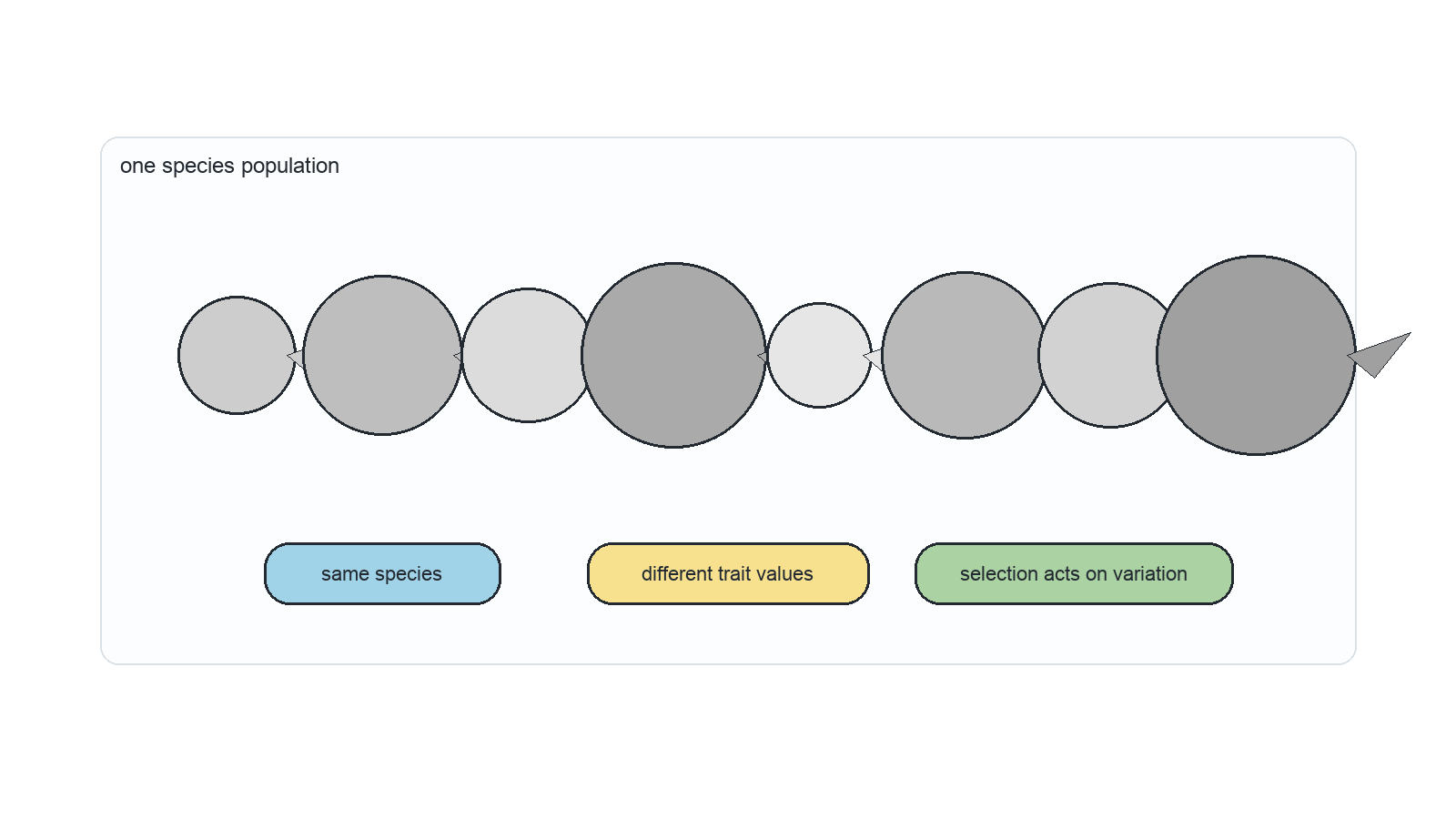
Diversity begins inside a species. Individuals of the same species are not identical, and that variation is the raw material for natural selection. Continuous variation, such as height or mass, often comes from many genes plus environmental effects, so values form a range rather than neat categories. Darwin noticed that selection can only act when individuals differ.
Notice that a species stays one species even when individuals vary.
Match each variation idea to its exam role.
MatchMatch each variation idea to its exam role.
ChooseUse Morphology And Binomial Names
Practice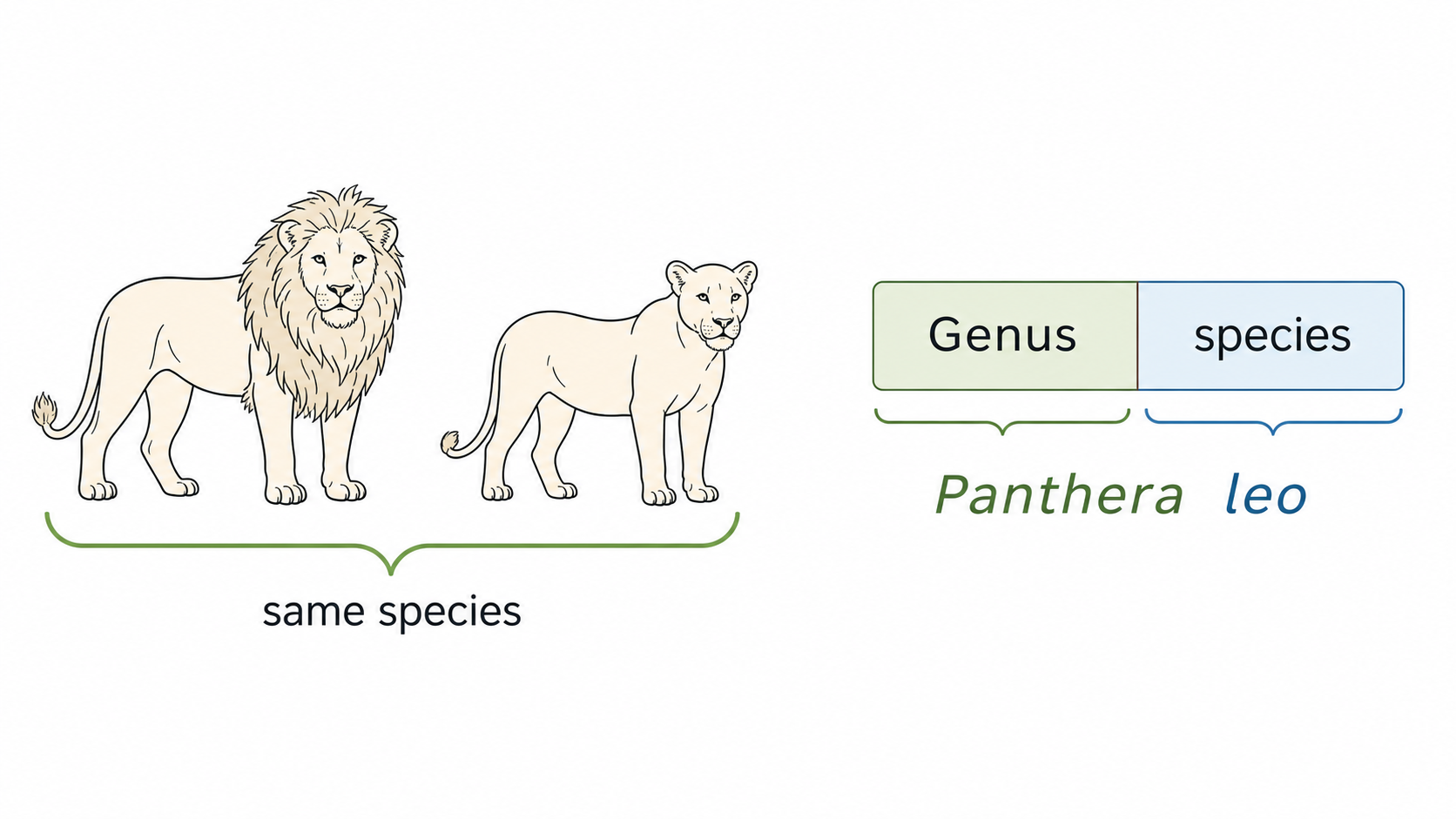
Morphology is useful when biologists group organisms by visible structural traits. It works well in fieldwork, fossils, and many plants, where breeding evidence may be unavailable. But morphology can mislead when males and females look different or when there is large variation inside one species. Binomial nomenclature solves a different problem: it gives every species a universal two-part Latin name, with the genus capitalized and the species lowercase, both italicized or underlined.
Keep species grouping by shared traits separate from the formatting rules of binomial names.
Sort each statement into morphology, naming rule, or morphology trap.
SortSort each statement into morphology, naming rule, or morphology trap.
ChooseTest The Species Boundary
The biological species concept tests species by reproduction: members of the same species can interbreed and produce fertile offspring, so gene flow links them. This works well for many sexually reproducing organisms, but it fails or becomes awkward for extinct organisms, asexual organisms, and cases where different forms still exchange genes. Speciation is gradual, so isolated populations may be partly diverged and theoretically able to interbreed, even if they cannot meet. That is why some species boundaries are partly arbitrary.
Repair this weak answer: “Two organisms are the same species if they look similar.”
Spot ErrorsRead Chromosomes As Evidence
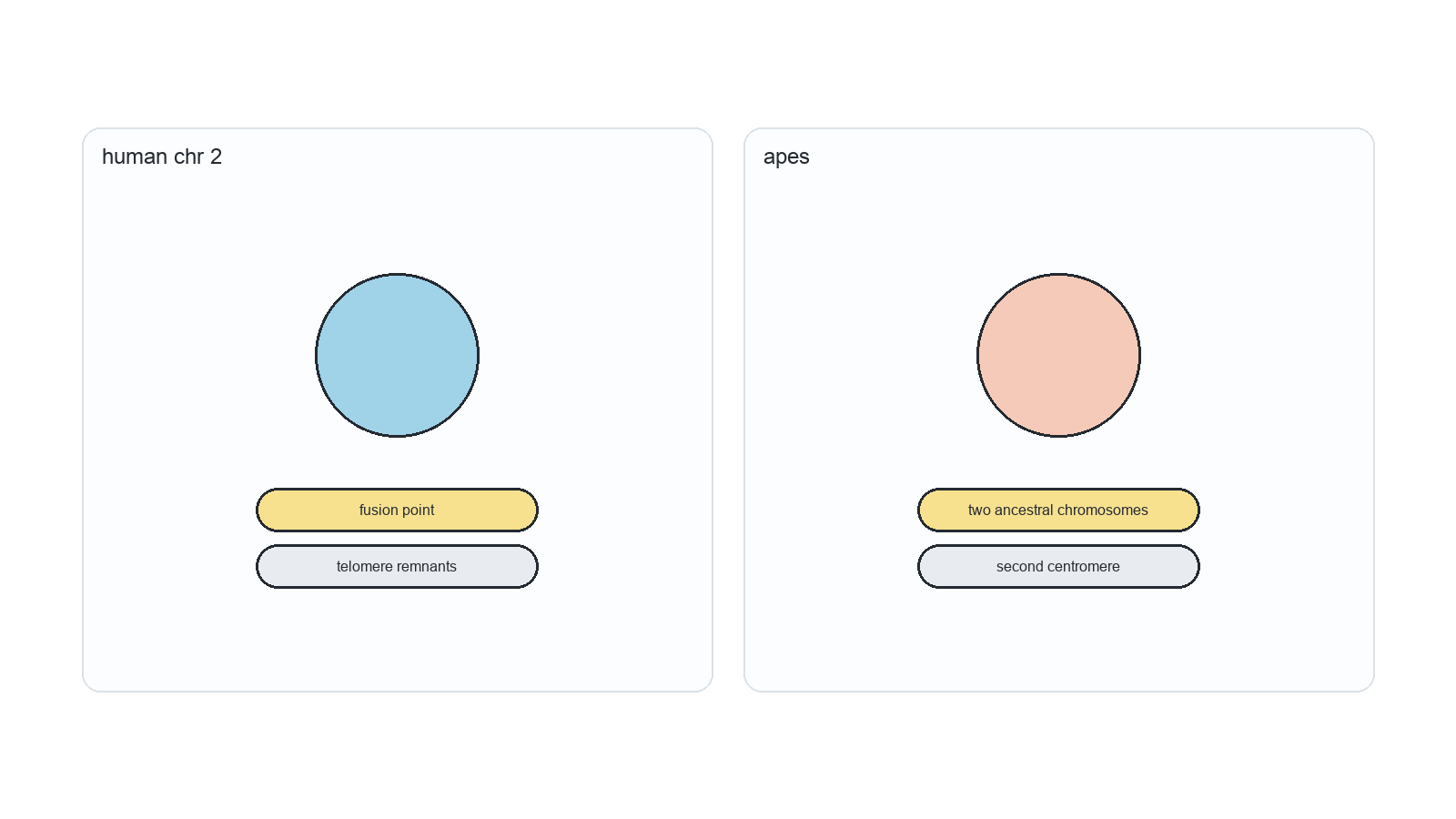
Chromosomes give another kind of species evidence. Chromosome number is usually constant within a species but varies between species; diploid numbers are even because chromosomes occur in homologous pairs. A karyotype is the full chromosome set, while a karyogram is the arranged display by length, banding pattern, and centromere position. Human chromosome 2 is important because its structure supports fusion from two ancestral ape chromosomes.
Use the visual to move from simple counts to structural evidence.
Label the karyogram features that allow comparison.
LabelLabel the karyogram features that allow comparison.
ChooseCompare Genomes Within And Between Species
A genome is all the genetic information in an organism. Members of one species share most of their genome but differ at variants. SNPs, or single nucleotide polymorphisms, are common single-base differences used as biological markers. Across eukaryotes, genomes vary in size and base sequence, and variation between species is much larger than variation within one species. Also, not all DNA codes for proteins, so genome comparison is not just gene counting.
Match each genome term to its meaning.
MatchUse Genome Size And Sequencing Carefully
Practice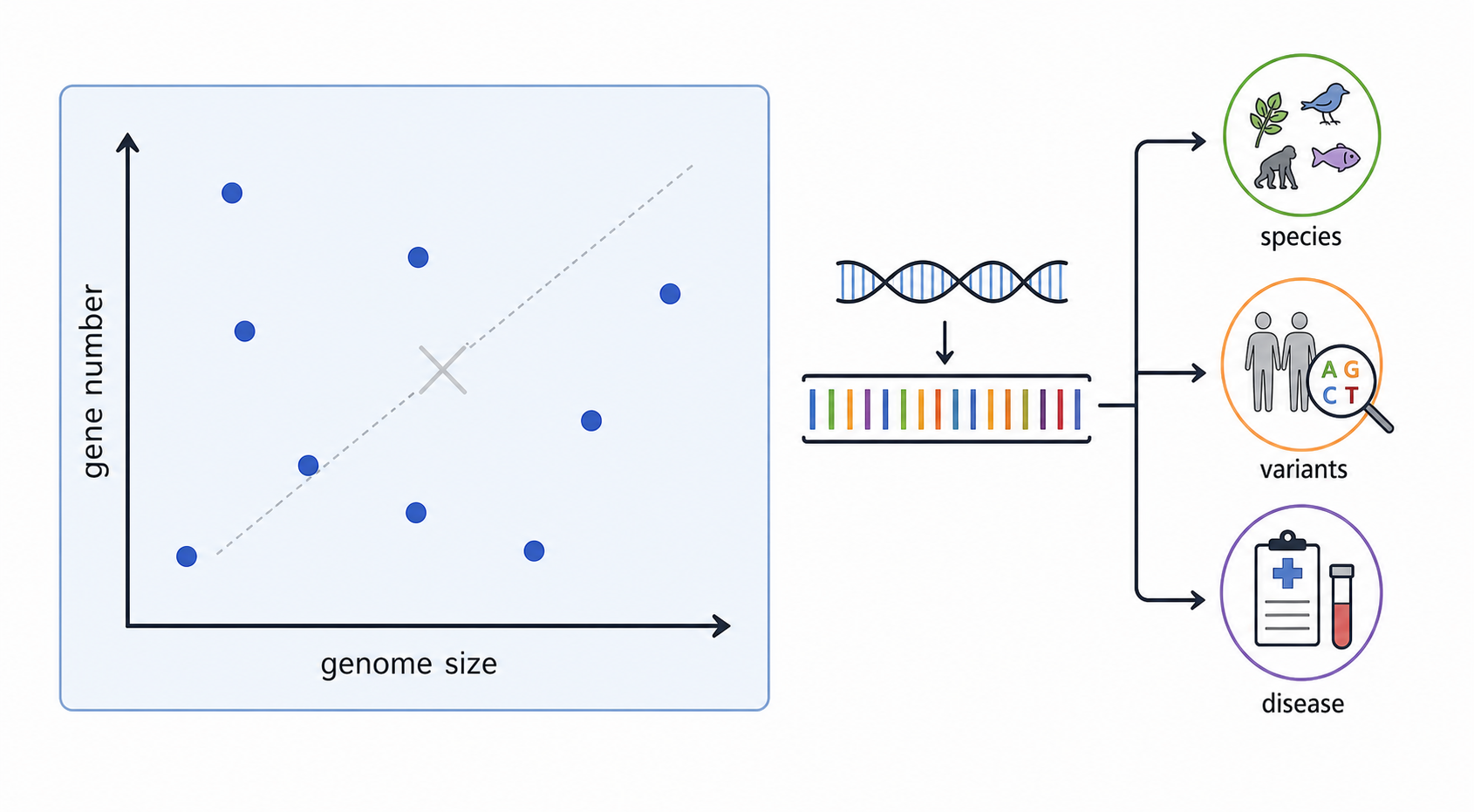
Genome size means the amount of DNA in one chromosome set. A larger genome does not necessarily mean a more complex organism; polyploidy can greatly increase genome size, especially in plants. Whole genome sequencing began at scale with the Human Genome Project and is now used for evolutionary relationships, gene discovery, and pathogen research. Future and growing uses include personalized medicine, diagnosis, disease prevention, and vaccine targets.
Separate the question of DNA amount from the question of what whole genome sequencing can reveal.
Which statement is the safest exam answer?
ChooseWhich statement is the safest exam answer?
ChooseSL Transfer: Classify With Evidence
Exam PracticeFor SL, A3.1 is really one evidence map. Variation explains why individuals differ. Morphology and binomial nomenclature help group and name organisms. The biological species concept uses interbreeding and fertile offspring, but boundaries can be difficult during gradual speciation. Chromosomes and karyograms add cellular evidence. Genomes, SNPs, genome size, and whole genome sequencing add molecular evidence. The skill is choosing the right evidence for the question.
Match each exam stem to the evidence tool.
MatchUse this for combined SL questions about classification evidence, species concepts, chromosomes, or genomes.
Use this for combined SL questions about classification evidence, species concepts, chromosomes, or genomes.
A strong A3.1 answer chooses the right evidence. Morphology can group organisms by structural traits and is useful for fossils or fieldwork, but sexual dimorphism and within-species variation can mislead. Binomial nomenclature gives a universal Genus species name. The biological species concept uses interbreeding and fertile offspring, but fails for fossils, asexual organisms, and some gradual speciation cases. Chromosome number, karyograms, genomes, SNPs, genome size, and whole genome sequencing add cellular and molecular evidence for diversity and classification.
Writing one long list without matching evidence to the question.
HL: Repair Asexual Species Boundaries
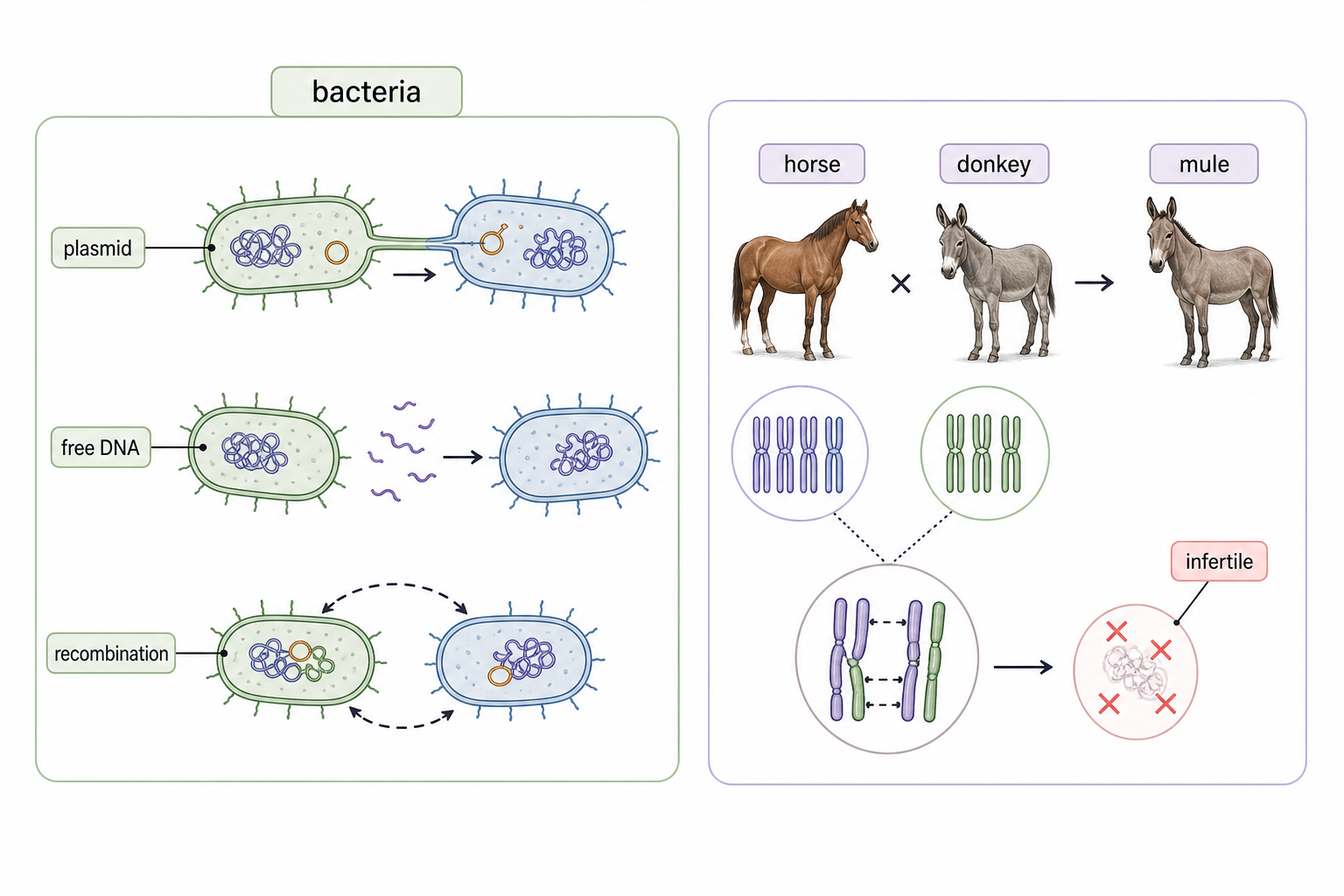
HL adds an important warning: the biological species concept does not work well for asexual organisms. Bacteria do not interbreed in the animal sense, but they still gain diversity by mutation and horizontal gene transfer. Transformation, plasmids, and recombination can move genes across lineages, blurring bacterial species boundaries. In many sexually reproducing organisms, haploid and diploid chromosome numbers are usually constant within a species because meiosis conserves chromosome number; different chromosome numbers can prevent fertile hybrids, as in mules.
HL species boundaries are clearer when you contrast asexual gene transfer with chromosome-based hybrid limits.
Fix the HL mistake.
Spot ErrorsFix the HL mistake.
ChooseHL: Choose An Identification Tool
Practice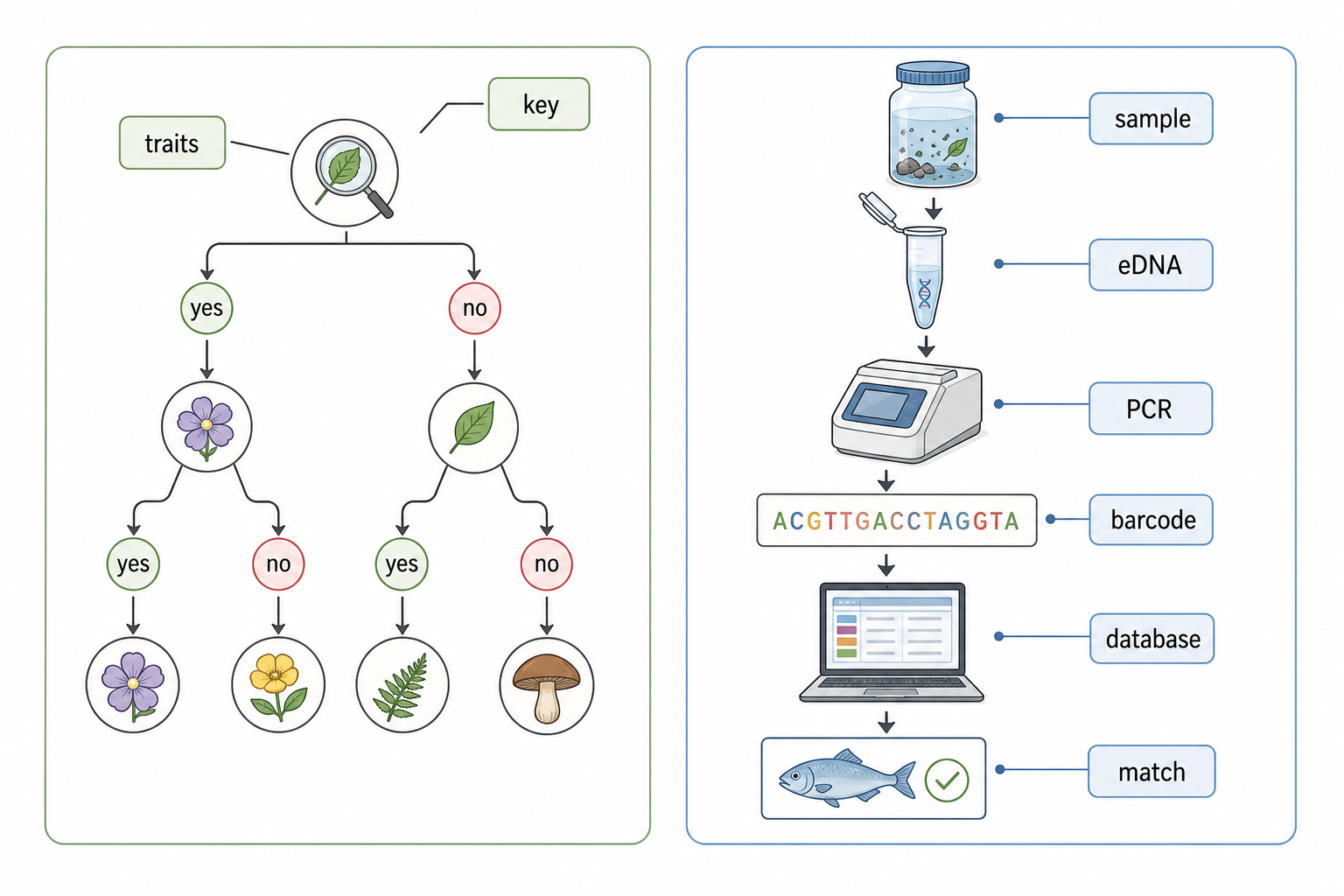
Identification tools depend on the evidence available. A dichotomous key uses paired yes/no choices based on observable features, usually built from a character matrix. DNA barcoding uses short selected gene sequences to identify species by comparison with databases. Environmental DNA can be collected from habitats, amplified by PCR, and matched to databases. Use keys when visible traits are reliable; use barcoding or eDNA when specimens are damaged, partial, hard to identify, or not directly seen. Local plant or animal species can be used to build and test dichotomous keys because their observable traits can be arranged into paired choices.
Choose between a trait-based key and DNA-based identification by asking what evidence is actually available.
Choose the best identification method for each case.
DecisionChoose the best identification method for each case.
ChooseHL Transfer: Boundaries And Identification
Exam PracticeThe HL extension connects two problems: species boundaries and species identification. Bacteria challenge the biological species concept because they are asexual and exchange genes horizontally. Chromosome number can help define boundaries in many sexual species because meiosis conserves it and mismatches can produce infertile hybrids. Dichotomous keys identify visible organisms using paired choices. DNA barcoding and eDNA identify species using short sequences, PCR, and databases when visible traits are limited.
Match each HL cue to the correct explanation.
MatchUse this for HL questions on bacterial species boundaries, chromosome number, dichotomous keys, DNA barcoding, or eDNA.
Use this for HL questions on bacterial species boundaries, chromosome number, dichotomous keys, DNA barcoding, or eDNA.
HL species questions often ask why one definition or tool is not enough. The biological species concept is weak for bacteria because they are asexual and exchange genes through mutation and horizontal gene transfer such as transformation, plasmids, and recombination. In many sexual species, chromosome number is conserved by meiosis and mismatched numbers can prevent fertile hybrids, as in mules. For identification, dichotomous keys use visible traits in paired choices, whereas DNA barcoding and eDNA use PCR-amplified sequences compared with databases, which is useful when specimens are damaged, partial, hidden, or difficult to identify morphologically.
Using one method for every case instead of matching the evidence to the problem.