
Locate Genetic Material
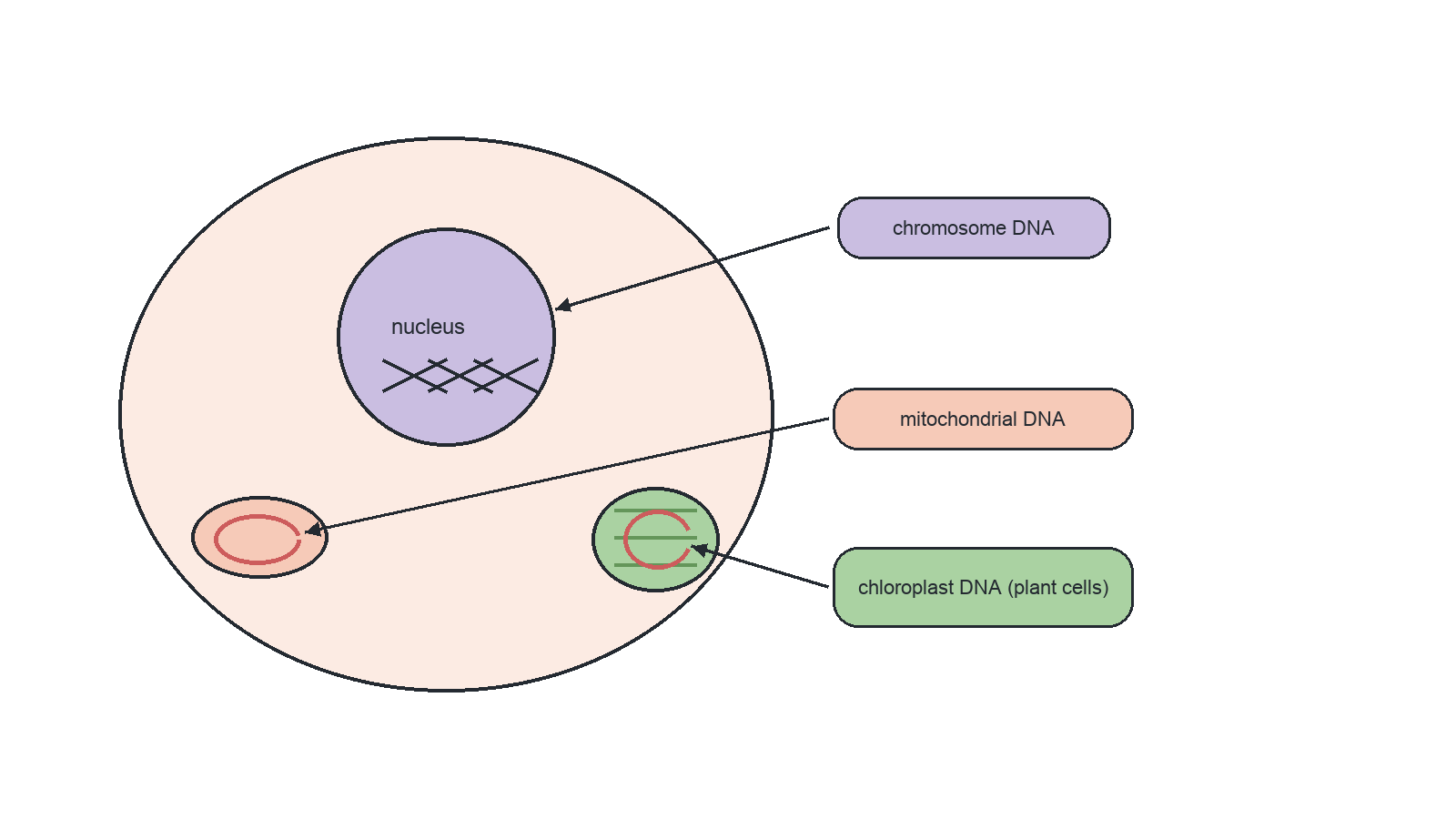
DNA is the genetic material of living organisms. In eukaryotes it is found mainly in chromosomes, with extra DNA in mitochondria and chloroplasts. Some viruses use RNA, but the syllabus does not treat viruses as living organisms.
Which statement is safest for this syllabus?
ChooseBuild a Scoring Nucleotide
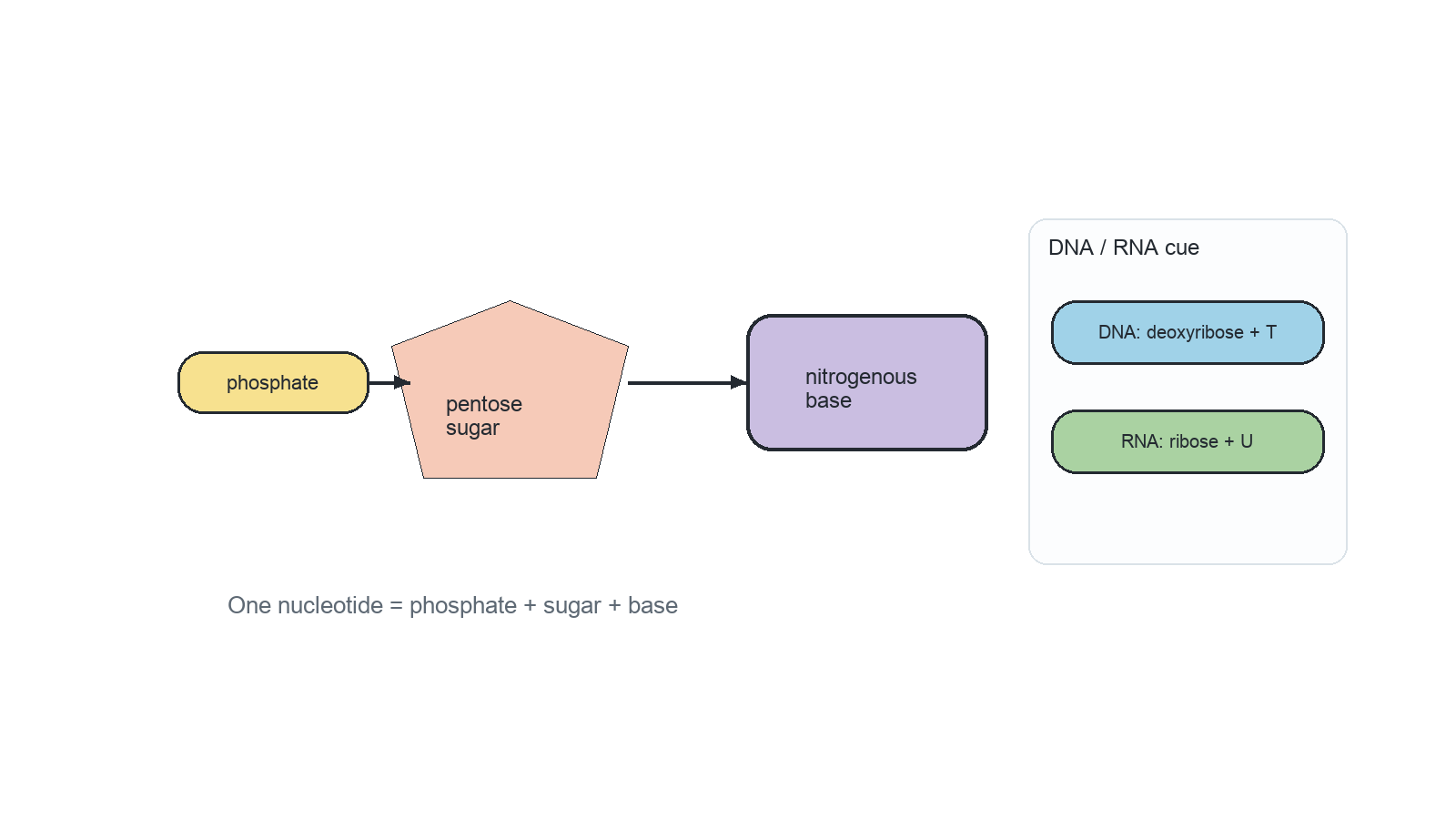
A nucleotide scores as three named parts: phosphate group, pentose sugar, and nitrogenous base. In the diagram, the sugar is the hub joined to the phosphate and the base.
After naming the three parts, use the sugar and base set to separate DNA from RNA.
Label the nucleotide before choosing whether it belongs to DNA or RNA.
LabelUse this when a question asks for nucleotide structure, DNA/RNA comparison, or base classification.
Use this when a question asks for nucleotide structure, DNA/RNA comparison, or base classification.
Calling a nitrogenous base a nucleotide, or forgetting the phosphate group.
Link Nucleotides Into a Backbone
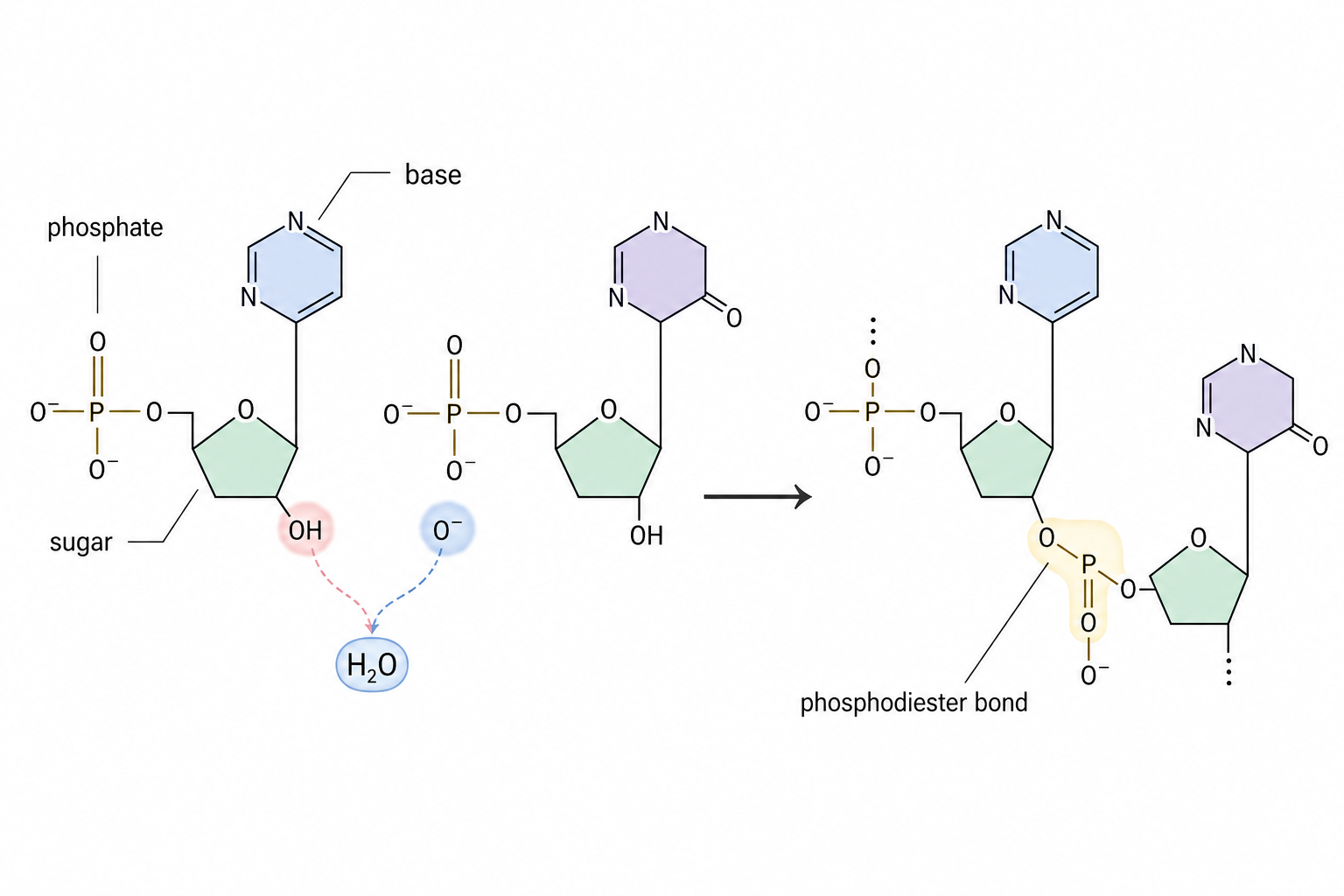
Nucleotides become a polynucleotide by condensation. The sugar of one nucleotide bonds to the phosphate of the next, forming a continuous covalent sugar-phosphate backbone. The bases project from that backbone, so their order can carry information.
The backbone gives structural continuity; the base order carries the code.
Match each structural part to what it does.
MatchMatch each structural part to what it does.
ChooseUse Bases as a Code
Practice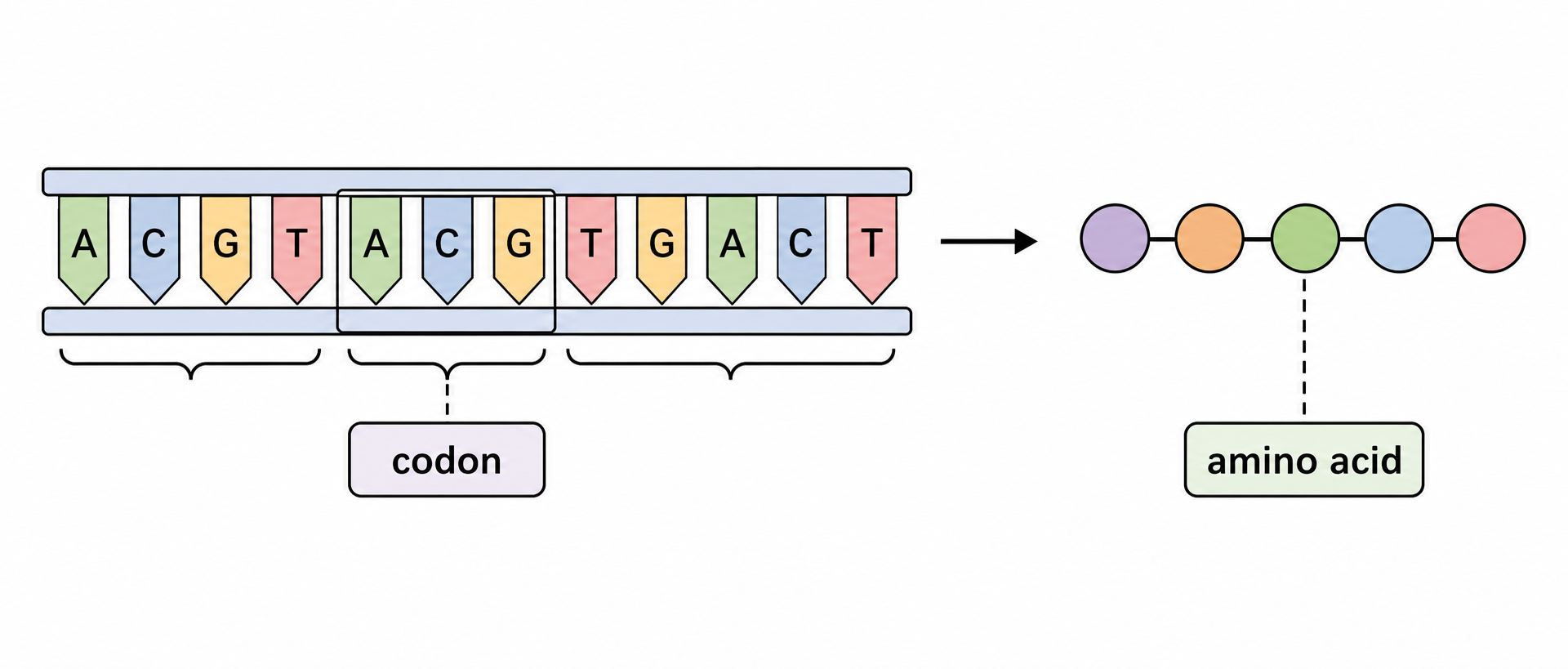
The code is in the order of bases, not the repeating backbone. DNA uses A, T, G, and C; RNA uses A, U, G, and C. Protein synthesis reads bases in triplets called codons, and RNA molecules carry out different jobs in that process.
The code comes from base order, and different RNA molecules help the cell read that code into protein.
Match each RNA/code term to its role.
MatchMatch each RNA/code term to its role.
ChooseFix DNA Model Errors
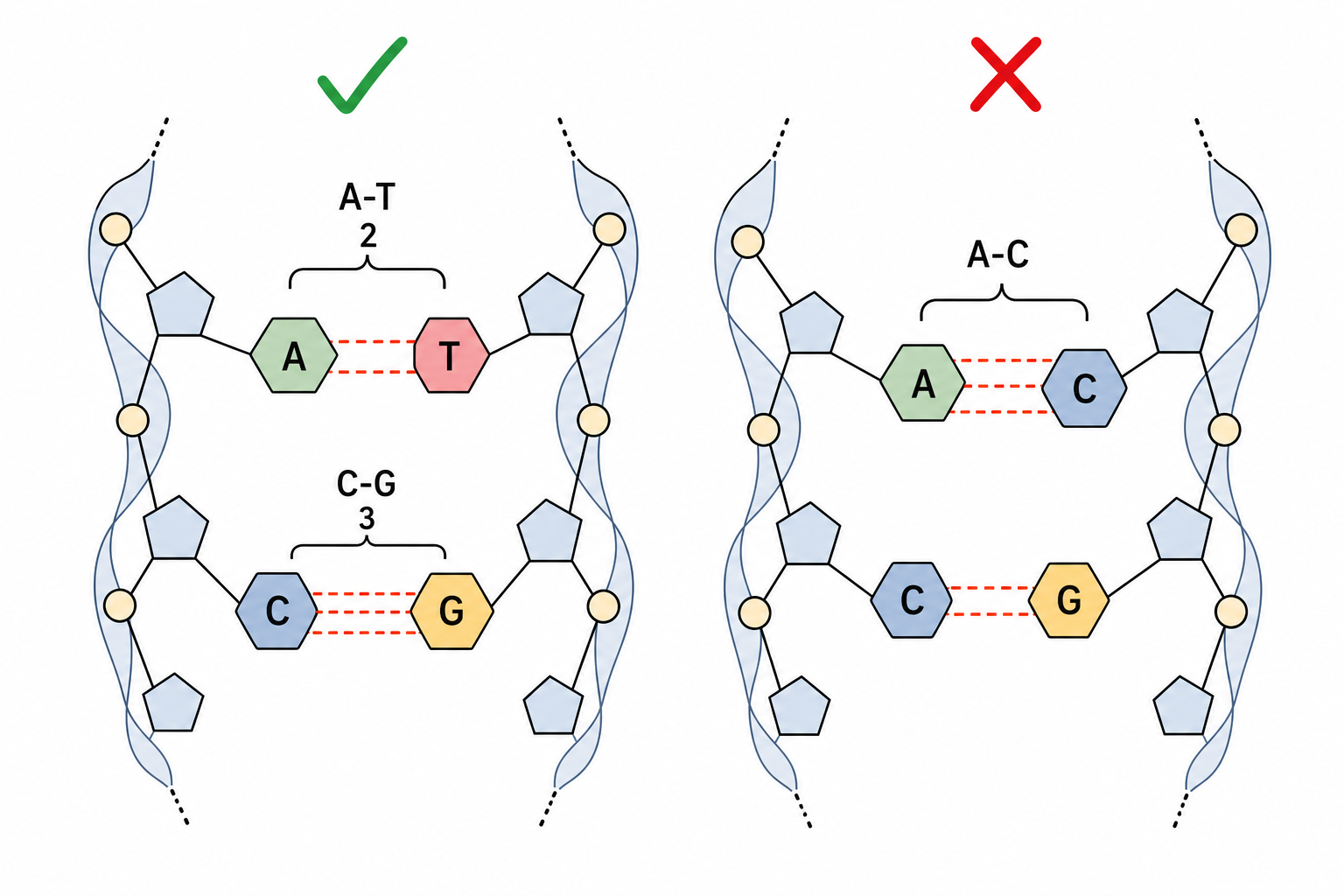
DNA is two antiparallel polynucleotide strands in a double helix. Bases point inward from the sugars and pair by hydrogen bonds: A with T, and G with C. When drawing the model, attach bases to sugars, not phosphates.
A correct SL model shows where bases attach and which bases pair.
A student draws bases attached to phosphate groups and says any two bases can pair. Spot the two errors.
Spot ErrorsA student draws bases attached to phosphate groups and says any two bases can pair. Spot the two errors.
ChooseExplain HL Helix Stability
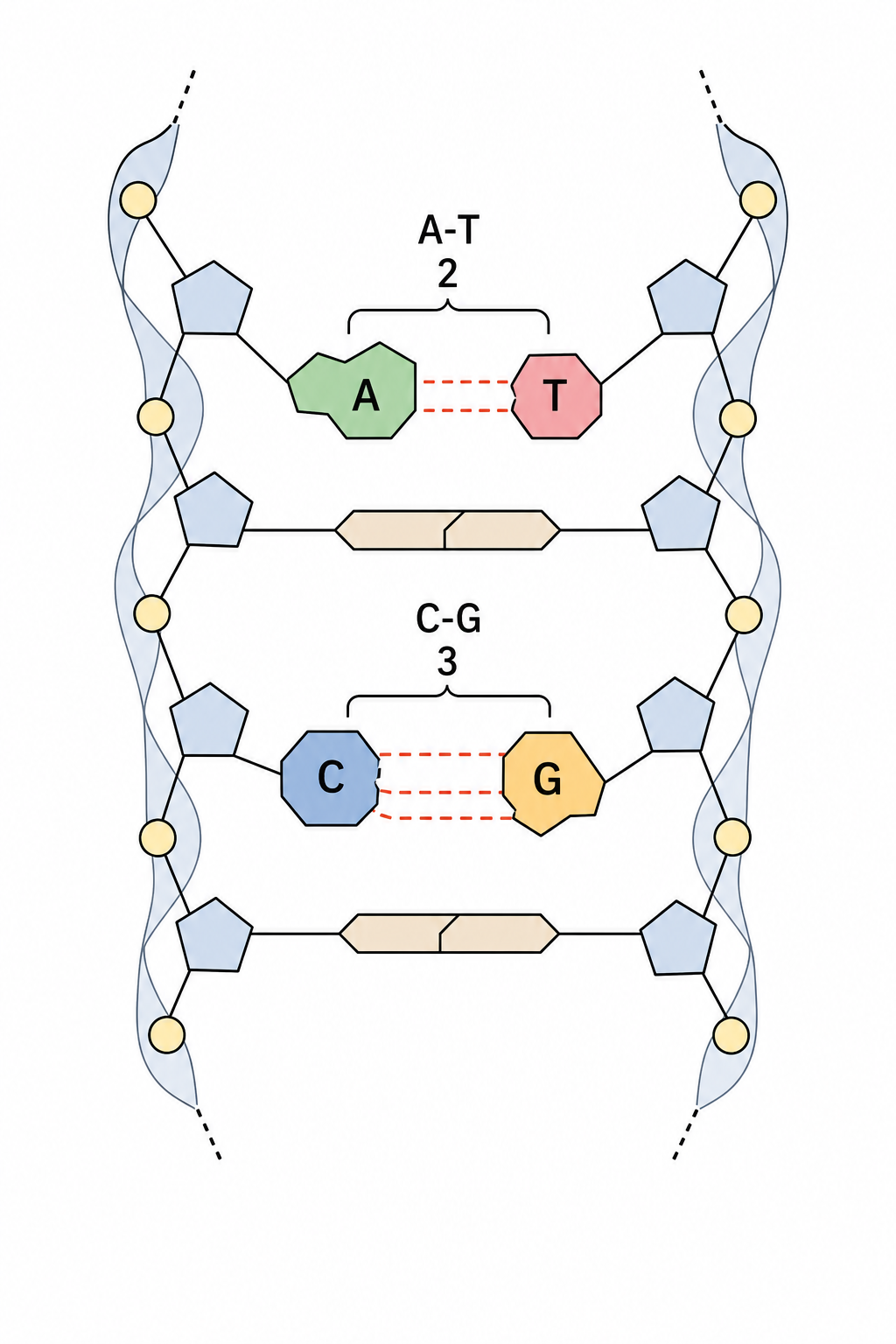
HL adds a geometry reason. A correct base pair has one purine and one pyrimidine, so the helix keeps a constant width. A-T and C-G fit the model and hydrogen bonds stabilize the paired bases.
The HL model explains why complementary pairs keep the helix width constant.
Why does DNA not pair A with G in the normal model?
ChooseWhy does DNA not pair A with G in the normal model?
ChooseDistinguish DNA From RNA
Practice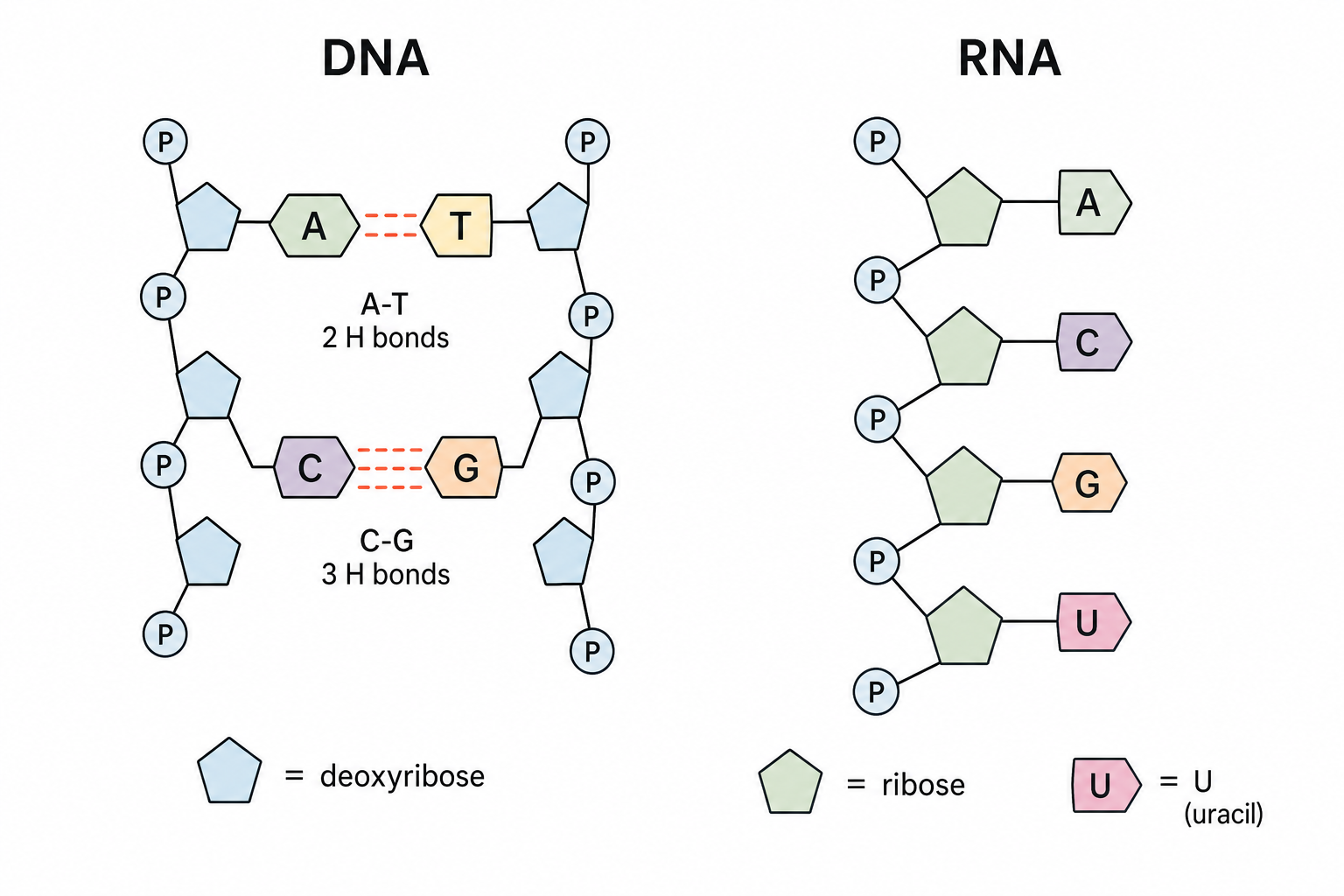
DNA and RNA are both nucleic acids, but the exam contrast is simple: strand number, sugar, base, and typical length. DNA is usually double-stranded, uses deoxyribose and thymine, and is longer. RNA is usually single-stranded, uses ribose and uracil, and is shorter.
Sort each statement into DNA, RNA, or both.
SortApply Complementary Base Pairing
PracticeComplementary base pairing is the copying rule. In DNA, A pairs with T and C pairs with G. In RNA, A pairs with U and C pairs with G. Because one strand predicts its partner, base pairing supports DNA replication, transcription, and translation.
A DNA template contains A-C-G. Which complementary RNA sequence fits the rule?
ChooseExplain DNA Information Capacity
DNA stores enormous information because base sequences can vary in length and order. Genome size and gene number vary widely, so they should not be treated as a simple scale of organism complexity.
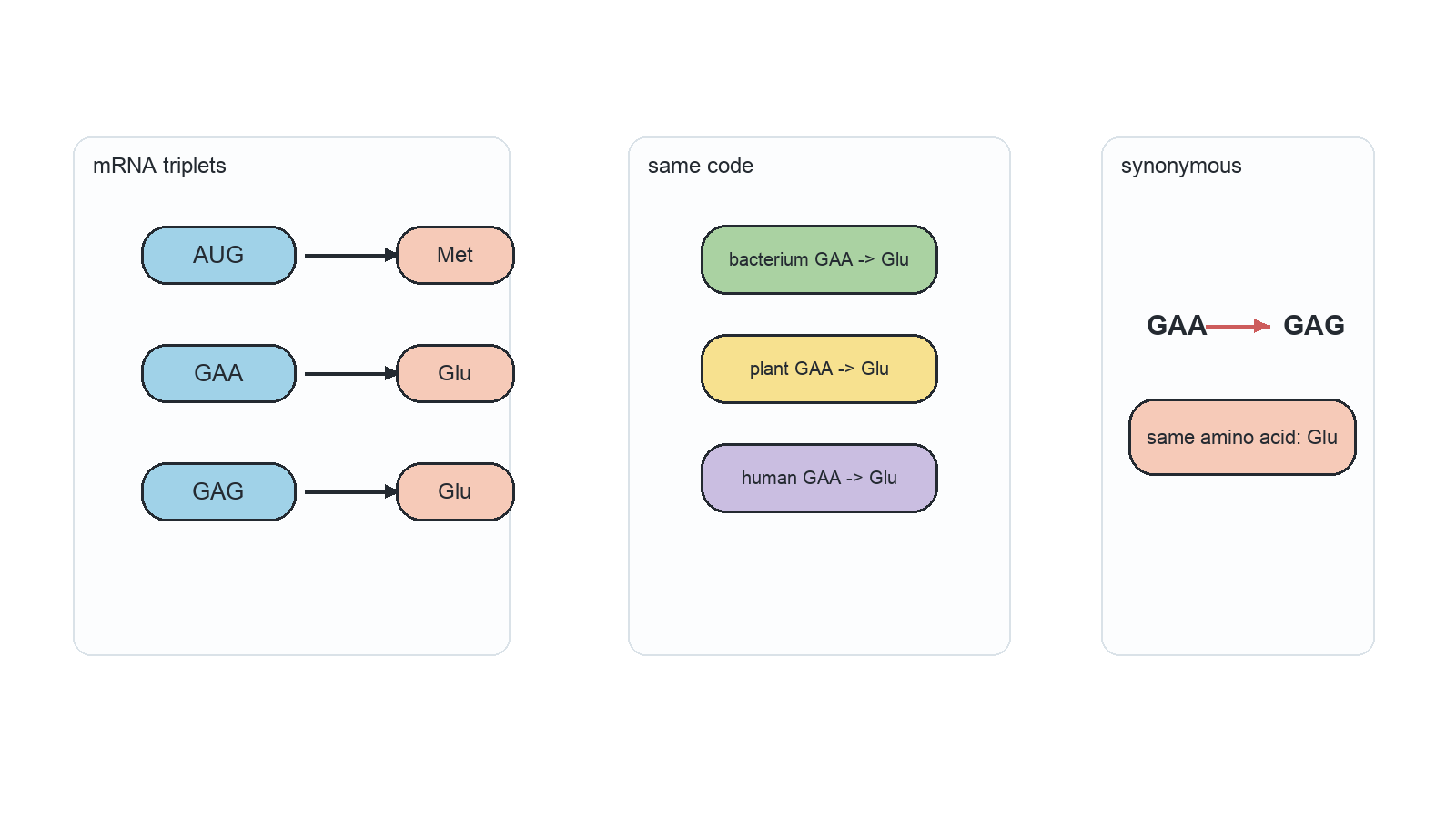
DNA sequences can vary enormously, but the code used to read most codons is conserved across life.
The genetic code is also conserved. The 64 codons have nearly the same meanings across life, and conserved genes for transcription, translation, and ribosomes support common ancestry. Synonymous mutations can preserve amino acid sequences.
Match the claim to the evidence or reason.
MatchMatch the claim to the evidence or reason.
ChooseUse 5 Prime and 3 Prime Direction
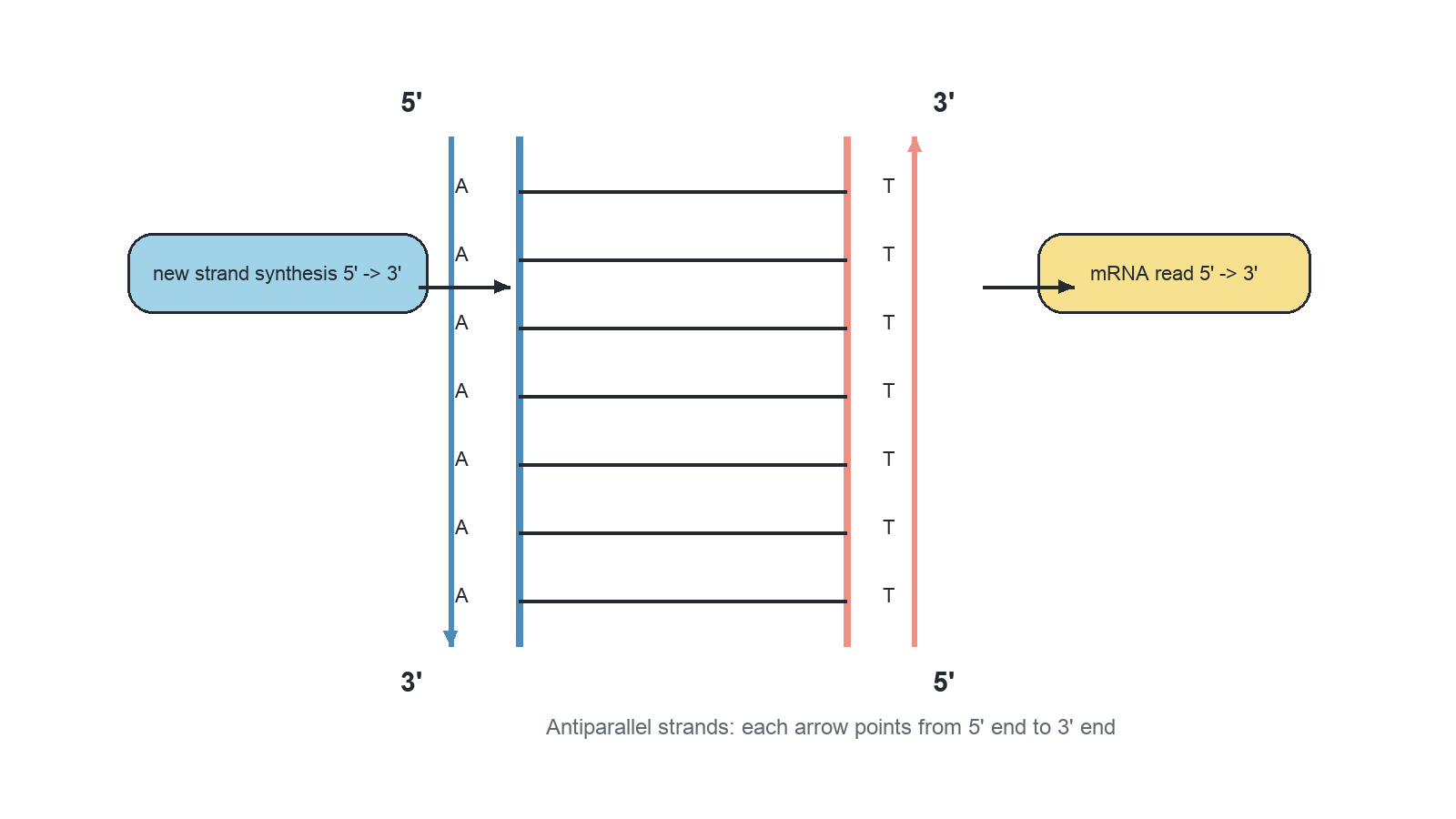
HL directionality means nucleic acid strands have different ends. Phosphodiester bonds create 5′ and 3′ ends. DNA strands are antiparallel, and RNA is synthesized and translated in the 5′ to 3′ direction.
The strand ends tell you which way the molecule is made and read.
Which statement correctly describes DNA strand direction?
ChooseWhich statement correctly describes DNA strand direction?
ChooseLabel a Nucleosome
A nucleosome is a DNA-packaging unit. DNA wraps nearly twice around an octamer of histone proteins. H1 binds linker DNA to the histone core. This packaging compacts DNA while still allowing regulated access to genes.
Place the labels on the nucleosome model: DNA, histone octamer, H1, and linker DNA.
LabelUse Hershey-Chase and Chargaff Evidence
Exam Practice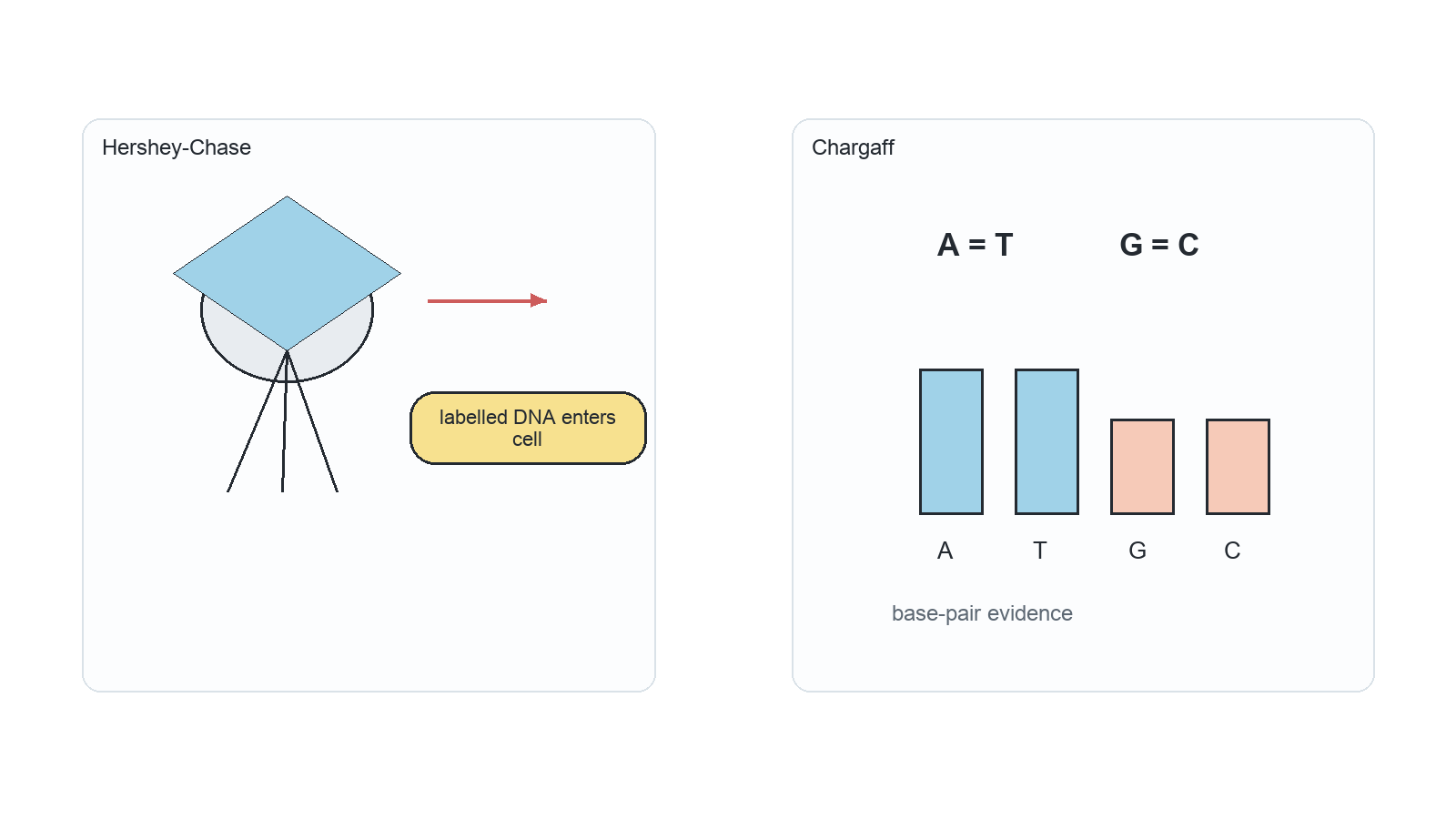
HL evidence matters because DNA was not always assumed to be the genetic material. Hershey-Chase labelled phage DNA with ³²P and protein with ³⁵S. The ³²P DNA label entered E. coli and appeared in new viruses, supporting DNA as the genetic material. Chargaff then showed A = T and G = C, helping explain complementary pairing.
Use the measured result from each classic experiment, not just the scientist name.
Match each observation to the conclusion it supports.
MatchUse this for HL evidence questions about how scientists concluded DNA carries genetic information or how Chargaff supported the double-helix model.
Hershey-Chase showed DNA carries genetic information because ³²P-labelled DNA, not ³⁵S-labelled protein, entered E. coli and appeared in new viruses. Chargaff’s data showed A = T and G = C, supporting complementary base pairing and rejecting the tetranucleotide hypothesis.
Do not write only “Hershey-Chase proved DNA”; include the labels and what entered the cells.
Match each observation to the conclusion it supports.
ChooseRetrieve The Core Rules
ReviewThe core chain is: nucleotides have three parts; condensation builds the sugar-phosphate backbone; base order stores information; complementary pairing lets DNA copy and express that information.
Match each core rule to what it explains.
MatchUse this when a question asks how nucleic acid structure stores or transmits genetic information.
Use this when a question asks how nucleic acid structure stores or transmits genetic information.
Nucleic acids are polymers of nucleotides, each with a phosphate, pentose sugar, and nitrogenous base. Condensation links nucleotides into a sugar-phosphate backbone, while the order of bases stores genetic information. Complementary base pairing, such as A-T in DNA and C-G, allows accurate replication and supports transcription and translation.
The common loss is listing parts without explaining how base order or base pairing stores and transfers information.
Retrieve The HL Extensions
ReviewHL adds directionality, helix geometry, DNA packaging, and classic evidence. These ideas stay separate: 5′/3′ explains strand direction; purine-pyrimidine pairing explains width; nucleosomes explain packaging; Hershey-Chase and Chargaff explain evidence for DNA and base pairing.
Match each HL extension to the question it answers.
MatchUse this for HL prompts that ask for directionality, helix stability, packaging, or classic evidence.
Use this for HL prompts that ask for directionality, helix stability, packaging, or classic evidence.
HL nucleic-acid answers depend on the prompt. Directionality questions need 5′ and 3′ ends plus antiparallel strands. Helix-stability questions need purine-pyrimidine pairing and hydrogen bonds. Packaging questions need DNA wrapped around histone octamers with H1 on linker DNA. Evidence questions need Hershey-Chase labels or Chargaff ratios.
The common loss is mixing the HL categories: using evidence details when the question asks for structure, or structure details when it asks for evidence.