
EduNinja
Question rangeD4.3.4—Polar habitat changes
[Maximum number: 14]

Global warming has changed both the thickness and surface area of sea ice of the Arctic Ocean as well as the Southern Ocean that surrounds Antarctica. Sea ice is highly sensitive to changes in temperature.

Scientists have calculated a long-term mean for the surface area of sea ice in the Arctic and in the Southern Ocean around Antarctica. This mean value is used as a reference to examine changes in ice extent. The graph shows the variations from this mean (zero line) over a period of time.
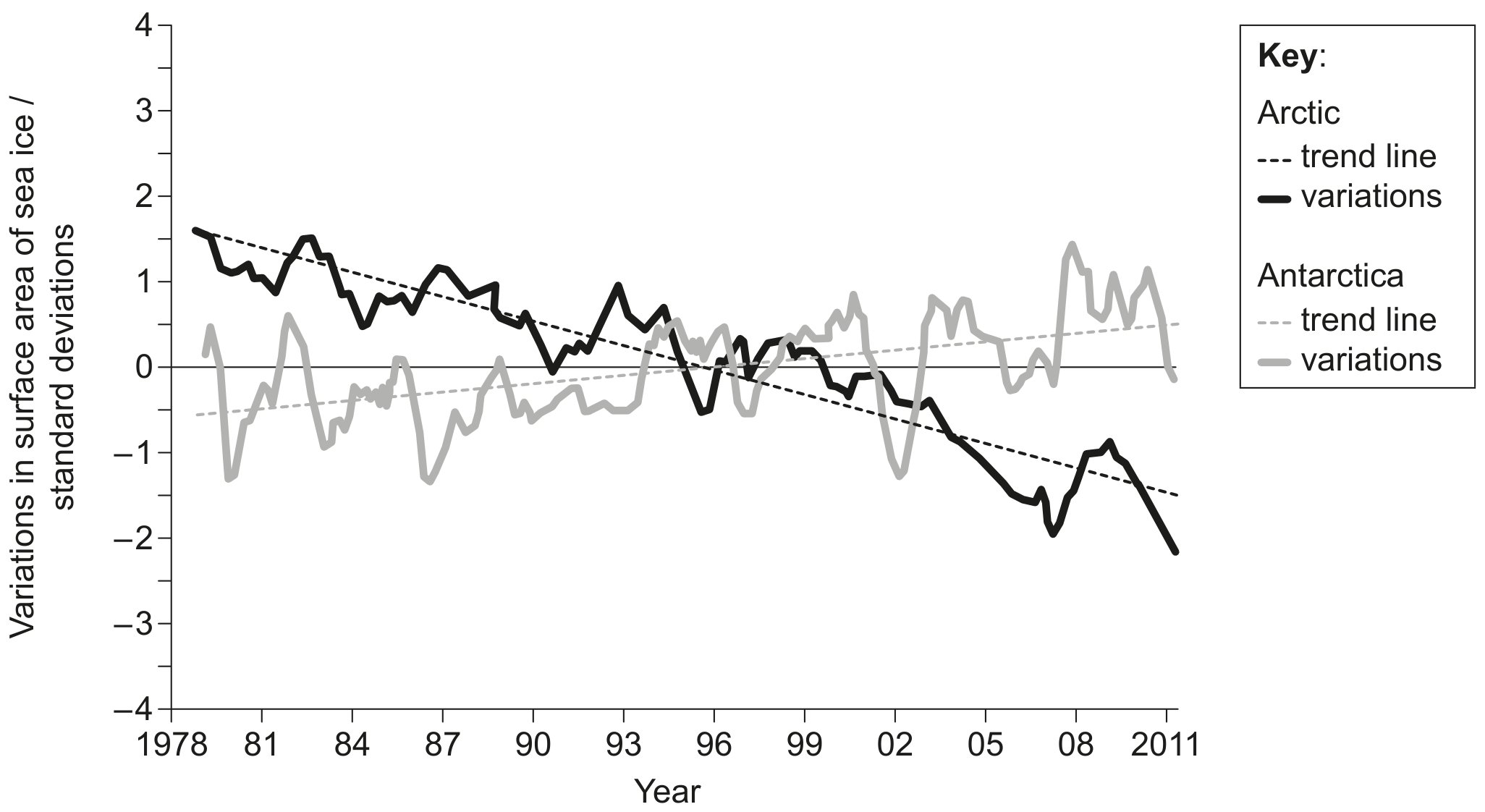
Question image
[Maximum number: 1]

What is a potential consequence of the rise in global temperatures on the Arctic ecosystem?

A

Increased exposure to UV light

B

Increased rate of decomposition of detritus

C

Decreased success of pest species

D

Increase in the ice habitat available to polar bears

[Maximum number: 1]

Global warming caused by the enhanced greenhouse effect is likely to have major consequences for arctic ecosystems. Which of the following are likely to occur in the arctic if the Earth's surface temperature rises?
I. Decreased rates of decomposition of detritus
II. Increased range of predators from temperate regions
III. Increase in numbers of pest species and pathogens

A

I and II only

B

I and III only

C

II and III only

D

I, II and III

[Maximum number: 1]

What might increase in arctic ecosystems as a result of rising global temperatures?

A

Ozone

B

Numbers of pest species

C

Day length

D

Chlorofluorocarbons

0